New energy is making waves, while the "old energy" is adrift.
Over the past two years, Beaver has switched to four different shops for maintenance and repair of his fuel-powered car. He first went to the store of Yongda on Deping Road, then the Jiaoyun store in Yangpu, followed by the one on Shenjiang Road, and now he has moved to an even farther store.
The frequent store changes are not because he got richer and bought a new car, but because the 4S shops closed down one after another, leaving him no choice but to move around helplessly.
As the new energy vehicle wave surges forward, while the durable quality of fuel cars remains unchanged, some 4S shops for fuel vehicles can no longer hold on.
The "2025-2026 China Automotive Circulation Industry Development Report" (hereinafter referred to as the "Report") released by the China Automobile Dealers Association in March shows that in 2025, nearly 5,000 new 4S outlets were added across the country, of which new energy vehicle brands accounted for about 56%; among the nearly 5,000 4S outlets that withdrew from the network, independent brands also took a large share, accounting for about 76%, joint-venture brands about 15%, and luxury brands about 9%.
In other words, the overall 4S network has shrunk slightly, but the internal structural differentiation is particularly severe: the new energy 4S network continues to expand, while the fuel vehicle 4S network is shrinking at an accelerated pace. For car owners, the most direct consequence of this change is that they have to wander between different 4S shops.
The car is still in good condition, but the shop has closed down first
"Zhongshang has delisted its stores, and Yongda has closed several outlets too. I have to cross the Huangpu River to Pudong just to use my basic maintenance coupons. I have changed three places in three years. We old fuel car owners are now almost like stray pedigree cats moving between different foster families."
After a rather bittersweet car maintenance experience, the author's senior schoolmate, who is also a fuel car owner, rarely showed negative emotions on her WeChat Moments.
The previously released "2025 Annual Development Report of China's Automotive Aftermarket" jointly issued by the China Association of Automobile Manufacturers and Hejun Consulting shows that the average age of traditional fuel vehicles is as high as 8.2 years, and more than 60% of the vehicles have been in service for more than 7 years.
Fuel vehicles are mostly regarded as durable goods, and car owners also pursue stability. However, against the backdrop of declining fuel vehicle sales, shrinking user base, especially the sharp reduction in brand revenue and profits, the situation that "the car is still in good condition, but the 4S shop providing maintenance services has closed down first" is no longer rare.
"XX is really hopeless. This is the second maintenance shop I go to that is about to close down. Such a large 4S shop can't even survive. I bought the car in 2021, which was the peak period for fuel vehicles back then, and people had to wait for a month or half a month to get their cars. I thought the 200,000-yuan car could be driven for more than ten or twenty years. It was squeezed out by the fierce competition in just a few years." A car owner in Guangdong wrote on social media.
The wave of new energy vehicles is so swift and turbulent that fuel car owners who bought their cars a few years ago never expected that the once widespread and booming fuel 4S stores would decline rapidly within a few years.
For car owners, the closure of 4S shops is an unchangeable fact. Even so, all kinds of inconvenience and distress brought by changing shops have to be borne by the car owners alone.
The most affected group are owners of ultra-luxury brands. The originally small number of ultra-luxury outlets have become more scattered after shrinking, which greatly increases the difficulty of maintenance and repair.
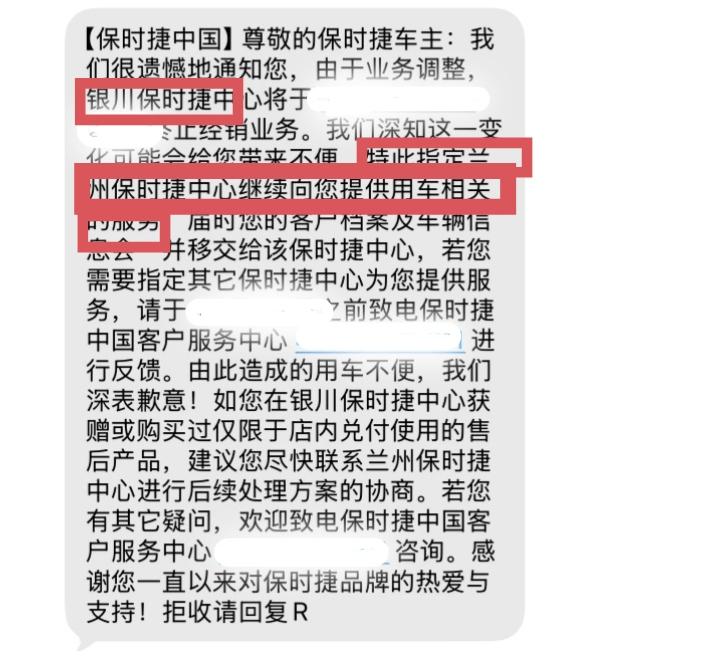
Take Porsche as an example. After years of sluggish sales, the brand has started to optimize its domestic dealer network, planning to reduce the number of stores in China to 80 by the end of this year.
Some car owners said that after the Porsche Center in Weifang closed, they had to travel across cities to Qingdao or Jinan for maintenance; after the local store closed, after-sales services for Porsche owners in Yinchuan were transferred to the Lanzhou store. Although the receiving party said that door-to-door services would be provided from time to time, cross-city maintenance is inherently insufficient in terms of convenience and stability.
Relatively speaking, it is already very difficult for car owners to get properly settled. Some brands have too many authorized dealers, which belong to different platforms. After some stores close, the new stores cannot take over the original services, making it difficult for car owners to enjoy the services promised by the sales staff orally or even in written contracts.
Previously, a Land Rover owner bought a Land Rover Range Rover SUV in 2019 and paid 30,000 yuan at one time for the lifetime free maintenance service. In 2025, the original 4S store where he bought the car closed down, and when the owner was transferred to another store, he was told that he had to present the original contract signed 6 years ago to enjoy the service. Finally, with the intervention of the media, the receiving store voluntarily retrieved the relevant contract and continued the free maintenance service for the owner.
However, without the intervention of the media, some Land Rover owners were unable to continue to enjoy the free maintenance service after being forced to change stores. "I also bought the lifetime maintenance service, but the 4S store closed before I could use it many times," one owner said.
Whether it is an entry-level hatchback or an expensive luxury car, the exhaustion of moving between different stores and the disputes after changing shops equally and continuously wear down every fuel car owner.
More than half of the stores are loss-making, and the shops are in a more difficult situation than car owners
The maintenance dilemma of fuel car owners is rooted in the closure of 4S shops for fuel brands. The shrinking of stores is not only the elimination under profit pressure, but also the inevitable result of the era transition.
At the 2026 China Automotive Forum held in July, Lang Xuehong, Deputy Secretary-General of the China Automobile Dealers Association, said that the total number of domestic automobile sales and service outlets now exceeds 50,000. In terms of the number of channels, there are about 32,000 4S shops for traditional fuel vehicles in total, and the total number of new energy sales outlets exceeds 20,000.
Although the 4S shop network for fuel vehicles is 12,000 larger than that of new energy vehicles, it is not difficult to find against the backdrop that the new energy penetration rate has exceeded 60% that the fuel vehicle outlets, which account for 64% of the total, only take 40% of the total sales volume.
Sales volume continues to decline, and profits shrink even more sharply. The Report shows that in 2025, 55.7% of automobile dealers fell into loss; 81.9% of automobile dealers suffered price inversion to varying degrees, and 51.5% of automobile dealers had a price inversion of more than 15%.
In terms of gross profit composition, the gross profit contribution of new cars is even negative, at -25.5%, and the main profits have shifted to after-sales services, finance and insurance. Some media reported that a traditional luxury brand store that had been open for 12 years was officially delisted in June this year, with a cumulative loss of more than 40 million yuan in three years.
New car business has become a drag, and loss-making has become the norm. The collapse of the entire 4S shop system has evolved from individual competition of survival of the fittest to systematic clearance of the whole channel, and even leading dealer groups cannot escape this situation.
The shrinking of channels further leads to brain drain. The turnover rate of front-line sales staff in traditional 4S shops is close to 70%, and the loss rate of after-sales technicians exceeds 50%. In 2025, more than half of the sales staff in joint-venture brand stores get less than 5,000 yuan of monthly salary in hand. The vicious cycle of continuous outflow of talents further weakens the offline maintenance and repair capacity.
A bigger problem is that the survival of 4S shops is dominated by new car sales, while maintenance demand is rooted in the stock market. On the one hand, electrification is coming fiercely. The latest data shows that in October, China's new energy vehicle output and sales reached 2.017 million units and 1.94 million units respectively, up 13.8% and 13.1% year on year, and new energy vehicle new car sales accounted for 64.3% of the total new car sales.
On the other hand, the ownership of fuel vehicles is still huge. By the end of 2025, the national ownership of fuel vehicles was as high as 322 million units, accounting for nearly 90% of the total 366 million vehicles, and a huge number of old cars still need fuel vehicle maintenance services.
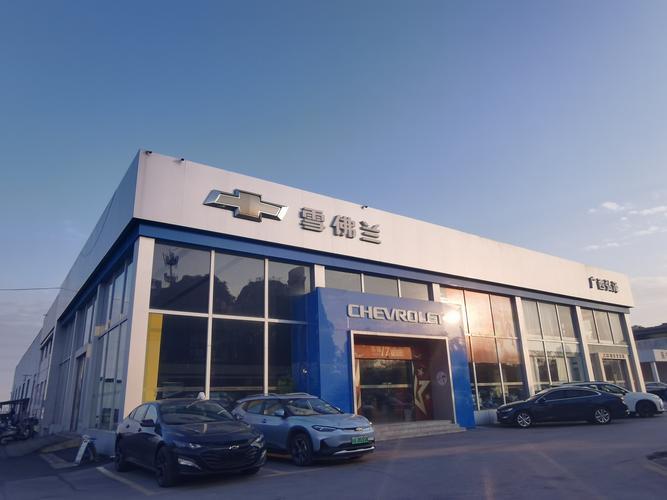
While the number of stores is shrinking and the car ownership continues to expand, the gap between supply and demand keeps widening. Under the wave of store closures, the first to bear the pressure are brands with large historical ownership and continuously declining new car sales in recent years, such as Hyundai, General Motors, Ford, etc. Chevrolet, which withdrew from the Chinese market not long ago, has closed a large number of 4S outlets, and some old car owners can only go to Buick stores under the same brand for maintenance.
But fortunately, the maintenance market can still generate considerable profits. After the official brand outlets are absent, chain after-sales market stores such as Tuhu Car Maintenance, Tmall Auto Service, and JD Auto are rapidly filling the gap. For example, as of June this year, the total number of Tuhu's global workshop stores has reached 8825, with a net increase of 817 in the first half of the year, a year-on-year increase of 22.5%.
However, even if the third-party chain stores continue to expand, they still cannot fully offset the era pains encountered by fuel car owners.
Of course, it can be said that the surging wave of new energy has taken away most of the attention in the sales market, and also taken away part of the talents and resources in the after-sales market.
But in the final analysis, the core problem lies in the channel itself. Dealers are generally facing losses, especially when the sales of new fuel cars are poor and cannot bring continuous and stable increment, closing down becomes the last choice for the stores, which will inevitably affect the owners of old fuel cars.
In the trade-offs of industrial transformation, the rise and fall of channels are determined by profits, and the car-using experience of stock car owners is hardly taken into consideration. After that, what is left for more fuel car owners may still be forced "migration" and "wandering".
This article is from the WeChat Official Account "Auto Community" (ID: iAUTO2010), written by Sai Jiatong, authorized for release by 36Kr.