In the unnoticed corners of China's auto market, Japanese cars are nearly completely on their last legs.
In October, Nissan launched a plug-in hybrid pickup called Frontier Pro in Mexico, whose design, R&D and production were all completed by Zhengzhou Nissan. This is Nissan's first model developed and manufactured in China for global export, with Mexico as its first stop outside China.
In the same autumn, Nissan released another set of figures. In September, it sold 23658 vehicles in China, down 61.6% year on year.
The changes at Honda are more intuitive. In 2020, it sold about 1.627 million vehicles in China, while the figure dropped to only 645000 in 2025. This September, media reports put Honda China's terminal sales at 25564 units, a year-on-year decline of 53.1%.
These figures are far from the end or the lowest point. In October, the share of Japanese brands in China's retail passenger car market dropped to 10.2%. Back in October 2020, this figure stood at 23.9%.
Six years ago, one out of every four new cars sold in the Chinese market was Japanese, but now the ratio has dropped to one in ten.
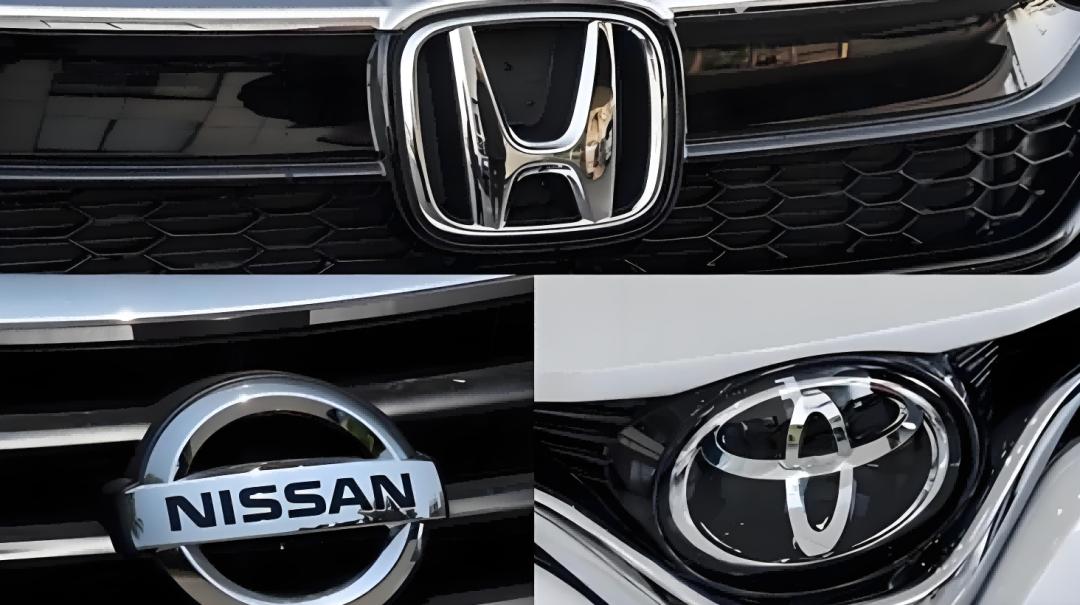
Many people's impression of Japanese cars still stays in the era when Accords and Sylphys were running all over the streets — these models are still not rare on the roads even today. But the number of existing cars on the road is only one aspect. For automakers, the volume of new car sales is obviously much more critical.
The ever-expanding Chinese market in the past could accommodate the growth of both Chinese and Japanese automakers. Now, Japanese automakers can basically be declared to have suffered a complete defeat in the competition in the Chinese market, and the remaining 10% market share is likely to continue to shrink.
Correction
In the first 10 months of this year, retail sales of passenger cars in China reached 14.978 million units, down 22.3% year on year, a figure close to the 14.92 million units in the same period of 2020. Six years ago, the downturn of the auto market was caused by the impact of the COVID-19 pandemic, while this time, the industry has hit the demand ceiling again after several years of expansion.
Car buying is easily mistaken as a kind of high-frequency consumption — consumers go from no car to owning a car, from owning a car to replacing it, then to upgrading to a luxury car. For many years in the past, after a consumer already owned a car, whether to spend money on a new one usually did not depend on whether the old car could still run, but on people's firm consumption confidence.
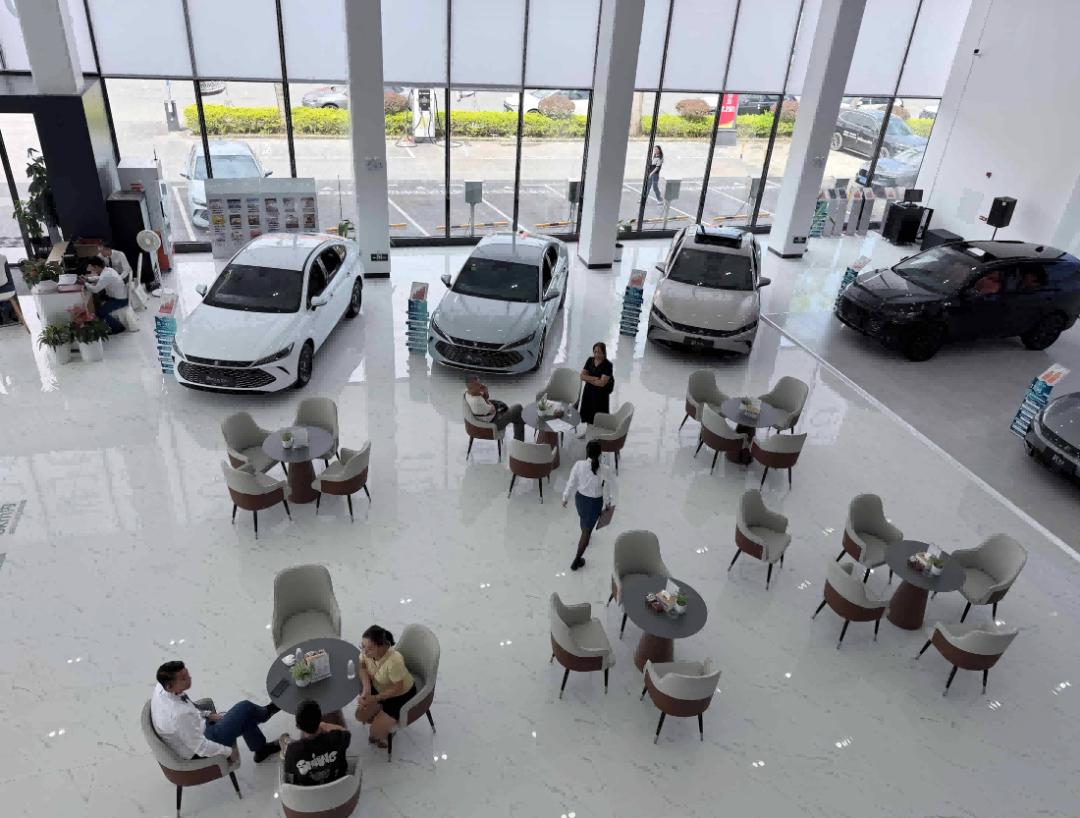
Statistics from the Ministry of Public Security show that by the end of 2025, the number of motor vehicles in China had reached 366 million. Big cities have gone through a long period of popularization of automobiles, and there is still space for first-time car buyers in counties and townships, but the release speed of these demands is completely different from that of the era when a large number of families bought their first cars.
The sluggish auto retail market is also affected by specific factors this year. In 2026, the new energy vehicle purchase tax policy was adjusted from full exemption within the quota to a 50% reduction, which led to a portion of orders that were supposed to be placed this year being brought forward to the end of last year. This year, the market is facing a higher comparative base from the previous period. Corresponding data shows that in October, national passenger car retail sales rose 1.5% month on month, but fell 27.1% year on year.
Data from the National Bureau of Statistics shows that the total retail sales of consumer goods in the first three quarters increased by 1.1%, and the growth rate reached 2.8% after excluding automobile consumption. The retail sales of automobiles by units above designated size dropped by 14.9%.
When residents' expectations for future income are not stable, a car purchase expense of more than 100,000 yuan is very easy to be put off. As long as the old car can still run, consumers would rather keep cash in hand and choose to "wait and see".
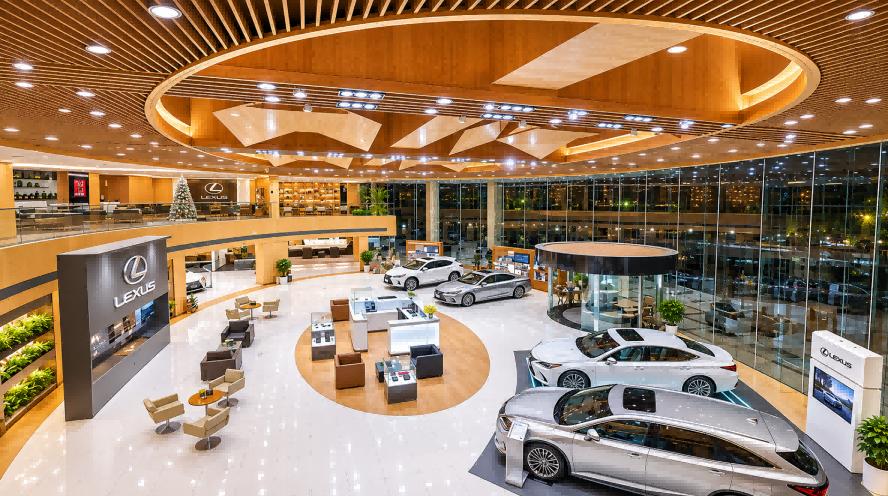
Car purchase decisions are also affected by public opinion. With store quotations falling again and again, and news of promotions and facelifts popping up on social platforms at any time, consumers naturally tend to wait for the next round of price cuts. The China Passenger Car Association also mentioned in its weekly report at the end of October that negative public opinion in the industry may further aggravate the wait-and-see attitude of new energy vehicle buyers.
For families, replacing a car increasingly requires more sufficient reasons, but automakers need revenue and profit growth every year. Car buyers can keep waiting, but 4S stores have to pay rent and interest on a monthly basis.
The total consumption correction is inevitable, which is very cruel for all institutions along the entire industry chain.
Loss of Ground
Japanese cars used to be the most reliable choice for family cars priced at over 100,000 yuan: fuel-efficient, low failure rate, and good resale value. For a family car that is supposed to be used for a long time, these are all very important selection criteria. At that time, with the cost performance of Corolla and Sylphy, consumers basically did not need to make too many trade-offs.
In January this year, the new BYD Qin PLUS DM-i was launched with a starting guide price of 79,800 yuan. It belongs to the same compact family sedan segment as Corolla and Sylphy, supporting daily electric commuting and gasoline refueling for long-distance trips.
More importantly, the old way of comparing cars by fuel consumption per 100 kilometers has obviously lost its meaning in the new energy era. Nowadays, people are comparing comprehensive factors such as range, battery performance, software upgrade and assisted driving.
In October, retail sales of conventional fuel passenger cars were about 530,000 units, down 45% year on year. New energy vehicle retail sales reached 1.109 million units, down 13.7% year on year, but its proportion in domestic retail sales rose to 67.5%. While the total number of car buyers is decreasing, the number of consumers choosing fuel cars is shrinking even faster.
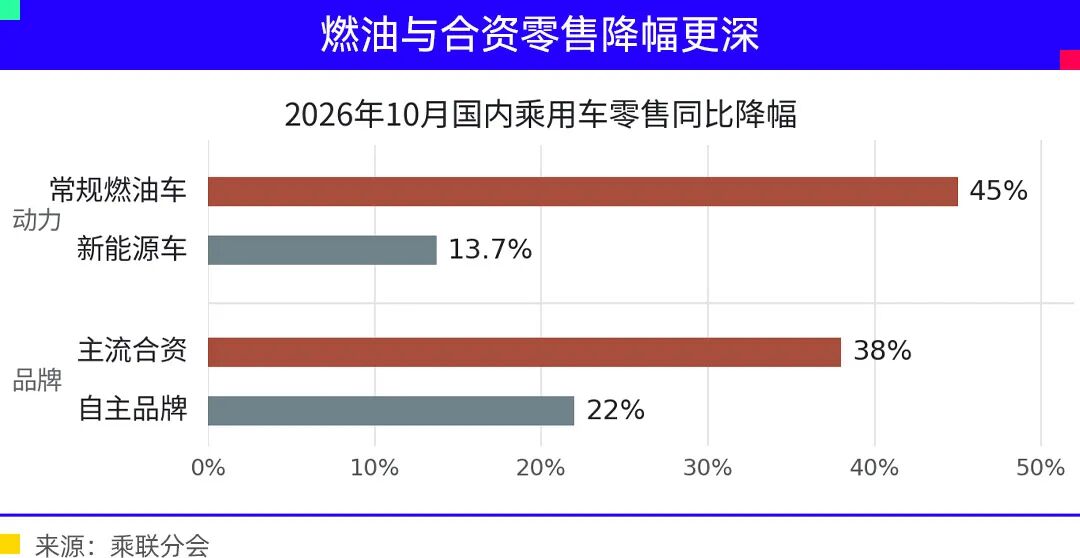
Japanese hybrid vehicles still have some buyers, and people who have no easy access to charging facilities value their low fuel consumption and convenient refueling. Retail sales of ordinary hybrid vehicles in October still increased by 28% year on year. But this can no longer support the large market share that Japanese brands once occupied across mainstream price segments.
The fuel consumption advantage can retain a small number of orders, but what configurations domestic new energy vehicles can offer at the same price and how much they cost to run daily are calculations that the vast majority of families can easily make.
Japanese cars also used to have the advantage of high residual value. But once automakers cut prices repeatedly, the transaction price of new cars will be transmitted to the used car market. Buyers will refer to the current new car prices, which puts pressure on the resale value of old cars. The price cuts made for short-term sales growth may eventually erode the premium that consumers were willing to pay for Japanese cars in the past.
The GAC Toyota bZ3X launched in 2025 was developed under the leadership of a Chinese regional chief engineer, in cooperation with GAC. Materials disclosed by Toyota show that this model has accumulated sales of more than 70,000 units in 2025.
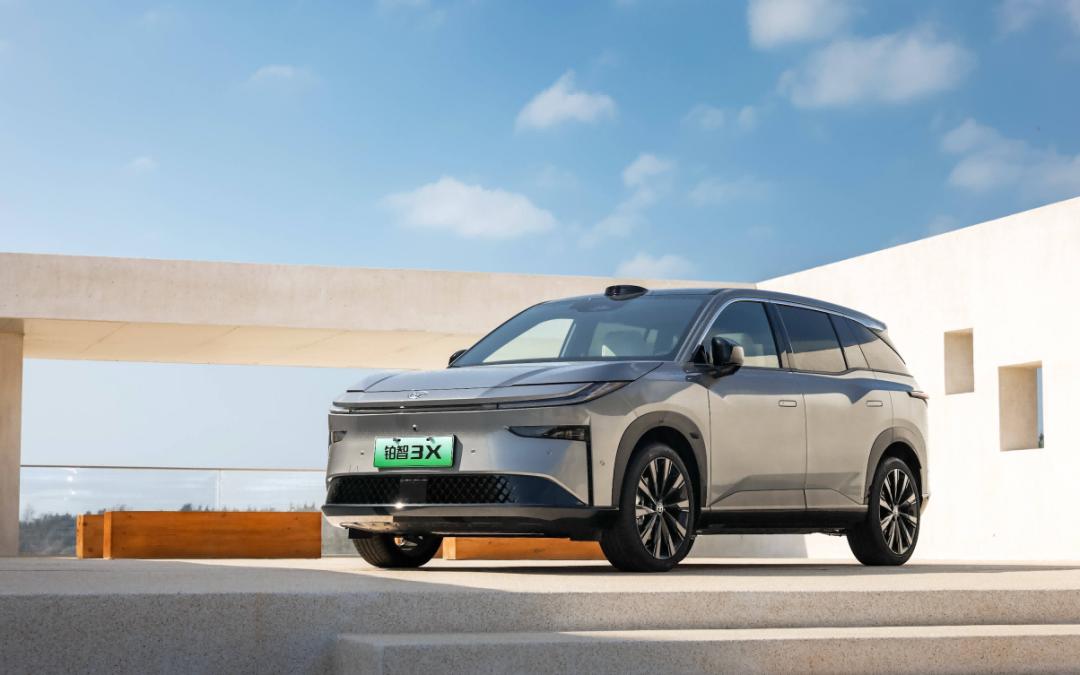
In the past, international automakers brought fully developed models to China, reduced configurations and extended their dimensions, and their joint ventures in China could mass-produce and sell these models. But now the situation has completely changed.
Battery, electric drive and cockpit suppliers, together with Chinese and foreign automakers, are iterating synchronously in the Chinese market. Once a new configuration becomes mainstream, all automakers, both Chinese and foreign, must catch up quickly, otherwise they will be easily abandoned by consumers without mercy.
There is one exception in this process: developing models based on the Chinese market and selling them outside China. In the huge overseas market, there is still a stage for competition between Chinese and Japanese automakers.
Overseas Expansion
In October, FAW, Toyota and GAC signed a new cooperation framework. GAC plans to acquire 50% equity of FAW Toyota held by FAW through issuing shares. FAW Toyota will continue to exist as an independent operating entity, and the joint venture between the two parties plans to further cooperate in R&D, procurement, production and sales.
Toyota's moves are driven by very realistic pressure: the Chinese auto market has integrated electrification, low-cost supply chain and local development together. It is almost impossible to cover the Chinese market by launching a global model every few years from the headquarters.
The current joint ventures need to select suppliers in China, set up R&D teams, and give these teams sufficient decision-making power. The product capabilities and supply chain systems formed in China cannot only serve the Chinese market.
For Chinese automakers, they need to find outlets for this major round of adjustment, and overseas markets are the core key. According to statistics from China Passenger Car Association, China's passenger car exports reached 928000 units in October, up 68.5% year on year, including both complete vehicles and semi-knocked-down kits for assembly overseas. This figure is equivalent to 35% of the total wholesale volume of automakers in the same month.
As selling cars in the domestic market becomes increasingly difficult, overseas business is directly related to capacity utilization and how much profit automakers can retain.
In Thailand, where Chinese automakers have the most extensive layout, the form of the next round of competition between Chinese and Japanese automakers can be clearly seen.
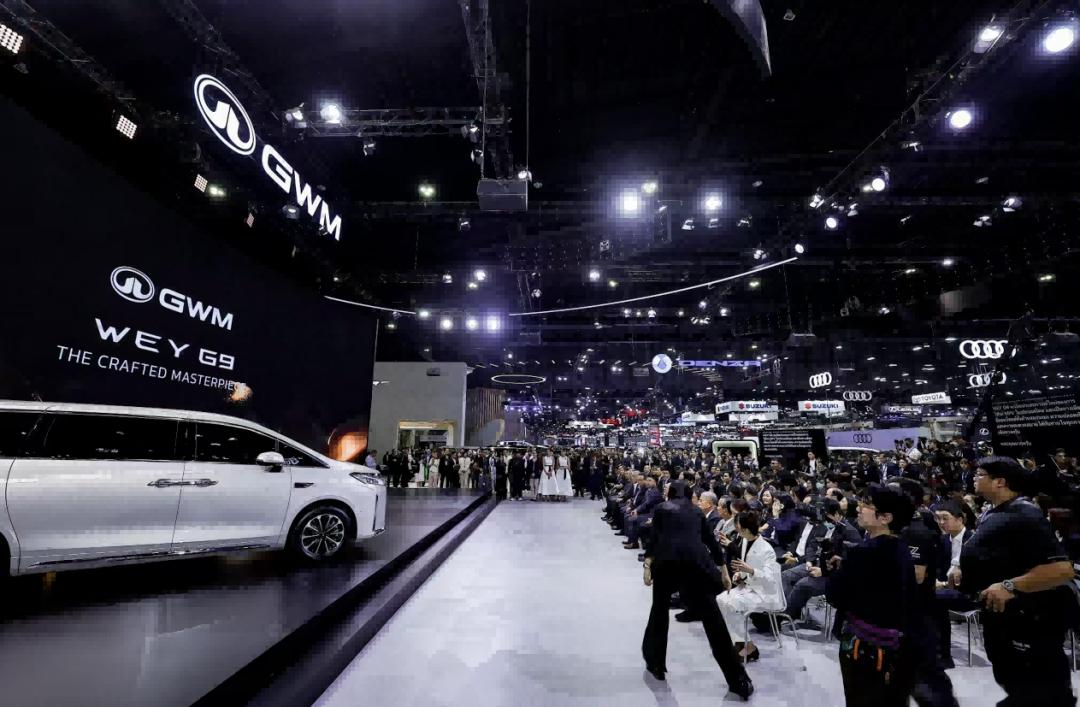
In 2024, BYD put its 150000-unit annual production capacity plant into operation in Rayong, building its production line in a market where Japanese manufacturers have operated for many years. Toyota's pickup trucks and hybrid vehicles have long-established user bases, dealer networks and maintenance networks. After Chinese automakers set up local plants, the competition has extended from price in showrooms to who can produce better cars, provide longer product lifecycles and more affordable maintenance services.
In the Latin American market represented by Brazil, the competition pattern is different. Toyota sells Corolla Cross hybrid vehicles that support ethanol fuel locally, while BYD produces small pure electric vehicles in Camacari, and has demonstrated the plug-in hybrid Song Pro that adapts to local ethanol fuel. Chinese brands are bringing plug-in hybrid vehicles overseas, and at the same time learning to adapt to the fuel that local residents are familiar with.
Building factories deep in the hinterland of various overseas countries will directly change the time scale of competition between Chinese and Japanese automakers. A production line put into operation overseas needs to amortize costs through continuous orders for many years afterwards, and a long-term symbiotic relationship will be formed between automakers and maintenance technicians, which is also true for the parts and components system.
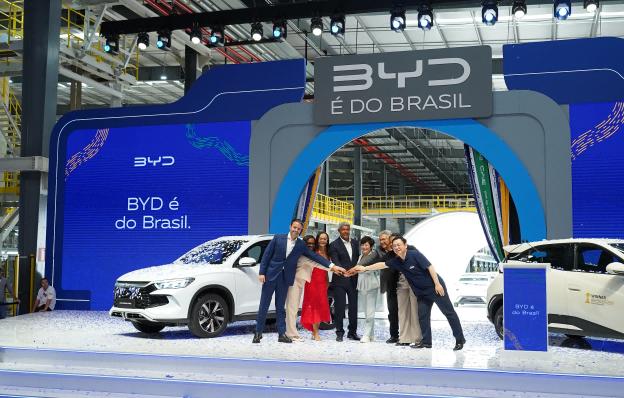
When Chinese enterprises make these layouts, they are targeting places where Japanese brands have operated the longest and have the densest symbiotic relationships, with the goal of weakening or even breaking these symbiotic relationships.
Sticking to their existing channels, Japanese automakers have also begun to leverage China's R&D and manufacturing capabilities to develop their next batch of global models. Especially in the global new energy vehicle sector, this new trend has been very clear.
After Chinese and Japanese automakers have decided the outcome of competition in the Chinese market, Chinese automakers are about to face this more formidable rival in the global market, and the outcome of this round of competition may not be as clear as that in the Chinese market.
Final Notes
In the past, Japanese brands came to China and shared a market that grew rapidly almost from scratch, making huge profits in this world's largest auto incremental market.
Now, the sales volume here has started to shrink, but more and more Chinese enterprises are capable of manufacturing automobiles. For Japanese manufacturers, it is a rational choice to learn various new technologies and business methods in China and then apply them in other markets.
But even if they enter other markets, they will still face global competition from Chinese auto companies.
The competition between Chinese and Japanese automakers in the Chinese market has come to a conclusion. In the next few years, competition in Bangkok, Sao Paulo and Mexico City will enter the second phase. In those places, Japanese automakers are far from the almost completely declining state they are in the Chinese market now.
This article is from the WeChat official account "Giant Tide WAVE", Author: Huigu, Editor: YANG Xuran, Published with authorization from 36Kr.