At the outlets, sports brands refuse to cheapen their brand.
Digging for off-season bargains between stacked shoeboxes and closely arranged shelves? If you still visit outlet malls with this expectation, you are likely to be disappointed.
Resort-like environments, high-end and elegant facades, and latest popular products placed in prominent positions have become the standard configuration of an increasing number of "super outlet malls". Among these super outlet malls, sportswear brands play a crucial role.
According to Winshang Big Data, by the end of 2025, sportswear brands account for the second largest proportion in the retail formats of outlet malls, second only to women's clothing, and their revenue contribution ratio is generally higher than their area proportion. For example, at Jinan Capital Outlets, the 17.4% area occupied by the sports format contributes 33.5% of the revenue, significantly higher than luxury brands and women's clothing.
Especially the outdoor brands that have been extremely popular in recent years, they occupy large core locations and open more luxurious standalone stores than full-price stores. These changes reflect the market environment and brand channel strategies, and more importantly, provide us with a unique perspective:
In the past, brands usually measured their strength and showed off their competitiveness by city flagship stores and concept stores, but now, the capillary channels cannot be underestimated, and brands' refined operation capabilities are emerging at outlet malls.
More Than One Driving Force Behind the Expansion Into Outlet Malls
The expansion into the outlet channel is not so much an active change sought by sportswear brands, but a move that conforms to the general trend.
With the upgrading of the outlet industry, the number of super outlet malls and "outlet +" projects integrated with cultural tourism, pet-friendly facilities, music festivals and various IPs is increasing day by day. The ultimate goal is to get rid of the "pure shopping" function and evolve into a one-stop "vacation destination".
High-end real estate operators are also testing the waters of outlet projects.
Recently, China Resources and Deji have both opened their first outlet projects - Dongguan Mixc Coastal Shopping Village and Deji Art Outlets. The former is known as "Aranya of the South" for its elements such as white triangular houses and sunset grandstands, while the latter has sparked heated discussion with the embellishment of cloud castles and art installations.
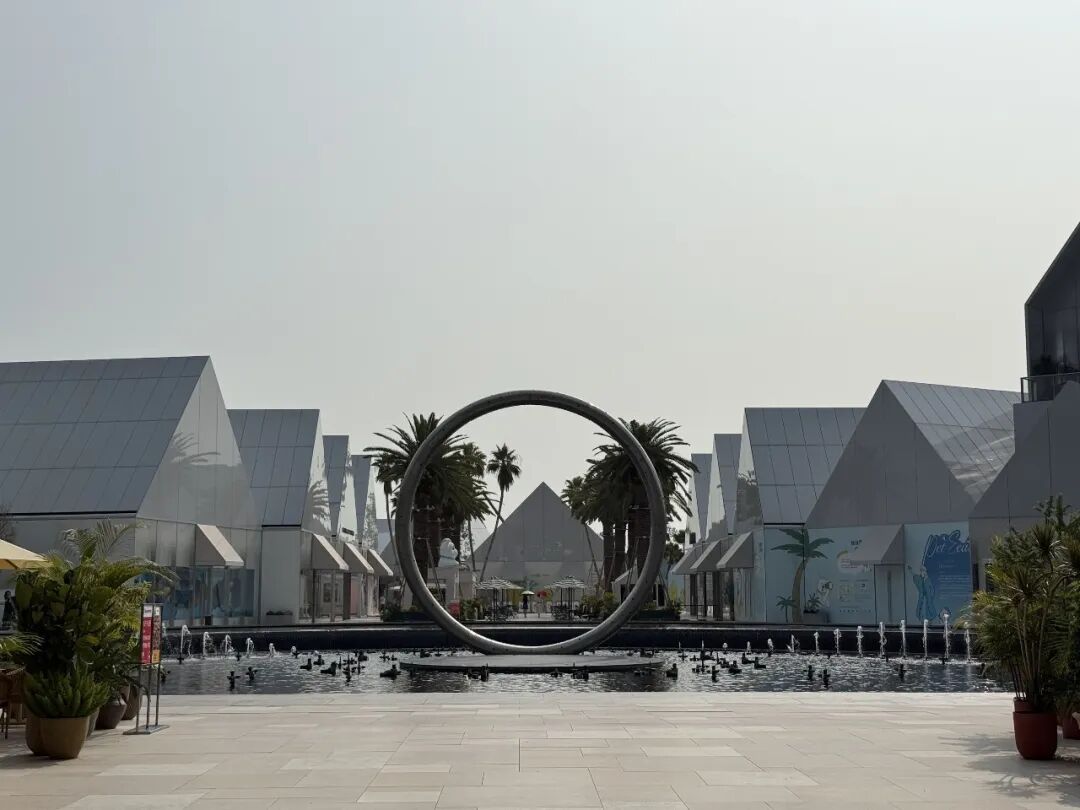
Dongguan Mixc Coastal Shopping Village is also known as "Aranya of the South"
All kinds of attempts are reshaping consumers' expectations for outlet malls. After the framework is built, what content should be used to fill it? That's when sportswear brands step in.
Against the general backdrop of the luxury market cooling down, outlet malls are increasingly relying on sportswear brands.
International giants Nike and Adidas are still strong revenue contributors for outlet malls. After the Nike stores at Guangzhou Wanguo Outlets and Bailian Qingpu Outlets in Shanghai were upgraded, their single-day opening sales both exceeded 10 million yuan, and the Adidas store at Changsha Shanshan Outlets also achieved over 10 million yuan in single-day opening sales.
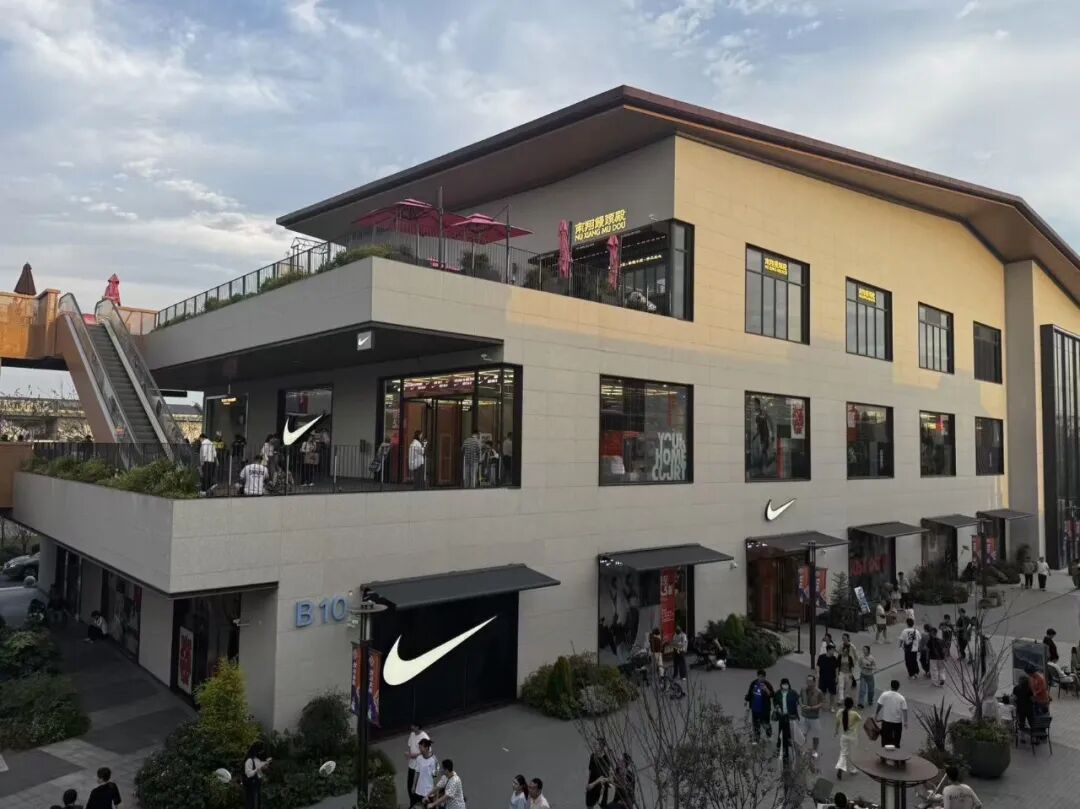
The single-day opening sales of Nike at Bailian Qingpu Outlets in Shanghai exceeded 10 million yuan
High-end outdoor brands and mid-range brands such as lululemon and On Running have become one of the criteria for consumers to measure the competitiveness of outlet malls. The "four favorites of the middle class", represented by Arc'teryx, Salomon, Descente and lululemon, are described by many investment promotion practitioners as "brands that you cannot even get in the queue to introduce, even if you pay to bring them in".
From another perspective, in the sluggish consumption environment, sportswear brands also need the supplement of the outlet channel.
In the past few years, it has been a consensus that offline physical businesses such as shopping malls, department stores and supermarkets have been struggling. Compared with them, outlet malls are a rare incremental market.
According to the *China Outlet Industry Development Report* released by the China Department Store Commerce Association, the 9.5% growth rate of outlet malls in 2023 was the highest among all channels.
It was also in this year that Li-Ning put forward the project concept of "Super Outlet", aiming to build stores with monthly average revenue of 8 million yuan and annual revenue exceeding 100 million yuan. Skechers put forward a "three-year plan" for the outlet channel, planning to open 600 outlet stores by 2026, with operating revenue accounting for 15-20% of the company's consumer market. Anta also came up with the idea of Super Anta, but hit the brakes recently.
Up to this year, the 3.8% retail growth of outlet malls still exceeds that of specialty stores, department stores and brand exclusive stores, but as the growth rate slows down, competition among brands is also heating up. In addition to competing for projects and locations, involution and refined operation have become more prominent.
After visiting multiple outlet malls, we have found at least three trends:
First, in terms of decoration, product assortment and pricing, the boundary between outlet stores and full-price stores is becoming increasingly blurred. For example, the Kailas store at Guangzhou Wanguo Outlets is almost a one-to-one restoration of its full-price store.
Second, under the general trend of channel upgrading, refined store types, experiential scenarios and super-large stores are also emerging in outlet malls. The opening of Descente's first golf outlet store, the setting of Kailas coffee corner and Anta outlet badminton court, as well as various brand super stores are all representatives.
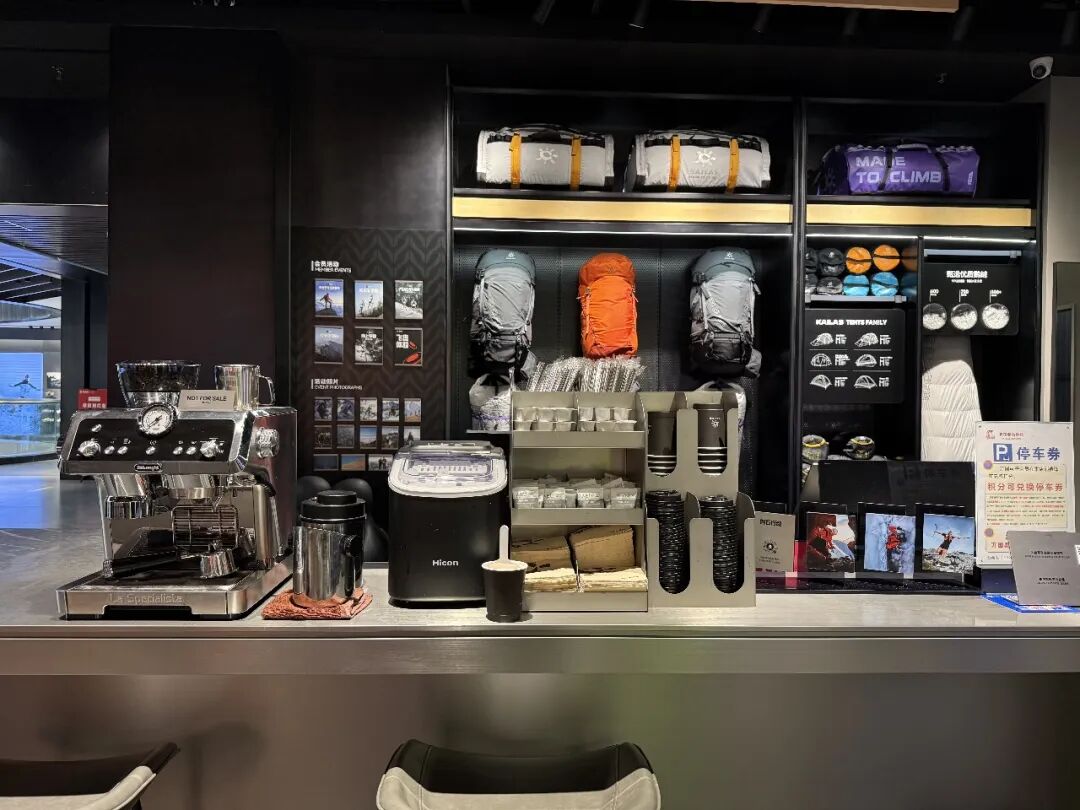
The Kailas coffee corner at Guangzhou Wanguo Outlets
Third, in addition to the retail function, marketing activities and group resources are tilted to outlet malls. Activities such as Nike Kids Fun Challenge, Li-Ning CBA Star Meet & Greet, Skechers Joy Run, as well as the "Going Downtown for Business" themed art installations or pop-up stores launched by Adidas at many outlet stores across the country this year under its "Catch the Vibe" campaign, have all enriched the content of outlet malls.
The fact that there is "no sense of outlet" in sportswear brand outlet stores is no longer a joking remark.
Domestic Brands Are More Competitive With Diverse Transformation Approaches
Although the general direction is the same, different brands have different focuses in their channel strategies, leading to different forms of outlet channel upgrading.
For most sportswear brands, selling products and clearing inventory are still the basic functions of outlet malls, the only difference lies in the degree and way of packaging.
Many international brands, including Puma, Asics, Under Armour and others, have adopted a conservative approach in this transformation. In terms of store design, products are displayed through densely arranged shelves and shoeboxes, with few clear partitions and scenario-based settings.
In contrast, the upgrading of Nike, Adidas and Skechers is more significant, with Nike's "Preferred Experience Stores" and Adidas' official flagship stores being continuously renovated. All domestic brands have entered the market, reshaping this space from the inside out.
These brands are particularly keen on opening super-large stores, and will also transplant product lines and innovative store types from conventional channels to outlet projects. For example, Anta Kids Linglong Store, Biem.l.fdl Golf Store, etc., there are even cases of designing exclusive store types for the outlet channel, represented by Li-Ning Super Outlet and Skechers Comfort Paradise Store.
If the above channel upgrading is based on the demand for long-term daily operation of brands, another idea is to carry the phased strategic goals of the brand while selling goods.
After Anta acquired Jack Wolfskin last year, the speed of Jack Wolfskin's store expansion in outlet malls has accelerated significantly. According to statistics from Winshang, by May this year, the number of Jack Wolfskin stores reached 120, of which more than 70 are outlet stores, accounting for over 60%.
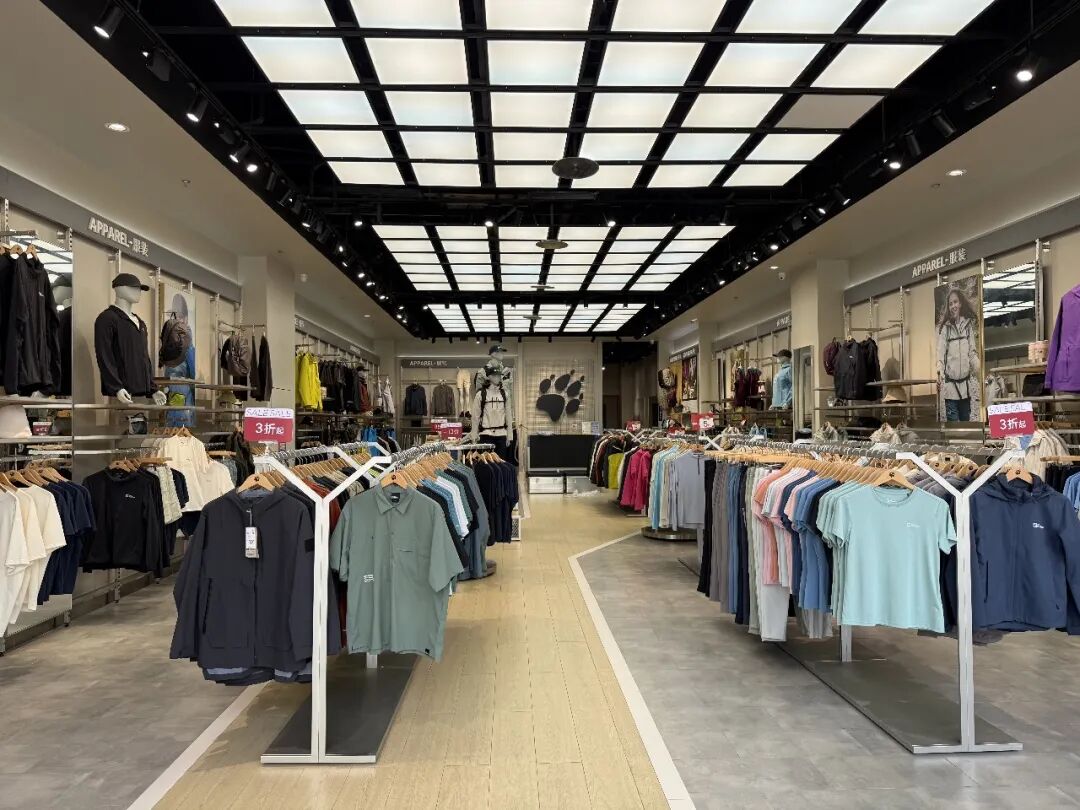
Compared with other "Anta System" brands, Jack Wolfskin offers larger discounts
This is most likely a "big clearance" before the brand restarts, which is conducive to telling new stories in the future.
Conversely, Sneaker Verse, whose business division was disbanded, is placed in Super Anta and Anta Outlets for inventory clearance, which is to wrap up the bold attempts of channel upgrading.
As domestic brands increasingly carry out channel innovation, multi-brand operation and acquisition of foreign brands, such stores that combine the functions of selling goods and connecting the past and the future may become more and more numerous.
Although they are all in the "Anta Universe", popular outdoor brands such as Arc'teryx, Salomon and Descente, together with domestic brands such as Pelliot and Kailas, adopt a different set of strategies. For them, outlet malls are more of a channel supplement, rather than a place to chase sales figures.
These brands are more picky about outlet projects, and pay more attention to the protection of their price system.
In other words, they have fewer outlet stores, the decoration is close to that of full-price stores, and the products in the store usually have few discounts, with a 10% off or no discount being the norm. Thanks to the inherent traffic of the brands, this "very un-outlet" practice can still trigger consumers to queue up to snap up goods.
Finally, niche brands attach the most importance to outlet malls. Perhaps to make up for the regret that it is difficult to compete with big brands in core business districts, stores in key outlet malls even have the function of image stores.
For example, French outdoor leisure brand Lafuma is often located in counters in urban business districts, while its store at Dongguan Mixc Coastal Shopping Village adopts a standalone design, with more advanced decoration than many urban stores.
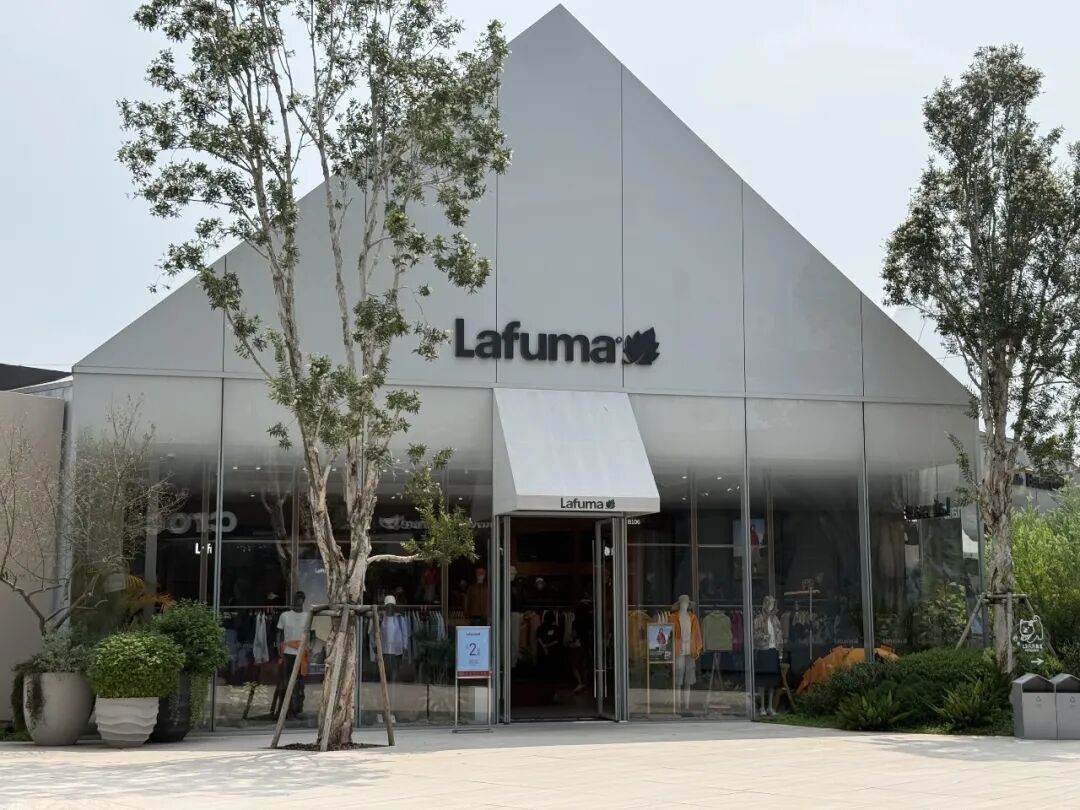
Lafuma opened a standalone store at Dongguan Mixc Coastal Shopping Village
As for the golf brand HONMA, which usually settles in exclusive stores and golf course stores, the HONMA store at Bailian Qingpu Outlets in Shanghai has a mini putting green for trial putting, and the store at Bailian Outlets in Jinan is also equipped with a golf simulator.
In the final analysis, no matter what type of transformation it is, brands hope to use high-quality outlet projects to meet higher sales expectations and provide consumers with a better experience.
However, what follows is the capability upgrading that affects the whole body when one part is moved.
A Small Move That Brings Far-reaching Impacts
Although the outlet channel is not the main source of sales for brands, it is still not easy to get the previously extensively operated stores rid of the "cheap" label.
In the business world, we often talk about the reconstruction of "people, goods and scenarios", and outlet malls are no exception.
"People" first refers to consumers.
Although consumers' shopping demands are changing, the positioning that "outlet equals low price" has been deeply rooted for many years. "Outlet looks no different from an ordinary shopping mall", "There are no obvious discounts, so why is it located in an outlet mall?" These are the doubts of many consumers, which are exactly contrary to the brand's expectation of "making sales closer to full-price stores".
The mismatch between the two will inevitably lead to conflicts, which puts higher tests on the shaping of brand value, product strength and the degree of channel control.
Internally, it is the re-establishment of the brand operation team.
In 2023, Zhang Wei, head of key channels at Li-Ning Headquarters, introduced at the CCFA New Consumption Forum that after the launch of the Super Outlet project, Li-Ning's outlet team has expanded from the original 8-10 people to an operation and management team of nearly 200 people across the country.
It is not difficult to guess that brands that actively upgrade their outlet channels will all face pressures such as labor cost and capability construction brought by the expansion of the number of stores and the increased demand for professional shopping guides.
Expansion not only increases labor input, but also raises the difficulty of product assortment.
Various super-large stores no longer target a single customer group. Different levels and different positioning outlet projects require differentiated product portfolios, and the methodology of product assortment and inventory management will inevitably iterate synchronously with dynamic deployment.
Take Skechers as an example, the brand divides outlet malls into three levels: conventional outlets, standardized outlets and flagship super outlets: conventional basic outlet stores focus on cost-effective basic consumption; standard outlet stores mainly sell exclusive outlet products and carefully selected off-season products, with an appropriate amount of new products; flagship super outlet stores carry a rich product matrix and give consideration to brand display.
In addition to super-large stores, multi-store operation is also one of the trends.
At the end of September, the second phase of Bailian Qingpu Outlets in Shanghai opened, and many brands operate two to three stores here. For example, Descente has Descente Kids, Descente Golf Store and Descente Standard Store, while The North Face has high-volume conventional stores and black label line stores.
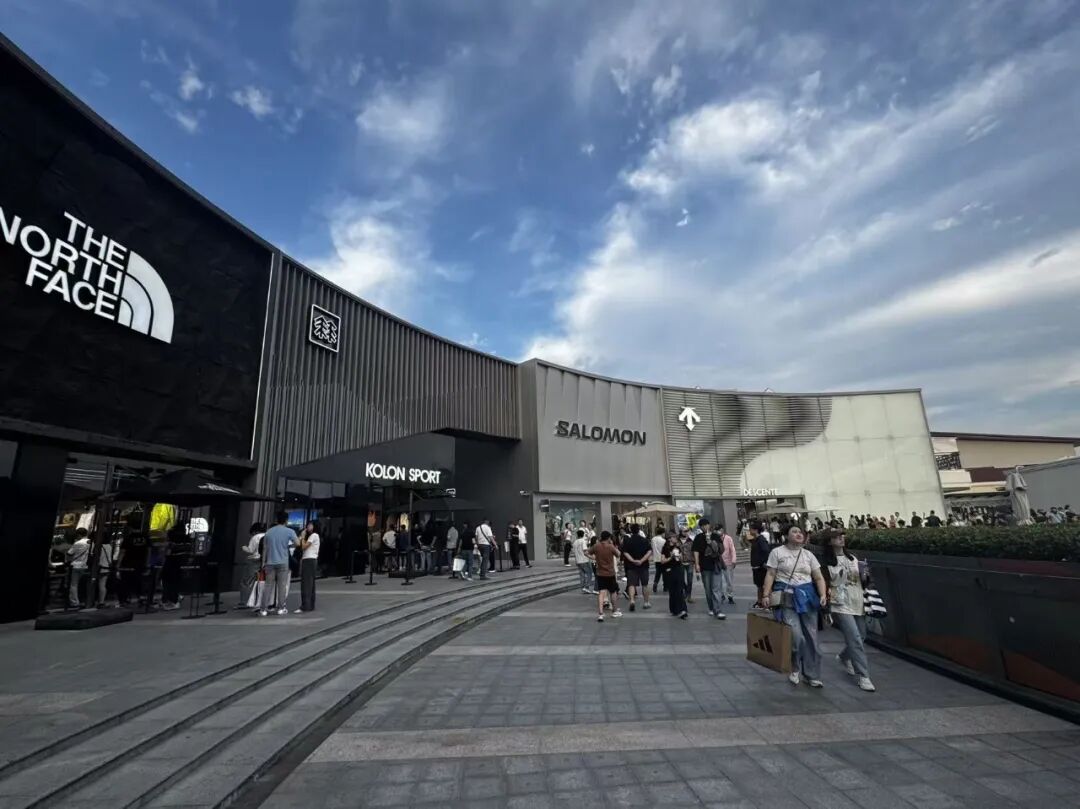
Outdoor brands occupy the core positions of Bailian Qingpu Outlets in Shanghai
In addition to how to avoid overlapping customer groups and product portfolios, for international brands, it also involves the game between directly-operated large outlet stores and small agent stores, which requires more in-depth expertise.
Skechers also opened three stores at Wuhan Shanshan Outlets at one go. The brand analysis shows that Wuhan Shanshan Outlets has sufficient passenger flow and concentrated family customer groups, which has the foundation for multi-store operation in different formats.
"The flagship store undertakes the function of full-category brand image display, the outdoor boutique store focuses on the professional needs of