The real estate developer that went bankrupt and pivoted to the semiconductor business is planning to hand over its hotel assets to Huazhu again?
Recently, a new hotel management company has quietly completed its registration in Guangzhou.
Huayingxin Hotel Management (Guangzhou) Co., Ltd. (hereinafter referred to as Huayingxin Guangzhou) has a registered capital of 5 million yuan and two shareholders. If you split its name apart, one character is taken from Huazhu and the other from Yingxin Development respectively.
The predecessor of Yingxin Development is exactly the former Xinhualian Cultural Tourism.
It is worth noting that the registered address of this new company is in the same building as Mercure Hotel Guangzhou Tianhe Sports Center and JI Hotel Guangzhou Tianhe Sports Center. These two hotels are exactly part of the underlying assets of the Huatai Zijin Huazhu Anzhu REITs, whose subscription has just been completed.
What is more noteworthy is the personnel change: Ye Fei, former Deputy CFO of Huazhu Group, recently appeared in public events again in the identity of CIO of Huazhu Group.
It is understood that Ye Fei's return this time is mainly responsible for work related to asset securitization, investment and operation of real estate assets and other related businesses.
Five years ago, Huazhu and Sunac established a joint venture Yongle Huazhu, which took over the management rights of 22 hotels from Sunac at one go, and rebranded them as high-end hotel brands including Steigenberger and Songpin for operation.
This time the movement is much smaller: there is no official announcement, no press conference, and the registered capital is not even a fraction of that of Yongle Huazhu.
However, the more low-key it is, the more worthy of in-depth observation.
Why does a real estate enterprise that has gone through bankruptcy restructuring and even switched to the chip business turn back to pick up the hotel business again?
What big game is Huazhu, which aims at stock revitalization and asset securitization, preparing to lay out?
01 Returning to the hotel track after switching to the chip business?
Why does a real estate enterprise that has just renamed its hotel management company to a semiconductor company set up a new hotel management company in joint venture with Huazhu?
The answer may not lie in "returning to the old business", but most likely in the revitalization and exit of its heavy-asset hotels.
The change of enterprise name is often the most intuitive signal of its internal reform.
In July this year, Xinhualian Hotel Management was renamed Yingxinwei (Beijing) Semiconductor Technology Co., Ltd., and its business scope was adjusted from property management, hotel management and enterprise management consulting to technical services, technology development and labor services.
A hotel management company that has operated for 12 years failed to even keep the four characters meaning "hotel management" in its name in the end.
However, the pains of transformation have lasted for many years.
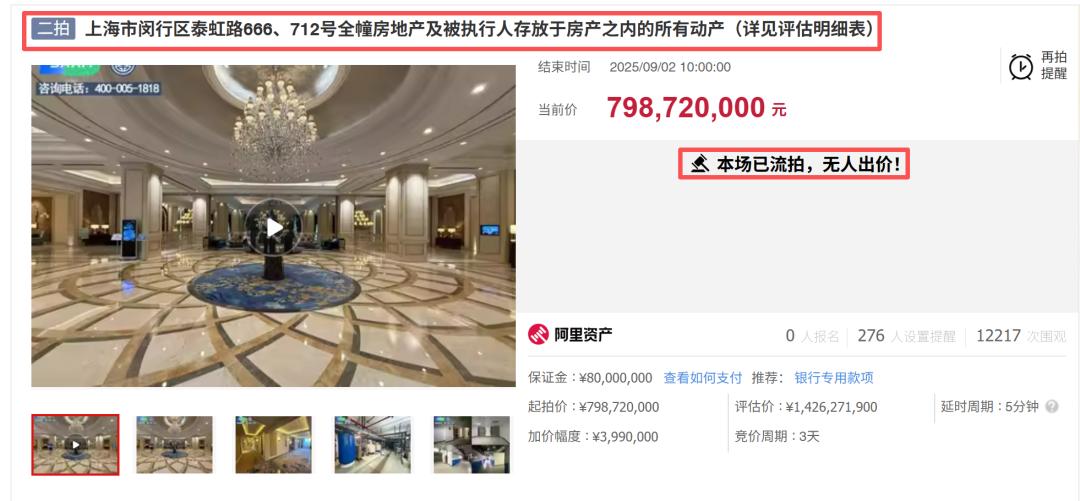
In April this year, Yinchuan Xinhualian Ruijing Hotel terminated its operation; the Sofitel Shanghai Hongqiao Xinhualian Hotel was priced down from 1.8 billion yuan to 798 million yuan, and suffered two failed auctions, with no one signing up for the first auction at all.
Source: Ali Assets
To clarify this transformation, we need to trace back the timeline.
Xinhualian is no newcomer in China's hotel and tourism industry. Beijing Lijingwan International Hotel opened in 2008, Xinhualian Hotel Management Co., Ltd. was established in 2014. After partnering with Accor, Sofitel hotels in Shanghai and Xining, as well as Ruijing Hotel and Sheraton Hotel in Yinchuan were launched one after another.
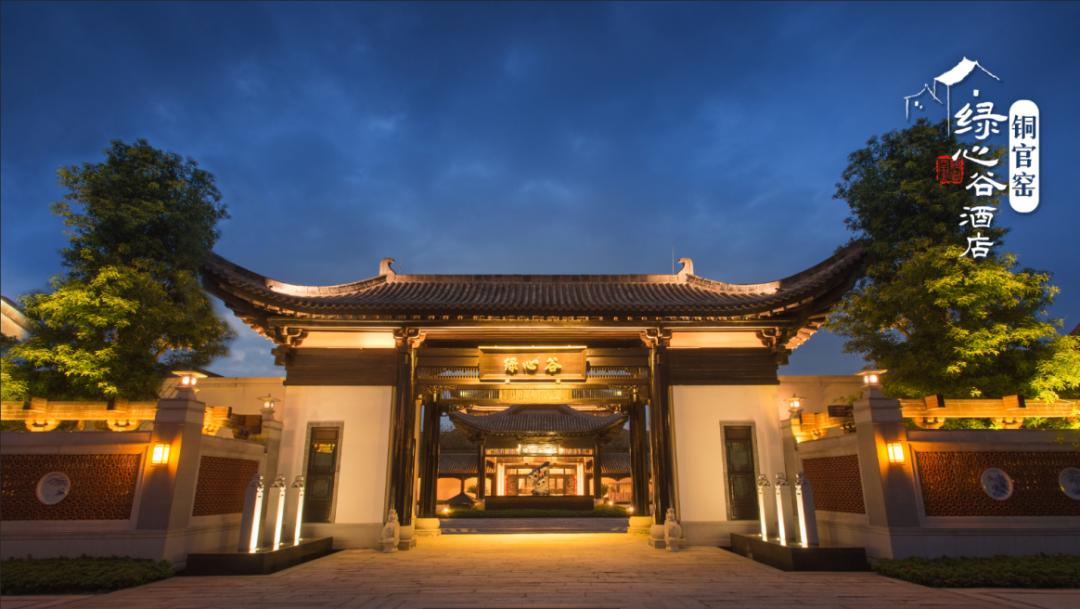
Around 2017, Xinhualian invested a total of nearly 30 billion yuan heavily in cultural tourism projects: Changsha Tongguan Kiln Ancient Town, Wuhu Jiuzi Ancient Town, Xining Children's Dream Paradise, all of which are extremely heavy in assets;
Its self-owned brands including Yinchuan Ruijing, Huangshan Ruijing, Wuhu Lvxingu, Tongguan Kiln Lvxingu and Zhuzhou Xinhualian Lijing are almost all backed by an ancient town or a cultural tourism complex.
Source: the Internet
By the peak period in 2022, Xinhualian Hotel Management had 16 operating hotels with 5339 guest rooms, a total floor area of 881,600 square meters, including 6 five-star, 4 four-star and 2 super five-star hotels.
However, excessive diversification, excessive financing, and the long return cycle of heavy cultural tourism assets, superimposed by the impact of the epidemic, pushed Xinhualian to the cliff of liquidity rupture.
In 2022, Xinhualian Holdings and its listed subsidiary Xinhualian Cultural Tourism entered judicial restructuring successively; in June 2025, the restructuring plan was fully implemented, and 877 billion yuan of debts were resolved.
After the restructuring, Xinhualian changed its controlling right and was renamed Yingxin Development. It quickly divested the real estate burden and cross-border acquired a semiconductor storage packaging and testing enterprise, trying to achieve performance growth again under the new narrative of "cultural tourism + technology".
Therefore, the purpose of establishing a new hotel management company in joint venture with Huazhu this time is quite obvious.
It still holds a batch of high-quality hotel properties and cultural tourism projects, but it is not so easy to find a transferee if selling all of them as a whole.
Rather than investing a lot of money to build brands, membership channels and supply chains from scratch, it is better to hand over the operation to professional players like Huazhu, revitalize the stock assets first, and reserve a channel for exit through REITs in the future.
02 After Sunac, Huazhu partners with a veteran real estate enterprise again
A veteran real estate enterprise holding a large number of high-quality hotel properties partners with a leading chain hotel giant, and the core of their cooperation is most likely inseparable from stock renovation.
By the end of the second quarter of 2026, the total number of operating hotels of Huazhu worldwide reached 13,539, covering 21 countries, with a total of more than 1.33 million guest rooms.
It is not difficult to see that Huazhu does not lack hotels at present. What it lacks is high-quality stock properties in prime locations that can be obtained in batches.
Negotiating franchise one building at a time is too slow. The rent in core areas of core cities is getting higher year by year, and building new hotels is becoming less and less cost-effective.
In contrast, the old guest houses, idle office buildings and scenic supporting hotels held by real estate enterprises and local state-owned assets are assets with good locations, clear property rights and large scale, but most of them have outdated facilities and low operation efficiency, and are in urgent need of revitalization.
It is easy to collect rent from a single building, but to turn it into a profitable hotel, you need brands, systems, supply chains and member traffic, which are exactly what Huazhu is good at.
Before this cooperation, Huazhu already had experience in cooperating with many real estate enterprises. Real estate enterprises including Xinyue Asset Management, Topway, Zhushi Real Estate and C&D Real Estate have all cooperated with Huazhu.
Source: the Internet
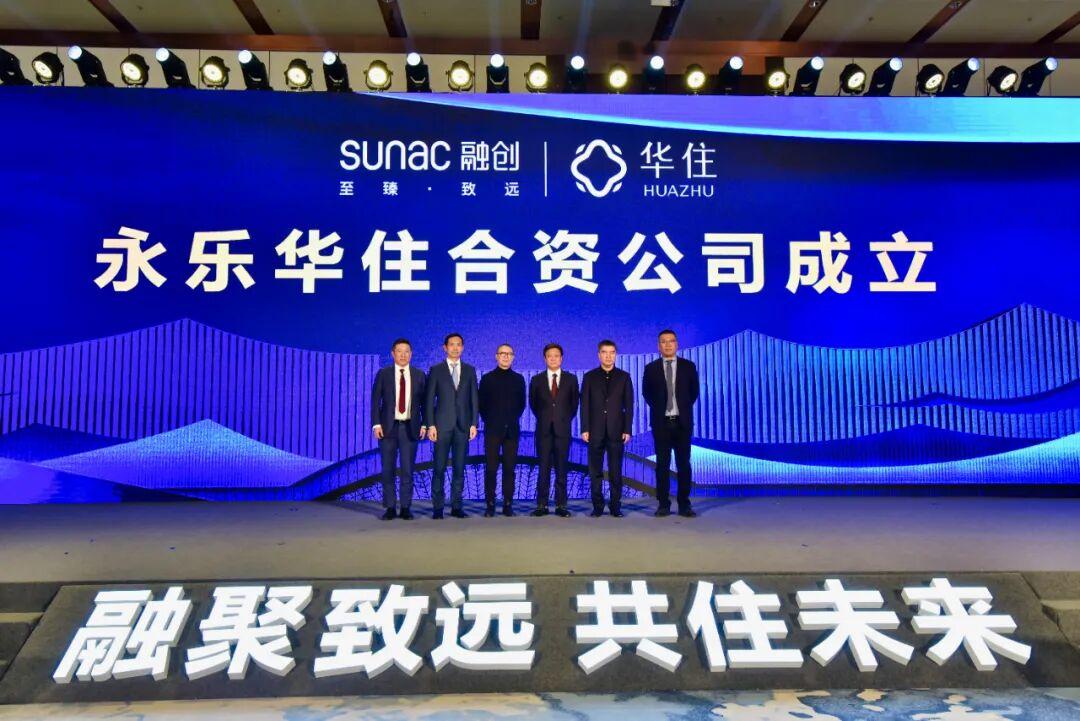
Among them, the most well-known case in the industry is still the cooperation between Huazhu and Sunac in 2021. Huazhu and Sunac Cultural Tourism established a joint venture Yongle Huazhu with a registered capital of 50 million yuan, with each party holding 50% of the shares.
Sunac authorized the management rights of 22 hotels under its name to Yongle Huazhu as a whole, which were later rebranded as Steigenberger, Steigenberger Grand, Songpin, Blossom Hill, and Yongle Banshan.
However, the shareholding ratio of this cooperation with Yingxin Development has changed.
Source: the Internet
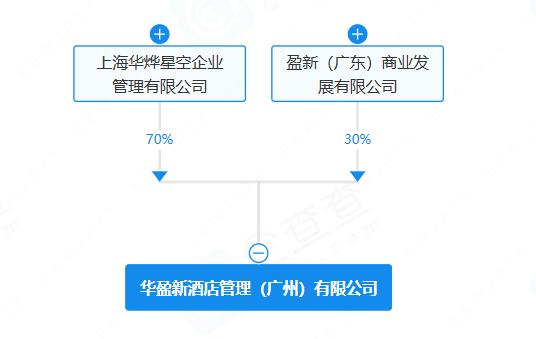
Huayingxin Guangzhou has a registered capital of 5 million yuan. Shanghai Huaye Starry Sky Enterprise Management Co., Ltd. contributes 3.5 million yuan, accounting for 70% of the shares, and Yingxin (Guangdong) Commercial Development contributes 1.5 million yuan, accounting for 30% of the shares.
The equity penetration diagram shows that Ji Mijia, the legal representative of Huayingxin Guangzhou, is also the legal representative of Huazhu Enterprise Management Co., Ltd. and Huazhu Hotel Management Co., Ltd.
Different from Yongle Huazhu whose equity was 50-50 at the beginning, Huayingxin Guangzhou adopts a 70-30 shareholding structure. The industry speculates that Huazhu will most likely have more say in subsequent cooperation.
What is really worth paying attention to is that this new company is registered in Guangzhou.
Coincidentally, its registered address is in the same building as Mercure Hotel Guangzhou Tianhe Sports Center and JI Hotel Guangzhou Tianhe Sports Center.
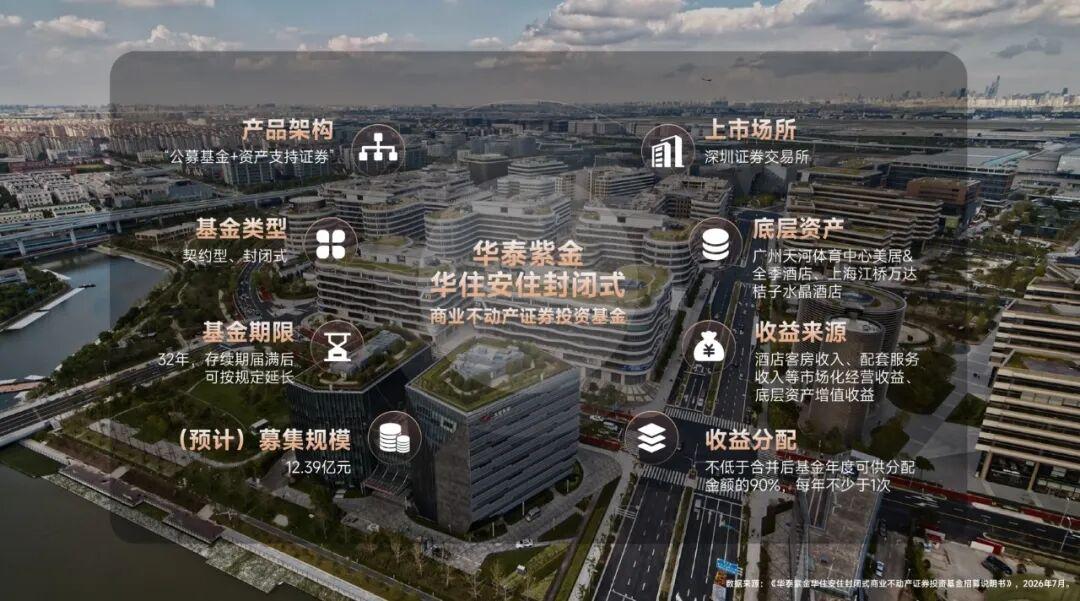
These two hotels are exactly part of the underlying assets of Huatai Zijin Huazhu Anzhu REITs whose subscription has just been completed.
Half a year ago, Huazhu just reached a cooperation with Guangzhou state-owned assets, planning to build 300 hotels in the next few years, with cooperation directions covering stock asset revitalization, cultural tourism, hotel management and asset securitization and other fields.
Source: the Internet
Last month, the fund contract of Huazhu Anzhu REITs just came into effect, becoming the first hotel-type commercial real estate REITs on the Shenzhen Stock Exchange, and also the first public offering hotel REITs in China led by a private hotel group, with a final raised capital of about 1.1645 billion yuan.
This is regarded as a landmark event in the industry. A large number of stock hotel assets held by local state-owned assets and real estate enterprises can theoretically achieve exit through REITs.
Renovating stock properties into hotels, and further exploring hotel asset securitization.
Apart from brand management and operation empowerment, the chain that Huazhu can participate in in the revitalization of stock assets is also getting longer.
03 In the stock era, real estate enterprises embrace leading hotel management groups
Let's go back to Huayingxin Guangzhou.
A newly established joint venture has limited things it can do in the short term, and no further cooperation content has been disclosed.
The industry speculates that this company is very likely to be a light asset management platform or interface.
Yingxin Development will import its stock hotels or cultural tourism resources into Huazhu's mature operation management system, and it is even possible to achieve revitalization or exit through REITs in the future.
Of course, the possibility of the two sides cooperating to develop new brands together cannot be ruled out.
In recent years, the trend of separation of property rights and operation in the hotel industry and the large-scale implementation of public offering hotel REITs in 2026 have also opened a new door for the capital operation of the hotel industry.
The combined light-heavy model of separation of property rights and operation is more conducive to the rapid expansion of hotel brands and the improvement of operation capabilities. In the US hotel market, this has given birth to light asset giants represented by Marriott and Hilton that focus on management output.
Only by handing over hotel property assets that require more resource input and have a longer recovery cycle to the securitized market can hotel brands run fast in a more lightweight posture.
Since June this year, leading local hotel management groups in China have also followed up rapidly. Hotel-type REITs including Hua'an Jinjiang Commercial REITs, CICC Kaiyuan Tourism Commercial REITs, Guolian An Fosun Commercial REITs, and Huatai Zijin Huazhu Anzhu Commercial REITs have been accepted or approved successively.
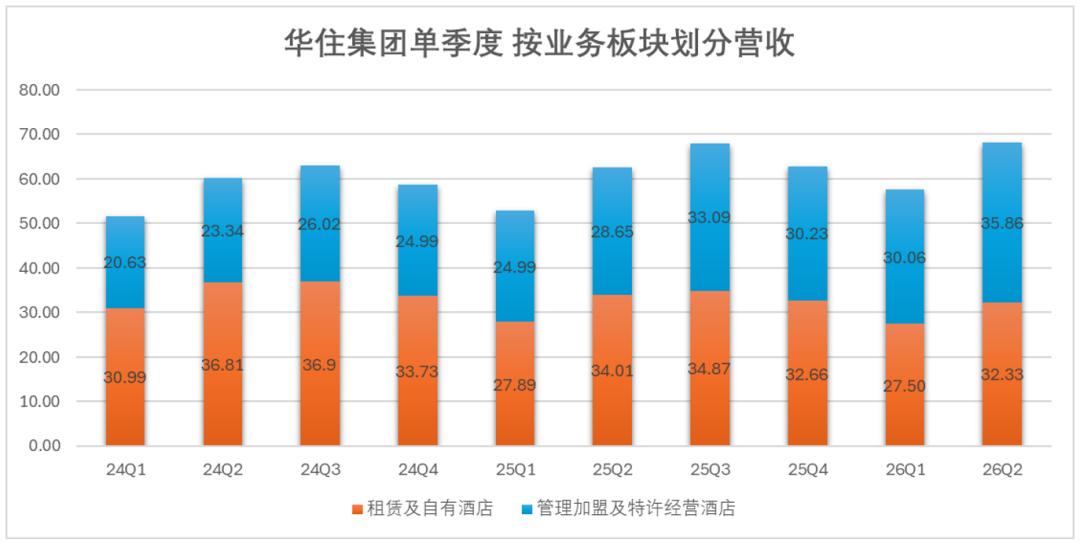
The financial report shows that in the first half of 2026, the revenue from management, franchise and licensing business of Huazhu Group accounted for more than 50% of the group's total revenue for the first time, officially becoming the largest source of revenue of Huazhu.
Source: Financial Report Chronicle
This means that Huazhu has bid farewell to the heavy asset expansion era dominated by self-construction and self-operation, and has fully entered the deep-water zone driven by light assets.
How to revitalize the huge pool of hotel properties in Huazhu's hands through securitization and transform from "holding and operation" to "light management and light holding" has become a new exam question for Huazhu.
Affected by the stock era and high debt of real estate enterprises, the number of hotels under real estate enterprises that are in urgent need of revitalizing their stock hotels is increasing rather than decreasing.
Most of these real estate enterprises are facing a paradox: a large number of holders of high-end hotel assets have huge original value of fixed assets, but their operating cash flow is extremely low or even negative.
Many real estate enterprises once set their sights on listing or asset securitization to seek better development of the hotel business, but due to the excessive "burden" of real estate hotels, there are few successful cases at present.
Therefore, choosing to embrace leading hotel management groups with more mature experience may be a more stable choice.
Next, how to operate complex stock assets, allocate appropriate operation capabilities for different types of assets, and make stock hotels continuously generate cash flow after renovation may become a new competition dimension for leading hotel management groups.
Looking forward, the hotel industry will probably not only compete on who has more stores, but on who can turn the resources held in hand into assets that can continuously make