Rivals exit the stage, Lisa Su of AMD ushers in her home court time.
The pendulum of AI computing power is swinging back. Over the past three years, NVIDIA has defined data centers in the training era with GPUs. Now, high-concurrency and low-latency task scheduling is bringing CPUs back to the center of the computing power landscape.
For example, in 2025, in the super-node architecture, the GPU:CPU ratio was generally 8:1 or even 4:1. However, some manufacturers told *China Entrepreneur* that this ratio has been significantly reduced in 2026, and it is possible that it will become 2:1 or even 1:1 in the future.
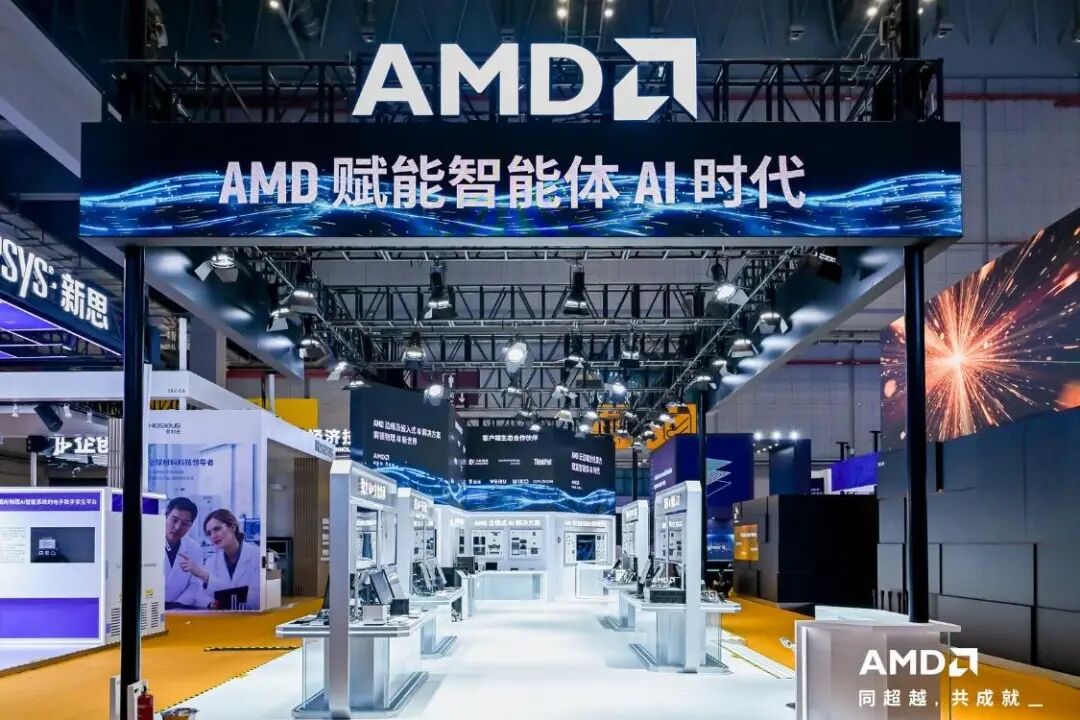
At the "AMD Developer Conference" held in Shanghai last May, AMD CEO Lisa Su also expressed a similar view that the ratio of CPUs to GPUs on AI nodes is rapidly evolving to 1:1. "With the deepening of AI inference scenarios and the growing demand for agent task orchestration, the role of CPUs is no longer auxiliary computing, but the core support of the full-stack computing power system."
Source: Interviewee
The capital market has voted first. On the evening of November 9, NVIDIA's stock price fell by 4.27%, erasing about 190 billion US dollars in market value overnight. AMD's stock price surged by 13.26%, closing at 508.58 US dollars, with a cumulative increase of 128% for the year, making it one of the strongest performing companies on the Nasdaq.
At the beginning of November, AMD released its third fiscal quarter report (ending September 26). The financial report shows that the company's operating revenue in the quarter reached 13.377 billion US dollars, a year-on-year increase of 45%. Its GAAP (Generally Accepted Accounting Principles) net profit was 2.428 billion US dollars, a year-on-year increase of 95%. Among them, the data center business contributed more than 60% of AMD's revenue, with a year-on-year increase of 97%.
However, if Lisa Su wants to convert CPU market demand into long-term revenue and profit, she and AMD still need to overcome two hurdles: supply chain and competitors.
On the supply chain side, wafers, advanced packaging and substrates are all in tight supply. AMD needs to use real money to lock in production capacity, while its rival Intel is also shifting the PC production capacity vacated by its own fabs to produce Xeon server CPUs. In terms of competition, NVIDIA has entered the x86 heartland with its Arm-architecture Vera CPU, and packages CPUs, GPUs and NVLink into full-rack solutions.
For Lisa Su, rivals in the Chinese market need to be observed in a longer cycle. Local players such as Huawei Ascend supernodes and Hygon are accelerating their supplementary deployment. Huawei Ascend follows the full-stack self-developed route, relying on the super-node architecture to form strong barriers in information technology application innovation and large-scale intelligent computing clusters. Hygon advances with the dual drive of x86 "CPU + DCU", and the domestic computing power market has shifted from being dominated by overseas giants to multi-party game.
One Financial Report, Two AMDs
Although the high growth of AMD's net profit this time includes a one-off factor: AMD recognized an income tax benefit of 555 million US dollars in the quarter, compared with a tax provision of 153 million US dollars in the same period last year. However, its operating profit increased by 123% year-on-year, which still reflects the company's operating performance in the quarter.
When you unpack the third quarterly report, you will see two AMDs with completely different growth speeds.
The data center business is growing at a breakneck speed. The business achieved revenue of 8.546 billion US dollars in the quarter, a year-on-year increase of 97%, and its proportion in total revenue rose to 64% from 47% in the same period last year. More critical is the profit structure: the data center segment's operating profit was 2.882 billion US dollars, a sharp year-on-year increase of 168%, with an operating profit margin of about 34% — it has become the absolute pillar of the company's profits, supporting the vast majority of AMD's growth and profits.
Lisa Su said on the earnings call that she expects server revenue to double year-on-year in 2027, and the growth rate of the data center AI business will be faster than the company predicted 90 days ago.
The "old AMD" is losing momentum. The client and gaming business including PCs generated revenue of 3.722 billion US dollars in the quarter, a year-on-year decrease of 8%. Among them, the gaming business revenue was 773 million US dollars, a sharp year-on-year drop of 40%, as the console cycle is coming to an end; the segment's operating profit was 573 million US dollars, shrinking by about one third year-on-year.
The client business is worth pondering, with revenue of 2.949 billion US dollars, a year-on-year increase of 7%. Referring to Intel's 5% decline in the client computing business in the same period, in the overall weak PC market, AMD is actually eating into the share of its old rival against the trend.
What is easy to ignore is the embedded business, which achieved revenue of 1.109 billion US dollars in the quarter, a year-on-year increase of 29%, with an operating profit margin as high as 41%. This business derived from the acquisition of Xilinx is not large in scale, but it is an important buffer for AMD's profit margin and anti-cyclical ability.
The cost of growth is also written in the financial report: the R&D investment in the quarter was 2.803 billion US dollars, a year-on-year increase of 31%, with an R&D intensity of about 21%. The three-front operations of CPUs, GPUs and full-rack solutions are not only AMD's capital to fight against NVIDIA, but also the battlefield where it must continue to transfuse resources.
Supply Chain Management Challenges
Similar to memory and GPUs, CPUs are also facing the pressure of price increases and extended delivery cycles.
Since September 2026, Intel has raised the prices of its CPU products by 10%~20%, while AMD has notified customers that the company's CPU products may see price increases in the fourth quarter, and previously, their graphics card products have already increased in price by 10%.
Media reports said that AMD and Intel are trying to promote longer-term contract arrangements with Chinese server manufacturers.
At the end of October, Intel released its third-quarter financial report: revenue in the quarter was 16.51 billion US dollars, a year-on-year increase of 21%; net profit was 3.32 billion US dollars, a year-on-year decrease of 18%; the data center and artificial intelligence division's revenue was 7.318 billion US dollars, a year-on-year increase of 78%, but the Client Computing and Physical AI Group (CCPG) revenue was 8.097 billion US dollars, a year-on-year decrease of 5%.
Intel's management expects global PC market shipments to drop by about 12% in 2026 and further drop by about 10% in 2027, which triggered a plunge of around 20% in Intel's stock price.
Photography: Yan Junwen
But this is not entirely a bad thing. The weak PC market has released part of the CPU production capacity. For example, Intel has suspended the 18A wafer capacity originally used for producing Panther Lake, and shifted it to Intel 3 — the latter is the process technology adopted by the Xeon series processors. Intel has its own fabs, and is alleviating the supply bottleneck of Xeon by increasing output, improving yield and shortening production cycles.
Different from Intel, AMD outsources wafer manufacturing to TSMC, and the certainty of production capacity needs to be exchanged with real money. Lisa Su said at the earnings meeting: "We have carried out work in all links of the supply chain to ensure the wafers, substrates, advanced packaging, memory and other key components needed for higher growth next year."
In May and October 2026, Lisa Su visited China Taiwan twice, and announced an investment plan of more than 10 billion US dollars in the future, aiming to promote suppliers to expand the production capacity of CPUs, GPUs and AI computing products.
Tang Xiaolei, AMD's Global Vice President and General Manager of Sales for the Internet and Enterprise Business Unit in Greater China, told *China Entrepreneur* that as early as 2021, AMD has learned how to build its own supply chain resilience: first, strengthen communication with customers to clarify customer needs; second, feed back its real business needs to upstream and downstream suppliers, and use real money to lock in production capacity.
"We need to look at the entire industry from beginning to end, this is roughly how we operate, there is no magic." Tang Xiaolei said.
The Chinese Market Is More Competitive
While the CPU prosperity is rising, new players are continuously pouring into the market — NVIDIA is still the most heavyweight one.
In March 2026, NVIDIA released the Vera CPU series — different from the x86 architecture of AMD and Intel, it adopts the Arm architecture, which is expected to bring in 20 billion US dollars in revenue. This means that NVIDIA is no longer satisfied with "selling GPUs and matching others' CPUs", but wants to hold the last short board in the computing power landscape in its own hands.
The form of competition has changed accordingly. The competition for single-point performance is giving way to system integration. NVIDIA's newly launched Vera Rubin integrates Rubin GPU, Vera CPU, NVLink, etc., integrating 7 special-purpose chips in 5 acceleration racks, which can increase inference throughput by up to 35 times and AI factory revenue by up to 10 times.
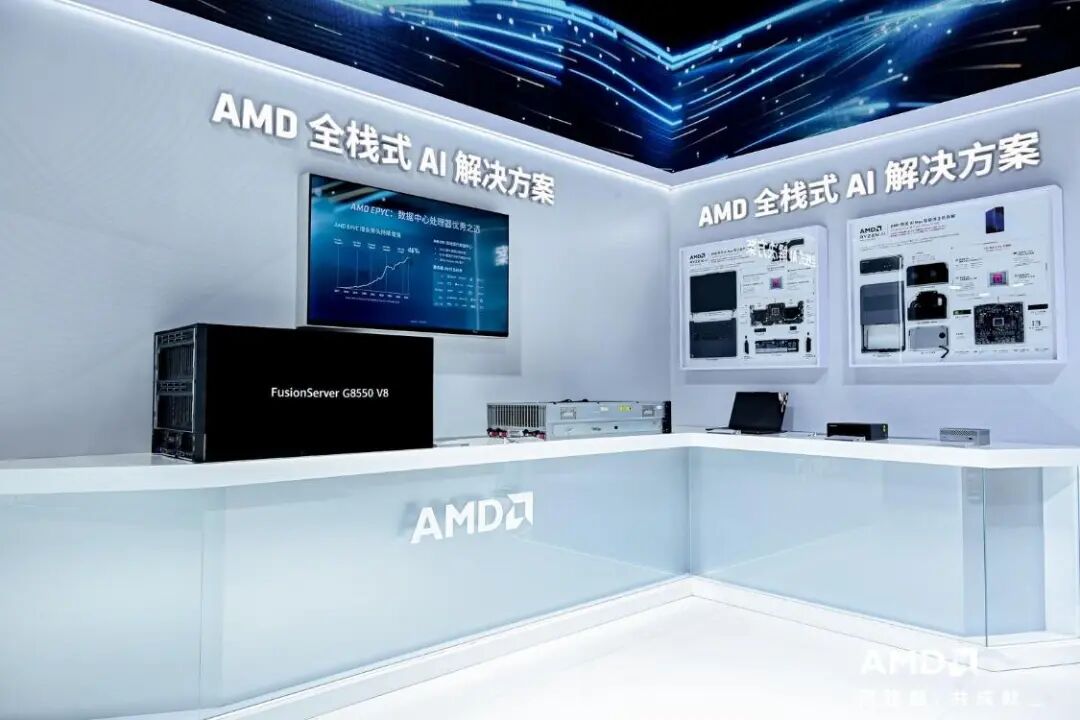
AMD followed up with its response. In October, AMD released Helion, an AI rack dedicated to agents. There are currently two versions: one is based on the 6th generation EPYC processor, supporting up to 32768 CPU cores to provide dedicated computing power for agent execution; the other integrates GPU and CPU series, focusing on enterprise-level scenarios.
Source: Interviewee
At the 9th China International Import Expo which opened on November 5, AMD showcased its 6th generation EPYC processor for the first time in the Chinese market — based on the new generation "Zen 6" architecture and 2nm process technology, it has already started mass shipment.
The Chinese market represents another dimension of competition. Manufacturers including Huawei, Hygon Information and Alibaba have launched their own CPU products: the "Ascend 950" supernode integrates 1024 Ascend NPUs, 256 CPUs and 4 Lingqu interconnection racks, which has been commercially deployed on a large scale, and its previous series "Ascend 910C" supernode has been deployed for more than 1000 sets.
Demand levels are also diverging. An employee of a server manufacturer told *China Entrepreneur* that most small and medium-sized companies do not need 128-card supernode products, but prefer 16-card mini supernodes.
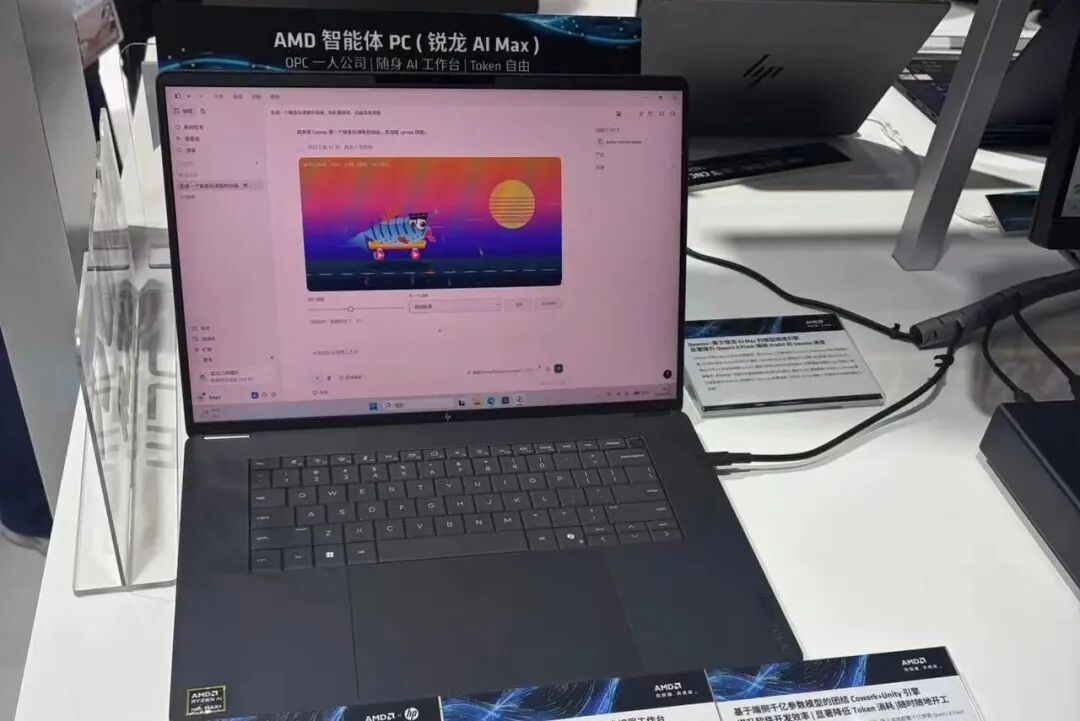
To this end, AMD has launched end-side computing power nodes for different levels such as OPC (one-person company), divisional level and large organizations, and cooperated with Tencent to launch the WorkBuddy version of terminal agent host.
Facing the demands of customers at different levels, Tang Xiaolei told *China Entrepreneur*: "What we need is to push forward with all our strength, no balance. Balance means stepping on the brakes a little bit, we need to go all in."
Talking about competition, Tang Xiaolei said that AMD believes in technological innovation and openness: "We welcome competition and are not afraid of competition. We hope to grow together with China's industry. When the cake is big enough, everyone can cooperate and coexist."
This article is from the WeChat official account "China Entrepreneur Magazine" (ID: iceo-com-cn), author: Yan Junwen, editors: Li Yuan, He Yifan, published with authorization from 36Kr.