Anthropic kicks off its IPO roadshow, and its valuation has shrunk by 600 billion U.S. dollars.
Even if you have to catch a flying knife with bare hands, you must get the big result!
To be honest, at the very beginning, no one could have imagined that this once-largest IPO in history of Company A would turn out to be so brutal, and Dario Amodei could be so stubborn.
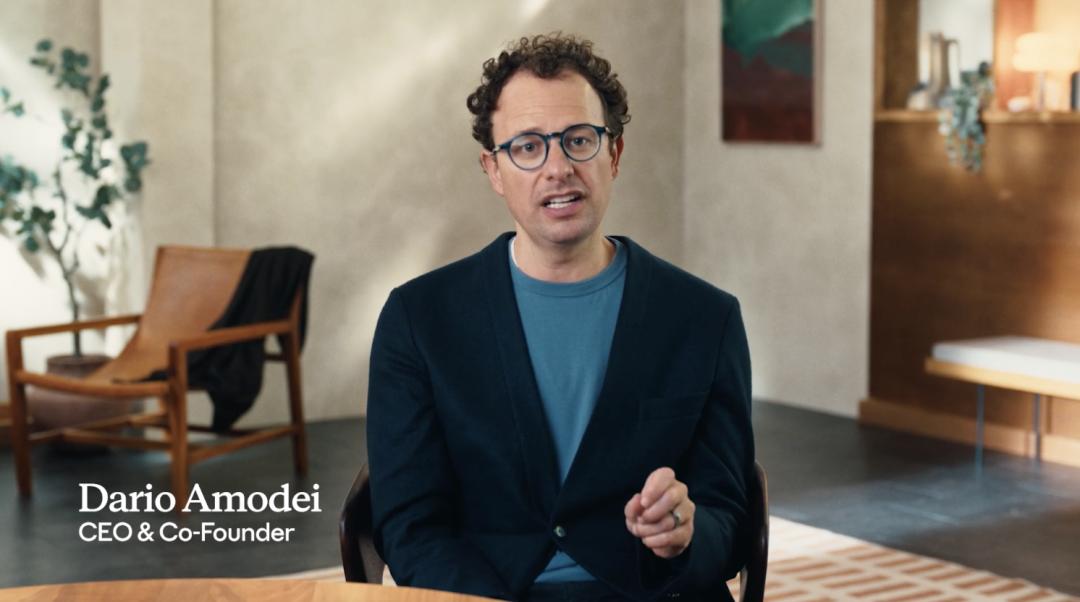
Just now, the IPO roadshow of Anthropic, the parent company of Claude, officially kicked off, dispelling previous rumors of withdrawal and postponement.
According to the plan, Anthropic plans to issue 825 million shares at a price of $70 to $78 per share, with a maximum IPO transaction size of about $643.5 billion. It plans to start trading on NASDAQ on November 19 under the ticker symbol ANT.
At that time, non-founder directors, executives, current and former employees and consultants can sell up to 10% of their prescribed benchmark shareholdings starting from the first trading day, corresponding to a maximum of about 316 million shares.
In other words, on the first day of listing, early shareholders of Company A will have the opportunity to cash out $221 billion to $246 billion (about 1.5 trillion RMB).
Similarly, investors who want to buy shares of Company A on that day will also face the same amount of selling pressure.
To be honest, in the eyes of ordinary people, this more than 200 billion US dollars is enough for many people to settle down and live a comfortable life in the Bay Area, but compared with Company A's previous expectations, we have to say that this is a severely shrunken medium result.
Why? Let's look at the background first:
On November 2, Anthropic updated its prospectus. Although its revenue still surged by 47% in the third quarter, the growth rate has slowed down by 67% compared with the second quarter.
On November 5, the NASDAQ Composite Index fell by about 5.5% in a single day, marking the largest single-day drop since April 2025.
On the same day, the bonds of AI cloud service provider CoreWeave were sold off, with yields on some bonds soaring to over 17%.
……
It can be said that when Company A is approaching its listing date, the global AI sector has collectively fallen into panic: valuations are being cut, risks are breaking out, and debts are being repaid.
After all these twists and turns, Company A's potential IPO valuation has shrunk from the previously discussed $2 trillion to about $1.4 trillion, a drop of about 30%.
Even, calculated on a fully diluted basis, this figure is already lower than the market value of about $1.77 trillion when SpaceX went public.
Many employees took advantage of this period, without waiting for Dario to ring the NASDAQ bell, and directly left Company A overnight to join OpenAI.
As a result, there were also rumors that Company A would postpone or suspend its listing...
However, with the launch of the roadshow today, it can only be said that the lone ranger Dario has withstood the pressure.
He can catch the flying knives from the periphery, accept the drop of his own company's valuation, allow employees to leave, and let shareholders wait in line to cash out, but he must get this trillion-dollar IPO big result.
I, Dario, must take it down firmly.
The whole world is stepping on the brakes, while Dario is stepping on the accelerator alone
Although the valuation has shrunk severely, objectively speaking, Anthropic's growth rate is enough to be recorded in the history of technology.
Anthropic was founded in January 2021 by Dario Amodei, former vice president of research at OpenAI, his sister Daniela Amodei, and many other former OpenAI researchers.
According to the roadshow PPT, since it officially launched commercialization in the first quarter of 2023, by the third quarter of 2026, Anthropic's single-quarter revenue has been close to 17 billion US dollars.
Interestingly, according to the blueprint drawn by Company A, this 17 billion US dollars is only the halfway point of the exponential growth curve.
Going further, there are knowledge work with an estimated annual economic value of more than 40 trillion US dollars, as well as more fields such as life sciences and robotics.
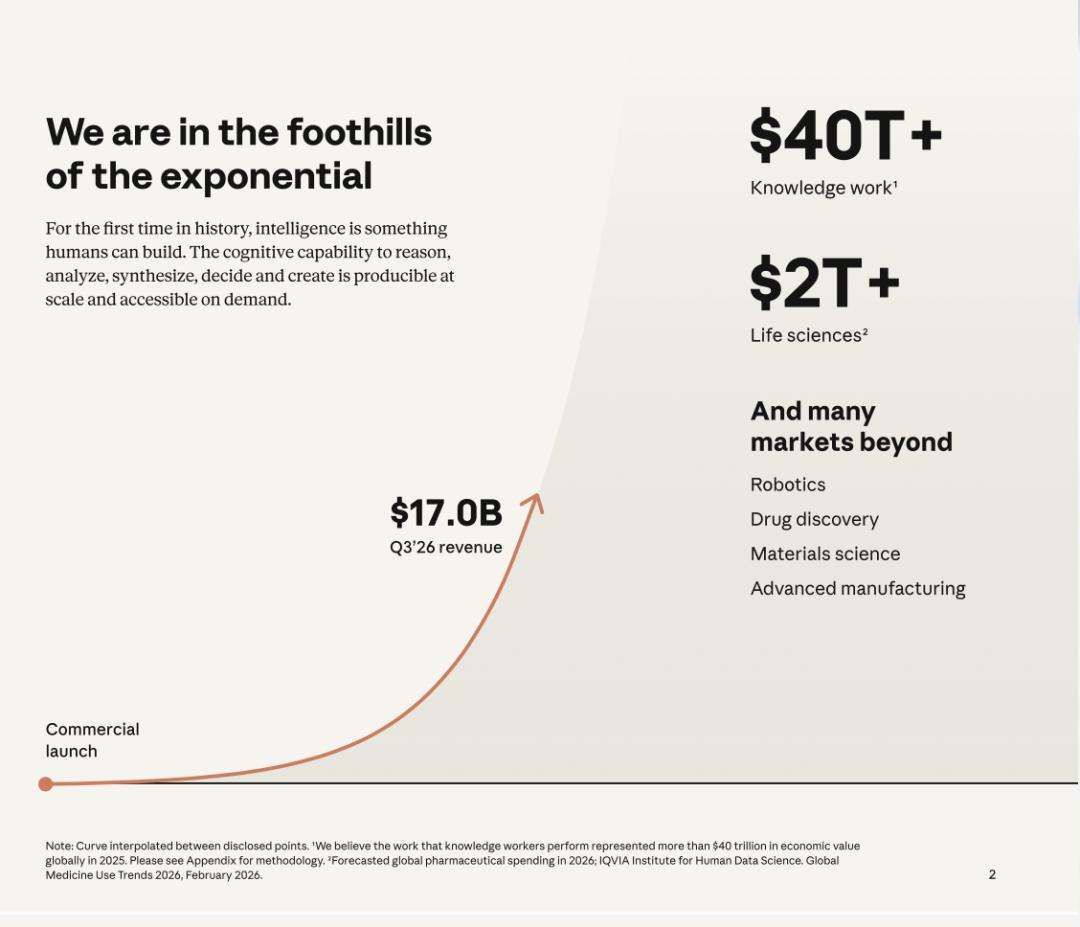
Although the blueprint looks a little too ambitious, it has to be admitted that in less than six years, from an AI startup to once the largest IPO in history, Company A has indeed achieved nearly exponential growth.
Calculated based on the upper limit of the issue price and the basic share capital after issuance, Company A's equity value is about 1 trillion US dollars, equivalent to about four times that of Alibaba.
If calculated on a fully diluted basis including potential shares such as options and restricted stocks, the valuation will reach about 1.4 trillion US dollars, second only to the largest IPO in history that merged xAI and SpaceX.
According to the roadshow materials, the 825 million shares offered in Company A's IPO include about 801 million newly issued shares by the company and about 23.65 million shares sold by existing shareholders.
What is really worth mentioning here is that a group of computing power sponsors are preparing to inject a total of 260 billion US dollars in private equity funds at the same time.
Among them, Google and Nvidia each contribute 100 billion US dollars, AMD contributes 25 billion US dollars, Broadcom, Micron, and Microsoft each contribute 10 billion US dollars, and the investment entity under TSMC contributes 5 billion US dollars.

In other words, the IPO itself raises a maximum of 643.5 billion US dollars, plus this 260 billion US dollars of strategic private placement, the overall financing scale is close to 904 billion US dollars at maximum.
Of course, as for how and at what price this money will eventually enter the pockets of these sponsors, it depends on Dario's subsequent operations.
In terms of operating data, as we said at the beginning, Company A's revenue growth is still staggering, but computing power expenditure is still further expanding, which has slowed down the growth curve.
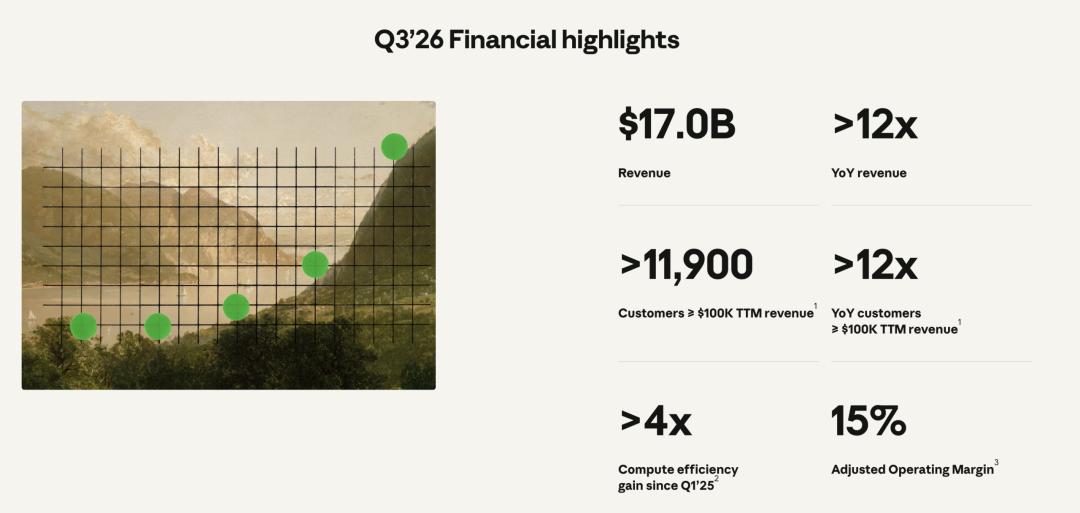
In the third quarter, Anthropic's revenue was 16.956 billion US dollars, 12.27 times that of the same period last year, with a quarter-on-quarter increase of about 47%, but it slowed down significantly compared with the second quarter.
Looking at the whole year, Company A's cumulative revenue in the first nine months was 33.242 billion US dollars, and the annualized revenue run rate disclosed on October 31 has reached about 81 billion US dollars.
At the same time, the number of customers who contributed at least 100,000 US dollars in revenue in the past 12 months has exceeded 11,900. Compared with more than 950 at the end of September 2025, it has increased by more than 12 times in one year.
Among them, more than 1,900 customers contribute more than 1 million US dollars in annual revenue, and about 250 customers contribute more than 10 million US dollars.
What's more exaggerated is that according to Company A's statistics, the net revenue retention rate of existing customers has reached about 900%.
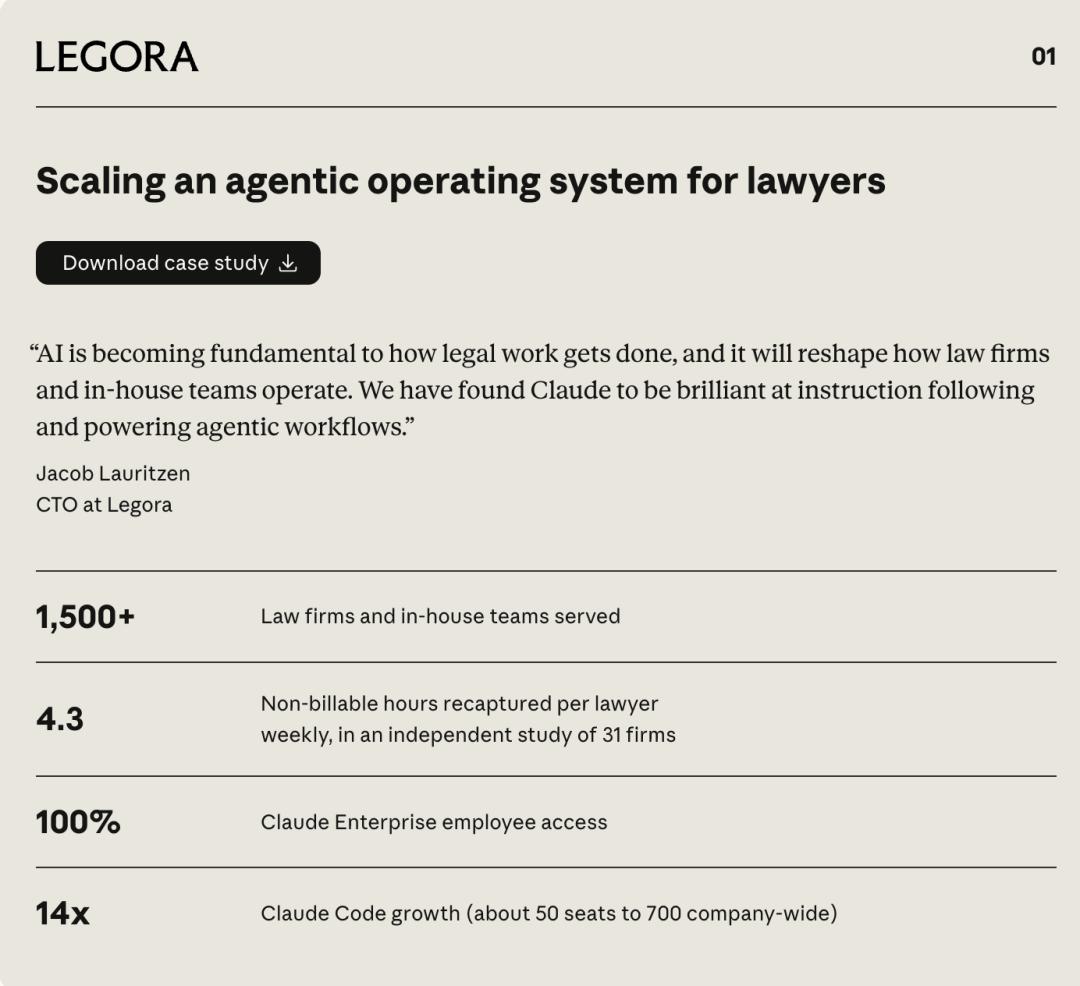
This also means that Anthropic's growth does not rely entirely on continuously acquiring new customers, but on continuously tapping the payment potential of existing enterprise customers.
From this perspective, Dario has indeed delivered a very impressive commercial performance.
But the problem also arises here.
As the panic on Wall Street these two days reflects, the market is no longer really doubting whether AI is useful, but has begun to seriously calculate another account:
Can the revenue brought by AI cover the massive computing power expenditure and data center investment behind it? Does this business have sufficiently good economic benefits?
For Anthropic, expensive computing power procurement is making this nearly exponential growth curve pay an increasingly high price.
In the third quarter, Anthropic's computing power and infrastructure costs reached 9.863 billion US dollars, and the proportion of revenue rose to 58% from 48% in the previous quarter.
The company explained that among the newly delivered computing power in that quarter, there was about 5 billion US dollars of short-term resources, whose price was significantly higher than that of similar resources procured through multi-year agreements.
In layman's terms, due to the rapid growth of demand, Company A has to pay a premium for short-term computing power that can be put into use immediately.
As a result, Company A's adjusted operating profit increased from 2.235 billion US dollars in the previous quarter to 2.463 billion US dollars, but the adjusted operating margin dropped from 19% to 15%.
Calculated in accordance with U.S. Generally Accepted Accounting Principles, the operating loss for the quarter was 567 million US dollars.
Beyond the costs of that quarter, Company A and Dario also have a huge bill that stretches over the next ten years.
It is reported that to support subsequent growth, Company A has already signed relevant procurement and lease commitments of about 9 trillion US dollars in advance.
Among them, about 4.516 trillion US dollars is expected to be incurred before the end of 2030, and most of the rest will be incurred from 2031 to 2045; about 707 billion US dollars needs to be paid within 12 months after the end of September 2026.
In other words, when businesses that can generate sustainable cash flow other than coding still need further verification, Company A has already arranged for computer room and chip resources for more than ten years in the future.
Whether it is an overdraft in advance or a continuation of exponential scaling, at least for today, this is still a question mark.
How to reduce costs and improve efficiency?
In this roadshow, Anthropic also demonstrated its plan to reduce costs and improve efficiency.
On the one hand, through the combination of multiple chips such as AWS Trainium, Google TPU, Nvidia and AMD GPU, it matches more suitable computing power for different tasks;
On the other hand, it directly leases chips and deploys data centers through Anthropic Direct to reduce long-term computing power costs.
At the same time, according to the roadshow disclosure, the daily code contribution of Anthropic engineers has reached 45 times the average level in 2024.
When adapting to AMD GPU earlier, the company even let Mythos complete the transplantation and writing of almost all underlying computing kernels in three days.
It can be said that Dario has taken the lead in letting AI participate in the enterprise's own R&D and production process —
On the one hand, use AI to reduce training and R&D costs, and on the other hand, let AI create more revenue.
Company A is also further replicating the business model that has been verified in coding to more knowledge work scenarios.
For example, just today, Claude released a series of office products, including Claude Sheets, Claude Whiteboards and Claude Data.

Coupled with the integration with third-party applications such as Adobe and Notion, Claude is trying to connect work such as spreadsheet processing, data analysis, collaboration and content production.
In the short term, office AI will be the core scenario that Company A bets on, and in the long run, there are larger markets such as life sciences and robotics.
However, up to this point in the story, Wall Street still seems to have its own ideas.
The comment section of CNBC's related report on this IPO roadshow is full of short positions:
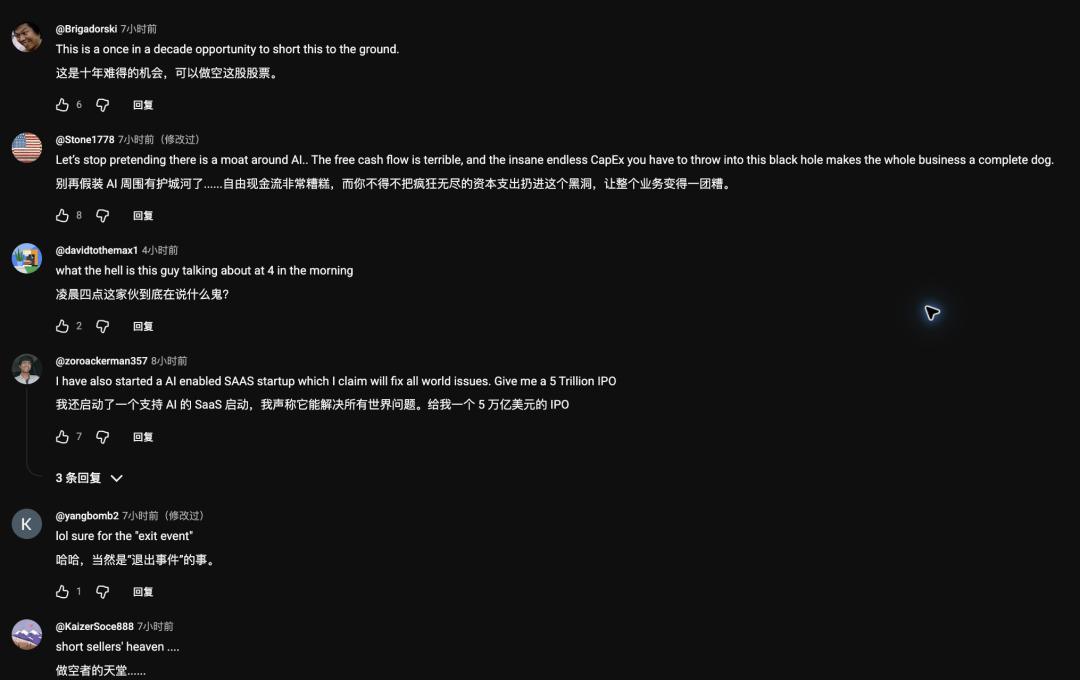
Dario is still betting big on the future of AI, while short sellers have already targeted this IPO.
Whether next week will be full of risks or the dawn will finally break through the clouds, the result will come out in due course.
By the way, according to Bloomberg reports, Dario also plans to have a live dialogue with Jamie Dimon, CEO of JPMorgan Chase, tomorrow. Interested friends can follow the live stream.
This article is from the WeChat official account QbitAI, written by a reporter focusing on cutting-edge technology, and published by 36Kr with authorization.