Acquisition survey of 389 game studios: 34% have been shut down, 50% of the studios acquired by Tencent underperform, and the corresponding ratio for NetEase is 33%
Over the past decade and more, the gaming industry has gone through several rounds of large-scale mergers and acquisitions. For large game companies, acquiring a mature studio means they can quickly obtain development teams, mature IP, technical accumulation, and access to opportunities in new markets. Compared with building an R&D team from scratch, direct acquisition seems to be a more efficient expansion path.
But after a studio is acquired, can it really achieve better development?
Recently, Game Studio Unlocked, a research project focused on the gaming industry, released a survey report on the fate of game studios after mergers and acquisitions. The report surveyed 389 PC and console game studios acquired by large and medium-sized game companies since 2000, trying to answer one question: when a studio becomes part of a large gaming group, will it eventually become stronger, or gradually lose its original creativity?
The research results are not optimistic. Among 359 game development studios, 122 were eventually shut down, accounting for 34%; another 96 were classified as showing declining performance. That is to say, 60.7% of the acquired studios have encountered problems of varying degrees in terms of work performance or organizational survival.
On this list, there are traditional gaming giants such as EA, Microsoft and Sony, as well as Chinese manufacturers such as Tencent and NetEase that have actively expanded their overseas R&D footprint in recent years.
389 Studios, One Third Were Eventually Shut Down
The survey conducted by Game Studio Unlocked covers PC and console game studios that were majority-owned by large or medium-sized enterprises from around 2000 to October 2026.
It should be noted that the study did not include mobile game studios, minority equity investments, and acquisitions of individual teams that do not involve the transfer of a complete studio. Among the 389 studios, 359 are studios with independent game development business, and the remaining 30 are mainly engaged in services such as co-development, game porting, QA and technical support, so they are counted separately.
Among the 359 game development studios, 122 were eventually "closed", accounting for 34%. Another 96 were rated as "declining", accounting for 26.7%; 96 remained "stable", accounting for 26.7%; only 45 were rated as "improved", accounting for 12.5%.
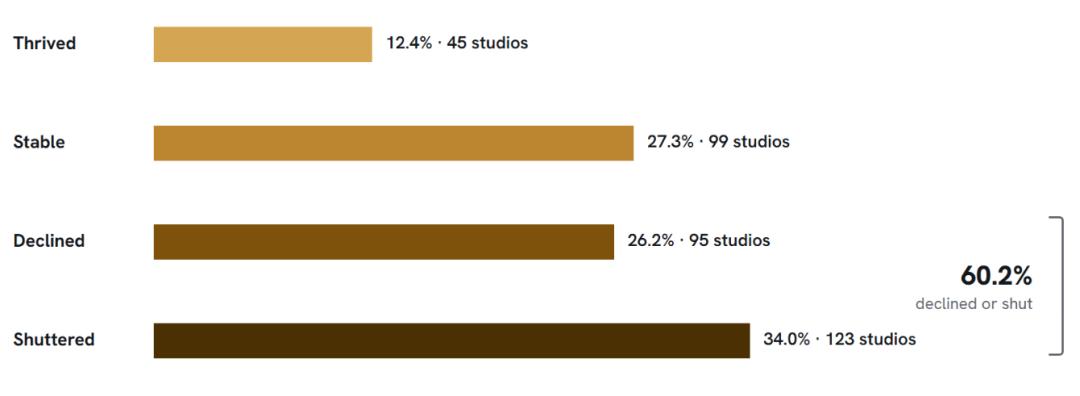
The image shows preliminary data, and the updated data shall be subject to the main text, the same applies hereinafter
In other words, only about one-eighth of the samples are studios that have truly achieved improved work performance after acquisition.
However, shutdown is not the only outcome faced by acquired studios.
From a time perspective, the 122 shut-down studios experienced an average of 6.5 years from acquisition to closure, with a median of 5 years. After further controlling the observation period, among 314 studios that have been acquired for at least five years, 19.4% were shut down within five years after acquisition; among 180 studios that have been acquired for at least ten years, the shutdown rate within ten years reached 38.9%.
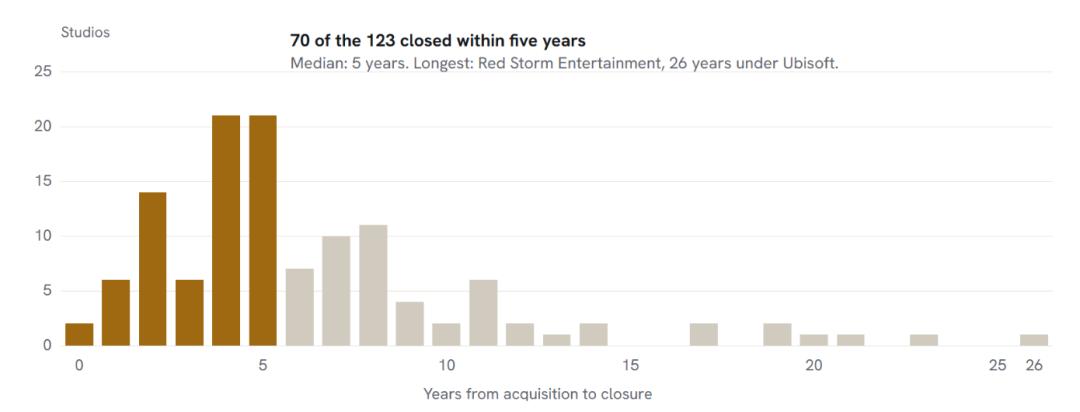
This means that the fate of a studio after acquisition often does not appear immediately after the transaction is completed. For the acquirer, the real test may only emerge after several years of development cycles, product verification and organizational integration.
What is more noteworthy is that only 101 studios in this survey are still operating healthily, accounting for 28.1%. If all studios with declining game performance, shutdown, or fairly good game performance but severely damaged organizations are counted, the proportion of studios with problems of varying degrees reaches 62.7%.
What Did the Studios Experience After Acquisition?
If you only look at the shutdown rate, you may underestimate the impact of mergers and acquisitions on game studios.
To avoid confusing work performance with organizational changes, the report divides the post-acquisition performance of studios into two dimensions: Output Grade (game work performance) and Institutional Grade (organizational health).
The former measures whether the game works of the studio after acquisition are improved, flat or regressed compared with those before acquisition; the latter focuses on changes such as layoffs, departure of founding teams, and organizational integration.
Among the 237 still-operating game development studios, only 108 are rated as Intact, which means there are no obvious problems such as large-scale layoffs, organizational absorption or departure of core management, accounting for 45.6%.
Another 60 are rated as Strained, which means they have experienced a certain degree of organizational shock; 69 are rated as Damaged, accounting for 29.1%, which means more serious organizational damage has occurred.
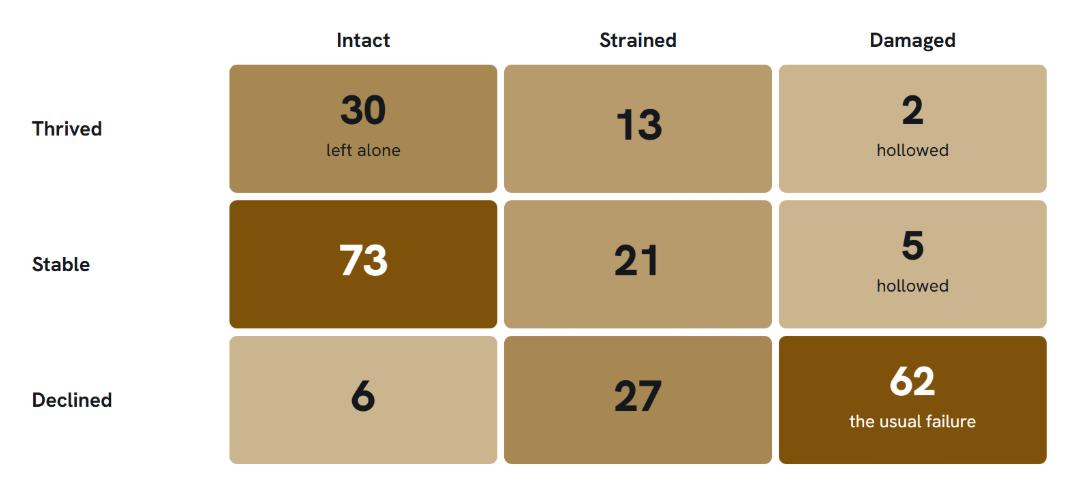
The most notable of these is a concept put forward by the researchers: Hollowed Winners. Although such studios still achieve success at the game work level, the organization itself has suffered obvious damage. Riot Games is a very typical example in the study.
After Tencent acquired Riot Games, *League of Legends* still maintains its position as the world's top PC game, and its works such as *Valorant* and *Teamfight Tactics* have also achieved commercial success. Therefore, the study rated its game performance as "improved".
But at the same time, Riot Games has experienced multiple rounds of layoffs, business adjustments and development team integration. According to the researchers' statistics, Riot has had three rounds of layoffs that meet its organizational damage criteria in the past seven years, so it is rated as "Damaged".
In the end, Riot Games is classified as "Hollowed": the games are still successful, but the organization that created these games is no longer complete.
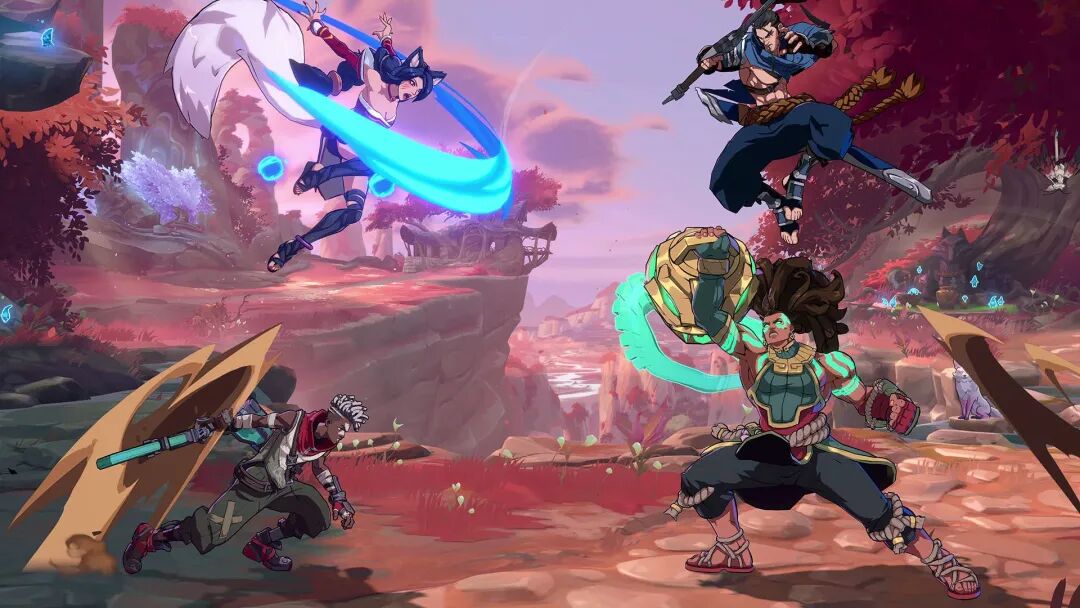
Just three weeks after the official launch of the new game *2XKO* at the beginning of the year, Riot laid off half of the employees of the team
This also shows that to judge the outcome of a studio's merger and acquisition, we cannot only see whether it continues to launch successful games. It is also worth paying attention to whether the studio retains its original team, creative autonomy and independent development capabilities.
In addition, there is an easily overlooked statistical detail in the study: among the 96 "declining" studios, 46 are not simply due to the decline in game scores or sales, but because they lost their independent identity after acquisition, were merged into the parent company's organization, or shifted from independent game development to providing support for other teams.
Among them, 33 were absorbed into the parent company's organization, and the other 13 were converted into support-oriented development teams.
Therefore, this report not only discusses the changes in the operating performance of game companies, but also involves a deeper question: whether the acquirer has retained the original value of the acquired studio?
Different Buyers Lead to Different Fates of Studios
If we shift our perspective from the acquired studios to the acquirers, we will find that there are obvious differences in the performance of different companies. According to survey statistics, the acquisition records of some large game companies are as follows:
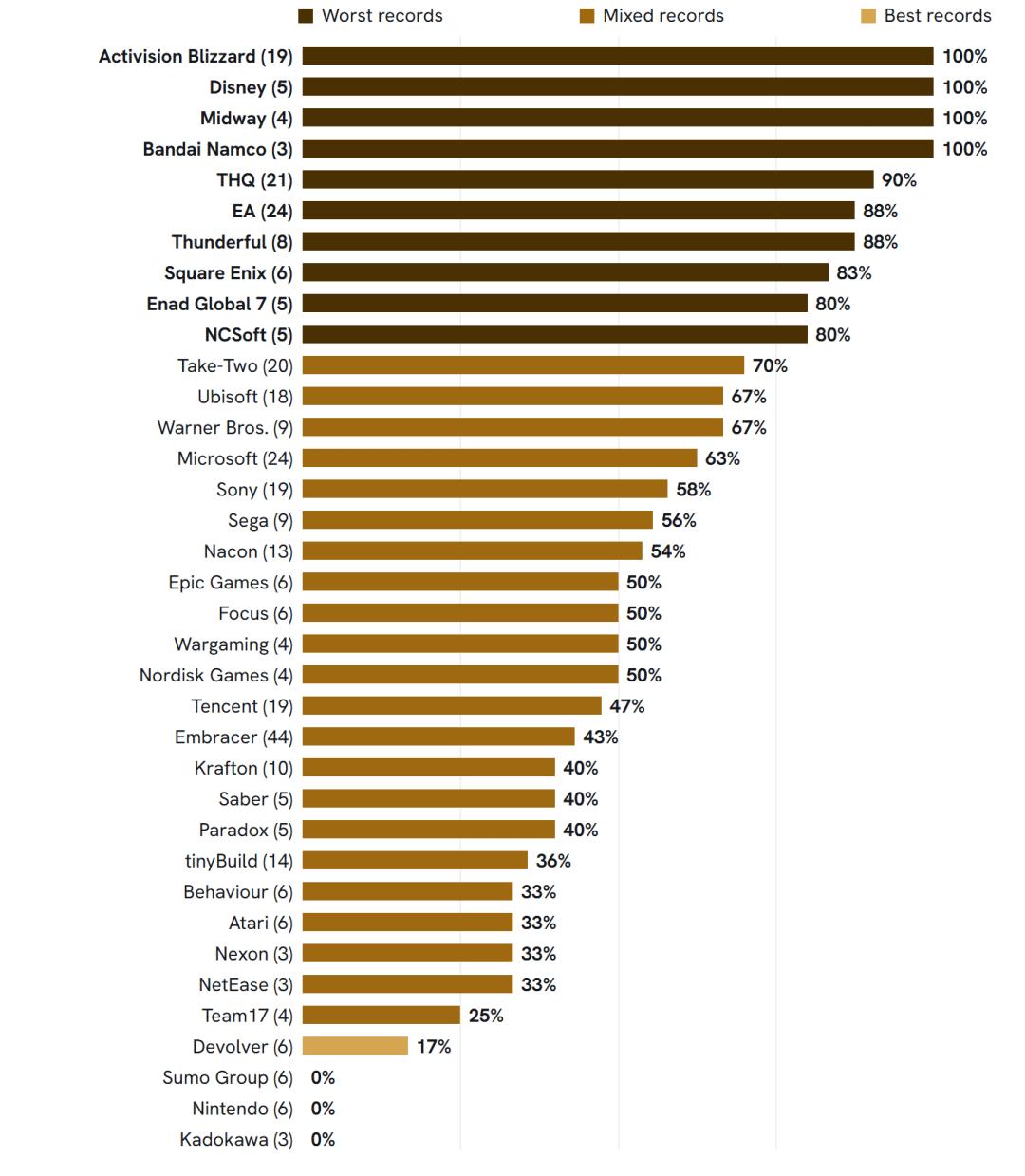
From the perspective of specific acquirers, the statistical results of some traditional gaming giants are particularly noteworthy. Among the 19 studios acquired by Activision Blizzard, the proportion of "declining" or "closed" reached 100%, none of them ended up with stable or improved game performance.
This proportion for EA is 88% (24 studios), 83% for Square Enix (6 studios); 63% for Microsoft (24), 58% for Sony (19). These companies cover different types from large publishers to console platform manufacturers, which also shows that having mature IP and a huge R&D system does not necessarily mean that the acquired studios can achieve long-term and stable development.
On the other side, among the 6 studios acquired by Nintendo, the proportion of "declining" or "closed" is 0%; the 3 studios of Kadokawa also did not have these two types of results.
This set of data does not mean that all acquirers have the same management method, nor can the company with the lowest proportion be simply regarded as the best buyer. There are differences in the acquisition scale, holding period and sample size of different companies, especially for companies with only a few samples, more careful interpretation is required.
But for Chinese game manufacturers that have actively acquired overseas studios in recent years, this set of data still provides an observation window.
Tencent: The Same Buyer, Its Studios Head to Different Outcomes
The original study involves 18 studios under Tencent, of which 9 are rated as "declining" or "closed", accounting for 50%. These 18 entities include 16 game development studios and 2 co-development studios.
From the perspective of specific cases, Tencent has not only studios with excellent performance, but also teams that gradually lost independent development capabilities and even were eventually shut down.
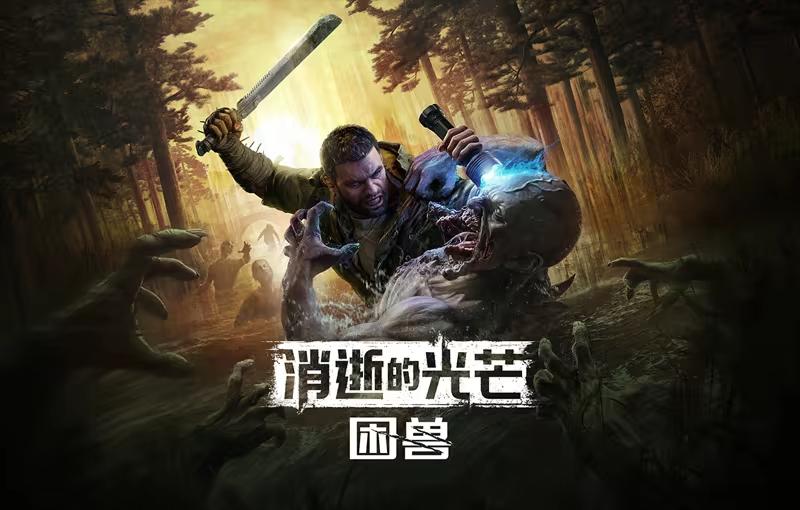
Techland is one of the more successful cases. In 2023, Tencent began to become the majority shareholder of this Polish studio, and completed the relevant transaction in 2024. Techland retained ownership of IP such as *Dying Light* and continued to develop in accordance with the direction of the original team.
*Dying Light: Beast* launched in 2025 achieved good market performance. The original study rated Techland as "improved game performance and intact organization". However, since Tencent officially took control for a relatively short time, this result still requires longer-term observation.
Grinding Gear Games is also rated as "Improved + Intact". Tencent acquired the majority stake of this New Zealand studio in 2018. Since then, the *Path of Exile* series has continued to develop, and the launch of *Path of Exile 2* has further expanded its influence.
But not all studios under Tencent have achieved similar results.
Spanish studio Tequila Works joined the Tencent system in 2022, and has developed works such as *RiME*, *GYLT* and *Song of Nunu*. In 2024, the studio filed for bankruptcy due to the long-term deterioration of the market environment, and it only took about two years from acquisition to bankruptcy.
Another notable one is Sumo Group. Tencent completed the acquisition of this British game development group in 2022. In 2025, Sumo Digital announced that it would abandon independent development of game IP and shift its business focus to providing development services for partners. In 2026, the studio confirmed layoffs and adjustments again.
It should be noted that Sumo Group belongs to the co-development and support-oriented studios counted separately in the study, and should not be mixed with the core sample of 359 independent game development studios.
From Techland to Tequila Works, and then to Sumo Group, the performance of Tencent's overseas R&D assets is inconsistent. After acquisition, retaining independent development capabilities and shifting to service-oriented business are actually two completely different development paths.
NetEase: The Commitment to Independent Operation After Acquisition Still Needs Time to Test
Compared with Tencent, NetEase has fewer acquisition samples in this study, with a total of 3 studios, of which 1 is rated as "declining" and the other 2 are "stable", with a decline or shutdown rate of 33%.
Quantic Dream is the most notable case among them.
This French studio was fully acquired by NetEase in 2022, and its representative works include *Heavy Rain*, *Detroit: Become Human* and so on. NetEase emphasized at that time that it would support the studio to maintain creative independence.
But in 2026, Quantic Dream announced that it would stop developing the multiplayer game *Spellcasters Chronicles*. The game entered Steam Early Access in February 2026, and development was announced to be stopped only about three months later, and the servers were shut down in June.
The studio said that the game failed to attract enough users to maintain long-term operation, so it decided to refocus resources on other projects and launch internal organizational adjustments.
Subsequently, the French gaming industry union STJV criticized the project management, saying that about 95 positions might be affected by layoffs. Some employees also publicly expressed concerns about insufficient development resources for *Star Wars: Eclipse*. However, Quantic Dream emphasized that the project is still progressing as planned.
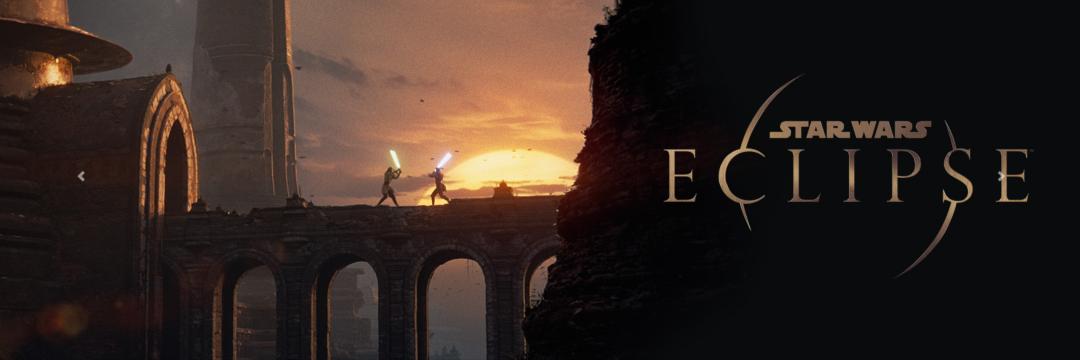
*Star Wars: Eclipse* is a new game under development by Quantic Dream
This also makes Quantic Dream an important case for observing NetEase's overseas studio management strategy: when a new project fails to meet commercial expectations, how will the acquirer and the studio redistribute resources?
On the other hand, NetEase also has studios with relatively stable performance.
Canadian studio SkyBox Labs joined NetEase in 2023. The official said at that time that it would continue to maintain independent operation and carry out development work with original partners. The original study rated it as "stable", but there is a certain pressure at the organizational level.
Japanese studio Grasshopper Manufacture announced its re-independence in September 2026, and officially separated from NetEase starting from