At 4 a.m., a group of "charlatans" are gathered in the brain-computer interface industry.
The brain-computer interface industry was not a popular track from the very beginning.
Sun Yu, founder of Softling Technology, once described the early stage of brain-computer interface as a hard time at "4 a.m. when you could not even find a single person on the street to ask for directions". Worse still, as both the technologies and application scenarios back then were too "sci-fi", many founders had the awkward experience of being treated as "charlatans" during their early financing rounds.
This forms a stark contrast with the red-hot status of the industry nowadays.
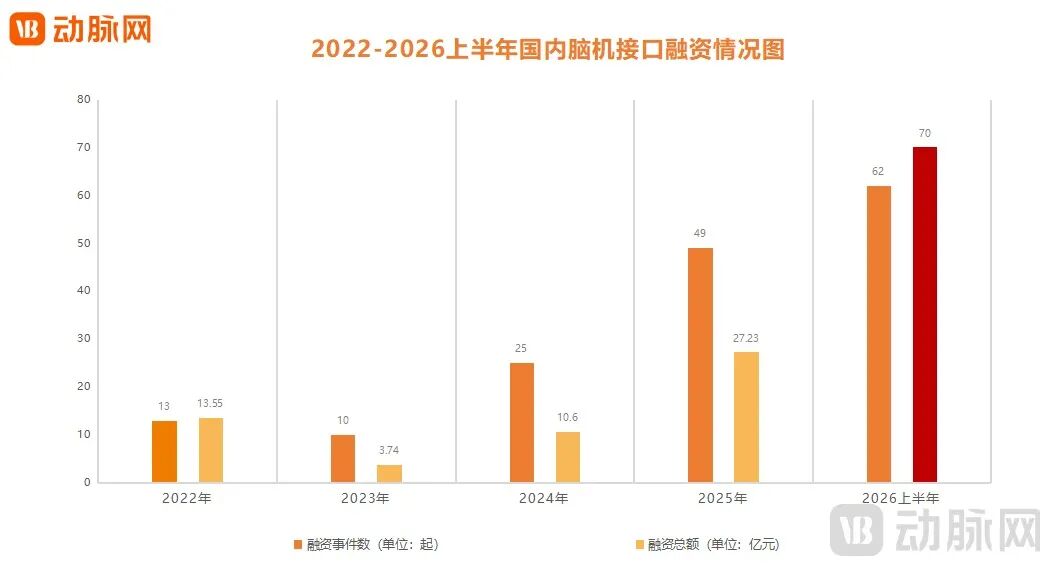
Fig. 1. Domestic financing status of brain-computer interface from 2022 to the first half of 2026
According to incomplete statistics from the Arterial Orange database, in the first half of 2026, China's brain-computer interface sector completed 62 financing deals in total, with the total financing amount exceeding 70 billion yuan. To visualize these two sets of data — in the past six months, one financing deal was closed in this track on average in less than 3 days, and the ultra-high financing amount of 70 billion yuan equals the sum of the past five years. Against the general backdrop of the current tightening primary market, such high financing density and scale fully prove how popular the brain-computer interface industry is at present.
There is no doubt that capital is betting real money on this track. But the essence of investment is not betting on the track itself, but betting on the "people" behind the projects. Just like the semiconductor industry in the early days, it was the investment in a group of genius scientists including Shockley, Noyce and Moore that gave birth to Intel, AMD and Fairchild Semiconductor, and then led to the rise of Silicon Valley and the golden age of the entire semiconductor industry.
Therefore, when we sort out the past and future trends of this promising brain-computer interface industry, we have to learn about the people standing behind the companies first.
An "entrepreneurship boom" breaking out in the ivory tower
After going through the founder lists of nearly 100 domestic brain-computer interface enterprises, the most intuitive feeling is that this is almost a hearty "professor entrepreneurship boom".
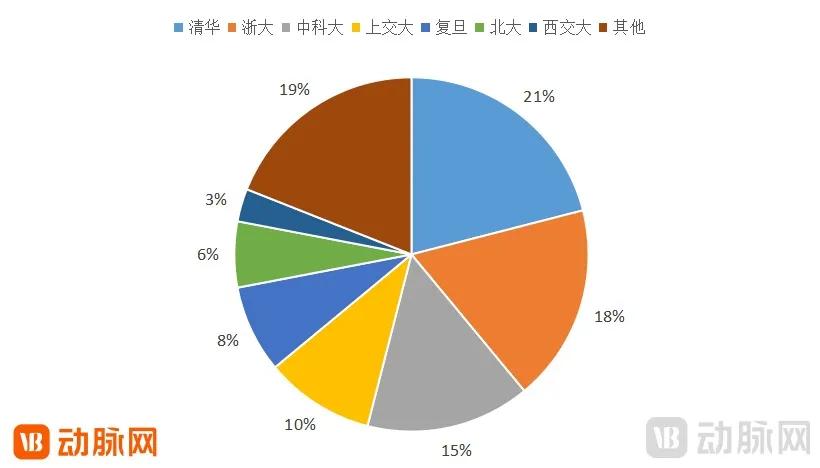
Fig. 2. Proportion of brain-computer interface founders with university academic background
Tsinghua University, Peking University, Zhejiang University, Fudan University, University of Science and Technology of China, Shanghai Jiao Tong University, Xi'an Jiaotong University... The "first identity" of these founders are all university professors or scientific researchers. Among them, founders from Tsinghua University, Zhejiang University and University of Science and Technology of China take the highest proportion, accounting for nearly 60% in total.
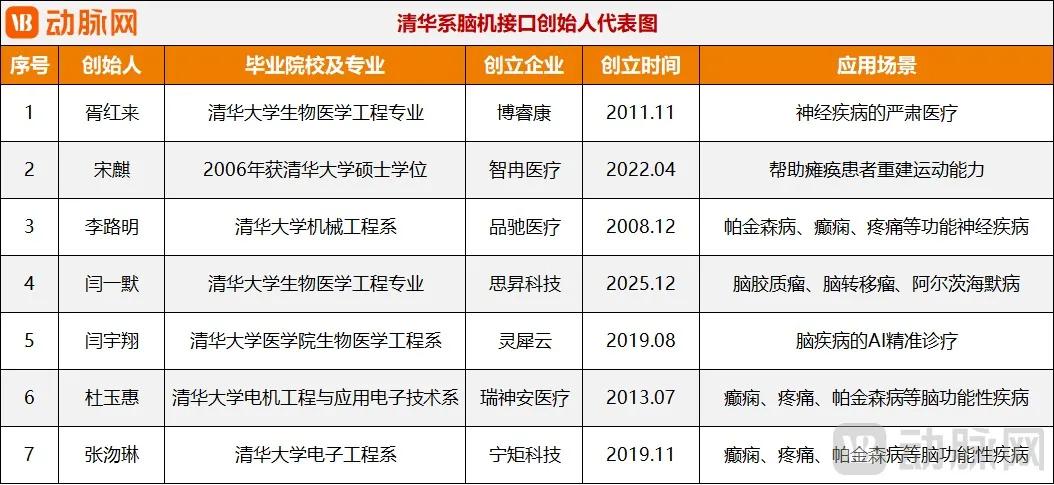
Fig. 3. Representative figures of brain-computer interface founders from Tsinghua University
Take Tsinghua University for example, Xu Honglai from BrainRoam, Song Qi from Zhiran Medical, Li Luming from Pins Medical, Yan Yimo from Sisen Technology, Yan Yuxiang from Lingxi Cloud, Du Yuhui from RayShield Medical, Zhang Mulin from NeuraMatrix are all typical representatives.
Take Xu Honglai as an example, he was the first doctoral student in the Neuroengineering Laboratory of Tsinghua University, studying under Professor Gao Shangkai, one of the founders of the domestic brain-computer interface field. Xu Honglai's research direction is neural signal acquisition and processing, which was completely "stuck in the neck" by foreign countries at that time. The related products were not only expensive, but also often refused to be sold to China. Around 2004, Professor Gao Shangkai wanted to buy a newly launched wireless EEG acquisition device from abroad, but was directly rejected by the other side on the grounds of "afraid of helping China's scientific research".
This incident greatly shocked Xu Honglai. Therefore, during his PhD study at Tsinghua University, he chose a path that almost no one dared to take at that time: abandoning the mature foreign analog technology route, and directly turning to the "full-digital" acquisition scheme of EEG signals. This also defined the technical foundation of BrainRoam for more than ten years afterwards. In 2011, Xu Honglai and his fellow apprentice Huang Xiaoshan went to Changzhou, Jiangsu Province to found BrainRoam, becoming one of the earliest pioneers in China engaged in the industrialization of brain-computer interface signal acquisition.
Different from Tsinghua University, the entrepreneurial genes of Zhejiang University are more reflected in the "intersection of medicine, engineering and industry and clinical transformation" — this group of people are focusing on another blueprint: how the brain-computer interface truly evolves from "reading signals" to "treating diseases".
The most representative case is Jialiang Brain Science, which has recently completed Series C and Series D financing consecutively. Its founder Cao Peng is a postdoctoral fellow from Zhejiang University School of Medicine, whose main research direction is magnetic resonance imaging and brain science. In April 2020, Jialiang Brain Science was officially founded in Hangzhou, betting on the clinical implementation of invasive brain-computer interface and neuromodulation — using methods such as laser ablation and closed-loop electrical stimulation to convert the "read out" brain signals into "scalpels" and "medicines" for treating neurological diseases such as epilepsy and Parkinson's disease. At present, Jialiang Brain Science has held 4 national Class III medical device registration certificates, and has established a cooperation network with more than 50 top three hospitals across the country.
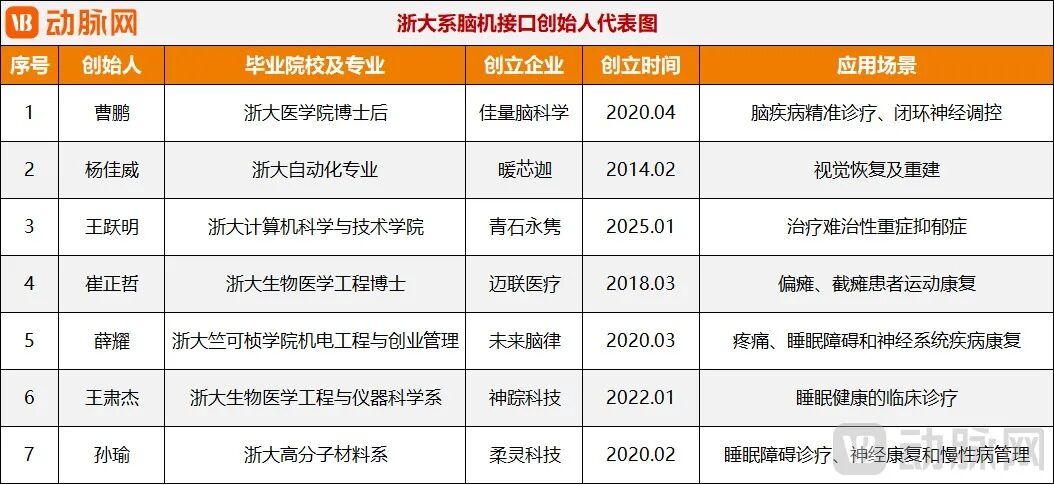
Fig. 4. Representative figures of brain-computer interface founders from Zhejiang University
In addition to Cao Peng, the list of brain-computer interface founders who graduated from Zhejiang University also includes a group of core forces such as Yang Jiawei from WarmCore, Wang Yueming from Qingshi Yongjun, Cui Zhengzhe from Melin Medical, Xue Yao from Future Brain Law, Wang Sujie from TraceBrain Technology, and Sun Yu from Softling Technology.
The University of Science and Technology of China, which is only two hours away from Zhejiang University by high-speed rail, presents a different scene. As the birthplace of the domestic "flexible material and minimally invasive implantation" route, it gathers a large number of entrepreneurs who integrate materials into the brain.
Tao Hu started his career at the University of Science and Technology of China. At the age of 16, he was recommended to study in the precision machinery major of USTC, and later obtained his master's degree at the Institute of Electronics. In 2014, Tao Hu joined the Shanghai Institute of Microsystem and Information Technology, Chinese Academy of Sciences, and devoted himself to the research and development of brain-computer interface. In 2021, he led the team to win the SAIL Award, the highest award of the World Artificial Intelligence Conference, with the project of "minimally invasive implantable high-throughput flexible brain-computer interface". It was this award that reconnected Tao Hu and Peng Lei, two old classmates who had not seen each other for more than 20 years.
In July 2021, Peng Lei, who was then the senior vice president of Alibaba Local Services, accidentally saw Tao Hu's award news on WeChat Moments. Since both of them were in Shanghai, they made an appointment for a dinner that night, and soon confirmed the idea of starting a business together: on November 1, 2021, Peng Lei officially resigned from Alibaba, and on the same day, NuroBrain was founded in Shanghai. Two months later, it won the largest early-stage financing in the domestic brain-computer interface sector, backed by two influential figures in China's venture capital circle — Chen Tianqiao, who has deployed brain science for many years, and Shen Nanpeng, founder of HSG.
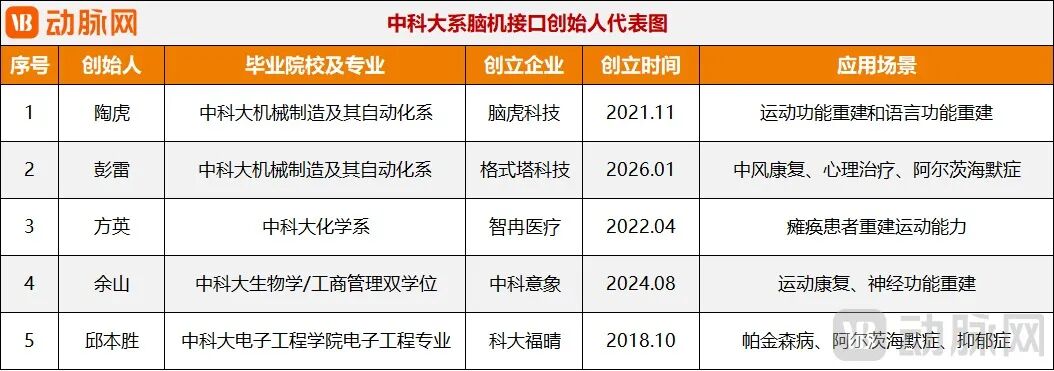
Fig. 5. Representative figures of brain-computer interface founders from University of Science and Technology of China
However, as the general trend goes, things that have been united for a long time will eventually separate. In 2025, Peng Lei left NuroBrain and founded Gestalt Technology in Chengdu on the first day of 2026, adding a new member to the brain-computer interface entrepreneurship map of USTC. In addition to Tao Hu and Peng Lei, USTC has also produced a group of representative entrepreneurs such as Fang Ying from Zhiran Medical, Yu Shan from Zhongke Image, Qiu Bensheng from KeDa Fuqing.
It is not difficult to see that university academic background has become the common label of these brain-computer interface founders — almost all well-known domestic entrepreneurial teams can trace their origins back to universities.
But different university backgrounds will breed different entrepreneurial logics. Tsinghua University focuses on "signal acquisition and engineering", Zhejiang University focuses on "intersection of medicine and engineering and clinical transformation", and USTC focuses on "flexible materials and minimally invasive implantation". These three paths seem to go separate ways, but in fact they are all answering the same question: how to combine the single-point breakthroughs in the laboratory into a complete industrial chain, so that China's brain-computer interface can truly run through the value closed loop from scientific research to clinical practice, and then from technology to industry.
02 Even laymen can see the tricks? 90% of founders are not "majored in related majors"
In addition to the university background, these founders have another notable feature: the vast majority of them are "switching to this career halfway", and the first degree certificate of most people is not from the corresponding major, but from the "neighboring disciplines" of brain-computer interface, including electronics, computer, machinery, materials, precision instruments, biomedical engineering and other fields.
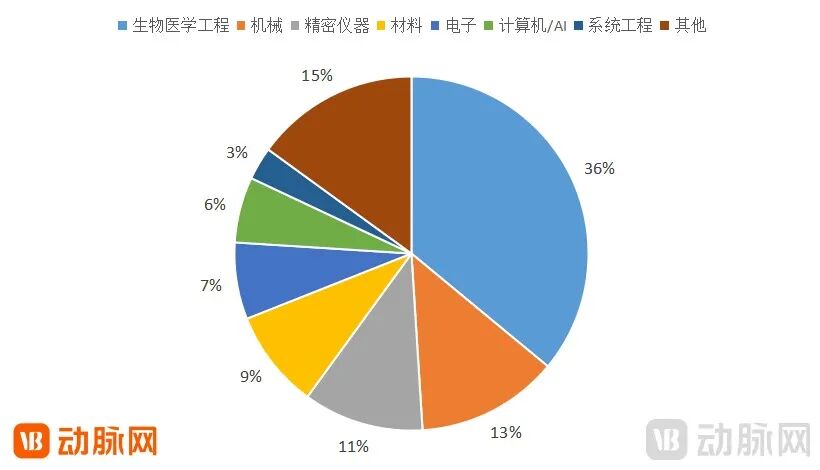
Fig. 6. Proportion of the "first degree" of brain-computer interface founders
For example, Han Bicheng, founder of BrainCo, studied precision instrument major for his bachelor's degree. After graduation, he joined the Fred Hutchinson Cancer Research Center in the United States to participate in medical device development and research. If everything went as planned, he would become a device engineer.
The turning point came in 2011. When Han Bicheng was working in the research institute, he accidentally learned that Professor Linda Buck in the adjacent laboratory was a Nobel laureate — she found that there are many receptors on the cell membrane of epithelial cells in the nose, which can combine with nerve receptors and then be converted into electrical signals and transmitted to the brain, so that the brain can permanently remember the smell. After passing by the adjacent laboratory countless times and being repeatedly "reminded" by those smells, the huge potential of neural plasticity deeply attracted this "layman". In 2014, he entered the Center for Brain Science of Harvard University to pursue his doctorate, and established BrainCo the next year, which became the first Chinese team incubated by the Harvard Innovation Lab.
Li Xue, founder of Step Medical, almost has the same experience. She studied biomedical engineering for both her bachelor's and master's degrees at Huazhong University of Science and Technology. During her postgraduate study, she accidentally came into contact with brain-computer interface and set it as her research direction. To make up for the disciplinary gap, in the following five years, Li Xue studied at the University of Texas and Rice University in the United States successively, and obtained master's and doctoral degrees in biomedical engineering and electrical and computer engineering from two universities.
In 2020, Li Xue returned to China and joined the Institute of Brain and Intelligence, Chinese Academy of Sciences, where she met Zhao Zhengtao, who also just returned from the United States and was determined to develop implantable brain-computer interface. The two hit it off immediately, founded Step Medical the next year, and completed the first domestic invasive brain-computer interface clinical trial in 2025.
In fact, there are many "cross-border practitioners" like Han Bicheng and Li Xue in the founder list of the brain-computer interface industry.
This is precisely determined by the highly interdisciplinary and complex disciplinary attribute of brain-computer interface — it is connected to the understanding of the brain activity mechanism from neuroscience on one hand, and connected to the support of microelectronics, materials, signal processing and artificial intelligence for signal acquisition and decoding on the other hand. Therefore, the "non-professional" background of these founders is not a short board, but a natural requirement for entrepreneurship: people with different backgrounds entering this track across borders can piece together the complete chain from "reading the brain" to "rebuilding connections".
However, although everyone is working on the same blueprint, everyone's "first degree certificate" still subtly determines the path divergence of these founders.
For example, people with engineering and electronics background will naturally focus on "signals" — either do high-channel invasive acquisition, or tackle the hard bone of implantable chips. Zhang Mulin, founder of NeuraMatrix, is a typical representative. She has been engaged in the design of special circuits and chips for neural interfaces for more than ten years, so as soon as NeuraMatrix was established, it directly targeted the underlying hardware of invasive brain-computer interface. In 2021, the self-developed brain-computer interface special system-on-chip of NeuraMatrix completed tapeout — this chip, which is only as small as half a fingernail, integrates hundreds of channels of signal acquisition, neural stimulation and wireless transmission, and is the first commercial two-way brain-computer interface chip in China.
Then there are people with materials background, who are more willing to focus on "electrodes and implantation". After all, no matter how good the signal is, there must first be a "wire" that can enter the brain without hurting it. Sun Yu from Softling Technology took this path. He is a PhD from the Department of Polymer Science of the University of Akron, Ohio, USA. Before starting his business, he worked in a world top 500 carbon company for many years to study graphene nanomaterials. In 2020, he returned to China to found Softling Technology, and directly applied his old expertise in nanomaterials to brain-computer interface. The core idea is to use nanomaterials to make electrodes that are thinner, softer and more suitable for biological tissues, so that the implantation can be as minimally invasive and painless as possible. At present, the core products of Softling Technology have reached cooperation with more than 30 top three hospitals, and the company's valuation exceeds 1 billion yuan.
Furthermore, a group of people with computer and AI background