The short drama sector is surging ferociously, having gone through three rounds of industry reshuffling.
In October 2026, short dramas have become a window to observe Chinese technology companies. Through it, some see a platform's domination of the public's time, some see the metaphor of AI computing power flowing to the entertainment sector, and others see the entry point for a new round of competition between two major Internet giants.
On October 26, well-known media personality Qin Shuo raised a question in *"The 'Terrifying' Hongguo and the ByteDance Era of China's Internet"*: whether China's Internet is shifting from the "Tencent era" to the "ByteDance era". He cited QuestMobile data from a Nomura Securities report: in July, among the top 50 mobile apps by usage duration, ByteDance's ecosystem accounted for 40.9%, while Tencent's ecosystem accounted for 29.1%. The next day, senior executives of the Douyin Group hit back, stating that this characterization was "extremely unrigorous, completely nonsense", and that short dramas and short videos are still industries with full competition. On October 28, the two sides continued to respond around the statistical scope and whether time share can represent market dominance.
Not long ago, another rumor pushed short dramas to the center of AI discussions. An investor relations activity record form of ChineseOnline was re-exposed, and the statement that "55% of the AI Token consumption of the whole industry is used for short drama and video generation" was spread as "more than half of the domestic computing power is used to create pleasure-oriented dramas". On October 19, Liu Xing, head of public relations at Doubao, said the relevant data was "unreliable", and stated that only about 10% of ByteDance's total computing power is used for training and inference of video generation models. The former refers to the Token consumption of the whole industry, while the latter refers to ByteDance's internal computing power, and the calibers are not consistent.
At the same time, Tencent has finally taken action on short dramas. In October, the "Green Bubble Short Drama" within WeChat attracted attention: the episodes are free, monetized through advertising, and no independent application download is required. On one side is the widely discussed algorithm distribution, and on the other side is the social relationship chain that WeChat is most familiar with. As a result, short dramas are no longer just the business of content companies, but also become another battlefield for super apps to compete for users' time.
Time, computing power, and entry points constitute the grand narrative of short dramas. However, in Zhengzhou and Nanchang, practitioners are facing another set of terms: guaranteed minimum payment, orders, rework, cash flow. Macro debates affect how the industry is understood, while detailed accounts determine whether a company can survive.
Turn the time back to August in Zhengzhou, when the summer heat was at its peak. In the yard of Henan Zhoutu Culture, a row of luxury cars were parked neatly, with the paint shining brightly in the sun, including a Rolls-Royce. They were purchased during the capacity expansion last year. In the busiest months, this leading short drama production company spent hundreds of thousands of yuan a month just on car rental, so buying cars was more cost-effective. Equipment, servers, vehicles, and props also kept increasing along with orders.
Now, the cars are still parked in the yard, but Wang Xiaoquan, co-founder, has no time to take a second look. In the past six months, he has been running around among employees, projects and suppliers, properly wrapping up every cooperation relationship, and slowly stopping the high-speed operating "capacity machine".
The brakes were pressed at the beginning of the year. In 2025, platform guaranteed minimum payments and orders pushed Zhoutu Culture forward. The monthly output of live-action short dramas produced by the company and its partner teams once approached 200, the number of employees expanded to more than 500, and many data almost doubled month by month. By the end of the year, Wang Xiaoquan already felt that the money was a little hot. He went to Beijing about twice a month, inquiring everywhere whether the industry trend would change.
After the Spring Festival, the industry "tightening" really came, and short dramas ushered in the "frozen May". Platform policies were adjusted, and the live-action short drama production line tended to shut down. Wang Xiaoquan could only compress production capacity, keep 20 to 30 live-action dramas and a small number of AI projects every month, waiting for opportunities after supply clearance.
In September 2026, Nanchang. On the 49th floor of a twin tower by the Gan River, from the office of Huang Haonan, founder of Jiangyou Culture, you can overlook the Pavilion of Prince Teng on the other side. That day, Huang Haonan received several groups of guests, all talking about how to make money from AI short dramas. Since the news of "nearly 1 billion yuan in annual income" spread, visits have hardly stopped, even his parents asked: "Where did this 1 billion yuan go?" His account book has another set of numbers: in 2025, Jiangyou Culture's revenue was about 700 million to 800 million yuan, including streaming investment fees; its own revenue was more than 200 million yuan, with a gross profit of more than 20 million yuan.
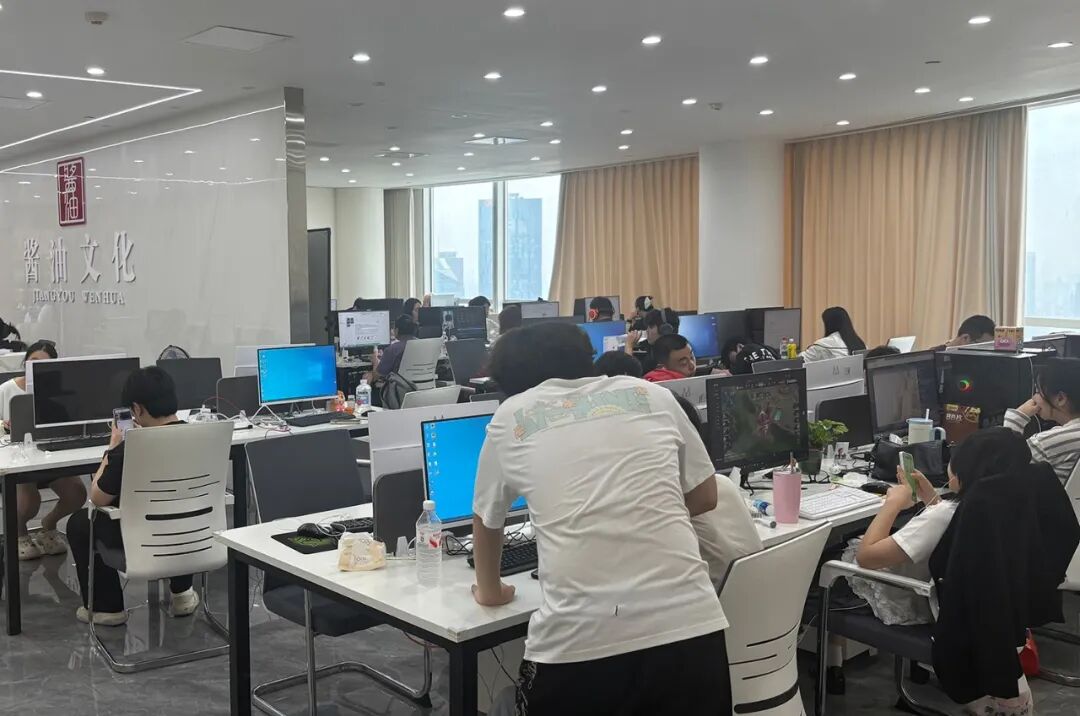
Photography: Chen Hao
At the beginning of the year, after the release of Seedance 2.0, the efficiency of video generation increased sharply, and Huang Haonan soon saw the other side: the technical threshold disappeared, everyone could produce, the supply was destined to explode, while the demand was basically constant, so most people could hardly make money. The company quickly shrank from more than 1,000 people to about 700 people, reducing volume, cutting costs, and shifting to overseas markets. During that period, he repeatedly advised people "outside the industry" not to act impulsively in his Douyin live broadcasts.
One is busy wrapping up the old production capacity of live-action short dramas, and the other is busy cooling down the new entrants of AI short dramas. The two people who were once selected by the industry are now dealing with the same consequence: the production capacity expanded too fast, but the opportunities for works to obtain revenue did not keep up.
The expansion of short dramas was once surprisingly fast. Industry data shows that in 2021, the national micro-short drama market size was less than 4 billion yuan; in 2025, it crossed the 100 billion yuan threshold, and it is expected to exceed 121 billion yuan in 2026. Online literature, film and television, advertising streaming investment and traditional post-production have poured in one after another, almost everyone who has enjoyed the traffic dividend has queued up in this vertical screen track.
But this does not mean equivalent returns. In the first 9 months of this year, 490,000 micro-short dramas were launched nationwide, while the total number for the whole of last year was only 33,000. DataEye takes 50 million views as the reference line for the break-even of a work on a single port, and only 1.3% of the AI dramas crossed this line in the first half of 2026.
The industry has not stopped growing, what has changed is the distribution of growth. In the past, betting on a category and expanding production quickly could bring excess returns; now, production is no longer scarce, and distribution, copyright, aesthetics and cost control begin to determine whether a work can be seen and retain profits.
To understand this change, we have to go back to the account book of short dramas. This industry is only a few years old, and the pricing rules have been rewritten three times.
Initially, whether the recharge can cover the traffic purchase cost determines whether a story is worth continuing to invest; after the free model appeared, advertisements and user duration pay for the audience, and the platform becomes the payer; in the AI era, computing power, copyright, accounts and distribution, together with the card drawer's final judgment of "whether to keep this shot", form a new bill.
The three pricings do not replace each other in sequence, but stack layer by layer. They have changed where the money comes from, and also changed who is qualified to expand production, who has to exit, and how creators and platforms divide labor.
The end of the "god-making era" of short dramas does not mean that the audience no longer needs stories, but that traffic, capital and technology can no longer guarantee returns alone. Short dramas are still a big business, but every investment has to be recalculated.
The first account: traffic sets the price for content
The starting point of short dramas is much more humble than the word "drama".
Around 2020, a new form of novel streaming advertising appeared: shoot the most conflicting plots into one-minute videos, put them into the information flow, and hang a link at the end. Users need to click in and recharge to read the next chapter, and the online novel platform will give rebates to distributors according to the recharge amount. These videos have no complete opening and ending credits, and are not even independent content products, with only one task - to send readers to the novel App.
This determines the inherent "hook" of short dramas: retain people at the 3rd second, and make people can't help clicking the next episode at the end. The counterattack of small potatoes, the return of the war god, the comeback of the son-in-law, establish the character setting in one sentence, and complete an emotional push in a few seconds. The advertisement must first be clicked, and it doesn't matter so much whether it is remembered.
*Wushuang* broke through the ceiling. This drama produced by Xi'an Fenghang was launched in August 2023: a total of 94 episodes, about 140 minutes, the cost was less than 500,000 yuan, the shooting only took 10 days, and the recharge exceeded 100 million yuan 8 days after launch. A dismissed son-in-law suddenly became the master of the Dragon Palace, a simple and direct emotional model combined with streaming investment, creating the first wealth myth of short dramas.
Li Tao, founder of Xi'an Fenghang, later repeatedly explained that the 100 million yuan was only the recharge flow. Traffic costs ate more than 90% of it, and the real profit left was only a few million yuan, which had to be distributed to producers, screenwriters and post-production; as the founder and chief director, his cash income was even less than 1 million yuan. But "breaking 100 million yuan in 8 days" was enough to attract traffic players to bet, and Wang Jiacheng was the outstanding one among them.

Wang Jiacheng Source: Interviewee
Wang Jiacheng has a background in mobile advertising and online novel CPS (cost per sales) distribution. In his logic, why do customers invest in advertising? Because investing 10 yuan can bring back 11 yuan; when will customers stop? Because the input-output ratio is not cost-effective. After 2020, the reading volume of self-media declined, and the CPS conversion rate continued to decline, while video users and advertising inventory expanded rapidly. He thus judged that "novel videoization", that is, short dramas, might be a good business.
From today's perspective, this is not surprising, but it was a minority view at that time. At that time, the content industry was dominated by three types of players: online novel companies sold IP, long video platforms purchased IP, and traditional production companies shot stories. Short dramas provided a fourth approach: use existing novels as raw materials, find users through streaming investment, and settle accounts according to recharge.
Therefore, in Wang Jiacheng's eyes, short dramas are completely different from the film and television industry. Everything serves streaming investment, and the underlying layer is a set of accounting models: how much to spend on production, how much to spend on traffic, at which episode users pay, and whether the recharge can cover the next investment. These numbers determine the fate of the project earlier than the resumes of directors and actors, and the long feedback cycle of traditional film and television is compressed to a few days.
The most typical test is to first invest 10,000 yuan to buy traffic, if it brings back 12,000 yuan of recharge, continue to increase it to 100,000 yuan; if it can bring back 130,000 yuan, it proves that there is still money to be made. When the input-output ratio is high enough, every additional budget can bring more cash; every cash return supports the next round of investment.
In August 2021, Wang Jiacheng registered and established Jiuzhou Culture. In the first half year, traditional film and television teams were unwilling to take such jobs, and the shot dramas lacked buyers, so the short drama business could only rely on the old business for support.
The turning point came from Kuaishou. In 2021, Kuaishou opened the floodgates for short drama traffic purchase, forming a closed loop of production, investment, payment unlocking and CPS revenue sharing. Every link that Wang Jiacheng was familiar with happened to be the capability that the platform lacked at that time, and his distribution experience finally had an outlet.
The "streaming investment-payment" logic quickly pushed the industry up.
Chen Ruiqing, founder of Dianzhong Technology, came from an online novel platform. In the middle of 2022, the team found that distribution partners began to make novel promotion materials into short dramas, so he decided to enter the industry. Dianzhong Technology's monthly short drama recharge in September 2022 was about 10 million yuan, and it rose to 400 million to 500 million yuan in June and July 2023. Zhou Peijin, founder of Shanhai Xingchen, entered later, and switched from online novels to short dramas in 2023; by the end of the year, the company's monthly production capacity was about 10 dramas, and it was close to 30 dramas a year later, with an average monthly flow of more than 350 million yuan.
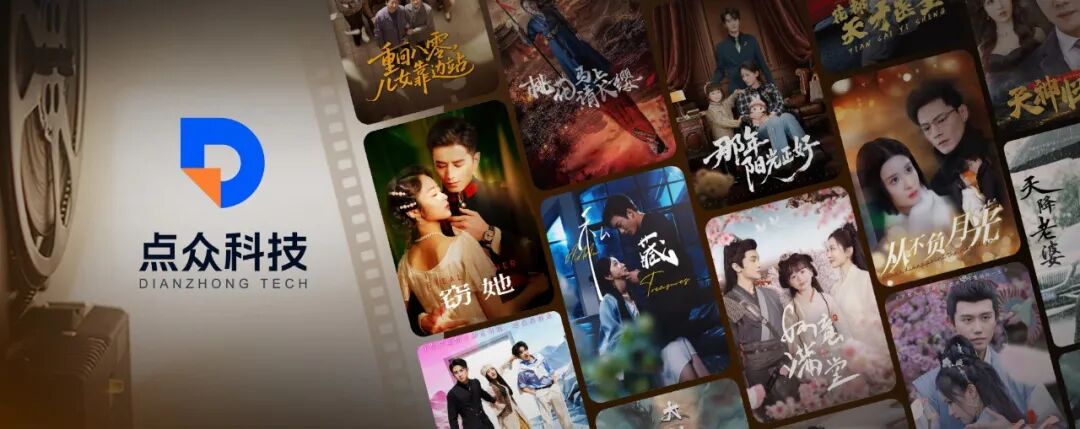
Source: Interviewee
The account book structure at that stage was brutally simple. A drama of 80 to 100 episodes was shot for 6 to 8 days, with a cost of 200,000 to 500,000 yuan, and more than 80% of the budget was spent on streaming investment. On the first day, the streaming operator threw thousands of materials into the traffic pool for testing, and the vast majority of the budget was pressed in the first week - the life of short dramas is often only half a month.
Short dramas seem to be a traffic business, but they have developed requirements for industrialization: the faster you want to recycle, the more you need a team that operates like a factory. The "industrialization" that the film and television industry has been shouting for 20 years has landed here instead.
In 2023, Hengdian became "Vertical Screen Store". A crew of less than 20 people was the standard configuration, the leading actor could act in three or four dramas a month, and the screenwriter wrote 10 episodes a day, 500 words per episode, to avoid being eliminated.
The company is also expanding. By 2023, Jiuzhou Culture's annual revenue at home and abroad reached about 4 billion yuan, with a team of about 1,500 people, including 300 to 400 streaming operators and 300 to 400 screenwriters. In the project structure, about 70% break even, and hits account for 10% to 15%. A "content factory" that runs around the clock has thus taken shape.
At that stage, practitioners talked more about commodities and less about works. Li Tao was familiar with materials, Chen Ruiqing was familiar with online novels and payment, Wang Jiacheng was familiar with distribution, Zhou Peijin was willing to use high budget to expand scale, and behind the different faces was a similar business path: find payment