On-device AI has suddenly exploded in popularity, what exactly are the capitals scrambling for?
On the afternoon of November 10, the originally calm market was suddenly ignited by AI glasses.
Yingtong Communication and Chaoyang Technology hit the 10% daily limit immediately, Siyai Technology and Fullhan Micro soared to the 20% daily limit, followed by StarChen Technology, Allwinner Technology and Rockchip, and the concept sector rose by more than 4.5% in a single day.
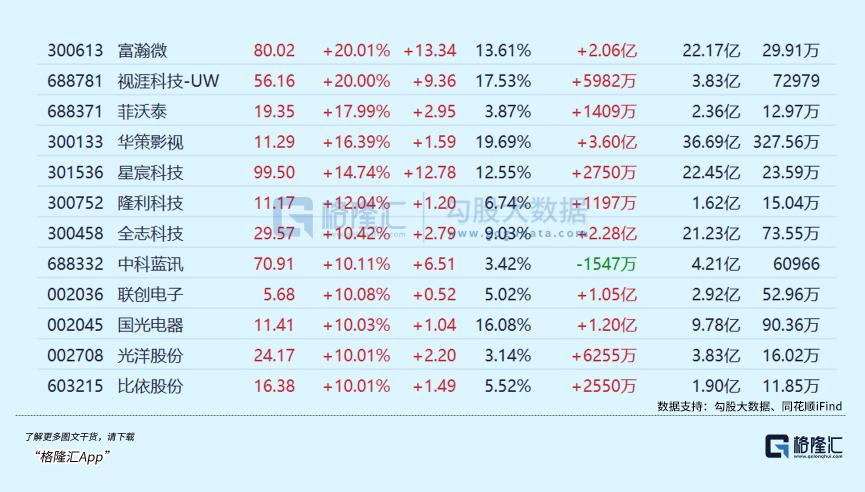
How did a niche concept suddenly become a hit in just one day?
01
For a long time in the past, AI glasses were only regarded as geek toys and could hardly enter the public view.
What is more niche is that Meta used to dominate the entire market alone in the past.
Data from Omdia shows that Meta accounted for 85.2% of the global AI smart glasses market in terms of shipment volume in 2025, and still maintained an overwhelming level of 81.3% in the first half of 2026.
According to Counterpoint's statistics, global smart glasses shipments in the first half of 2026 increased by 263% year-on-year, products without displays accounted for 96%, and Meta took 94% of the share of screenless AI glasses.
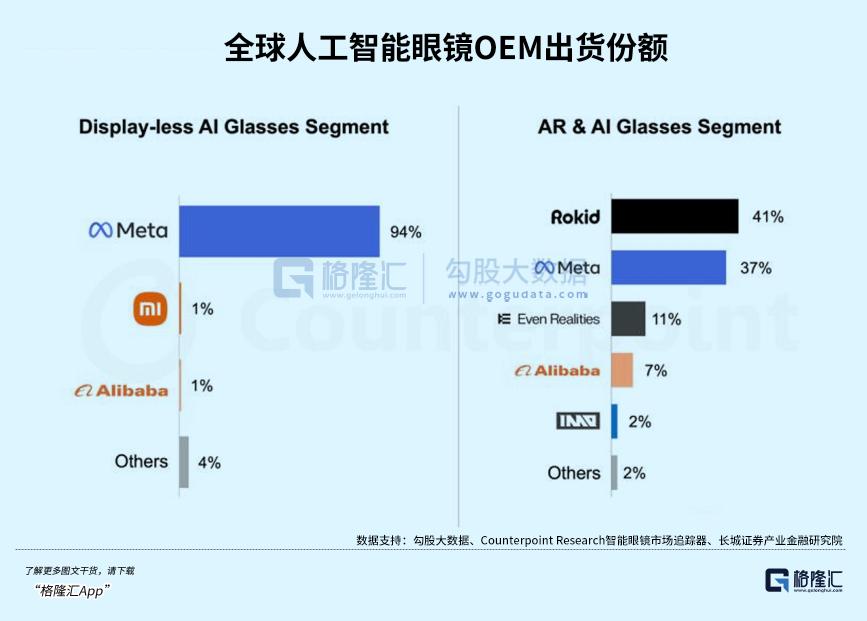
That's why when a disruptive player finally emerged in this track, the market became surging.
The current game-changer is Samsung.
On November 9, "Intelligent Eyewear", the first AI glasses co-developed by Samsung Electronics and Google, was officially announced. It will be open for reservation on November 12 and officially launched in December. It is equipped with Google's generative AI model Gemini, and the frames are designed by Gentle Monster and Warby Parker, with South Korea and the United States as the first batch of launch markets.
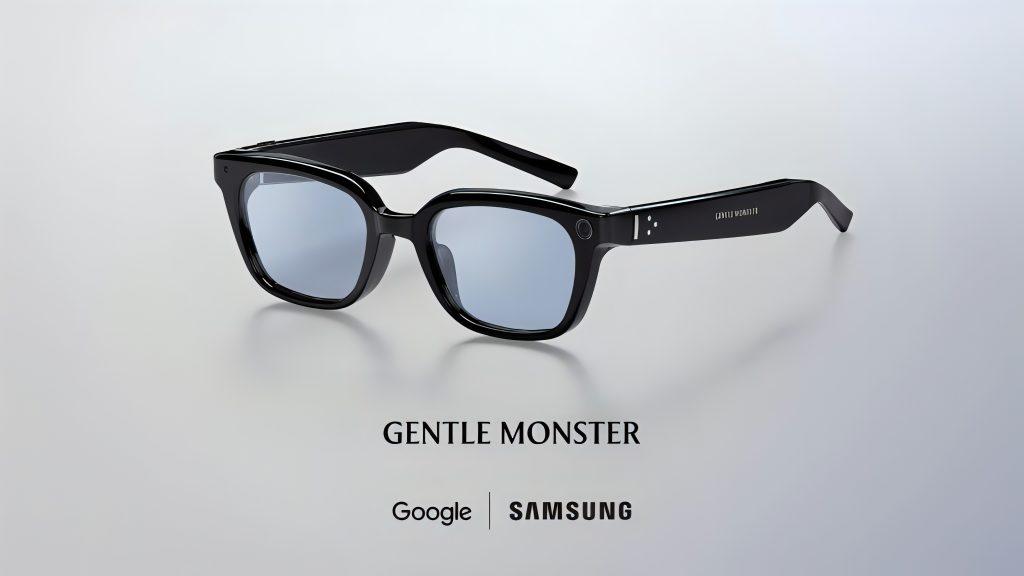
Although it is only a product reservation, the market is currently in a time window that is extremely sensitive to the AI glasses narrative.
In 2025, Meta used the Ray-Ban series to push AI glasses from geek toys to the public consumer market.
Global AI glasses shipments increased by more than 400% year-on-year in 2025, and the industry has finally moved past the stage of product launches and entered the stage of exploring the mass market.
The entry of Samsung and Google means that for the first time, there is a combination in this track that is no less competitive than Meta in terms of model capabilities, hardware manufacturing and channel resources.
A monopoly pattern that accounts for more than 80% has finally welcomed a heavyweight competitor, and the capital market can hardly fail to react.
Furthermore, the Ministry of Commerce's big business data also disclosed at the same time that the sales of smart glasses on key platforms in the first three quarters increased by 1.1 times year-on-year.
This means that consumer demand for AI glasses is already real. Omdia reported that shipments reached 4.2 million units in the first half of the year, with a year-on-year growth rate of 127%.
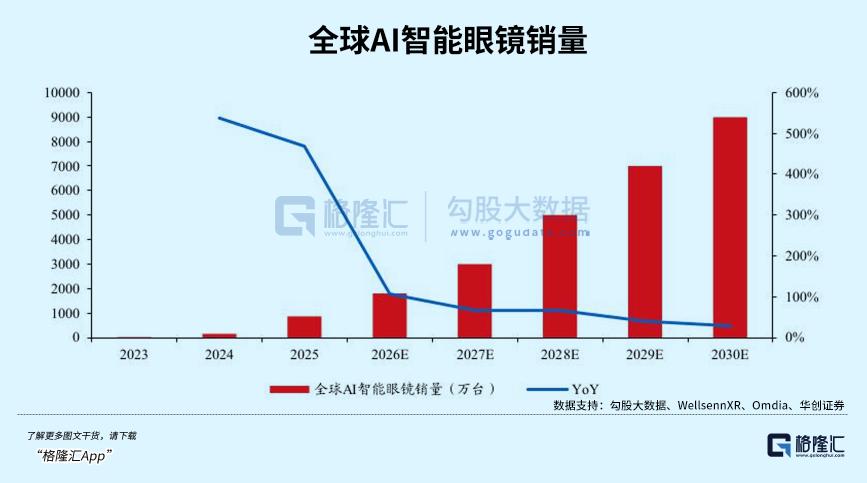
And long before that, smart glasses were officially included in the national subsidy catalog this year, and incorporated into the home appliance trade-in subsidy system.
This means that policymakers have begun to treat AI glasses as a terminal category with mass penetration potential.
However, more important than the current development stage of AI glasses is that AI glasses have become a more attractive carrier than earphones and watches.
As OpenAI, Meta, and Anthropic successively launched personal Agents, the carrier of personal Agents is regarded as the most important traffic entrance in the future.
No one has a definite answer as to what this carrier will eventually be.
As a result, large model manufacturers have begun to cut into new hardware such as glasses and portable devices. Innovation in hardware forms is emerging in various possibilities and has become the competitive direction for large model manufacturers.
Mobile phones need to be taken out, the upper limit of interaction for earphones and watches is voice and touch, earphones cannot see the world, and watches only give a quick glance when you raise your wrist.
Only glasses, mounted on the most natural organ for humans to obtain information, naturally occupy the visual and first-person perspective, making them the ideal physical shell for Agents.
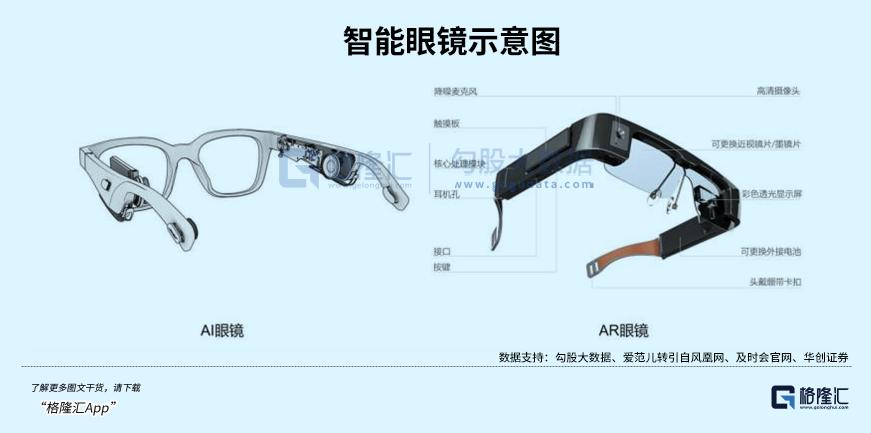
Compared with AI glasses themselves, betting on AI glasses is more like betting on the next generation of traffic entrances.
02
At present, Apple, Meta, ByteDance and OpenAI are continuously advancing AI glasses and AI-native devices. Apple will enter a new product innovation cycle in 2027, and AI glasses have been included in its hardware roadmap.
ByteDance's Doubao AI glasses have been mass-produced at Longcheer Technology's Nanchang factory, with a minimum order quantity of 1 million units, while Meta has doubled its 2026 AI glasses production capacity target to 20 million units.
With the release of personal Agents and world models, AI end-side hardware, as an interaction entrance, has ushered in a systematic revaluation of value.
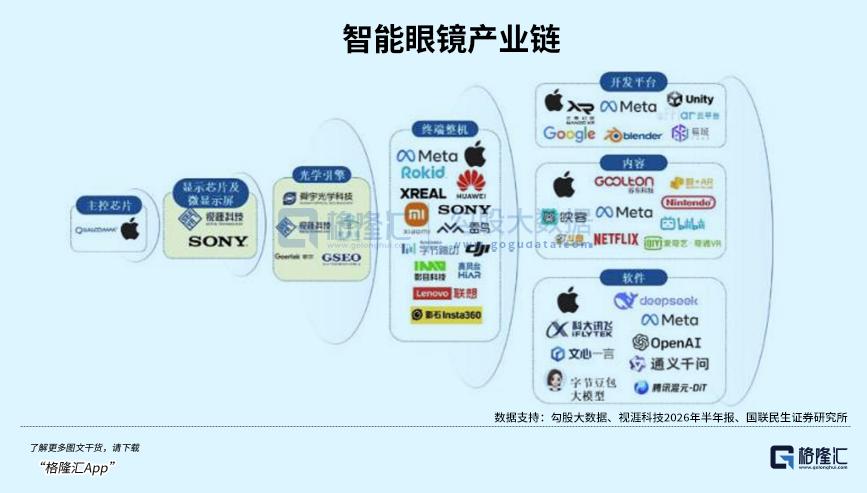
The "Lingying AOS" released by Ant Group in September is positioned as an Agent-native operating system for new terminals such as AI glasses.
This means that even the software layer of the industrial chain is already preparing infrastructure for glasses as Agent carriers.
Then, if the software layer has already taken action, what about the rest of the industrial chain?
In AI glasses with display functions, the upstream optics and chips account for the vast majority of the BOM cost.
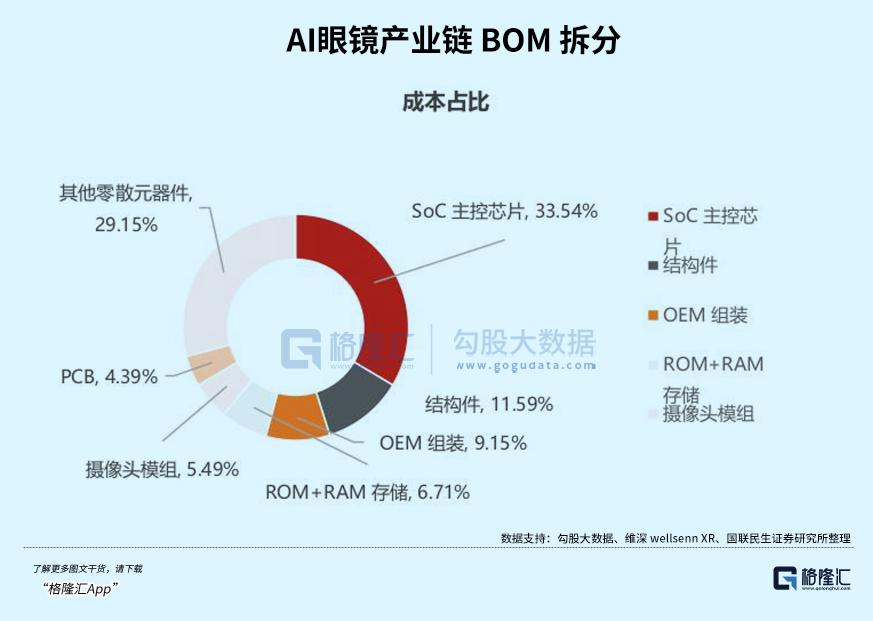
The total of optical waveguide and optical engine module accounts for 50% of the BOM, and the AI main control SoC accounts for 25%, and the two together account for more than 70% of the total cost.
Even in screenless AI glasses with a simpler structure, chips account for more than one-third of the total cost.
This means that the profit pool of the industrial chain is highly concentrated in two links: the players who can make optics thinner and brighter, and the players who can make chips smaller and more power-efficient.
The leading stocks that rose today, including KTC Technology, Siyai Technology, Yingtong Communication, and the following industrial chain targets such as Rockchip and Beken, basically fall within this scope.
Now, the competition for positioning in the optics sector has reached the process layer.
Goertek Optics put into operation China's first 12-inch wafer DUV photolithography and etching mass production line in June 2026, directly raising the production of micro-nano optical devices from the industry mainstream of 4-inch and 6-inch to the semiconductor-level process.
The domestic substitution on the chip side is also accelerating. The increase in the localization rate of optics and chips is pushing down the BOM cost of AI glasses, which in turn stimulates shipments. In this way, a positive cycle has already started to operate.
The concentration of the midstream OEM link is higher than expected, and the barriers are deeper than expected.
Goertek has taken most of the share in the OEM of AI glasses complete machines ——
Meta's Ray-Ban series is exclusively manufactured by Goertek, Goertek undertakes about 70% of the OEM share of Huawei AR glasses and about 70% of the OEM share of Xiaomi's first AI glasses.
Not only that, the myopia adaptation demand of AI glasses is pulling traditional optical players into the industrial chain.
Conant Optics has introduced Goertek as a strategic shareholder holding 20% of its shares, and Doctor Glasses has also established a joint venture with Thunderbird Innovation.
As AI glasses evolve from geek toys to near-eye terminals that can support social content and task flow interaction, the weight of myopia prescription, functional lenses, offline experience and after-sales delivery system is rising.
Mingyue Lenses' net profit growth rate in the 2026 three-quarter report is 33%, and Doctor Glasses' net profit growth rate is 43.6%. The performance realization of lenses and optometry channels means that the industrial value of lenses and channels may be realized earlier than that of complete machine brands.
03
As a niche category, the reality faced by AI glasses is still harsh.
While the shipment growth rate of AI glasses is indeed staggering, the base is still very small.
Global AI glasses shipments reached 8.46 million units in 2025, which is not even a fraction of the annual shipment of more than one billion smartphones.
Not only that, although shipments are growing rapidly, profitability remains at a low level.
Most terminal brands are currently losing money on almost every unit sold. The gross profit margin of display-type AI glasses is just over 20%, and this part of the profit also needs to be distributed to distributors.
More importantly, the return rate. As a niche category for early adopters, whether it is returning after use for experience purposes or the inherent experience problems of AI glasses, the return rate of the entire industry has remained high.
In 2026, the industry-wide return rate still remains at 60% to 70%, while the return rate of traditional glasses e-commerce is usually between 15% and 30%, the gap is huge.
This means there is still a significant gap between being a novelty for early adopters and being a commonly used product.
The impossible triangle between performance, weight and battery life still exists. The cost of reducing 1 gram of weight is calculated in tens of millions, and the optimization accuracy has been advanced to the unit of 0.1 gram, so the marginal cost will only become higher and higher.
Whether it is weight, battery life, heat generation, or the social awkwardness brought by AI glasses, they are all urgent problems to be solved in the industry.
In the current AI glasses industry, the primary market is increasingly eager to vote with real money, and the secondary market also has to keep up with the pace.
In the first half of 2026, there were at least 64 financing, M&A and strategic investment events in the global smart glasses industrial chain, with a total disclosed amount of about 90 billion yuan, while there were about 36 financing events in the whole year of 2025, with a total amount of about 43.67 billion yuan.
After Bit Illusion completed its angel round financing, its valuation jumped directly from 130 million yuan to 1.5 billion yuan, more than ten times higher;
INMO Technology raised nearly 1 billion yuan in Series C+ round;
Yiwen Technology completed a US$150 million Pre-B round, with a post-investment valuation of over US$1 billion, becoming a unicorn only three years after its establishment.
Thunderbird Innovation completed three rounds of financing within 10 months, and XREAL has submitted its Hong Kong stock prospectus, sprinting for the "first smart glasses stock".
The rise in primary market valuations will transmit the price comparison effect to the secondary market.
But conversely, when terminal sales cannot support the return rhythm expected by the primary market, the pressure of retreat will also pass back along the same chain.
Conclusion
AI glasses have not yet ushered in their iPhone moment in 2026.
Return rates, usage duration, privacy disputes, and the lack of killer applications are all real problems.
But likewise, for a category with a penetration rate of almost zero, a growth rate of over 40%, policy support, and tenfold valuation surges in the primary market, the potential of AI glasses cannot be ignored.
However, in the face of the harsh reality, the capital market has already been far too hot.
After Siyai Technology hit the 20% daily limit, its price-earnings ratio has exceeded 1355 times.
For a category with shipments still in the order of tens of millions of units and an industry pattern that has not yet taken shape, the expectations contained in the valuation have gone too far.
For the capital market, what really matters is not whether AI glasses will succeed, but which part of the industrial chain, and even which company, the profits will stay in after AI glasses develop.
Gelonghui Statement: The views in the article are all from the original author and do not represent the views and positions of Gelonghui. Special reminder: Investment decisions need to be based on independent thinking. The content of this article is for reference only, does not constitute any practical operation suggestions, and transaction risks shall be borne by the participants.
This article is from the WeChat official account "Gelonghui APP" (ID: hkguruclub), author: Yuan