The Codex handheld gaming console suddenly went on sale, but netizens are urging for the update of GPT-6.2
When you were a kid, you wanted to own a Game Boy. When you grew up, you wanted to make your own Game Boy game. Unexpectedly, OpenAI is about to fulfill both of these wishes for you at the same time.
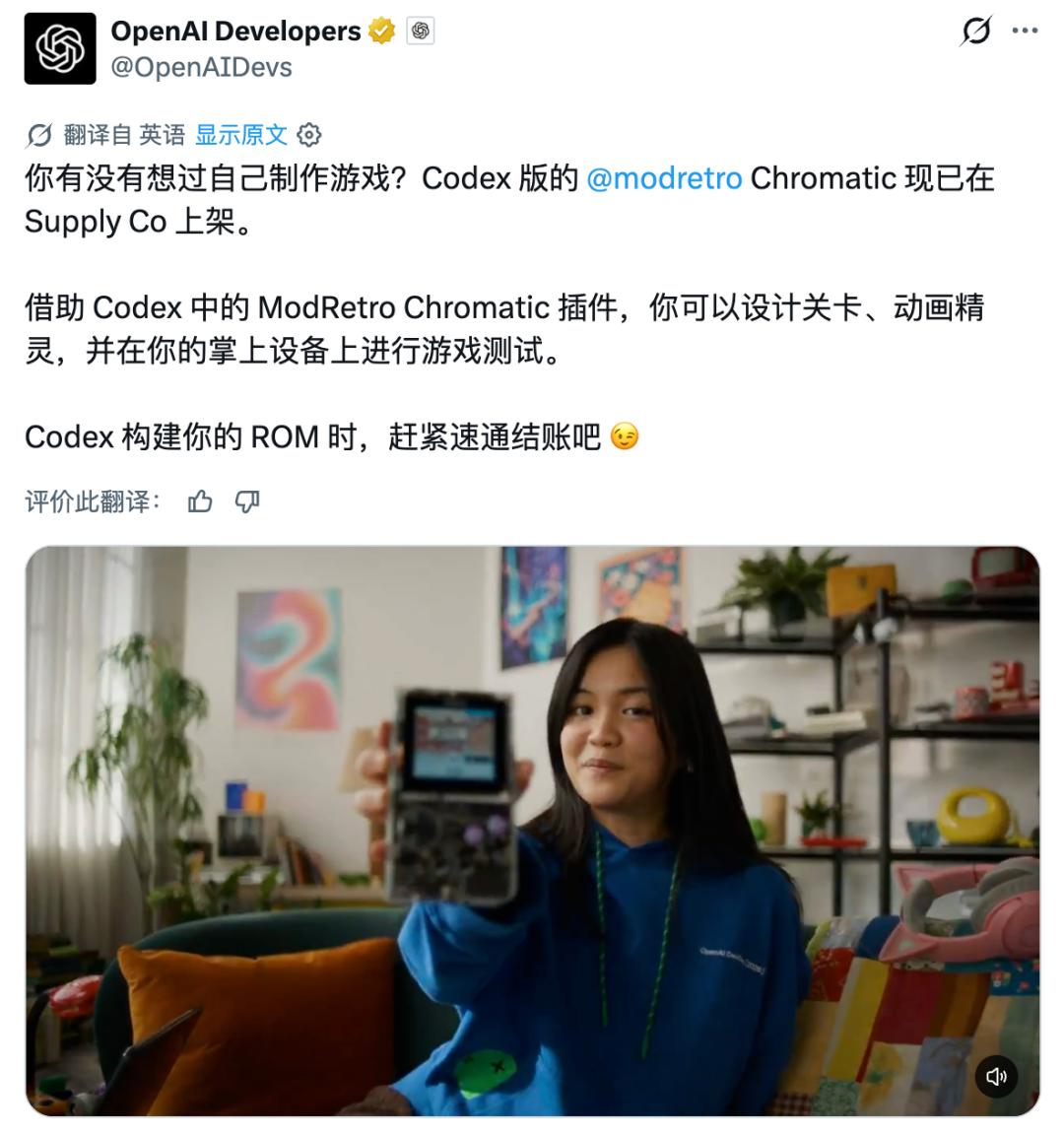
Just now, OpenAI's official merchandise store Supply Co. has officially launched a handheld console jointly developed with retro game hardware manufacturer ModRetro, named ModRetro Chromatic Codex Edition, priced at 200 US dollars, which is approximately 1344 yuan.
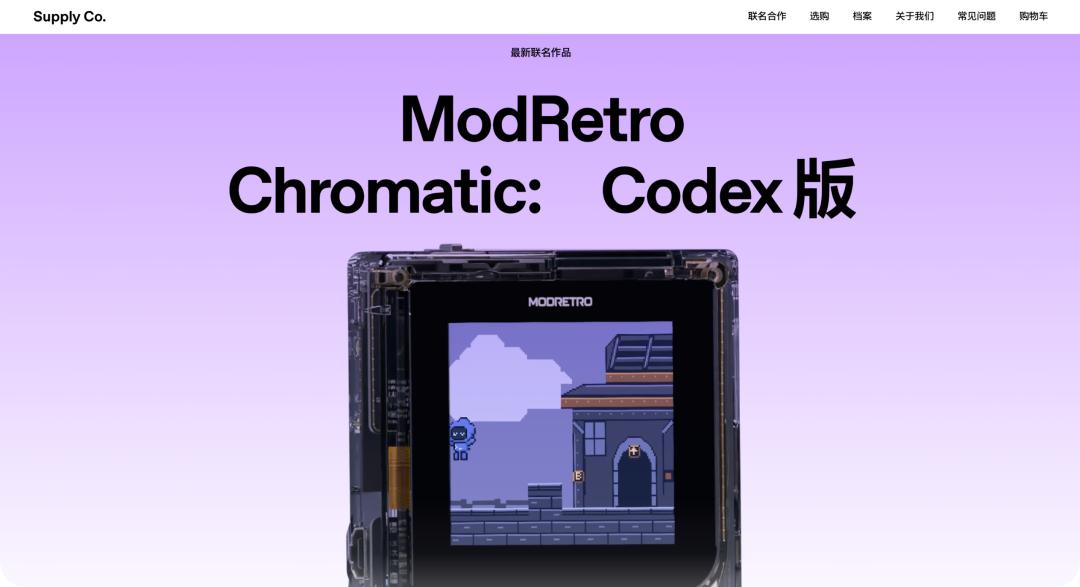
Figure | 🔗 https://openai.com/zh-Hans-CN/supply/co-lab/chromatic/
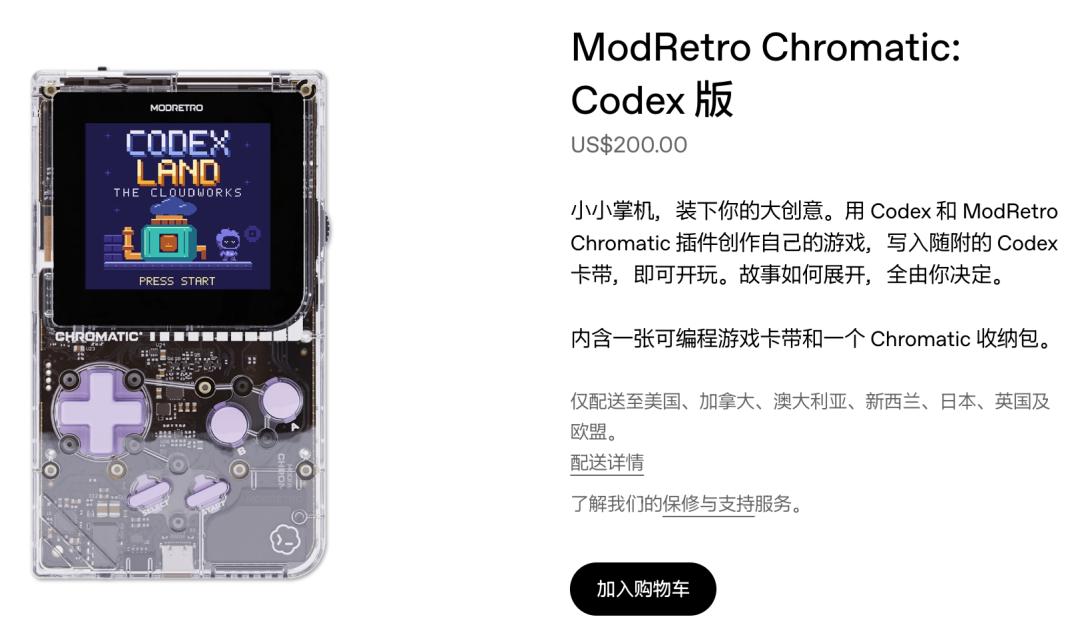
At first glance, this device is quite similar to Nintendo's classic Game Boy handheld console, equipped with a retro LCD screen, D-pad, physical operation buttons and game cartridge slot, and even retains the iconic cartridge design of traditional handheld consoles.
However, OpenAI obviously does not intend to sell products purely relying on nostalgia.
The biggest selling point of this co-branded handheld console is that it allows players to use Codex to create their own games through natural language, then write the games into physical cartridges, and run the works on the actual handheld console.
In other words, retro mini-games that used to require learning programming, drawing characters and making maps to complete, now you only need to describe your ideas to AI, and you will get a playable work that you can hold in your hand.
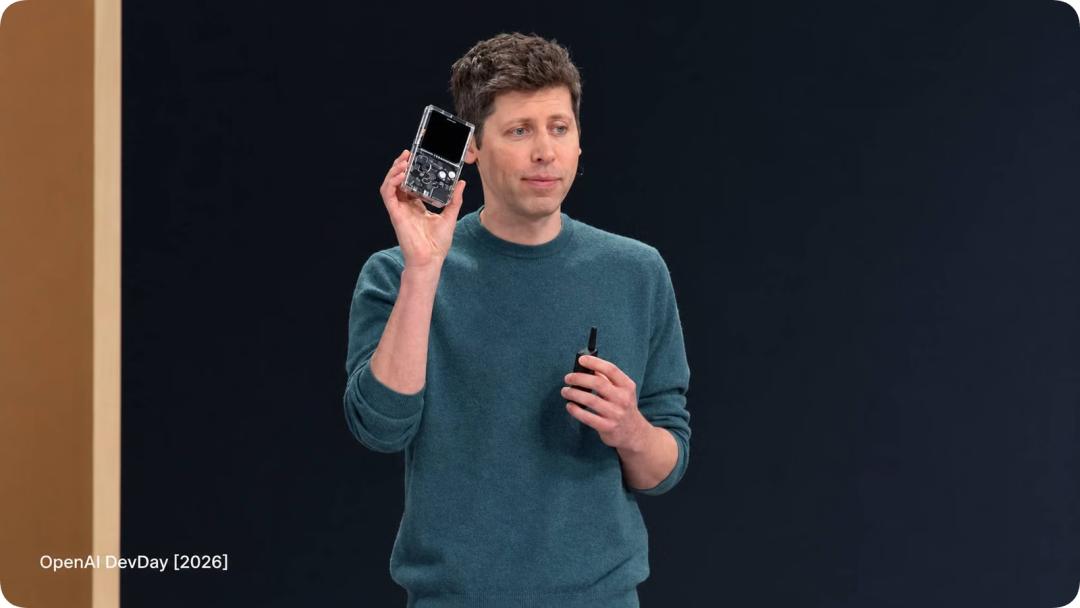
In fact, this handheld console was first unveiled as an event-exclusive product at the OpenAI DevDay developer conference. Now it is re-launched to the market and becomes the latest co-branded product released by Supply Co.
Moreover, this is not the first time OpenAI has launched Codex co-branded hardware across different fields.
Previously, OpenAI jointly launched the Codex Micro mini mechanical keyboard priced at 230 US dollars with keyboard manufacturer Work Louder. It supports displaying the running status of AI Agent through RGB lighting effects, and can also use physical buttons, joysticks and knobs to quickly call Codex functions and adjust inference levels.
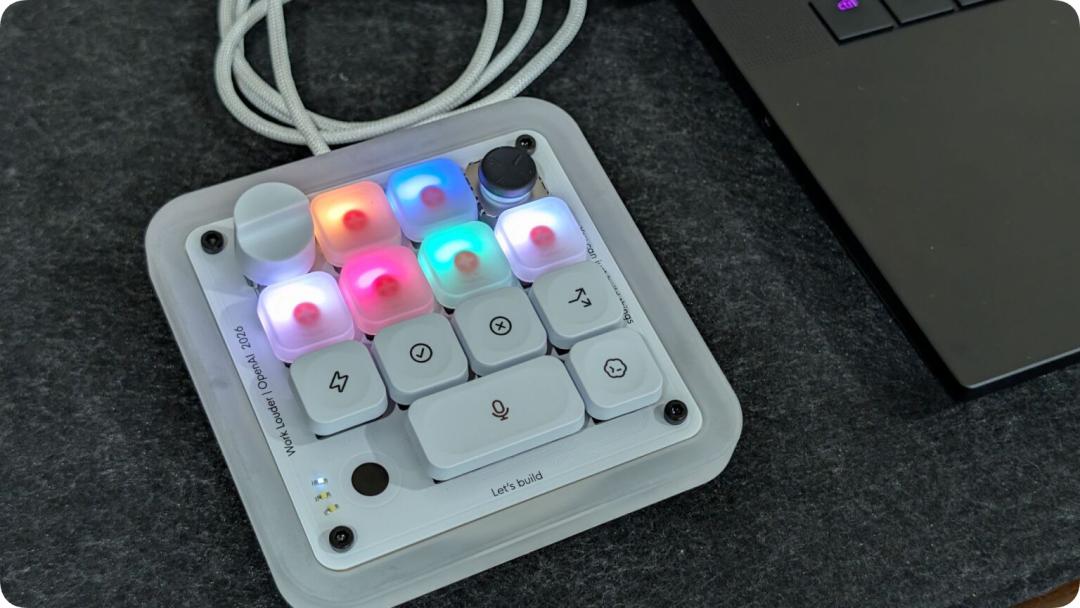
From the developer-dedicated mechanical keyboard to the retro game handheld console that ordinary users can get started with, OpenAI is trying to bring Codex into more physical hardware scenarios.
According to the official introduction, the $200 handheld console set this time includes not only the device itself, but also a programmable Codex game cartridge and an exclusive storage bag.
At present, the product is only available for delivery to the United States, Canada, Australia, New Zealand, Japan, the United Kingdom and the European Union regions.
Compared with the handheld console itself, what OpenAI wants to demonstrate more is how simple Codex can make game development.
The entire creation process can be divided into four steps.
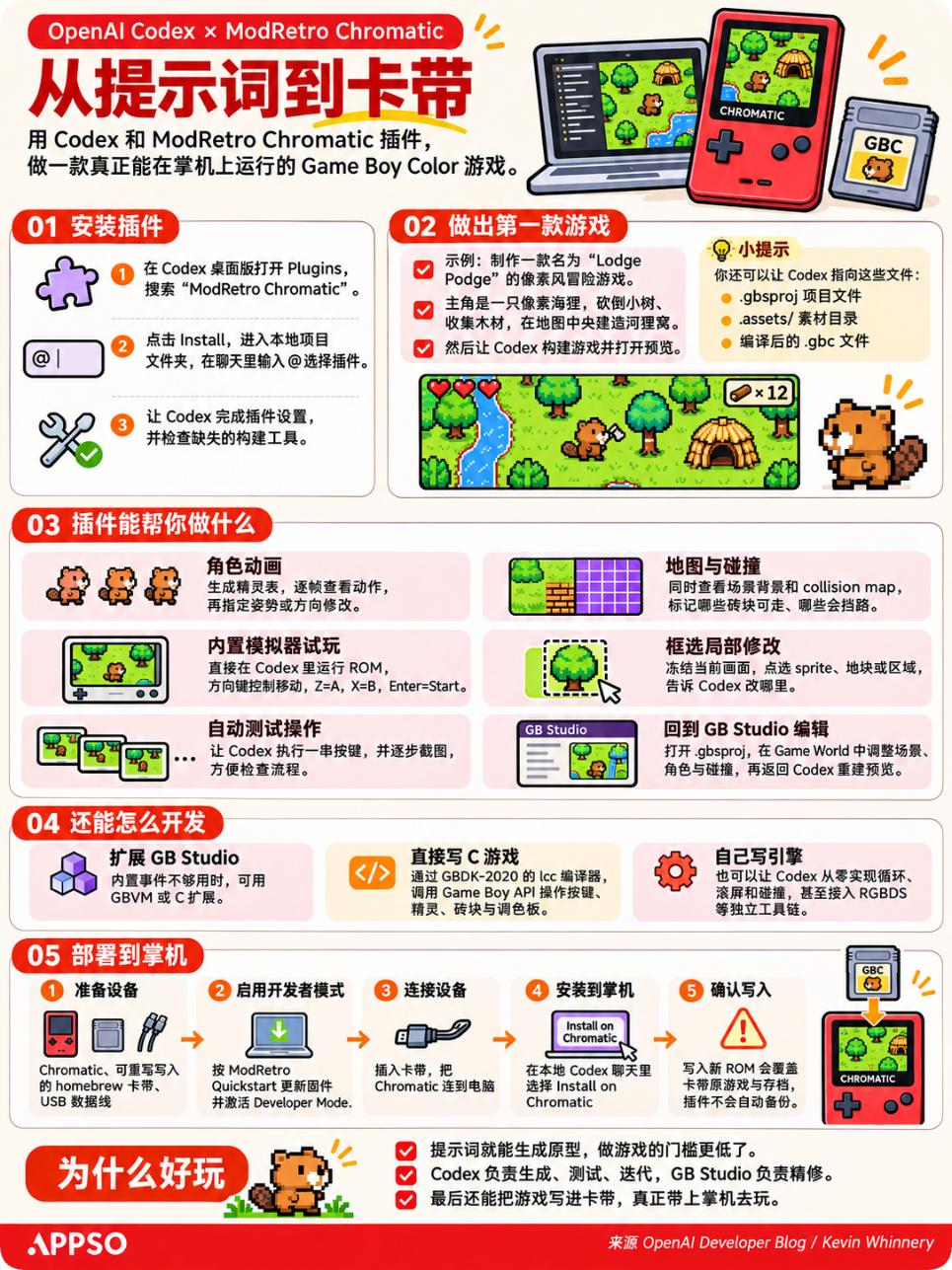
First, users need to install the ModRetro Chromatic plugin in the Codex desktop application, then describe their game ideas through chat, including the worldview, character settings and specific gameplay.
For example, you can ask Codex to make a top-down adventure game, where a pixel-style beaver collects wood in the forest and builds its own cabin.
After receiving the instructions, Codex can call the development tools in the plugin to create game projects, generate character assets, build maps, and write relevant game logic.
If you are not satisfied with the generated effect, you can continue to modify the game through natural language. For example, make the beaver a little fatter, add collectible resources such as soil and leaves, or adjust the obstacles in the map to make certain areas passable.
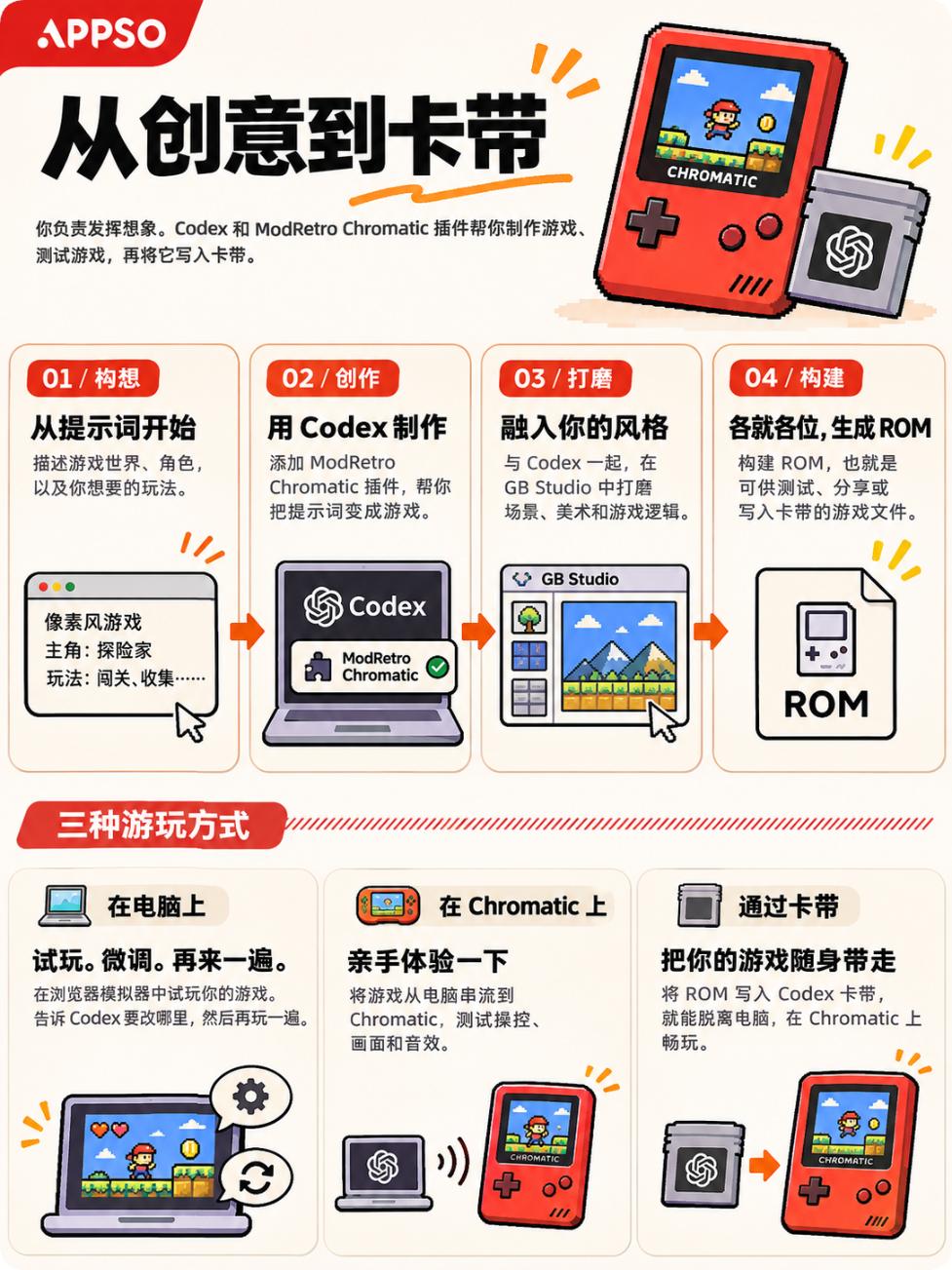
What's more interesting is that Codex also supports directly annotating and modifying the game screen.
Users can pause the game in the browser simulator, select a certain character, map element or specific area, and then tell Codex how to adjust it. After the modification is completed, rebuild the game file, and you can see the new effect.
In addition, the plugin can also simulate key operations, continuously execute specified actions and capture game screens, helping developers check functions such as character movement and scene interaction.
For users who want to further fine-tune the game, Codex also supports working with GB Studio.
GB Studio is a visual editing tool for Game Boy game development. Users can directly adjust game scenes, character positions, collision areas and event logic, and then let Codex rebuild.
After the game is produced, the system will generate a ROM file, which is a game program that can run on simulators or compatible game hardware.
Here comes the interesting part.
OpenAI has prepared three game running methods for this set of tools. Users can not only play the game on the computer for trial, but also connect the physical handheld console for testing, and finally write the game into a real cartridge.
Among them, the computer side supports running games directly through the browser simulator, which is convenient for users to test and modify repeatedly.
If you want to experience the feel of physical buttons, you can use a USB data cable to connect Chromatic, and test the game's control, display and sound effects on the handheld console.
After debugging is completed, users can also write the ROM to the included Codex cartridge. After that, even if the computer is disconnected, you can directly insert the cartridge into Chromatic and run your own work just like playing a traditional Game Boy game.
Before using the cartridge function, you need to update the handheld console to a supported firmware version and enable developer mode. It should be noted that writing a new ROM will overwrite the original game in the cartridge and may also erase the save files, so important data needs to be backed up in advance.
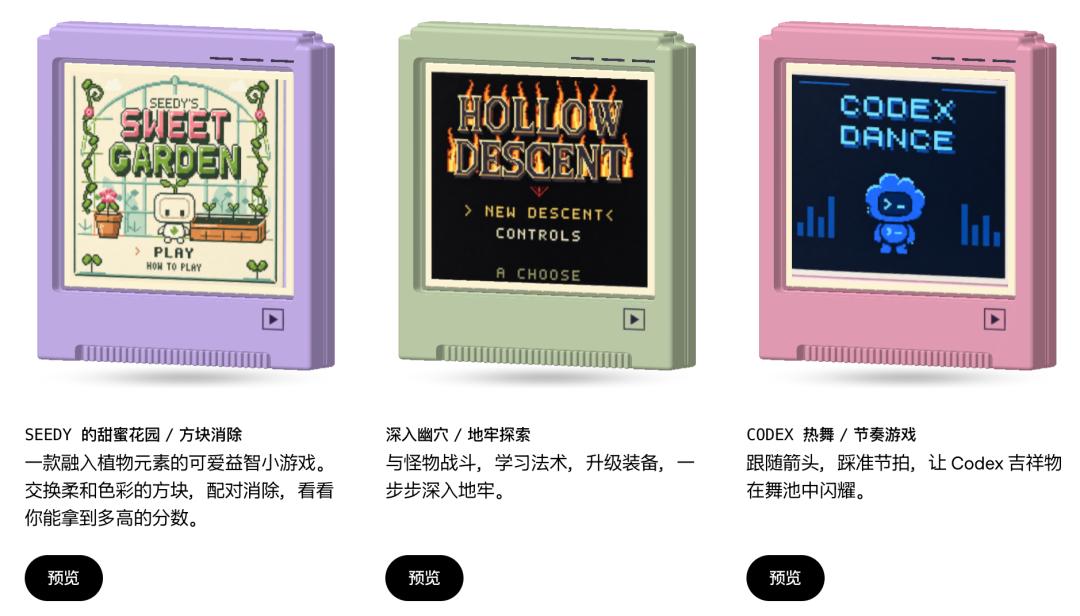
In order to demonstrate Codex's game production capabilities, OpenAI also provides a number of original games for users to experience.
For example, *Seedy's Sweet Garden* is a plant-themed block elimination game, where players need to swap blocks to complete matches and challenge for higher scores.
*Deep into the Dark Cave* is a dungeon exploration game, where players need to fight monsters, learn spells and upgrade equipment, and gradually go deep into the underground world.
Another game *Codex Dance Fever* focuses on music rhythm gameplay, where players need to step on the beat according to the arrows on the screen to make the Codex mascot complete dance moves.
In addition, OpenAI has also launched a dedicated ModRetro game display page, which includes multiple Game Boy Color games made with Codex such as *FlapGPT* and *Codex Land*. Users can directly try them out in the browser or download the ROM files.
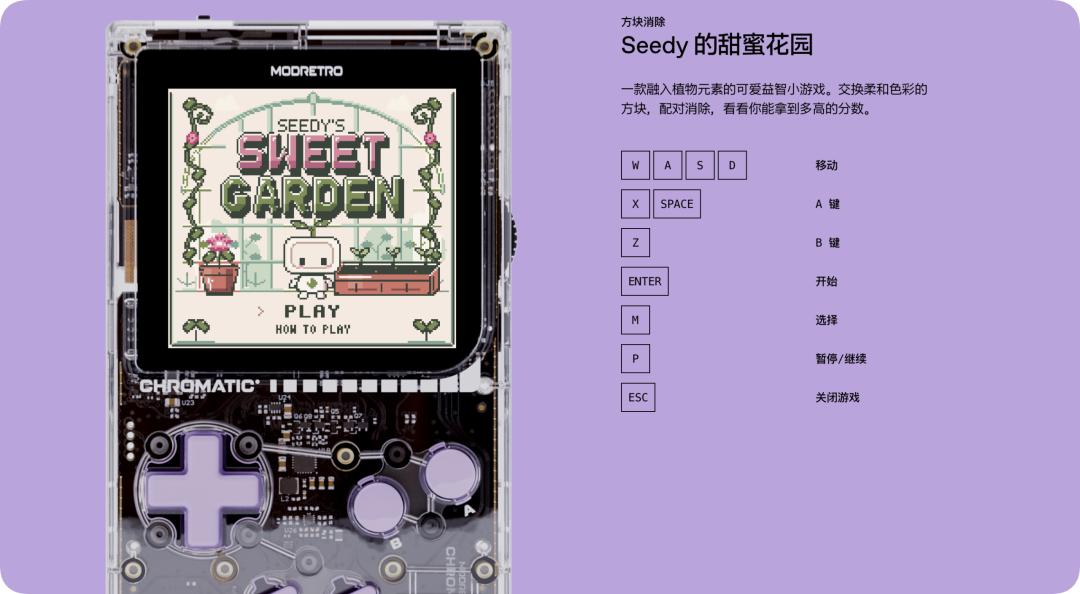
In addition to the officially displayed works, some players have already started trying to put their own ideas on the handheld console.
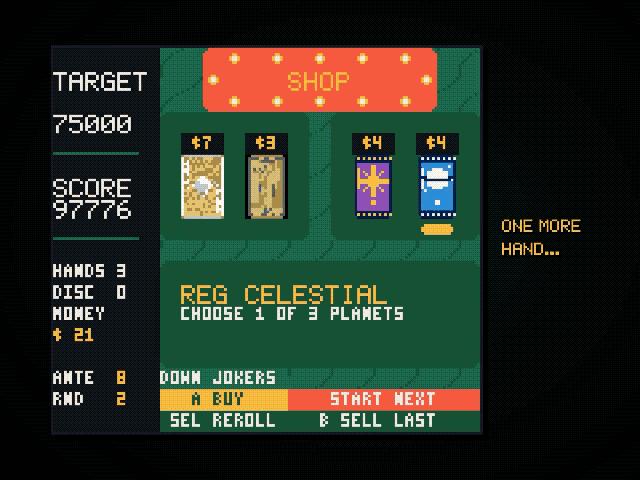
Netizen kuna showed off the popular card game *Balatro* that he ported to the Game Boy Color platform, and said that it has successfully run on the Chromatic handheld console he obtained during DevDay.
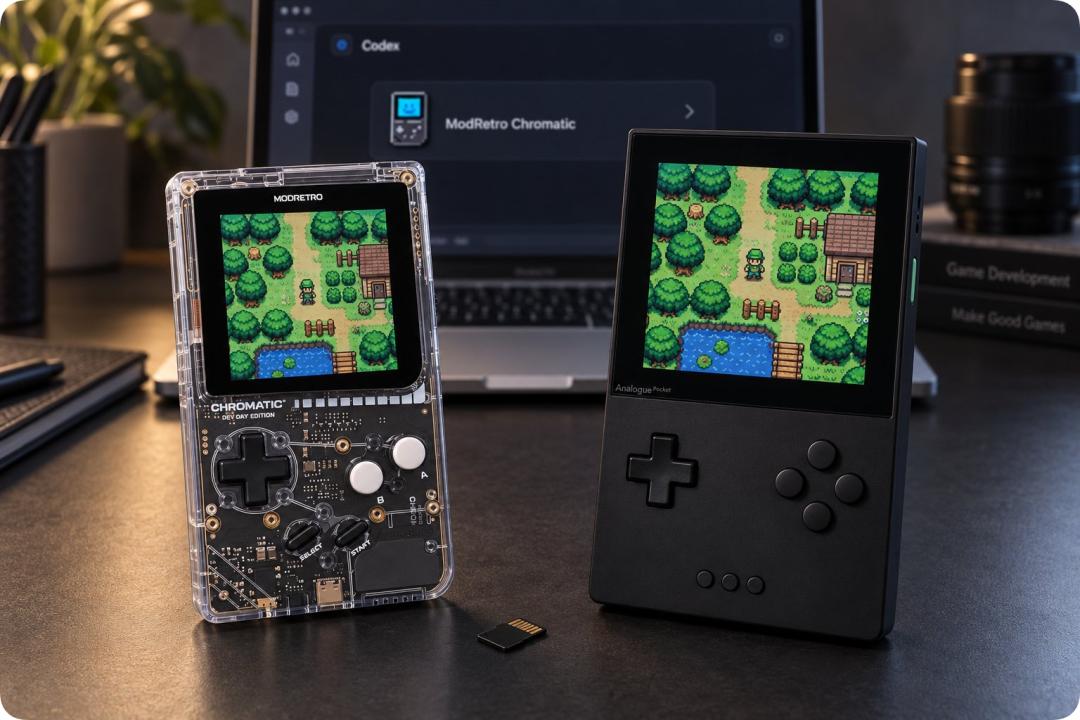
Another netizen Moriarty used the ModRetro Chromatic plugin to make a *Geometry Dash* style game level for his son, and you don't need to buy the co-branded handheld console, it can also run on Analogue Pocket.
Codex developer Kevin Whinnery also shared his experience of using related tools to build games, demonstrating the gameplay of AI-assisted retro game development.
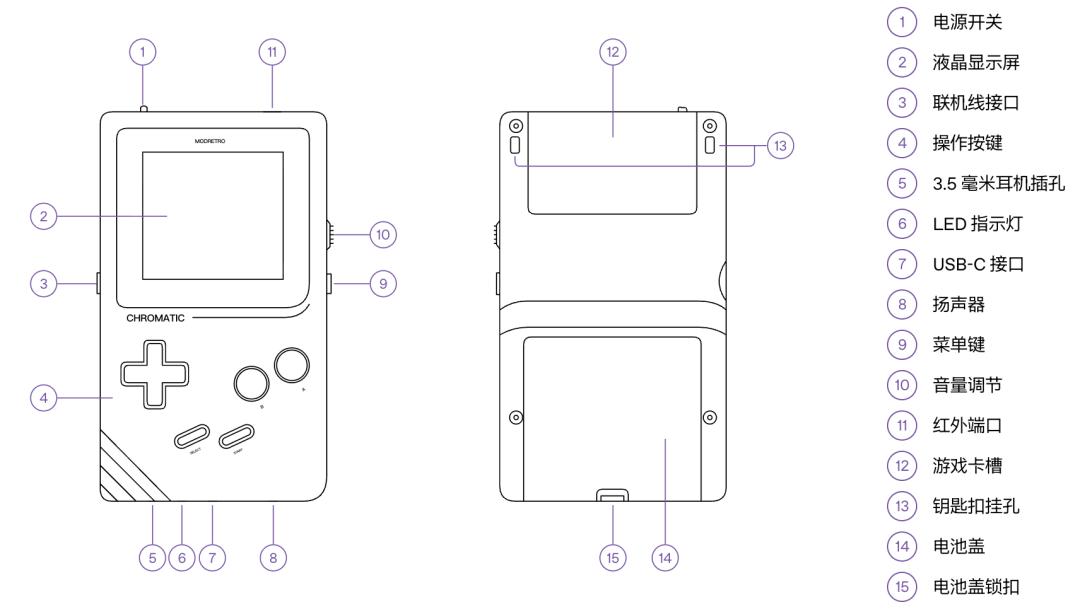
As for the hardware itself, Chromatic still retains the design language of traditional retro handheld consoles.
The device is equipped with an LCD screen, D-pad, A/B operation buttons, Start and Select buttons, and is provided with a 3.5mm headphone jack, USB-C port, speaker, link cable port and infrared port.
The back of the fuselage retains the physical game cartridge slot and battery cover, and the overall design clearly pays tribute to the classic Game Boy.
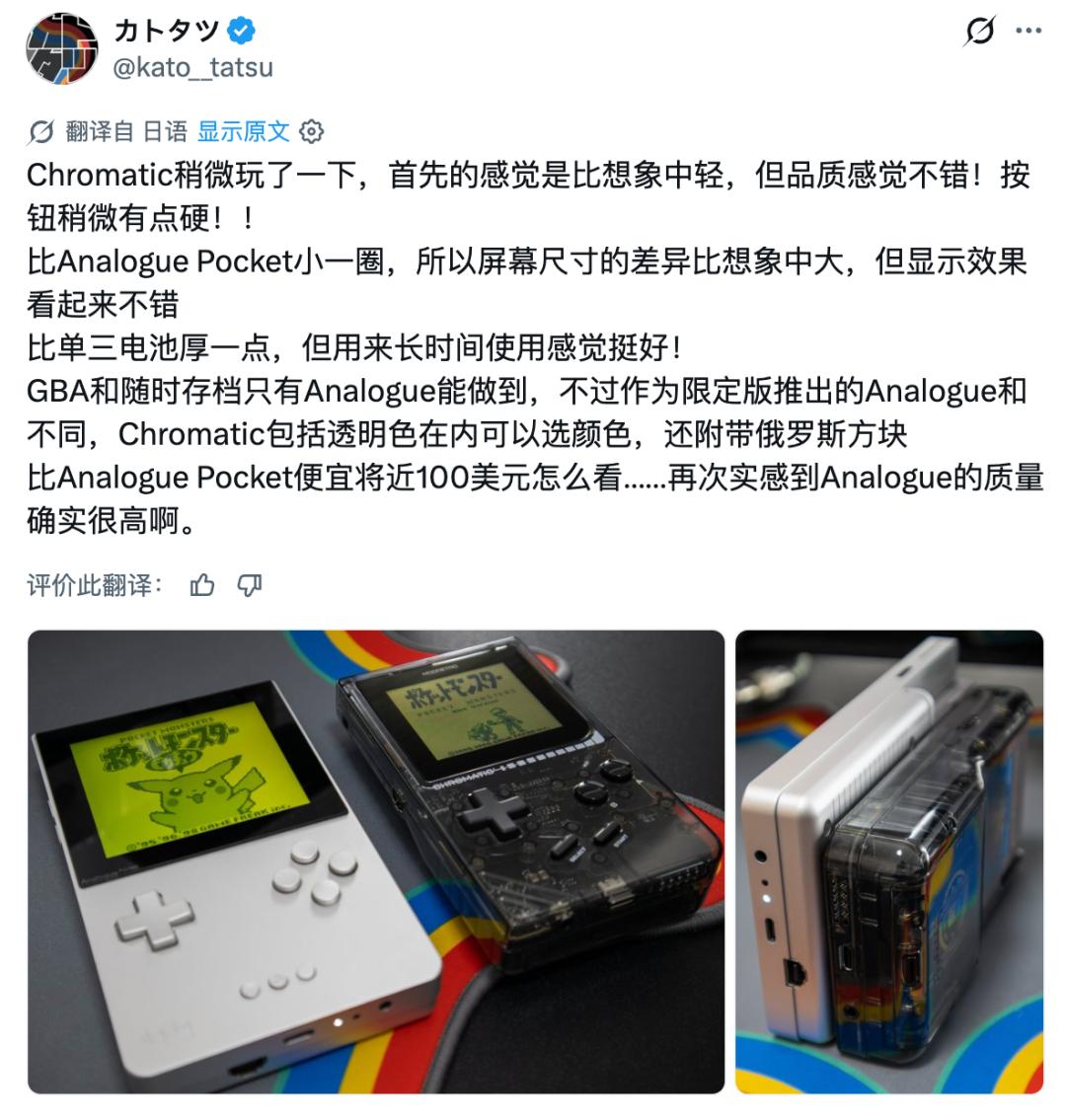
Netizen @kato__tatsu commented after experiencing Chromatic that the fuselage is lighter than expected, the display effect is also good, but the buttons are slightly hard, and the screen is one size smaller than Analogue Pocket, and the price difference of nearly 100 US dollars between the two makes him re-feel the hardware quality of Analogue Pocket.
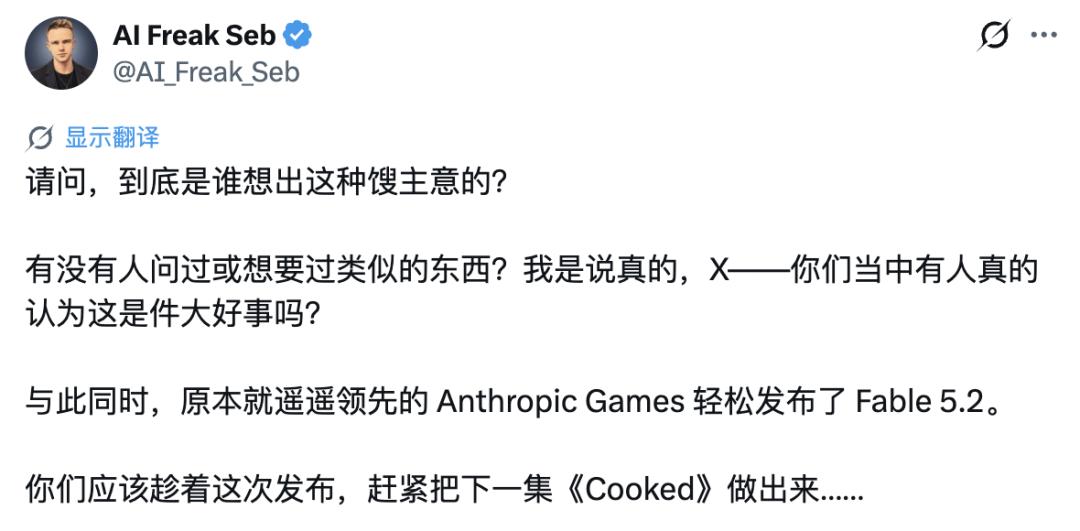
However, when this co-branded handheld console was released, the first reaction of many netizens was: Anthropic has launched Fable 5.2, where is my GPT-6.2 Astra?
In addition, OpenAI also sells a separate Codex programmable flash cartridge priced at 50 US dollars, which is currently out of stock and is expected to be restocked on November 19 local time.
This cartridge supports the ROM formats of original Game Boy and Game Boy Color games (.gb / .gbc). Players can make games through the ModRetro Chromatic plugin and write them to the cartridge to carry their own works with them.
Each cartridge also comes with a Codex pendant and a developer mode activation code. The activation code can be used on up to two devices, but it is only applicable to the ModRetro Chromatic Codex Edition.
