Beef freedom has come to an end.
Beef prices have been rising consecutively, dealing repeated heavy blows to ordinary workers — the so-called "beef freedom" has come to an end.
Two years ago, affordable beef catering outlets sprung up wildly across the streets, with hot pot, grilled skewers, buffet and other formats expanding at full speed. With a per-customer spending of 40 to 50 yuan, eating beef to one's heart's content became a daily routine for ordinary people. However, the low prices gained from continuous losses at the breeding end could not last after all.
Since last year, beef prices have been rising moderately all the way, and the low-price window is slowly closing. According to the national agricultural wholesale caliber, the increase of beef prices from the first quarter of 2025 to November this year is close to 27%.
Consumers quickly found cheaper alternatives, namely pork which is still at a low price level, and chicken which has a more friendly cost-performance ratio.
With the rebound of beef prices, farmers have finally ushered in a profit inflection point. Industry institutions estimate that in October 2026, the profit per head of beef cattle under the self-breeding and self-raising model is close to 6,000 yuan, and the profit per head of professionally fattened cattle is also above 4,000 yuan.
The rise of beef prices essentially boils down to two reasons: first, the continuous contraction of domestic market supply, and second, the restricted quotas for imported beef.
This round of rising cycle is likely to last until next year, or even the year after. Consumers who love eating beef may really need to control their cravings from now on.
Beef prices are on the rise
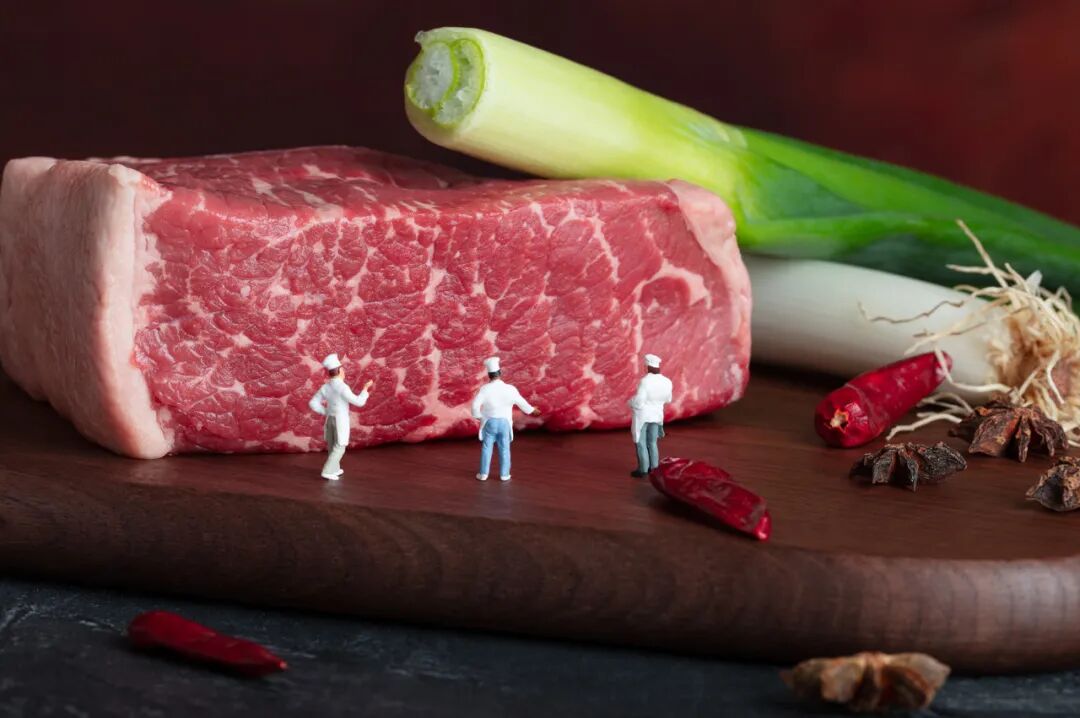
Last weekend, I went to a wet market in the downtown area of Wuhan, and found that the number of people in front of the beef stalls decreased significantly. Because beef prices have risen again, the unit price of cuts like chuck flap and silverside has long exceeded 40 yuan per jin, and high-quality cucumber strip cut is steadily priced above 50 yuan per jin.
I remember that in 2024, the price of fresh beef at the stalls was around 30 yuan per jin. At that time, frozen Argentine beef shank priced at more than 20 yuan per jin was ubiquitous on e-commerce platforms.
The stall owner said that the price increase has lasted for a long time. Now fewer customers buy beef, and the per-purchase volume has also shrunk significantly, making the business a bit difficult.
The price of the braised beef store of a neighboring brand has also been raised accordingly. In the past, a jin of braised beef was less than 60 yuan, but now the unit price has risen to 90 yuan per jin, and the price of better-quality products is even higher.
How on earth did this round of beef price rise start?
After sorting out public information, it is found that the inflection point when beef prices officially entered the upward cycle appeared in the second quarter of 2025.
According to the national monthly agricultural wholesale caliber, in April, May and June 2025, the wholesale prices of beef were 61.52 yuan/kg, 63.20 yuan/kg and 63.78 yuan/kg respectively, and the average quarterly wholesale price was 62.83 yuan/kg, which was significantly higher than 58.03 yuan/kg in the first quarter of that year.
However, this upward trend did not stop there. In the third and fourth quarters of 2025, beef prices in the national agricultural wholesale caliber reached 64.72 yuan/kg and 66.74 yuan/kg respectively.
After the peak consumption season in autumn and winter 2025, beef prices went further higher. In the first quarter of 2026, it exceeded 70 yuan for the first time, reaching 70.25 yuan/kg.
As of November 7, the beef price in the agricultural wholesale caliber has risen to 73.53 yuan/kg, with a cumulative increase of 26.7% compared with the first quarter of 2025.
The price at the wholesale end is transmitted downward to the consumption end, which slows down the beef consumption of both catering and households, and the total beef consumption of the whole market decelerates significantly.
According to public data, in 2025, the total apparent consumption of beef nationwide reached 10.812 million tons, with a year-on-year slight increase of only 1.4%; in the first 10 months of 2026, the total apparent consumption of beef nationwide is estimated to be 8.92 million tons, only about 200,000 tons more than the same period of the previous year.
Insufficient cattle supply
This round of "beef freedom" gained at low prices came at the cost of consecutive losses in the breeding sector.
In the second half of 2023, the breeding sector had already suffered continuous losses for nearly two years. Small and medium-sized individual farmers first eliminated breeding cows to stop losses, plus the normally slaughtered beef cattle, the supply of beef on the market increased instantly.
Zhang Mengzhe, a catering practitioner, sensed the change in the beef market, opened "Qianniudao Crushed Beef Hot Pot" in Chengdu in 2023, and opened franchised stores the next year, with more than 100 stores across the country.
The per-customer spending of 40-50 yuan for crushed beef hot pot is far lower than the average consumption level of Sichuan-style hot pot, which quickly became a hit. Along with this trend, stores of related categories such as crushed beef rice noodles and crushed beef over rice bloomed everywhere.
Almost no one realized that behind the boom of affordable beef consumption, structural changes were taking place in the breeding sector: a large number of breeding cows were eliminated, which directly reduced the future slaughter scale of beef cattle, and thus affected the supply of the beef market.
As the production capacity base of beef cattle, breeding cows cannot be restored immediately after being eliminated, leading to a drop in the number of calves born.
The whole cycle of beef cattle, from pregnancy, birth to fattening and slaughter, lasts as long as 27 to 28 months. Therefore, the effect of production capacity contraction did not gradually appear until the second quarter of 2025.
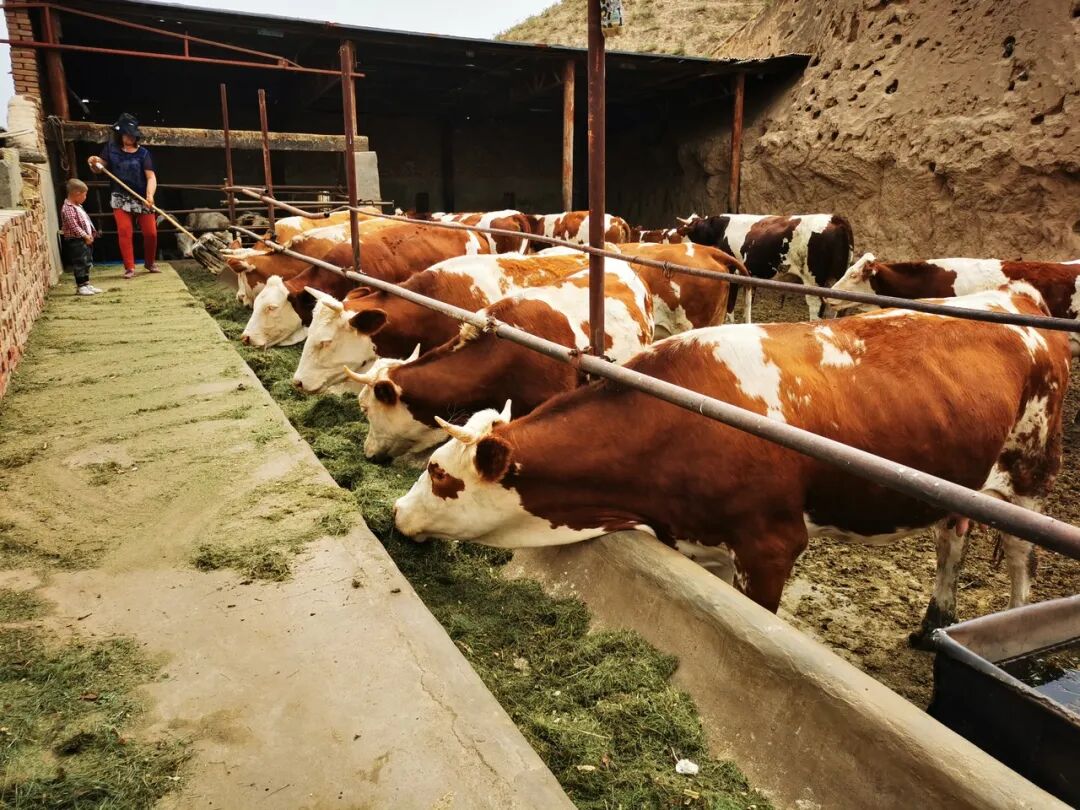
By the end of the second quarter of 2025, the national cattle inventory was 99.92 million head; by the end of the fourth quarter, the inventory had dropped to 96.08 million head, more than 4 million head less than the 100.47 million head at the end of 2024.
Huaan Securities' research report shows that at the end of the first quarter of 2026, the domestic cattle inventory was 93.73 million head, down 4.0% year on year, 2.4% lower than the end of 2025, and a cumulative drop of 10.8% compared with the end of 2023.
Since 2026, a country-specific quota mechanism has been implemented for imported beef, with the quota tariff raised, the cost of imported beef upon arrival has risen accordingly, and both the volume and price of imported beef have been restricted.
Affected by multiple factors, the continuous contraction of beef cattle market supply in 2026 may push beef prices to stay at the high level of the year.
Ordinary people are saying goodbye to beef freedom, while beef cattle farmers have ushered in a long-lost profit cycle. According to the analysis of Changjiang Securities' research report, as of October 16, 2026, the profit of domestic self-breeding and self-raising beef cattle is 5,825.35 yuan per head, surging 104.6% year on year; the profit of professionally fattened cattle is 4,438.74 yuan per head, up 33.3%.
After the price rise
With the continuous rise of beef prices, differentiation has emerged on the consumer side.
Beef-themed catering businesses have taken measures such as adjusting prices and reducing portion sizes to absorb costs; some even cannot withstand the cost pressure and exit the market one after another. The crushed beef hot pot track has cooled down rapidly; "Lin Zhenzhen", a 68-yuan all-you-can-eat beef rib buffet brand, has closed a large number of its stores, and its operating entity Changsha Lin Zhenzhen was cancelled last September.
At the household consumption end, people actively reduce the frequency and portion of beef purchases, and pork and chicken priced at around 10 yuan per jin have become more widely chosen.
The change in consumer preference for beef products emerged as early as last year. According to public data, in the first 5 months of 2025, the proportion of beef in meat consumption dropped from 8% in the same period of the previous year to 6.5%.
However, the demand for beef consumption has not disappeared. The price rise only curbs the demand for affordable beef consumption, while high-end beef and quality household consumption are still supporting the overall market.
Although beef prices have rebounded, the willingness of the breeding sector to restock is not strong at the current stage, and the core constraint is still feed cost.
At present, the costs of corn, forage, labor, venues and other factors are all at a high level, the comprehensive breeding cost remains high, and the profit space is still being continuously squeezed.
According to Changjiang Securities' research report, with the continuous contraction of beef cattle market supply, the supply gap is expected to further expand from 2027 to 2028, and the industry will enter a profit cycle of more than 2 years.
But farmers are always in a wait-and-see state, generally adopting a conservative strategy and no longer expanding production blindly. Everyone still remembers the bleak market from 2023 to 2024: under the self-breeding and self-raising model, the loss per head was 500 to 1,000 yuan.
China has implemented country-specific quotas for imported beef from 2026 to 2028, and levies additional tariffs on imports exceeding the quotas. The supply and demand pattern will keep the beef cattle breeding industry in a high prosperity state, and also bring benefits to relevant listed enterprises.
In the first three quarters of 2026, Tian Shan Bio (300313.SZ) saw its operating revenue surge 470.06% year on year to 333 million yuan, and the growth of meat sales was an important driving factor.
In the first half of 2026, Aoya Group (02425.HK) recorded a 1.6% year-on-year increase in operating revenue to 1.726 billion yuan, mainly benefiting from the rise in beef cattle selling prices and the increase in feed sales. As of the end of June this year, the company's beef cattle inventory was 30,878 head, up 20.1% year on year.
This article is from WeChat Official Account "Banma Consumption" (ID: banmaxiaofei), written by Chen Xiaojing, and published with authorization from 36Kr.