Hitcard's IP Capital Gambit: Tying up IP right holders, hyping redeemable items, and running time-slot targeted business.
The Hitcard IPO rumors that have been circulating for over a year have seen new developments.
On November 2, 2026, Qixing Network signed an agreement with the controlling shareholder of Almaden, intending to acquire 20% of the shares and become the controlling shareholder of this photovoltaic glass listed company. This A-share company operating on the ultra-thin photovoltaic glass track has been mired in a harsh downturn in recent years. Its performance report for the first three quarters of 2026 recorded a net loss of 145 million yuan, with the loss expanding by 142.81% year on year. Qixing Network's acquisition of control over a heavy industry business unrelated to trendy play is widely regarded by the outside market as a prelude to its planned backdoor listing.
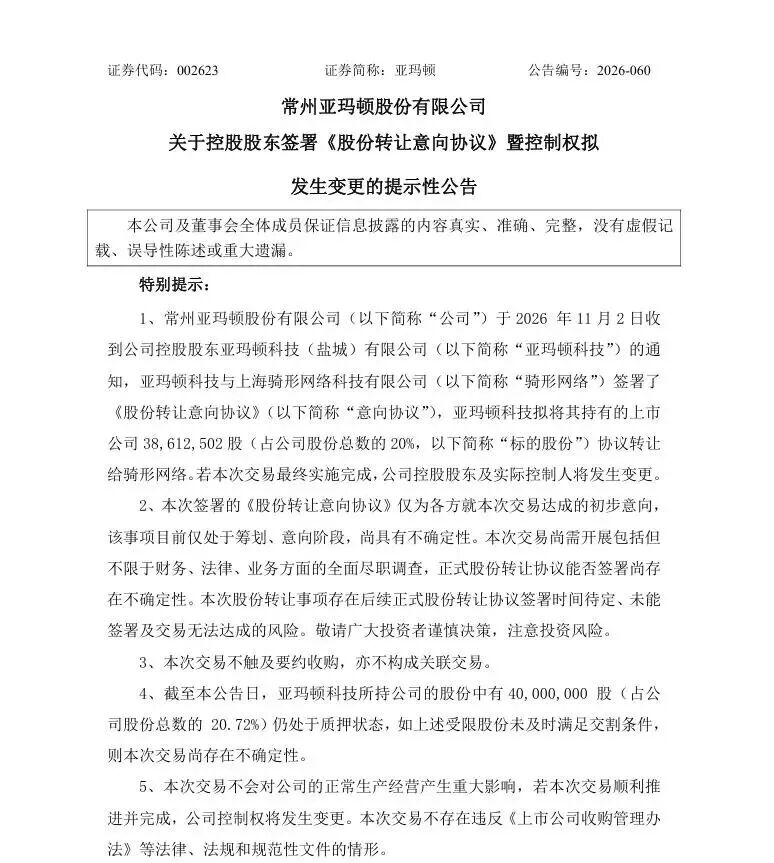
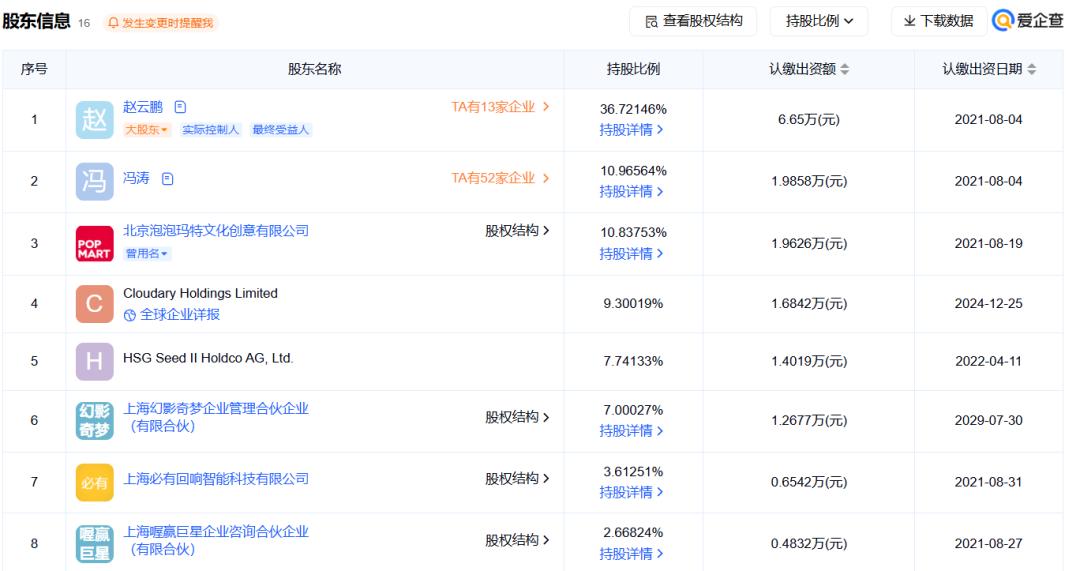
Compared with Almaden, the name Hitcard has been more active in the investment and financing market in recent years. Only one year after launching Hitcard, Qixing Network received early strategic investment from Pop Mart, followed by successive additional investments from HSG and China Literature, while Lehua Entertainment also holds a 7% stake through Phantom Dream. As early as the second half of 2025, the market had repeatedly spread news that it was advancing its IPO, claiming that "it is currently in the inquiry stage".
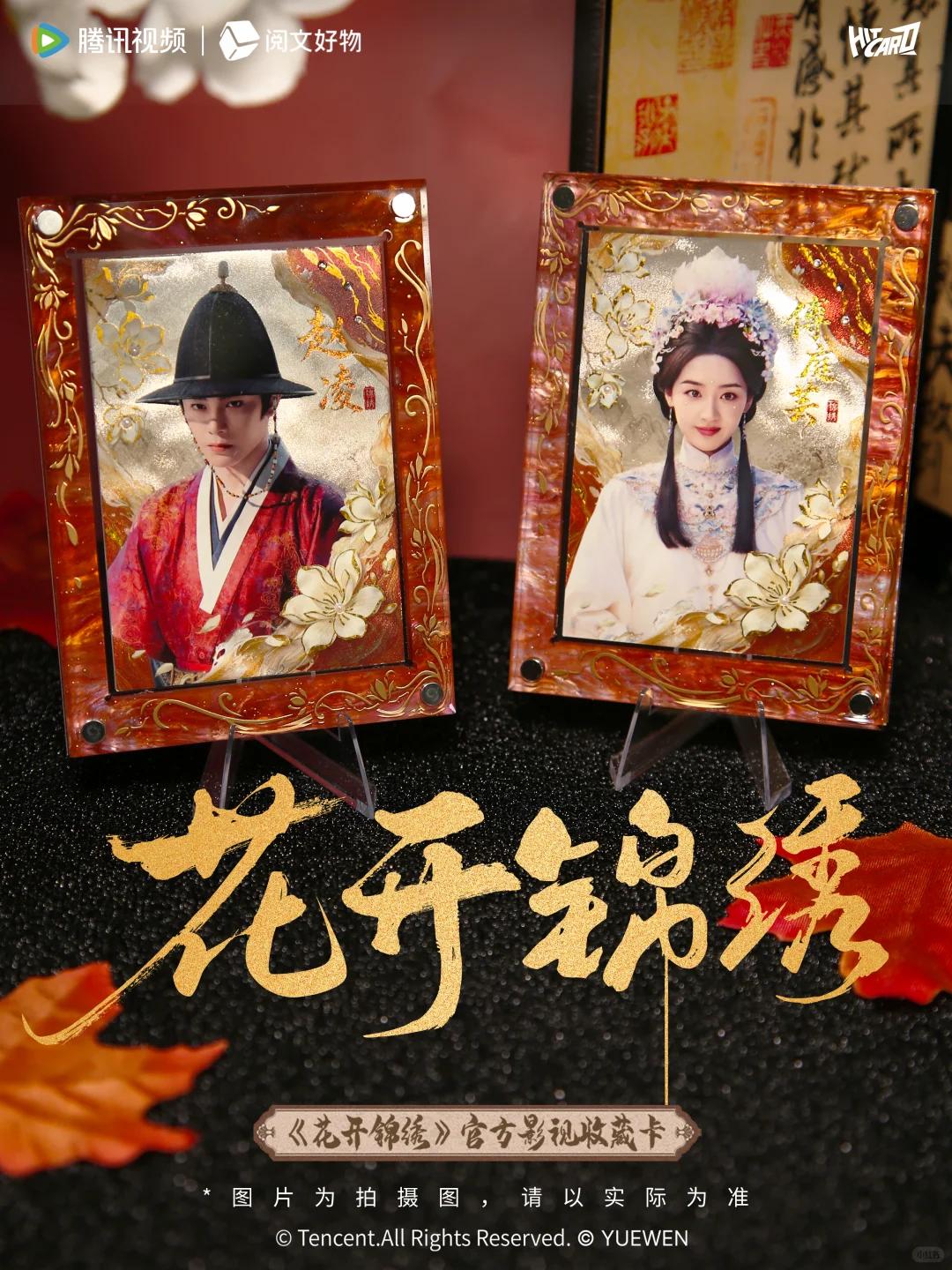
Dense and vertical industrial capital has supplied it with a large number of IP resources. Hit hit live-action film and television dramas such as *The Lotus Casebook*, *The Fragrance Remains*, and *Marry the Gold Hairpin*, as well as major "China Literature IPs" such as *The King's Avatar*, have formed the most intuitive perception of it among consumers. In 2024, Hitcard disclosed that its revenue reached approximately 400 million yuan. Facing an expected year-on-year growth rate of over 600%, Zhao Yunpeng, founder of Hitcard, said in an interview that "this expectation is still conservative."
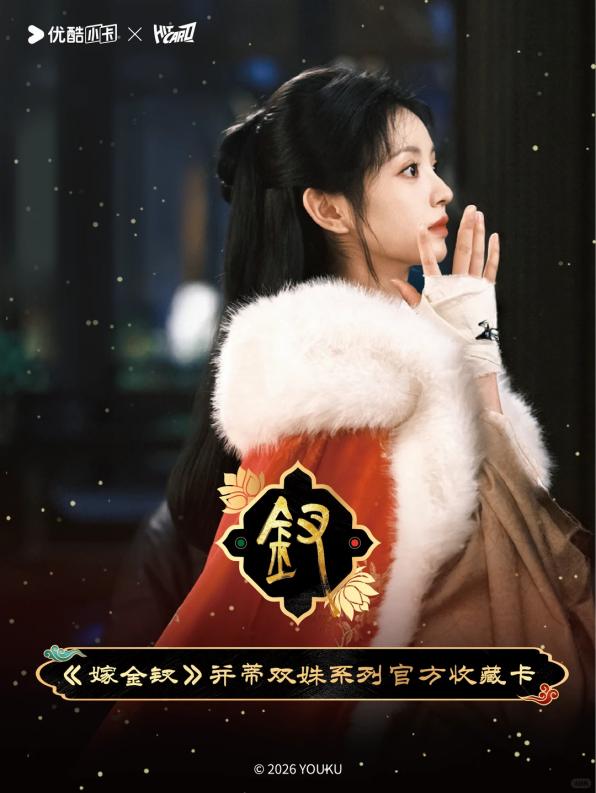

However, on the consumer side, Hitcard's reputation is mixed: despite holding a large number of exclusive IPs from top platforms such as iQiyi, Tencent Video and Youku, its cards are considered by players to "hardly have a healthy secondary market or any value preservation space".
This winter may not be a good time for card companies to go public. The capital market at the end of 2026 is far less enthusiastic about collectible cards and even trendy play consumption than it was at the beginning of the year. Kayou passed the hearing of its IPO application, but got stuck one step before the public offering. Suplay, which submitted its listing application at the beginning of the year, also saw its prospectus expire silently half a year later. The title of "first collectible card public company" is still vacant, but the market no longer seems to be so keen on discussing who the next one will be.
Judging from the timeline, Qixing Network may judge that the regular IPO window will not open for it in the foreseeable future. After all, Kayou, the most profitable company with the highest market share in this industry, has been stranded in the public capital market for nearly two years. Now that Hitcard is taking a detour via backdoor listing, can it seize the title of "first collectible card public company" and tell a new story for the collectible card industry to the capital market?
The Collectible Card Player That Most Resembles an "IP Service Provider"
In its IPO application, Kayou focused on its IP reserve and pan-demographic channels, while Suplay's Kakawo emphasized mature collectors who are willing to pay high premiums and a high-end collectibles ecosystem that preserves value.
The stories most frequently stated by the brand and its senior management externally reflect their positioning from a side perspective. Zhao Yunpeng, founder of Hitcard, rarely talks about "ecosystem" or "collection value preservation" in external interviews. The topics he expands on mainly focus on its in-house production system, IP development speed, and the breadth of IP coverage fields. These practical details are more attractive to upstream industry players than to players.
Instead of repeatedly telling the historical stories of veteran card players such as Topps, Hitcard is positioned as a product company in interviews: "Our job is to interpret IPs, not create IPs." Its positioning is probably closer to a "super execution service provider" for IP owners in the vertical category of collectible cards: ensuring that IP content is fully understood, disassembled, and converted into sales performance of derivatives such as collectible cards.
The hit broadcast of *The Lotus Casebook* pushed film and television collectible cards to the mass market, and the "Above the Rivers and Lakes" series produced and distributed by Hitcard reached a GMV of 30 million yuan, which is probably the landmark event that brought it into the public view. At present, Hitcard launches 7 to 10 new IPs every month, and has cooperated with more than 200 IPs, mainly focusing on live-action film and television collectible cards. Common co-production logos include Tencent Video, China Literature, Youku, iQiyi, Damai, Tomato Novel and other platforms.
Different from long-running IPs such as My Little Pony, live-action film and television dramas place more emphasis on the outbreak during a window of several weeks, and derivatives have a certain supervision and revision cycle that requires project initiation in advance. However, for IP owners, derivatives only account for a part of their income after all, and it is not cost-effective to allocate manpower to supervise the design, review, printing and distribution during the chaotic release period.
At this time, Hitcard plays the role of a fast, stable, long-term cooperative execution party with a good reputation: it has product teams organized by IP type, as well as production capacity from self-built factories, which can minimize the cycle from project initiation to shipment of a single product. For Hitcard, it does not need to bet on the long-term value of a certain IP, but only needs to become the most trusted "super service provider" by the upstream during the few weeks when each IP is at its peak popularity.
This model has enabled Hitcard to deliver impressive financial performance in the short term, but the ceiling of the "IP service provider" model lies precisely here: When a company's core competence is defined as "turning other people's IPs into collectible cards", what the capital market cares about during valuation is the sustainability of orders and the room for gross margin improvement, and it is difficult to tell a story of IP premium with unlimited imagination.
According to relevant disclosed data, Hitcard's gross margin has gradually increased from around 30% in the early stage to around 40%, which is not low in the framework of a manufacturing execution party.
But in the long run, is Hitcard irreplaceable for upstream IP owners? Similarly, for downstream players, is Hitcard also irreplaceable among the increasingly rich IP derivatives?
Having IPs Does Not Equal Owning IP Fans
No matter how the opinions of players change, there is a consensus that the collectible card business itself is a low-cost, high-premium business.
The real heavy burden of the collectible card business model still lies in the two major expenses of channels and IPs, and IPs are even the lifeline of most collectible cards. Now the IP market is highly mature, most copyright owners are unwilling to grant exclusive licenses, and most card companies cannot afford the cost of exclusive licenses. Most IP licensing agreements last for 1 to 3 years and are not automatically renewed. When Suplay sprinted for its Hong Kong stock listing at the beginning of the year, its prospectus exposed this weakness: sales of licensed IPs accounted for as high as 95% in the first three quarters of 2025, and one core main IP in its IP library was in the expiration negotiation stage when the listing application was submitted.
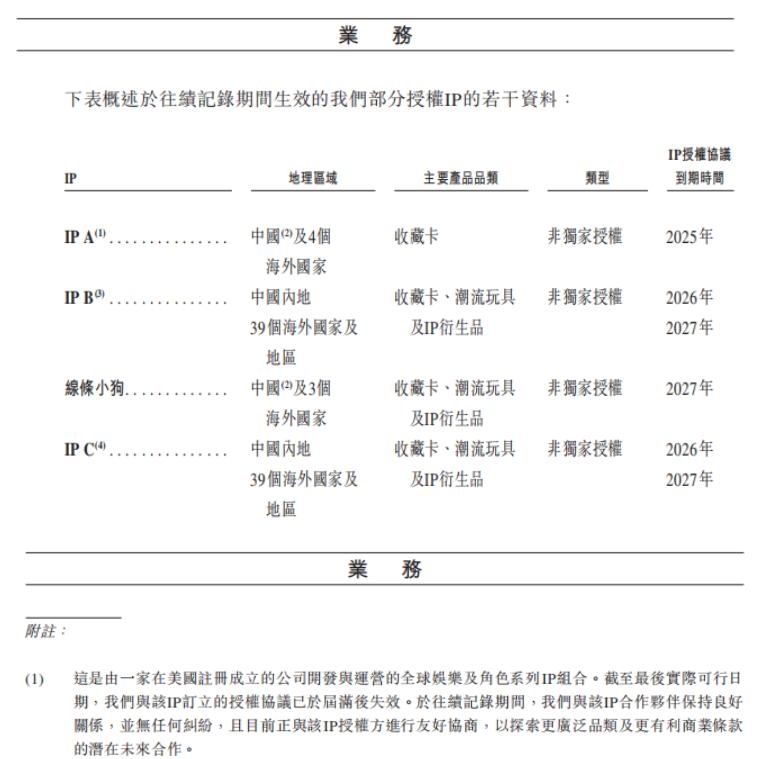
Screenshot from Suplay's prospectus
In this dimension, the capital layout behind Hitcard, including China Literature and Lehua Entertainment, seems to provide sufficient confidence. The deep equity tie-up gives Hitcard a natural priority when competing for popular projects, and also provides fault tolerance space for "multiple IPs, small batches, and high-frequency iteration" under the objective environment full of variables in film and television drama scheduling. Its logic of delivering value to the upstream is perfect: it is deeply bound with popular film and television IPs to seize the promotion and release nodes, supports the high premium expectation of the secondary market through autographs, numbered limited edition cards, rare redeemable card peripherals, and connects to live streaming rooms in the downstream.
However, players who pay for emotional value may feel the less pleasant side of this "service provider" logic.
Among Hitcard's collectible card categories, there is a type called "redeemable items".
Take the recently released sixth installment of *Notes on Tomb Raiders* as an example, the "redeemable series" is classified as S-level cards, along with 8 types of high-rarity cards including limited edition numbered cards, lace cards, and seed cards. "Redeemable items" include peripherals such as card albums, art prints, notebooks, art collections, and hair ties.
A player told Spicy: "Sometimes Hitcard will cooperate with some very popular internet celebrity illustrators who rarely take on new projects to make exclusive goods."
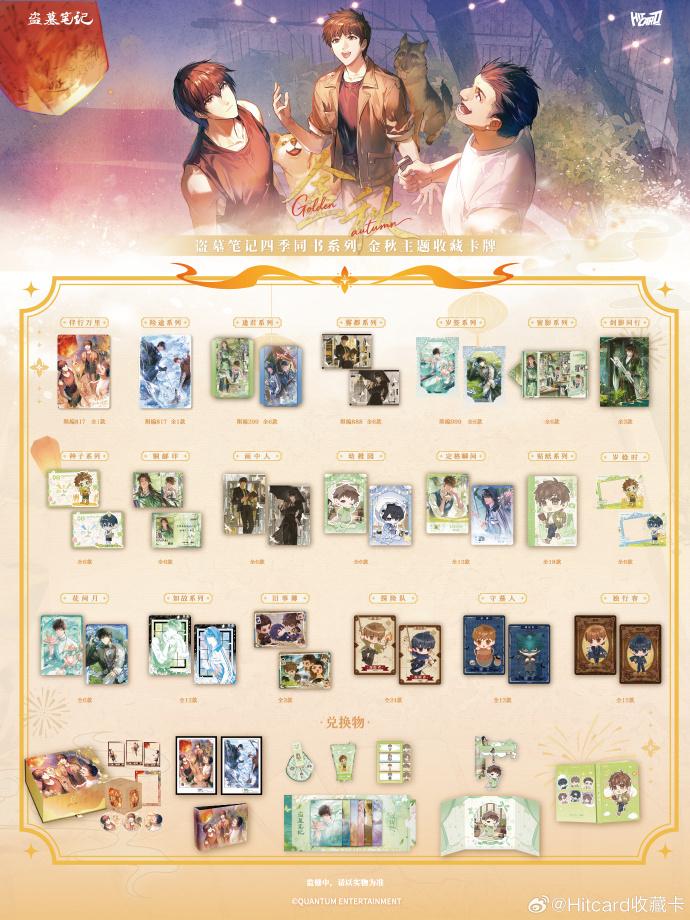
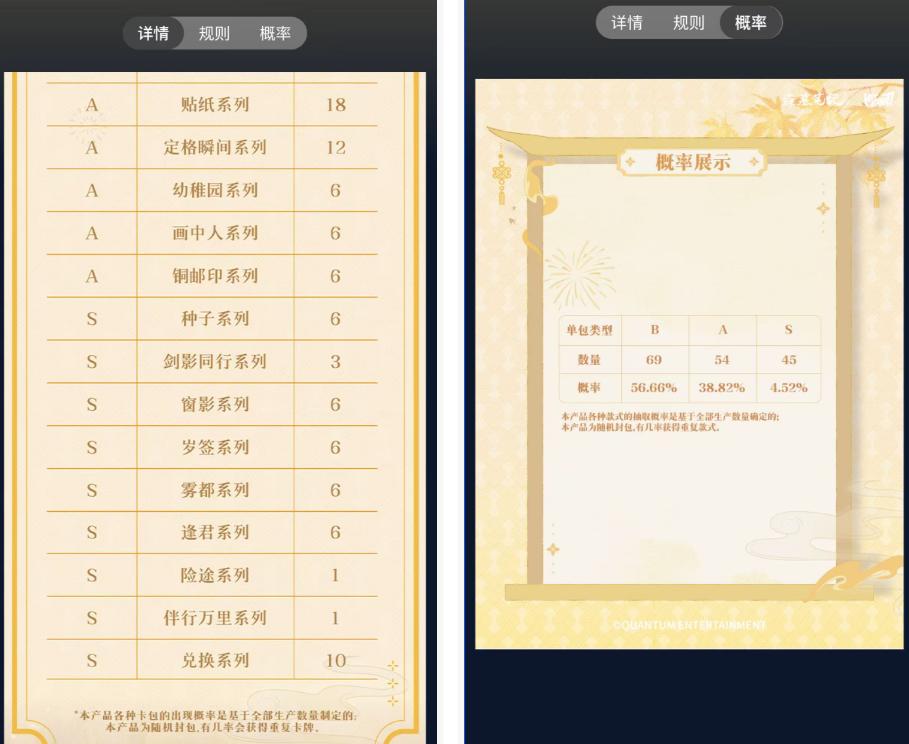
The sixth installment of *Notes on Tomb Raiders* has a total of 4 rarity tiers, with 1169 designs in the full collection. Hitcard's release specification is 3 cards per pack, and 10 packs per box, which totals only 30 cards. Calculated based on probability, if you want to stably obtain the "redeemable series", you usually need to choose to "buy the whole case": one case contains 36 boxes, totaling 1080 cards, with a selling price of 3600 yuan. These goods are often collectively referred to as "case-exclusive items".
Players who want the peripherals usually choose to "share the purchase" with others. Different "case-exclusive items" have different premium spaces, and some extremely scarce peripherals can be speculated to thousands or even tens of thousands of yuan on second-hand platforms such as Xianyu.
But there is a structural misalignment in this system: In a set of Hitcard products, the products that are speculated to the highest price in the secondary market are peripherals that do not belong to the card system at all, and may not even naturally flow to ordinary players because they can be "snatched by buying the whole case": "Everyone defaults that in the Hitcard cards opened in the live streaming room, the merchant will take away the case-exclusive goods in advance, and the remaining cards will be priced so low." And the high premium of peripherals indirectly leads to faster depreciation of the cards.
Hitcard's main products are priced in the middle-to-upper price range. Take the *The Fragrance Remains* collectible card as an example, the price of 19.8 yuan for 3 cards per pack is more expensive than the 2-yuan pack and 5-yuan pack of its peers, but it is still far from the "high-end collectibles" positioning of Kakawo, where each single card is priced at more than 10 yuan. However, many players feedback that some cards even "start to depreciate before they are launched", and the limited edition numbered cards that are supposed to preserve value also have precedents of Hitcard reprinting with changed fonts, which still cannot avoid a sharp price drop: "Spending money is just to support the IP and 'gamble' for rare peripherals, and there is almost no possibility of getting your money back."
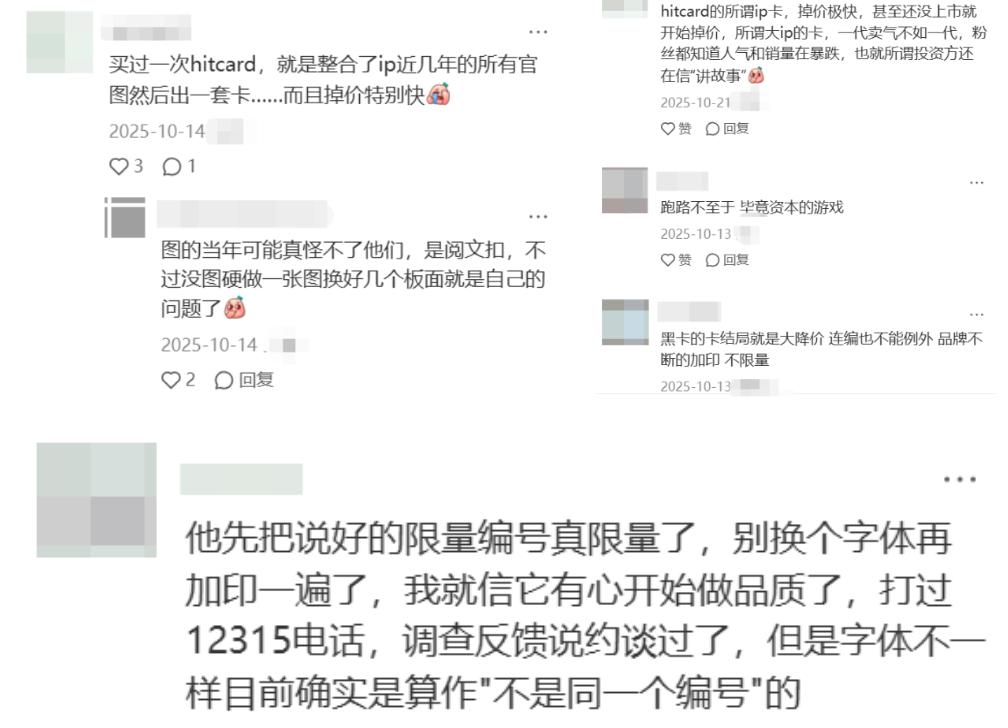
Due to the remaining exclusive IP barriers, there are still many people who choose to "complain while buying", but now IP owners are granting licenses more and more widely.
Take China Literature's IPs as an example. After China Literature acquired a 10% stake in the company in 2024, it released head IPs such as *The King's Avatar* to Hitcard. A player who quit Hitcard told Spicy that she bought