MediaStorm makes its foray into the overseas market, and its first video on X has gained 58 million views. How can domestic content creators replicate this success?
Riding on the global tech discussions sparked by the iPhone Duo, MediaStorm, a top domestic Chinese content creator, has gained widespread popularity overseas.
On October 22, Tim (Tianhong Pan), founder of MediaStorm, posted his first piece of content on X: a 23-minute full-English review of the iPhone Duo. In the video, the team not only conducted 10,000 folding durability tests on the phone, but also used professional equipment to disassemble the screen and body structure, testing its performance, battery life and daily user experience.
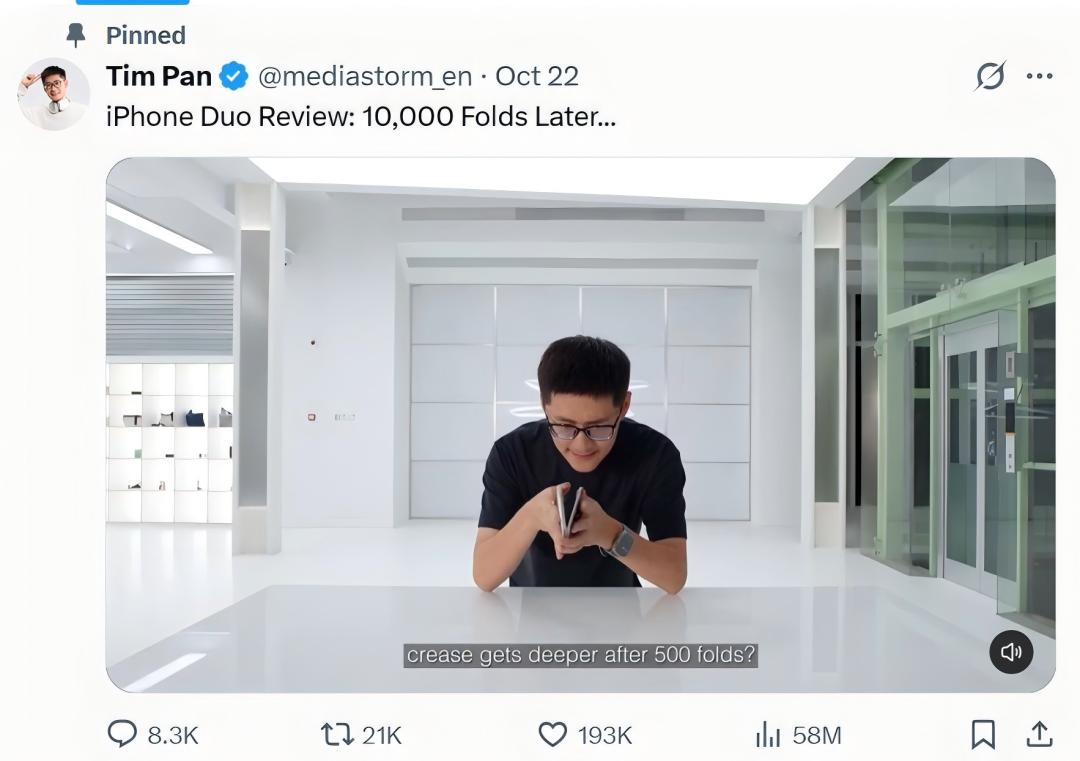
This video quickly went viral overseas. Around 16 hours after its release, its views exceeded 17.7 million; as of November 9, the video has recorded over 58 million plays, and Tim's account has gained 329,000 followers. Tim later announced that he would give away 100 units of iPhone 18 Pro, further expanding the account's influence.
With the robotic arm, precise tests and cinematic camera language, the production quality of this video even made some overseas viewers suspect that it was generated by AI. Tim later shared the production timeline and behind-the-scenes footage. The high-level production that domestic audiences have long been accustomed to shocked overseas netizens. Many users praised the video's production quality, calling it the best smartphone review they have seen in recent years. Renowned tech commentator John Gruber also specially recommended this video, saying that he did not know Tim before, but was impressed by his production standards.

It is understood that MediaStorm's videos have been synchronously updated on YouTube, with the earliest one released in December 2014, 11 years ago. Although no localization adjustments were made, the channel has accumulated 984,000 subscribers. Instagram is more like Tim's personal account, and it was not until the release of the iPhone Duo that MediaStorm published the English version of its content on X, marking its official entry into the global content market.
From Li Ziqi to Mr. He, and then to MediaStorm, it is no longer a new thing for Chinese creators to gain attention overseas. But different from the simple sense of freshness brought by cultural differences, this time MediaStorm quickly broke through the overseas traffic track with its mature content production capabilities.
What exactly enables Chinese bloggers to achieve cold start on overseas platforms? Does the traffic distribution mechanism of overseas platforms provide different growth opportunities for new creators? From content genes and expression methods to platform operation, what overseas expansion experiences of Chinese creators are worth summarizing?
What Do The Viral Overseas Creators Look Like?
To observe the content distribution of Chinese creators on overseas platforms, this article selects three platforms, namely YouTube, X and TikTok, as samples, refers to the public creator lists of each platform and third-party data platforms, filters accounts with a certain scale of fans, continuous updates and content creation as their main activity, and records their follower count, creative fields and content forms.
It should be noted that the calibers of the lists on the three platforms are not completely consistent: YouTube mainly refers to the channel subscription scale, X refers to the Chinese KOL influence list, and TikTok refers to the creator list in China. Due to differences in geographical labels, account types and ranking algorithms, the following samples are not the total list of Chinese creators under a unified caliber, nor do they represent the type distribution of all creators on each platform. They are only used to observe influential Chinese content accounts and their creative characteristics on different platforms.
YouTube: Long-form Videos, Professional Content and Cultural Display
X: Professional Opinions, Industry Information and Personal Influence
TikTok: Short Videos, Visual Expression and Situational Narrative
Judging from this batch of samples, Chinese creators on the three platforms present different content structures.
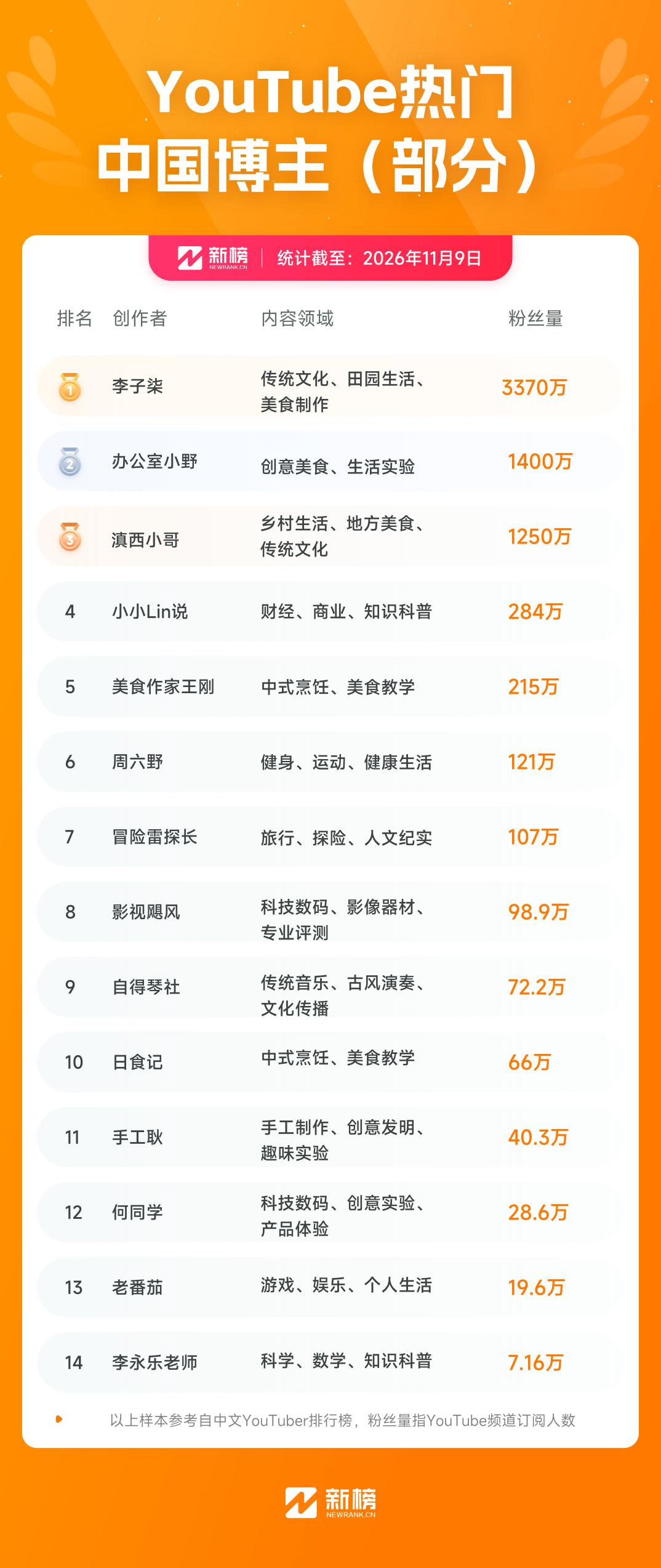
The types of creators on YouTube are relatively diverse, with a certain scale of content covering traditional culture, food, tech reviews, popular science and professional skills. Long-form videos, serialized content and professional knowledge-based creations have more display space here.
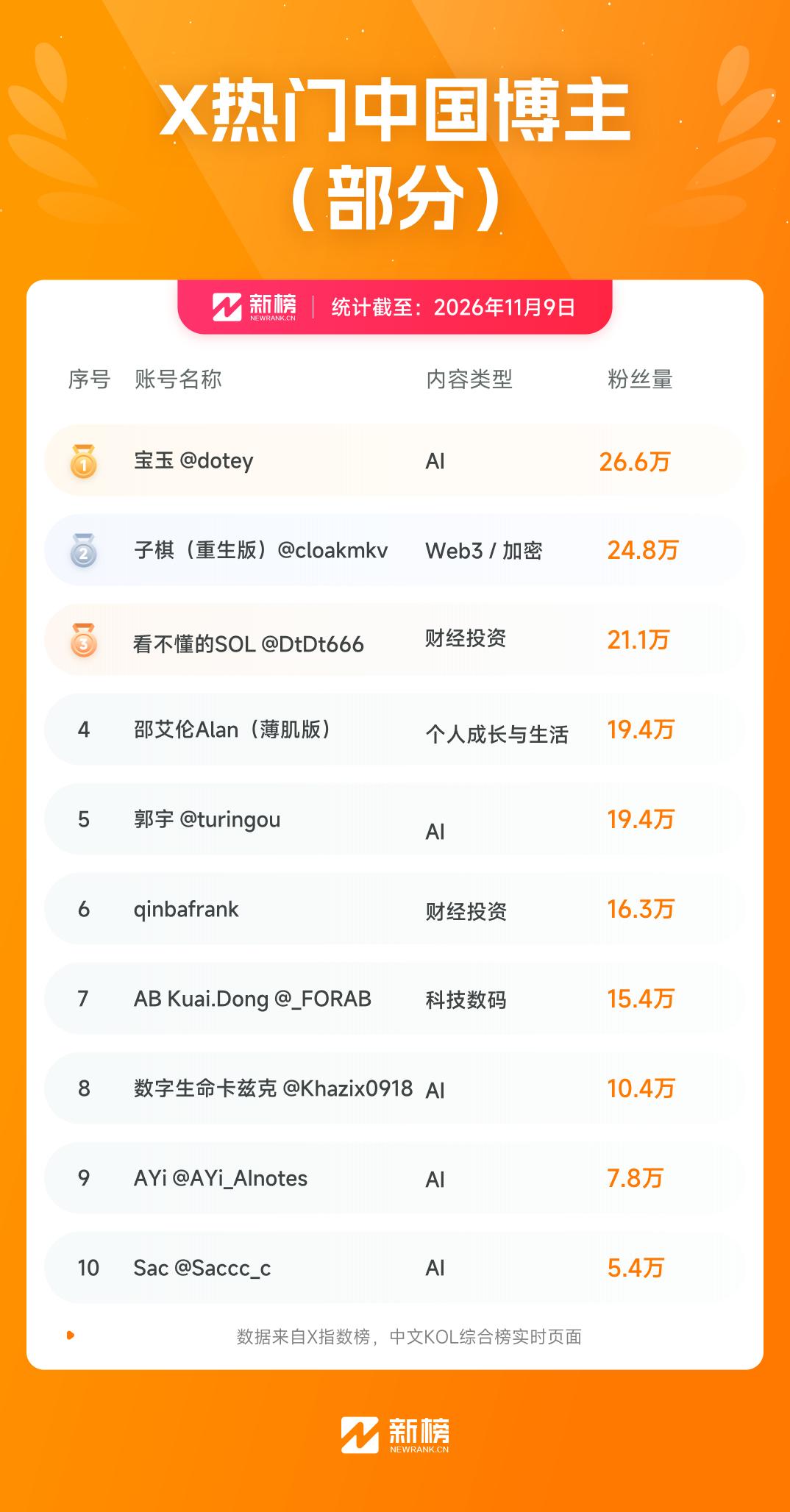
Chinese creators on X are obviously concentrated in fields such as AI, technology, developers, financial investment and entrepreneurship. They are not necessarily traditional video bloggers, and more rely on professional experience, industry information and opinion output to build influence.
The reason is that one of the core usage scenarios of X is real-time information acquisition and public discussion. Users can participate in topics by following, reposting, quoting and replying. A professional opinion may be reposted by industry insiders and enter communities that do not originally belong to the creator. Therefore, X is more suitable for creators who can continuously provide incremental information, professional judgment or distinct views. The value of content does not necessarily lie in how exquisite it is produced, but in whether it can provide information worthy of discussion and dissemination.
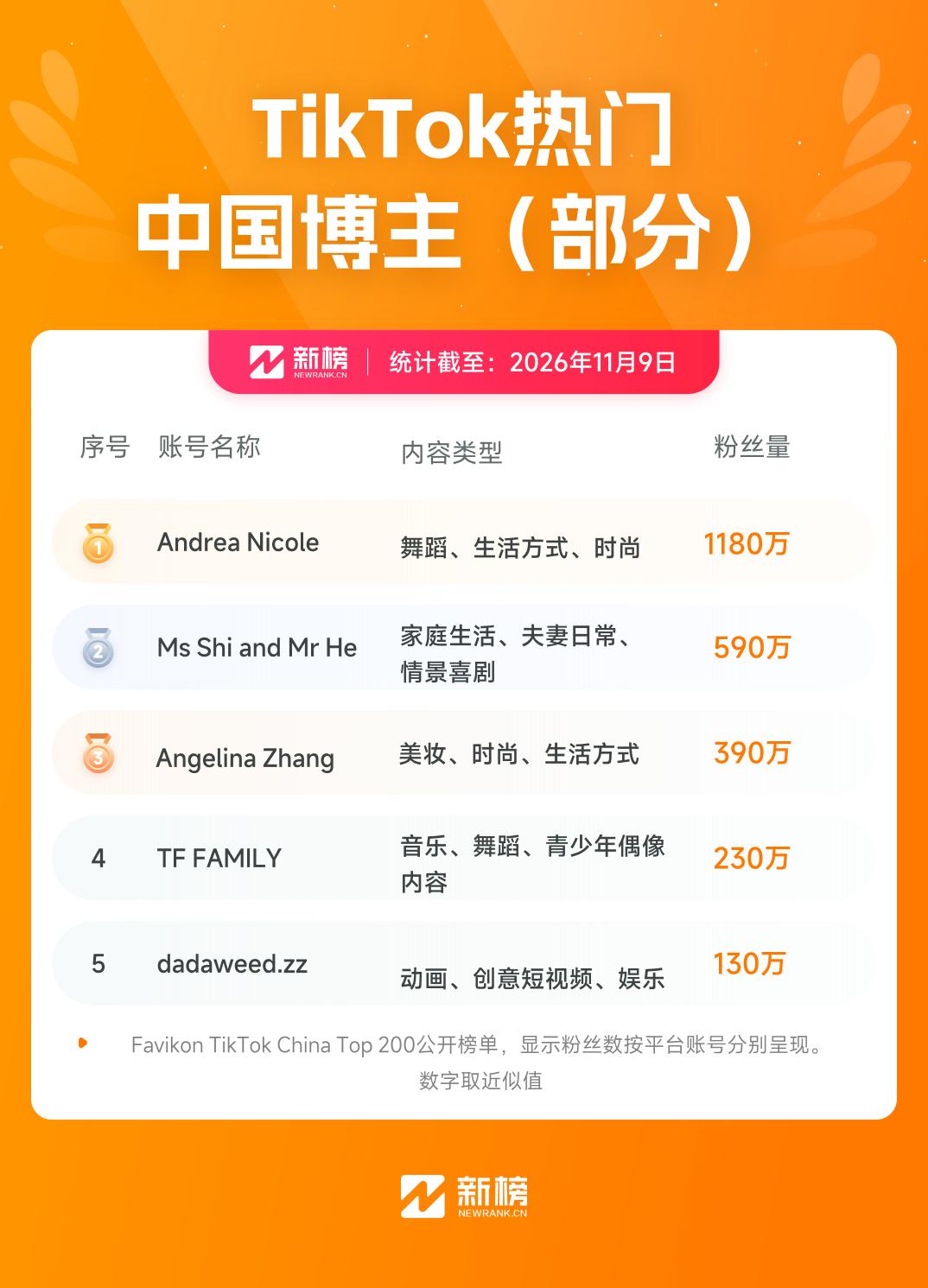
The TikTok samples are more biased towards dance, music, food, fashion, animation and life narratives. Character relationships, visual expression and emotion transmission are relatively common content assets of these short video accounts.
These differences are related to the product form of the platforms and user consumption scenarios, but they cannot be simply understood as that a platform is only suitable for a certain type of content. They are more like different paths for different content forms to gain exposure and build user relationships.
Although the characteristics of creators presented on different platforms are different, their common point is that the content itself has the communication ability to cross language and cultural environments.
To further understand why these contents are accepted by overseas users, we need to return to specific works. This article selects "Li Ziqi", "Mr. He" and "MediaStorm" as observation cases. The three have formed distinct content characteristics in cultural display, technological creativity and professional production respectively, and correspond to different cross-cultural communication paths.
Taking Li Ziqi, the earlier phenomenal overseas creator, as an example, her works not only have cultural differences between the East and the West, but also have global universality in vision.
In Li Ziqi's videos, there are Chinese rural life, traditional crafts and food culture, but she does not rely on narration to convey information. The processes of picking, cooking and making form a complete visual narrative. Even people who do not understand Chinese culture can understand the labor, aesthetics and life emotions in it.
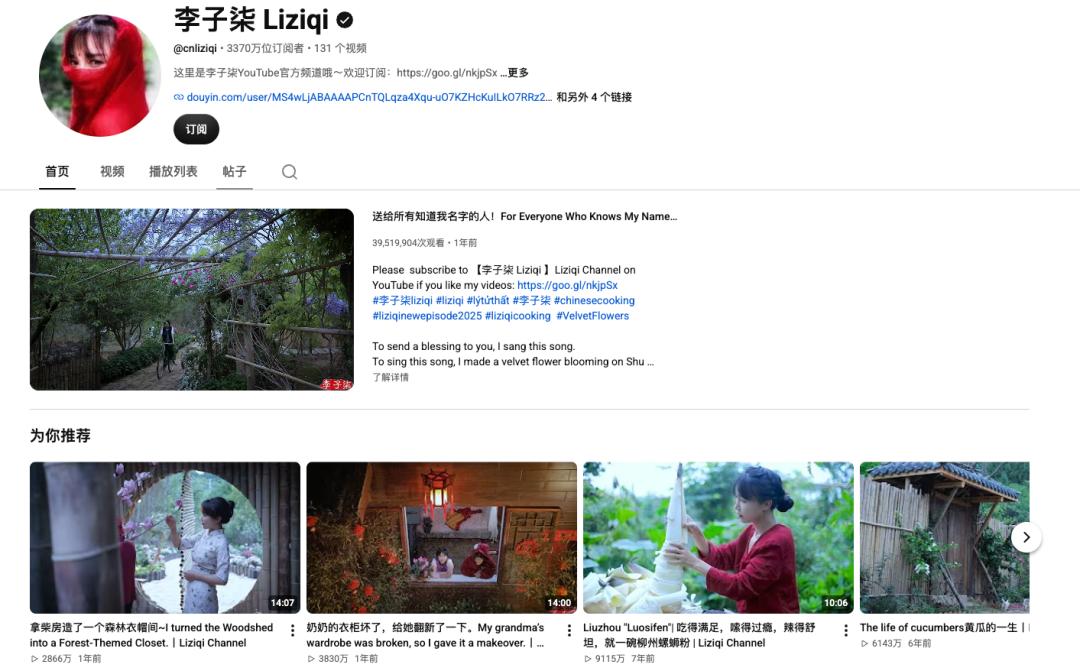
Cultural differences form attractiveness, and visual expression lowers the threshold of understanding. Creators such as "Office Xiaoye", "Eclipse Note" and "Food Writer Wang Gang" have also gained the attention of overseas audiences through food production, life scenes and visual processes. Their common point is that you don't necessarily need to understand the language to feel the creator's expression.
The subsequent creator "Mr. He" built global connections through creative expression and personal style in the tech field.
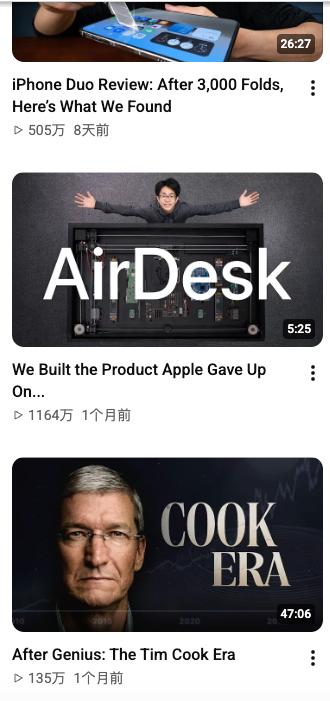
Tech products are a global common topic, but simply introducing parameters is difficult to form differentiation. "Mr. He" is better at turning products into creative problems. Through experiments, scene design and personal expression, he makes reviews more than just reviews, but also adds his personal attitude. For example, in the video "I Made the Product Apple Abandoned", a fan left a message at that time saying that the video went viral on YouTube with 6.77 million views in 4 days. Videos such as "The Cook Era" also made "Mr. He" more than just a review blogger.
From experiments on Apple products to observations of the tech industry and figures, Mr. He's content has gone beyond the scope of traditional digital reviews. He once moved domestic audiences with the "romance of science students", and this kind of romance may also have global universality. His personal expression and narrative method make tech topics more watchable.
MediaStorm, on the other hand, is the ultimate representative of professional capabilities and industrialized production.
MediaStorm's advantage lies in its long-accumulated shooting, testing and production capabilities. The team can transform professional knowledge into visually impactful content and continuously produce through standardized collaboration. Tim's iPhone review this time combines professional testing capabilities with global tech hotspots, allowing overseas audiences to quickly understand its value.
The three cases represent cultural uniqueness, creative expression and professional capabilities respectively. It can be said that Chinese creators do not necessarily have to become English-speaking bloggers first when going global, nor do they have to rely on a fixed content form. What is more important is whether they can transform the content they are good at into works that audiences from different cultural backgrounds are willing to watch, understand and share.
What Else Is Needed From A Viral Hit To Sustained Overseas Traffic?
Under the circumstance that the number of domestic internet users has almost peaked, it is almost logical for top creators to turn to overseas markets, which means that content has the opportunity to break away from the original fan relationship and enter the information flow of unfamiliar users. For example, TikTok officially made it clear as early as 2020 that the number of fans and whether the account had viral hits in the past are not direct factors of the recommendation algorithm, which also gives domestic creators opportunities for cold start. On June 3, 2025, the platform launched functions such as Manage Topics, allowing users to actively adjust the interest themes of the For You feed. That is to say, TikTok's content discovery mechanism not only relies on system judgment, but also increases the space for users to actively manage recommended content.
Different platforms provide different content discovery entries.
YouTube recommends content to audiences who may be interested through home page recommendations and related videos. Users' viewing history, search history, subscriptions, likes and other behaviors will affect the recommendation results. TikTok's For You feed emphasizes continuous video discovery, so users do not need to actively search or follow to constantly encounter new creators. X's For You feed mixes posts from followed accounts and system-recommended content at the same time, and users may see posts published by accounts they do not follow.
In addition to algorithmic recommendations, X's reposts, quotes and topic discussions also allow content to spread along public issues. A tech review video can be reposted by tech media, industry insiders and ordinary users respectively, entering different discussion circles. X's official help center shows that its recommendation system refers to users' likes, reposts, replies, as well as interaction behaviors in their following network.
Therefore, overseas platforms do not provide a completely different traffic logic, but more diverse content discovery entries. For Chinese creators, the real opportunity is that even without a local fan base, as long as the content can be recognized, understood and arouse interest, there is a chance to reach unfamiliar users through recommendations, searches and social dissemination.
But getting one exposure is just the beginning. Whether the audience will continue to watch and follow still depends on the content itself.
After completing the first wave of exposure, creators also need to consider how to continuously obtain traffic. For top domestic creators who have accumulated a large amount of content, their past non-time-sensitive works can become content reserves for overseas expansion, but simple reposting does not mean that the same communication effect can be obtained. Whether the topic has global attention, whether the expression method lowers the understanding threshold, and whether the content adapts to the consumption habits of different platforms will all affect subsequent dissemination.
The first is the adaptation of the content itself.
Global topics can reduce users' cognitive cost. MediaStorm's choice of iPhone Duo as the topic this time is precisely because Apple's new products have global attention, and product testing does not rely on a specific cultural background. The video establishes viewing value through 10,000 folding tests, equipment disassembly and actual experience. At the same time, the team did not simply add English subtitles to the Chinese version, but re-edited and shot the English-hosted version.
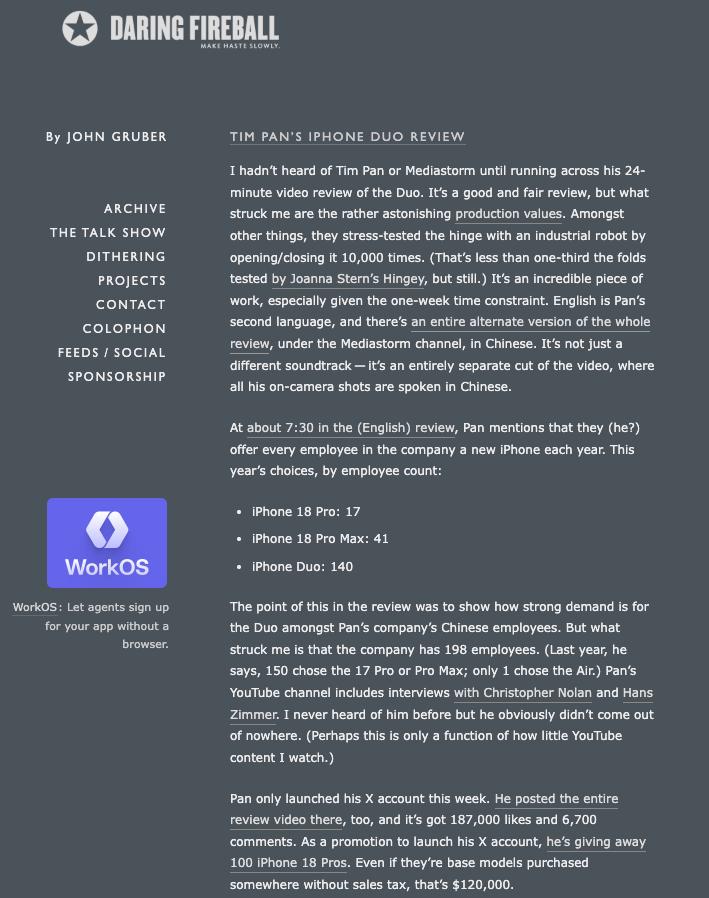
Renowned overseas tech commentator John Gruber specifically mentioned that Tim released two independently edited versions in Chinese and English. This shows that localization is not just language translation, but also includes adjustments to expression methods and content rhythm.
The second is content operation targeted at the platform. The same content does not have to be reposted as it is on all platforms: YouTube is suitable for hosting complete reviews, TikTok can extract experimental processes and visual highlights, and X is suitable for publishing videos, data and opinions combined with hotspots. Creators should not only retain their original style, but also understand the consumption habits of users on different platforms.
For example, after the first video became a hit, releasing a less than 30-second vertical behind-the-scenes clip to add fuel to the existing popularity is more suitable for appearing on X, and it will appear in more people's feeds through reposts.
In addition, interactions with native influencers on foreign platforms such as MrBeast also add richness and localization to his content.
The last is interactive operation to amplify dissemination. After Tim's review video became popular, he announced that he would give away 100 units of iPhone 18 Pro on X, with participation methods including following, liking and reposting. On Bilibili, MediaStorm prepares a large number of giveaway gifts almost every time it releases a new product review. This time, after the video went viral on X, Tim separately posted a video to announce the giveaway. It did not directly make Tim's account on X grow rapidly, but this mechanism did allow the first viral hit to be seen by more people.
