2026's "queue king in shopping malls" has given all people in Guangdong a thoroughly satisfying dining experience.
Changsha's prowess in crafting internet-famous brands is renowned nationwide.
Following well-known brands such as Cha Yan Yue Se and Wenheyou, a local snack store from Changsha has risen to the top of public attention this year.
On September 30, Jinlimen opened its first outlet in Guangzhou at the Bai'etantan MixC. Cantonese people who never skimp on delicious food did not miss this grand opening. According to reports, around 11:30 a.m., almost all drinks in the beverage cabinet were sold out. Staff members said even the stock stored under the shelves was completely cleared out.
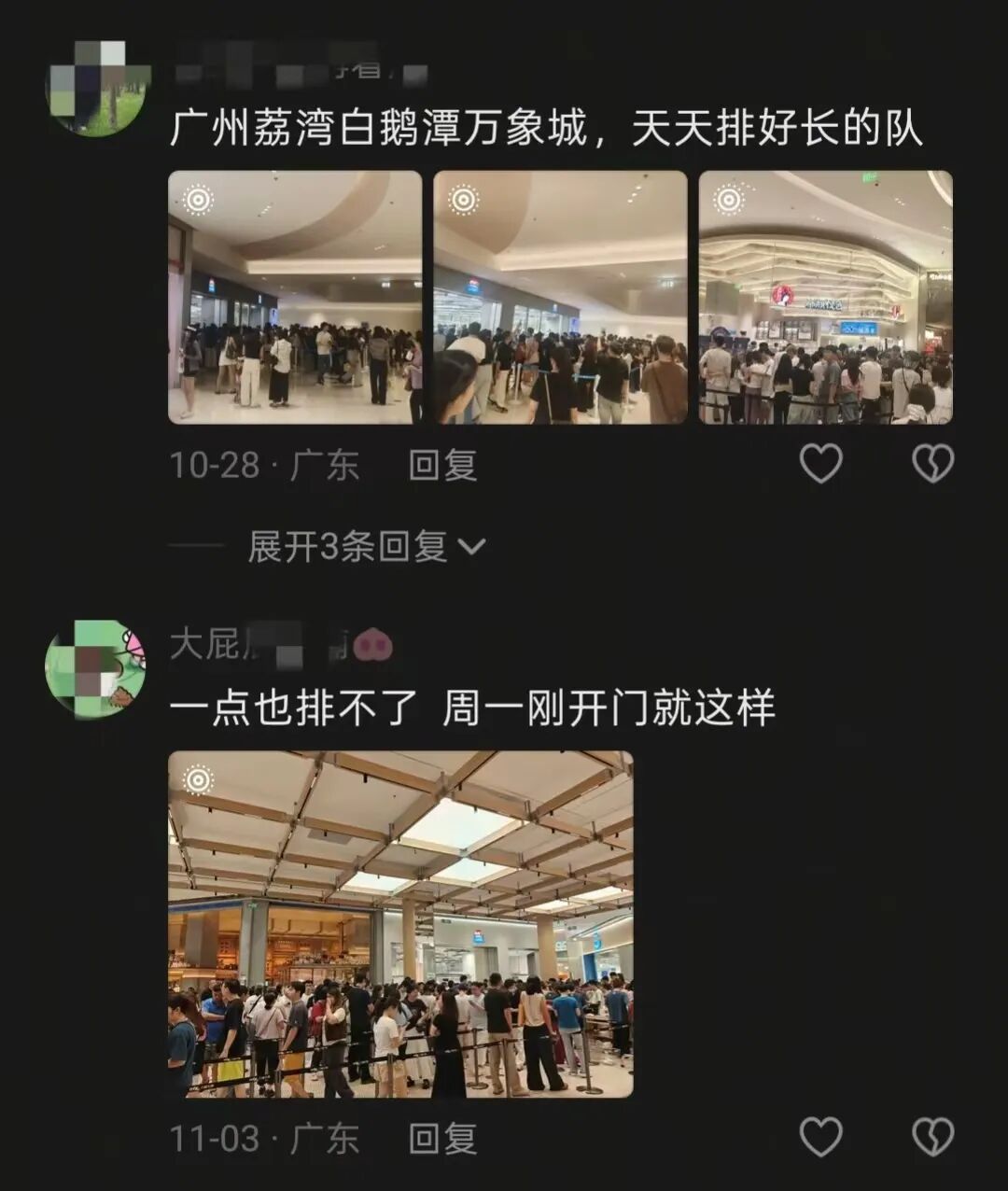
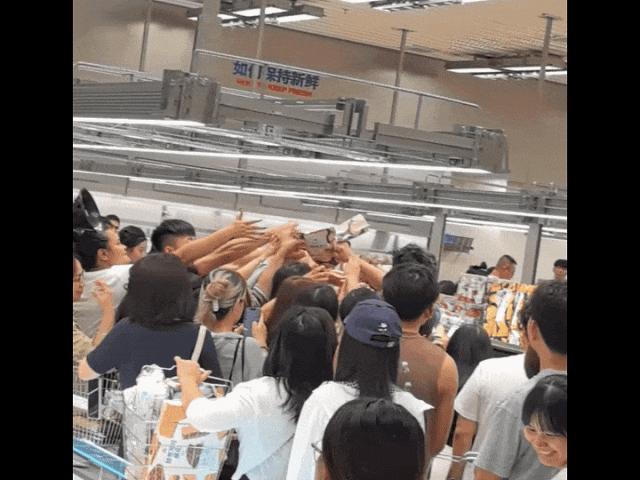
In Foshan, at the Jinlimen store on B1 floor of MixC World, there was still a long queue that took at least 15 minutes to get through at 7:30 p.m. on the third day of its opening. The frantic rush for some popular snacks looked like a scene from a famine, and the staff trying to keep order shouted until their throats were parched.
Different from the typical internet-famous stores in people's impression, Jinlimen's products are surprisingly unpretentious: for example, 6-yuan shrimp chips, 6.5-yuan fresh milk jasmine fermented cold drink, 8.5-yuan konjac strips, with an average per-customer spending of around 50 yuan.
Yet these seemingly ordinary snacks have not only won over the food-obsessed Cantonese people, even the sophisticated Shanghainese could not resist the temptation.
On October 15, Jinlimen's first Shanghai store opened at Minhang MixC. On a weekday morning, the queue stretched from the escalator on B1 floor all the way to the subway entrance. Some consumers traveled all the way from Songjiang specially for the store, only to find more than 100 people waiting in line ahead of them when they arrived. Even to this day, the store is still overcrowded, and it was once temporarily closed due to excessive crowds during the period.
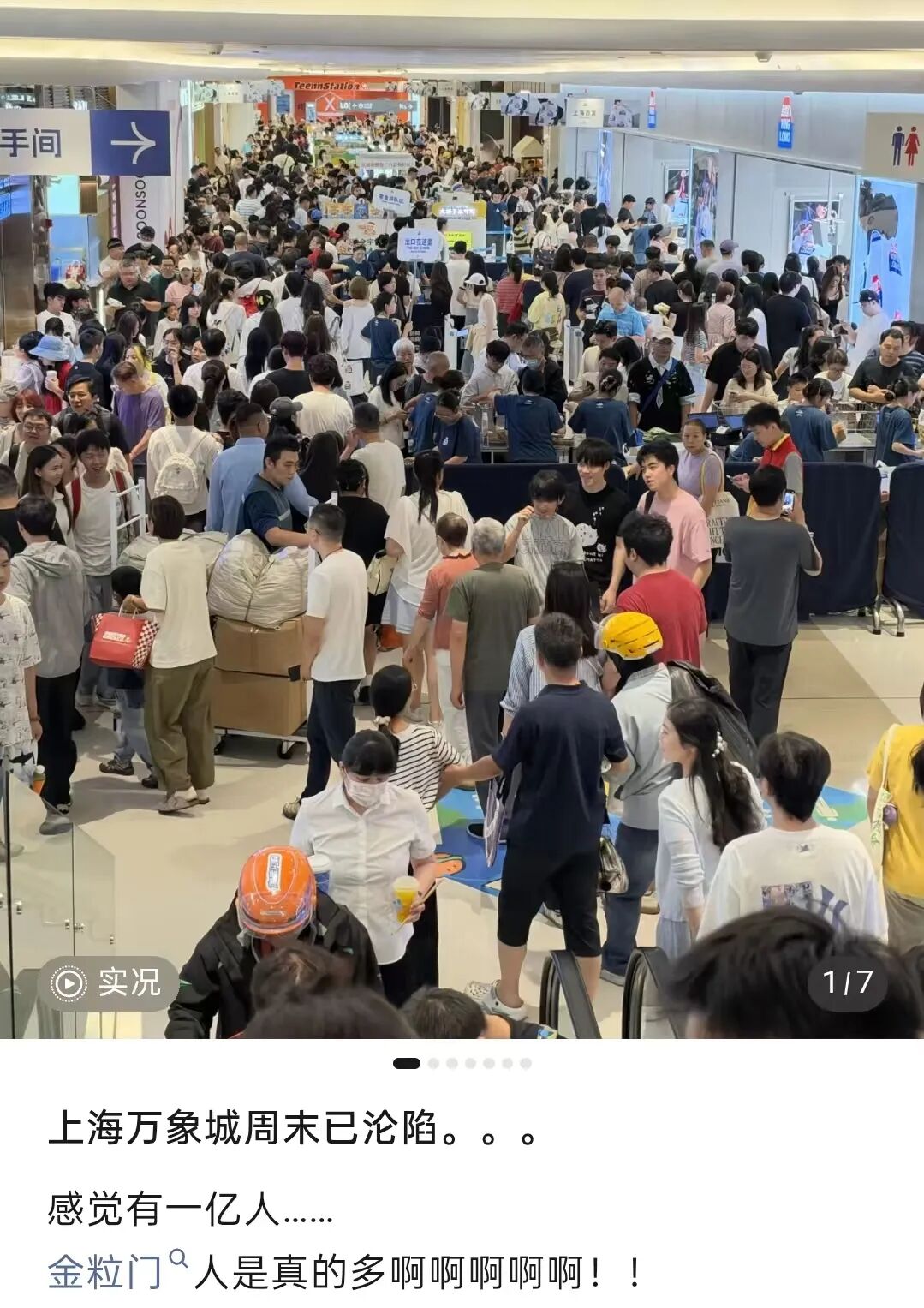
By November this year, Jinlimen only has around 50 directly-operated stores nationwide, yet its popularity and momentum are no less than those large-scale bulk snack chains with tens of thousands of outlets.
Why is this rising new player in the snack industry so aggressive?
A snack store that even has a full personal shopper industrial chain
To see how popular a store is, you can check if there are some phenomena around it that are hard for ordinary people to understand.
Just like some people are willing to wait for hundreds of tables to eat at Kaokao Master, Jinlimen also has a large number of die-hard crazy fans.
Some people look for personal shoppers on e-commerce platforms, and do not hesitate to pay 23 yuan for SF Express shipping; on Xiaohongshu, posts asking "is there any local Changsha resident who can help buy products on my behalf" are gradually increasing. Even more absurdly, 2-yuan shopping bags can be resold at a markup on second-hand platforms. Industry insiders have counted that 36.8% of posts about Changsha Jinlimen on social platforms are strongly related to travel, check-in activities and souvenirs.
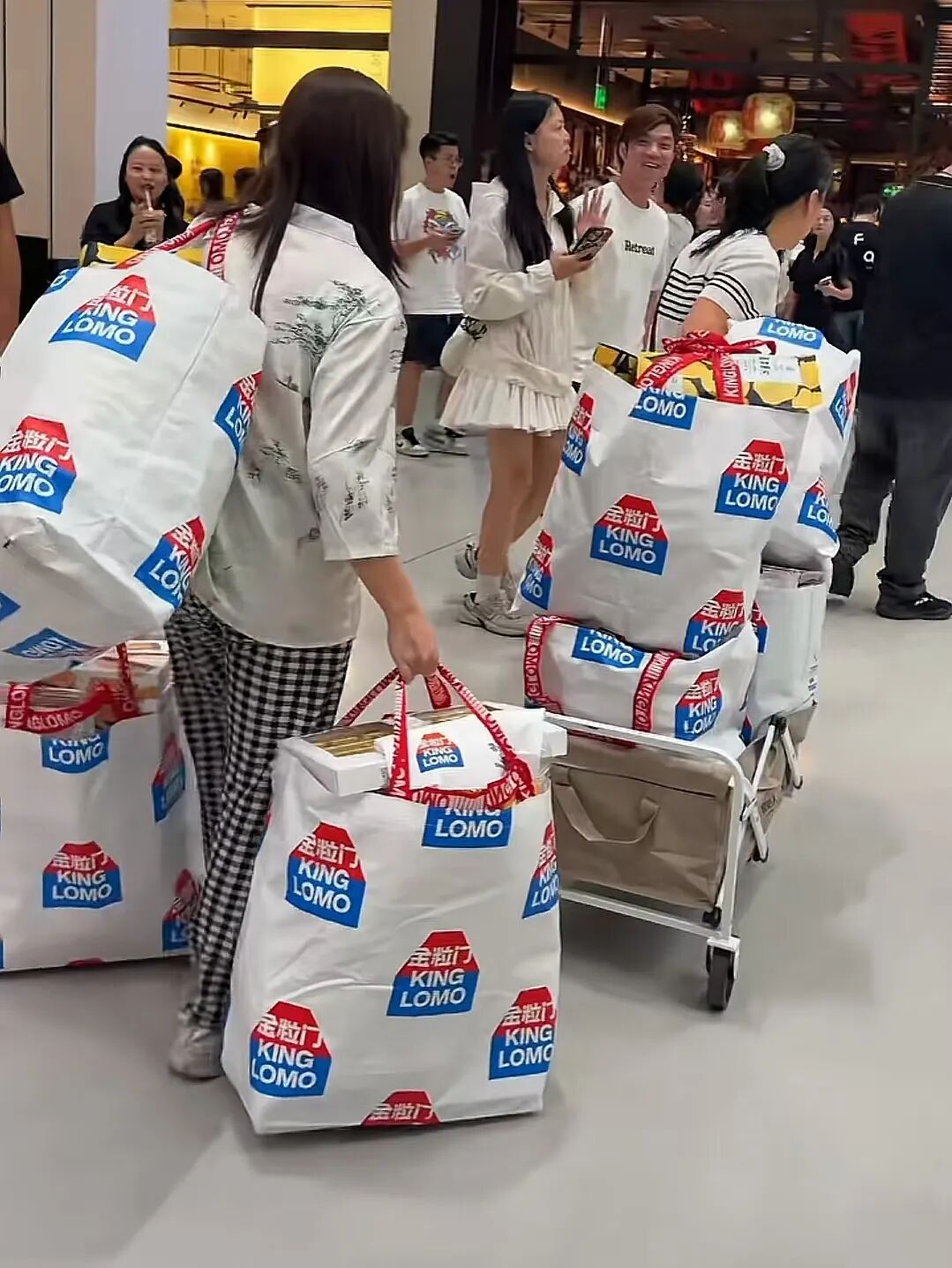
Jinlimen can be regarded as the signature souvenir of Changsha right now.
Many people may not imagine that more than a decade ago, it only had the vibe of a casual street stall product.
In 2015, Liu Chang and Tao Feng, the two founders of Jinlimen, opened a small store on the streets of Changsha selling sugar-fried chestnuts and candied hawthorns on sticks, which was then called "Jin Lv Men". According to public reports, neither of them has a fancy elite education background nor work experience at large top-tier companies, they are ordinary entrepreneurs who groped their way up little by little in offline physical business.
The sugar-fried chestnut business was doing well, but its characteristic of being booming in autumn and winter and sluggish in spring and summer destined it to be difficult to grow bigger and stronger.
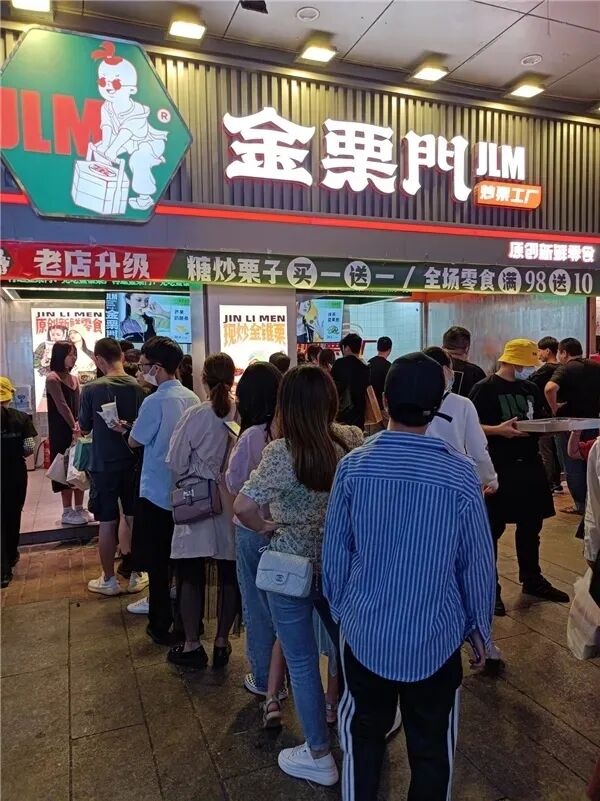
The turning point first came from observing the details of daily operations. They found that female customers who came to buy freshly fried chestnuts always liked to pick up two packs of potato chips after paying, so they used chestnuts as a traffic-driving product, and slowly added other products such as dried fruits to the shelves.
Secondly, they tried every means to ride on market trends and create new consumption concepts. Around 2020, freshly made tea and new-style baking made "freshly produced, short shelf life" a new preference for young people. The two founders took the opportunity to propose the concept of "fresh snacks", launched their first short-shelf-life category "fresh spicy snacks", and added new categories including baked goods, freshly brined food and drinks.
In 2021, chestnuts completely finished their historical mission and gave way to the all-inclusive Chinese character "Li" (grain) — "Jin Lv Men" was officially renamed "Jin Li Men" (Jinlimen).
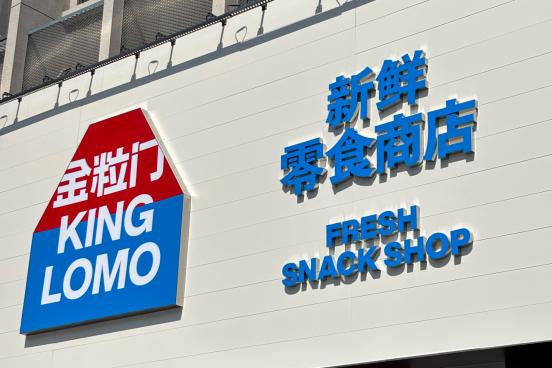
Entering this new development stage, Jinlimen began rapid iterative transformation.
For example, the store style has gone through several iterations. The 2023 concept store at Changsha IFS made the open kitchen the core highlight for the first time; the 3.0 store model launched in 2024 adopted the signature red and blue contrasting color scheme.
In 2024, they invited the design firm that once completed visual design work for Bananain, replaced the brand LOGO, and renovated all stores into an industrial warehouse style. The blue, white and red three-color shopping bags have since become a viral "fashion item" on social platforms.
What tests their core competitiveness even more is the huge effort they invested in product development and supply chain construction.
In terms of products, different from the "large and comprehensive" operation logic of bulk snack stores, Jinlimen took the opposite path: it offers a wide enough range of categories, but only keeps 3 to 10 market-proven best sellers for each segmented category; at the same time, it uses its own short-shelf-life operation logic and unique flavor design to "remake" some products, such as its spicy konjac strips and crispy shrimp chips.
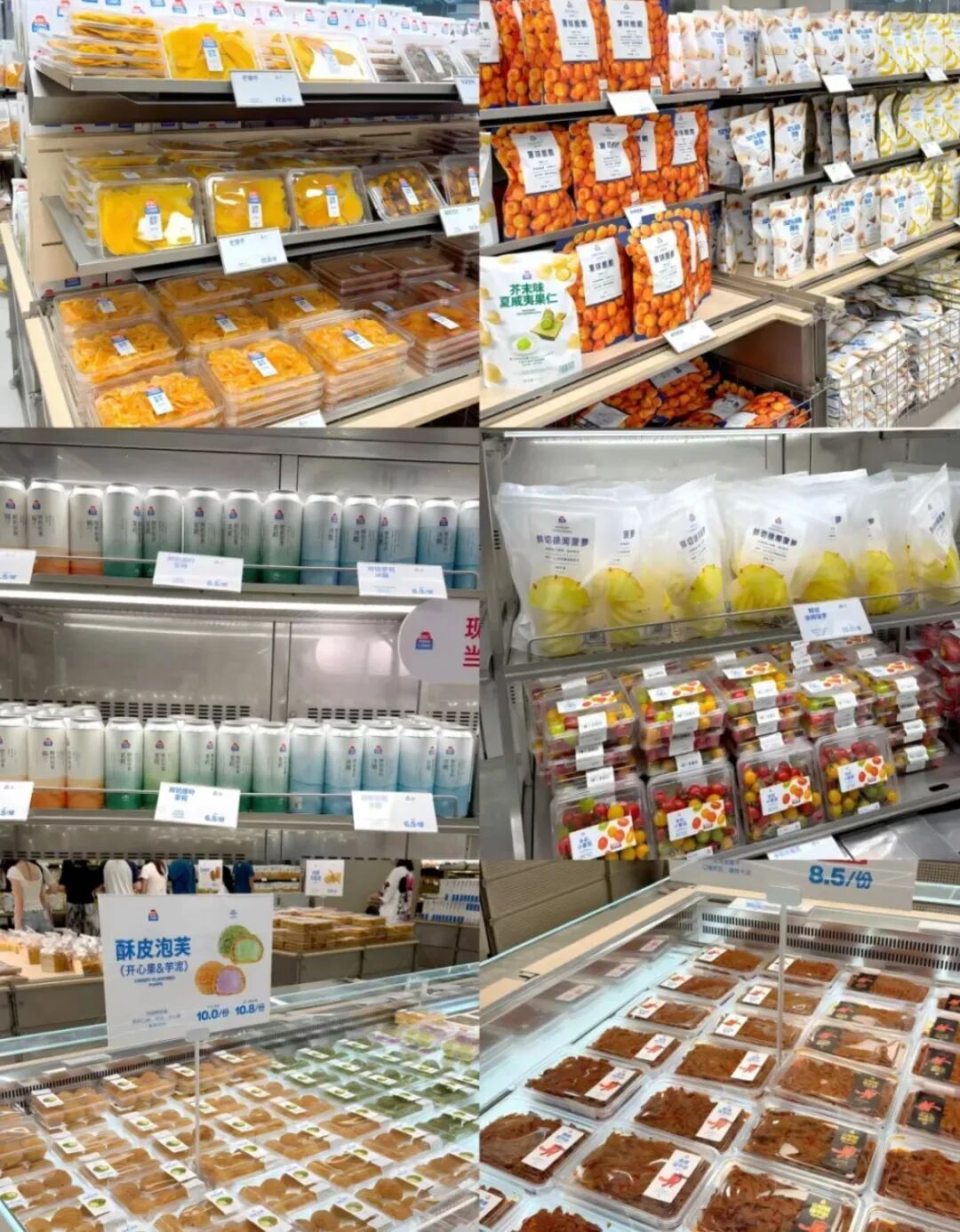
The supply chain construction is the top priority of all their efforts.
Short-shelf-life products only have a shelf life of 1 to 5 days. The effective coverage radius of cold chain daily distribution is generally recognized in the industry as 200 to 300 kilometers, otherwise it is difficult to guarantee product freshness, control inventory loss, and maintain a reasonable restocking frequency.
This is also why Jinlimen did not expand its business out of Hunan for many years, and did not open its first out-of-province store in Nanjing until May this year. This is because two new factories in Changzhou and Dongguan were officially put into operation in May 2026.
Although the store opening speed is slow and the number of new stores is small, scarcity itself is a very effective form of brand promotion.
Jinlimen's explosive popularity relies on three layers of interlocking "camouflage"
Local conditions nurture local people, and Jinlimen's explosive popularity is closely tied to its birthplace Changsha.
Changsha has a large young population, which is a natural advantage that benefits new consumer brands. Data from the 7th National Population Census shows that young people aged 14 to 35 account for 31.4% of Changsha's total population, and the average age of the city's residents is only 37 years old. Some entrepreneurs' monitoring data shows that the peak foot traffic at Wuyi Square in Changsha even appears at 1 a.m.
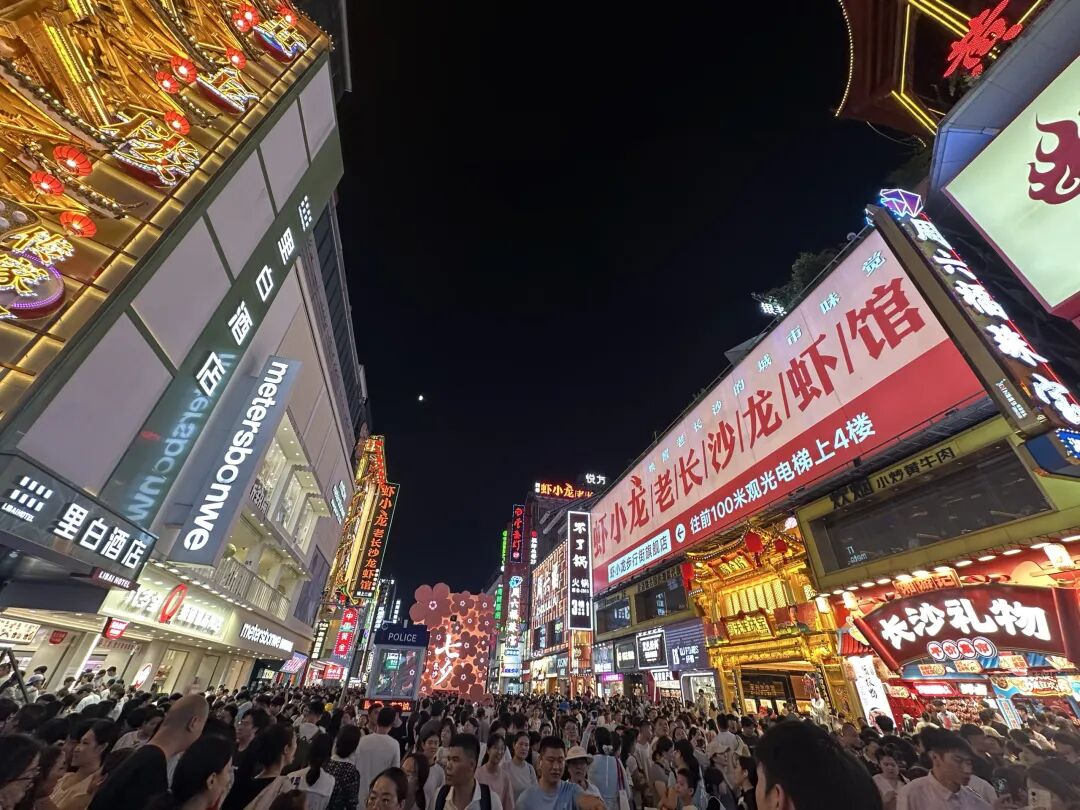
On the other hand, the mature local supply chain can timely meet the diverse needs of young consumers. Within Jinlimen's own system, there are 16 cooperative factories in Hunan that supply 54 SKUs, 11 of which are located in Changsha.
A person working at a contract manufacturing factory told Jiemian News that for some snacks, free shipping is offered for orders of 50 boxes, and customers can directly replace the brand label without modifying the raw materials and flavors of the products at all.
This is good news for Jinlimen, and also good news for its peers who copy its business model.
But even with the same source of products and stores all located on B1 floor of shopping malls, Jinlimen's queue is always longer than that of its competitors.
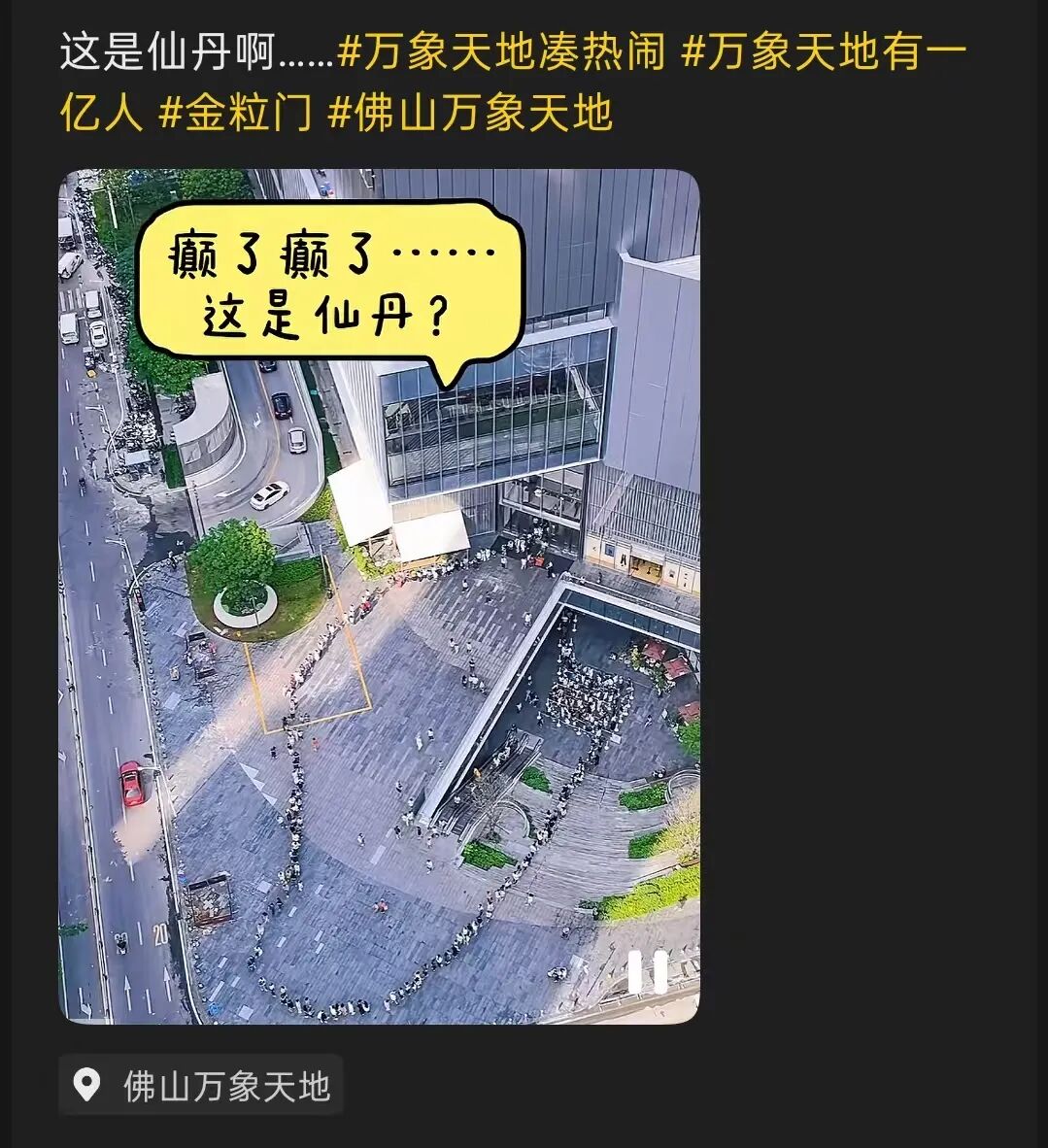
Behind this phenomenon are three interlocking layers of "camouflage" that immerse young consumers in the consumption experience.
First, use short-shelf-life products for traffic drainage, and rely on long-shelf-life products to generate profits.
Jinlimen positions itself as a brand focused on fresh snacks, but in fact, short-shelf-life and long-shelf-life products are equally important to it, they just have different functional divisions.
When you enter the store, the first row of products in sight are freshly made drinks, freshly brined food and freshly baked products with a shelf life of 1 to 5 days, with their aroma and hot air coming at you together; walking further inside, you will find dried fruits, nuts, puffed food and dried meat products, whose shelf life is counted by months.
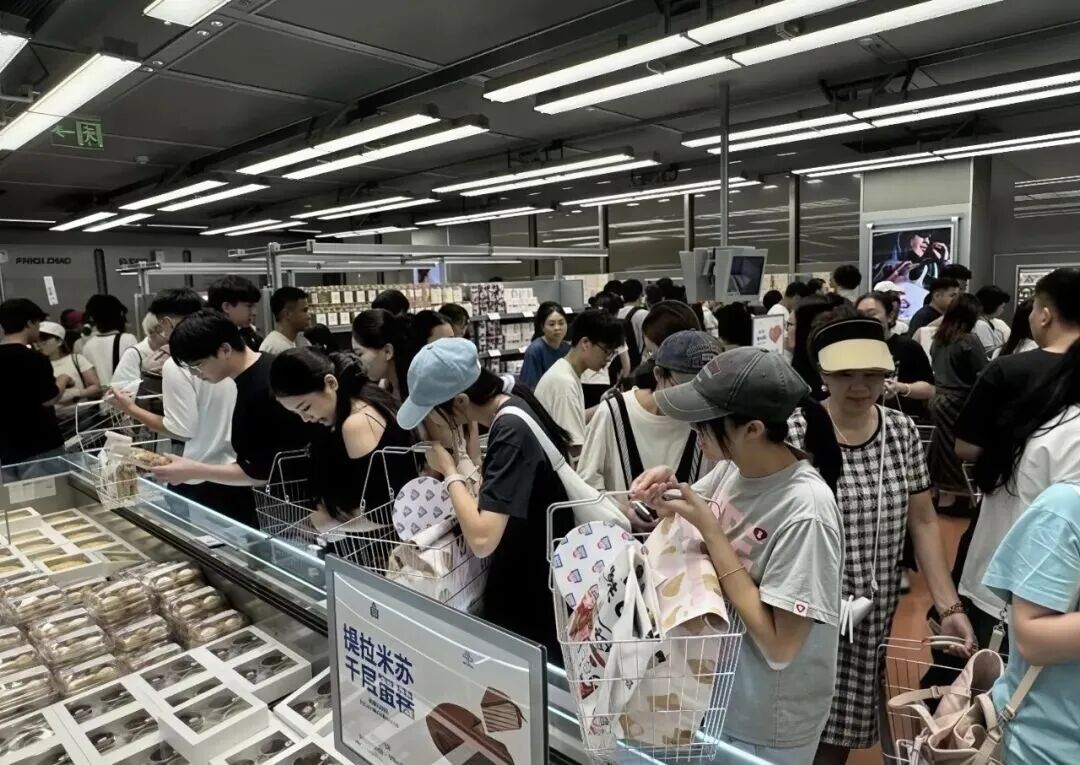
According to the survey data from Huachuang Securities, short-shelf-life SKUs with a shelf life of 1 to 5 days account for 46.1% of total SKUs, contributing more than 60% of total sales revenue.
It seems that short-shelf-life products are the main revenue driver, but in terms of inventory loss rate, long-shelf-life products are far lower than short-shelf-life products. So the actual operation situation is: short-shelf-life products are responsible for driving overall revenue, and long-shelf-life products support the gross profit margin.
Second, the "performance" of on-site production.
How to highlight its selling points of short shelf life and product freshness? The best solution is to complete the production process on site in front of consumers.
In Jinlimen, there are always eye-catching scenes happening: store staff pour drinks into aluminum cans and seal them on the spot, and staff will remind each customer that they can only buy two bottles per person, must finish drinking them on the same day, as the product only has a one-day shelf life; the same rule applies to baked goods and brined food produced in the transparent open operation room.
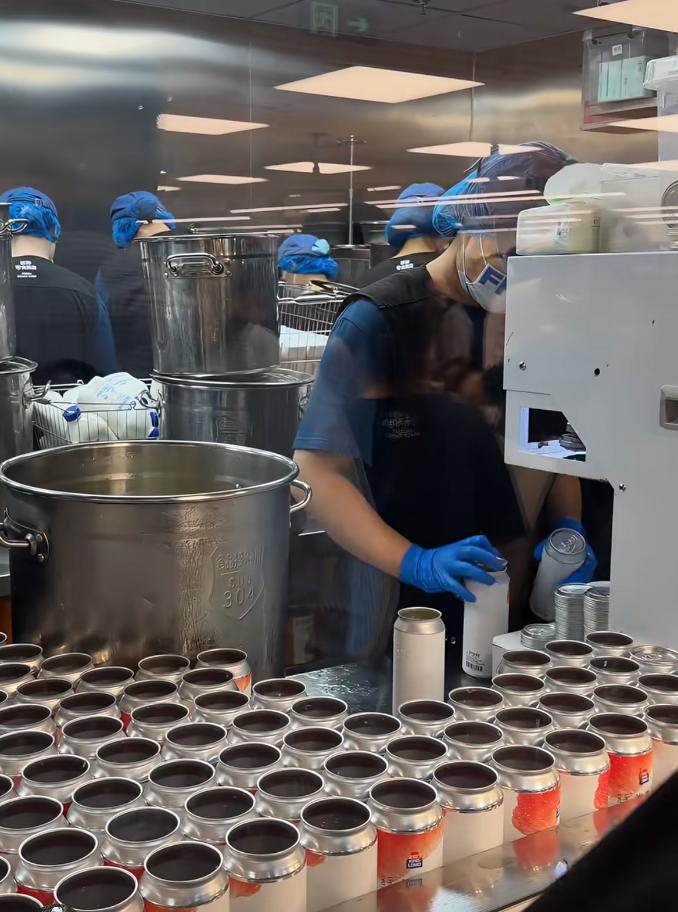
At first glance, many products are made completely on site in the store, so it is quite reasonable for them to have a small premium.
But the truth is, for some of these "freshly made" products, only the last one or two steps are completed on site. Wang Zhigang, vice president of Shanghai Chain Operation Association, introduced that this type of freshly made drinks are still different from those sold in dedicated tea stores: most of their raw materials are delivered uniformly by the central factory, the formula is pre-matched, and the store only completes the last few simple assembly steps.
This operation mode is equivalent to the central factory preparing all the ingredients, and the store only completing the final steps, which can be seen by customers and drive spontaneous social sharing.
In fact, this is quite reasonable. Otherwise, if all the production work is done by the store, what value will the central kitchens, satellite factories and contract manufacturers have? Of course, this is not unreasonable, as long as the selling points such as "short shelf life", "freshness" and "health" can be delivered as promised.
