Mercedes-Benz has laid its cards on the table: it will skip L3 and directly sprint towards L4.
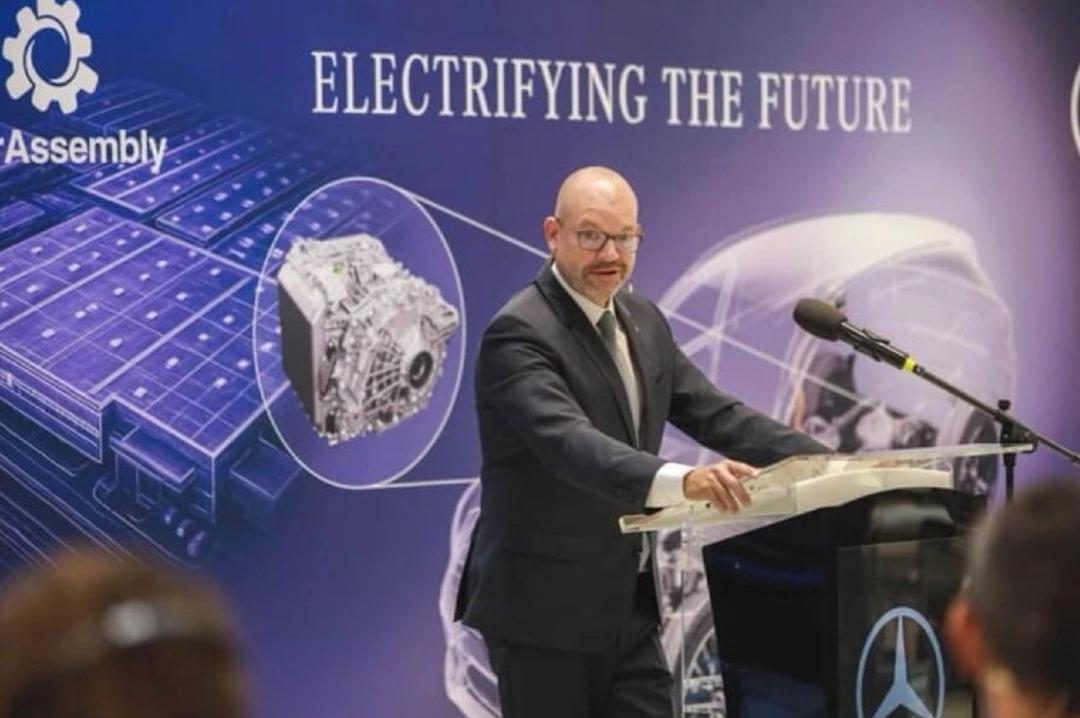
On November 7, Jörg Burzer, Mercedes-Benz's Chief Technology Officer, was asked at a media roundtable why the latest S-Class is not equipped with Drive Pilot in the United States.
His answer was that the system was launched too early.
"Launching new technology ahead of the curve does not mean it can meet the actual needs of consumers," he added, "Sometimes when a technology is launched too early, you end up realizing you have to re-examine what customers really want."
In other words, Mercedes-Benz has spent five years working on L3 autonomous driving and has now decided to abandon this path.
The new roadmap is to push L2++ to its absolute limit, then skip L3 and directly advance to L4. As for the mass production timeline of L4, Burzer said it will not arrive until after 2030.
It Was the World's First Five Years Ago
At the end of 2021, Mercedes-Benz Drive Pilot received approval from the Federal Motor Transport Authority of Germany, becoming the world's first mass-produced L3 system legally permitted to operate on public roads.
As early as 2017, Germany revised its Road Traffic Act, becoming the first country in the world to define L3 autonomous driving and clarify liability rules in legislation. In 2021, it passed the Autonomous Driving Act, opening the door for L4 systems to operate in limited areas. Only after the regulatory framework was relaxed could autonomous vehicles be allowed on public roads.
Mercedes-Benz was the first enterprise to obtain this official approval.
It was a glorious milestone. Before that, L3 was only a concept confined to laboratories and test sites. Mercedes-Benz integrated it into the S-Class, allowing car owners to release the steering wheel, take their eyes off the road, watch videos, reply to emails and even play games under specific conditions.
More crucially, Mercedes-Benz stated that it would take full liability for any accidents that occur while the system is activated.
In 2023, the system was approved in Nevada and California in the United States, making Mercedes-Benz the first automaker in the U.S. to obtain L3 certification. The media hailed it as the "originator of global L3 autonomous driving".
In addition to the hands-off driving function on highways, another capability of Drive Pilot is frequently mentioned: automatic parking in completely unmanned scenarios, which can independently find parking spaces, plan routes, and actively power off, and this function has already been implemented on mass-produced vehicles.
However, behind the aura, the applicable conditions are extremely specific: the maximum speed is 64 kilometers per hour, the system only works on congested highway sections, it can only operate in sunny daytime, and high-precision map coverage is mandatory.
Interestingly, the combination of these four conditions means that the most suitable scenario for this system may not be in Germany.
German highways have no general speed limit, so speeds below 64km/h only appear on congested sections around large cities, which rarely occur throughout the year. However, during the morning rush hour in first-tier Chinese cities, elevated roads are as congested as parking lots, with vehicles moving only 10 kilometers per hour. This kind of road condition is exactly the ideal scenario for L3 autonomous driving.
But Mercedes-Benz has not launched L3 autonomous driving in China, as Chinese regulations have not opened the relevant access for L3. Meanwhile, Chinese users' expectations for intelligent driving have long been raised to another standard by urban NOA (Navigate on Autopilot).
The price is also not low: the optional package costs 5,000 to 9,000 euros in Germany, and it is offered as an annual subscription in the U.S. at 2,500 dollars per year.
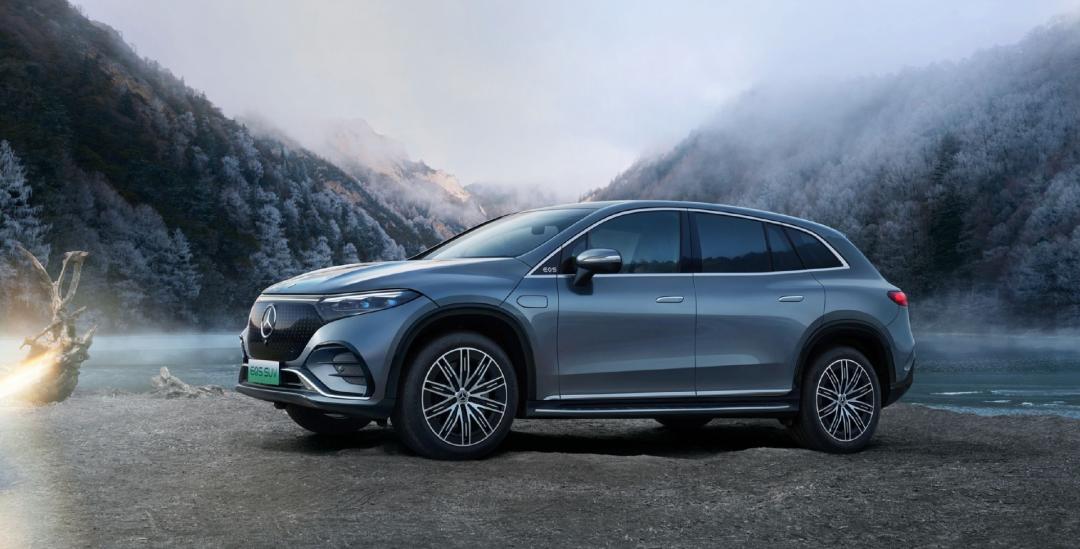
In January this year, the new S-Class was launched, and Drive Pilot was no longer listed in the configuration sheet. The facelifted EQS also removed this function. The official statement at that time was rather vague, until Burzer clarified the matter in November.
The Unsolvable Core Dilemma of L3
The definition of L3 autonomous driving is that under specific conditions, the vehicle drives itself, the driver can take their hands off the steering wheel and eyes off the road, and the automaker takes full liability. How this "specific condition" is defined determines whether the system is practically useful.
Mercedes-Benz set the limit at below 64km/h.
This number is not arbitrarily set, it corresponds to the crawling speed during highway congestion. Below this speed, the system has sufficient reaction time, the sensors have sufficient redundancy, and the vehicle can brake in time even if an emergency occurs.
But what are the actual usage scenarios for users? They are commuting on elevated roads at a speed of 60 to 100 km/h every day, and cruising at 120 km/h on highways during weekend trips.
Congested road sections with speed below 64km/h only account for a very small part of these scenarios. That means users spend tens of thousands of yuan on a function that can barely be used several times a year.
What is more troublesome is the liability issue.
When an accident occurs with an L2 system, the driver is held responsible. When an accident occurs with an L4 system, the automaker is held responsible. L3 is stuck in the middle: the automaker is responsible when the system is operating, but as soon as the system prompts "please take over", the liability immediately falls back to the driver.
How long is this "instant"? The common practice in the industry is to give the driver about 10 seconds. No one can guarantee that 10 seconds is enough for a person who was watching videos to fully take over the vehicle.
To cover this liability risk, the vehicle needs to be equipped with redundant systems: dual braking, dual steering, dual power supply, lidar, and high-precision maps, all of which add up to huge costs.
Liability transfer brings another more troublesome problem, which is evidence collection. For L2 accidents, the dashcam footage can be checked to confirm whether the driver was paying attention to the road, and the liability can be clarified quickly. For L3 accidents, it is necessary to first judge whether the system was running at that time, whether it exceeded the operational design domain, and whether the driver took over as prompted. All these data are stored on the vehicle and provided by the automaker.
Who can guarantee that the data has not been tampered with? Do third-party testing agencies have the ability to read the data? What insurance premium rate should be set? Germany spent years polishing this framework, and other markets do not even have a similar framework yet.
Therefore, it is difficult to make L3 economically viable: the cost rises, applicable scenarios are limited, the price cannot be reduced, and users are not willing to pay for it.
There is also a mismatch in expectations: users expect autonomous driving to be usable throughout the entire journey, while L3 can only be used in a very short section of the trip, which is completely different. Therefore, when urban NOA has become a standard feature on vehicles priced at over 100,000 yuan in China, L3's "hands-off driving on limited sections" looks more like an exhibit — it seems advanced, but is impractical for daily use.
This is not a problem unique to Mercedes-Benz. Audi announced that it would abandon L3 back in 2019, claiming that "the legal framework is not mature". Honda launched a limited batch of 100 L3 vehicles in 2021, which were only available for lease instead of sale. Ford and General Motors also withdrew from L3 development later.
Looking at Tesla, the situation becomes clearer. FSD has been sold for many years, but its autonomy level has always remained at L2, and Tesla never promises to take liability for accidents. Its choice is straightforward but effective: maximize the system's capabilities, but never transfer any liability. As a result, the function can be continuously iterated, and all regulatory risks are borne by the car owner.
L3, by contrast, requires the automaker to take over the liability first before improving the system's capabilities. This path is logically more advanced, but much harder to commercialize.
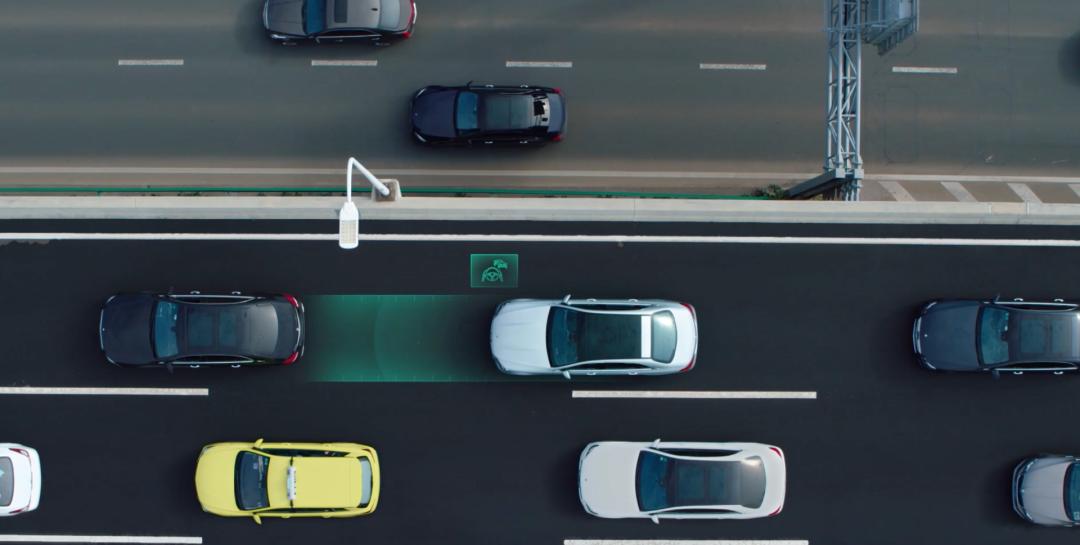
The Chinese market is much more flexible. It does not get tangled up in the liability attribution of L3, but directly pushes the capabilities of assisted driving into urban areas. Urban NOA has become the mainstream trend, and users compare whether the system "can drive from home to the office" instead of "whether you can watch videos in traffic jams".
Mercedes-Benz persisted for five years, making it the last automaker to withdraw from the L3 track, and also the one that exited in the most decent way.
What Has Mercedes-Benz Figured Out
If you calm down and think about it, what Mercedes-Benz did is actually the right call.
L3 is essentially a transitional state, which assumes that "human-machine co-driving" is feasible. But in reality, once people are allowed to take their hands off the steering wheel, their attention will quickly dissipate, and their reaction time will be far insufficient when they need to take over. This is common sense in human factors engineering, which cannot be solved by technology.
Therefore, skipping L3 is more like a strategic retreat to advance, and switching to a new track in advance.
Burzer also made a very important point: instead of spending several more years developing an L3 system with limited improvement, it is better to concentrate resources on L4 development.
This statement is based on a very realistic judgment: the ceiling of L3 has been locked at 64km/h. Even if the speed is increased to 130km/h, the problems of regulations, liability, and redundancy costs will not disappear, and the user experience will not be significantly improved. Continuing to invest money in it is equivalent to betting on a market that is destined to never achieve large-scale adoption.
But directly advancing to L4 is not an upgraded version of L3, it is a completely different system.
The L4 competition is not about who can build a vehicle that allows hands-off driving, but about who can operate an entire fleet — remote takeover, liability definition for insurance, city-level maps, regulatory permits, and accident handling procedures. The players in this field are Waymo, Apollo Go, and Tesla's Cybercab, no longer BMW and Audi.
It is also easy to understand why Mercedes-Benz chose to conduct Robotaxi tests in Abu Dhabi instead of Stuttgart: to find a place with relatively relaxed regulations, moderate city size, and supportive policies, to run through the operating model first. This is exactly what Waymo did in Phoenix back then: complete the full operational loop in a controllable city first, then replicate the model elsewhere.
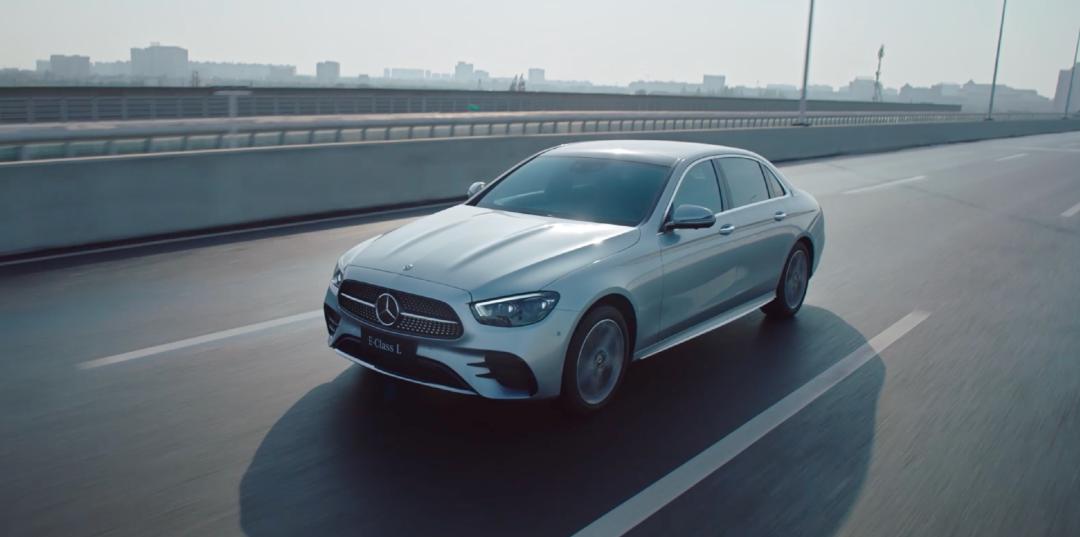
Mercedes-Benz's path is also very clear: generate revenue with L2++ products today, and secure a leading position in the L4 track for tomorrow.
The L2++ system is MB.DRIVE ASSIST PRO, which provides full-journey assistance from the starting point to the destination, and can perform lane changes, pass intersections, make turns, and recognize traffic lights both on highways and in urban areas. The new S-Class is equipped with up to 27 sensors, including 10 cameras, 5 millimeter-wave radars, and 12 ultrasonic radars, with a computing power of 254 TOPS. The driver is required to keep their hands on the steering wheel, and the driver takes full liability.
This system has been first launched in the Chinese market, and some Mercedes-Benz models are also equipped with Momenta R7, which supports end-to-end parking assistance from parking space to parking space.
The massive data volume of Chinese users and the engineering experience of urban NOA that Momenta has accumulated in China are impossible for Mercedes-Benz to develop independently behind closed doors. More importantly, Mercedes-Benz still holds the final say in vehicle definition, safety standards and brand. It can leverage external resources for intelligent driving development, but it still retains full control over vehicle manufacturing.
As for abandoning L3, it also made Mercedes-Benz realize that technological leadership does not equal commercial success, and securing the right position is more important than rushing to be first. Now, it has skipped the intermediate transitional state and chosen to stand directly at the starting line of the autonomous driving era in 2030.
This article is from the WeChat Official Account "SuperEV Lab" (ID: SuperEV-Lab), written by Zai Zhou, and authorized for release by 36Kr.