The "ceiling" of shopping malls never lies in the city's capacity.
Urban commerce in China is heading for different destinations.
On one hand, over half of Chinese cities have no new shopping malls coming up; on the other hand, the scene where a new mall ignites the whole city keeps emerging one after another.
In the past September, Foshan MixC World opened to the public, receiving over 860,000 visitors in the first four days, which triggered a "parking war" on Jihua Road; Guangzhou Baie Tan MixC entered the market, drawing 287,000 visitors on its opening day, pushing the passenger flow at Fangcun Metro Station to the second highest across the city, making the nickname "Fang Manhattan" go viral.
Guangzhou and Foshan are two cities with no shortage of shopping malls. Guangzhou has a permanent resident population of about 19.1 million and already has 270 existing shopping malls; Foshan has roughly half the population of Guangzhou, and has opened 132 shopping malls as well. The two cities are dotted with mature business districts, with leading malls gathering core passenger flow. Newly emerging projects are not facing a blank market, but fierce head-to-head competition.
Yet Baie Tan MixC and Foshan MixC World still became extremely popular immediately after opening. This shows that commercial capacity is not the only measurement for the growth boundary of urban shopping malls. So under what circumstances will the commercial pattern of a city be solidified? And what kind of new projects will break it open again?
01.
After Reaching the Peak
Leading Malls Maintain Stable Performance, Wanda Becomes the Biggest Winner
When the new supply in a city has been stagnant for a long time, there have been no newly opened shopping malls since 2023, and there is no clear new supply in the next three years, we define it as a structurally peak-reaching city. These cities are basically distributed in the sinking markets of fourth-tier and lower-tier cities.
Such cities are the best samples to observe the commercial pattern of peak-reaching cities. Looking back at the passenger flow changes of sample projects in structurally peak-reaching cities in the past three years, we found that the competition pattern of shopping malls in these cities has been relatively solidified. Since 2024, the top passenger flow project in 71 of the 77 sample cities has remained unchanged, accounting for 92.2%; the top three projects in 58 cities are completely consistent, accounting for 75.3%.
The change in passenger flow ranking mainly occurs in mid-tier projects, which is often caused by the passenger flow improvement brought by replacing the operation entity and other reasons. In comparison, large-scale reshuffles rarely happen among leading projects.
This is closely related to the market characteristics of structurally peak-reaching cities. Such cities have small commercial market capacity and limited choices, and consumers often form strong consumption inertia towards familiar malls. Once a project establishes brand recognition and customer base, it is difficult for other projects to easily shake its position.
From the perspective of project performance, chain shopping malls rely on stronger brand appeal and mature operation systems to lock in core customer groups with inter-generational product advantages, further attracting passenger flow from the whole city. Among them, Wanda Plaza has performed particularly prominently. In cities below the third tier where Wanda has settled in, Wanda Plaza basically ranks first in local passenger flow, showing extremely strong brand appeal and competitiveness.
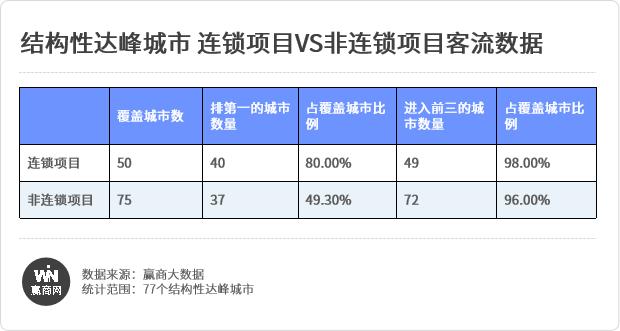
However, structurally peak-reaching cities are not completely free of competition. In some cities, although the status of traditional core business districts is difficult to shake, new district development and population migration may still bring new consumer demands, and Yan'an is a typical example.
The commercial market of Yan'an is mainly concentrated in Baota District, the main urban area. Before 2018, the commercial forms were mainly small-sized department stores, traditional supermarkets and street shops. It was not until February 2018, when Baota Wanda Plaza opened, that the first modern shopping mall was ushered in.
Baota Wanda Plaza is located in the core area of the old town of Yan'an, at the intersection of the "three mountains sandwiching two rivers" node, which is the oldest and most popular traditional business district in Yan'an. After the opening of Baota Wanda Plaza, 69 brands including Yonghui Supermarket, Wanda Kids Kingdom, Play Family, Suning, Haidilao entered Yan'an for the first time, taking the lead in breaking the local traditional commercial pattern.
With a rich brand matrix and modern commercial space, Baota Wanda Plaza provides one-stop consumption experience, forming a clear inter-generational product gap with the original commerce, quickly occupying the core consumer market of Yan'an, ranking first in the city's passenger flow all year round. It has received an average annual passenger flow of more than 15 million person-times in the eight years since its opening, with annual sales exceeding 700 million yuan.
One and a half years after the opening of Baota Wanda Plaza, Yan'an Wuyue Plaza opened in September 2019, seizing the development opportunity of Yan'an New District. With a huge volume of 170,000 square meters, it has become the largest local commercial complex. Its diverse business combination and consumption scenarios meet the demand of population agglomeration and consumption upgrading in the new district. However, due to multiple factors such as the immature development of the new district and the outbreak of the epidemic, Yan'an Wuyue Plaza failed to form a stable passenger flow import in the early stage.
But as the development of Yan'an New District becomes increasingly mature and the population continues to grow, in 2024, Yan'an Wuyue Plaza carried out an in-depth renovation in response to changes in the consumption environment, introducing well-known brands at home and abroad, optimizing the structure of catering brands, increasing the proportion of fashion retail brands, successfully adjusting more than 20 brands, and realizing an overall improvement of brand level. In September 2024, the total passenger flow of the project during the three-day fifth anniversary celebration reached 161,000 person-times, and the single-day passenger flow on September 15 reached 72,000 person-times.
Since then, Yan'an Wuyue Plaza and Baota Wanda Plaza have advanced side by side, becoming the first echelon projects of passenger flow in Yan'an.
One old and one new, the two large shopping malls occupy the two most important commercial sectors in Yan'an respectively, basically covering the core consumer groups of the whole city. But a stable market position does not mean the end of competition. On the contrary, it forces the two projects to continue to renovate and renew, and continuously consolidate their respective competitive advantages.
At the end of November 2025, the Yonghui Supermarket in Yan'an Baota Wanda Plaza took the lead in completing the renovation of the "Pangdonglai Model", becoming the first Pangdonglai-style Yonghui in Yan'an. More than a month later, the Yonghui Supermarket in Yan'an Wuyue Plaza completed the renewal, updating about 45.5% of the products, and adjusting the store moving line, shelf height, fresh cooked food and service system at the same time.
In 2026, Baota Wanda Plaza introduced first stores in the city such as Holiland and Jinkunge, and created fresh experiences through marketing activities such as mermaid underwater interactive performance and the debut of Unitree Technology robots; Yan'an Wuyue Plaza launched a systematic renovation, introducing more than 20 first stores in the city, and comprehensively reconstructing the business layout, brand matrix and space scene.
In summary, when there is no longer increment in the market, the urban commercial pattern will gradually become stable, but the competition will not stop there. The competition between existing projects puts more tests on product iteration, brand renovation and continuous operation capabilities. Leading projects also need to continuously improve their attractiveness through renovation and renewal to further consolidate their competitive advantages.
The example of Yan'an is only one side of the changes in the commercial pattern of peak-reaching cities. When the supply of shopping malls in more and more cities tends to stagnate, for those cities that have not yet reached the peak, where will the new commercial increment come from? Which cities and districts still have the conditions to attract new projects?
02.
When Increment Becomes a Scarce Resource, Where Are the Opportunities?
Discussing the "peak reaching" of urban commercial increment is essentially to explore where the real growth boundary of urban shopping malls lies.
This is not a simple problem of supply and demand balance. A phenomenon worthy of attention is that some cities have only two or three shopping malls, and there have been no new projects for many years; while many cities with huge existing commercial stock still maintain a high new supply.
From the perspective of per capita shopping mall area, there is no unified "peak line". On the contrary, structurally peak-reaching cities often stop adding new projects when the per capita commercial supply is still at a relatively low level, which is a passive peak reaching, indicating that these cities have not touched the upper limit of space capacity, but the upper limit of consumer demand and project development capacity.
Among the cities that are still continuously adding new malls, there are many cities with a relatively high per capita shopping mall area. According to the statistics of Winshang Data, cities with a per capita shopping mall area of more than 1 ㎡ per person currently include Sanya, Nanjing, Shanghai, Suzhou, Hangzhou, Zhuhai, Foshan and Wuhan. These cities are still constantly emerging new projects with outstanding operating performance. While Bijie, which has the lowest per capita shopping mall area, only has 0.06 ㎡ per person, there are still 4 projects under preparation, and many of them are led by leading chain enterprises.
It can be seen that the urban commercial capacity is not static. Whether a new project can share the stock opportunity depends not only on the size of the urban consumer market, but also on whether it can stimulate the originally unmet demand and create new consumption increment through better products and operation capabilities.
It can be said that the upper limit of commercial increment peak reaching is not only the boundary of commercial capacity, but also the boundary of project investment return.
From the perspective of newly opened and reserve projects in the past two years, leading enterprises usually choose to continue to increase investment in advantageous regions and deeply cultivate cities. On the one hand, long-term deep cultivation can enable enterprises to fully understand the local consumer market and customer preferences; on the other hand, multi-point layout is also conducive to systematic management, strengthening consumers' recognition of the brand, thus reducing the entry cost and operation risk of new projects.
Of course, these cities are mostly concentrated in high-tier cities with strong commercial foundations, and some third-tier cities with good consumption power. In addition to the larger market size and higher demand ceiling of these cities, more importantly, they follow different competition logic from the sinking market: in the sinking market, the core is to seize the first-mover advantage, quickly establish brand recognition and consumption habits with inter-generational product gaps, which is difficult for latecomers to shake easily.
In high-tier cities, the late-mover advantage may be more prominent. Although the commercial supply is sufficient, the degree of project homogenization is high, and consumers' requirements for quality, brand and experience are constantly improving. If early projects do not iterate continuously, even if they occupy a good location, they may be surpassed by newer products.
The "multiple MixC in one city" strategy of China Resources Mixc Lifestyle in Hefei is a typical embodiment of its late-mover advantage.
China Resources Mixc Lifestyle is currently the commercial operator with the largest layout scale in Hefei. It has laid out 10 projects in Hefei in 13 years, of which 6 are already open and 4 are signed or under construction. This layout density ranks top within China Resources system.
Hefei has never formed a local operator with obvious competitive advantages, and its commercial development started relatively late, which also brings more market opportunities to chain enterprises such as China Resources Mixc Lifestyle. In 2015, after China Resources Mixc Lifestyle established a benchmark with Hefei MixC, it expanded regional-level projects in different districts of Hefei.
This layout mode has enabled China Resources Mixc Lifestyle to accumulate strong brand influence and commercial resource coordination capabilities in Hefei, which also provides confidence for it to further expand the market. Even though the business districts in the north of Hefei and Binhu in the south already have large-scale commercial supply, China Resources Mixc Lifestyle still chooses to continue to layout large-volume projects.
The 7th mall of China Resources Mixc Lifestyle in Hefei - Baohé MixC opened in May 2024, which is the 77th shopping mall in Hefei and also the 23rd shopping mall in Baohé District. Baohé District is the location of Binhu New District. With the relocation of provincial administrative organs to Binhu New District, regional population, industries and public resources have accelerated to gather, and it has now become the administrative district with the largest covered population, the largest economic aggregate and the highest commercial scale in Hefei.
Before the opening of Baohé MixC, Binhu Intime Department Store, Hefei Forman (Binhu Store) and Baohé Wanda Plaza covered Baohé District from south to north, which were the three projects with the best passenger flow performance among regional-level shopping malls in Hefei, once forming a three-legged competition pattern in Baohé District.
Facing such fierce competition, Baohé MixC is located in the Gedadian area, adjacent to Hefei South Railway Station. Although it is located between the three mature commercial projects of Baohé Wanda, Hefei Forman and Binhu Intime Department Store, it still successfully breaks through in the mature competition pattern by virtue of its product and operation advantages.
Baohé MixC introduced about 360 brands in total when it opened, of which more than 60 are first stores in Anhui, and the first stores in Baohé account for more than 40%. The key introduced brands include SEPHORA, Freshippo Supermarket, NITORI, NIKE RISE 750, MUJI, UNIQLO, UR and other trend-setting benchmark brands, creating a mid-to-high-end internet-famous catering matrix including Sanchu Shan, Niunew Sukiyaki, Slow Knife, NEED, O'EAT, Weightless Restaurant, Young Star Chef.
The passenger flow on the opening day of the project was about 250,000+, and it immediately entered the first echelon of passenger flow projects in Baohé District after opening. In Q3 2026, the average daily passenger flow was nearly 40,000, ranking second in the city, second only to Hefei MixC.
The layout strategy of China Resources Mixc Lifestyle in Hefei has two inspirations:
■ First, in highly competitive high-tier cities, whether the first-mover advantage can continue to lead depends on long-term operation, investment promotion iteration and product update capabilities.
Baohé Wanda Plaza, which opened in 2010, is located in the north of Baohé District, close to the traditional city center, and was once one of the representatives of top-tier commercial projects in Hefei. The early occupation of the core location brought stable passenger flow and customer groups to the project, which is an important foundation for the first-mover advantage.
However, if the first-mover project only adopts a standardized box-type product, even if it once occupied a good location, it may still be impacted by new projects later. For example, the late-entering Baohé MixC, under the condition of similar location, has formed strong competition for old projects by virtue of newer products and operation capabilities.
■ Second, the status of city-level projects is often difficult to shake, while regional-level and community-level projects are more likely to be diverted due to higher homogenization.
City-level projects usually not only occupy core locations, but also maintain operation quality and build product barriers, so late entrants are difficult to obtain location conditions and brand resources of the same level, and can only find market gaps in other districts.
In Hefei, the competition difference between city-level projects and regional-level projects is also obvious. Hefei Intime Centre, which opened in 2012, gathers international first-tier luxury brand resources, establishing its leading position as the only heavy luxury shopping mall in Anhui.
Facing the rise of Intime Centre, other projects have taken different development paths. Baohé Wanda, which once introduced the first Gucci directly-operated store in Anhui, gradually lost its early high-end commercial advantages, and then faced competition from regional-level projects such as Baohé MixC; in contrast, Hefei MixC did not directly compete with Intime Centre for the heavy luxury market, but formed differentiated competition with mid-to-high-end positioning, established brand and customer group advantages in line with