The parent company of GUCCI has set its sights on the business of Laopu Gold.
While traditional Chinese heritage gold brands are continuously moving closer to the luxury sector, international luxury groups have also begun to enter the Chinese gold market in the reverse direction.
During the 9th China International Import Expo, Qeelin, the jewelry brand under Kering Group, officially launched its independent gold brand Qeelin GOLD, with its first boutique scheduled to open at Grand Gateway 66 in Shanghai on November 20.
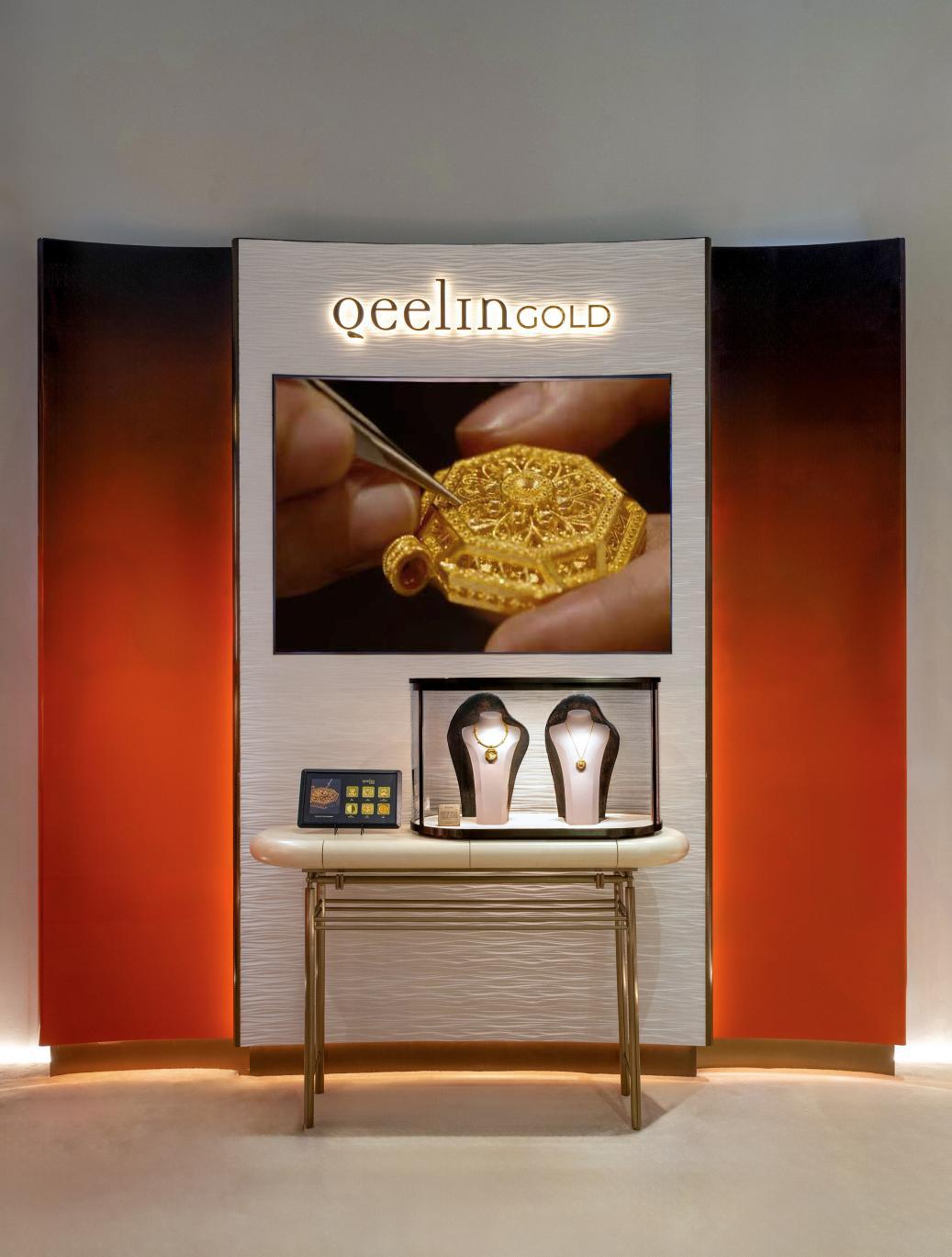
Different from Qeelin's previous jewelry products that mainly feature 18K gold, diamonds and gemstones, Qeelin GOLD takes fine gold as its core material and adopts a fixed-price pricing model.
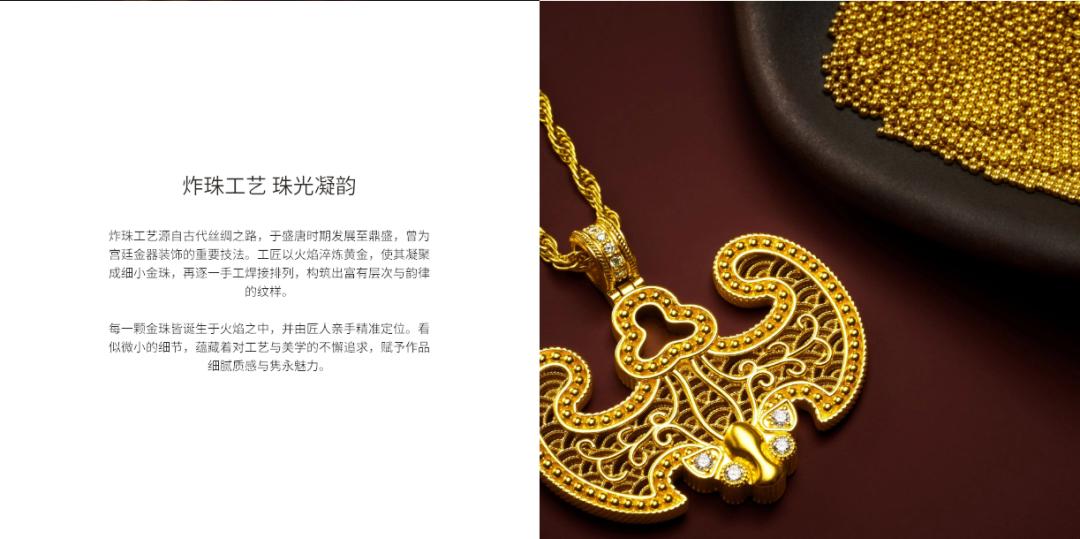
Although the brand does not explicitly define itself as "heritage gold", the traditional gold craftsmanship it uses, including filigree, granulation and engraving, clearly overlaps with the craft systems of local high-end gold brands such as Laopu Gold.
This is not Kering's first foray into China's high-end gold market. In November 2025, the group participated in the Series A financing of Baolan, a local high-end gold brand. From financial investment to launching an independent brand, Kering has begun to directly participate in the competition in this market.
Behind the changes is the convergence of two forces: on one hand, traditional luxury groups are seeking new sources of growth, and on the other hand, Chinese brands such as Laopu Gold are entering the consumer market originally occupied by international luxury brands through high-end positioning.
The "Blue Blood" Brand's Anxiety for Presence
Kering is going through a long-term business adjustment.
On October 22, Kering Group released its third-quarter 2026 results. The group recorded revenue of 3.345 billion euros, down 1% year-on-year on a comparable basis. Among them, revenue of the core brand Gucci reached 1.291 billion euros, down 6% year-on-year on a comparable basis, and direct retail revenue fell by 9%.
Over the past few years, Gucci has always been Kering's most important profit source, but as global luxury consumption cools down, the brand continues to face pressure.
Although the group has promoted transformation by replacing the creative team, adjusting product mix and optimizing channels, weak demand in markets including China is still affecting the recovery process.
Jewelry has become one of the few businesses of the group that maintains growth at the current stage.
In the third quarter of this year, Kering's jewelry business achieved revenue of 239 million euros, up 11% year-on-year on a comparable basis; the cumulative revenue in the first three quarters reached 760 million euros, up 17% on a comparable basis.
Last December, Kering announced the phased acquisition of Italian jewelry manufacturer Raselli Franco;
In March this year, it established an independent Kering Jewelry business division, bringing four brands including Boucheron, Pomellato, DoDo and Qeelin under unified management.
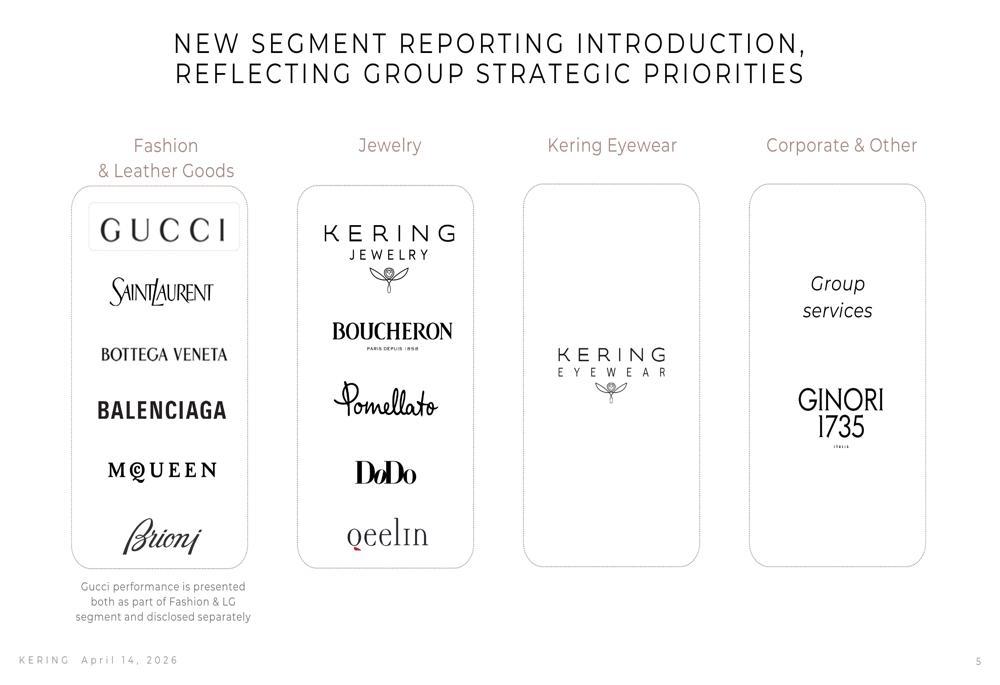
From design and manufacturing to retail, Kering is strengthening the independence and supply chain capacity of its jewelry business.
Another more important change is taking place in China's high-end consumer market.
In the past few years, Laopu Gold has built a brand system close to international luxury brands through traditional craftsmanship, original design, fixed pricing and high-end shopping mall channels.
From 2023 to 2025, Laopu Gold's revenue increased from 3.18 billion yuan to 27.3 billion yuan, expanding more than 8 times in three years, with annual growth rate remaining in triple digits consecutively, of which the year-on-year growth in 2025 was about 221%.
While traditional gold jewelry consumption is under pressure, high-end craft gold jewelry is still competing for more consumer spending. The rise of Laopu Gold has also begun to attract the attention of international luxury giants and financial institutions.
In September 2025, Bernard Arnault, Chairman and CEO of LVMH Group, specially visited the Laopu Gold store in Shanghai IFC during his store inspection tour in Shanghai.
According to media reports, Arnault and his entourage stayed in the store for about half an hour, visiting the display of gold ornaments and goldware. Staff at the Laopu Gold store later confirmed to the media that he did visit and tour the Laopu study, but did not purchase any products.
Third-party research cited in Laopu Gold's 2026 interim report shows that the average overlap rate between its consumers and consumers of five international luxury brands has increased from 77.3% in July 2025 to 84.6% in August 2026.
This competition is no longer limited to the purchase budget of high-end consumers, but gradually extends to how the value of luxury goods is defined.
For a long time, European luxury brands have built premium relying on brand history, design, craft inheritance and identity recognition. But as luxury goods continue to raise prices and the consumption environment changes, this narrative is facing challenges.
Chinese high-end gold brands provide another interpretation of value: they also emphasize cultural inheritance and complex craftsmanship, and their products also contain measurable material value of gold.
The rise of brands such as Laopu Gold shows that traditional Chinese culture and craftsmanship themselves also have the opportunity to support high-end pricing, without having to fully rely on the identity endorsement of European luxury brands.
The Gold Business: Different Paths May Not Lead to the Same Destination
Qeelin is one of the jewelry brands under Kering with the strongest foundation in the Chinese market.
Since its founding in 2004, the brand has taken oriental cultural symbols such as gourds and ruyi as its design language, mainly using materials such as 18K gold, diamonds and gemstones.
After joining Kering in 2013, the brand further expanded the Chinese market. At present, 66 of its 108 global stores are located in Chinese mainland.
The debut products of Qeelin GOLD continue the brand's long-standing oriental design language.
Among them, the BAJING collection draws inspiration from structures such as octagonal windows and caisson ceilings in traditional Chinese architecture. According to Shanghai Securities News, one piece exhibited at the CIIE site is priced at 126,000 yuan, and another custom piece costs about 450,000 yuan.
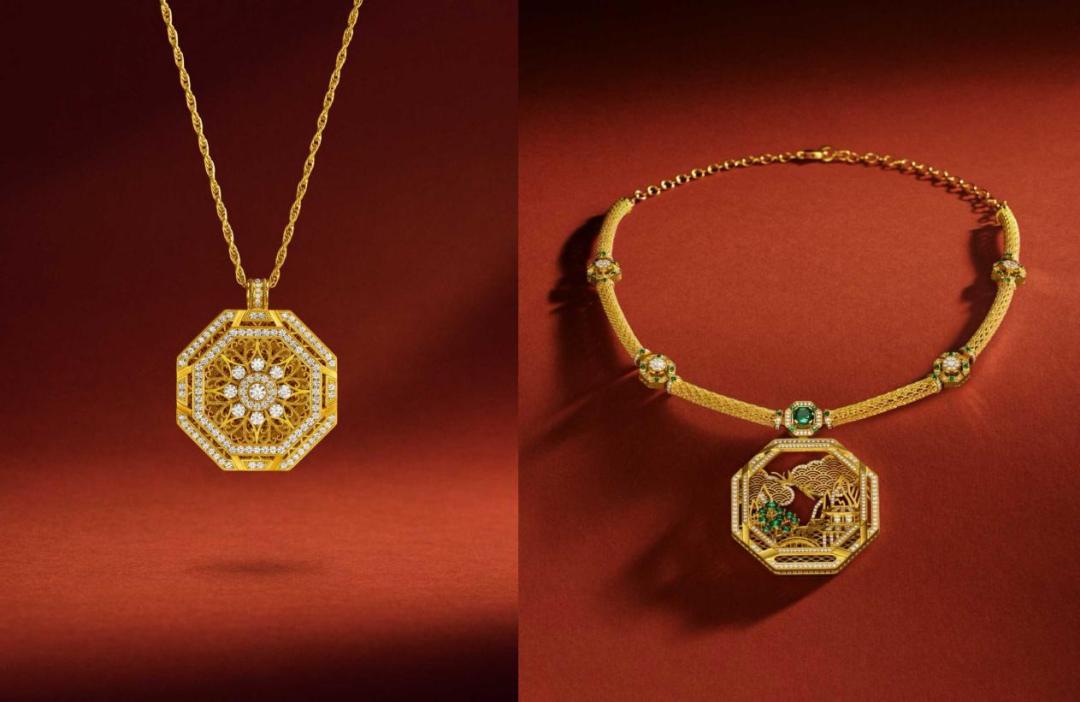
In the future, the store will also sell two collections, WULU and FUDAO. The former continues Qeelin's representative gourd design, while the latter uses bat patterns to convey the traditional implied meaning of "blessing arrives".
Although Qeelin GOLD has not yet disclosed the full product price range, the pricing of Qeelin's original 18K gold jewelry already overlaps with the core price band of Laopu Gold.
For example, a classic Qeelin WULU collection 18K rose gold, red agate and diamond gourd necklace is priced at 17,800 yuan, which is at a similar price point to some small-weight diamond-encrusted pendants from Laopu Gold.
In the higher price band, most of the products priced above 100,000 yuan sold on Laopu Gold's Tmall flagship store, apart from goldware ornaments, are gold bead bracelets and bangles with gold weight close to 60 grams, while pendants and necklaces are relatively rare.
This makes it possible for Qeelin GOLD to adopt a more high-end positioning than Laopu Gold's overall product system, but it ultimately depends on the new brand's main products and pricing in the future.
This difference also extends to the two sides' understanding of the gold business.
Despite the changes in materials and craftsmanship, Qeelin GOLD still follows the original jewelry design logic, focusing on cultural symbols, contemporary aesthetics and wearable jewelry. Laopu Gold, on the other hand, tries to expand its gold business beyond jewelry.
Xu Gaoming, Chairman of Laopu Gold, previously made it clear that "the product positioning of Laopu determines that our high-value customers are not targeting ornaments, but goldware."
He also emphasized that Laopu is a full-category brand with gold as the material, and cannot be simply defined as a gold and jewelry brand.
Apart from gold ornaments, Laopu already has cultural play items and goldware ornaments such as gold pots, tea sets, seals, paperweights and ruyi, with unit prices of related products ranging from hundreds of thousands to millions of yuan.
Although the business directions of the two types of brands are not completely the same, this does not prevent them from competing for similar high-net-worth consumers.
Laopu Gold has entered high-end commercial centers such as Beijing SKP, Shanghai Grand Gateway 66 and Hong Kong IFC. Shanghai Grand Gateway 66, where Qeelin GOLD's first store is located, gathers international jewelry brands such as Cartier and Bvlgari. In September this year, local high-end gold brand Junpei also officially settled here.
The core commercial spaces that used to be mainly occupied by international luxury brands are becoming places for local high-end gold brands to build brand recognition.
Under the common theme of luxury, how to make consumers recognize the sense of value is sometimes more important than the specific size of the value itself.
Breaking away from the value narrative of traditional European luxury brands centered on brand history and identity recognition, Laopu Gold combines the measurable value of gold material with traditional gold craftsmanship, cultural design and high-end shopping mall experience, exploring another path to build luxury premium.
But this answer also has limitations: when gold becomes the reason to support high-end pricing, the transparent gold price becomes the reference for consumers to measure the premium.
Previously, as gold prices rose rapidly, Laopu's fixed-price products were adjusted relatively slowly, coupled with shopping mall discounts, which once formed price attractiveness. With the phased fall in gold prices in 2026, this advantage has begun to be tested.
Qeelin GOLD is facing another exam question: whether it can extend its original brand value to the fine gold market, attract new customers, rather than just driving existing customers to switch from 18K gold to fine gold to realize internal product substitution.
In this sense, Kering's entry into the fine gold market is neither a simple act of devaluing itself, nor necessarily a humble move to learn from Chinese gold brands.
More accurately, it is re-evaluating what high-end Chinese consumers are willing to pay a premium for.
This article is from the WeChat Official Account "All-Weather Tech" (ID: iawtmt), written by All-Weather Tech, and authorized for release by 36Kr.