The in-car foot bath is back again. How ridiculous can the new energy industry possibly get?
Another mind-blowing feature is coming to cars — have you heard of the "mobile foot spa room"?
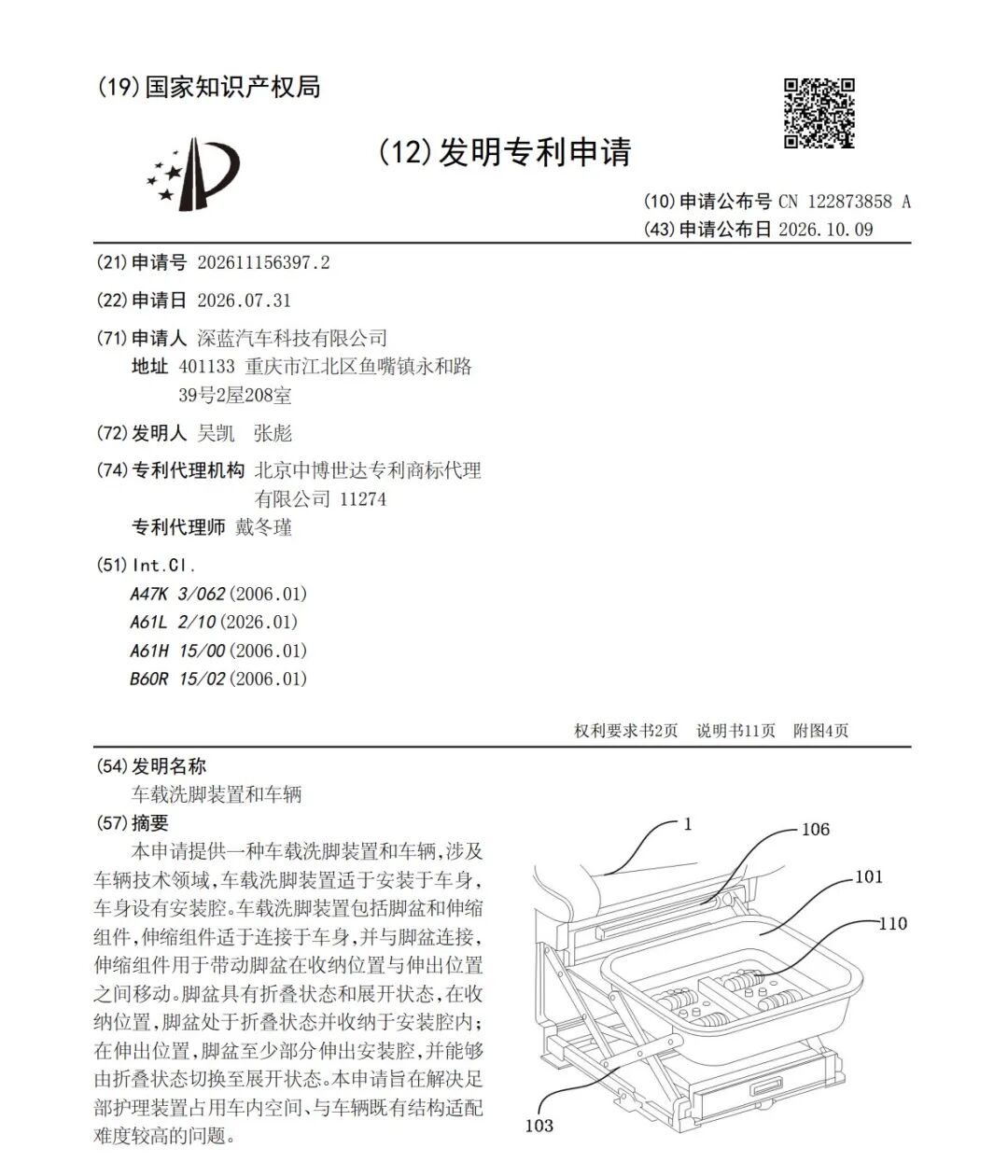
The in-car foot-washing device patent filed by Deepal Auto this July was published on October 9. The device mainly consists of a foot basin and a telescopic mechanism. It can be folded and stored in a dedicated space under the co-pilot seat in normal times, and extended for use when you need to soak your feet.
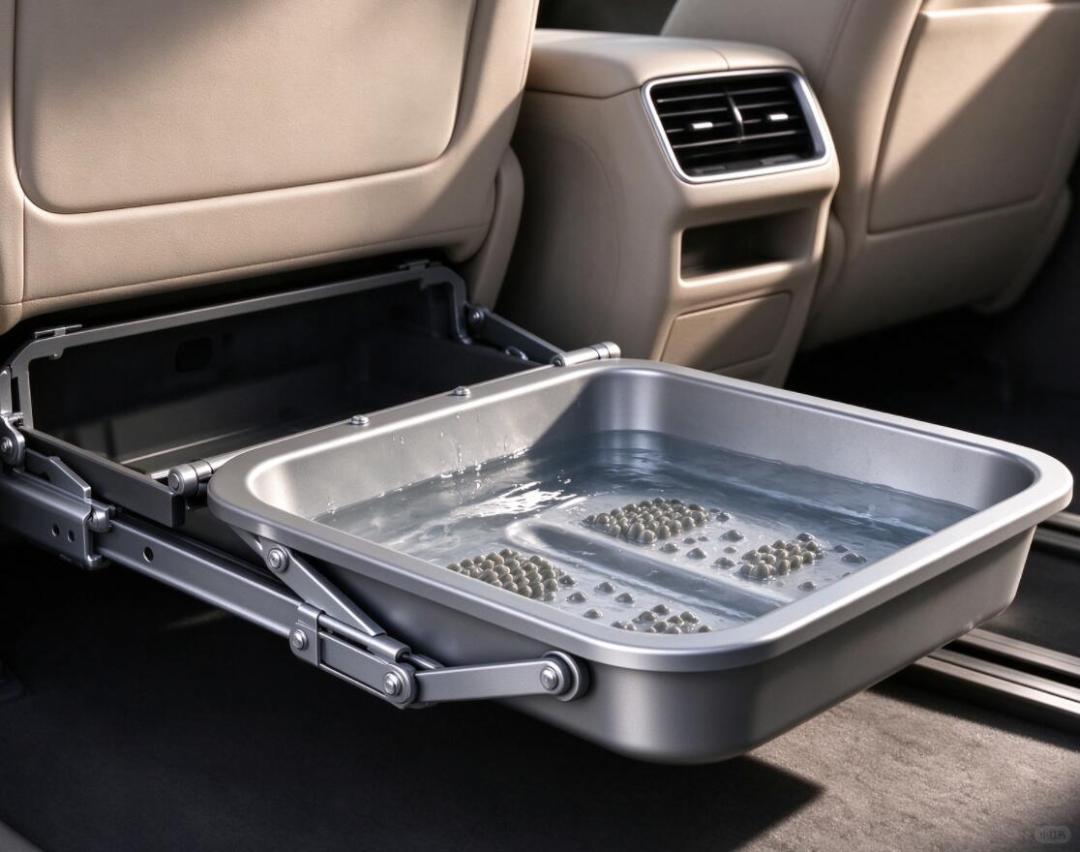
Moreover, the interior of the foot basin is designed with a water splash-proof structure, diversion holes and anti-shake structure. The foot basin is connected to the vehicle body pipeline through a quick-connect joint, which can be disassembled at any time, and a disinfection component can also be installed in the storage space.
You have to admire the wild imagination of carmakers — what else can new energy vehicles not do? As Lao Hu noticed, apart from the previously exposed in-car toilet, shower, floor heating and liftable roof, Xiaomi's in-car esports room is also on the way.
As a mobile travel tool, in the era of fuel vehicles, cars were extremely restrained and frugal in power consumption. Let alone running the air conditioner with the engine off, even if you listened to music for a long time, you had to keep the engine running, after all, the single car battery back then was incredibly small.
But after entering the new energy era, larger batteries have satisfied more unrestrained ideas. Carmakers and users no longer hold back, and are desperate to integrate all kinds of cross-border functions that have nothing to do with basic travel needs into cars, to increase selling points and enrich user experience. But do these seemingly cool configurations have great practical significance and value?
Don't rush to take sides or vote yet. Existence is reasonable. Some functions that we think are useless may not be a white elephant in the eyes of other users, but instead may be something they desire and consider a rigid demand.

Take the very common "fridge, big screen and plush sofa" setup as an example. When it first appeared, people might think it was a gimmicky fancy extra, but now it is basically standard equipment for new cars priced above 100,000 yuan. Without these three items, carmakers seem to be embarrassed to launch new models, which in turn proves the high acceptance of consumers.
The fridge allows seamless switching between cold and hot drinks in different seasons. The huge screen brings richer audio-visual experiences and even AI interaction, improving both entertainment and convenience.
But the real controversial part is the "sofa", the zero-gravity seat that can be fully reclined, which obviously optimizes riding comfort. However, this function has recently been banned while the vehicle is in motion, because when the seat is in a reclined position, the seatbelt cannot provide sufficient restraint.
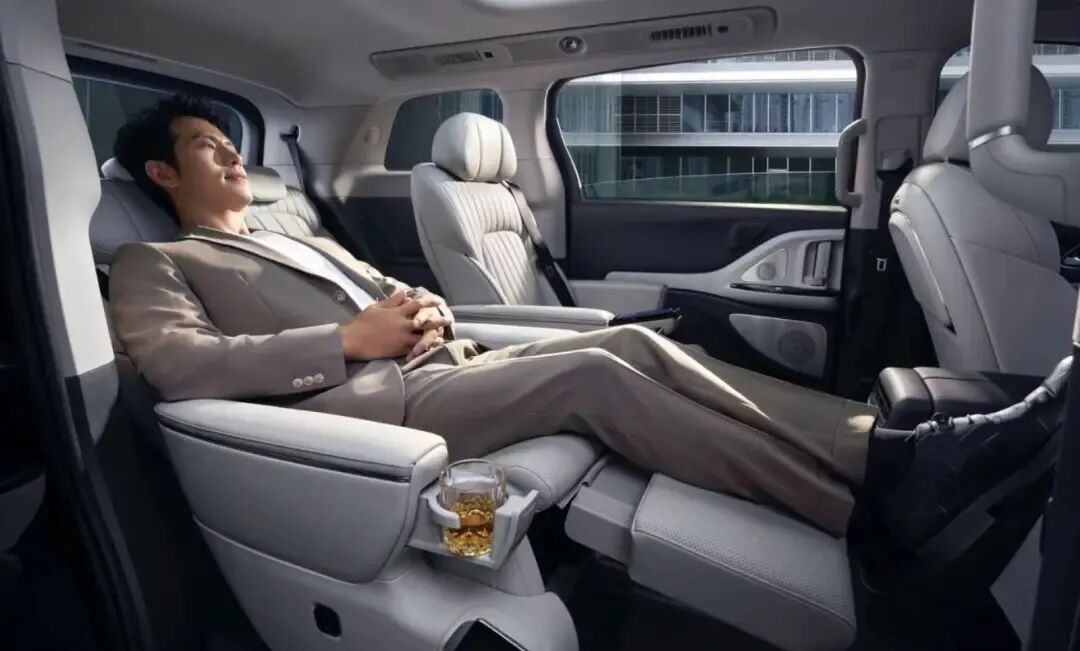
In the event of a collision, it is very easy to cause greater injury to the occupants, or squeeze the front passenger seat to reduce the survival space, or even cause the occupants to be thrown out of the car directly. The same logic applies to in-car foot spas, toilets, showers and other similar functions. When the vehicle is moving, it cannot maintain a steady state all the time like a house.
Therefore, from a more rational perspective, on the premise of not affecting safety, most of these amazing new functions can only be used when the vehicle is stationary. After the usage scenarios are clearly defined, how much attractiveness is left?
To look at it from two sides, for most ordinary consumers, functions like in-car foot spas and in-car toilets are really dispensable. Since all of them can only be used when the car is stopped, going to a professional foot massage parlor, public restroom or bathhouse is obviously more efficient.
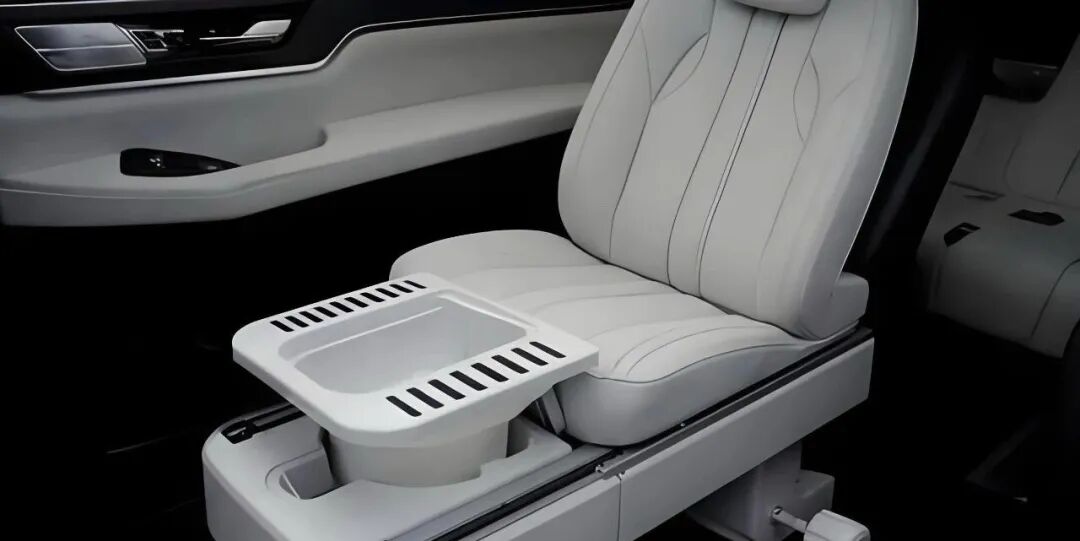
But for some special user groups, these functions can solve real problems and even become rigid demands. For example, for people with disabilities, even if they stop at the service area to go to the toilet, it is very inconvenient for them to move around. An in-car toilet will make things much more convenient and comfortable.
Another example: some practitioners working in complex environments may not have access to shower facilities at their workplace after work. If they can take a shower, soak their feet and change into clean clothes in the car before going home, it is obviously a very thoughtful design.
As for whether it is worth it or necessary, it should be judged according to the frequency of use and the optional installation price of the function. There is no uniform standard, and what suits you is the best.
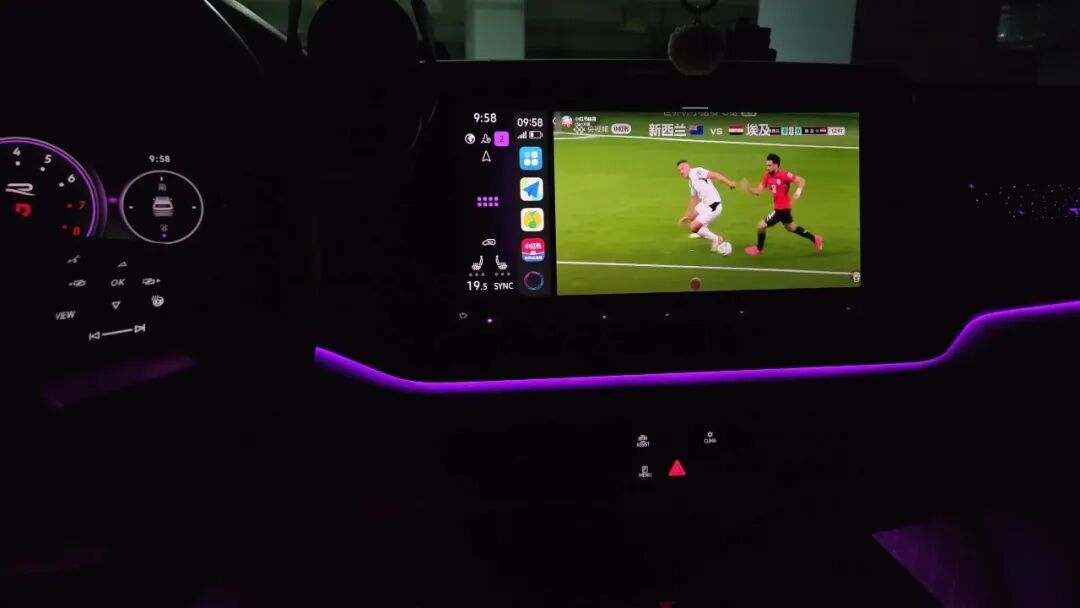
Moreover, for people who need the independent private space provided by the car to work or watch sports games for entertainment, optional rear small tables, entertainment screens and other configurations are indeed very necessary. Some functions that seem to have no connection with the travel attribute of the car itself cannot be completely dismissed out of hand.
A more positive interpretation is that carmakers are actively trying to extend car functions and meet the diverse needs of consumers.
To put it bluntly, whether it is the fridge, big screen and plush sofa, or toilet, shower, kitchen, even swimming pool, wine cabinet and reception room, all of these features have long been available in dedicated RVs for decades.
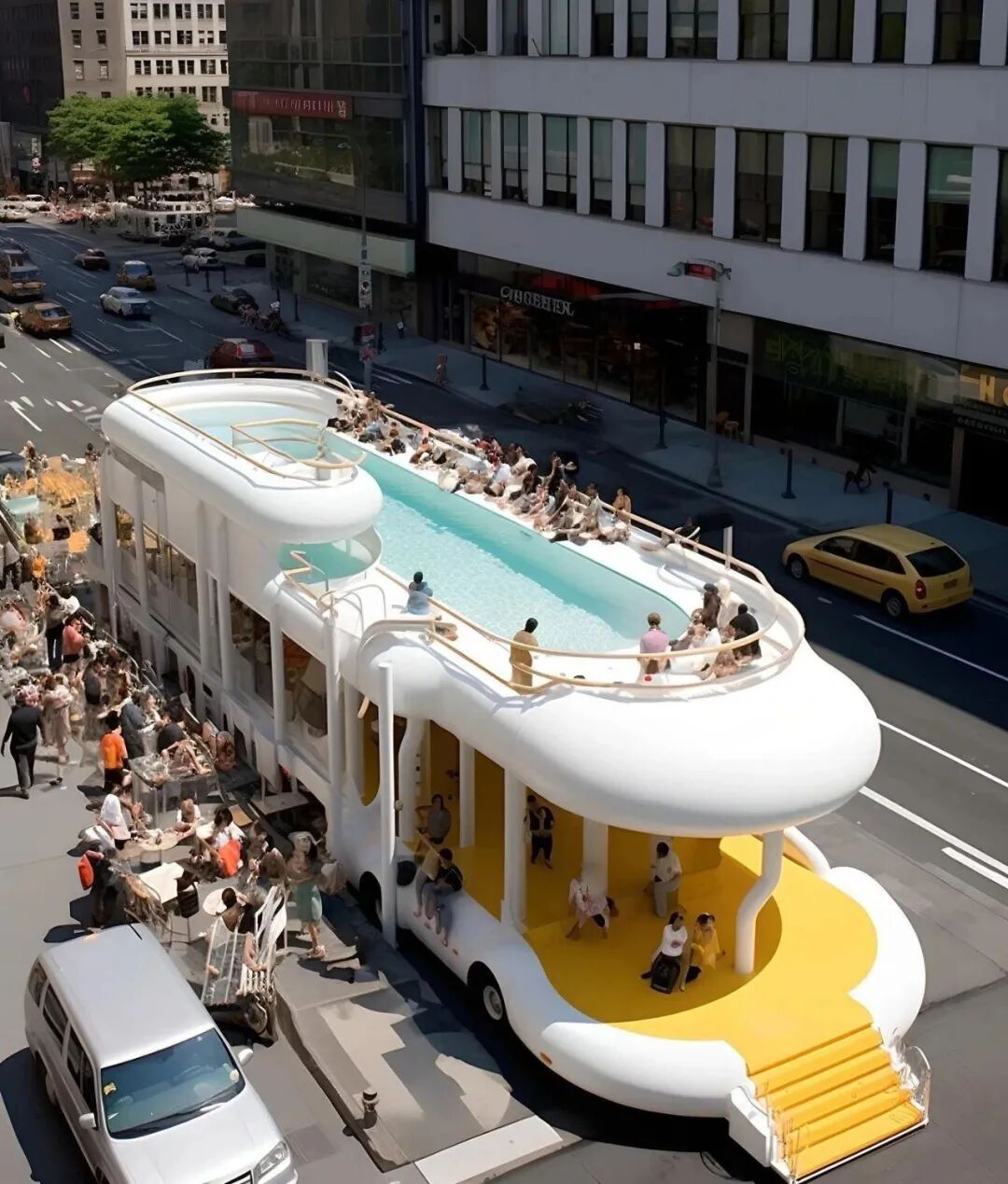
The reason why these features are attracting more attention now is that the exclusive functions that used to belong to a small group of wealthy consumers are now being made accessible to more ordinary users, so that the commuter cars that were originally only used for daily travel can support more scenarios and realize multi-purpose use of one vehicle.
As for rationality, some functions are really ingenious. For outdoor enthusiasts, the liftable roof and in-car kitchen are very hard to resist. Without significantly increasing the body height and affecting handling performance, the liftable roof expands a third space, which is much more practical and convenient than the mobile large bed that can only be set up in the passenger compartment after moving all luggage and items around.
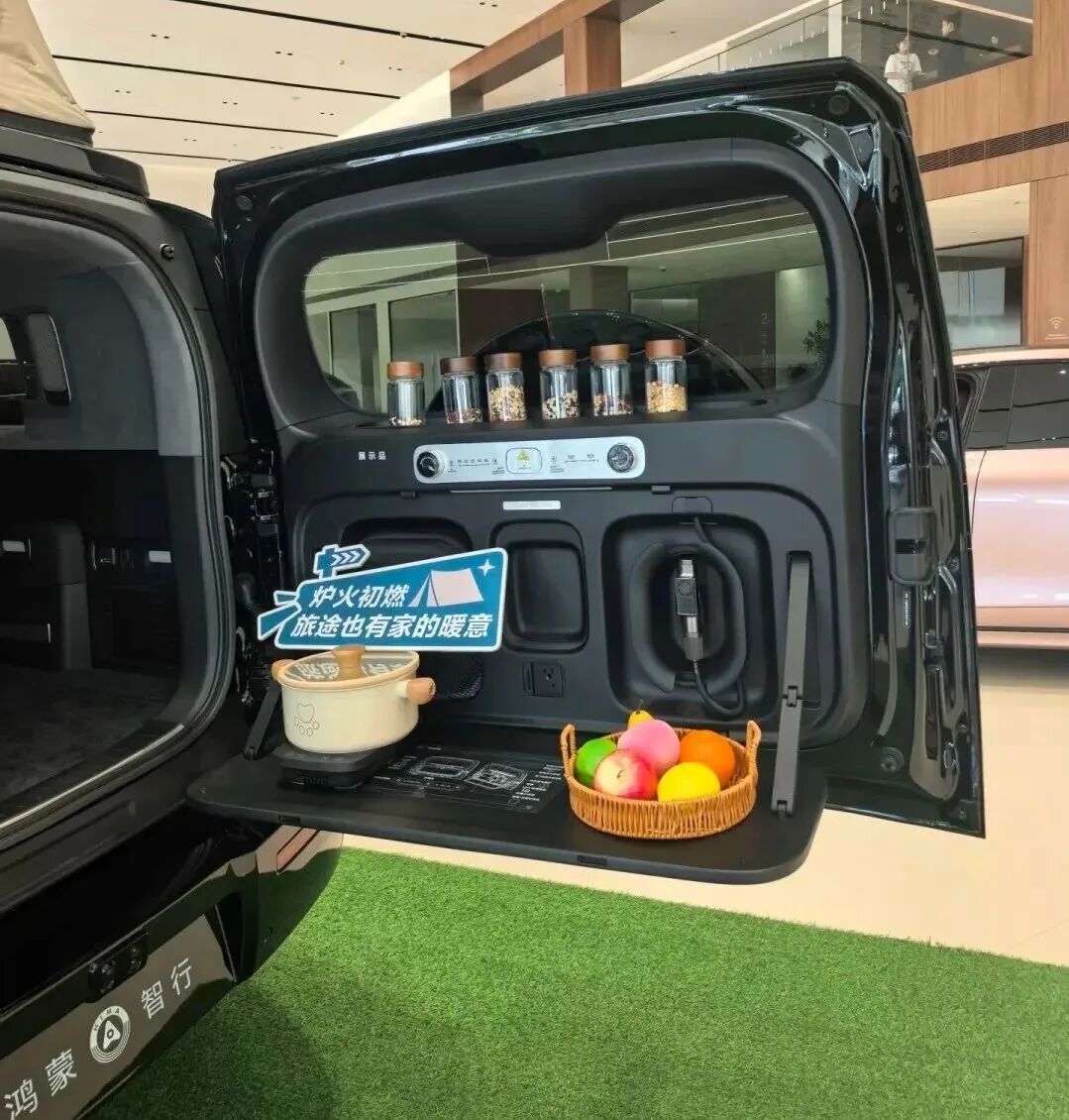
The kitchen that is independently installed at the tailgate is the same: it does not occupy the storage space of the trunk. With the power supply in the car, you can pull out the shelf, put a pot on it and cook or boil water, which is much more integrated than carrying separate teapots, hot pots, baking trays and other equipment.
But the above views are only based on the combination of specific functional scenarios and segmented user groups. It is believed that for most ordinary consumers, their focus when buying a car is still on the product itself, such as brand, size, range, performance, safety and other core indicators.
Manufacturers' endless enthusiasm for exploring extended functions is also aimed at avoiding homogeneous competition and attracting public attention.
In today's new cars, it is difficult to find unique selling points in similar price ranges. Their design, range, intelligent performance and other aspects are all roughly at the same level, which is very different from the era of fuel vehicles, where Mercedes-Benz was known for comfort, BMW for handling, and Audi for all-wheel drive, with distinct labels that consumers can easily remember.
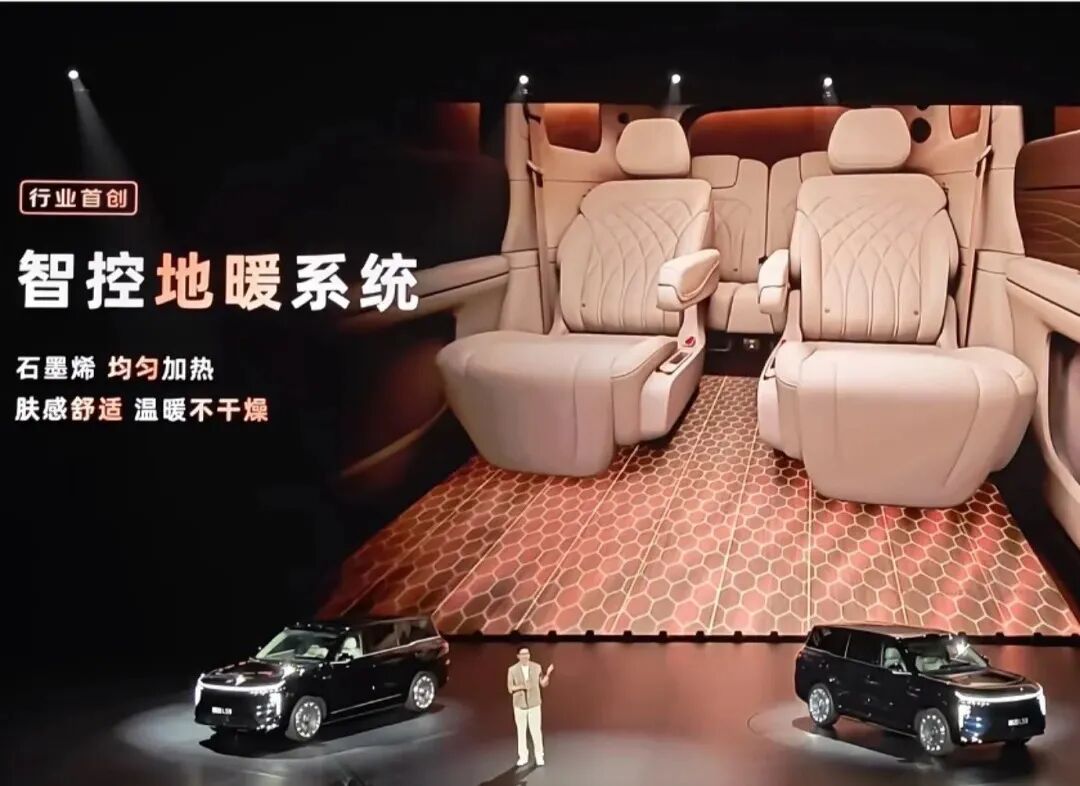
Therefore, bolder innovations and alternative approaches are needed to leave a deep impression on consumers. As Lao Hu mentioned before, the number of new car launch events this year is so dense that it even exceeds the number of launch events for fast-moving consumer goods.
At the same time, Tesla has set an example in terms of promotion. From hidden door handles, single-pedal mode to screen-controlled gear shifting, although "no advertising" used to be Tesla's feature, every time a novel and subversive function is installed on its cars, it can harvest a wave of traffic and trending searches, which is far more efficient than brainstorming advertising ideas, inviting media for promotion and spending large sums on advertising placement.
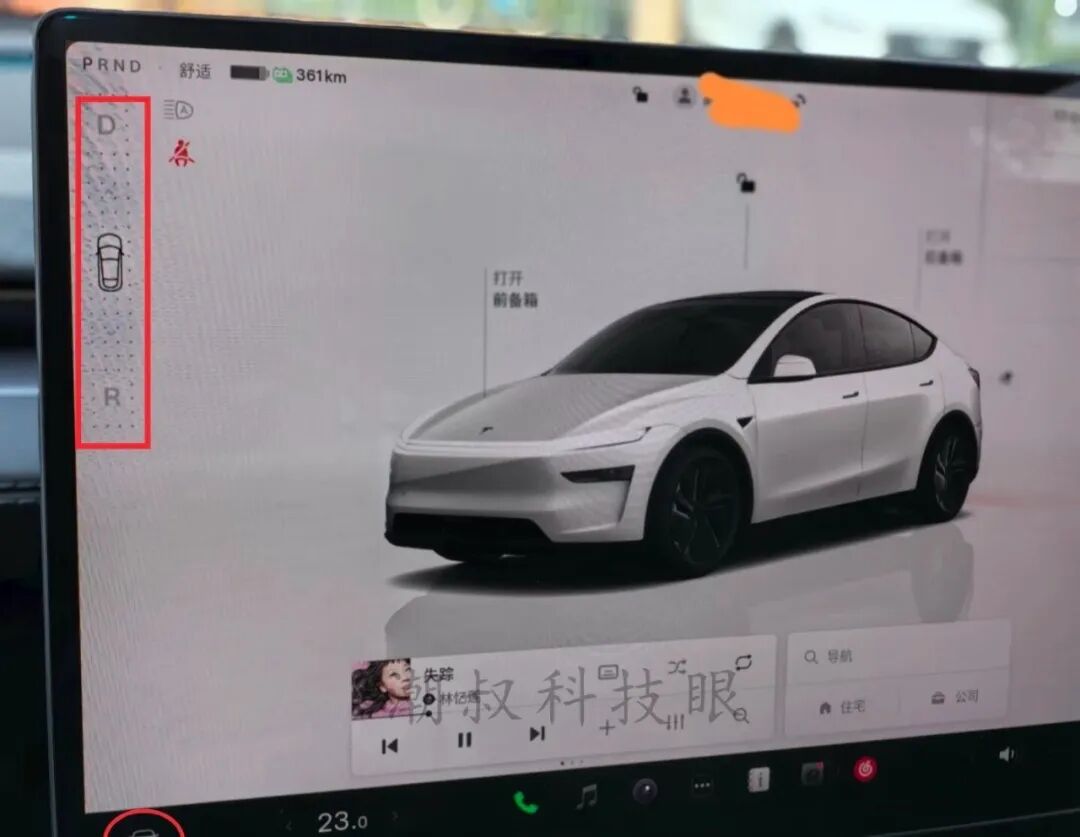
Among Chinese new car-making forces, Li Auto, Harmony Intelligent Mobility, Xiaomi and others are all beneficiaries of this strategy, which has led other carmakers to follow suit.
In practical application, we can also see some clues. Apart from the "fridge, big screen and plush sofa" setup, very few of those fancy and cool functions have been mass-produced and widely applied. Compared with the concepts of "mobile home", "mobile foot spa" and "mobile shower", their topic-driven attribute is actually more important in the traffic era.
The main group of car buyers now are people born after 1990. Many young people have been exposed to cars since childhood and know more about cars than their parents. They know exactly what they want, and it is very difficult to force them to accept some overly exaggerated concepts.
This article is from the WeChat Official Account "Tech Fox" (ID: kejihutv), written by Lao Hu, and published with authorization from 36Kr.