From the dining table to daily life, the other side of Sam's
"Which Sam's Club in Beijing actually has wool quilts? I've been waiting for days, why are they still out of stock?" As the seasons shift from autumn to winter, such comments have been popping up more frequently on social media. Some users shared photos of the Sam's Club silk all-season dual-layer quilt, saying it "covers every season of the kid's life"; others pulled up their order history to sort out the daily necessities they repeatedly repurchased, apart from those hit food products.
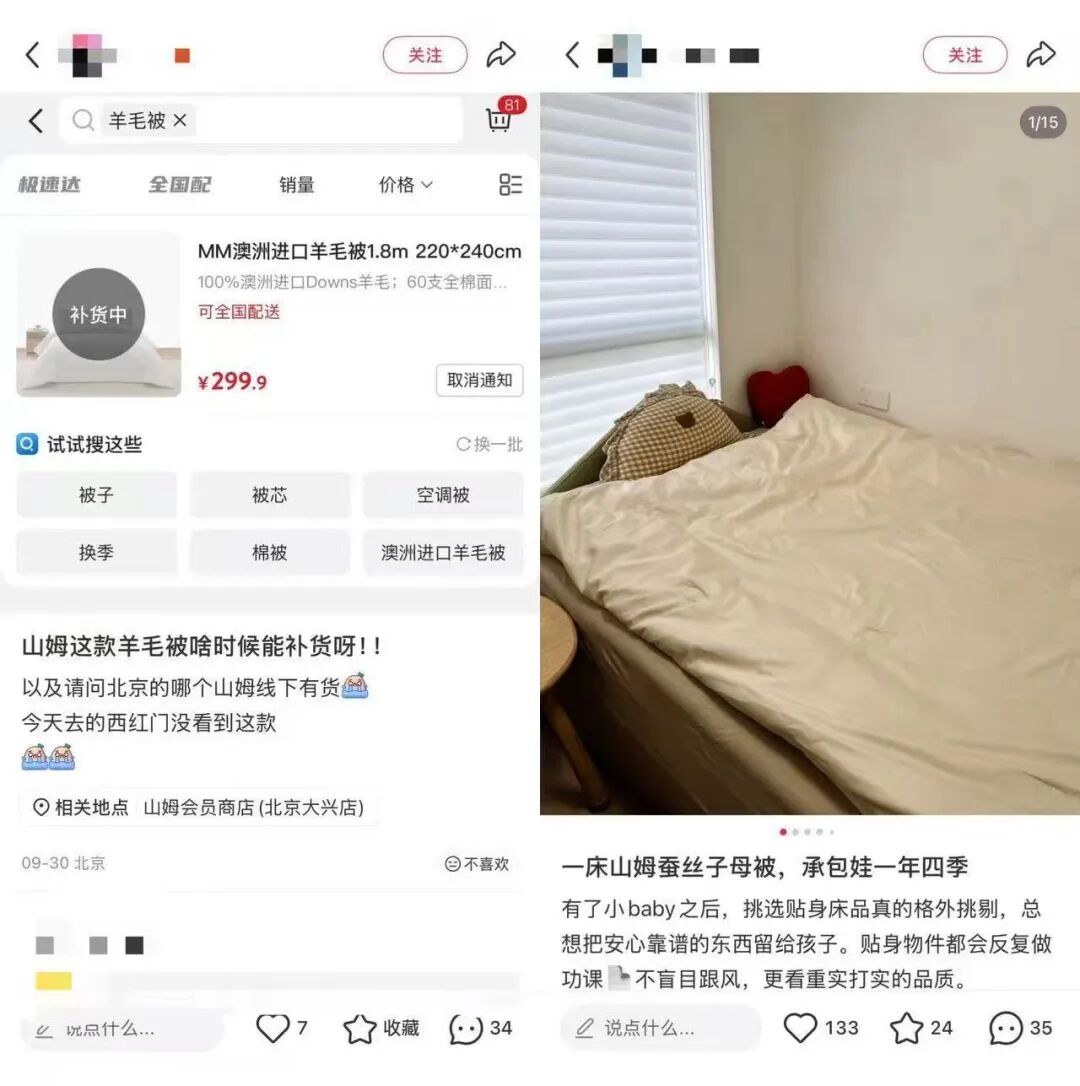
In the past, when people mentioned Sam's Club, they would easily think of roasted chicken, Swiss rolls, and lime juice. But on social media, more and more members are exclaiming that "home goods are another hidden treasure of Sam's Club".
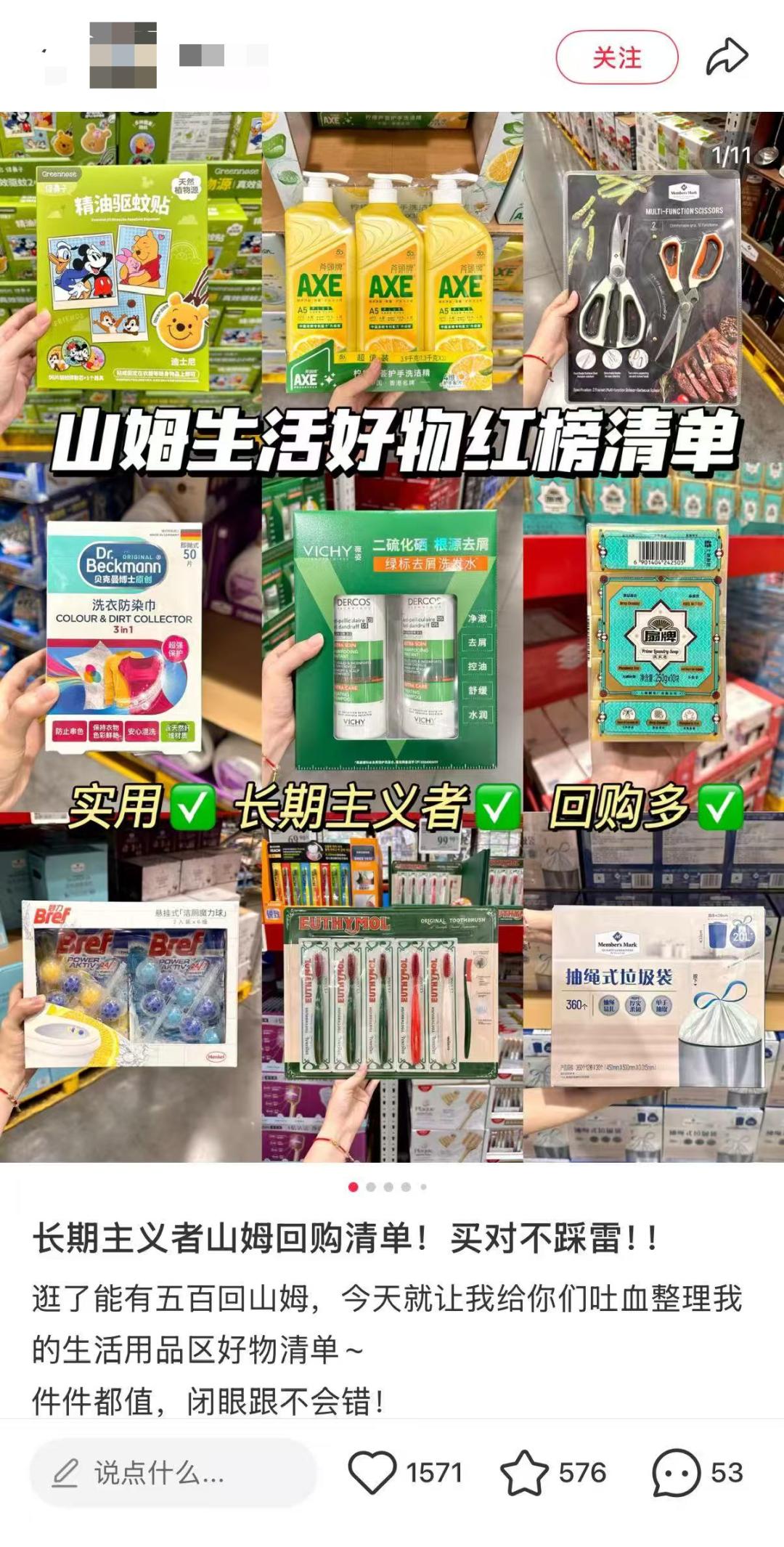
From searching for a suitable quilt to sharing daily necessities that are used repeatedly at home, these discussions show that Sam's Club offers far more worthy-to-buy products beyond the dining table. The membership card that many people originally applied for to buy food now serves other purposes. Why has Sam's Club gradually become the first choice for people to buy clothing, bedding, daily necessities and digital products?
1. The unseen craftsmanship behind basic items
What a retailer decides to put on its shelves directly determines which products consumers can choose between in the end.
The non-food category is particularly challenging. Compared with food, the supply of daily necessities is more standardized and sufficient, with styles, brands and prices all clearly visible. To stand out, the effort has to be put in even earlier than that — first figure out exactly what customers are missing, and whether the existing products on the market can solve their problems properly.
Sam's Club's approach is to move these judgments as far forward as possible, to the stage of developing private label products and customized items.
Take winter warmth as an example. Consumers rarely put forward parameter-specific requirements for down jackets, nor do they actively ask for a specific stitching structure for a quilt. Usually they just say they want something warm and not bulky, or they don't want to hear the fabric rubbing sound every time they turn over in bed. The procurement team needs to convert these vague feelings into material and process requirements that suppliers can implement.
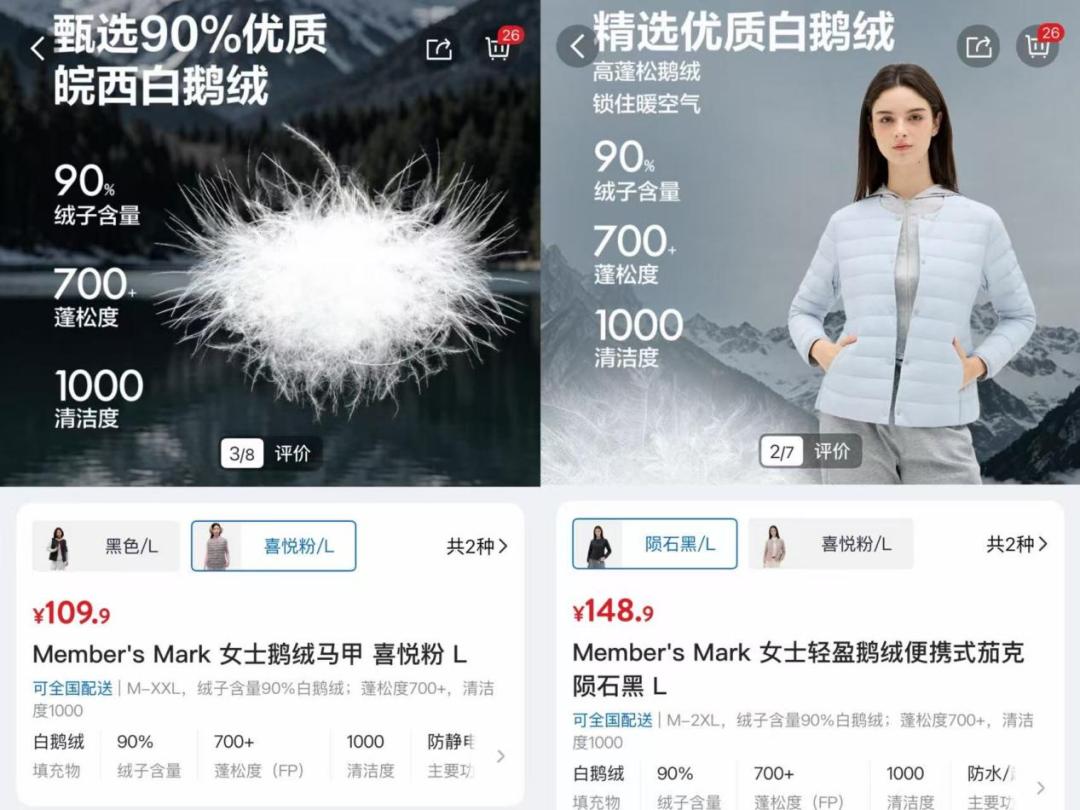
Reflected on the product side, Sam's Club's "MM Goose Down Vest" and "MM Goose Down Jacket" both adopt 90% white goose down content with a fill power of 700+ FP. The former refers to the proportion of down clusters in the filling, while the latter is related to the ability of down to fluff up and trap air. The combination of these two indicators makes the lightweight thin coat keep you warm effectively.
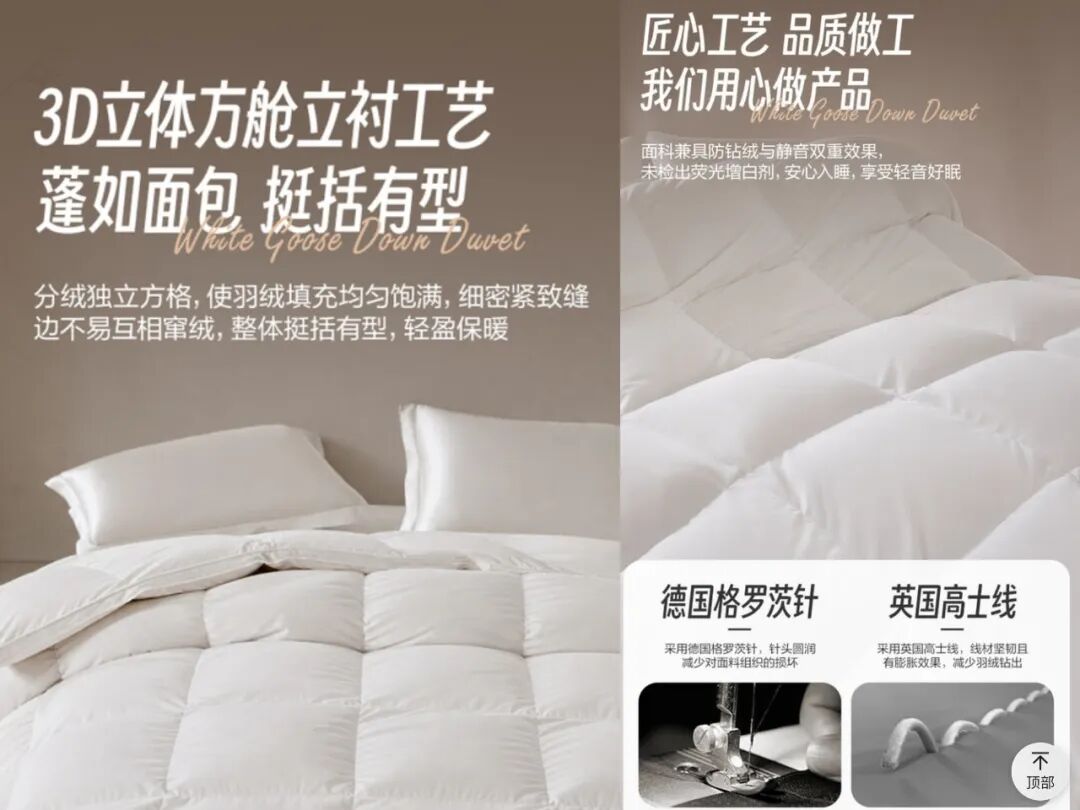
For the same goose down used in quilts, there are more factors to consider. The "MM 95% Goose Down Quilt" adopts independent down compartment design, which keeps the filling in its respective area and reduces down shifting; the silent fabric takes care of the noise caused by turning over during sleep. In addition to down cluster content and fill power, these processes also determine whether the warmth is evenly distributed and whether you can sleep quietly.
How deep the judgment of members' needs is also determines how far the boundary of product development can extend. Silk quilts are soft and fit closely to the body, but traditional silk quilts are usually not recommended for machine washing, and how to deal with them when they get dirty is another troublesome thing. Sam's Club's "MM 100% Mulberry Silk All-Season Dual-Layer Quilt" is made of long mulberry silk, laid and stacked by hand. The outer cover of the quilt has been specially treated to support machine washing, and the combination of different thicknesses can adapt to seasonal changes. The demand it responds to has expanded from the touch when sleeping, to how a family cleans, stores and changes bedding across seasons.
It is not new for supermarkets to sell clothes and quilts. What makes Sam's Club different is that it is willing to turn the daily details of members, even their micro sensory needs, into specific materials and processes bit by bit. The more basic the product is, the more it can reflect the meticulous craftsmanship. Sam's Club does exactly this by pushing the basic needs to the extreme. Whether it can be lightweight besides being warm, and whether it is easy to take care of besides being soft, it is these details that gradually win the favor of members for Sam's non-food products.
2. The value of curation is unfolding in more daily scenarios
Clothing and quilts meet the centralized demand during the seasonal transition, but a family also needs to do laundry and cleaning on a daily basis, prepare personal items when traveling, and also purchase home appliances, beauty products and digital products. These demands together form the complete scenario of household consumption, and jointly expand the boundary of the role Sam's Club plays in daily life.
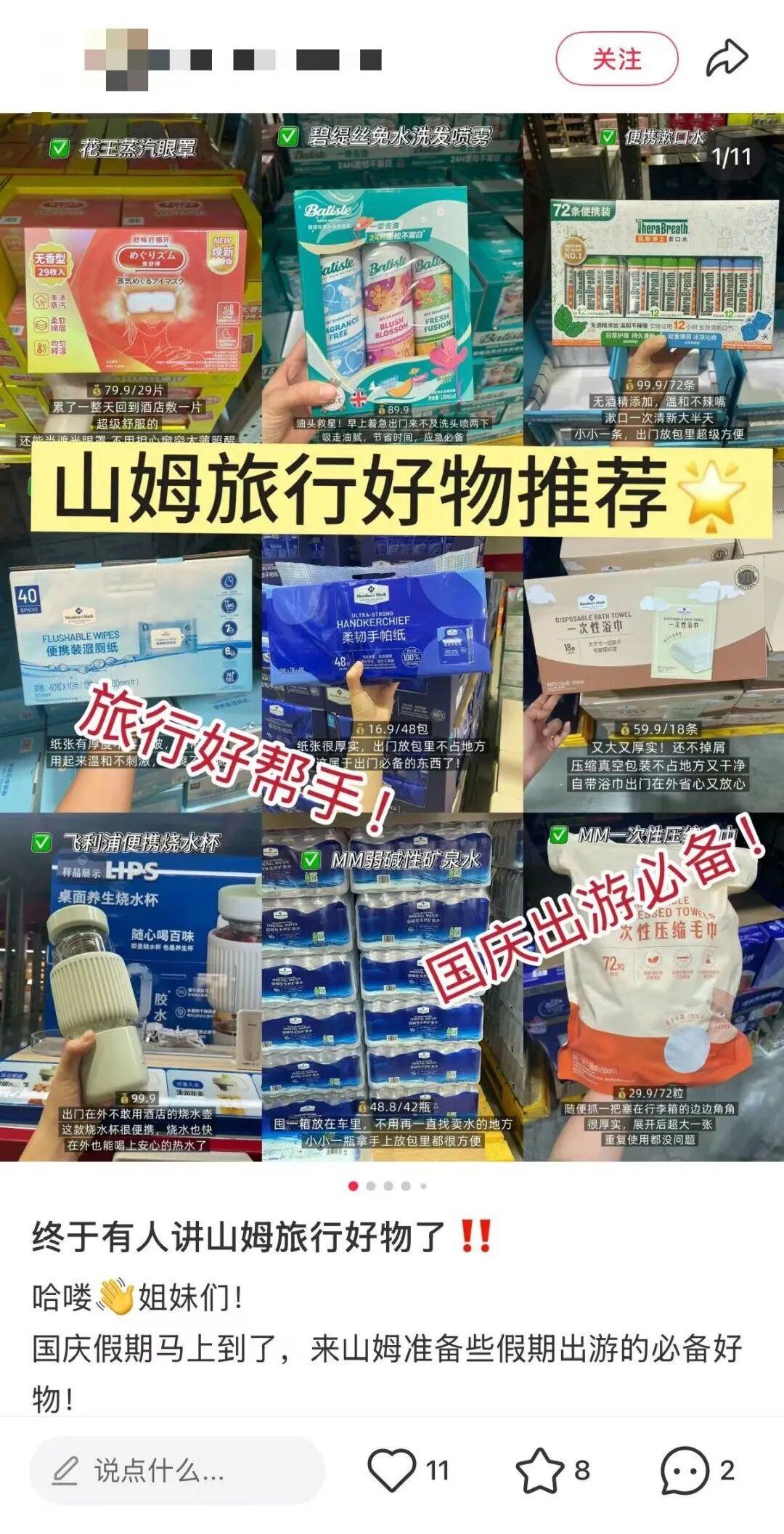
Some members have sorted out Sam's travel products into a "must-have travel list", with items like wet toilet paper, compressed towels, and electric heating water cups all packed into the same suitcase. They belong to different categories, but for people preparing for a trip, they are all items that need to be purchased in one go. Buying all kinds of products in a familiar channel saves members the trouble of looking for them separately, and also extends Sam's convenience from the kitchen to trips and daily life.
The familiarity and trust Sam's Club has accumulated in the food category in the past provides an excellent foundation and starting point for many members to try non-food products; but whether non-food products can stay in their purchase lists for a long time ultimately depends on their actual use experience and whether the cost performance is high enough.
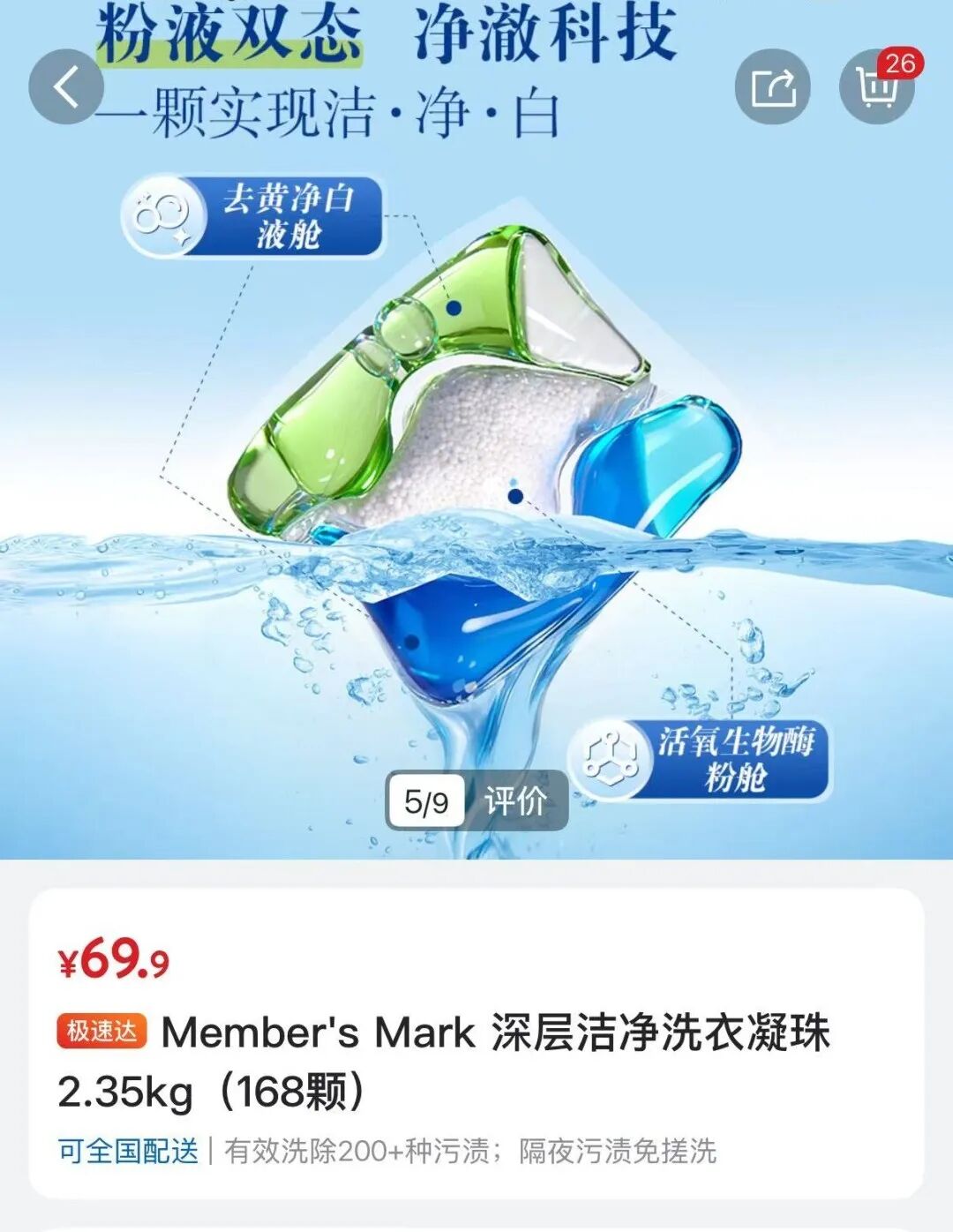
Take household cleaning products as an example. They are consumed frequently, and the single expenditure may not be very high, but they are a long-term continuous household expense. Sam's laundry detergent pods have been upgraded from single-chamber to powder-liquid dual-chamber, with upgraded functions but lower unit cost — a box of 168 pods costs 69.9 yuan, which works out to about 0.42 yuan per pod. The 1.5kg pack of "Member's Mark Laundry Scent Booster Beads" is sold at 79.9 yuan. In addition to being used during the laundry process, members have also developed more usages for it as a "wardrobe sachet", and its price is far lower than the market average.
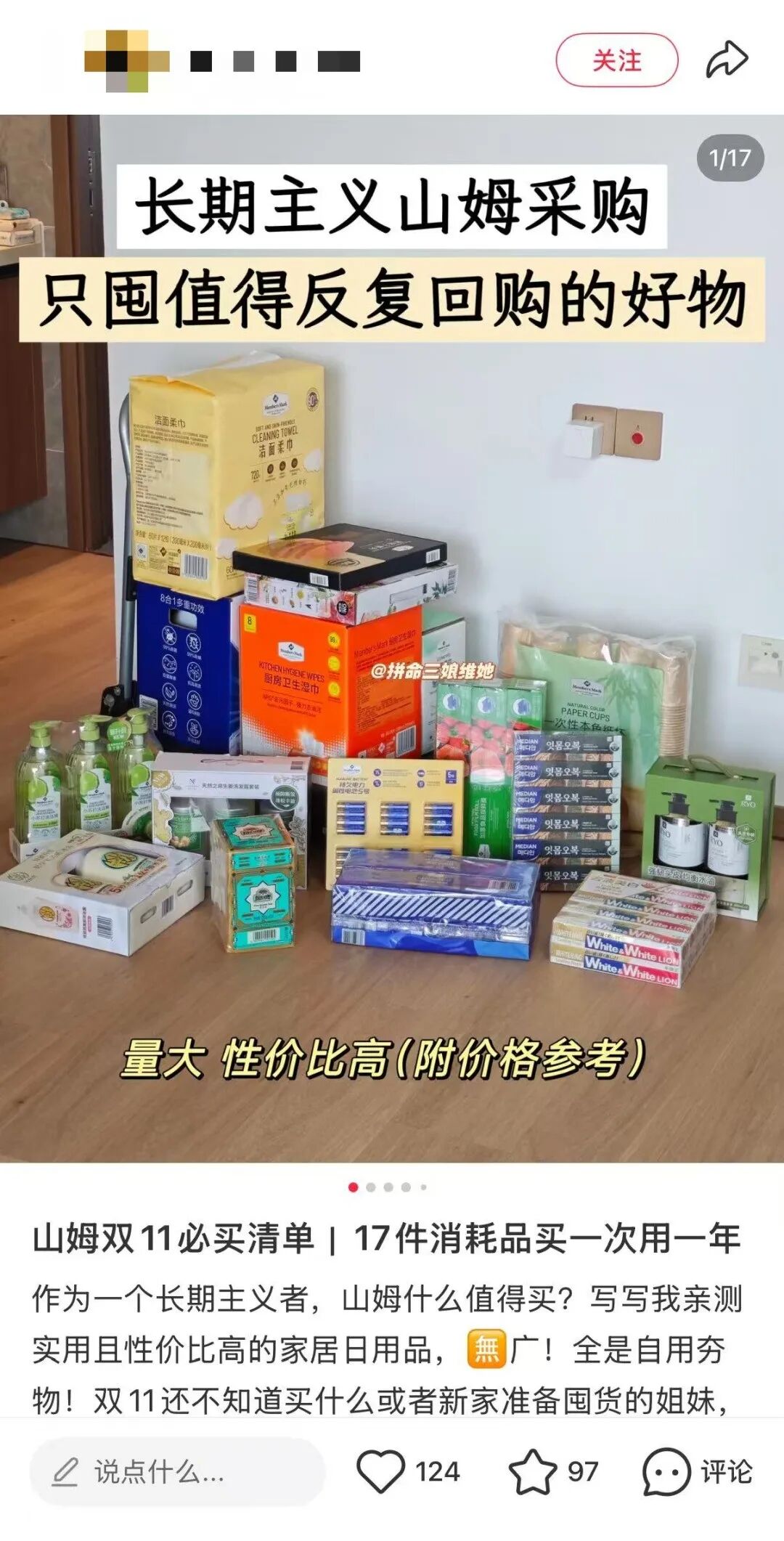
On social media, some people have specially sorted out a list of "Sam's home items that I have repurchased N times". Compared with the freshness when you first buy a product, repeated purchases better prove whether a product is suitable for daily life. After paper products, laundry and cleaning products are used up, consumers still have the opportunity to re-select; continuing to put them in the shopping cart means that the previous use effect and cost are enough to support the next purchase, and also make non-food products a fixed reason for members to come to Sam's Club.
There is another fun part of shopping at Sam's Club — after you have bought all the items on your list, some unexpected products will catch your eye, making you exclaim "the supermarket actually sells this!"
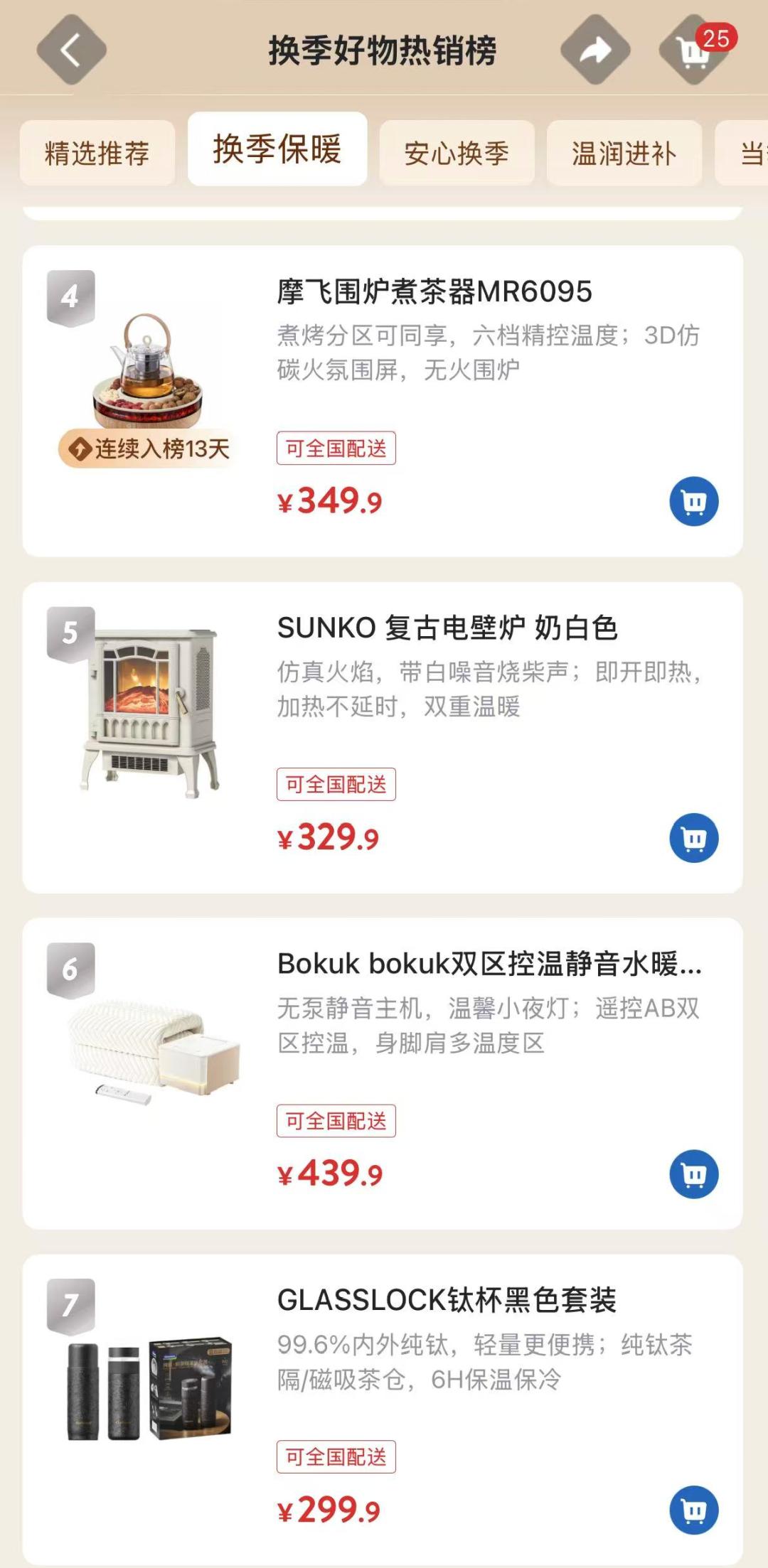
The SUNKO vintage fireplace heater combines heating, simulated flame effect and simulated firewood crackling sound, responding to the demand that combines warmth and home atmosphere. The Unitree robotic dog, Bambu Lab 3D printer, and KATA companion robot bring new options for entertainment, creation and companionship to the supermarket shelves.
The Bambu Lab booth at Sam's Club puts the printer set, finished models, sand table and interactive query system in an area of about one square meter. It lets people see the printed finished products first, and then learn about the machine. A device that people originally only saw in digital news thus enters the sight of daily in-store shopping, and becomes a product that can be approached, observed and explored for usage scenarios.
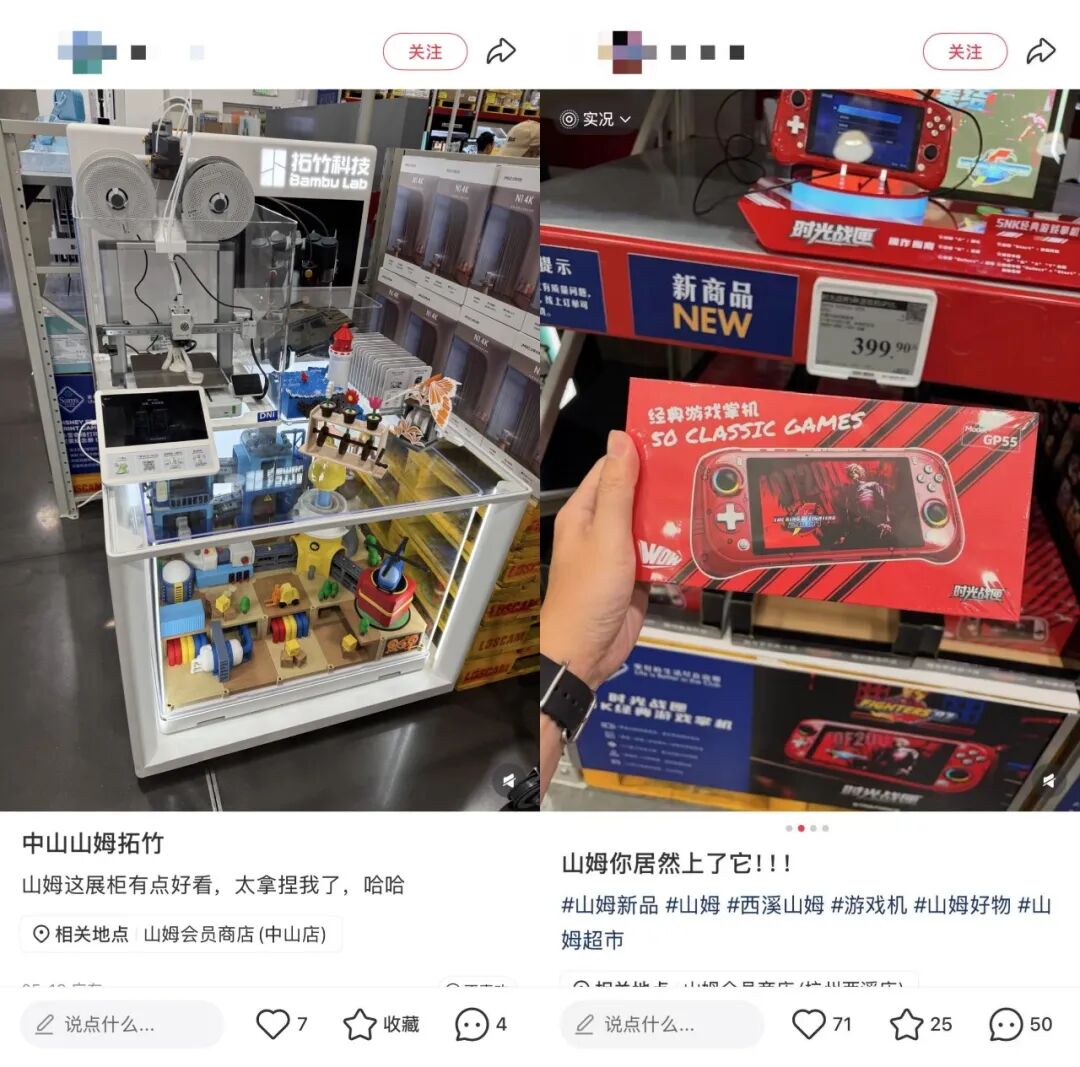
On social media, there is no shortage of content like "Sam's Club, you actually put this on the shelf!" and "Shopping at Sam's Club is like treasure hunting", which refers to that unexpected sense of surprise. Member's Mark private label products, exclusive imported goods and Sam's customized items give members the opportunity to find specifications, combinations and designs that are not easy to buy elsewhere. Shopping in the store thus has an extra expectation: in addition to buying all the daily necessities, you can also see what new products Sam's has brought this time.
For big brand products such as iPhone, DJI cameras and Estée Lauder skincare products, many people do not need to re-recognize the brand. The question they care more about is whether it is cost-effective to buy the products they have already decided to purchase at Sam's Club.
On social media, Sam's Club is often used as a reference for price comparison. Under a post about the low-price promotion of the Advanced Night Repair Serum, a user left a message "Sam's Club already sells it at this price". Some other users wrote in their order sharing posts that they previously bought a 100ml bottle of Advanced Night Repair Serum from a daigou, and later saw a suitable price for a double pack at Sam's Club, so they bought two bottles. The reason she gave was "I always shop at Sam's Club, and I trust the quality of Sam's products."
As the Double 11 shopping festival is approaching, the significance of everyday favorable prices is easier to perceive. In a consumer interview, a short video director mentioned that she spent more than 600 yuan on a L'Oreal skincare set last year, and had not used it up by the next Double 11, so she bought fewer similar products afterwards. Another interviewee thought it troublesome to place orders at a fixed time, saying that she "prefer the regular daily price to be reasonable". In the interview, some consumers even said bluntly, "Now I don't buy those products during the shopping festivals, I go to Sam's Club instead."
In addition, for high-quality big brand products, relying on bulk procurement and brand cooperation, Sam's Club strives for member-exclusive prices and product combinations through special supply sets, exclusive gift boxes, large packaging and other methods. You don't have to hesitate to choose the products you have recognized, and when the specifications and prices are suitable, repurchasing becomes a natural thing.
From digging deep into materials, craftsmanship and standards for basic demands, to exclusive imported products, private label and customized products, and then to member-friendly prices for global big brands, Sam's non-food products follow the consistent curation logic it has always adhered to. The product coverage is wider, but what attracts members is still the specific quality, differentiation and favorable price. The three factors together support the "one-stop shopping" experience beyond food.
Conclusion: Reliable daily life is Sam's more long-term value
Some people pack the travel supplies they bought at Sam's in one stop into their suitcases, some share Sam's global purchase good product list before Double 11, and some have already taken Sam's Club as the destination for seasonal shopping. The connection between Sam's Club and its members has extended from the dining table to more daily scenarios along with these purchases.
For consumers, doing laundry, changing quilts and preparing for travel are inherently connected things in life. Sam's Club gathers all these demands in one store, and provides sufficient reasons for purchase for each product with its extreme material selection, craftsmanship, product combination and pricing. One-stop shopping saves the time of looking for products separately, and curation reduces the energy spent on researching and comparing each item one by one. Sam's Club combines the two, turning the rich product categories into convenience in daily life.

The value of retail lies exactly here. Faced with the abundant product supply, consumers still need to spend time judging what suits them, whether the difference in materials and craftsmanship is worth paying for, and whether a new function can really be put into practical use. The more specific the retailer understands the demands, and the stricter the product screening is, the better consumers can arrange their daily life properly with limited budget and energy.
This is also the most essential member value that Sam's Club, as a "new generation curated lifestyle space", can provide. On social media, a user commented on Sam's anti-static fleece blanket with only six words — "Worth the membership fee", which is a reflection of the fact that members are increasingly trusting Sam's Club in their daily consumption: making people willing to entrust more of their daily shopping to the same store is a longer-term operating advantage than selling a single hit product or heavily investing in a certain category.
—————— &