The looming storage storm spells unavoidable doom for niche smartphones.
In January this year, a piece of news claimed that ASUS would withdraw from the mobile phone market and lay off all staff in its mobile phone division. ASUS later responded publicly that it had no plan to launch new smartphones this year, but the operation of its mobile phone business unit would remain unchanged. However, the latest news from the supply chain recently shows that ASUS's mobile phone inventory has been almost completely sold out in the fourth quarter.
With zero inventory and no new models to "take over", this seems to announce the death of the brand.
The "last straw" that crushed ASUS's mobile phone business was the skyrocketing price of storage chips. When the rise in upstream costs drove a general increase in mobile phone prices, more and more consumers were no longer willing to pay for niche brands, but preferred to allocate their phone purchase budgets to mainstream flagship models from leading brands. At the same time, with rising costs and shrinking profits, niche mobile phone brands that barely made any money were pushed to the edge of the survival line.
Waiting to be phased out and exiting the market may be the outcome they have to accept after years of struggle.
"Death List"
Around 2019, domestic niche mobile phone brands experienced a brutal "massacre":
After Gionee encountered a major crisis, it collapsed within a year, with total liabilities reaching nearly 21.1 billion yuan at the time of bankruptcy; Meitu posted a farewell letter on Weibo, announcing that the Meitu mobile phone brand was fully licensed to Xiaomi Group; Smartisan Technology was taken over by ByteDance and changed its legal representative, all core members left the company, and Luo Yonghao, the "idealist", withdrew from the mobile phone industry; the 360 mobile phone business was rumored to be suspended, and the official reply said it was only a temporary delay, but no new models were launched ever since.
At that time, competition was extremely fierce, the leading market pattern had initially taken shape, and other mobile phone brands, seeing no hope of "getting a seat at the table", chose to fold their cards one after another.
This year, another round of reshuffling is coming, and it is likely to be the last one.
In February, two days after the news that its mobile phone business had stalled spread, Meizu finally responded, stating that it would suspend the R&D of new domestic mobile phone products and carry out strategic transformation. Before the news of business stagnation came out, Meizu had already cancelled the launch plan of Meizu 22 Air, and Meizu 23 would not be sold on the market, which already meant that the once-generation "phone king" had entered the death countdown and was about to disappear from the public view.
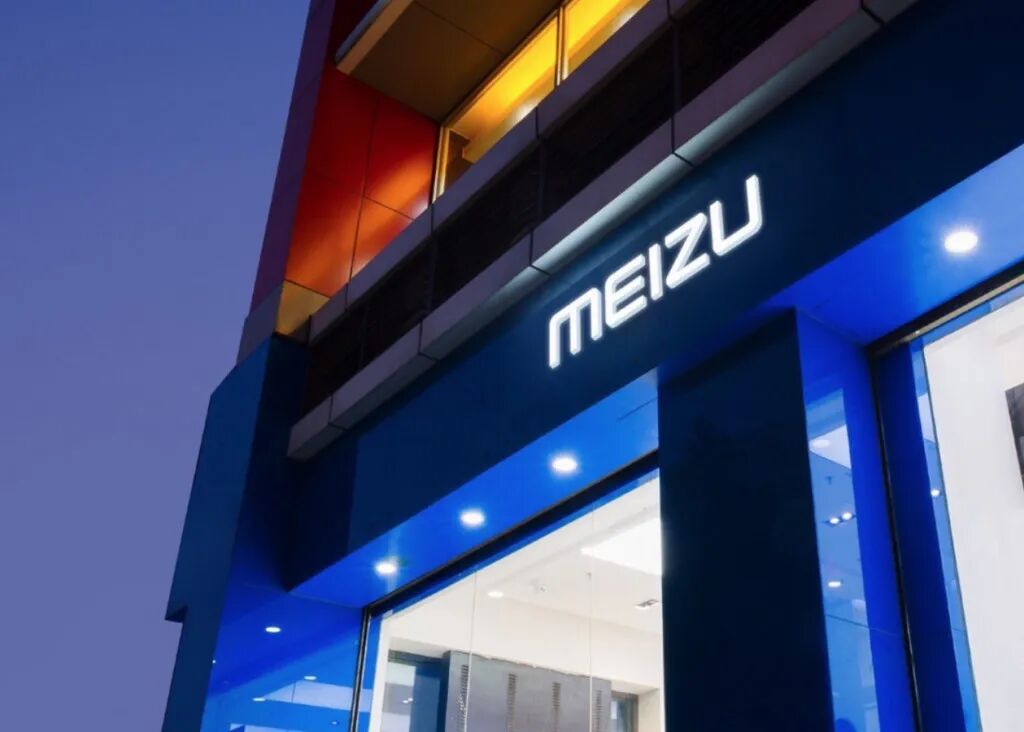
As an enterprise established 23 years ago, Meizu's development has been full of ups and downs. It started with glory, but then its brand tone became blurred due to strategic mistakes, leading to a decline in sales. Shortly after that, the founder returned, internal conflicts broke out among senior management, and the new models failed to turn the tide. The brand could only survive on user sentiment until it was taken over by Geely.
Three years ago, Geely acquired Meizu and founded Star Meizu Group, which was once regarded as a new starting point for Meizu. Shen Ziyu, the then chairman and CEO, set a goal: to return to the top five in China's domestic high-end market within three years. However, three years later, Meizu's role positioning is still awkward. It not only failed to fulfill its original ambition, but was completely abandoned.
ASUS's mobile phone business has also had a hard time in the past two years. In the "cost-effective" battlefield, the ZenFone series cannot shake the "sea-of-phones strategy" and extreme cost control of mainland brands; in the "innovation" battlefield, it cannot invest in R&D resources comparable to those of giants in cutting-edge fields such as imaging and foldable screens. As a result, the pace of product iteration has slowed down, and its market presence has become increasingly weak.
In fact, since last year, there have been few new moves in the mobile phone business line within the company. Now that the inventory has been cleared, the retreat of ASUS's mobile phone business is almost inevitable.
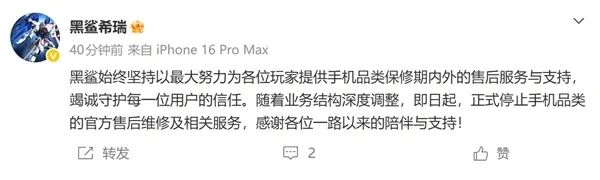
Another brand that officially came to an end this year is Black Shark, the former "king" of gaming phones. In June, Black Shark released the "Announcement on Black Shark Community Server Upgrade and Service Migration", announcing that the Black Shark community would be temporarily inaccessible due to server upgrades; in July, "Black Shark Siri", a technical support engineer at Nanchang Black Shark Technology Co., Ltd., announced that due to in-depth adjustment of business structure, the official after-sales maintenance and related services for mobile phone products would be suspended.
The last time Black Shark launched a mobile phone was in 2022. The Black Shark 6, which was originally planned to be launched in 2023, was still stillborn after preheating. In the past few years, Black Shark has no longer launched new mobile phones, and users' attention to it has become less and less, so that its end hardly caused much fluctuation in the market.
On the gaming phone track, there is now only Red Magic left. Looking at the entire smartphone market, there are almost no niche brands left except those backed by large manufacturers.
Fatal Blow
The smaller the overall smartphone market, the more concentrated the market share tends to be on leading brands.
According to IDC data, in the 2025 shipment ranking of Chinese smartphone manufacturers, Huawei ranked first with 46.7 million units shipped, followed by Apple and vivo with 46.2 million units and 46.1 million units respectively, while Xiaomi and OPPO took the remaining seats. The data also shows that the market share of these five manufacturers accounted for 79.4% of the total share of China's smartphone market in 2025, and the market concentration is on the rise.
The same is true in other markets. For example, in North America, Apple has always been the undisputed leader, and its market share has shown an upward trend in recent years. According to statistics, in the first quarter of 2022, Apple's smartphone shipment was 19.9 million units, with a market share of 51%; in the fourth quarter of 2025, Apple directly took 69% of the market share, hitting a record high.
As consumers gather towards leading brands, the market left for niche brands is naturally smaller. Especially for those niche mobile phone brands that grew up in the soil of segmented markets, when leading brands make up for their shortcomings, maximize their performance, and turn to invade their hinterland, they have almost no ability to resist.
The decline of ASUS, Black Shark and Lenovo Legion is exactly like this. The original market of gaming phones has basically been eaten up by large manufacturers.
Of course, originally niche mobile phone brands were expected to continue to survive by relying on user sentiment and some loyal fans, and slowly look for new opportunities, but this hope was completely shattered by the upstream supply chain.
Since last year, the supply of storage chips has been tight and prices have skyrocketed. Large manufacturers can spread the cost with shipments of tens of millions of units, while niche manufacturers have no bargaining power in the supply chain. They cannot get preferential prices, and may even fail to get the goods at all. An employee of a leading smart hardware company said, "There are rumors in the industry that small manufacturers cannot grab memory at all, large manufacturers can only buy it at a higher price, and downstream products have to raise prices accordingly."
Moreover, most niche mobile phone brands are concentrated in the low-end and mid-range markets, where profits are already thin. With the sharp rise in memory costs, the mobile phone business no longer makes money and has become a loss-making business.
IDC estimates that the proportion of storage cost in low-end models has risen from 10% to 15% in the past to 40% to 50%; Omdia's estimate is even higher, with this proportion exceeding 64% for models priced below 99 US dollars. The further downstream, the weaker the ability to pass on costs. Niche mobile phone manufacturers such as Meizu and ASUS cannot digest costs through scale effects.
Not only niche mobile phone brands, but even large leading manufacturers with huge scale have been pushed to a dangerous situation. The most typical example is Transsion. In order to stock up on chips, Transsion not only used up its own funds, but also borrowed money, which brought huge pressure to the company's capital chain. Financial reports show that the net outflow of cash flow from operating activities in the first three quarters of this year expanded from less than 5.9 billion yuan in the first half of the year to nearly 9.9 billion yuan, while it was a net inflow of 3.285 billion yuan in the same period of the previous year.
Stocking up chips cannot really reduce costs, but only slows down the rate of cost increase. In essence, it uses cash and inventory risks to exchange for a cost time difference. If Transsion cannot complete price increases and product structure adjustments within the time window won by "stocking up chips", it is likely to be crushed.
Sticking to the Core Business is the Top Priority
The storm of storage chips has swept not only the mobile phone industry, but also the PC market. Nearly 40% of the cost of a PC is eaten up by memory and hard drives, which pushes up the selling price of the whole machine and greatly suppresses the demand for device replacement. It can be seen that the squeeze of memory on the PC market has evolved from a cost issue to a structural contradiction.
ASUS's position in the PC market has always been rather awkward. On the ranking list, the top three positions have long been occupied by Lenovo, HP and Dell. Apple stands out with its closed ecosystem, while ASUS supports its market share by relying on gaming laptops. As a well-known overlord in the motherboard market, affected by the AI wave, the PC motherboard market is undergoing systemic shrinkage, and ASUS's business has inevitably declined.
According to the latest forecast from DIGITIMES, the total shipments of the world's top four consumer-grade PC motherboard manufacturers, namely ASUS, GIGABYTE, MSI and ASRock, will shrink by 28% in 2026, with a total reduction of about 11.7 million units. Among them, ASUS shipped 15 million motherboards in 2025, but only managed to ship more than 5 million units in the first half of 2026. It is expected that it can barely hold the 10 million unit mark for the whole year, a year-on-year plunge of 33%. The only fortunate thing is that the AI server business is growing rapidly and has become a new driving force for performance improvement.
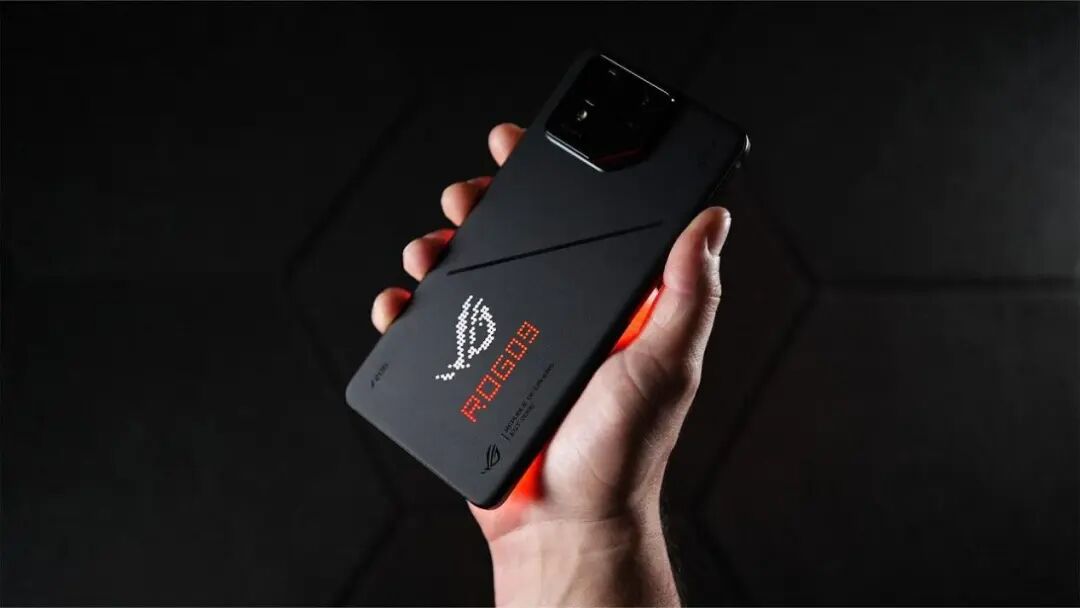
Against this background, the mobile phone business has become even more of a burden for ASUS. Compared with its core business, the revenue proportion of its mobile phone business has long been less than 10%, and it has suffered losses all year round, never achieving stable profitability. In 2018, Chairman Shi Chongtang once admitted the failure of the mobile phone business, and the company's financial report that year recorded a one-time loss of about 6.2 billion New Taiwan dollars (about 1.36 billion RMB) due to the restructuring of this business.
Giving up the unprofitable mobile phone business and focusing on the core business has become the most realistic choice for ASUS.
Looking back at the development history of China's mobile phone industry, niche mobile phones can be said to be "products" left over from the fierce market battles in the past. Those that have survived for many years are mainly attached to or backed by hardware giants or large internet companies. However, when giants and large internet companies generally enter an era of "just getting by", maintaining core businesses is far more important than continuing to "occupy a position" in the mobile terminal through the mobile phone business, especially now that niche mobile phones have almost no living space.
Lenovo's situation is very similar to that of ASUS. Although Lenovo's AI phones have achieved growth, they are classified into the "Others" category in the global smartphone statistics list, with weak presence in the mass consumer market, and only maintain a certain market size in some overseas local markets. Moreover, although Lenovo has a wide range of AIoT product lines, it has not yet launched a national-level hit product.
The explosion of computing power business cannot cover up the reality of its uneven development in C-end consumer hardware.

To cut or to keep? This question has obviously become more urgent when the memory storm sweeps across the entire mobile phone industry. At present, ASUS and Meizu (Geely) have made their choices, Lenovo may be waiting and seeing, while ZTE has already taken action. A few days ago, there were rumors that ZTE Corporation is negotiating mobile phone business cooperation with a large internet manufacturer, and the plan involves packaging ZTE's mobile phone business.
Growth, peak, turning point, decline. Although almost all niche mobile phone brands are now in the prelude to their curtain call, they have left a strong and colorful mark in the development history of domestic mobile phones.
Leaving a decent exit may already be the best ending.
This article is from the WeChat official account "Dao Always Makes Sense" (ID: daotmt), written by Dao Zong, and published with authorization from 36Kr.