Anthropic's most powerful Model 4 is unveiled for the first time: RSI skyrockets at 2x speed
Anthropic's deeply hidden mysterious "Model 4" has been exposed!
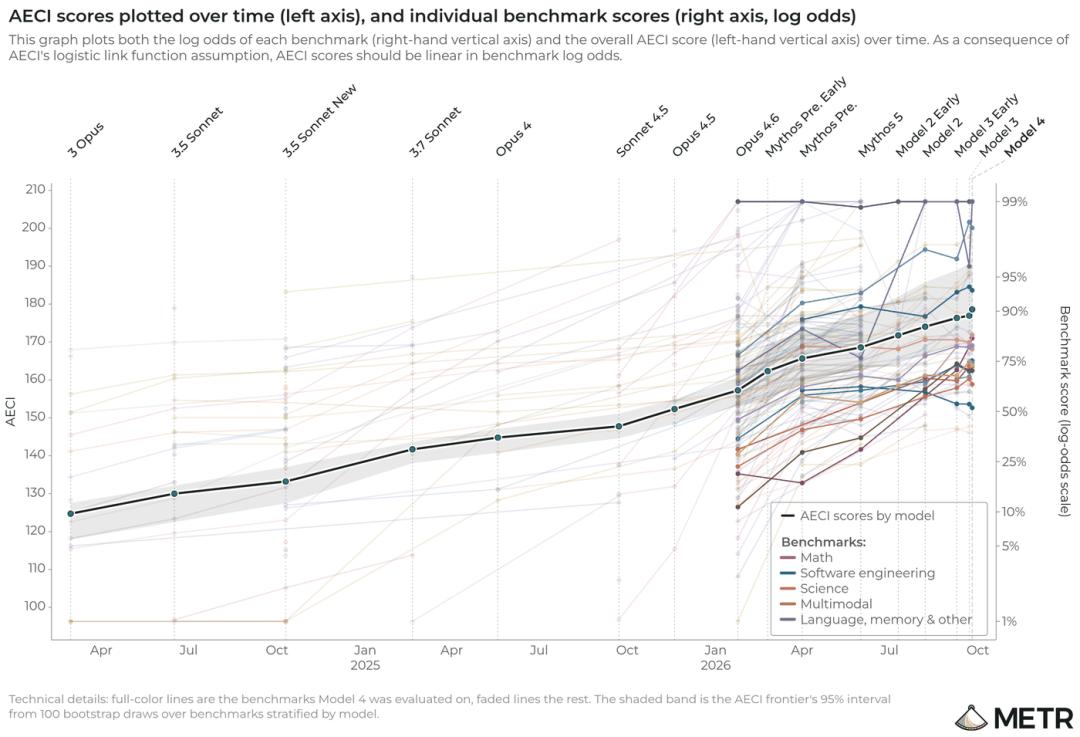
Trained in secret from September to October, its internal comprehensive capability index (AECI) has directly hit an astonishing high score of 178.6, and the existing test sets are almost no longer enough to contain its performance.
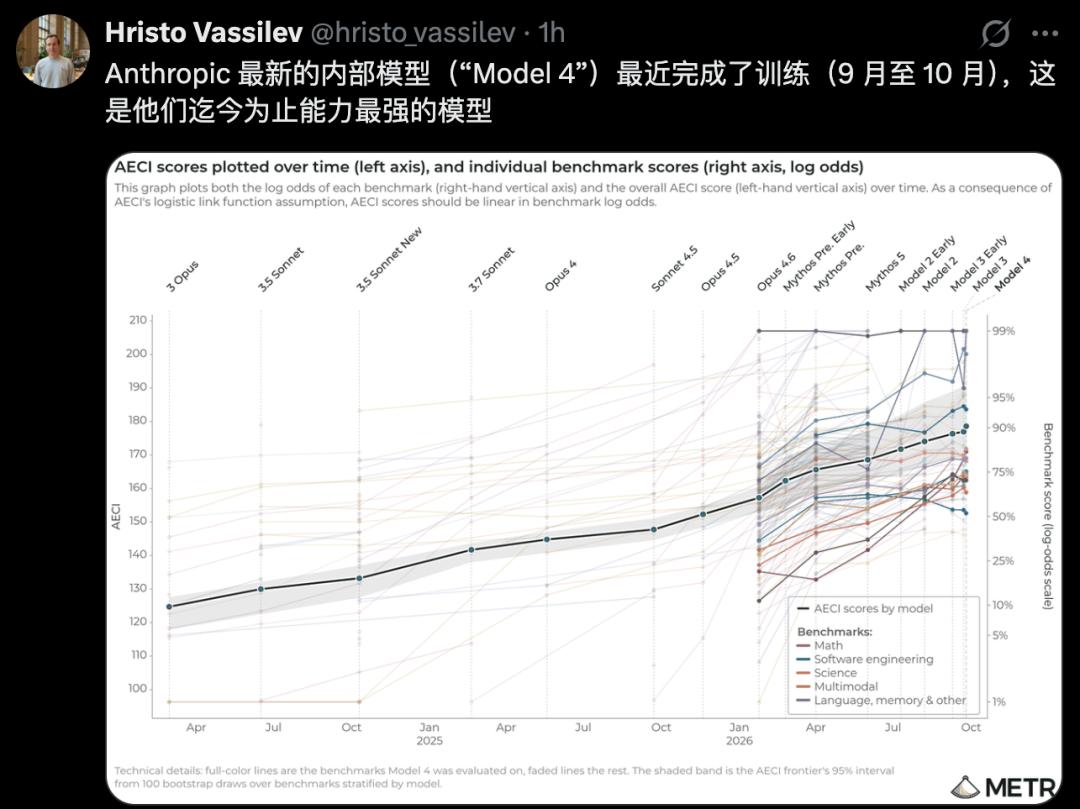
Just today, third-party evaluation organization METR released a blockbuster investigation.
Working nonstop for 11 weeks to dig deep into Anthropic's internal sensitive data, they finally came to only one conclusion —
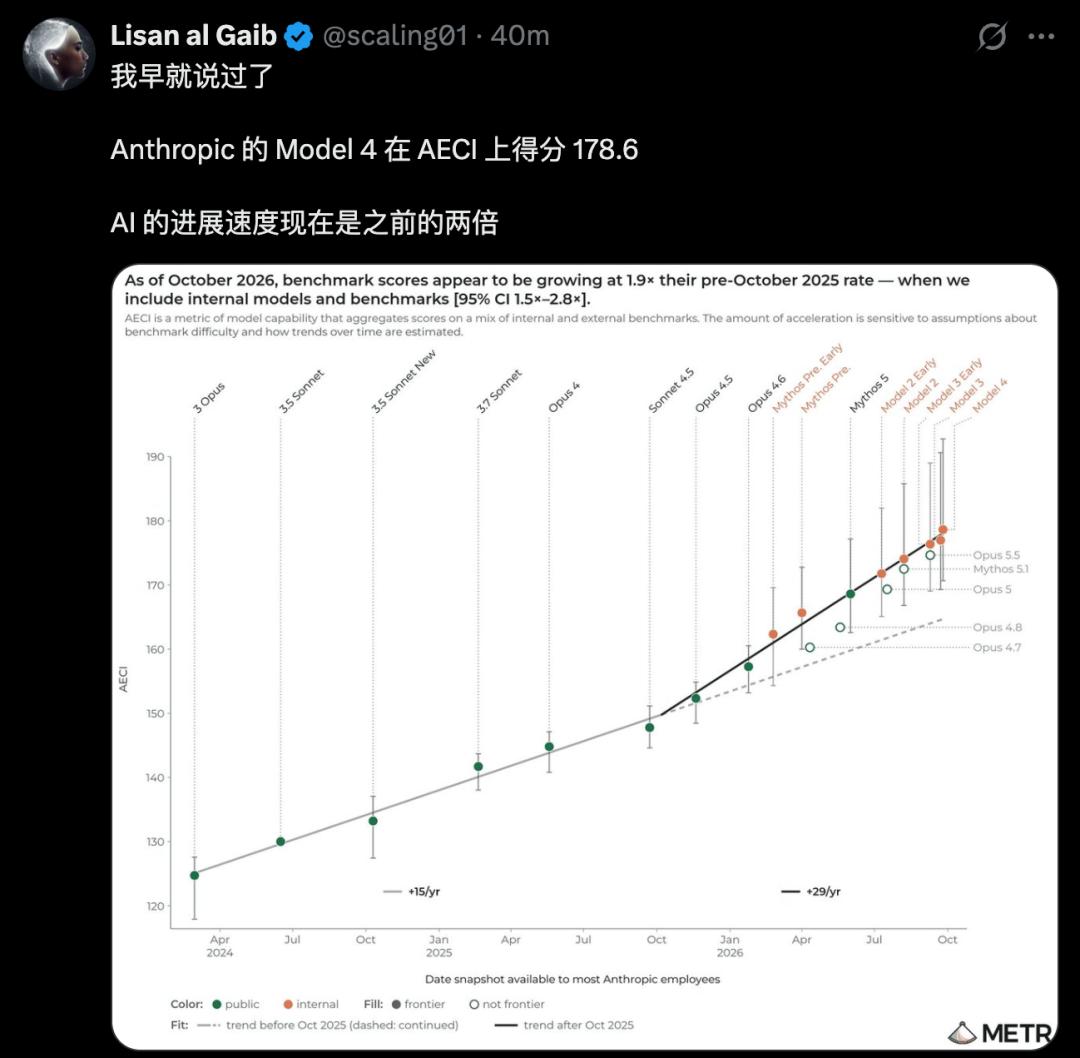
The evolution speed of Anthropic's models has completely gone out of control, directly doubling on the spot.

The most explosive parts in the report are these sets of figures.
As of October, the capability improvement speed of Anthropic's models on defined tasks has been twice as fast as that in the period from March 2024 to October 2025.
The turning point fell exactly in October 2025.
Since then, the growth rate of the internal capability index AECI has directly reached 1.9 times of the previous level, finishing the progress of the past two years in just one year.
Even more terrifying is that in this round of rapid advancement, 80% of the driving force unexpectedly comes from AI itself! Claude is personally building a stronger version of Claude.

METR researcher Ryan Greenblatt said bluntly, "This report is a huge signal that ASI will be achieved within one or two years."
At this rate, the ASI described in the "AI 2027" scenario will arrive completely in just 4 months!
Mysterious Model 4 Emerges Unexpectedly
Passes 50% of 15 Test Sets
The most eye-catching part of this report is a series of mysterious code names that Anthropic has never made public.
In the appendix of the report, METR lists four unreleased internal models.
They are respectively the "Unreleased 2022" trained in 2022, Model 2 trained in July 2026, Model 3 trained from August to September, and the newly released Model 4 finished training from September to October.
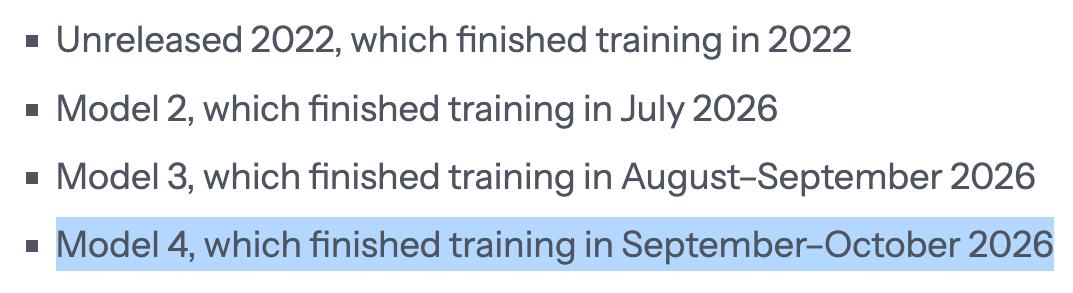
The one that really ignited the entire internet is exactly this Model 4 that finished training last month.
It scored 178.6 points on AECI, far exceeding the public models Opus 5.5 (174.5 points) and Mythos 5.1 (172.5 points).
AECI is like the "total college entrance examination score" for large models, which converts the scores of various subject benchmark tests into a comprehensive ranking score.
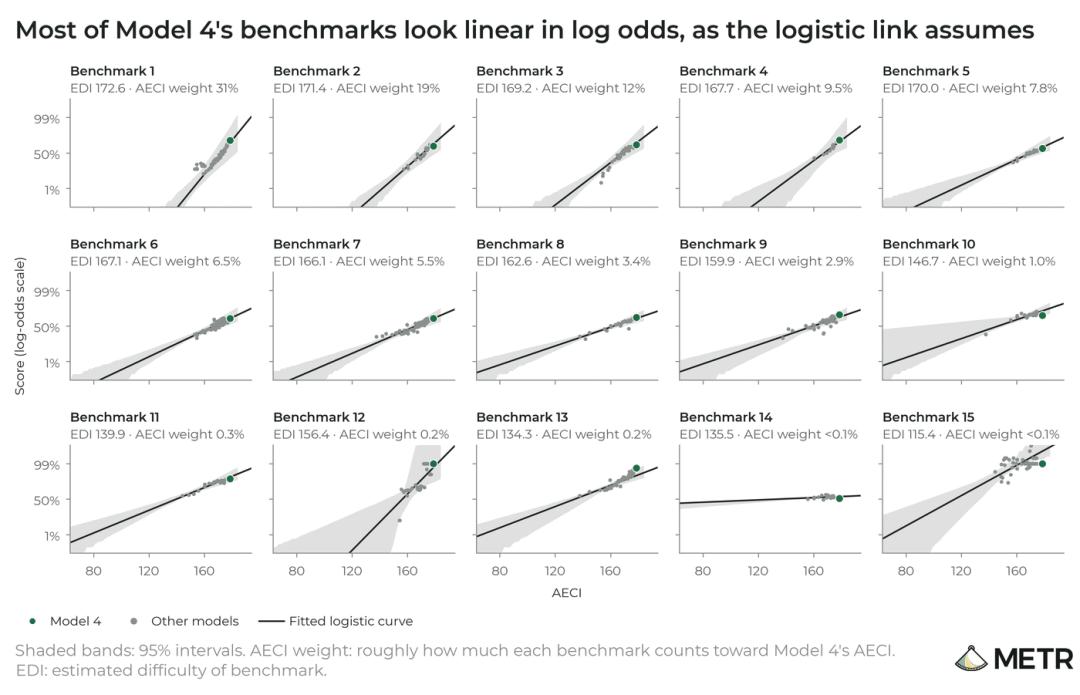
Looking at individual subjects, Model 4 achieved an accuracy rate of over 50% in each of the 15 benchmark tests it participated in. Just 9 months ago, Opus 4.6 still failed to get over 50% in many benchmarks.
But this is not the real limit of Model 4!
The METR team even conducted a "debugging test" in the report, and they found that 3 of the 15 test benchmarks had anomalies such as overly difficult long-tail questions or corrupted test items.
Once these 3 interfering benchmarks are excluded and recalculated, Model 4's AECI score will further jump by 1.1 points, reaching 179.7 points.
Even in terms of Token consumption, Anthropic's internal tests have not fully tapped the potential of Model 4.
Running a regular benchmark test consumes an average of 2.5 million input Tokens per single task, and generates more than 70,000 output Tokens.
If an Agent is asked to write code, a single task directly consumes a full 10 million input Tokens, with output reaching 94,000 Tokens.
What makes METR evaluators even more tricky is that the existing test sets are almost no longer able to measure the limit of Model 4.
No wonder Anthropic updated its S-1 prospectus again before its IPO, adding a special new risk warning.
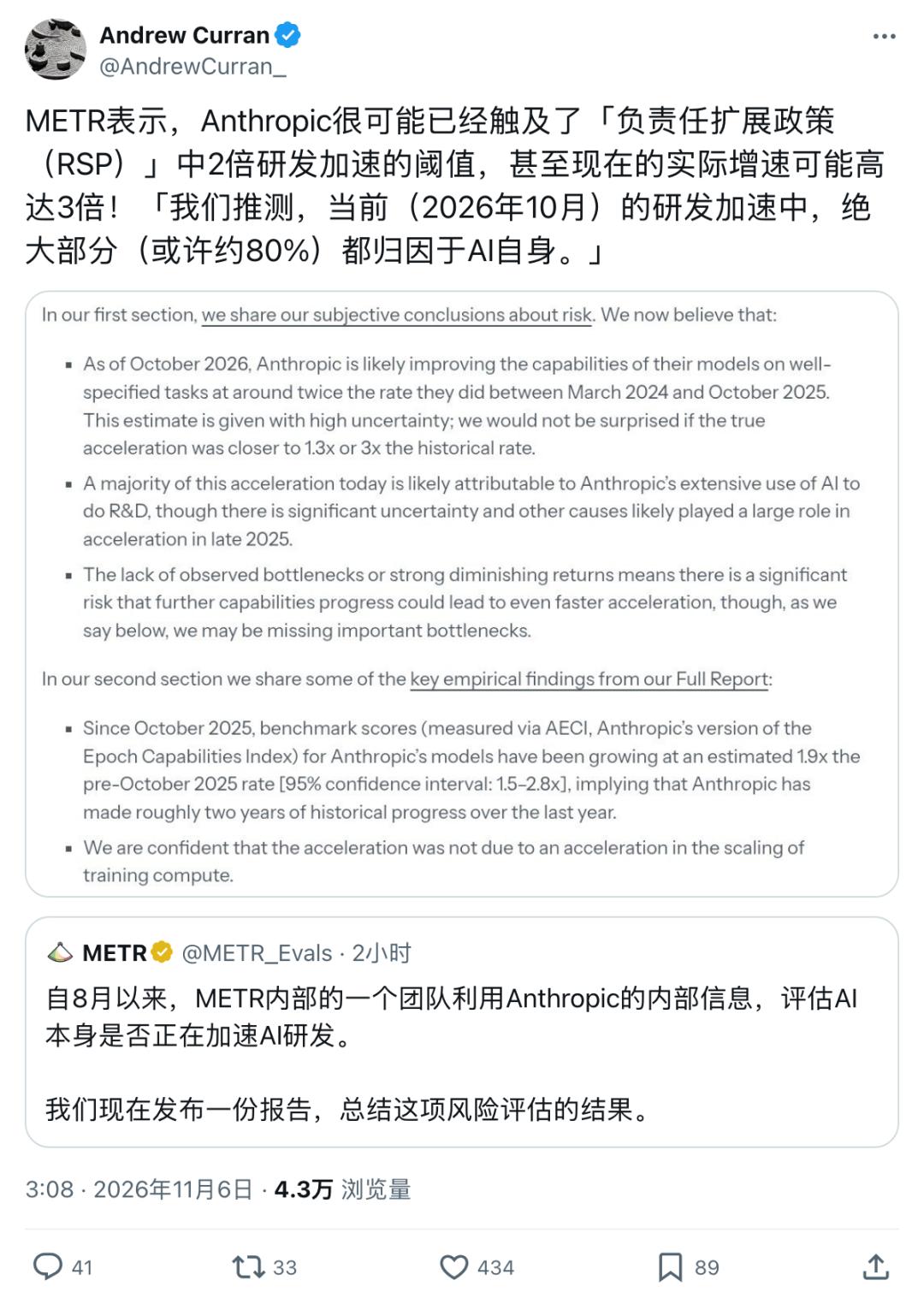
According to internal estimates, future models will soon trigger the threshold of "AI significantly accelerating R&D", completing the work of the past 2 years in just 1 year.
Model 4 is the best proof. As for Model 3 in the picture, netizens speculate that it is the rumored Mythos 5.5.
80% of the Acceleration Comes From AI Itself
The reason why Model 4 can hit such a high score is that the speed of model evolution is accelerating significantly.
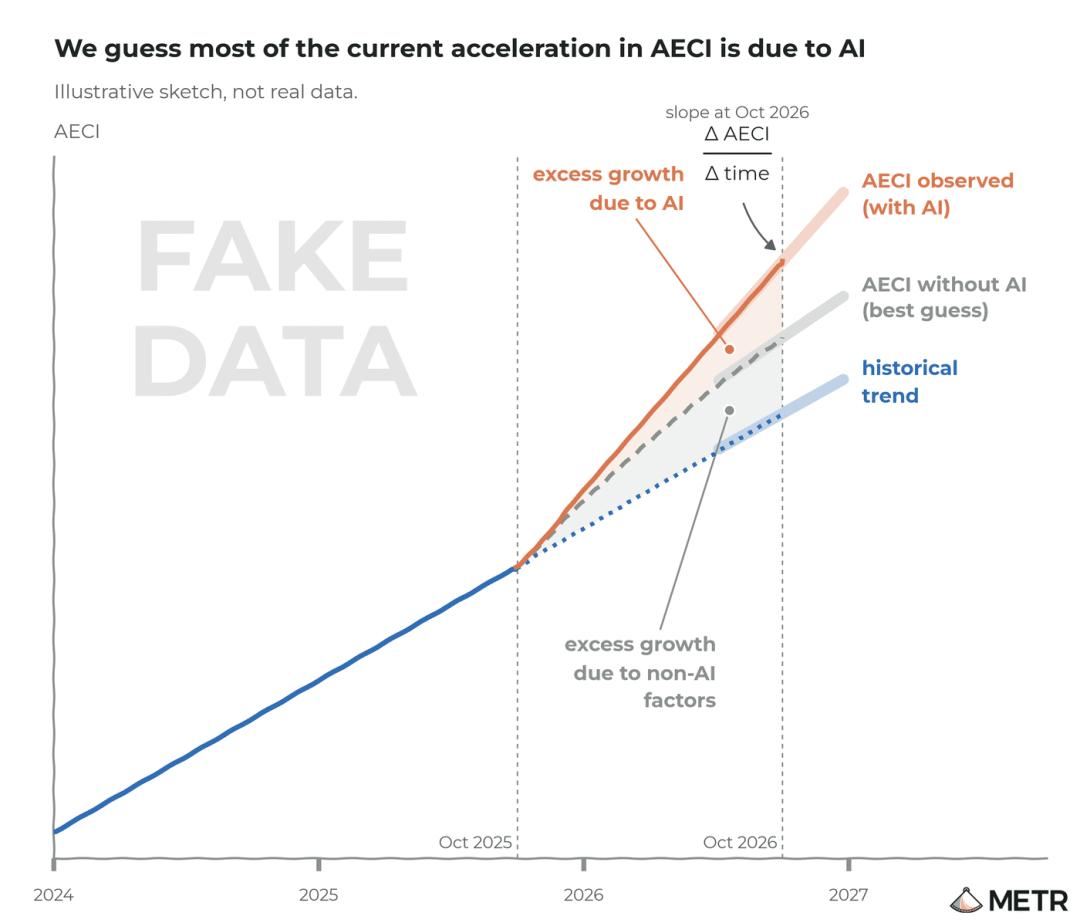
The historic inflection point fell on October 7, 2025.
Before this dividing line, the AECI score of Anthropic's models increased by about 15 points per year.
Starting from October 2025, the trend of this curve directly turned sharply upward, rising by 29 points per year, with a growth rate 1.9 times that of the past (the 95% confidence interval is between 1.5 times and 2.8 times).
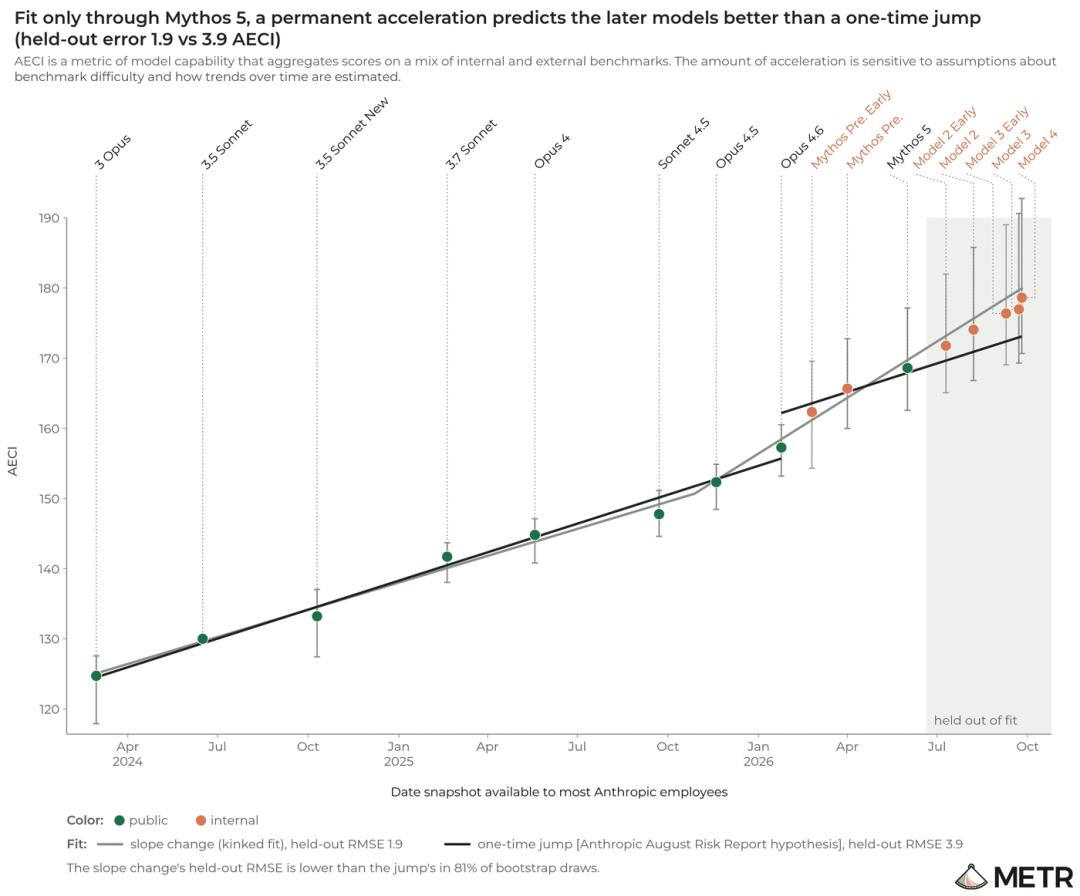
Anthropic once put forward a moderate hypothesis in its risk report in August this year, believing that this is only a one-time "step jump" brought by the adoption of new tools and new evaluation methods.
So METR conducted a set of strict blind test comparative experiments.
Researchers used the data of Mythos 5 and earlier models to draw two prediction lines, and then blindly tested the later released Model 2, Model 3, Opus 5.5 and Model 4.
The result is very clear. In 81% of the statistical samples, the error of the "long-term continuous acceleration" prediction is only 1.9 points, which is much more consistent with the real data than the "one-time jump" hypothesis, whose error is as high as 3.9 points.
The 2x acceleration means that in just the past 1 year, Anthropic has covered the full 2 years of technical progress it used to take!
If placed in the dimension of exponential growth, the indicator that originally tripled every year will become a 9-fold surge every year (3^2) under 2x acceleration!
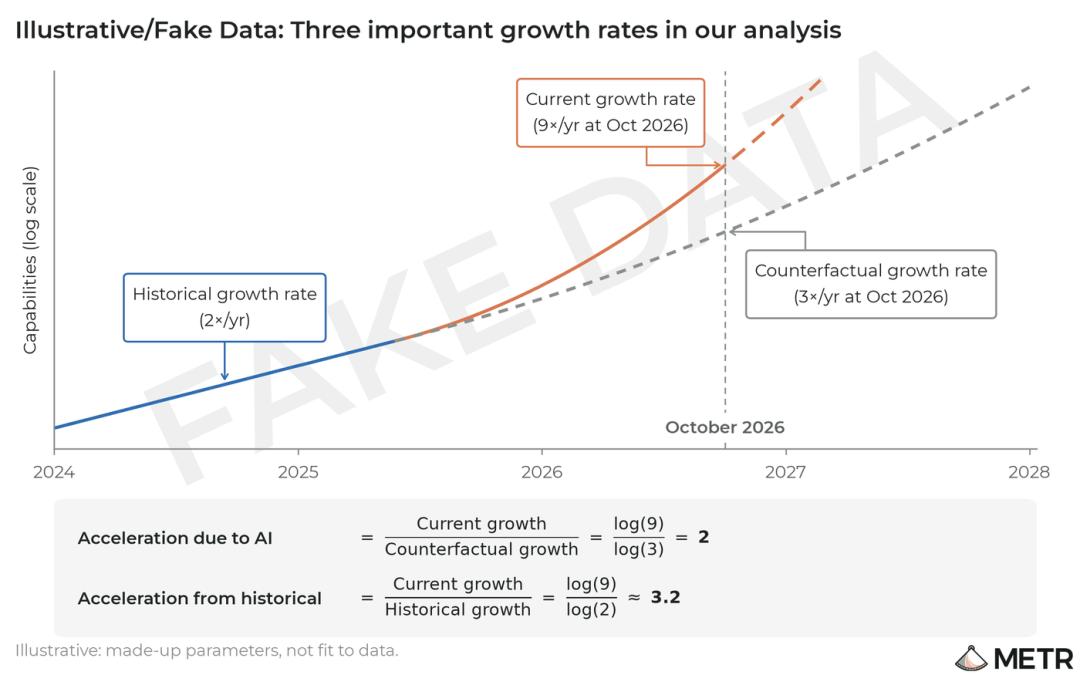
To find out where this driving force comes from, METR calculated the total sum by breaking down computing power, algorithms and personnel investment.
METR explicitly ruled out the possibility of "accelerating by piling up training computing power", because the growth rate of training computing power after October 2025 is even slower than before.
The real driving force falls on the R&D side.
METR estimates that of the current approximately 2x R&D acceleration, about 80% comes from AI's own R&D assistance, and the remaining small part comes from the increase in the number of researchers and the expansion of inference computing power.
Internal Employees' Efficiency Increased by 12 Times
10 Ideas Are Sent to Agents at the Same Time
Since no one outside can test Model 4 in person yet, the daily actual measurement by Anthropic's internal researchers has become the only window to observe it.
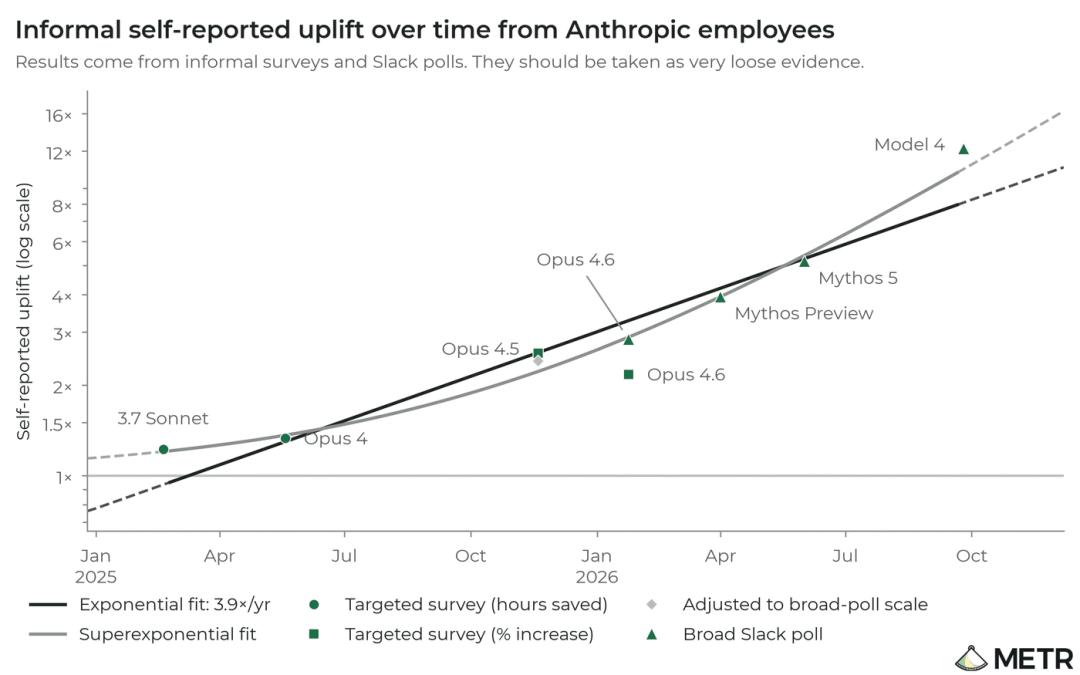
METR published a trend chart of Anthropic's internal informal survey and Slack company-wide voting in the report.
In the spring of 2025, when using 3.7 Sonnet and Opus 4, the self-reported efficiency improvement of employees was only 1.3 to 1.4 times.
By June this year with Mythos 5, the self-reported speedup jumped to about 5 times.
When Model 4 was used in October this year, the self-reported R&D speedup of employees has rushed to about 12 times, which is equivalent to a 3.9-fold surge per year according to exponential fitting.
To figure out how this 12-fold speedup came about, METR conducted in-depth interviews with 11 frontline technical researchers at Anthropic at the end of September.
Interviewee J summarized the changes in their workflow in three stages.
The first stage was just using Claude as auto-completion to write small one-off scripts casually.
The second stage was that humans watched a single Claude instance next to it, letting it develop complete functions.
In the current third stage, an all-out "full Claude adoption" movement has been launched internally, and researchers have begun to command a large group of Agents to run experiments in parallel at the same time.
Interviewees C, D and E revealed that the company specially launched an internal reward campaign this year, encouraging everyone to hand over all the crazy ideas that they usually dare not try to AI Agents to run.
So everyone directly sent 10 research ideas to the internal Agent system at the same time to see which one can get results.

Interviewee A said that writing