Midea's whole-home intelligence is anchored on A2A: interconnection of home appliances is evolving from "interface docking" to "Agent dialogue" | The Frontline
Author | Huang Nan
Editor | Yuan Silai
The concept of whole-home intelligence has been developing for many years, yet the industry has never crossed the threshold of large-scale popularization. A large number of products on the market can operate smoothly and interact within a single-brand system, but once cross-brand and cross-category collaboration is involved, the connection often falls into fragmentation.
Recently, the 31st Midea Group Technology Month Conference was held in Shunde, Foshan, showcasing Midea's latest achievements in technological R&D, product innovation, and digital intelligent transformation.
Dr. Shang Zhe, General Manager of Midea Whole-Home Intelligence, pointed out in an interview during the Technology Month that for a long time, the bottlenecks of the whole-home intelligence industry do not come from the performance of individual hardware, but three systemic constraints: it is difficult to break through the data silos of heterogeneous devices; there is a gap between the actual effect of intelligent interaction and user expectations; the engineering threshold for system deployment and commissioning is not user-friendly for ordinary families.
The performance of the hardware itself can already meet basic usage needs, but the experience shortcomings are prominently exposed at the system collaboration level. Behind these three superficial problems lies the same structural contradiction: the industry does not lack the subjective willingness of interconnection, but has never formed a low-cost, large-scale replicable cross-brand and cross-category collaborative technical paradigm. Most cooperation can only stay at the point project pilot stage, and it is difficult to popularize to a huge number of ordinary families.
For example, the mainstream cloud-to-cloud peer-to-peer API docking solution has an intuitive implementation logic, but it has an unavoidable scale defect: the docking cost will rise exponentially with the number of cooperative ecosystems.
"Assuming that Manufacturer A and Manufacturer B each have thousands of devices, two-way interconnection means massive interface development, continuous joint debugging and post-maintenance." Dr. Shang Zhe calculated an industrial account: every time a new cooperative ecosystem is accessed, a new round of interface adaptation needs to be completed. This determines that the API model is only suitable for creating a few cases, and cannot support wide-range device interconnection, which is also one of the technical root causes why the industry ecosystem is difficult to break through.
Against the wave of large models, AI Agent has begun to become the capability hub of home and in-vehicle systems, and another solution has emerged in the industry: Agent to Agent (A2A).
The core idea of A2A is no longer to write a separate docking interface for each device. In simple terms, the two parties' AI agents communicate directly: one party transmits the user's real demand to the other party, lets the cooperative party's agent judge whether the task can be completed on its own, then schedules its own devices to complete the action, and finally feeds back the execution result.
If operations involving sensitive information such as home security are encountered, the Agent will return the choice to the user for confirmation. The whole set of collaboration only needs to build a unified communication language between the two sets of AI Agents, and there is no need to develop and adapt to various types of hardware one by one.
According to Shang Zhe, Midea and Chery iCAR have completed A2A docking, and iCAR models have been connected to the Midea Home platform to realize car-home interconnection. Car owners can give instructions in natural language in the car to query the remaining amount of consumables at home, and the function will later be extended to voice-triggered restocking. This step has broken through the traditional switch linkage of "car controlling home": devices are no longer simple instruction forwarding, but cross-system business-level task collaboration.
The technical base supporting Midea's A2A platform is Midea's self-developed home agent MevoX. Different from most voice assistants on the market that can only respond to explicit instructions, it has two core capabilities: the first is deep reasoning. Faced with users' vague and incomplete expressions, MevoX can decompose the real intention by combining the spatial scope, device ownership and environmental context, instead of only matching the literal instructions.
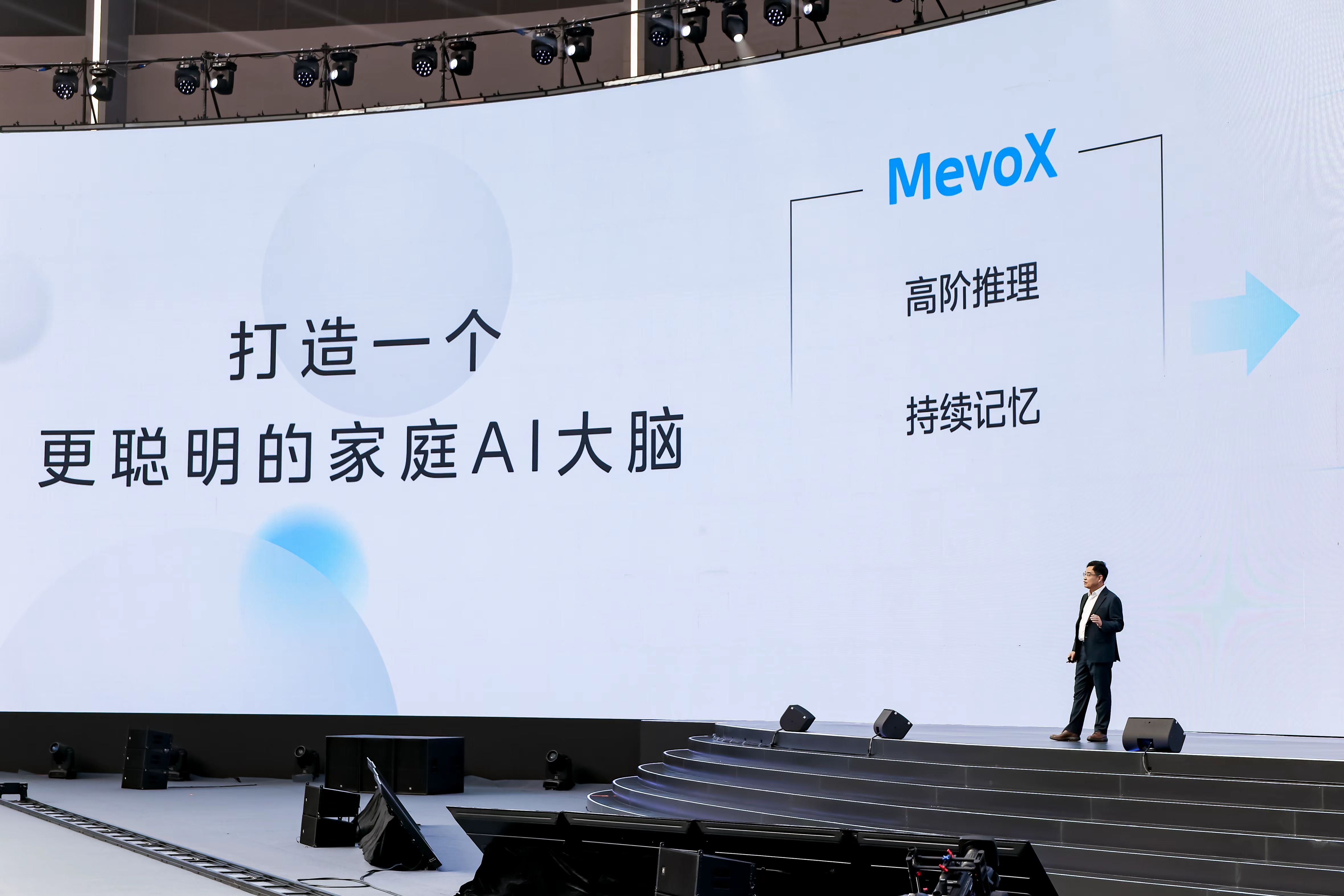
Midea's self-developed home agent MevoX (Source / Enterprise)
The second capability is long-term memory. Users' usage habits will be continuously accumulated. When adjusting personalized parameters such as lighting and air later, the system will default to the user's preferred settings, so that the whole-home intelligent interaction gradually becomes personalized for each user, instead of starting from scratch every time.
Combined with Midea's years of accumulation in home appliance intelligence and full-category hardware matrix, it forms the in-depth capability of MevoX in real home scenarios: the front end can capture vague intentions, the back end can mobilize specific devices, and the middle part connects multiple interactions through context memory. This is not a stack of single-point technologies, but a complete link from intention understanding to implementation.
At the business strategy level, Midea chooses to position itself as a home-side capability provider, adheres to opening up interconnection to the outside world, and establishes cooperative relationships with external in-vehicle and mobile-side Agents.
At present, Midea has realized human-vehicle-home interconnection with leading mobile phone manufacturers such as Huawei, vivo, OPPO and Honor, as well as core vehicle enterprises such as BYD, NIO, Changan and Chery. This year, as the first enterprise in the home appliance industry to connect the home agent A2A with ecological partners, Midea has taken the lead in realizing in-depth collaboration with Tongyi Qianwen, WeChat Xiaowei, Honor YOYO Assistant and Chery Automobile's agents.
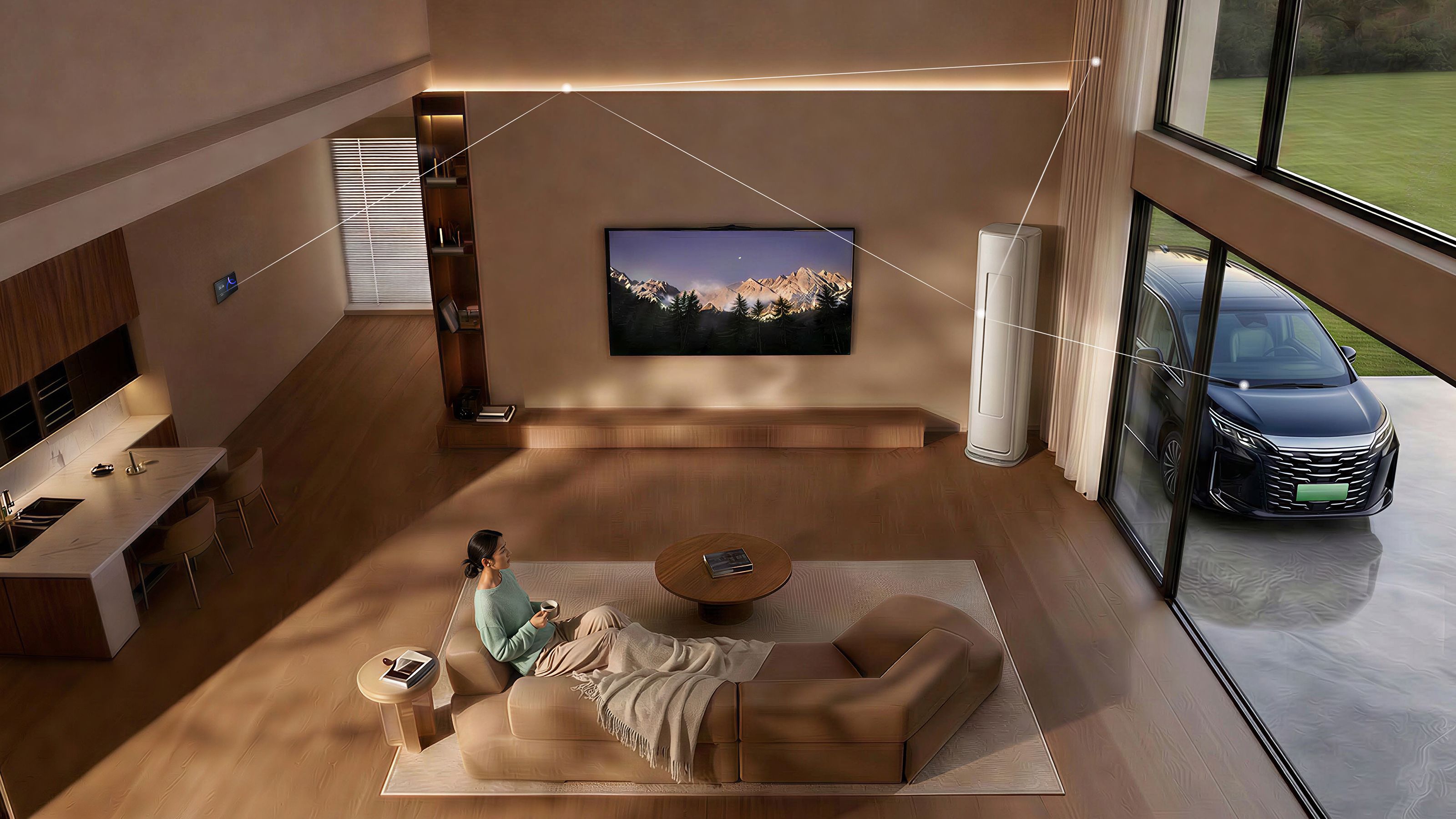
The first home appliance enterprise to connect the home agent A2A with ecological partners (Source / Enterprise)
At present, the standardization construction of the industry's underlying hardware protocol is also advancing simultaneously. A number of home appliance interconnection standards organized by the Ministry of Industry and Information Technology, with Midea as a core working group member and jointly participated by many enterprises, have basically completed the formulation of five standard drafts by the end of September this year since the relevant work was launched last August. They entered the technical standard test and verification stage in October, and are expected to complete the verification and enter the public notice in January next year. This set of standards is designed to solve the interconnection problem between devices of different brands.
In terms of car-home interconnection, Midea has also joined hands with the China Academy of Information and Communications Technology, BYD and other institutions and enterprises, as well as relevant industry organizations, to jointly promote the work related to car-home interconnection standards. Midea is pushing open connections from point-to-point docking between enterprises to broader industrial collaboration.
From the perspective of industrial cycle, the competition paradigm of whole-home intelligence has ushered in iteration. The core anchor point for measuring the competitiveness of enterprises is gradually shifting from the scale indicators of individual hardware products and device access to the reasoning capability of Agents and the cross-ecological collaboration efficiency.
With the mature implementation of the A2A agent interoperation paradigm, the most direct industrial effect is that the marginal cost of cross-manufacturer collaboration is greatly reduced. Small and medium-sized manufacturers do not need to invest high R&D costs to dock multiple ecosystems one by one, and heterogeneous hardware can also break brand barriers to complete linkage around user scenarios.
The deep-seated change it brings is the iteration of the ecological architecture. The traditional mode of "centralized platform + access partners" is expected to evolve into a "distributed" network of multi-Agent peer-to-peer collaboration. The barriers of leading enterprises no longer come from ecological enclosure, and small and medium-sized manufacturers do not need to rely on external platforms to obtain scenario entrances. The focus of competition will return to the core capabilities of the enterprise itself.