Netizens of this generation are pulling off absurdly wild feats with AI for device tinkering: Redmi phones can run iOS, and Mac computers can run Android.
Attempts such as running iOS 16 successfully on Redmi devices and launching Android apps on Mac have suddenly gained massive popularity in the past one or two months.
Not long ago, Bilibili content creator @RryanLyu even successfully ran HarmonyOS 6 on OnePlus Ace 5, and fixed the GPU driver to support normal display of the home screen, system animations and floating app windows.
Almost at the same time, some users modified the underlying configuration to successfully lift the computing performance restrictions on certain NVIDIA RTX 20, 30 and 40 series graphics cards, making the throughput of RTX 4090 in specific tensor computing tests nearly doubled.
Even more surprising achievements are coming next. Running Android apps on Mac, playing Android games on iPhone, and even porting Switch games to Windows, Mac and iPhone have successively become new challenges for developers. Recently, some users even demonstrated the native running footage of Switch exclusive games The Legend of Zelda: Tears of the Kingdom and Mario Kart World on Mac.
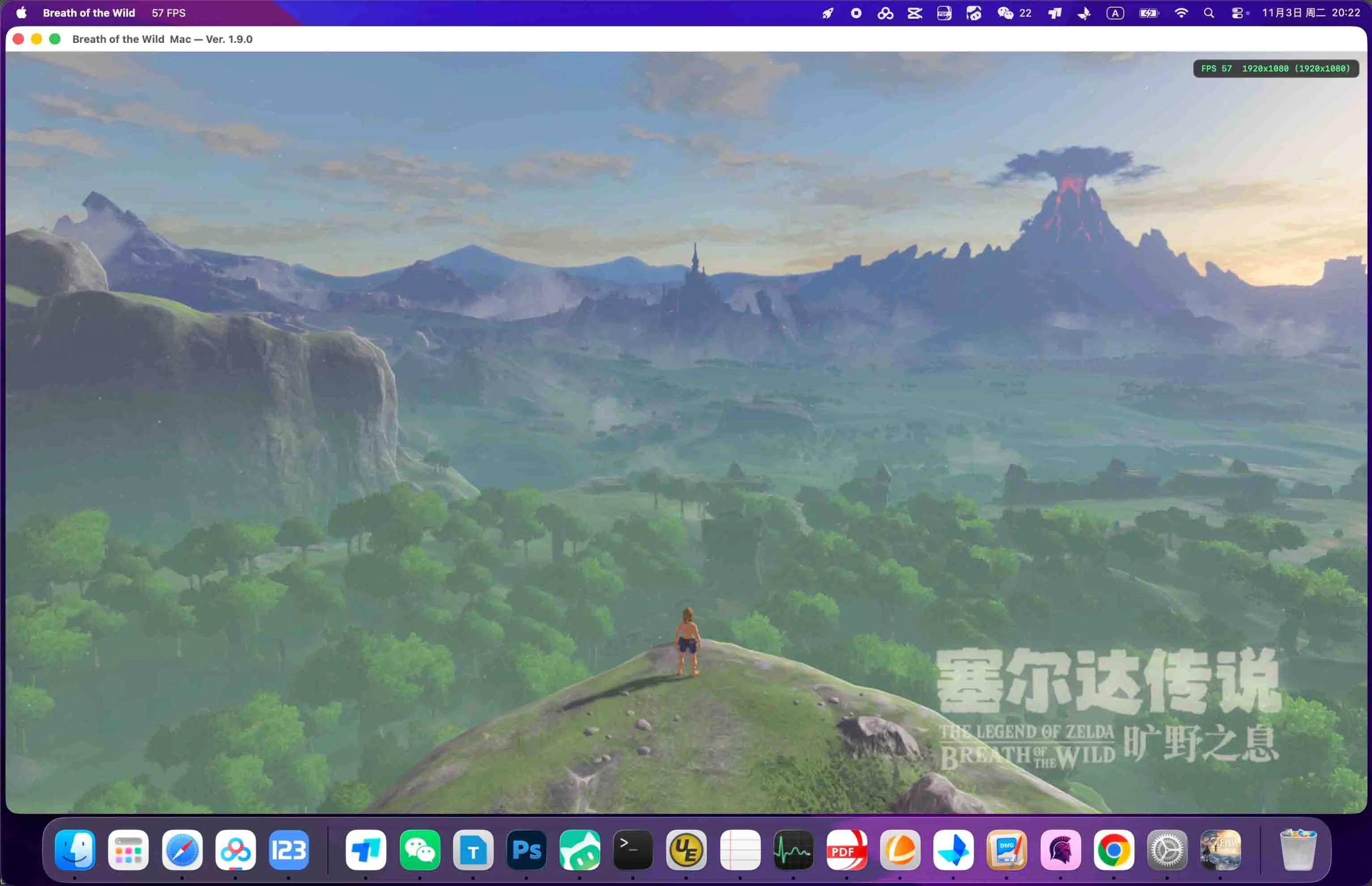
Image source: X
Of course, the completion level of these achievements varies, and some projects are still in the technical verification stage. However, compared with system porting and reverse engineering that used to require a large amount of professional knowledge, time and energy to complete, today individual developers can challenge previously unattainable complex projects with the help of AI Coding Agents.
Tinkering with consumer electronics is not a new thing. Now that smartphones and computers are becoming increasingly mature, and flashing custom ROMs and jailbreaking have gradually faded out of the public view, why can AI make the device modding circle popular again? When more and more people try to break through the software and hardware restrictions set by manufacturers, what changes will it bring to the consumer electronics industry?
Device modding is not new, but AI-enabled modding works in a very different way
For those who experienced the early development of smartphones, it is not difficult to understand the appeal of the device modding culture.
From flashing third-party ROMs on Android phones to jailbreaking iPhones and building Hackintosh PCs, over the past decade, a number of developers and users have always been keen to challenge the preset software and hardware boundaries set by manufacturers. Some do this to obtain new functions, some to improve performance and user experience, and others purely to prove the technical feasibility.
However, as smartphones become increasingly mature, manufacturers have continuously strengthened system security and ecological control, and the influence of third-party ROMs has gradually declined. A large number of functions that previously required Root access or jailbreaking to implement have been integrated into the native system.
But AI Coding has brought new changes to the situation.
Take ios-sweet, the open source project that runs iOS 16 on Redmi Note 10 Pro, as an example. The developer not only ported Apple's open source XNU kernel, but also successfully started the iOS 16 user space of iPhone X, including native system services, SpringBoard home screen and other components.
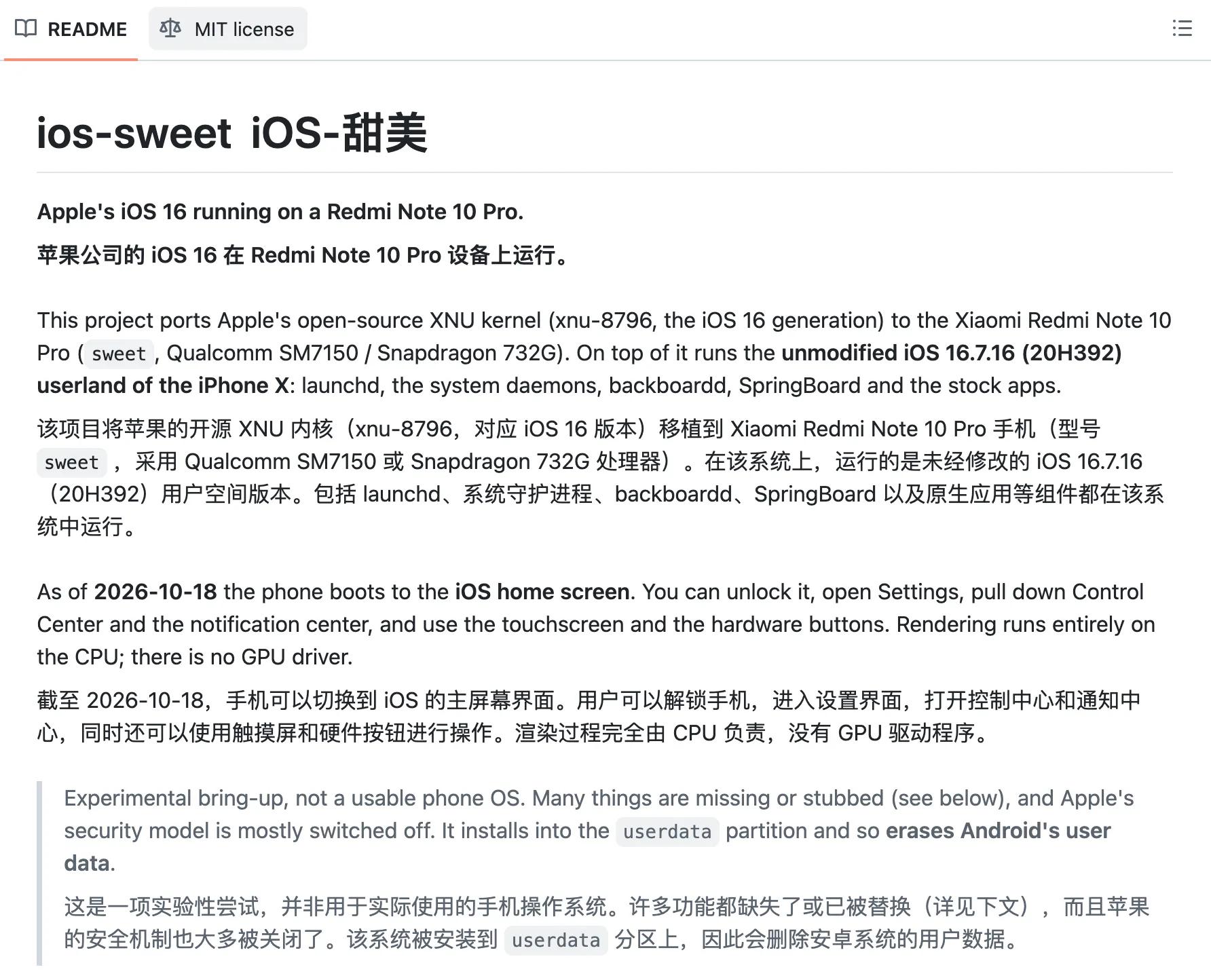
Image source: GitHub
The publicly available development logs of the project have recorded a large number of processes where AI Agents such as Claude and Codex participated in kernel modification, driver adaptation, troubleshooting and task handover.
Developers do not need to be familiar with the kernels, boot processes, hardware drivers and underlying interfaces of different operating systems at the same time. They can fully let AI read unfamiliar source code, generate adapted code, and complete a large number of repeated compilation, analysis and debugging work.
The same applies to game reverse engineering. The unofficial recompilation project for The Legend of Zelda: Link's Awakening allows the game code originally developed for Switch to run on platforms such as Windows and Mac. The nxnative project tries to take advantage of the fact that both Switch and Apple chips adopt the ARM64 architecture, to build a running environment for Switch games on Mac and iPhone.
As of November 5, the nxnative project has listed more than 120 games that have been tested to varying degrees, including Switch exclusive games such as The Legend of Zelda: Tears of the Kingdom and Super Mario Odyssey.
Of course, the explosion of these AI reverse engineering projects is on the one hand the most powerful proof of the rapid progress of AI Coding capabilities, but on the other hand, to be fair, AI has not created all technologies from scratch.
No matter the open source XNU kernel source code released by Apple, Android, Linux, Wine, QEMU, or various disassembly and recompilation tools, they have undergone development for more than a decade or even longer. To a large extent, the role of AI is to enable individual developers to understand, integrate and utilize these existing achievements more efficiently.
Coupled with the open source collaboration on GitHub and the spread on Bilibili and social platforms, once a project achieves a breakthrough, other developers will soon follow up.
However, the fact that technologies are easier to implement is not enough to explain why people are more willing to do so.
One realistic background is that devices are becoming more and more expensive and more durable. Over the past year, the rise in memory chip prices has pushed up the costs of mobile phones and PCs. At the same time, flagship phones and graphics cards released several years ago can still meet many new demands, while the necessity of replacing devices is decreasing.
The computing power unlocking of RTX graphics cards can particularly illustrate this point. In the past, players may not have cared about the throughput restrictions of some tensor computing instructions of GeForce, but after the rise of local large models, AI image generation and LoRA training, old graphics cards like RTX 3090, with 24GB video memory, can even achieve a performance improvement of more than 60% in some specific loads, which makes it not difficult to understand why they have become so sought-after.
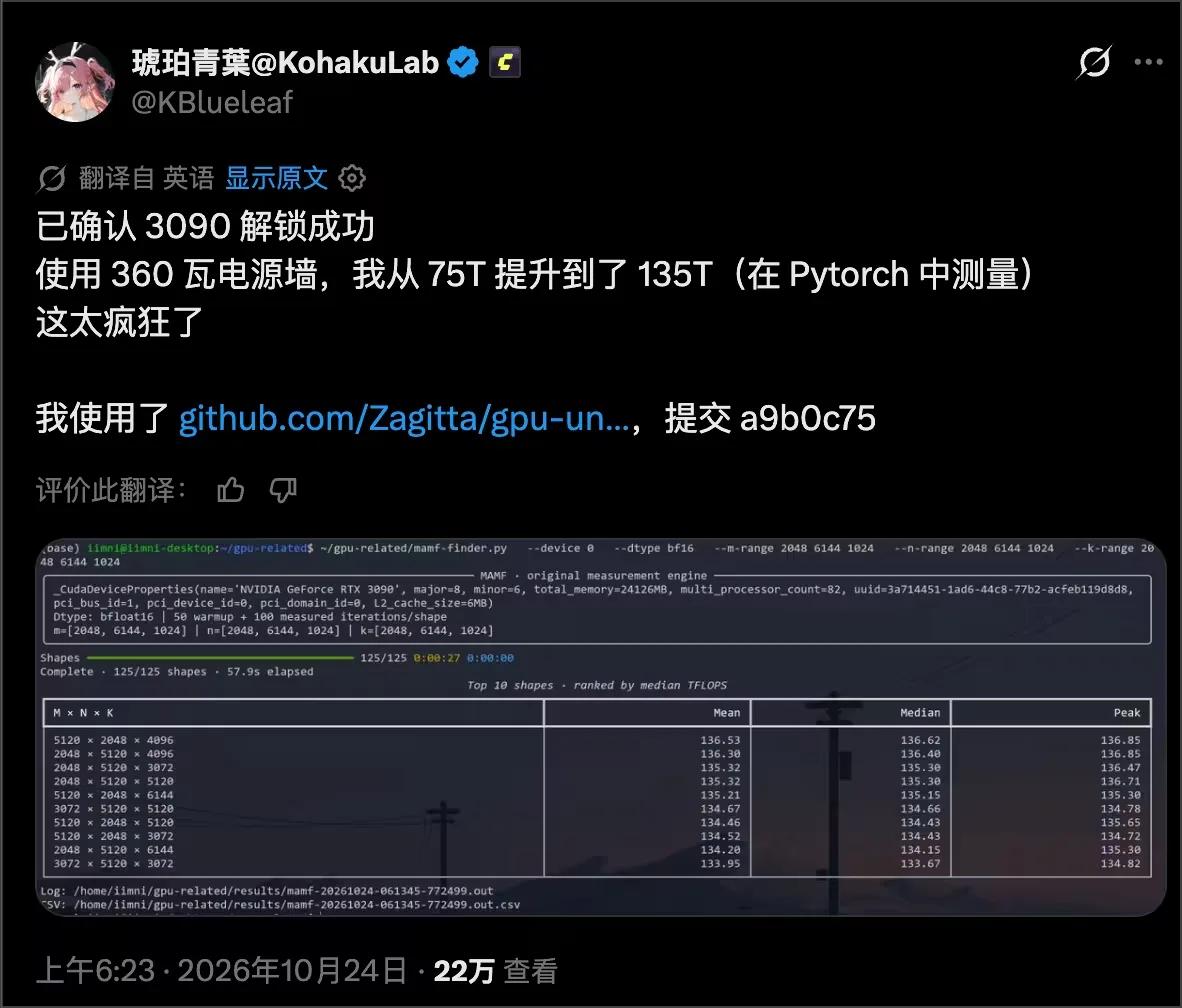
Image source: X
Cracking the computing performance restrictions can naturally bring intuitive value, and also makes today's device modding have practical significance different from the past. Since the hardware is still usable, why not transform it through software to give full play to its greater value?
In a sense, this is also an interesting contrast that AI brings to the consumer electronics industry. On the one hand, the construction of AI infrastructure has pushed up the cost of hardware such as memory, making new devices more expensive for consumers; on the other hand, AI Coding is reducing development costs, making it easier for users to tap the potential of existing devices.
Manufacturers want to block, but how much can they actually stop?
But for consumer electronics manufacturers, this wave of AI reverse engineering obviously raises some concerns. On the one hand, there are issues related to security, compatibility and after-sales responsibility, and on the other hand, it involves the software ecosystem, product positioning and even commercial interests originally controlled by manufacturers.
First of all, it must be acknowledged that manufacturers' control over hardware and software is not completely unreasonable. Modern personal devices such as mobile phones and computers involve a large number of sensitive functions such as payment, privacy and identity authentication. Unverified system modifications may indeed damage device security, and even bring unpredictable losses to ordinary users.
Game reverse engineering and cross-platform porting involve more complex intellectual property issues. Nintendo has previously taken measures such as litigation to crack down on Switch emulators and related infringements.
From a technical point of view, manufacturers are not helpless. Locking the Bootloader and verifying system signatures can prevent ordinary users from flashing other systems at will. Even if the device is modified, online services such as payment and accounts can control access through integrity verification.
But this cannot stop all device modding behaviors. Yunfei from GeekBay stated in early October that with the help of AI and vulnerability research, retail Android phones of all brands can obtain Root access without unlocking the BL lock.

Image source: Bilibili
What's more, projects such as running Android apps on Mac and cross-platform recompilation of games do not necessarily need to modify the system boot chain. Manufacturers can restrict permissions, distribution and services, but it is difficult to treat all compatibility development as security vulnerabilities. Excessive blocking may even damage the platform's own development ecosystem.
On the other hand, the ideas of AI manufacturers will also have an impact. At the end of October, Addy Osmani, a technical staff from Anthropic, confirmed that the team has added relevant instructions to the Opus 5.5 configuration of Claude Code, aiming to prevent users from using Claude to replicate specific games developed by others.
Some users also reported that Claude has begun to refuse to execute general reverse engineering tasks, which even affected some normal software development and debugging work.
However, it still remains questionable how effective such restrictions can be.
On the one hand, reverse engineering itself is not equivalent to piracy. Conducting compatibility research on existing software and copying and distributing game content without authorization involve different legal issues. On the other hand, Claude is not the only model that developers can use. Even if Anthropic restricts certain development behaviors, other AI models, open source tools and technical exchanges between developers may still promote the continuous development of related projects.
The question is, where exactly should these restrictions be drawn? It is certainly necessary to protect user security and respect intellectual property rights, but blindly blocking all modification channels may push users who want to research their own devices to exploit more insecure vulnerabilities.
Especially on highly versatile computing platforms such as PCs, users' demands to install software from other sources, run virtual machines or compatibility layers have long existed. If manufacturers keep tightening restrictions just to block a small number of third-party projects, they may also damage the appeal of the platform itself.
Moreover, as AI is continuously reducing the development cost of device modification and software compatibility, is it still necessary for manufacturers to block all unofficial modifications outside the system?
There is a reference case here, which is Fairphone.

Image source: Fairphone
Different from most mobile phone manufacturers, Fairphone explicitly supports users to unlock the Bootloader and install other operating systems. It will also remind users of relevant risks and set boundaries for technical support for third-party systems. This practice is certainly not suitable for all brands, but it at least proves that manufacturers can fully retain choices for users who are willing to take risks while ensuring default security.
For example, the device can be kept in a secure locked state by default, but users are allowed to actively unlock it through procedures such as explicit confirmation and erasing original data. For old devices that no longer receive official support, manufacturers can also consider providing more convenient unlocking mechanisms and necessary technical documents to help the third-party community extend the software lifespan of the devices.
Such changes may conflict in the short term with the business model of some manufacturers that rely on the software and hardware ecosystem to promote users to replace and upgrade devices. But from another perspective, as the hardware usage cycle gets longer and users pay more attention to the long-term value of devices, openness and sustainable usability may become new brand competitiveness.
The EU's Ecodesign Regulation for smartphones, which came into effect in June 2025, has put forward longer-term requirements for device system updates, repair parts and related software support. Although these regulations do not require manufacturers to allow users to flash custom ROMs arbitrarily, they reflect a direction:
The service life of consumer electronic devices should not be easily determined by the software support cycle.
Final Notes
AI Coding has greatly lowered the threshold for complex software engineering, and the long-accumulated open source technologies thus have more opportunities to be utilized. At the same time, the rising cost of new devices, the extended hardware usage cycle, and the new demands brought by AI are also making users more motivated to tap the potential of their existing devices.
However, this wave of device modding boom sparked by AI Coding is currently a technical carnival for a small number of geeks and developers.
Running iOS on Redmi devices, running HarmonyOS on OnePlus phones, natively running Switch games on Apple devices... These projects are still far from being normally used by consumers. The computing power unlocking of RTX graphics cards also has clear limitations on hardware and application scenarios.
As for the cross-platform porting of Switch games, although new progress has been made continuously, there are still many problems to be solved before achieving a mature and stable user experience and resolving the corresponding copyright disputes.
But compared with what these projects can achieve at present, the changes behind them are more important. When AI promotes the rapid diffusion of top technical capabilities, the software and hardware ecosystem we traditionally understand may also undergo subversive changes, but no one can see what the future will look like clearly today.
This article is from "Lei Technology", and is authorized for release by 36Kr.