However, the "ugliest Ferrari in history" was sold out one year ahead of schedule.
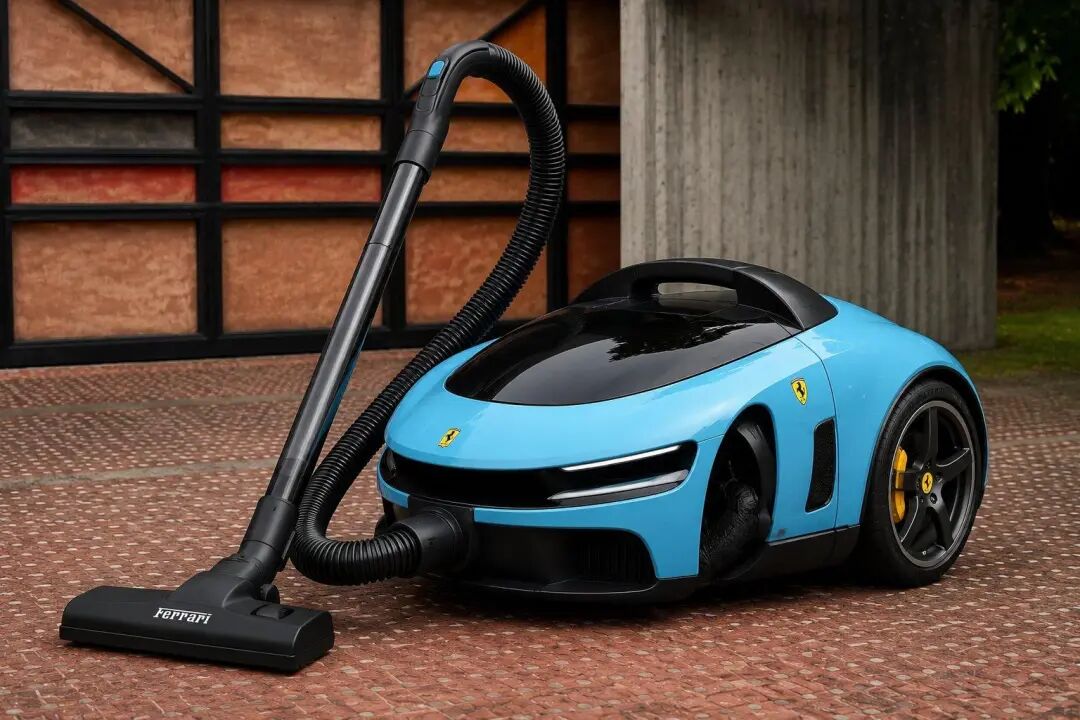
A Ferrari was publicly dismissed by its former chairman, turned into vacuum cleaner and mouse memes by netizens, and was widely labeled "too ugly to accept" by old-money elites in Italy.
Even right after the car was unveiled, Ferrari's stock price fell immediately, with its market value evaporating by 40 billion!
A few months later, the plot took a full U-turn:
The planned production volume for 2027 has been completely sold out!
This is Ferrari's first mass-produced all-electric model Luce.
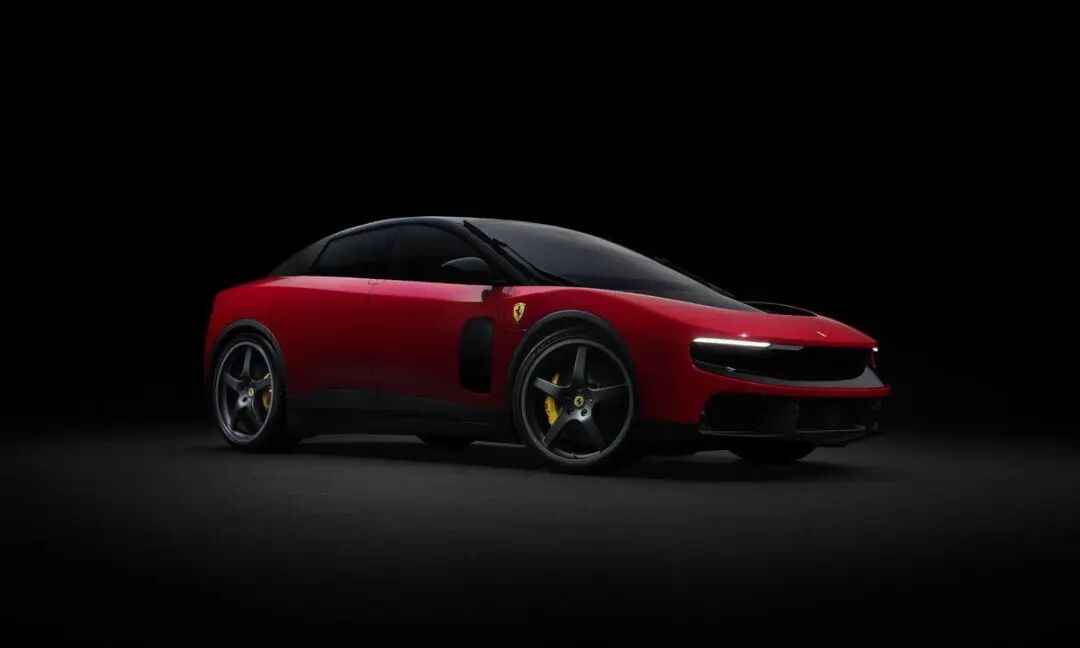
1050 horsepower, four motors, 800V, 0-100km/h acceleration in 2.5 seconds... Its performance parameters are very typical of Ferrari.
But its exterior and interior bear a strong resemblance to the vibe of Jia Yueting's Faraday Future.
Traditional car fans are complaining in groups, but new customers are queuing up to place orders. What kind of peculiar car is this exactly?
Ferrari: No units left, not a single one
As of November 6, 2026, Ferrari CEO Benedetto Vigna confirmed during the Q3 earnings call on November 3 that all planned production of Luce for 2027 has been fully sold out, and new customers placing orders now are expected to wait for at least one year.
Ferrari has previously made it clear that the "mass production version" of Luce has a fixed annual quota, with a cumulative delivery of around 2500 units expected by 2030, and the annual delivery volume will be controlled within 500 units afterwards.
This is Ferrari's consistent operating model. For the brand, cars are not industrial products, but carriers that shape the value of handicrafts, luxury goods and collectibles. The "fair value" support of Ferrari has always been its glorious history in motorsports accumulated over more than 90 years, which keeps breaking limits continuously.
But Luce is born with a DNA completely different from that of other Ferrari models.
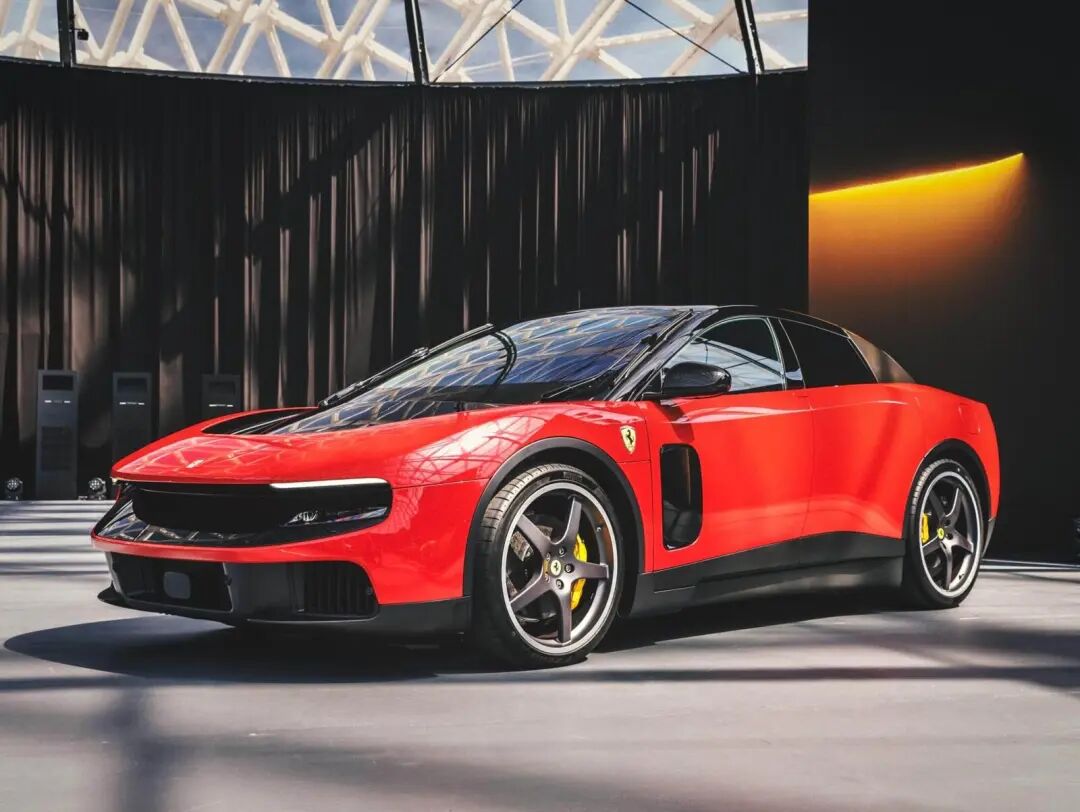
Luce is a four-door five-seat high-performance GT, with a body length of 5026mm, a wheelbase of 2961mm, and a curb weight of about 2260kg.
Its size has been completely separated from Ferrari's traditional two-door sports cars, and its positioning is more inclined to a luxury model that balances daily use and high-performance driving.
The power data is very much in Ferrari's style:
Four motors, with a total system maximum power of 772kW, which is equivalent to about 1050cv; 0-100km/h acceleration takes 2.5 seconds, 0-200km/h only takes 6.8 seconds, and the top speed reaches 310km/h.
However, in the electric vehicle track, such data is not that outstanding. Not to mention Musk's Roadster sports car, the manufacturing capacity of a mysterious top Chinese manufacturer can even apply such parameters to models priced at 300,000 to 400,000 yuan.
Then what else can Luce, which is sold at 4 million yuan in China, offer you?
It is equipped with a 122kWh battery pack and adopts an 800V high-voltage architecture, the maximum charging power reaches 350kW, and the official announced range target exceeds 530km.
However, overseas media practitioner Edmunds found some problems after actual measurement, for example, the actual range shrank to only about 320km. Meanwhile, it is equipped with Ferrari's self-developed 880V high-voltage platform, which has low compatibility with most public charging piles on the market, so the fast charging power will drop significantly.
But there is also a highlight worth elaborating, which is its four-motor layout.
The four motors drive four wheels respectively. The two motors on the front axle output a total of 210kW, and the two motors on the rear axle output a total of 620kW, so the rear axle undertakes the vast majority of the power of the whole vehicle.
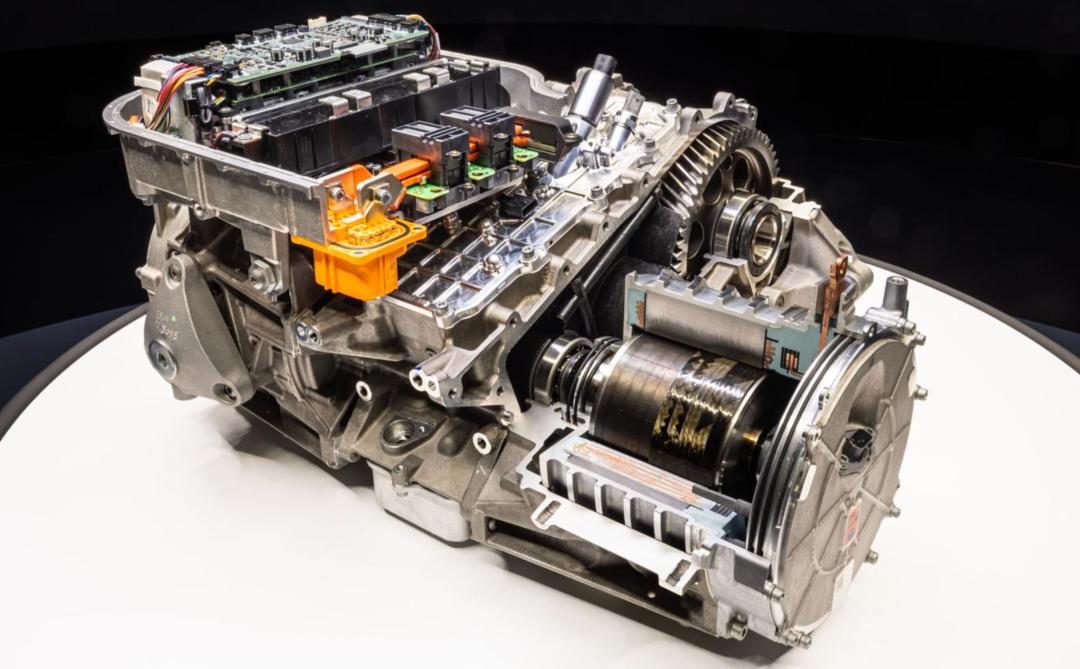
The maximum speed of the motor on the front electric drive axle reaches 30000rpm, and that on the rear electric drive axle is 25500rpm.
When entering the Launch Control mode, the total maximum torque at the motor end is 990Nm. After being amplified by the transmission system, the torque at the wheel end reaches 11500Nm.
The most important capability of this architecture is that the power distribution of the four wheels is finely handled by the electronic control system, which can adjust the output torque of each wheel separately, so that the vehicle has more power control space during acceleration, turning and corner exit.
For example, when passing a curve, the outer wheels and the inner wheels travel different distances and require different driving forces. The four motors can adjust the torque of each wheel according to the vehicle state to help the vehicle control the steering attitude;
When accelerating out of the curve, it can also distribute power more finely to reduce the loss caused by idling of a single wheel. The power ratio of the front and rear axles can also be dynamically adjusted, so that the vehicle presents different handling characteristics under different driving states.
Of course, four motors also mean more motors, inverters and control systems, and issues including weight, cost, heat dissipation and collaborative control all need to be solved at the same time.
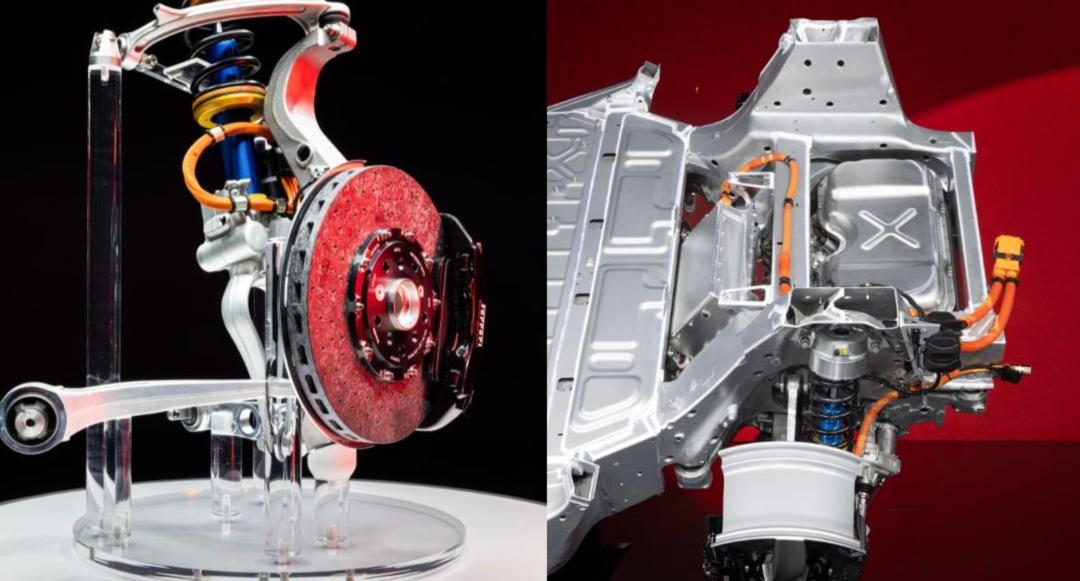
Ferrari announced that the weight of the front electric drive axle is about 65kg, and the rear electric drive axle is about 129kg, with power densities of 3.23kW/kg and 4.80kW/kg respectively, and the officially disclosed efficiency of both is 93%.
Even so, the overall curb weight of 2260kg makes it the "heaviest" Ferrari in history.
But for electric vehicles, lightweight is never easy. Most products on the market will use design methods such as matching contours and covering parts to make the car look not bloated visually.
But the biggest controversy of Luce lies right here: it looks exactly like an "evil big mouse".
Turning Ferrari into an Apple product? Where does the controversy come from
To understand why Luce is being criticized, we first need to figure out what Ferrari is supposed to look like in everyone's mind.
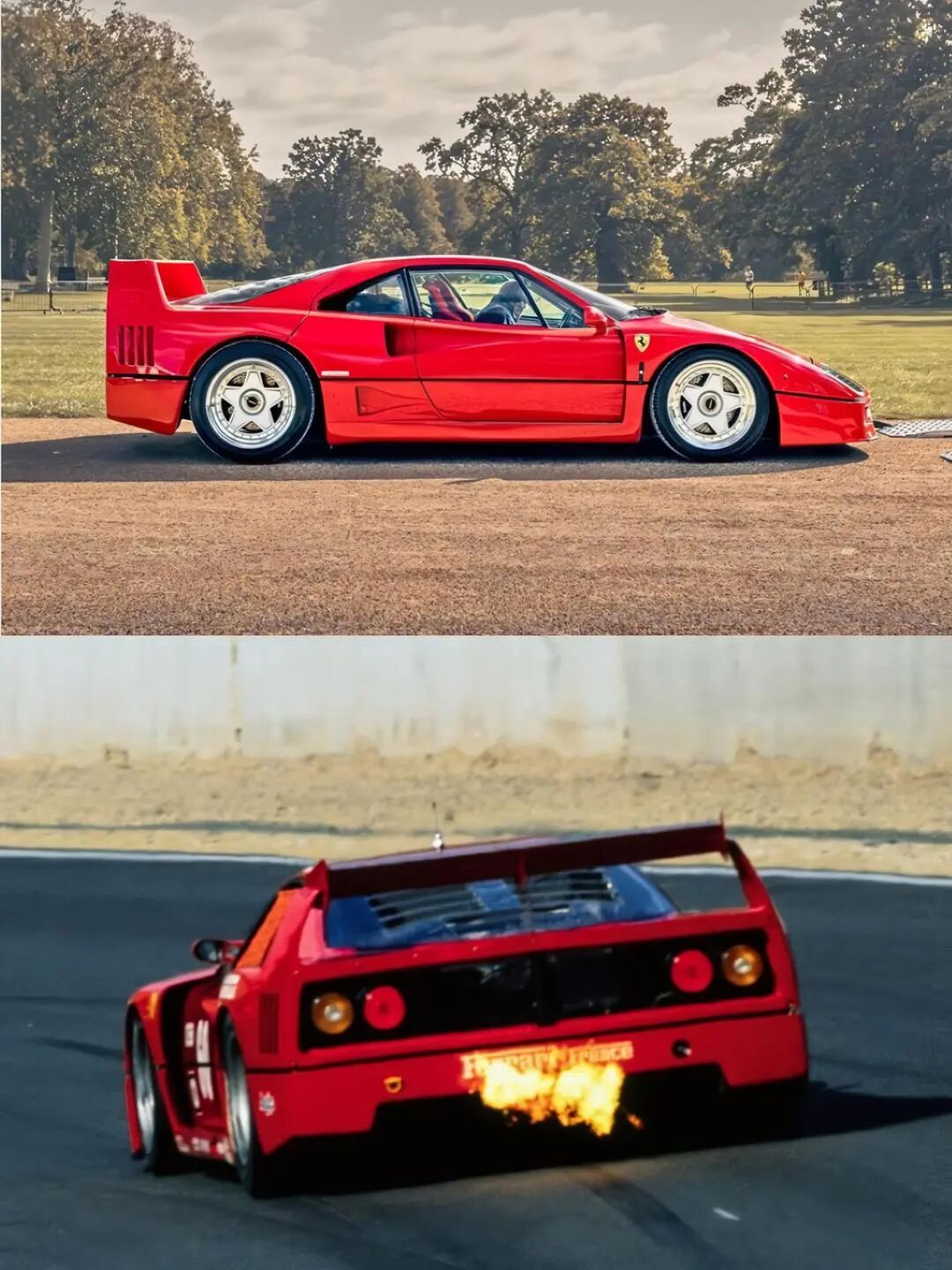
From 250 GT, Daytona, to F40, Enzo, and then to 296 GTB, Ferrari's classic design has a very distinct visual language:
The body is low and wide, the wheel arches and waistline have obvious muscular sense, the front of the car has a forward diving posture, and the rear of the car emphasizes the sense of speed through diffusers, spoilers and complex curved surfaces.
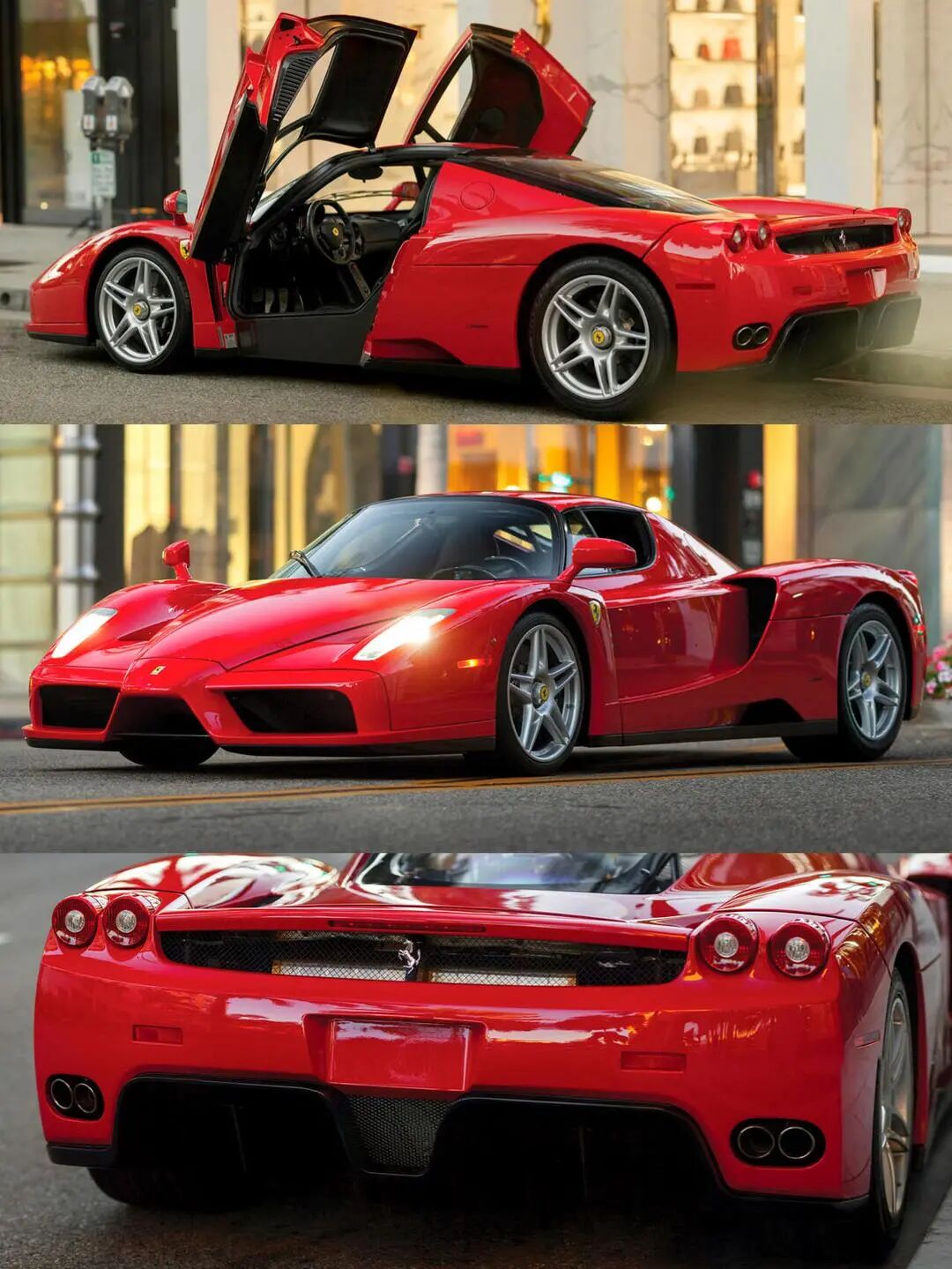
The appearance of fuel-powered Ferraris is usually directly affected by mechanical structure and aerodynamics. Where to place the engine, how large the air intake needs to be, how to arrange the heat dissipation channels, and how the airflow passes through the body, these engineering problems will all leave traces on the shape.
The air intakes, raised wheel arches and complex curved surfaces on the body not only undertake functions, but also convey performance information. Even if the engine is not ignited and you can't hear the sound of V8 or V12, you can feel its aggressiveness just by looking at the body posture.
Different from pure "luxury supercars" such as Lamborghini and Pagani, Ferrari's design concept and appearance are backed by solid and brilliant competitive achievements on the racetrack.
However, the Luce team has no intention of inheriting and continuing Ferrari's excellent assets at all.
The design is entrusted to LoveFrom, a design team founded by Jony Ive and Marc Newson. Jony Ive worked at Apple for nearly 30 years and participated in the design of products such as iMac, iPod and iPhone; Marc Newson is a well-known industrial designer.
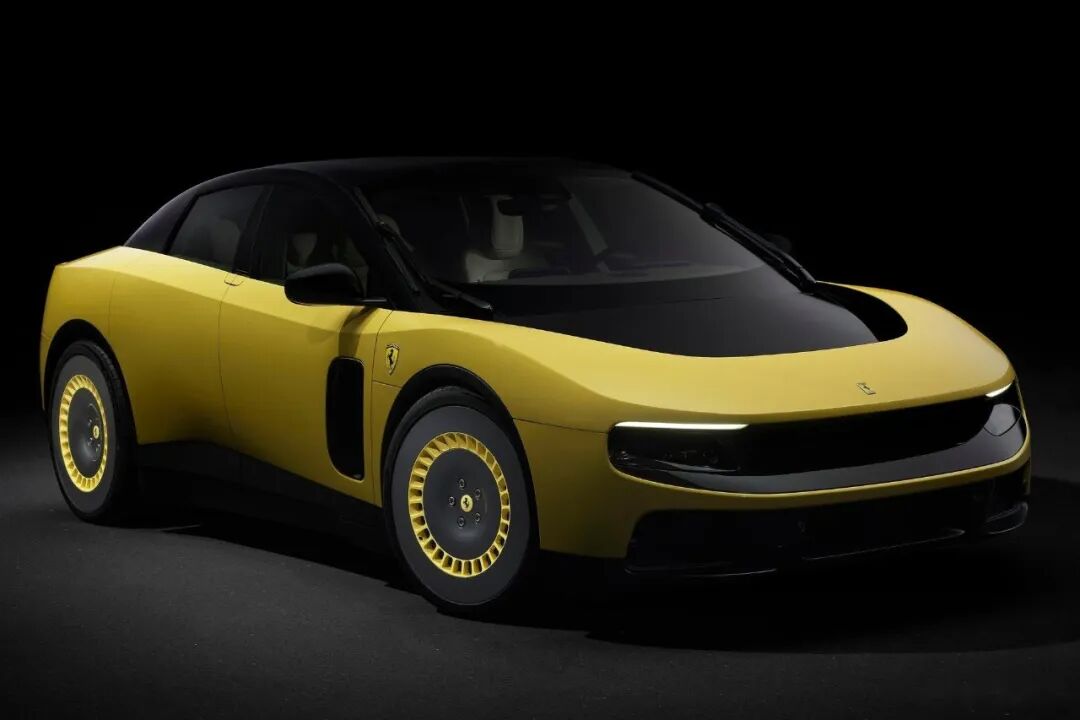
Of course, Ferrari's own design center also participated in the whole process, but the final result is that the "Apple style" completely prevails.
The core of Jony Ive's familiar design method is integrity, simple form, material texture, and the unity of function and interaction.
When applied to consumer electronic products, this set of methods is very easy to understand: minimize unnecessary elements, so that every part looks, feels and operates as part of the same whole.
But applying this set of methods to Ferrari is far more difficult.
The most obvious change is that the surface of Luce's body becomes much cleaner. The complex muscular curved surfaces and sharp fold lines that are common on traditional Ferraris are greatly reduced, and the front, side and rear of the car emphasize the continuous contour relationship. The light groups and aerodynamic components also adopt relatively restrained geometric shapes, making the overall look more rounded and more integrated.
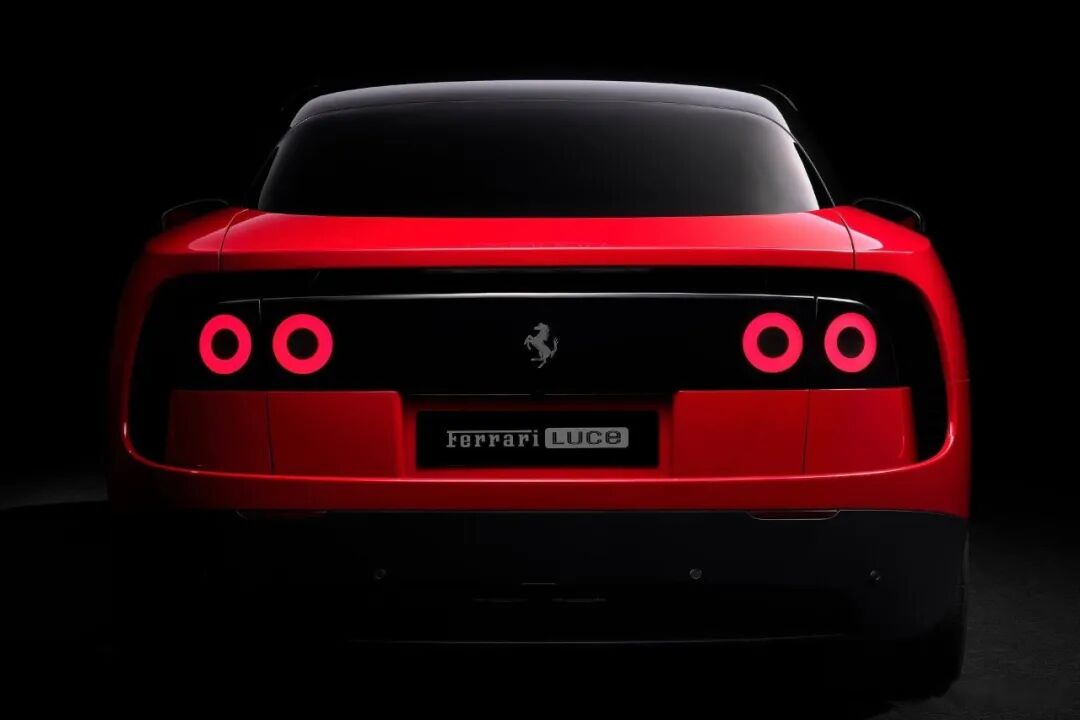
Of course it also has aerodynamic design, but these details are not converted into a large number of visual aggressiveness like traditional supercars, but tend to the popular "low drag" shape of electric vehicles. Especially the four-door body and relatively smooth side make it look more like a consumer electronic product.
Therefore, netizens quickly found familiar references: Nissan Leaf, vacuum cleaner, and even Apple Magic Mouse:
If the exterior follows the Apple style, the interior makes a 180-degree turn and presents a "vintage style":
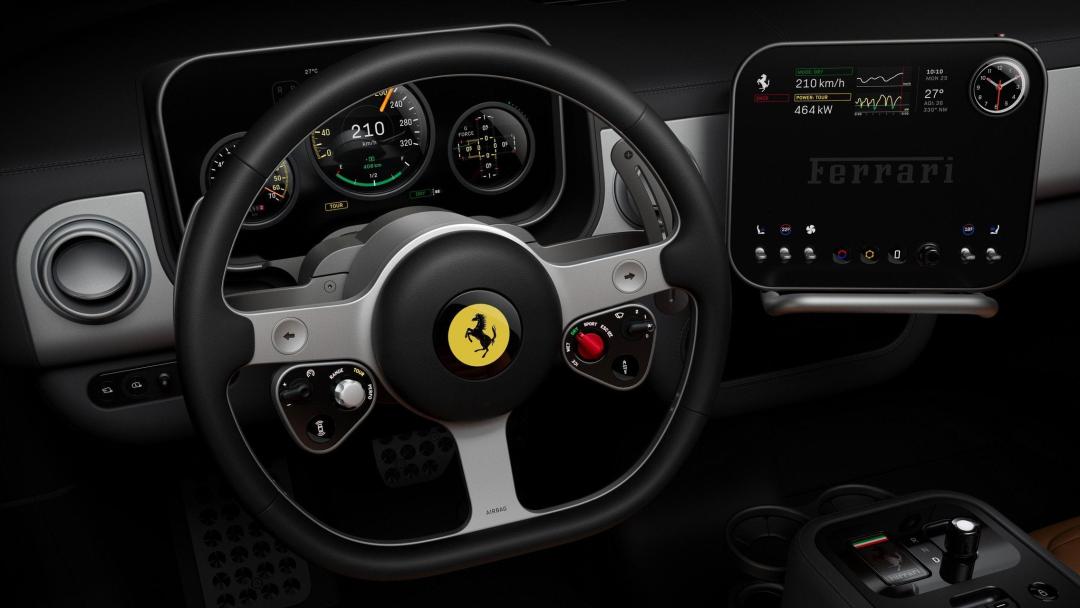
Jony Ive did not turn the cockpit into a large screen. He once expressed his doubt about over-reliance on touch control in driving scenarios: drivers need to look down to find functions on the screen, and they have to take their eyes off the road when operating.
The idea of designing for driving is understandable, but aren't the lines, materials and shapes of this design a little too "simple and plain"?
Ferrari's fuel-powered models have long stopped adopting this kind of design:
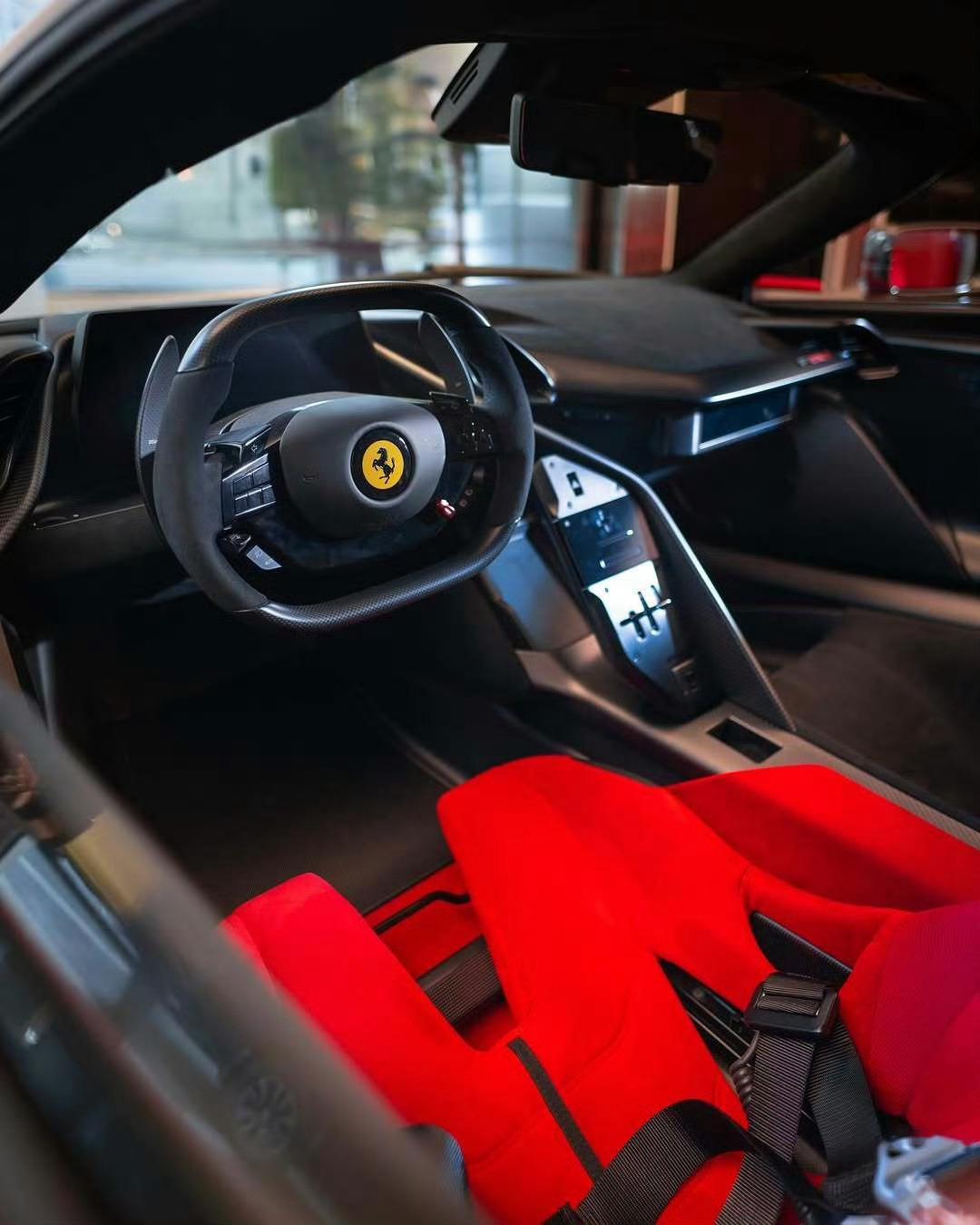
△
The former meritorious Ferrari chairman Luca di Montezemolo could not bear it anymore:
Si rischia la distruzione di un mito.
The gist of the statement is: This risks destroying a legend, and it is suggested that the prancing horse logo on the front be removed when selling the car at the very least.
He even added a harsh comment:
No one would even want to copy this kind of design.
The official complaint is the most devastating.
Netizens' imagination is even richer. Vacuum cleaners, Magic Mouse, Nissan Leaf, Fiat Multipla, all kinds of meme pictures keep popping up, and even other brands joined in the teasing.
