Radical hardware revamping is the first AI dividend that ordinary people can enjoy.
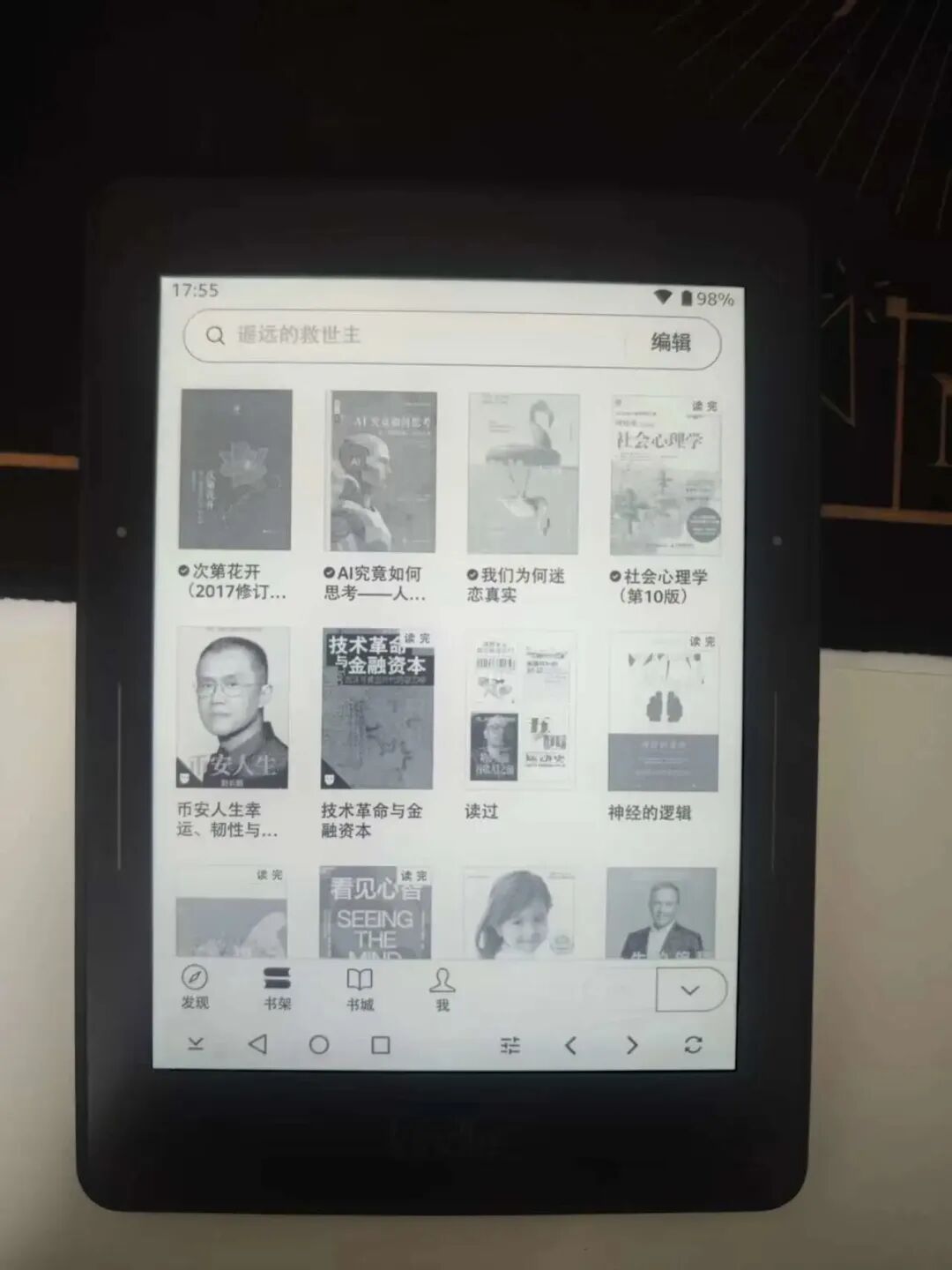
Recently, I used WorkBuddy to flash an Android system onto a Kindle and installed WeChat Read on it. The most satisfying part of the whole process was that I only entered a URL on the Kindle and pressed Enter, and all the rest including jailbreaking and file copying were done by AI, with me only acting as a supervisor the entire time.
I suddenly recalled that I did the exact same thing five or six years ago. Back then there was no AI, I had no coding skills, so I had to find a merchant, send my Kindle to them, pay nearly 200 yuan to get it flashed, and wait for them to send it back to me.
For the exact same task, a few years ago you needed to find a professional and pay for the service. Now as long as the device can be operated by an Agent, I can chat with it while letting it execute commands, and finally get the task done.
This experience felt more direct to me than asking AI to write a paragraph or generate an image. Because that Kindle was right in my hand: what it could do was originally determined by the pre-installed system at the factory, but now I can modify it on my own.
01 Young People Are Starting to Heavily Modify Hardware With AI
On social networks recently, more and more sharing of hardware modification projects can be seen.
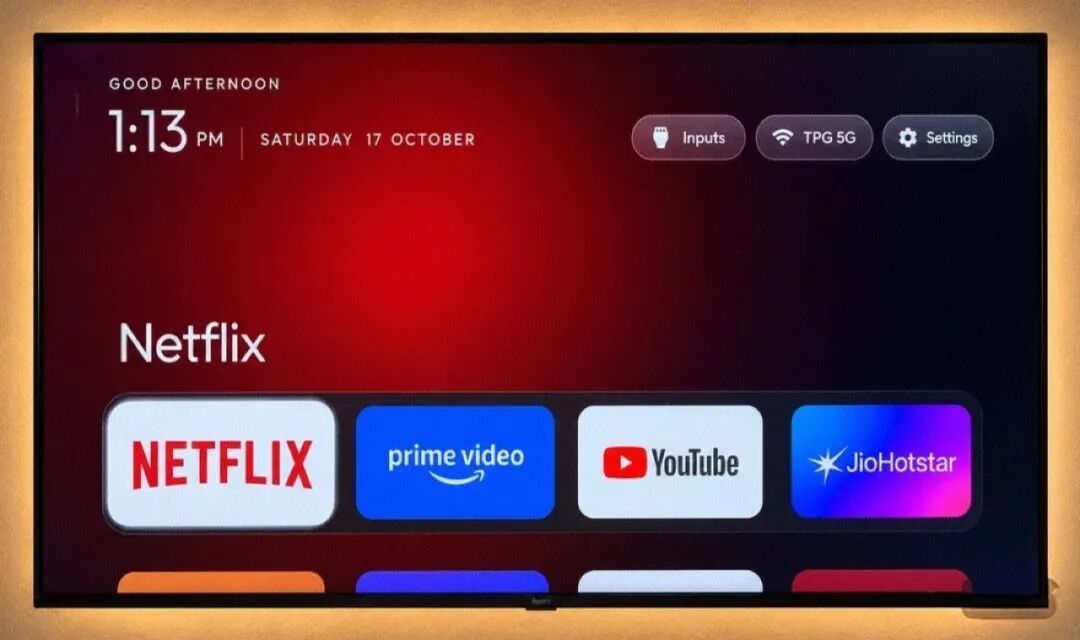
On October 17, developer Gathin went back to his parents' home, where their Xiaomi TV would play an ad every time before opening Netflix. Instead of flashing the system, he sent the TV model to Claude Code, let it connect to the TV via the same Wi-Fi, disabled 25 Xiaomi system components, and wrote a minimal launcher.
The modified interface looks like Apple TV, which directly opens the frequently used apps after booting up.
He posted the before-and-after comparison on X, which was seen by millions of people, and the comment section turned into a gathering spot where people reported their own TV models. In more than ten days, CleanYourTV gained tens of thousands of stars, and the community list covers more than 80 brands and over 300 TV models.
This project also sparked discussions on Weibo. Under the hashtag #AI TV Ad Removal Tutorial#, many creators detailed step-by-step guides to benefit other internet users.
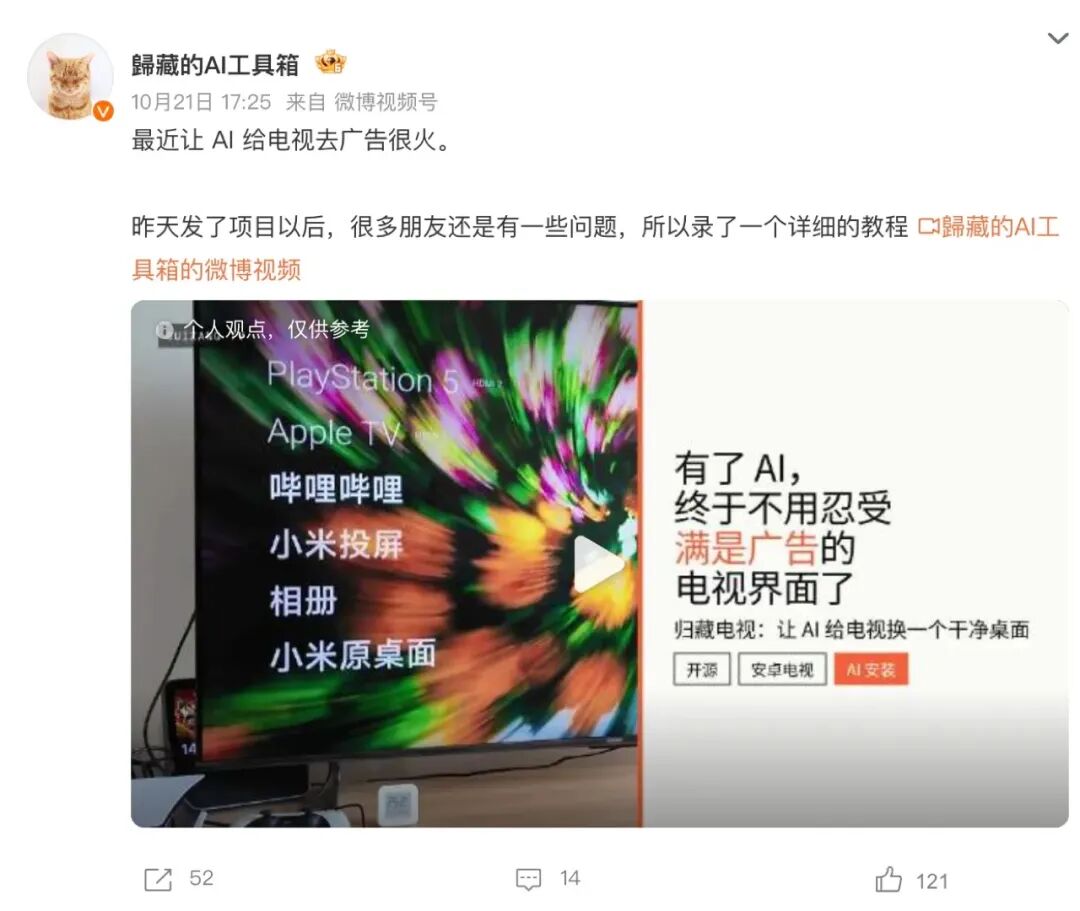
Weibo also amplified people's imagination of the use of AI. Many people who do not usually browse open source projects can easily understand what it means to have fewer ads on TV. After seeing such modifications, they will realize that the TV at home that they get annoyed with every day can also be improved with the help of AI.
A popular trending search becomes the entry point for ordinary people to start learning about and using Agents.
On October 10, a blogger whose online name is November posted a note saying that AI converted the point-reading package to another format. He asked AI to first understand the structure of both types of files, then write a conversion program, package the files and run reverse verification, and finally successfully completed real-machine point reading on the Maomaochong WiFi point reading pen.
Within two weeks, a relay of similar projects emerged on Xiaohongshu, and the point-reading packages for the Little Tadpole point reading pen can also be converted now. The defense line of closed audio formats represented by point reading pens has been broken through.
Some people even take their entire home as the modification target.
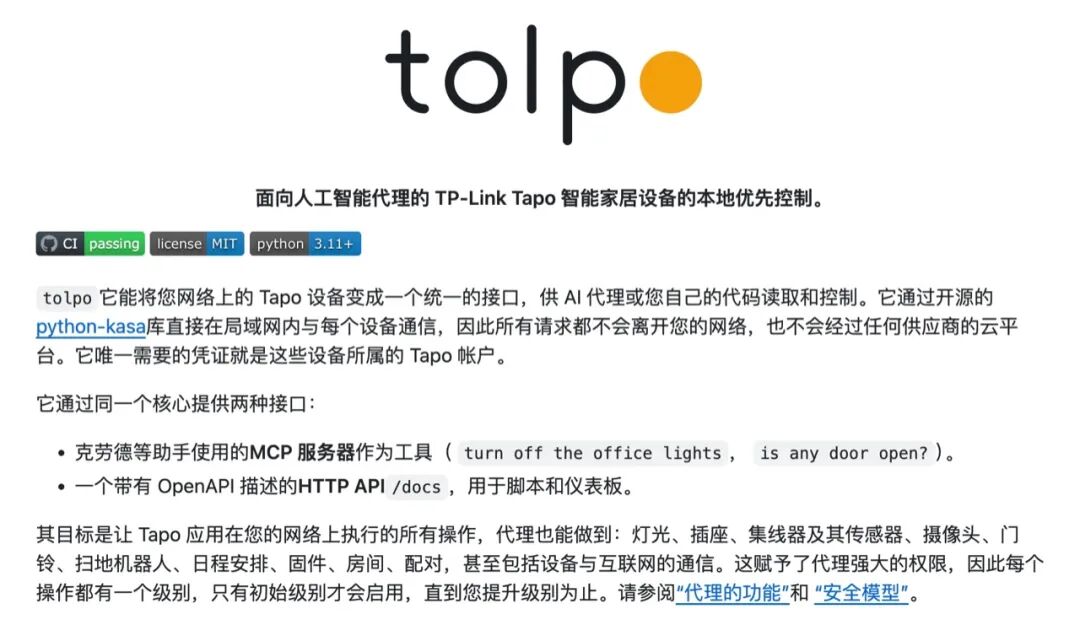
The author of the open source project tolpo studied the communication method of Tapo smart home devices, connected lights, sockets, sensors and other equipment to the AI Agent, so that users can ask AI to adjust the lighting and query device status.
The most interesting type of modifications are made to old devices.
Reddit user motojo shared a modification project: he spent a month working with Claude to study an old product from a now-defunct sleep tech company, and claimed that he successfully restored the device's functionality. For such devices, the hardware may still be in perfect condition, but the software and services provided by the manufacturer end first. As long as someone is willing to continue researching, the device gets another chance to keep working.
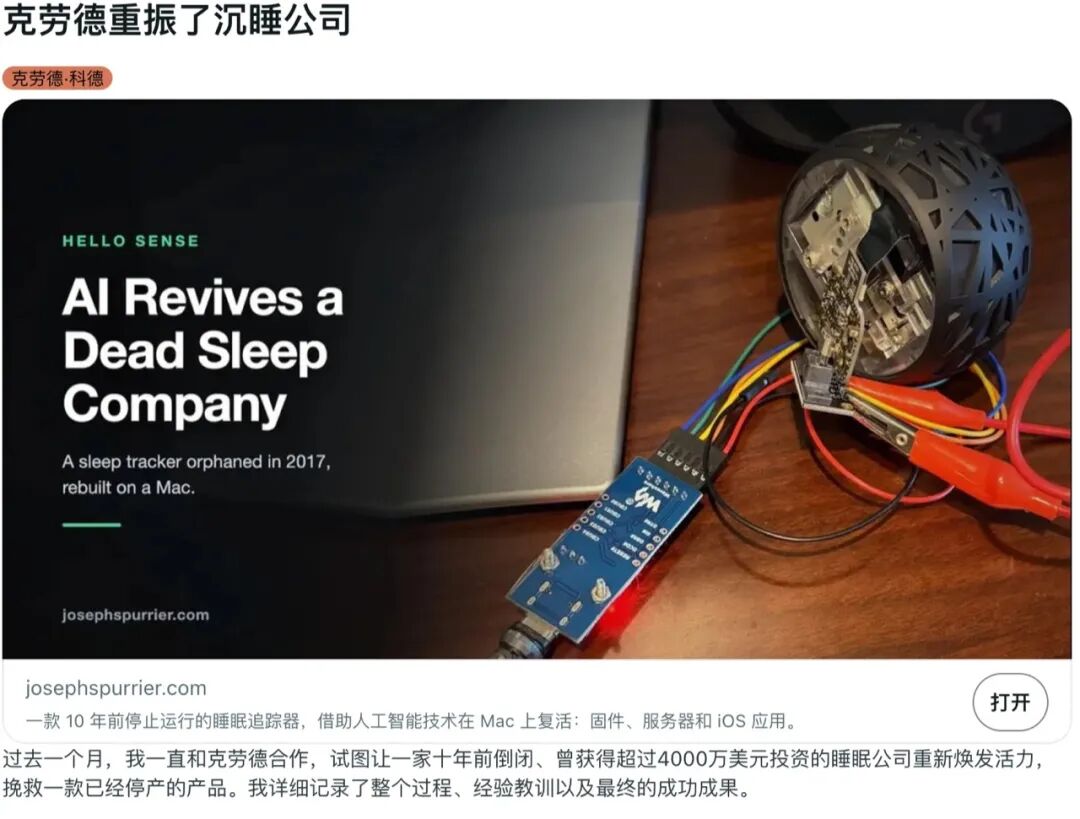
What these people want to do are all very small things: some want to watch fewer ads, some want to avoid buying an extra point reading pen. The demands are so trivial that manufacturers will never develop a dedicated feature for them, but once the modification is done, the user of the device can feel the difference every day.
02 AI Grows Not Only a Brain, But Also Hands and Feet
In the past, modifying electronic devices had a high threshold.
Flashing a system requires knowledge of Linux, Android and firmware; writing programs requires proficiency in Python and C++; connecting devices requires research on Bluetooth, USB and Wi-Fi protocols. When encountering more underlying problems, you may even need to understand chips, circuits and drivers.
Ordinary people easily get stuck at the first step. There are tutorials online, but different device models and different system versions will lead to unexpected error codes when you follow the steps, and you will have no idea what to do next.
I paid exactly for that service back then, when I wanted to flash Android system on my Kindle to use WeChat Read.
Now, AI has changed the way people access and use this knowledge. Users can first put forward their demands, ask AI to look up materials, analyze files and write programs, and retrieve whatever knowledge is needed to solve the problem at hand.
And Agent has gone a step further.
It has grown hands and feet. After obtaining authorization and proper tools, it can operate computers, run programs, and connect to devices through interfaces. It can execute the code it writes, check for errors when the execution fails, and continue testing after modification.
For example, when cleaning up a TV, what an ordinary person says is "I want to see my frequently used apps directly after booting up". For an Agent, this sentence can be split into a series of actual operations: first identify the model and components, figure out which parts are home screen recommendations and which are related to normal playback. After modification, check whether the TV can boot normally and whether the remote control still works.
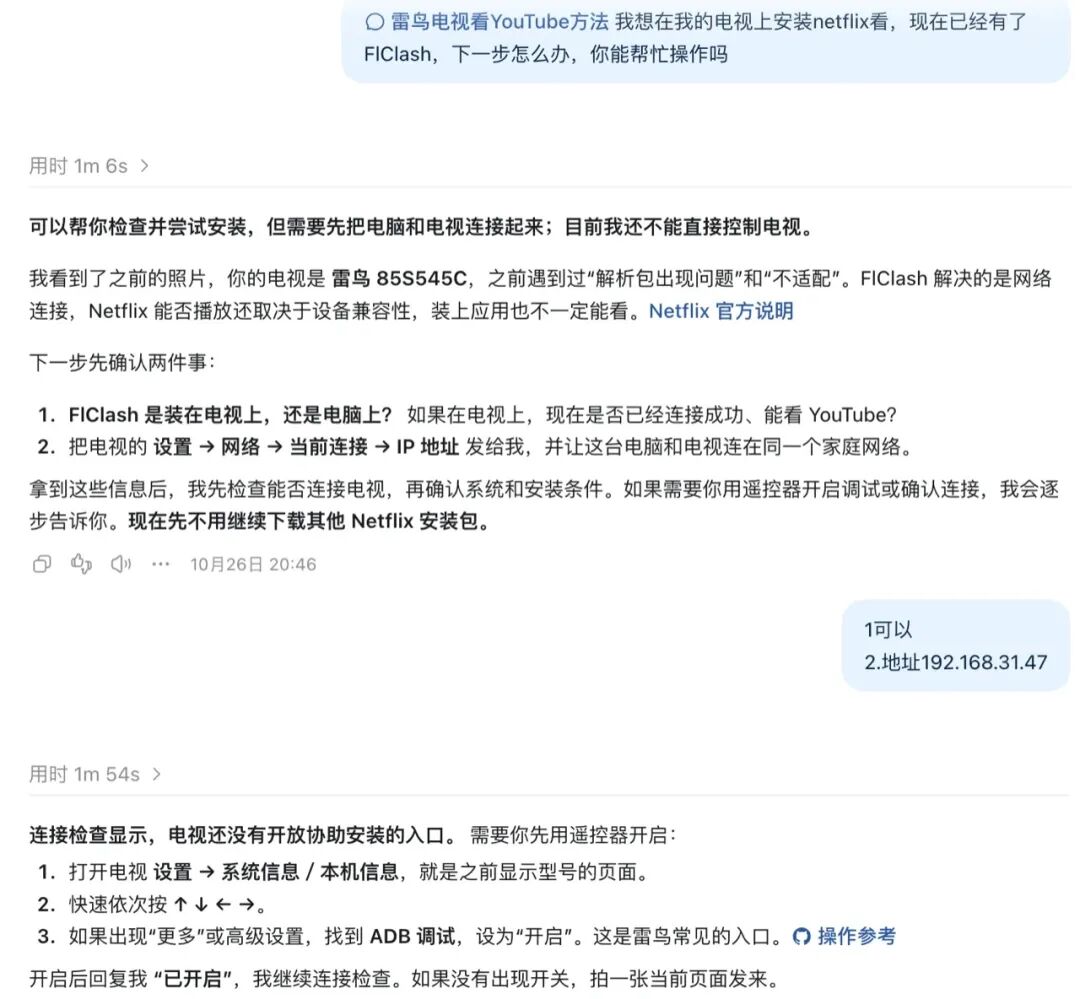
In the past, search engines handed you the tutorials, and you had to do all the rest by yourself. Now, Agent can participate in the whole process, and take over the work of searching, coding and debugging for you.
Ordinary people can complete the modification without learning all the related technologies.
More importantly, the solution tested by one person can become a reusable tool for others.
For example, if one person posts the modification process on Weibo, other people can ask follow-up questions with their own device models, demands and error codes. One single share can thus turn from passive onlooking into actual attempts by more people.
AI lowers the threshold for hands-on modification, and public discussions let more people realize that they also have a problem worth solving by themselves.
03 You Finally Get Full Control Over the Products You Bought
What changes will this bring to ordinary people's lives?
First of all, we have more decision-making power over the products we bought.
The native experience of Kindle is designed around Amazon's reading ecosystem. Although you can import personal documents, it is not convenient to use other reading apps. My modification allows it to run WeChat Read. After switching to a compatible Android environment, users also get the chance to choose other reading apps supported by the device.
The same goes for TVs. Some people like content recommendations, some only want to keep a few frequently used apps, and some hope to boot directly into the set-top box. Since people have different usage habits, the home screen should have more room for adjustment.
One of the exciting points in the early days of the internet was its openness: information could flow across different websites, and tools could connect to each other. Later, more and more products started building their own ecosystems around accounts, content, proprietary formats and cloud services, and the internet gradually became closed off.
After buying a point reading pen, you have to check its supported formats before choosing books. After buying a TV, you have to go through the manufacturer's pre-set home screen every time you turn it on. The hardware is already in your home, but the way you use it is still controlled by others.
AI turns many originally insurmountable obstacles into solvable technical problems. Whether a format can be converted, whether a device can be connected to another system, whether the home screen can be replaced: users are starting to have the ability to make these changes.
This kind of openness can start from very small aspects: a point reading pen supports one more set of books, a TV has fewer promotion entrances, a smart light connects to the control system you prefer.
For brands, this is not necessarily bad news. These modification behaviors can be used as a way to collect user demands.
One person wanting to change the TV launcher is just personal preference; when these modifications are discussed on Weibo, manufacturers get the chance to see what users repeatedly want to remove and what they want to keep. Those small inconveniences scattered in the living room and study room are starting to become collectively expressed product demands.
Weibo also amplifies consumers' right to speak about how to use products, and these discussions can help brands optimize their next-generation products.
The function here is similar to Haier's "listening to user feedback" on Weibo.
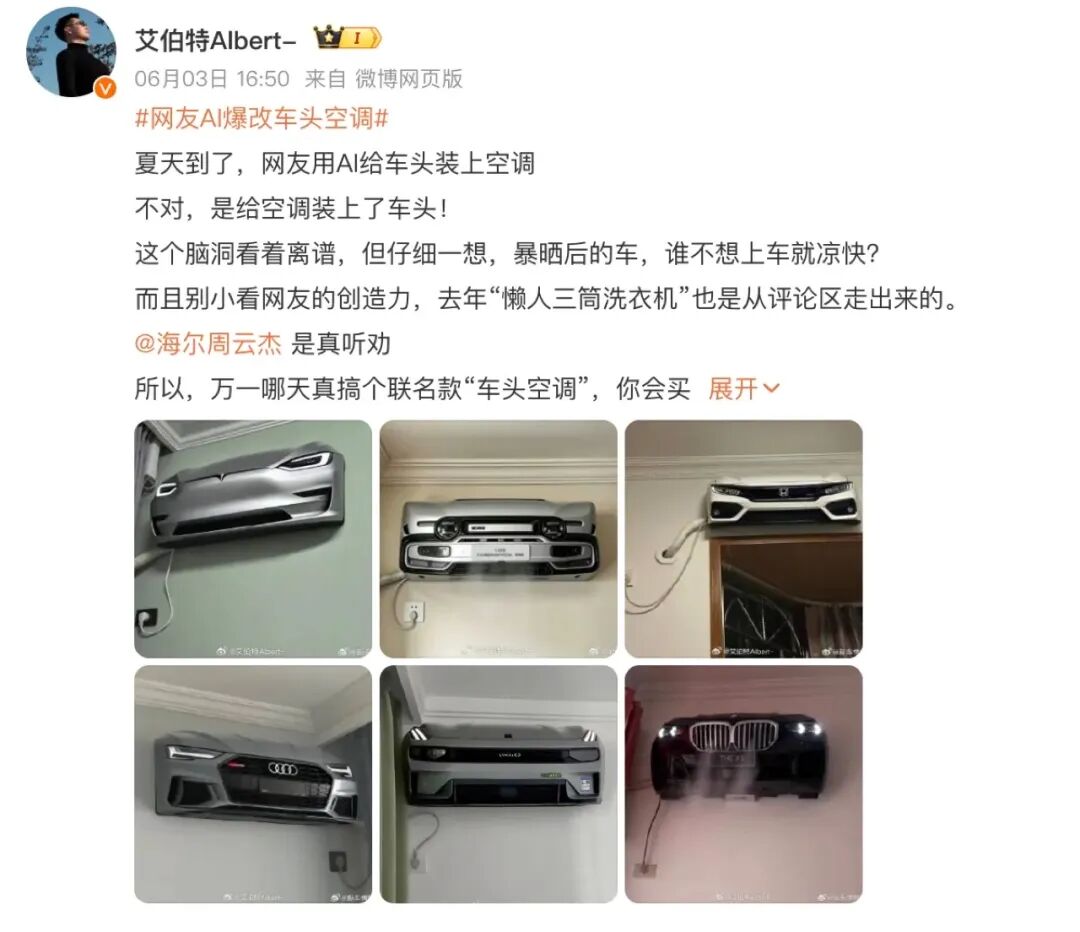
Thinking further ahead, it may also change the way devices are repaired.
When I was little, the circuit at home broke down, my father taught me how to repair it, saying that people would laugh at you if you didn't know how to repair things yourself. In the future, this kind of situation will become less and less common.
Suppose you turn on the air conditioner in summer, it blows wind but does not cool the room. If you ask AI today, you can only describe the phenomenon, and it will list several possible causes based on limited information.
But if the air conditioner opens up necessary interfaces, after getting authorization, the Agent can read the model, operation mode, fault code and historical records, which will provide more basis for accurate judgment.
For problems that can be solved through settings or software operations, it can directly try to handle them, then check if the function is restored. When encountering hardware anomalies, it can also narrow down the fault range based on existing data, and prompt what parts need to be purchased and replaced.
This direction is worth looking forward to: it is equivalent to having a technical assistant at home that knows all your devices well, knows what problems they have had and what adjustments have been made before. It will help you fix software problems, and guide you to fix hardware problems by yourself, so you never have to call those overcharging repair services to your home.
Therefore, consumers' autonomy over products extends from how to use them to how to maintain them, and when to replace them.
Conclusion
In the past two years, the term "AI dividend" has mostly referred to the production end: people who write code, do design, and write copy have felt the efficiency improvement first. For ordinary people, the first thing they may experience is that after buying a product, as long as you clearly state what you want, you can leave the rest to a capable Agent that can take actions.
This part is special because it does not cost extra money. Every previous round of technology dividend required you to buy something first: a smartphone, cloud services, a new graphics card. The entry point this time is the things you have already paid for: a TV, a point reading pen, an air conditioner that you have used for five years.
When manufacturers deliver a device, they define what it can do out of the factory. When you form new habits, new content demands, and new problems, you can redefine what the device can do.
A device that had to be sent out for modification five or six years ago can now be modified anytime right on your desk. Making the devices in your hands continue to adapt to your own life is probably the most tangible dividend AI brings to ordinary people.
This article is from the WeChat Official Account "Xunkong's Marketing Revelations", author: Xunkong, published by 36Kr with authorization.