ZTE Mobile dispels the "sell-off" rumor: how much of a future can borrowed AI deliver?
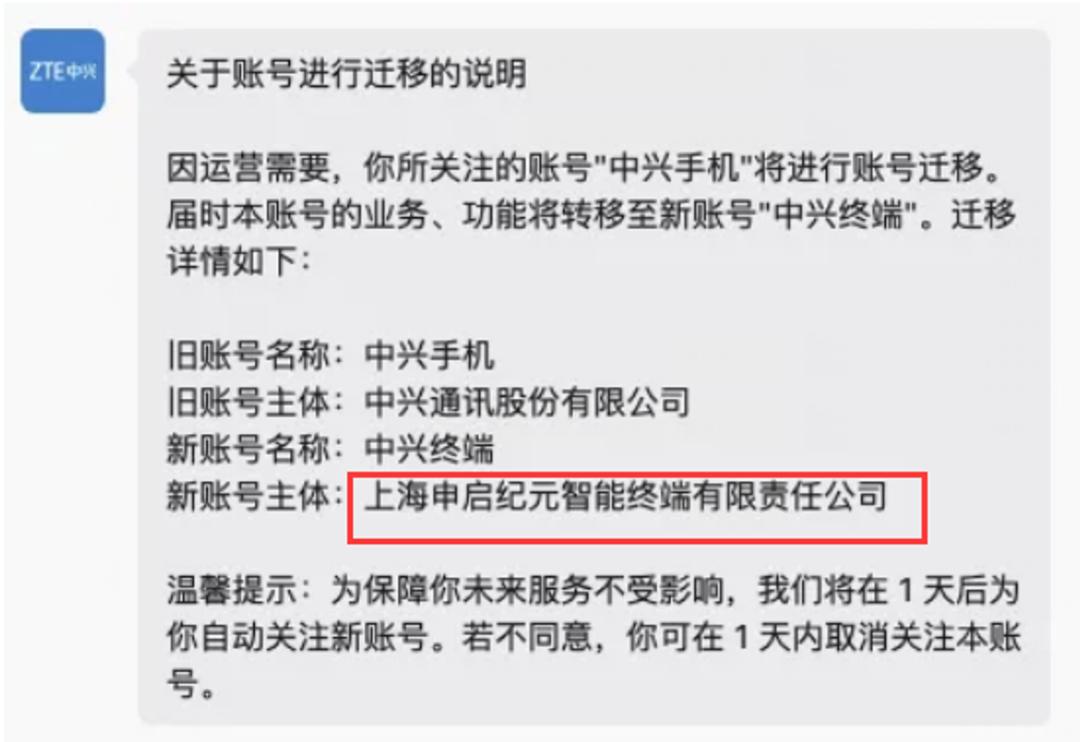
On November 4, the WeChat official account of ZTE Mobile quietly changed its brand sign.
The original "ZTE Mobile" was renamed "ZTE Terminal". The operating entity behind the account also changed along with this adjustment: from the listed company ZTE Corporation to its wholly-owned subsidiary Shanghai Shenqi Jiyuan Intelligent Terminal Co., Ltd.
This adjustment came rather subtly.
The day before, the market just spread the news that ZTE Corporation was preparing to discuss mobile phone business cooperation with a large internet manufacturer, planning to inject relevant businesses into a joint venture, involving information such as an estimated valuation of about 40 billion yuan and an investment of about 8 billion yuan. ZTE Corporation responded quickly, stating that the content of relevant reports was seriously inconsistent with the facts.
Public information shows that Shanghai Shenqi Jiyuan was established in 2025, fully owned by ZTE Corporation. It later adjusted its business scope, adding businesses such as mobile terminal manufacturing, mobile communication equipment manufacturing and software development.
It is worth noting that this company has a very close relationship with the Doubao mobile phone. In the mobile-side large model filing information announced in July this year, the filing entity of the "Nubia Doubao Mobile Large Model" is exactly Shanghai Shenqi Jiyuan.
In the already implemented AI mobile phone cooperation, ZTE provides hardware and system adaptation, while ByteDance provides the Doubao model and agent capabilities. Both sides have their own needs, but the chips in their hands are not exactly the same. ByteDance can continue to look for other mobile phone partners, while ZTE hopes to get an opportunity to re-enter the mainstream consumer market with the help of Doubao.
This difference does not mean that ZTE has lost its right to speak in cooperation, but as the competition of AI mobile phones extends to models and application ecosystems, the degree of mutual dependence between the two sides is likely to become an important factor determining the long-term cooperation status.
In the past, mobile phone manufacturers competed for consumers' attention, brand awareness and the right to choose to replace phones. In the AI era, competition begins to extend to models, system permissions and application ecosystems. Mobile phones are still the entry point, but whoever masters the capabilities behind the entry point will have the opportunity to redefine the value of this screen.
For ZTE, AI mobile phones have brought the opportunity to return to the game table, and also brought a familiar exam question: how much of the advantages obtained with the help of external partners can finally remain in its own hands?
Chapter 1: It is getting harder and harder to tell the brand story
ZTE is not an enterprise that lacks presence in the mobile phone market.
Around 2012, the domestic smartphone market was still in a period of rapid expansion, and the operator channel was one of the most important sales channels. ZTE, Huawei, Coolpad and Lenovo were once important players in the operator customized mobile phone market.
At that time, the mobile phone business competed for supply chain efficiency, channel coverage and operator resources. As long as the products could enter the operator's procurement system, there would be an opportunity to achieve large-scale shipments.
The problem is that the mobile phone industry quickly changed its set of game rules.
With the decline of operator subsidies, smartphones gradually shifted from channel-driven to consumer-driven: Xiaomi opened up the market relying on internet marketing and cost performance, OPPO and vivo established advantages through offline channels and brand marketing, and Huawei gradually entered the high-end market with accumulated communication technology, R&D investment and product matrix.
Mobile phones are no longer just communication terminals that can make calls and access the internet, but consumer products that highly rely on brand awareness, product experience and ecological services.
It was during this transformation process that ZTE failed to keep up with the trend.
ZTE did not lack attempts, and even its engineering R&D capability is not poor. Nubia once attracted attention with its borderless design and imaging technology, and the Axon series also explored technical directions such as under-display cameras. The Axon 20 5G launched in 2020 became the world's first commercial under-display camera mobile phone; RedMagic chose the game mobile phone segment market, and established its own product recognition through active heat dissipation, high-performance configuration and e-sports experience.
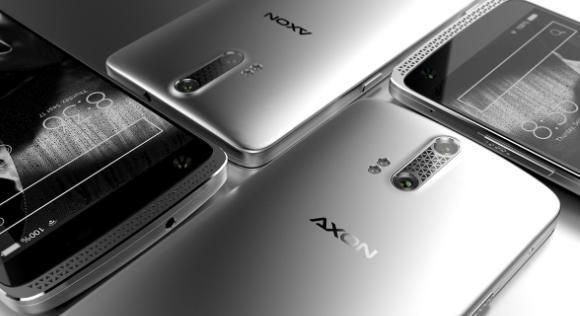
Unfortunately, the highlights in technology cannot be automatically transformed into advantages in the market. What ZTE lost in the domestic mainstream consumer market is the long-accumulated consumer awareness and purchase priority.
According to the preliminary data of China's smartphone market in the third quarter of 2026 released by IDC, the shipment volume in this quarter was about 57.9 million units, down 15.4% year on year. Huawei ranked first with a market share of about 21%, Apple accounted for about 17.8%, OPPO, vivo, Xiaomi and Honor followed closely, and other manufacturers only accounted for about 3.5% in total.
Not only is the market shrinking, but competition is further concentrating on the leading players, leaving less and less space for non-head brands.
For consumers, mobile phones are products with high frequency of use, relatively long replacement cycle and non-low decision-making cost. When leading brands have formed a mature product matrix, channel system and after-sales network, latecomers who want to re-enter the mainstream market need to pay much higher costs than in the past.
It can be said that ZTE can hardly be regarded as a main competitor in the domestic mobile phone market.
Moreover, from the group level, mobile phones have gradually deviated from ZTE's business focus. In the first three quarters of 2026, ZTE Corporation achieved an operating revenue of 116.84 billion yuan, a year-on-year increase of 16.2%; the computing power-related revenue increased by more than 70% year on year, and its proportion in total revenue rose to 38%; the total revenue of family and personal terminal business accounted for about 23%, compared with about 25% in the same period of last year.
ZTE has not given up the consumer market of mobile phones, but the terminal business is no longer limited to traditional mobile phones, but forms a larger business system together with home networks, cloud terminals, mobile internet and AI personal terminals.
This is a normal situation in the group's resource allocation. Communication equipment, servers, data centers and computing power infrastructure can form synergy with ZTE's long-accumulated communication technology, customer relationships and R&D system.
ZTE can choose to operate Nubia and RedMagic, and can also try AI mobile phones, but to re-establish a strong domestic mainstream brand, it still needs to cross many thresholds such as brand awareness, channels and user scale.
In those days, the operator channel helped ZTE expand its shipment volume rapidly, but failed to make it maintain the same strong brand position in the consumer market continuously. Now, new changes have taken place in the mobile phone industry, and ZTE has also found new partners.
From operators to ByteDance, the cooperation objects have changed, and the business model has also changed, but there is a problem worthy of vigilance: when the enterprise's growth increasingly relies on the key resources provided by external platforms, to what extent can it still control its own market destiny?
Chapter 2: Doubao has the entry, ZTE has the mobile phone
The emergence of Doubao provides a new path for ZTE.
In December 2025, ByteDance launched the technical preview version of the Doubao Mobile Assistant, and Nubia under ZTE immediately launched the M153 engineering prototype equipped with this assistant; on September 16 this year, the Nubia NaviX Ultra equipped with the consumer version of the Doubao Mobile Assistant was officially released for sale, with a starting price of 5999 yuan. The cooperation between the two sides has moved from technical preview to the consumer market.
This cooperation has caused quite a stir, not just because the mobile phone is equipped with AI, but because it tries to change the interaction mode that smartphones have followed for more than ten years.
In the past, mobile phone manufacturers were responsible for providing hardware and operating systems, internet platforms were responsible for providing applications and services, and users switched back and forth between different apps, manually completing information search, service selection and transaction operations.
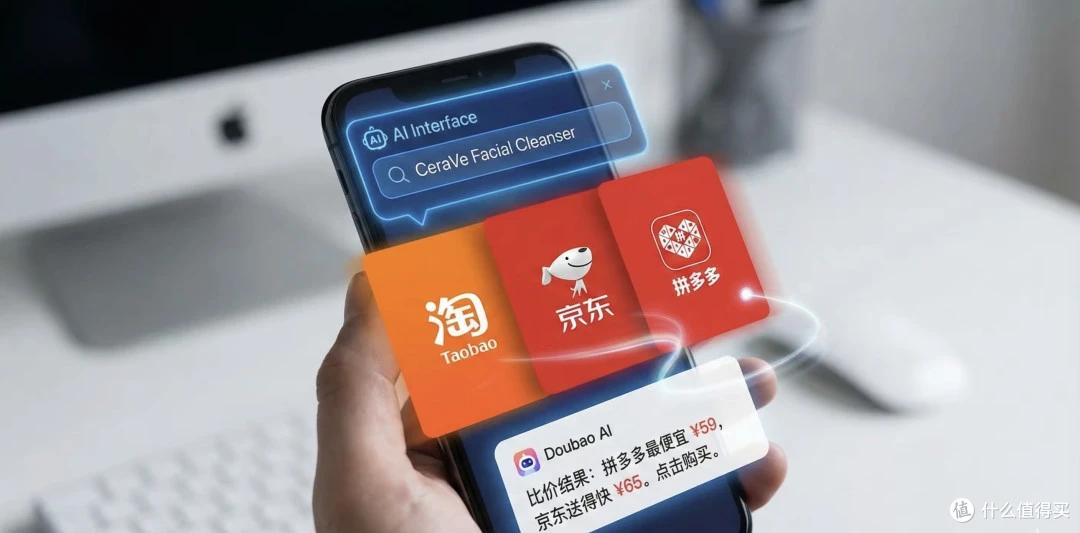
Doubao tries to change this logic. Users only need to put forward their demands. After the AI understands the task, it will call the applications and services on the mobile phone to try to complete the things that originally required users to operate step by step.
From this perspective, what AI mobile phones are competing for is not just the mobile phone market, but the next generation interaction entry point of the mobile internet. Whoever can become the first stop for users to put forward demands will have the opportunity to reorganize the relationship between applications, services and transactions.
ByteDance and ZTE came together for this reason: ByteDance has the model capability of Doubao, agent technology and a huge software product system, but lacks the mobile phone system entry that it can independently control; ZTE has mature hardware R&D, manufacturing and system adaptation capabilities, as well as its own AI technology accumulation, but it still needs external partners to make up for the gap in general models and high-frequency application ecosystems for ordinary consumers.
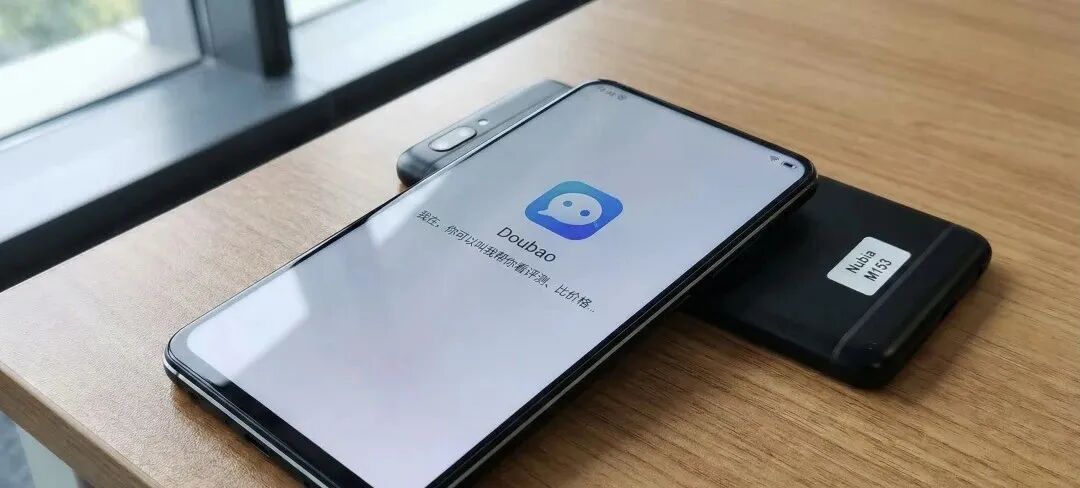
The cooperation between the two sides can be understood as a splicing of industrial chain capabilities. ByteDance is responsible for making mobile phones smarter, and ZTE is responsible for making this set of capabilities truly integrated into a mobile phone.
However, the implementation of ideas does not mean the implementation of business models, and practical factors are often more complex.
AI mobile phones cannot naturally form a complete business closed loop by stuffing a large model into the mobile phone and giving it the permission to click on the screen.
What it really needs to solve are two independent but indispensable problems: whether the mobile phone system is willing to hand over the underlying permissions, and whether third-party applications are willing to open the service entry.
The former is the core of mobile phone manufacturers, and the latter is the livelihood of internet platforms.
A truly capable AI assistant that can do things for users needs not only to understand demands, but also to identify screen content, mobilize system services, read authorized data, transfer tasks between different applications, and complete operations such as clicking, inputting and confirming at critical moments. Each of these involves the permission management, system interfaces and security mechanisms of the operating system.
ByteDance can train models and develop Agents, but it cannot obtain the system-level control of all mobile phones just by relying on a software product. In the Android ecosystem, different mobile phone manufacturers have their own arrangements for system interfaces, permission management and security policies. Without the cooperation of hardware manufacturers, it is difficult for AI assistants to obtain complete and stable device execution capabilities.
This is exactly the value that ZTE can provide.
But conversely, having an operating system for mobile phone manufacturers does not mean that they can control all services in the mobile phone.
Enterprises such as Huawei, Xiaomi, OPPO and vivo do have hardware and operating systems, and have the conditions to integrate their self-developed AI capabilities deep into the system, but they may not have the same model capabilities and software ecosystems as leading model companies.
Mobile phone manufacturers can open their own system functions, but they cannot decide for third-party APPs whether to accept AI calls. Because a large number of services with real commercial value are not in the hands of mobile phone manufacturers, but scattered in the hands of internet platforms.
Over the past decade, internet platforms have established their own traffic entry and business closed loops through APPs. Opening WeChat means entering Tencent's social, content and payment ecosystem; opening Taobao means entering Alibaba's e-commerce transaction system; opening Meituan means entering the local life service network.
These platforms not only own users, but also master the connection relationship between user demands and commercial services, and today's Agents have the potential to redistribute this relationship.
Users' demands first enter the AI, and then the AI looks for services. For users, this is an efficiency improvement; for platforms, it may mean the redistribution of entry points and traffic.
Moreover, there is no reason for platforms to train user habits for external AI for free.
If users no longer actively open Taobao in the future, but directly put forward shopping demands to Doubao, and Doubao completes product selection and transactions, then Taobao's position in the user consumption chain may change.
Platforms not only have to face the risk of being cut off from the traffic entry, but also need to reconsider who controls user data, transaction sharing and service responsibilities.
On October 14, the Doubao Mobile Assistant announced the latest list of rejected operation applications, involving a total of 155 applications, including high-frequency applications such as WeChat, QQ, Taobao, Alipay and Meituan. According to the screen automated operation statement agreement launched by the Doubao Mobile Assistant, third-party applications can independently declare to allow or reject the agent to perform screen automated operations.
In contrast, large internet companies have more resources available for exchange.
In January this year, Alibaba's Qianwen App accessed businesses such as Taobao, Alipay, Taobao Flash Purchase, Fliggy and AutoNavi, trying to complete tasks such as shopping, food delivery and travel in its own ecosystem. ByteDance also has high-frequency applications such as Douyin, models and user base.
When AI mainly runs inside its own ecosystem, enterprises can form a relatively complete closed loop through their own APPs, data and service interfaces. Users put forward demands, AI is responsible for understanding and scheduling, and the platform is responsible for providing services. The final transactions and user relationships still remain in their own system.
But once AI wants to cross the ecological boundary, the situation is completely different.
ByteDance wants to call Alibaba's services, why should Alibaba open them? Alibaba wants to call Tencent's services, why should Tencent cooperate? Both sides not only need to solve the interface compatibility problem, but also need to negotiate data authorization, user privacy, transaction ownership, responsibility division and benefit distribution.
After all, you have the resources I need, and I have the motivation to open up to you; you can bring new users, orders or revenue to me, and I have a reason to establish cooperation with you.
This is also why large internet companies have natural advantages in the AI Agent competition. They not only have models, but also their own application matrix and commercial services. At least they can complete the task closed loop internally first, and then expand outward step by step.
Of course, not all applications have the same strong resistance to opening up.
For example, a vertical service platform like Didi has its core value concentrated in travel services. For such platforms, accessing external AI through standardized interfaces may bring new orders and users, which may not conflict with their own core interests.
Therefore, the cooperation between ByteDance and ZTE only solves half of the problem: ByteDance obtains a hardware carrier to enter the mobile phone system and verify the agent experience, and ZTE obtains model capabilities and a new direction of product differentiation.
However, third-party applications still have the right to decide whether to open up, and other mobile phone manufacturers also have the ability to gradually make up for their own capability shortcomings through self-developed models, introducing external models or cooperating with other AI companies.
This also reminds ZTE: cooperation with ByteDance can indeed give Nubia an early advantage in system-level AI experience, but similar capabilities will not be owned by ZTE alone forever.
Both sides need each other, but the degree of need and the resources they master are not equal.
If ByteDance really cooperates with more mobile phone manufacturers in the future, how many irreplaceable chips