What else can the hospitality industry compete on other than scale?
As China's hotel market enters the stock era, the core of industry competition shifts from scale to operation. What other cards can the hotel giants play?
In 2026, China's hotel industry is entering a new period. User operation-oriented players led by Huazhu and Atour are reaping new fruits; the large-scale implementation of hotel industry REITs starting this year has provided greater space for the combination of light and heavy asset models in the hotel market.
The core competition in the hotel market still lies in hotel operation itself: the number of hotels and guest rooms, occupancy rate and average daily rate, industry chain rate and market concentration. These key indicators demonstrate the "hard power" of hotels.
The "soft power" of hotels is equally important: on the front end, it tests hotels' user operation capabilities, the number and stickiness of members, and the depth and length of user connections; on the back end, the capital operation capability of hotels is the key to going further. In addition to IPOs and industry mergers and acquisitions, public offering REITs for hotels are also opening up new ideas.
Three Decades of China's Hotel Industry
In 1997, the first Jinjiang Inn opened next to Shanghai Jinjiang Amusement Park, with clean and tidy guest rooms, 24-hour hot water, and a price of only over 100 yuan, which instantly filled the market gap. This is the starting point of China's local economy chain hotels.
For many years before that, although there were traditional formats such as guesthouses and inns distributed across the Chinese market, they were still far from the definition of "hotels".
In 1979, the state approved the construction of Jianguo Hotel in Beijing and White Swan Hotel in Guangzhou. A few years later, Jinjiang Group was established in Shanghai. In the 1990s, foreign capital entered the market, bringing in Marriott, Hilton and Shangri-La. However, these hotels were positioned at a high end, mainly used for foreign affairs receptions, and had little to do with the lives of ordinary people.
The special significance of Jinjiang Inn lies in that through the positioning of economy hotels, ordinary Chinese people also had a warm residence outside their homes.
Around the turn of the new century, China's economy began to take off, business travel demand rose sharply, family travel consumption gradually sprouted, and the hotel industry accelerated into the golden age.
From 2002 to 2005, under the influence of Ctrip, Home Inn, Hanting and 7 Days were established successively, and the three major economy chain hotels competed on the same stage. They improved the American motel model, introducing the routes of cleanliness, simplicity, standardization and low price into the hotel market.
Only a few years later, Home Inn, Hanting and 7 Days were listed on US stock markets one after another. With the support of capital, they launched crazy expansion through the franchise model.
But problems also emerged: The homogenization of economy hotels gradually failed to keep up with the upgrading demand of the hotel market; in addition, the price war also made major companies suffer a lot, eager to jump out of this industry involution.
In 2010, Hanting launched its upgraded brand, JI Hotel, which started independent operation in 2012. Wang Haijun, who had worked at Ctrip, Home Inn and Hanting, founded Atour in Shanghai in 2013. Led by JI Hotel and Atour, mid-to-high-end hotels have become the main growth point of the market until now.
After nearly 20 years of development, China's hotel market has ushered in its first wave of mergers and acquisitions, and the fast-growing economy and mid-range chain hotels have become the main targets.
In 2016, Jinjiang Hotels acquired Plateno (including brands such as 7 Days, Lavande, James Joyce Coffetel, Xana Hotelle) and Vienna, ranking first in the Chinese market in terms of the number of hotels and guest rooms.
Based on Hanting and JI Hotel, Huazhu successively acquired Crystal Orange Hotel, Blossom House, Deutsche Hospitality (brands such as Steigenberger, IntercityHotel), etc. Its scale is second only to Jinjiang, but its revenue and profit are higher.
Also in 2016, BTG Hotels took over Home Inn and became the third player in the hotel market.
Since then, not only have the three major economy hotel brands completed their listings, but they have also enriched the mid-to-high-end market on this basis, forming China's three major hotel groups.
Stock Era, Intensified Differentiation
After 30 years of development, China's hotel industry is bidding farewell to the rapid expansion and entering a shift period of extreme differentiation.
Affected by the real estate cycle, the newly built and delivered area of commercial real estate has decreased significantly, and the number of high-quality properties that can be used for new hotels is declining.
Moreover, for property owners, without the property value-added attribute, the hotel business is becoming a chicken rib. For operators, hotels provide relatively stable and continuous income; but for property owners, compared with high investment costs, the rent collection efficiency is relatively low.
On the other hand, affected by factors such as the macro economy, the slowdown in the growth rate of business travel demand, and changes in travel consumption patterns, hotel demand is also entering a low growth rate range.
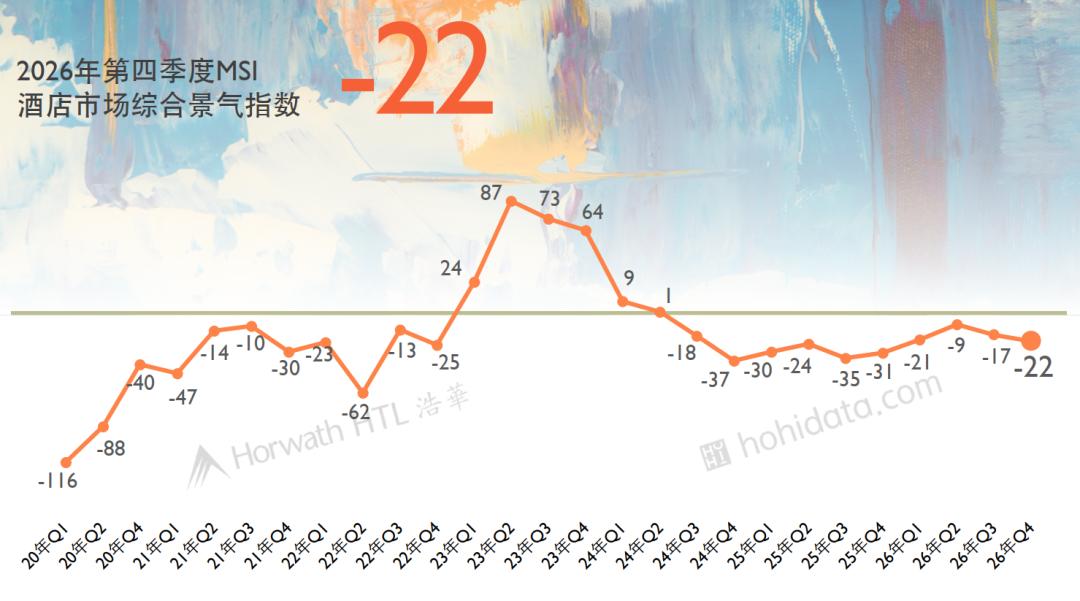
According to the "China Hotel Market Prosperity Survey Report" disclosed by Horwath, the national hotel market prosperity index MSI has been negative since Q3 2024, and the values for Q1 2026 to Q4 2026 are -21, -9, -17 and -22 respectively.
In such a market environment, the most squeezed are small and medium-sized hotel brands, especially small chain and independent hotels; head brands can still continue to expand their market scale through stock competition by virtue of their market position, brand influence, operation capability and supply chain advantages.
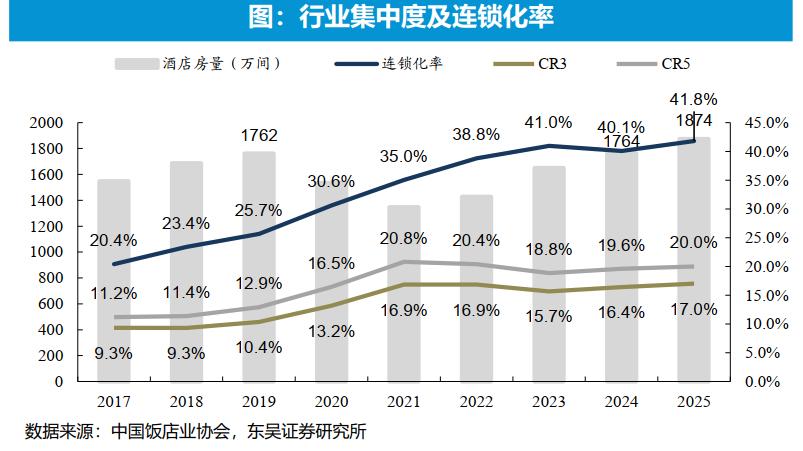
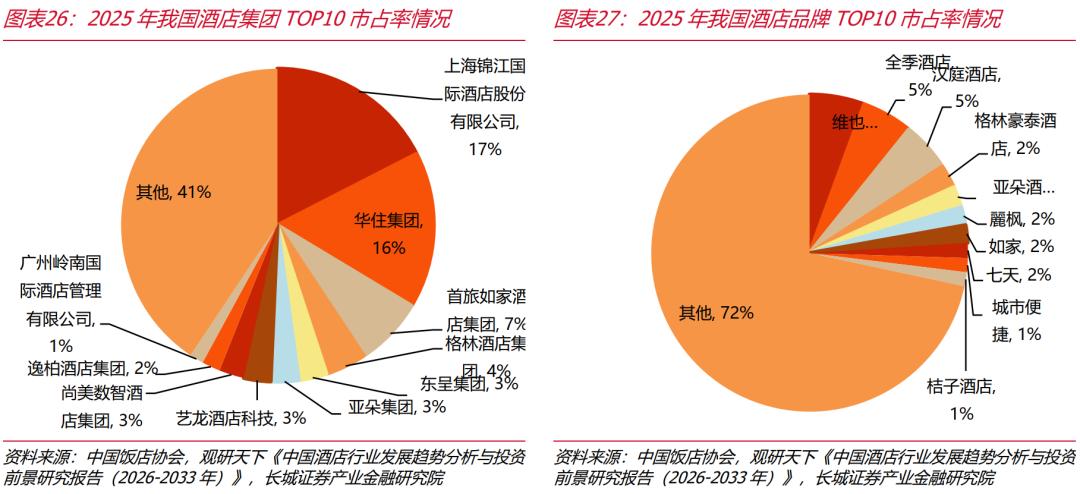
From the perspective of global market rules, The improvement of chain rate and market concentration is an inevitable trend of the development of the hotel industry. From 2019 to 2025, the chain rate of China's hotel market increased from 25.7% to 41.8%; in 2025, the industry CR3 reached 17.0%, and CR10 was close to 60%.
This extreme differentiation has been reflected in the performance of listed hotel companies.
Since 2026, Jinjiang, Huazhu and Atour have maintained rapid growth. BTG Hotels has seen a decline in revenue but a significant increase in profits, while Lingnan Holdings has achieved a slight increase in revenue and a significant improvement in profitability.
Outside the top 10 of the industry, Huatian Hotel continues to make losses; Ssaw Hotels has also fallen into performance difficulties in recent years, and once tried to transfer control to local state-owned assets; CYTS is trying to sell its Shanshui Hotels due to its losses...
In fact, the next business direction of head hotel groups is not only to continue to use mid-to-high-end hotels to meet the upgrading of business travel consumption and family vacation demand, but also to sink into the market.
In the past 30 years, the expansion of head hotel groups has paid more attention to first and second tier cities; after the economy hotels replaced the traditional backward supply in the county-level market, it is also gradually entering the upgrading stage.
Vienna Hotel under Jinjiang has supported most of the company's growth and performance through expansion in the sinking market; in recent years, JI Hotel with a higher brand positioning has also begun to enter the county-level market.
Therefore, After the next round of hotel chain upgrading in third and fourth tier cities is completed, China's hotel market will truly reach the level of a mature market. The industry predicts that by 2030, China's hotel chain rate will rise to 57.7%.
Selling Goods While Operating Hotels
When the scale of stores and guest rooms can no longer be expanded on a large scale, head hotel brands have successively focused their business on member operation. The most direct operation method is to sell goods.
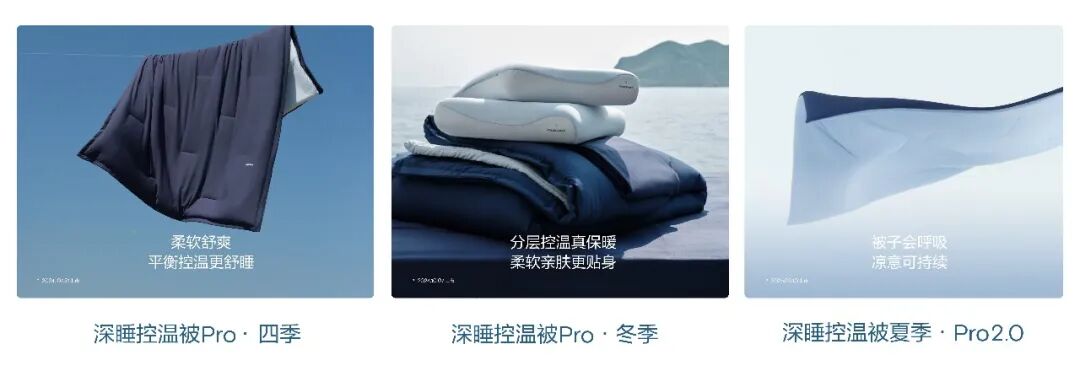
Maybe you don't stay at Atour Hotel very often, but you have most likely used or heard of the pillows, quilts, pajamas or eye masks of Atour Planet. In addition to being sold at the front desk of hotels, Atour Planet has also opened up channels such as e-commerce and live streaming, and developed into an independent lifestyle brand.
In the first half of 2026, Atour Planet's revenue reached 2.646 billion yuan, a year-on-year increase of nearly 60%, accounting for 42% of the company's total revenue. Its profitability is far higher than that of the hotel business, making it the growth and profit pillar of the company.
The layout of retail business by hotel brands can not only enhance business value, but also extend the connection between hotels and users, truly enter people's life scenarios, cultivate loyal and deep users of the brand, and feed back the hotel business to form a virtuous cycle.
Compared with Atour, Huazhu has more users and deeper user stickiness. However, Huazhu Club only regards the retail business as a supplement to the main hotel business, and devotes more energy to cultivating the brand matrix and influencing users' lifestyles.
The two hotel giants have different priorities in member operation, which is related to their business scale and different development stages.
Atour started late, and the number of its stores and guest rooms has not yet reached the top position, and its brand gradient is not enough, making it difficult to catch up with Jinjiang, Huazhu and BTG in the short term. Therefore, it can only focus on the retail business to break through the restrictions of stores on business.
In this regard, Atour has indeed achieved curve overtaking, and has been the focus of the industry in recent years. In contrast, Jinjiang and BTG seem to be slightly insufficient in user operation capabilities.
Jinjiang, BTG and Guangzhou-based Lingnan Holdings are all state-controlled hotel giants that developed relying on local property and hotel resources. They have stood at the top of the industry through capital operation, which is better than most other state-owned giants in other industries. However, this is only the first step to success; the second step of market-oriented operation remains to be accelerated.
The Second Half Tests Capital Capability More
The development history of China's hotel market is a history of hotel brand mergers and acquisitions.
In addition to Jinjiang, Huazhu and BTG, GreenTree Hospitality Group, which follows the three giants, has invested in Eba Hotels, which is also among the top 10; Lingnan Holdings was formed by integrating Garden Hotel, China Hotel and Urban Hotel on the basis of Dongfang Hotel; Ssaw Hotels acquired Narada Hotel with higher positioning...
In recent years, with the trend of tourism market integration, OTA platforms and Internet companies have also joined this wave of investment and mergers and acquisitions in the hotel industry.
In addition to investing in Huazhu and Atour, Ctrip has personally supported Rezen Group; Meituan has invested in Dongcheng; Xiaomi has invested in Shangmei Digital Smart Hotel Group, which is dedicated to the mass market and sinking market; Tongcheng Travel not only has eLong Hotels, but also took over Wanda Hotels.
Next, As the scale expansion of the hotel market slows down and the chain rate and market concentration increase, the speed of industry mergers and acquisitions will accelerate. In the first stage, many hotel groups outside the top 10 will be put on the shelves; in the second half, the merger and reorganization between hotel giants will gradually appear.
Of course, in recent years, the trend of separation of property and operation in the hotel industry, as well as the large-scale implementation of public offering REITs for hotels in 2026, have also opened a new door for the capital operation of the hotel industry.
The combination of light and heavy assets model with separated property and operation is more conducive to the rapid expansion of hotel brands and the improvement of operation capabilities. The US hotel market has thus spawned light asset giants such as Marriott and Hilton, which focus on management output.
This is a precise grasp of the degree of participation in hotel operation. Too much participation, such as Ssaw Hotels, which emphasizes self-operation and only launched franchise business in 2025, missed the best expansion period and laid a hidden danger for the performance pressure in recent years; too little participation, such as OYO, which was once regarded as a dark horse in the hotel industry, eventually failed in the Chinese market due to crazy money burning and inadequate management.
Only by adhering to the positioning of the operator and handing over the hotel property assets that require more resource investment and have a longer recovery cycle to the securitized market, can hotel brands run fast in a more lightweight posture.
Since June this year, hotel REITs such as Huaan Jinjiang Commercial REIT, C