Projected profit margin hits zero, BMW initiates strategic "loss-making".
2026 profit margin guidance: -0.5% to 0.5%.
It is hard to imagine that the automotive business of a century-old luxury carmaker is standing on the verge of loss.
During the 2009 financial crisis, BMW's profit margin was -0.6%. During the 2020 pandemic, the figure was 2.7%. That means the profit BMW made from selling cars in 2026 has fallen back to the level of the year when Lehman Brothers collapsed.
Layoffs took place almost at the same time. Globally, BMW plans to cut 8,000 positions targeting R&D, administrative and management posts through voluntary separation programs, which will be completed by the end of 2027 with a maximum compensation of 650,000 euros, equivalent to about 4.88 million RMB.
In Shenyang, BMW Brilliance plans to lay off 1,800 to 2,000 employees, with compensation package of N+5 to be implemented from November. The extra 5 months of salary is calculated based on the basic wage, not the pre-tax monthly salary.
On one side is the check of 650,000 euros, on the other side is the N+5 agreement. On the same income statement, there are two versions of decency.
01. It is China that has pushed the profit margin close to zero
Judging from the financial report alone, BMW is not in that bad shape.
Global deliveries in the third quarter reached 551,100 units, down 6.3% year on year. However, deliveries in Europe hit 235,800 units, up 2.6%, and 107,100 units in the US, up 2.5%. Pure electric vehicle deliveries reached 110,300 units, up 7.2%, accounting for 20% of total deliveries, compared with 17.5% in the same period last year.
Only in China, deliveries in the same period stood at 114,400 units, down 24.8% year on year. Total deliveries in the first three quarters reached 376,400 units, down 21.8%.
BMW's own explanation is that the reduction of new energy vehicle subsidies in China and fierce price competition have led to a significant contraction in its performance in China, dragging down its global performance.
Of course, there is another unstated factor: Chinese automakers are expanding overseas, bringing competition to Europe and Southeast Asia, which in turn squeezes BMW's traditional markets. The growth in Europe and the US stated in the financial report is achieved against this background.
Europe has once again become BMW's largest market. This used to be the norm, but now it is newsworthy.
The market that once promised huge profits has pulled the profit margin of BMW's global automotive business from 5.2% to 3.4%, and pushed the full-year guidance from 1%-3% to near zero.
It is indeed a bit of black humor.
Apart from sales volume, there are other factors — additional US tariffs, which reduced the profit margin of BMW's automotive business by about 1.25 percentage points respectively in the third quarter and the first three quarters. R&D expenditure was 1.79 billion euros, down 6.8% year on year, and down 7.4% in the first three quarters, which means that even R&D costs are being cut. Sales and administrative expenses reached 2.48 billion euros, down 3%.
Total revenue in the first three quarters fell 7.3% to 92.718 billion euros, and net profit attributable to shareholders fell 21.8% to 4.319 billion euros. One of the few figures that are still rising in the financial report is the financial business, whose penetration rate has risen to 55.4%, 3.4 percentage points higher than the same period last year.
Selling cars is not profitable, and financial business makes up for part of the loss, which is a common practice for luxury brands.
But the ceiling of the financial business depends on how many new cars are sold.
Of course, it should be made clear that BMW is not losing money.
At the group level, the pre-tax profit margin in the third quarter is 6.8%, and free cash flow is expected to exceed 2.5 billion euros. Excluding one-off restructuring expenses, the profit margin of the automotive business remains above 2%. The figure near zero refers to the EBIT margin of the automotive business, not the overall profit and loss of the group.
The real problem lies in the trend.
BMW Brilliance's sales volume was 673,600 units in 2021, 665,000 units in 2022, 646,200 units in 2023, 607,800 units in 2024, and 525,700 units in 2025. In five years, the figure dropped from 670,000 to 520,000.
The number of employees is also shrinking. Tianyancha shows that the number of employees participating in social insurance at BMW Brilliance in 2025 is about 21,000, 2,402 fewer than in 2024.
The downward curve in 2026 is steeper. From January to September, sales reached 316,900 units, with a year-on-year drop of more than 33% in September alone. At the current pace, full-year sales will be 380,000 to 400,000 units, down 25% to 28% year on year.
This is not a cyclical fluctuation, but the fifth consecutive year of decline.
What is more troublesome is that the decline is exactly taking place in the price band where BMW makes the most profit: 300,000 to 600,000 RMB, which is the most profitable segment for luxury brands and also the most concentrated area where Chinese brands have launched attacks on electrification in the past two years.
The reason is not hard to find. In July 2026, BMW Brilliance stopped production of three domestically produced pure electric models: i3, iX1 and i5, leaving its pure electric product line temporarily empty.
In the current pure electric market above 300,000 RMB, NIO ES8 and ES6, AITO M8 and M9, Li Auto i8 and MEGA take up most of the top 10 best-selling models in 2025.
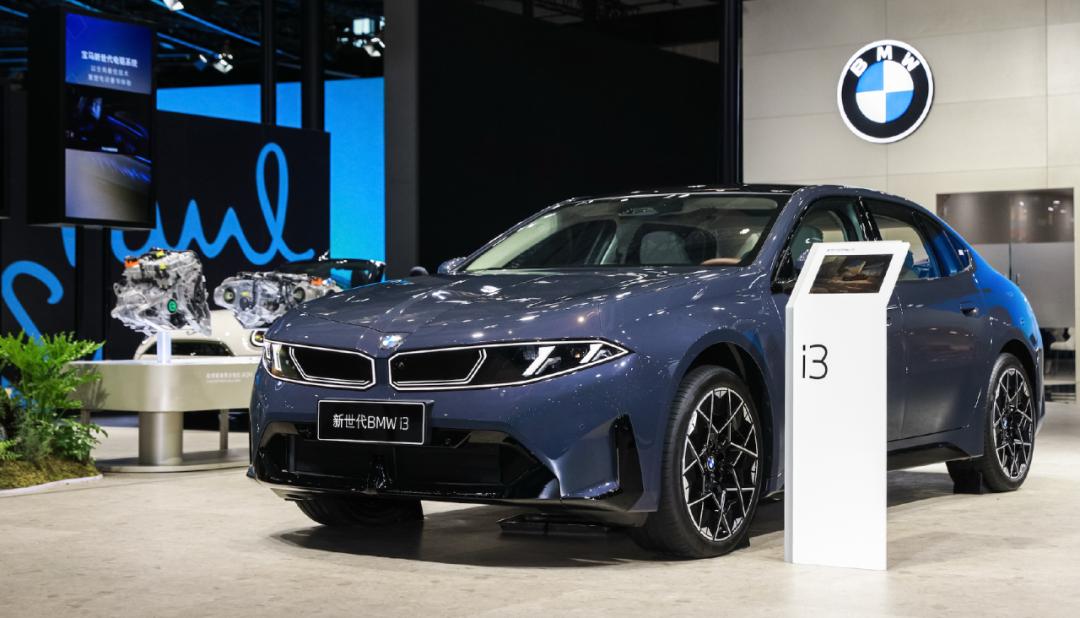
The sales volume of these brands in the same period: Harmony Intelligent Mobility Alliance sold 589,100 units in 2025, NIO 327,000 units with a year-on-year increase of nearly 47%, Li Auto 409,000 units. The contribution of BMW Brilliance's entire new energy product line is far lower than any of them.
02. German employees get 4.87 million RMB, Shenyang employees get N+5
At the end of July, BMW announced that it would cut 8,000 positions by the end of 2027, accounting for about 5% of its total workforce, focusing on administration, R&D and group planning, while production lines remain unaffected. The layoff is carried out through voluntary separation programs with very high compensation up to 650,000 euros, equivalent to about 4.87 million RMB. The upper limit of similar programs at Volkswagen is 405,000 euros, and Mercedes-Benz is 500,000 euros. BMW's figure sets a new record for German automakers.
On October 8, the internal inquiry channel was opened. 40,000 to 50,000 employees logged in at the same time to calculate how much compensation they could get, and the system crashed immediately. After the system was restored, the enthusiasm did not fade, and 5,000 vacancies were snapped up in three days. On October 20, BMW closed the application channel ahead of schedule.
A layoff was turned into a rush purchase.
This sum of money is not out of generosity. BMW is calculating another account: using one-off expenditure to buy out long-term labor costs. Germany has dismissal protection regulations and labor unions. Forced layoffs will lead to lawsuits and strikes, which cost more. Paying employees to leave voluntarily is the cheapest path. In exchange, BMW also promised not to implement forced layoffs on remaining German employees in the coming years.
The person pushing forward this initiative is Milan Nedeljkovic, CEO who took office in May this year. In addition to the 8,000 positions, about 100 executives mainly based in Munich will also be cut. The speed of management downsizing is faster than originally planned.
Those who took the money and left are not in an easy situation. An employee working in the German automotive industry said that his annual salary is nearly 100,000 euros, but when he looks for a new job under the IG Metall collective agreement, he finds that large enterprises of this type have almost stopped recruiting. Even if he finds a new job, his annual salary will most likely be only 70,000 to 85,000 euros, a pay cut of 15% to 30%.
Now look at Shenyang. On November 2, BMW Brilliance launched personnel restructuring involving three factories in Dadao, Tiexi and Powertrain, with a scale of 1,800 to 2,000 people, accounting for about 10% of the 19,000 employees. The restructuring mainly targets P-class production posts, as well as G-class technical posts.
The compensation package is N+5, N is calculated based on pre-tax monthly salary, and 5 months of salary is calculated based on basic wage.
For example, a worker who has worked for nearly five years in the assembly workshop of Dadao Factory received a call from the HR department on November 3 and signed the agreement on the same day. Three people in his team will leave this time: one section chief and two front-line workers. A 15-year veteran at Tiexi Factory signed the agreement on the same day.
An employee in the equipment planning post said that the three-year contracts of four employees in his department all expired this year, and none of them were renewed.
The price gap is obvious: one employee in Munich can get up to 4.87 million RMB, while one employee in Shenyang can only get about 100,000 to 200,000 RMB.
But this is not BMW being biased. Germany has the Dismissal Protection Act and IG Metall. Forced layoffs will lead to strikes, lawsuits and public outcry. If BMW wants employees to leave voluntarily, it has to pay for it. BMW has prepared 1 billion euros in one-off expenditure for these 8,000 people, in exchange for saving 1 billion euros in labor costs every year from 2028 onwards.
Shenyang does not have such constraints. The N+5 package is already decent in the industry, and employees signed the agreement quickly.
So this is not a moral issue, but an issue of cost structure. Labor cost in Germany is so high that companies cannot afford forced layoffs, while labor cost in China is low enough that direct layoffs are feasible.
Let's do a simple calculation: for the 1,800 people affected in this restructuring at BMW Brilliance, based on the annual comprehensive labor cost of 150,000 to 200,000 RMB per capita, the company can save 270 million to 360 million RMB a year. The total compensation for the N+5 package, estimated based on an average tenure of 8 years and a pre-tax monthly salary of 10,000 RMB, is about 120,000 RMB per person, totaling about 216 million RMB for 1,800 people. The cost can be recovered within one year.
BMW is doing two things at the same time now: reducing costs in Germany and scaling down its business in China. The two rounds of layoffs follow the same logic.
03. Competitive products are coming
This round of layoffs is easily interpreted as a sign of contraction, but from another perspective, it is more like a gear shift.
The front-line production posts cut in Shenyang correspond to the three discontinued fuel-to-electric models and the adjusted production capacity rhythm; the administrative, R&D and planning posts cut in Germany correspond to the organizational redundancy accumulated in the era of old platforms. What is being cut on both sides is the weight left over from the last era.
But in the same factory, another production line is accelerating.
On October 15, the sixth-generation high-voltage power battery went into mass production at the Shenyang Powertrain Factory. On August 21, the Neue Klasse iX3 was opened for pre-order at the Chengdu Auto Show, and will be officially delivered in November.
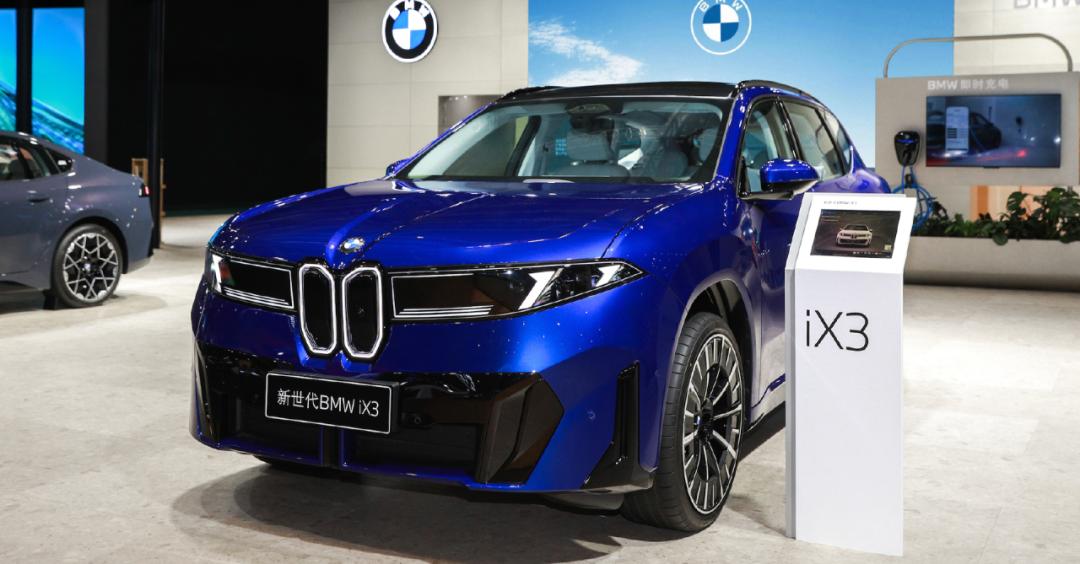
This model is highly anticipated. It adopts a native pure electric platform, full-domain 800V architecture, and supports a maximum charging power of 400kW. It uses 46mm large cylindrical 9-series high-nickel cells, with an energy density 20% higher than that of the fifth-generation prismatic cells.
The 50L version has a CLTC range of 919km, and can replenish 418km of range in 10 minutes. In August, BMW engineers drove an iX3 50L from the Shenyang factory all the way to the Beijing R&D center, covering a total distance of 1030.2km without charging, with 5% battery remaining on arrival.
The starting price is 269,900 RMB, the 40L version is priced at 299,900 RMB, and the 50L version at 339,900 RMB. It is sold at a unified national price, with the pre-order price consistent with the listing price. Nearly 40 configurations are standard across the entire lineup, including the 800V platform, intelligent driving assistance, and AI assistant integrated with Alibaba's large model.
What does this price mean? For the first time, BMW has brought its pure electric luxury products into the main battlefield below 300,000 RMB. In the past, it sold cars relying on brand premium, but now it is competing head-on relying on product strength and pricing.
The overseas version has already obtained the five-star rating of Euro NCAP 2026, and the cumulative orders in Europe are moving towards 100,000 units. In the first quarter of next year, the 8th-generation 3 Series developed specifically for China — the Neue Klasse i3 will be delivered, with a CLTC range of over 1000km. In 2027, nearly 20 models equipped with the Neue Klasse technology cluster will be launched.
This is BMW's real hidden card.
Now look at the cost reduction account. Cutting 8,000 positions in Germany will save 1 billion euros per year from 2028, and cutting 1,800 positions in Shenyang will save 270 million to 360 million RMB per year. If this money is not invested, it will only make the financial report look good for one year. BMW says it will accelerate the production of new models and phase out old models and old technologies in advance.
It is not the first time that BMW has come to such a crossroads. During the 2009 financial crisis, the profit margin of its automotive business was -0.6%, and it recovered later relying on the Efficient Dynamics strategy. In 2016, it launched the "First Strategy" and turned to electrification amid widespread doubts. This is the