Circle: Amid its bloated performance and the backlash from major channel partners, building a large ecosystem is the only way out.
Circle released its Q3 financial report before the US East Coast market opened on November 4. Overall, this "outperformance" of earnings was mainly achieved by Arc token sales revenue. If this part is excluded, the actual performance is mediocre, which confirms the capital market's concerns before the earnings release.
Specific details:
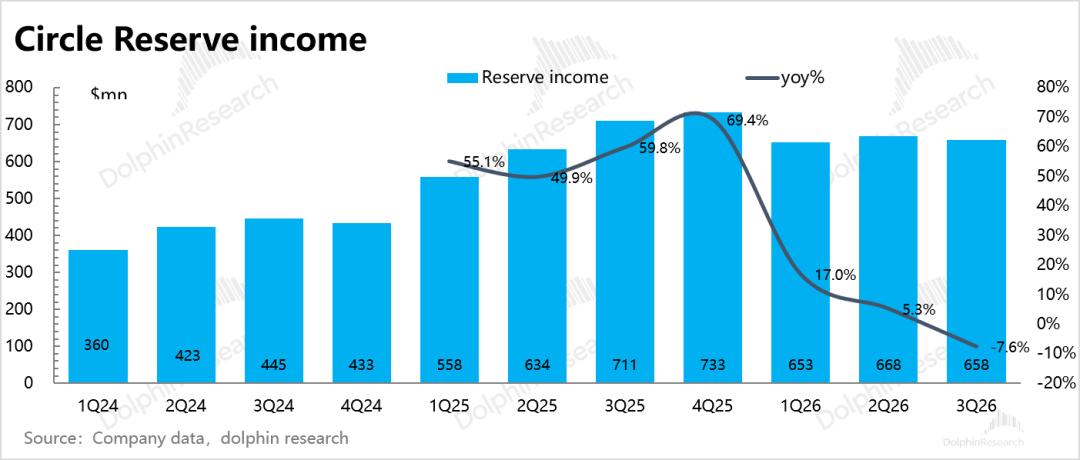
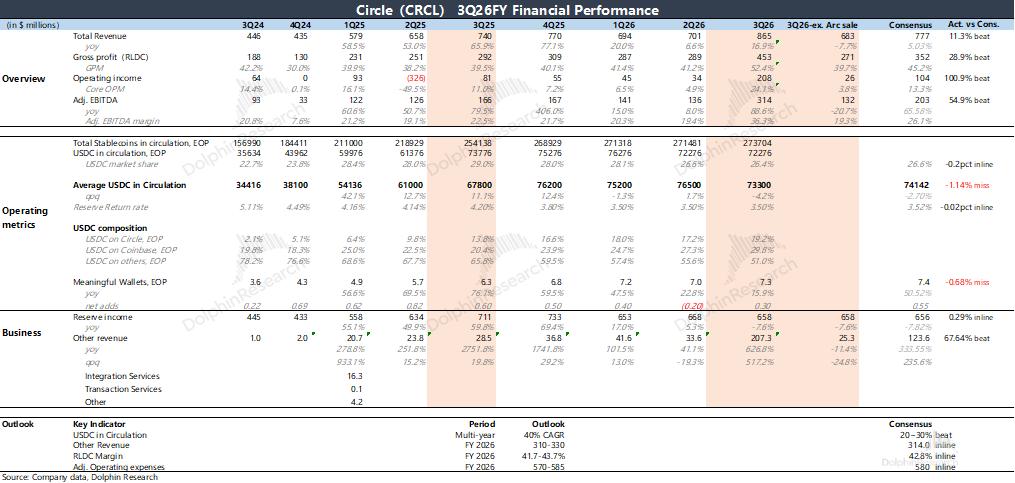
1. Reserve interest income declined within expectations
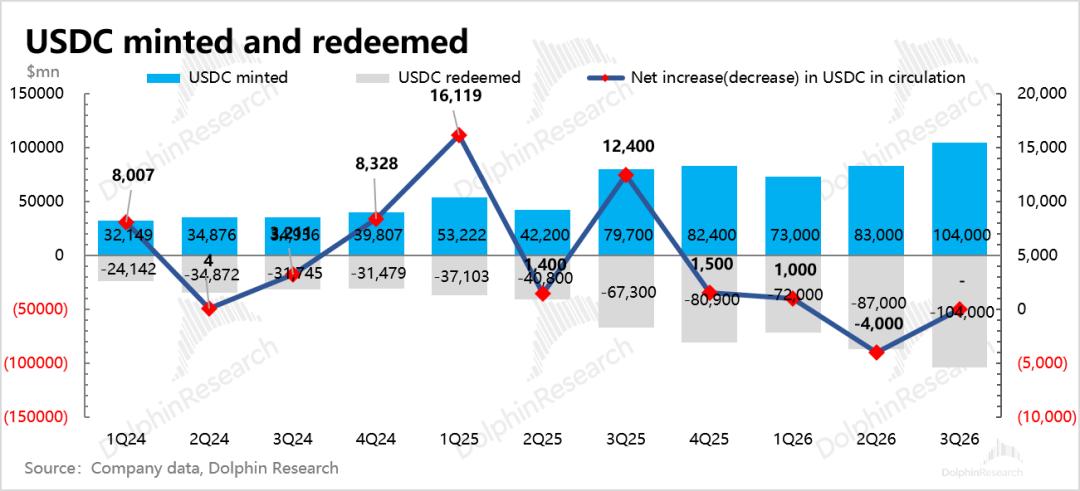
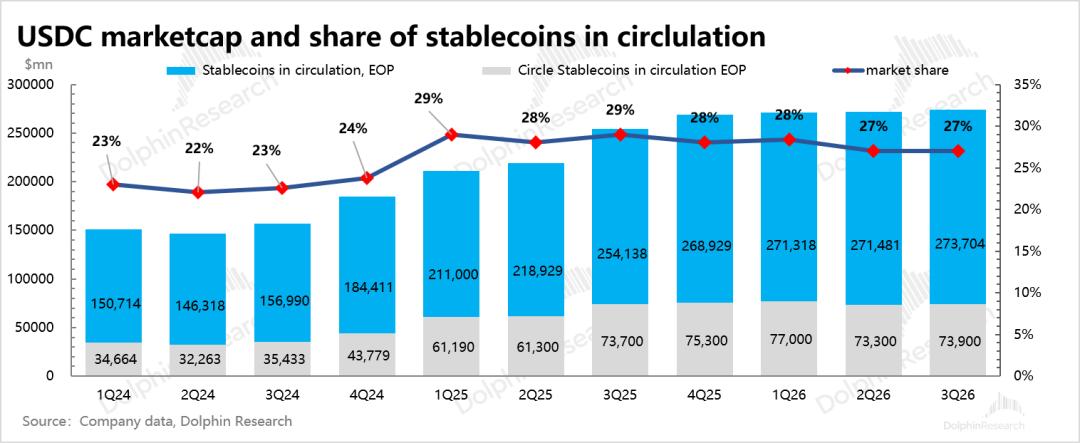
The reserve interest income in Q3 reached 660 million US dollars, which was in line with expectations. Despite the 8% year-on-year growth of USDC market value, the figure decreased by 8% due to the year-on-year decline in interest. On a quarter-on-quarter basis, the average circulating scale of USDC in Q3 was 73.3 billion US dollars, down 4% compared with Q2.
2. The recognition pace of Arc token sales is faster than expected
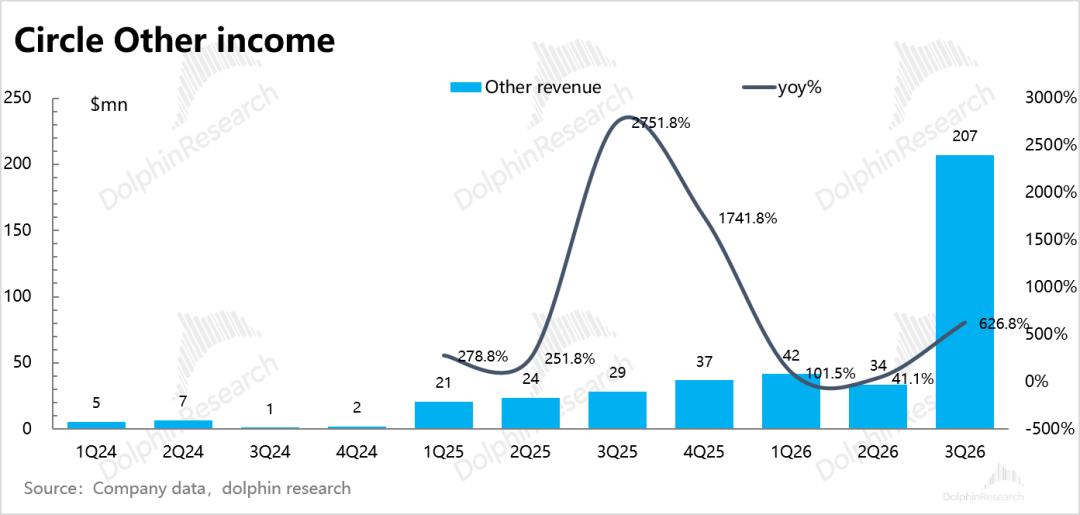
Other revenue in Q3 exceeded 200 million US dollars, of which Arc token sales revenue was recognized at 180 million US dollars. The recognition pace exceeded market expectations (estimated at 90 million US dollars) and the original full-year guidance of 180 million US dollars.
However, this revenue is not stable and sustainable, and is more of a one-time income. According to the unchanged full-year guidance of other revenue at 310-330 million US dollars, it is expected that there will be no such income in Q4. The total of two rounds of pre-sales this year is 224 million US dollars. After 180 million US dollars is recognized in Q3, the remaining 40 million US dollars will be recognized next year.
This Arc token pre-sale has attracted a large amount of institutional capital. But in essence, it is a "equity subscription" for the future earnings of the Arc public chain asset. Circle records it as deferred revenue first, and finally recognizes it as revenue according to the development progress of Arc chain products.
The fact that equity subscription payment equals revenue is very strange, and cannot provide a reliable outlook. Unless Circle continues to "raise funds" by issuing tokens, this is a one-time income and does not have the characteristics of stable and sustainable business.
The real sustainable revenue will not come until 2027, sourced from Arc transaction fees, staking revenue and charges from the CPN payment network. The ARC pre-sale only realizes part of the future value in advance.
3. Major channels "turn against each other", increasing pressure on subsequent interest sharing
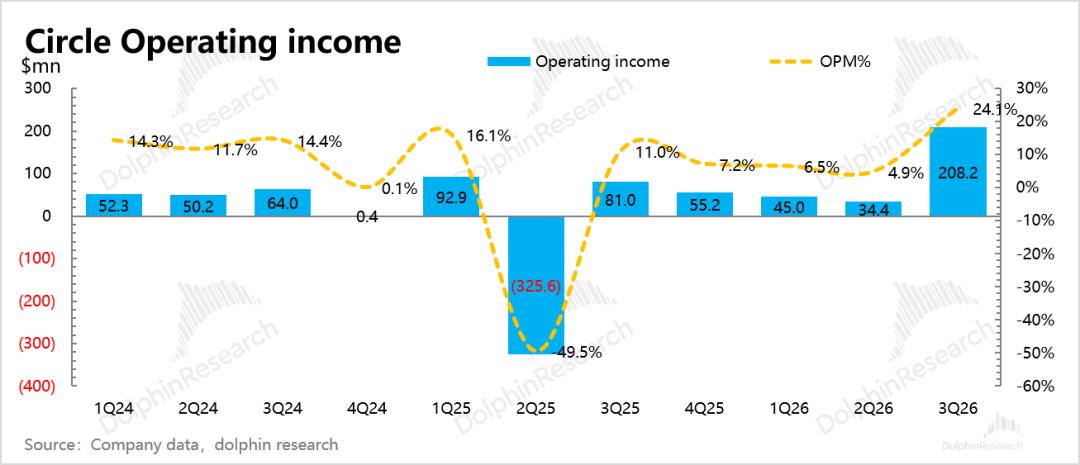
Since Arc token sales are almost cost-free, 180 million US dollars is equivalent to pure profit, which brings "inflated" profit in Q3. After stripping this part, the real profit trend is downward — due to the decrease in revenue and relatively rigid expenses, the GAAP operating profit margin was 3.9%, which actually dropped by 1 percentage point compared with Q2.
However, the Q3 performance also reflected the optimization trend on the expense side brought by layoffs. Nearly half of Circle's expenses are personnel salaries, so the adjusted operating expenses (excluding severance expenses) decreased by 5% quarter-on-quarter, reflecting a 5% headcount reduction in this quarter.
It is worth noting that starting from Q3, the impact of Hyperliquid's interest sharing will gradually be reflected in the profit side. Dolphin Analyst roughly calculates that for Circle, the gross profit directly reduced each year is nearly 100 million US dollars, and the pressure of earnings change brought by channel resistance will be clearly reflected as early as Q4:
Hyperliquid is the largest on-chain perpetual contract exchange, which has its own public chain. Users need to deposit USDC as margin before trading on it, so a large amount of USDC, about 6 billion US dollars, is settled on the platform. For Circle, this is one of the few large-scale USDC sedimentation pools outside exchanges.
When different stakeholders are tussling over the CLARITY Act, starting from September, Hyperliquid required Circle to return the reserve interest corresponding to USDC. But Circle has a pre-agreed sharing agreement with Coinbase — Coinbase takes 100% of the interest for USDC custodied on its platform, and Coinbase will take 50% of the interest for USDC outside the custody of Coinbase and Circle.
Therefore, in order to meet Hyperliquid's interest return requirements, it has to go through the Coinbase channel. The result of this operation is:
(1) Hyperliquid takes back the vast majority of the interest (estimated at 90%);
(2) Coinbase and Circle each lose 50% of the interest share, and get 90% of the USDC in-platform custody scale (AUC) added, with Circle retaining 10%;
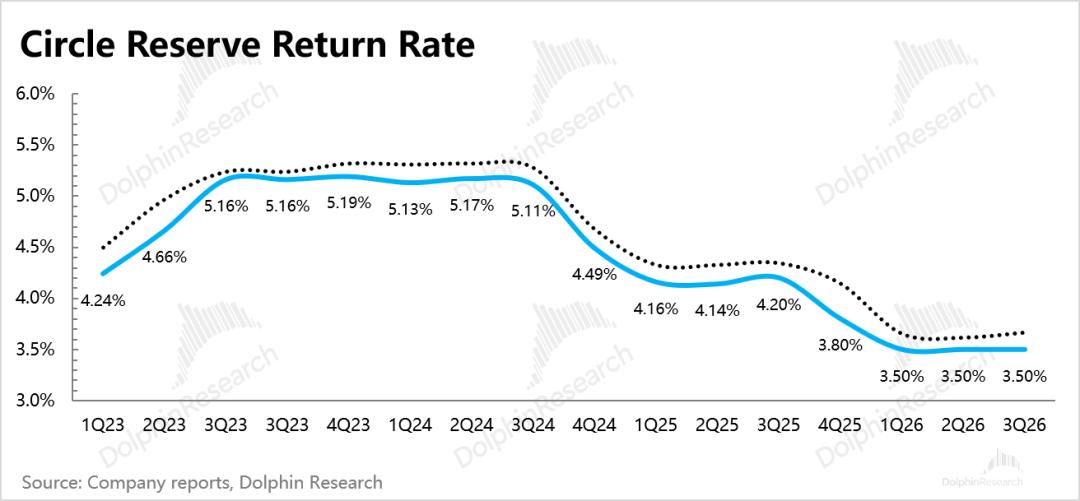
At present, the total amount of USDC in the Hyperliquid ecosystem is 6.3 billion US dollars. Calculated at 3.5%, the annual reserve interest income is 228 million US dollars, of which Hyperliquid will take 90%, that is 200 million US dollars. The remaining less than 30 million US dollars of interest will be shared by Coinbase and Circle.
In other words, the original recognizable 228 million US dollars of interest income and 100 million US dollars of gross profit (excluding issuance costs and the 50% share originally agreed to be distributed to Coinbase) finally turned into only 10 million US dollars of gross profit in hand.
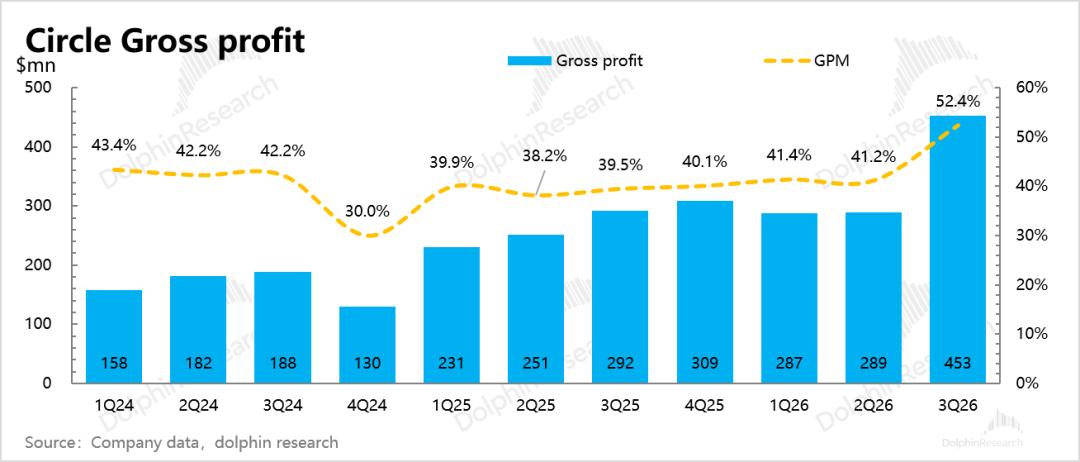
The gross profit margin in Q3 was 52.4%. After excluding the 180 million US dollars of pure profit brought by Arc token sales, the gross profit margin was 39.5%, and some impact can already be seen compared with Q2.
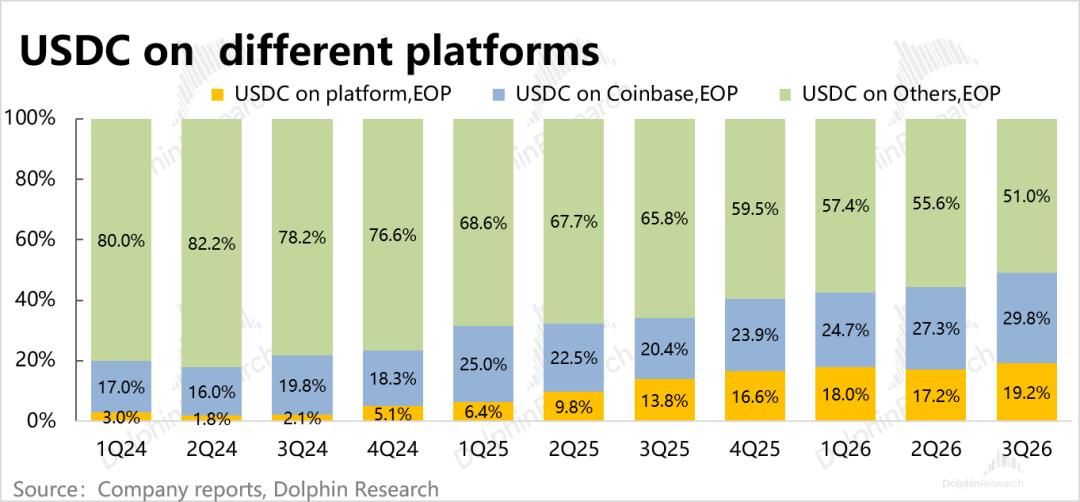
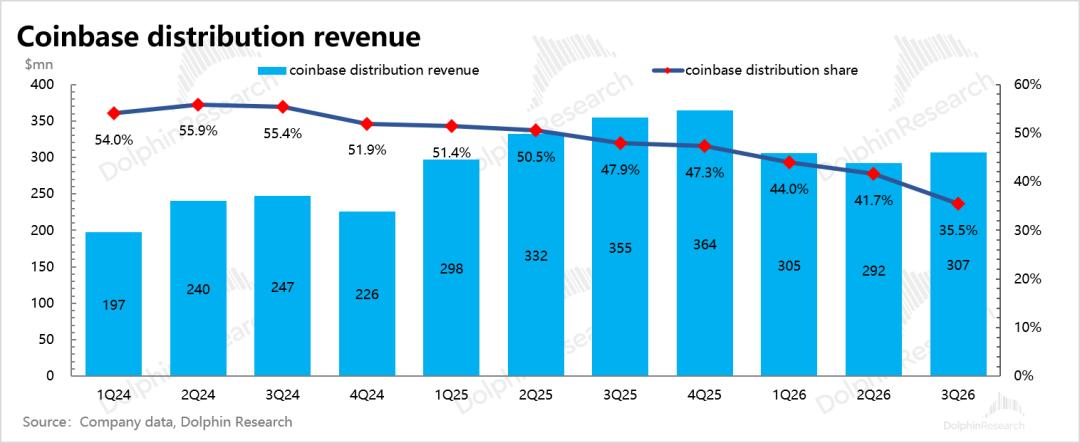
The share of USDC in Coinbase has rapidly increased to 30%, but the share of sharing income in Circle's sharing cost has rapidly dropped to 35%, which also confirms the impact brought by Hyperliquid's "resistance".
4. Overview of key indicators
Viewpoint from Dolphin Analyst
The Q3 performance is only "inflated" caused by the difference in recognition pace, so it does not bring real surprises.
In terms of guidance, neither revenue nor profit has changed. The RLDC profit margin (revenue minus distribution cost, similar to gross profit margin) will remain at around 42% for the whole year. After calculation, the gross profit margin in Q4 will probably drop to more than 30%, which shows that the impact brought by Hyperliquid is further deepening.
However, since the Hyperliquid incident was disclosed in September and its impact is quantifiable, the market should have basically priced it in. But the risk point is: will there be a second Hyperliquid in the future?
In addition, competition in the stablecoin sector is also intensifying. The advantages of USDC are mainly reflected in US Treasury bond collateral and high compliance, while it is strongly tied to Coinbase, the leading centralized cryptocurrency exchange in the United States that has closer relations with regulatory authorities.
However, the game between financial institutions is also changing. As USDC gets closer to Binance — Binance invested 100 million US dollars in Circle's equity to expand and renew the strategic partnership between the two sides.
Although the cooperation with Binance is mainly focused on emerging markets, it will inevitably bring subtle changes to the relationship with Coinbase. The Open USD consortium coin jointly launched by Coinbase and a number of traditional financial payment chain players was also launched on September 30.
However, Dolphin Analyst believes that apart from USDT, USDC still has significant advantages over consortium coins at present, and consortium coins may fail to form effective synergy due to too many stakeholders. In comparison, the constraints of other financial institutions on Circle are more likely to be the risks and impacts brought by large channel players like Hyperliquid requiring interest return.
Therefore, although the management's long-term guidance on the expansion of USDC circulation remains positive (40% CAGR growth rate), from a short-term or even medium-term perspective, it still needs to rely on the prosperity of the Crypto market itself (the main scenario of USDC) and USDC's breakout against competition.
This article is from the WeChat Official Account "Dolphin Investment Research" (ID: haituntouyan), Author: Dolphin Analyst, 36Kr is authorized to distribute this content.