Stop waiting, won't humanoid robots achieve any major results?
At the peak of the humanoid robot boom, almost everyone believed that a new era of productivity was just around the corner.
A single appearance on stage, a backflip in a video, could push the industry's imagination a little further. Entrepreneurs aspired to build the next tech giant, investors looked forward to a new industry capable of reshaping the economic landscape, and ordinary people envisioned what a world of human-machine symbiosis would look like.
Financing, valuations, and IPOs — the wealth stories revolving around humanoid robots kept coming in waves. For some participants in the sector, many had already reaped their long-awaited "major outcomes" ahead of schedule.
Back then, people were almost convinced that humanoid robots were about to step out of science fiction and into reality. A brand new era seemed to be just a few steps away.
But the journey from the stage to real-world application has not been smooth.
As the spotlight shifted from galas to real life, humanoid robots stepped out of the screen and in front of people, performing increasingly complex and polished movements. Yet the relationship between humans and machines remains stuck at the level of watching, filming, and short-lived interactions.
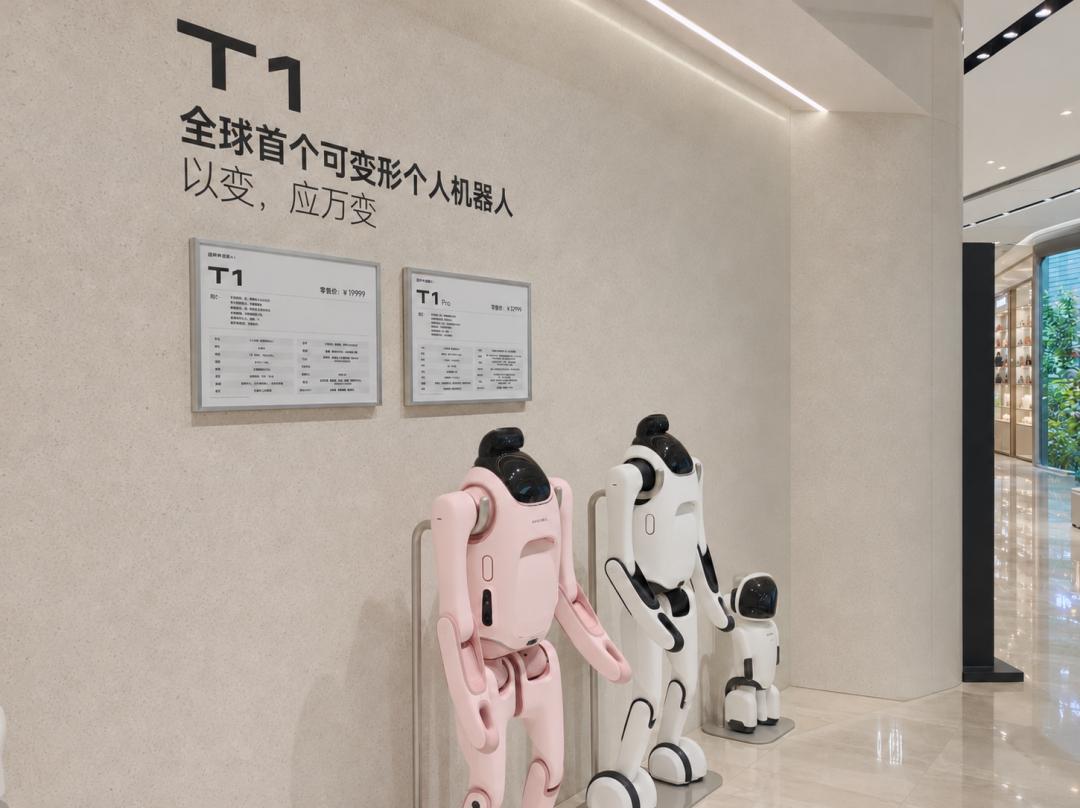
What we expect is a leap in productivity, a reshaping of work patterns, and a brand new world where humans and machines live side by side. Today, robots are already very close to us, but the highly anticipated era has not arrived in tandem.
The initial wow effect can make people stop and pull out their phones. But after watching the same performances over and over, how long will the novelty last? Humanoid robots ultimately have to pass another test: whether they can continuously create value beyond the applause.
Away from the bustling demonstrations, news from the industry has also become increasingly mixed.
Unitree has delivered profitable results, Figure AI has secured high valuations thanks to its model and technology narrative, Tesla is still exploring mass production, while some other startups have fallen into the predicament of delivery, payment collection and capital turnover.
All betting on the future of humanoid robots, the situations of enterprises have gradually diverged. Is the current division a necessary process for a new industry to mature, or does it mean that the "major outcome" we once imagined needs to be re-examined?
1
Unitree's success was rooted in the years before the boom
Before a track becomes the focus of public attention, there are always companies that have been quietly exploring for many years when few people are paying attention. When the boom arrives, the results of their long-term accumulation will gradually be seen by more people.
The capabilities that Unitree was later recognized for were also accumulated in this process.
When founder Wang Xingxing was pursuing his postgraduate studies at Shanghai University, he devoted a lot of energy to the XDog quadruped robot. In his master's thesis, he documented how to use the motor-driven solution to complete the design and control of the entire quadruped robot, and build a robotic dog from scratch.
Behind this design, there are many specific and trivial attempts. Wang Xingxing once bought nearly a dozen different brushless motors for model aircraft, compared their performance, and designed his own motor driver according to the requirements of control, cost and size.
At that time, BigDog, the early quadruped robot developed by industry pioneer Boston Dynamics, adopted an engine-powered, hydraulic-driven solution. The system included components such as hydraulic pumps, pipelines, valves and heat dissipation devices, which could provide strong power but also brought high mechanical complexity.
And Wang Xingxing's most unique insight was to adopt the power scheme of brushless motor direct drive, which greatly simplified the mechanical complexity of the hydraulic system. It not only had advantages in size and cost, but also achieved high motion performance. Although Unitree's products later underwent restructuring in drive hardware, the early thinking around electric drive, independent R&D and cost has been carried over to the company's product philosophy.
In 2019, Unitree released the quadruped robot Aliengo. While iterating on the product, a group of customers with clear demands gradually emerged.
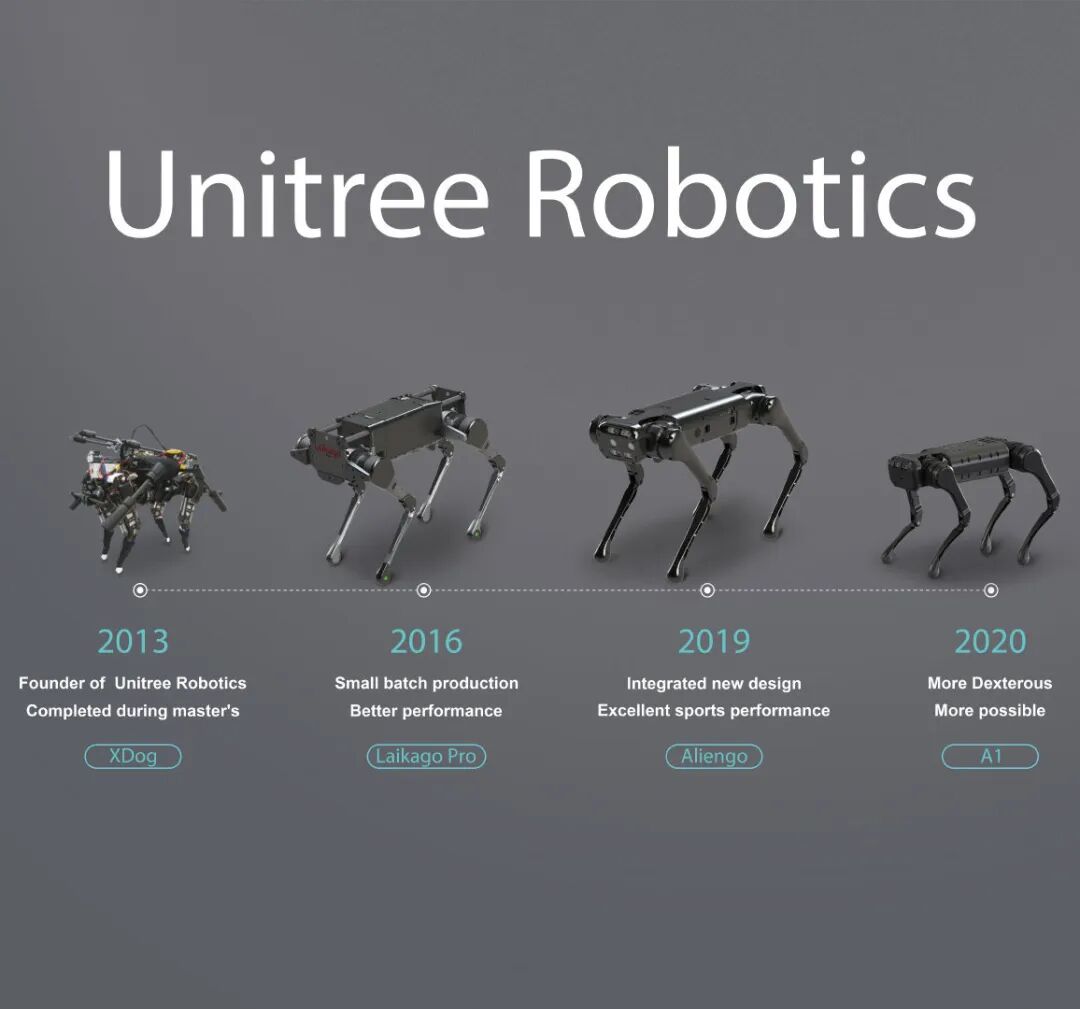
Figure / Iterative updates of Unitree's robotic dogs
According to The Paper, Tian Jiangchuan, Unitree's early investor and managing partner of InCapital, recalled that in 2019, when she communicated with Professor Yu Yang from the AI Laboratory of Nanjing University, she learned that laboratories at home and abroad had strong demand for Unitree's robotic dogs. During her inspection in Silicon Valley in 2023, she found that Unitree's robotic dogs were very popular in the laboratories of institutions including UC Berkeley and Stanford.
For Unitree at that time, scientific research was a market with relatively clear demand. Universities and laboratories needed a robot that could support research and algorithm verification. As long as the performance, price and development capabilities met the requirements, there was a reason for the product to be purchased.
This is also the part of Unitree's early experience worth revisiting: before wider commercial applications matured, it had already found product-market fit (PMF) in the scientific research niche. Before wider commercial applications matured, it had already reached out to actual users, and continued to polish its products based on their demands.
These accumulations were later applied to humanoid robots. The structures of quadrupeds and humanoids are different, but some joints, motors and motion control technologies can be reused. When Unitree entered the humanoid robot field, it already had the foundation of years of R&D and product delivery.
At the 2025 Spring Festival Gala, 16 Unitree H1 humanoid robots wearing traditional Chinese floral jackets and waving handkerchiefs performed the Yangko dance together with dancers. The "YangBOT" performance brought robots, which used to appear mostly in laboratories, exhibitions and technical videos, to the general public.
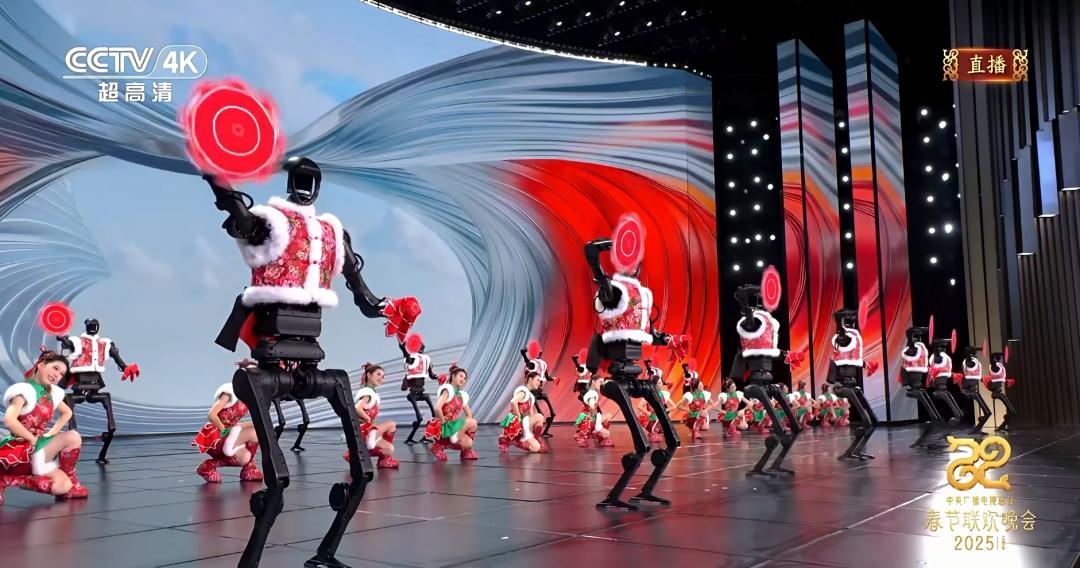
Figure / Unitree robots performing Yangko dance at the Spring Festival Gala
It took Unitree many years to go from R&D accumulation to public fame, while the audience could get to know it in just one performance. The Spring Festival Gala amplified Unitree's popularity, but the technology, products and team that supported that performance had already started accumulating long before the boom arrived.
But as the form of robots changed, the expectations surrounding them also changed. When robots have human-like outlines, can walk, turn around, and share the stage with humans, the public will more easily associate them with the companions in science fiction works, expecting them to understand demands, take on more imagined scenarios, and eventually integrate into the daily operation of human society.
A single performance can make the future feel close at hand, but it cannot complete the leap from technology to real-world application for the industry. Humanoid robots have aroused expectations far beyond that of a single product, but from product capabilities to actual use, the industry does not seem to have caught up with this rapidly amplified dream.
2
The industry fog where the final critical step remains elusive
From autonomous driving and low-altitude economy to humanoid robots, visions of future life have emerged wave after wave. Standing in 2026, these narratives all seem to be urging one thing: the futures that have been discussed for many years should start to be delivered.
This is especially true for humanoid robots. They already have a near-human outline, can walk, turn around, and complete complex movements. They seem to be just one step away from becoming partners that can participate in social operations.
In August 2021, Tesla first announced its humanoid robot plan at AI Day. At the second AI Day in 2022, Tesla's first generation humanoid robot prototype took the stage, able to walk and wave. Although its movements were stiff and wires were exposed, it was still quite impactful.
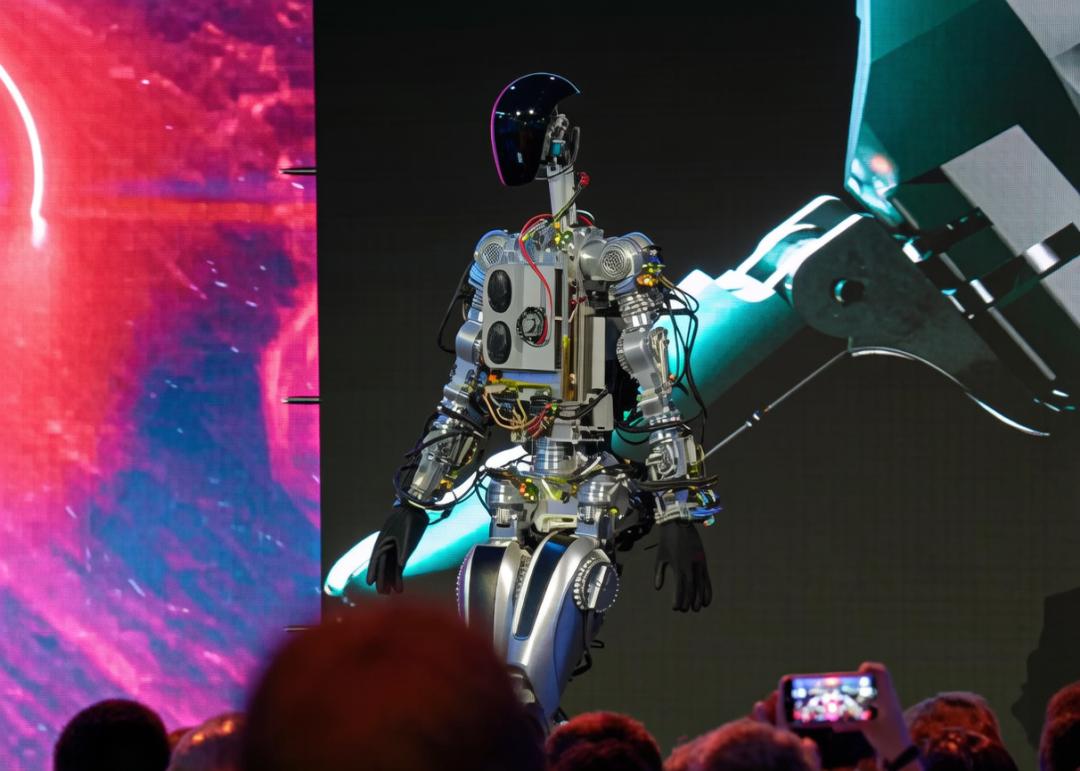
Figure / Tesla's humanoid robot
Elon Musk depicted a huge robot market: as mass production is realized, large-scale production will drive down costs, and robots will also reshape the global economic structure.
Since then, the industry has indeed continued to move forward in manufacturing and pricing. Companies including Unitree and Agibot have promoted product iteration through independent R&D of core components, reuse of existing technologies and manufacturing supply chains. In May 2024, Unitree released the G1, with a starting price of 99,000 yuan, prompting more institutions to start seriously considering purchasing a humanoid robot.
At the same time, videos of robots performing boxing, dancing, and backflips continued to spread. Price and motion capabilities together shortened the distance between humanoid robots and the public.
But between being affordable and moving well, and being able to complete tasks independently, there is still one threshold — intelligence.
The core capabilities of humanoid robots are often summarized as the brain, cerebellum and body. The brain is responsible for perception, reasoning and task planning, the cerebellum is responsible for motion control, and the body undertakes hardware execution. These capabilities need to work in continuous coordination to enable the robot to understand what is happening in front of it, decide what to do next, and constantly adjust during action.
The robots we are familiar with in science fiction works are often able to understand an incomplete instruction, enter an unfamiliar environment, find solutions on their own, and continue to complete tasks even when encountering accidents. This expectation actually implies quite high general autonomous capabilities.
Being able to answer questions is only a very small part of that.
Connecting robots to large language models can improve conversation and instruction understanding. But from "knowing what to do" to controlling the body to get things done, there are still many barriers to cross, including perception, spatial judgment, action execution and error recovery.
So, how far have the current cutting-edge robots come?
Figure AI provides a sample worth observing.
In September 2026, Figure announced the test results of Helix 2.5: the robot was sent to 30 households where no data had been collected before, to complete three types of tasks: tidying up toys, folding towels and making beds. These tasks had been trained in other environments, and the test examined whether the robot could transfer these capabilities to unfamiliar households and objects. According to the full task completion criteria it disclosed, the success rate was 56%.

Figure / Figure's robot working in an unfamiliar household
This is already beyond the scope of playing preset actions. Robots are beginning to be able to act autonomously in new environments, and can correct errors in some scenarios.
But it also needs to be noted that this test only involved three types of specific tasks, which cannot directly lead to the conclusion that the robot can handle all kinds of work in a household. For users who expect to use the robot with peace of mind after purchasing, demonstrating a capability and turning it into a reliable daily service are still two different stages.
The difficulties in the real world are often hidden in these gaps.
For the same task, if you change to a different room or a different set of items, can it still be completed? If the task is interrupted halfway, can the robot judge what to do next? After continuous operation, can it maintain efficiency and know when to stop and ask for help?
All these questions ultimately need to be answered by perception, reasoning, control and hardware working together.
Products sold for household use also show this capability boundary. On the current product page of 1X's NEO, it is clearly stated that early users will get "basic autonomous capabilities"; when encountering complex tasks that the robot cannot yet handle, users can make an appointment for the company's experts to remotely supervise, helping the robot complete the work and learn new capabilities.
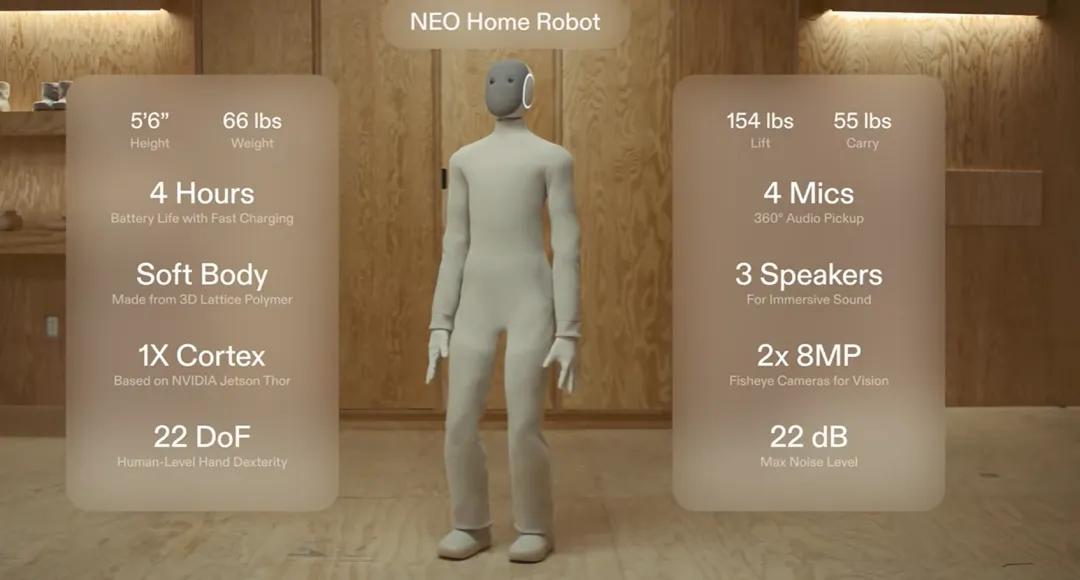
Figure / NEO, the household service robot
This means that even if the product has started to be marketed for households, autonomous capabilities still need to be supplemented by human assistance. The fact that a robot can walk into a home does not mean it can independently take over all the housework.
This is also where gaps often arise between public expectations and actual products.
What some people expect is a partner that can understand demands, act autonomously, and can be trusted completely. But what is more easily accessible may still be performances, interactions and Q&A. Even with added functions such as companionship and learning tutoring, the value provided by these functions still falls short of the promise of a general-purpose labor force.
The humanoid appearance makes it easy for people to prematurely endow robots with human-like capabilities. But the progress of language models will not automatically translate into equivalent levels of action capabilities; one successful demonstration cannot replace reliable performance in long-term use.
Technology is indeed advancing, but the future that is imagined to be "available for purchase soon" still requires a lot of training, adaptation and verification in real environments. At least judging from these public developments, there is still insufficient basis to compress the timeline for their widespread entry into daily life into just the next few years.
Production schedules can be arranged and products can roll off the assembly line, but general autonomous capabilities cannot be delivered on the same exact timeline.
For enterprises that have started mass production, the exam questions have also changed: how much real demand can the robots they produce actually support, and how long can customers continue to use them?
3
When hot capital starts counting the returns
No matter how grand the vision is, it eventually has to land on a specific financial calculation.
The popularity of humanoid robots is still there, and capital is still looking for opportunities. According to incomplete statistics from Geeks Embodied AI, in September 2026, there were still 49 disclosed financings in the embodied intelligence field, with capital continuing to flow to directions including complete machines, models and core components.
But the popularity of the capital market does not always synchronize with the perceptible changes in daily life. How much money a company has raised, or how much its valuation has risen, will not directly turn into products around ordinary people.
Capital can bet on long-term possibilities, but ordinary customers need to pay for current use. Both are waiting for results, but what they are waiting for is not the same.
For robot companies, financing can support R&D and also support capacity building. But as products go to the market, sooner or later companies need to answer: besides the next round of capital injection, who else