The competitive tea beverage sector is seeing a massive reshuffle of its mid-tier players.
01
A group of mid-tier tea beverage brands are collectively shrinking regionally
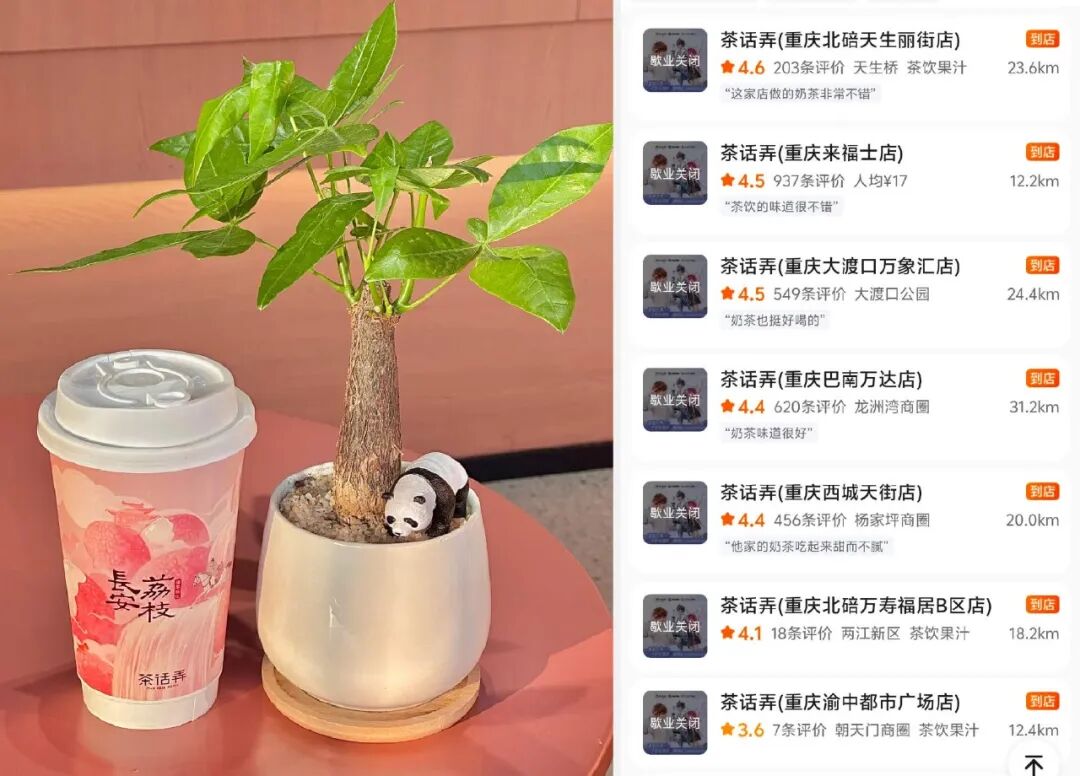
Nowadays in Chongqing, it may not be so convenient to get a cup of Chahua Nong.
When Neicanjun searches for Chahua Nong on Dianping, only one store in Changshou District is shown to be still open in Chongqing. Previously, there were more than a dozen stores including the Raffles City store and Banan Wanda store, which could be seen almost everywhere when you walked around.
This shrinkage did not happen overnight. As early as the second half of 2024, consumers found that Chahua Nong stores near them disappeared one after another. Over time, the sign of store reduction also appeared in cities such as Wuhan and Hangzhou. According to Tea & Coffee Observer, in September 2026, Chahua Nong withdrew from 10 cities, becoming the brand with the most severe contraction.
As for Lelecha, it has completely withdrawn from Chongqing.
According to a report from Caixin, after the National Day holiday, many local Chongqing users posted on social platforms saying that the Lelecha stores they usually ordered from could no longer process orders. The Dianping page shows that all 5 local Lelecha stores in Chongqing are now marked as "Closed Down".
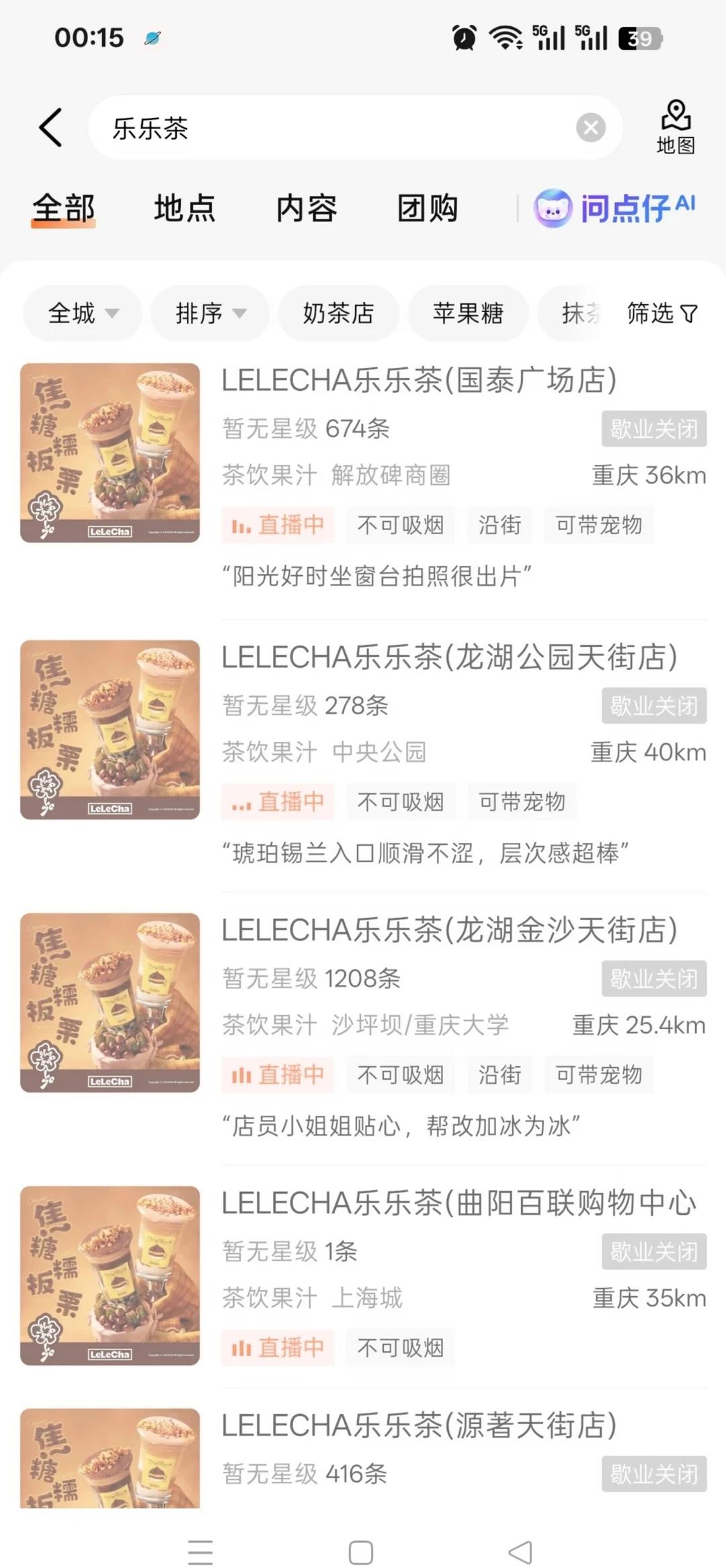
In February this year, Lelecha officially announced that it would expand stores in Chongqing and recruit partners. At that time, the brand re-laid out the local market, sending a signal to the outside world that it would continue to develop. According to netizens, some stores still sold baked products in the first half of the year, but this business was cut in the second half.
This is not the first time Lelecha has hit a wall in Chongqing. As early as the end of 2019, Lelecha opened its first store in Chongqing, then closed it in April 2021. After several years, it returned again, but now it is facing the situation of all stores being closed.
Of course, based solely on the store status at present, it cannot be fully confirmed whether this is a temporary adjustment or a permanent withdrawal. But no matter what the final result is, the fact that from re-layout to collective store closure in a short period of time shows that the brand's local operation has not continued smoothly.
The regional shrinkage of these professional tea beverage brands reflects that the current operation of the tea beverage market is entering a "hell mode". For cross-border players lacking industry accumulation, the challenge to gain a foothold in this track is undoubtedly even greater.
In June 2026, Shanye Mitea was exposed to start large-scale contraction and adjustment, and its stores in many cities including Hangzhou, Ningbo, Nanjing, Kunshan, Suzhou, Hefei and Qingdao were shown to be closed. Among them, all stores in Hangzhou were closed.
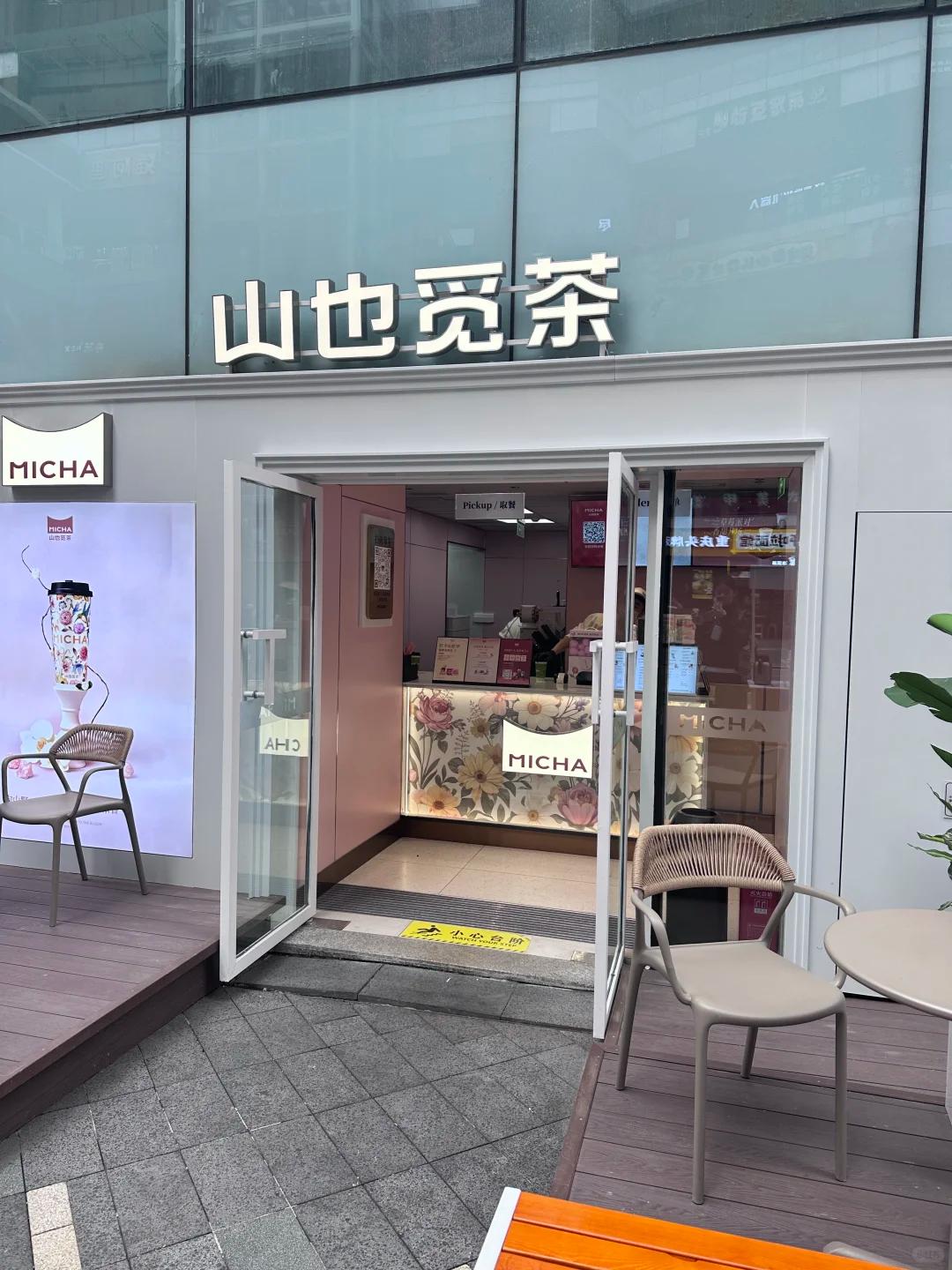
As a new-style tea beverage brand under Dreame, its first batch of stores opened in Suzhou and Nanjing in April 2025, and attracted attention due to long queues. The brand expanded with a model that combines direct operation and franchising, and set up branches in many major cities to support regional development.
This wave of closures includes many stores that first opened in April and May last year, and the subsidies previously given to franchisees have also been stopped one after another. There are still 34 stores in operation on the brand's mini-program, which is far from the brand's once-claimed goal of "over 10,000 stores by 2026".
02
Tea Beverage Industry Enters "Hell Mode"
Fiercer Competition Among Mid-tier Brands
The pressure faced by mid-tier tea beverage brands is spreading layer by layer.
1. Stores close in just 3 months! Mid-tier tea beverage brands in core business districts are replaced more and more frequently
If you observe carefully the tea beverage brands in shopping malls, you will find that some brands seem to stay there all the time, while others are always being replaced.
Brands such as Heytea, Bawang Chaji, Mixue Bingcheng and Guming are still familiar faces in shopping malls. Even if the store adjusts its location or even closes temporarily, it will often reappear in a new store form. For example, Heytea sometimes moves from the first floor of the mall to other floors, but the brand does not really leave.
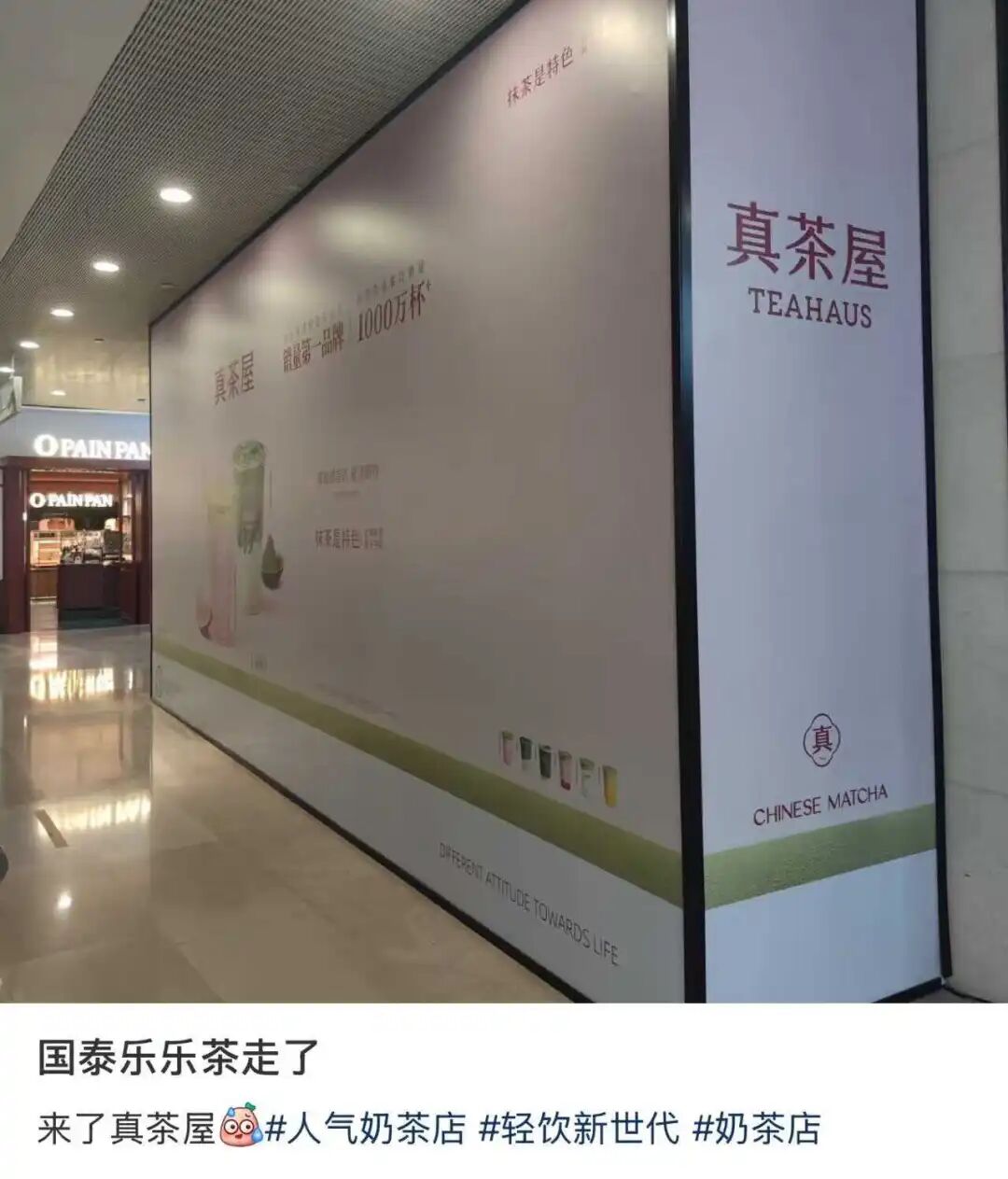
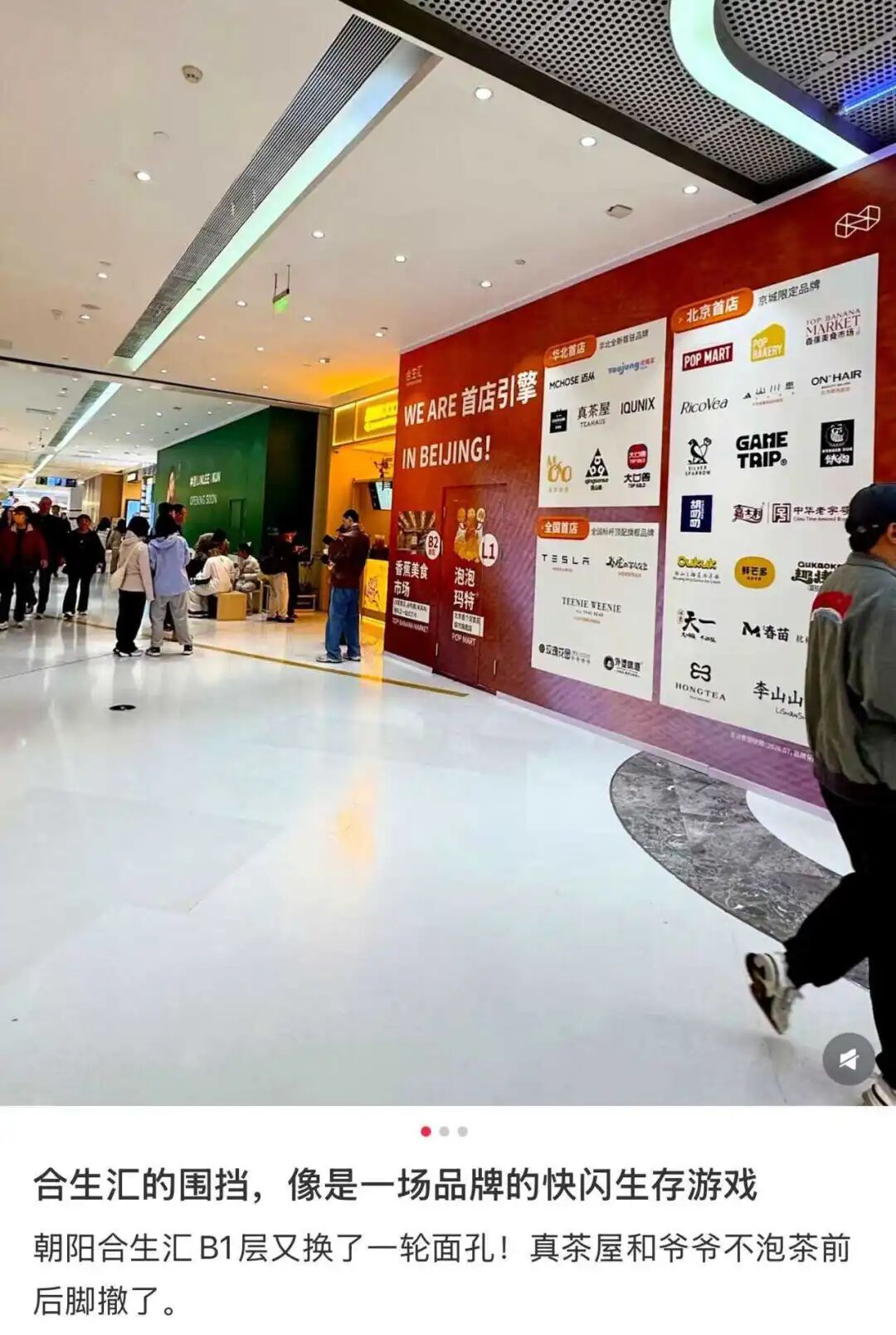
In contrast, some mid-tier tea beverage brands and small regional brands have a significantly higher frequency of store replacement. Recently, Hepingli in Chaoyang, Beijing confirmed that Zhenchawu has closed its store, which was Zhenchawu's first store in Beijing. It started trial operation on August 1 this year and went bankrupt only 3 months later.
2. Franchisee resources are increasingly concentrated on head brands
It is not only consumers who are choosing brands, but also franchisees are re-selecting brands.
For franchisees, compared with a new brand that has not been fully verified, a 10,000-store brand with a mature store system, stable supply chain and operation team often means more predictable business risks.
One franchisee of Shanye Mitea experienced such a gap. He said that the brand promised generous support at the time of signing: monthly subsidies of more than 100,000 yuan for materials and store expenses, millions of yuan in marketing investment, and suggested choosing locations in core business districts. But a few months after opening, the passenger flow was dismal, and the revenue could not cover the rent. The two sides negotiated to move to a location with lower rent and retain the support policy, and the franchisee invested more than 2 million yuan in total. When the new store was being prepared, he found that the agreed subsidies were cleared in the system, and only then learned that the brand planned to stop this tea beverage project.
3. Fragile mental barriers, easy to be imitated and diverted
For mid-tier tea beverage brands, it is not easy to find a differentiated selling point, but what is more difficult is how to make this selling point belong to themselves for a long time. Glutinous rice flavor lemon, freshly squeezed fresh fruit, hand-made yogurt, special tapioca pearls, head brands and other mid-tier brands can follow up and launch new products at any time, and quickly divert customers with traffic and co-branding activities.
The trademark incident of Amah Shouzuo reflects this dilemma from another side. Recently, some trademarks of Amah Shouzuo were declared invalid. Data shows that there are as many as 347 catering brands with the word "handmade" in their brand names. "Handmade" could originally be used as a unique expression for the brand to distinguish itself from industrialized and standardized products, but as more and more brands use it, this word has gradually changed from a brand-specific differentiated label to a marketing language commonly used in the industry.
4. Head brands are running faster and faster, squeezing the living space of mid-tier brands
In the early years, Lelecha was once in the same competitive echelon as Heytea and Nayuki in terms of brand positioning and market popularity. However, with the rapid expansion of the industry, Lelecha's store layout has long been concentrated in the Yangtze River Delta, failing to complete wider market coverage in time.
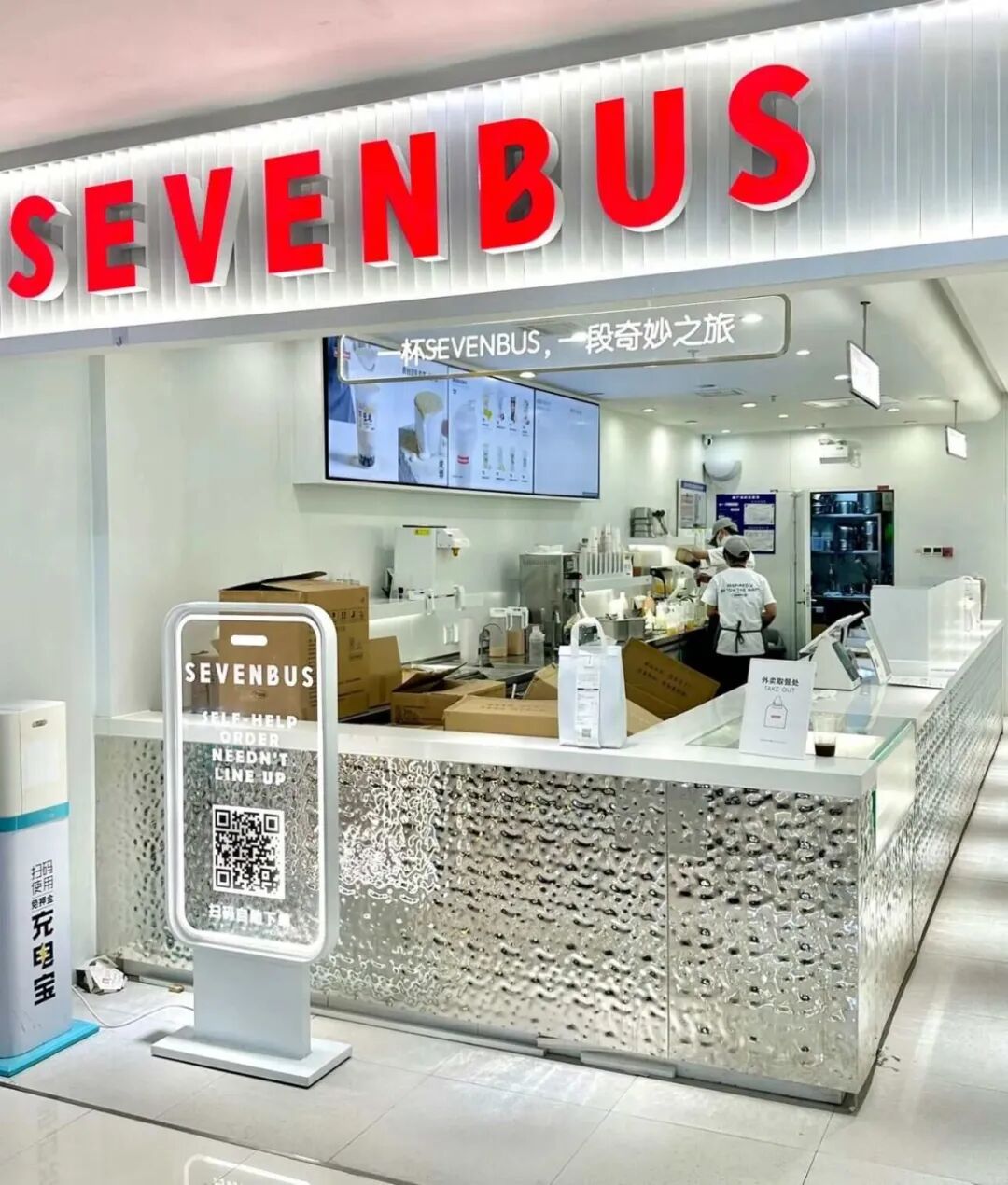
Sevenbus was once popular all over the country for its soy milk milk tea, known as "the light of Xiamen milk tea". At its peak, it had nearly 400 stores nationwide, but now there is only one store left in Xiamen. Sevenbus's ambition and tone in positioning are comparable to Heytea and Nayuki. When the brand first became popular, there was a boom of a large number of people competing for franchise positions in many cities in Fujian. But as netizens commented: "The headquarters was in Xiamen, moved to Chengdu after expansion, and the brand declined after the franchise boom."
If a brand fails to establish sufficient market coverage and brand advantages in time, it will easily lose its position in the next round of competition.
03
Major Reshuffle of Mid-tier Tea Beverage Brands
A quiet reshuffle is taking place in the mid-tier camp of the tea beverage industry.
In the past, mid-tier brands were often regarded as reserve forces to impact the top tier. The number of stores, city coverage rate and franchising speed were important indicators to measure the growth of brands. But with the change of industry competition logic, it is difficult to establish long-term advantages simply by relying on scale expansion.
At the same time, a number of mid-tier brands that focus on segmented categories, have distinct product mindsets, and pay attention to store quality have begun to take a development path different from traditional scale-oriented brands.
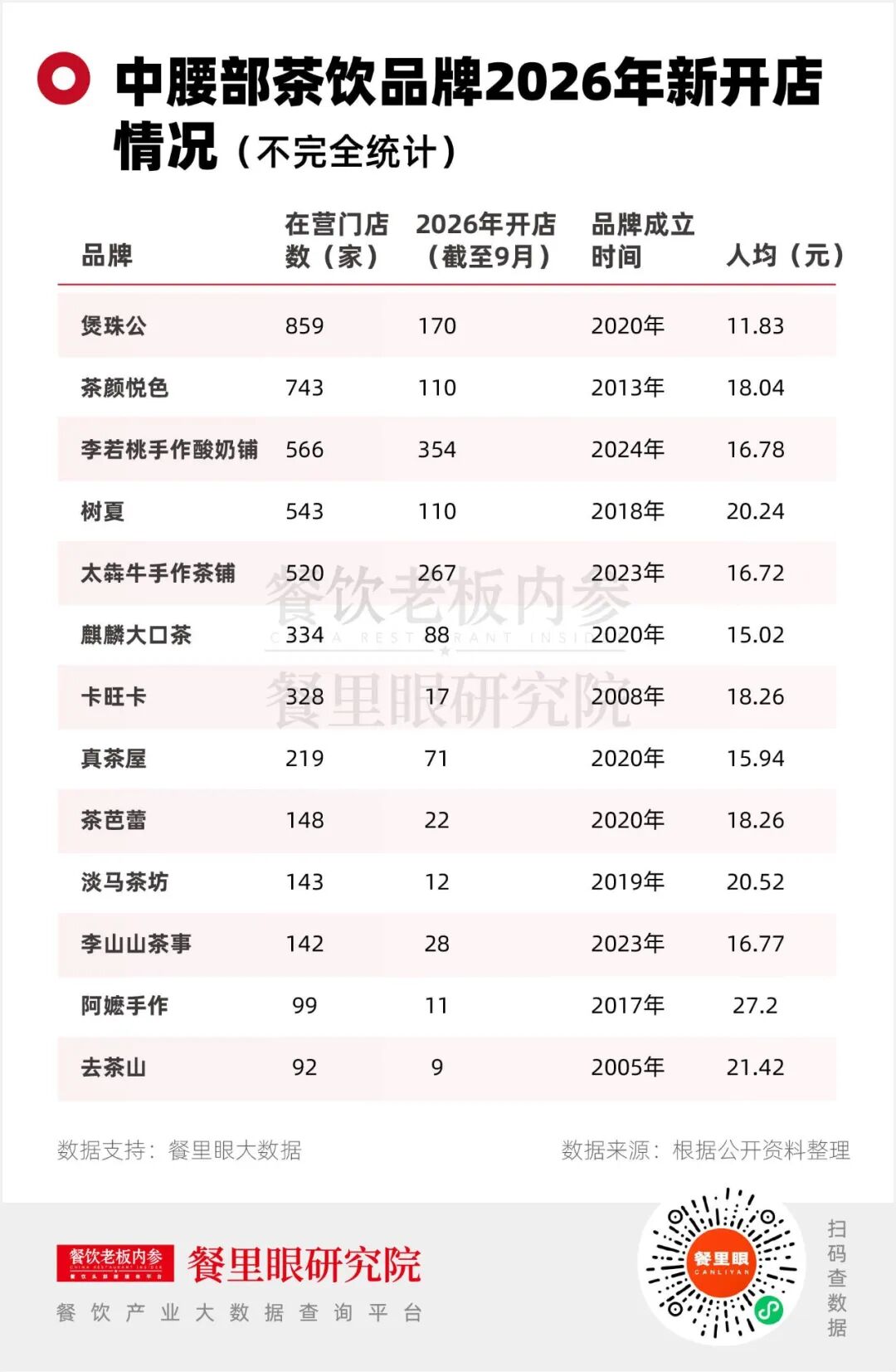
They are not in a hurry to expand across the country, nor are they obsessed with the rapid growth of the number of stores. Instead, they pay more attention to the operation quality of regional markets, product recognition, and whether consumers can form stable brand awareness.
I. Prioritize regional density over national expansion, hold the base area first, and then look for incremental growth
Kawangka is a typical example.
For a long time, Kawangka has focused its operation on the Anhui market, especially continuously cultivating core regions such as Hefei. Compared with quickly entering more cities, it prefers to deepen the familiar market first: accumulate brand awareness through store density, ensure product stability through supply chain and operation systems, and then build market advantages relying on the word-of-mouth of local consumers.
This is also the path chosen by many regional boutique tea beverage brands. They usually follow the expansion logic of "base area first, word-of-mouth spillover outwards": first establish a sufficiently solid base in the local market, and when brand awareness, supply chain capacity and store operation are gradually mature, then extend to surrounding regions with similar cultural backgrounds and consumption habits.
II. Establish a clear brand label as the priority in consumer mindset
In the past, many tea beverage brands tended to cover more consumer needs by enriching SKUs, and products such as fruit tea, milk tea, cheese tea and coffee were continuously added. Mid-tier tea beverage brands do not pursue all-round products, but build their own consumer memory around a clear product feature.
For example, Shuxia emphasizes a sense of health, combining fresh fruits, tea bases and low-burden product expressions, making health an important cognitive label of the brand; Baizhugong anchors brown sugar tapioca pearl milk tea, and strengthens consumers' memory of the core category of brown sugar tapioca pearls through a relatively focused product structure. Compared with constantly chasing the new product trend, this way of continuously polishing around signature products is easier to form stable consumer cognition.
III. High quality, taking a boutique route different from head brands
At a time when head brands generally rely on mature supply chains, standardized pre-made materials, stable industrial production and brand marketing momentum to seize consumer mindset, a number of mid-tier tea beverage brands choose another high-quality path: for example, taking "handmade" directly as the brand logo to build differentiated barriers and form a distinction with head brands.
Brands such as Amah Shouzuo, Taibanniu and Li Shanshan Chashi all put "handmade" on their store signs. For example, Li Ruotao Handmade Yogurt directly steams glutinous rice in the store, selling a visible handmade process, which also brings unique emotional value and sense of trust.
This is the core signal of this round of mid-tier reshuffle: the industry no longer believes that "more stores mean stronger".
The admission ticket to the mid-tier seats has shifted from scale indicators to mindset barriers, single-store profitability resilience and differentiated irreplaceability.
In the future, the stock tea beverage market will continue to see two-way flow: generalized mid-tier brands without memory points will continue to be cleared out; regional brands rooted in local areas, with unique flavors or emotional value, will continuously fill the vacant mid-tier positions.
04
Summary
Therefore, this round of reshuffle of mid-tier tea beverage brands does not mean the disappearance of the mid-tier, but the screening criteria have changed.
In the past, the most important task of mid-tier brands was to expand their scale and city coverage as much as possible. The more stores they had, the more opportunities they had to move closer to the top tier. But now, the market no longer simply looks at who opens stores faster and runs further, but begins to check whether the brand has its own signature products, whether it can hold its core base area, whether the operation of a single store can continue to make profits, and whether the original product and operation advantages can be successfully replicated after leaving the local market.
In the future, the tea beverage market may form a clearer division of labor. Head brands are responsible for standardized rigid demand supply, forming the traffic base; the mid-tier is no longer a "mini version of head brands", but a differentiated flavor or local culture supply layer, and a large number of small regional brands can focus on doing local business well, without forcing to enter the mid-tier.
These two types of brands do not necessarily have to fight to the death, and can even form complementarity: tourists drink Bawang Chaji in first-tier cities, Kawangka in Hefei, and Baizhugong in Nanning, and the two can coexist in different consumption scenarios.
The mid-tier is no longer a necessary springboard to the top tier. Perhaps "being a stable mid-tier brand" is a kind of success in itself.
This article is from the WeChat official account "Restaurant Owner Insider"