Xi Ning, Zhou Wei and Luo Yihang share the stage: What is the next step for the world model?
On the afternoon of November 2, a discussion themed "World Model" was launched during the 2026 Hong Kong FinTech Week.
This exchange was co-initiated by Hong Kong FinTech Week and Tencent Tech. It invited SI Ning, Chair Professor of Robotics and Automation in the Department of Data and Systems Engineering, and Director of the Institute of Emerging Technologies of the University of Hong Kong; ZHOU Wei, former Managing Partner and Head of China at U.S. venture capital firm KPCB, and Founding Managing Partner of Creation Ventures (CCV); and LUO Yihang, Co-founder and CEO of Shengshu Technology to share their judgments on the technical route, industrial implementation and future development trend of world model technology.
Wong Lok Chi, Co-founder and Co-CEO of Finoverse, the organizer of Hong Kong FinTech Week, told Tencent Tech that in the past two years, with the rapid development of the AI industry, the composition of guests participating in the conference has also been changing. More and more professors, scientists and AI entrepreneurs have stepped onto the stage, and the number of technology enterprises from the Chinese mainland has also increased significantly.
"Artificial intelligence has become one of the key topics of Hong Kong FinTech Week. From AI agents to embodied intelligence, the discussion scope of the conference is continuously extending to cutting-edge technologies, and the world model has also become an important topic for exploring the next stage of AI technological development and industrial competition," a forum organizer told Tencent Tech.
However, amid the boom, there are still many divergences in the discussion of world models: multiple technical routes such as video generation, 3D spatial modeling, latent space prediction, and the combination of world model and action model are developing in parallel, and a unified technical path has not yet been formed.
At present, the focus of discussions in the industry mainly lies in: companies from different backgrounds, from large model manufacturers to robotics and autonomous driving enterprises, have laid out world models one after another. Will they move to the same market in the future, or form a different competition pattern? Which of the multiple technical routes will be the first to be successfully implemented? How far is it from large-scale commercial application?
"We have looked at hundreds of related companies," ZHOU Wei, Founding Managing Partner of Creation Ventures, admitted that the technical route of world models is far from converging. Compared with the early stage of the development of large language models, investment choices are more complex now. He believes that judging from the current technological progress, it is still very difficult for general physical models to achieve practical applications in the robotics field within the next three years. Therefore, in addition to general models, he has begun to focus on "software and hardware integrated" startups, hoping to find the "Tesla" in the robotics industry.
The unclear technical route also makes ZHOU Wei pay more attention to the founder himself. In his view, excellent entrepreneurs need to know when to persist and when to adjust the direction.
For the entrepreneur ecosystem, ZHOU Wei said that entrepreneurs are people who break the existing order, and a more open and inclusive culture is needed. Taking the different business dress habits in Silicon Valley, Chinese mainland and Hong Kong as examples, he proposed to reduce formal restrictions and give entrepreneurs a more free communication space.
Talking about the difficulties of world models, SI Ning said that to make large models understand such a dynamically changing world, the required data and model capabilities are significantly different from those of language models, which is an important reason why it faces many technical difficulties.
However, he does not believe that physical AI has to wait until humanoid robots are mature to enter real industrial scenarios.
"Robotic arms in factories are robots, and automation equipment such as CNC machine tools also has a control mechanism similar to that of robots. In the future, large models are very likely to find application opportunities first in industrial robots and other intelligent devices," said SI Ning.
For the technical development direction of world models, LUO Yihang, Co-founder and CEO of Shengshu Technology, believes that with the continuous iteration of model capabilities, the technical path of world models is gradually becoming clear.
Taking Shengshu Technology as an example, the company started from video generation and gradually expanded to physical environment prediction and robot motion learning. In September, Shengshu Technology released Motus 2, a world model for dexterous robot operation, trying to improve model capabilities through self-evolution training.
He divides the development of world models into five stages: from L1 world generation, L2 real-time interaction, L3 world action, to L4 autonomous evolution and L5 multi-agent collaboration step by step. At present, the industry is continuously promoting the capabilities of the first three stages, exploring higher-level autonomy and collaboration capabilities.
"In the future, world models need to be more completely combined with the high-level reasoning capabilities of language models to achieve more refined physical understanding, prediction and action," in LUO Yihang's view, with the continuous development of related capabilities, the advancement of world models to the industrial application of embodied intelligence is accelerating.
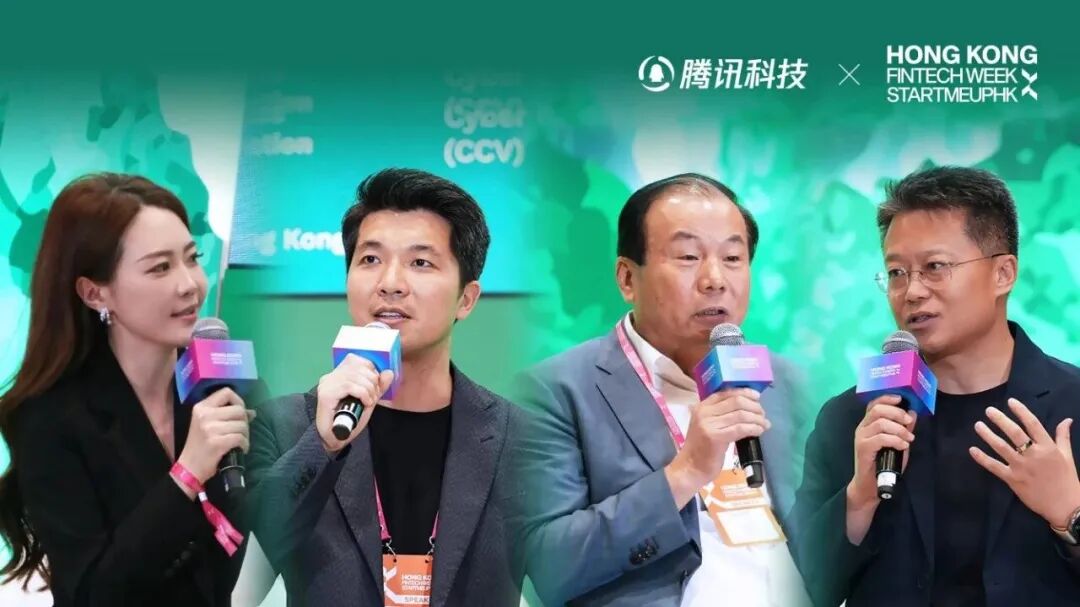
From left to right: LI Hailun from Tencent Tech (questioning), LUO Yihang, Co-founder and CEO of Shengshu Technology, SI Ning, Chair Professor of Robotics and Automation in the Department of Data and Systems Engineering and Director of the Institute of Emerging Technologies of the University of Hong Kong, ZHOU Wei, Founding Managing Partner of Creation Ventures (CCV)
The following is the essence of this exchange (sorted out according to the on-site dialogue record, and some expressions have been appropriately streamlined and optimized):
Q: First of all, please briefly introduce yourselves, as well as your respective research, investment or business practices related to world models. When did you start to pay attention to the field of world models?
ZHOU Wei: I have been engaged in early-stage venture capital all the time. I worked at KPCB for ten years and managed its China fund. Later, our team spun off to establish CCV (full name "Creation Ventures"), and continued to focus on hard technology investment. Overall, we are a global fund.
Speaking of world models, we have been involved in this round of large model wave from the very beginning. Around 2023, I discussed the development of large models with FU Sheng in a live broadcast. At that time, I was very optimistic about the prospects of large models, believing that it would change many industries including autonomous driving. FU Sheng thought that investors' expectations for large models were too optimistic. Interestingly, now his attitude towards large models is even more positive than mine.
We (CCV) invested in the first wave of foundation model companies, including Zero One Everything. Now Zero One Everything has shifted to solutions, that is, decision models. After that, our Silicon Valley team also invested in many local artificial intelligence application companies in Silicon Valley.
World models and robots have been closely linked from the very beginning. Before the emergence of large models, we had invested in six or seven well-known robotics enterprises, three of which are preparing for listing. After the emergence of large models, a well-known project we invested in is in the field of robotic dexterous hands, called Linkerbot. We are its early investor.
In the field of physical models, we have invested in three companies, and are currently in contact with some other startups, mainly from Silicon Valley and the Chinese mainland.
Q: Thank you, Mr. Zhou. We will discuss the investment logic in depth later. Next, Professor SI Ning.
SI Ning: When it comes to whether world models can finally generate practical value, an important question is whether they can help robots understand the physical environment, generate control instructions and complete tasks.
I have been engaged in robotics and automation research for decades, from my student days to the present. We have also carried out a lot of cooperation with the industry, covering from basic theoretical research to application development.
Now when talking about large models, especially physical artificial intelligence, a very important issue is how to use large models to control physical systems, including robots, automation systems and process control systems. But before the emergence of large models, we have been paying attention to this problem, and have developed many methods. At that time, they were not called large models, but "automatic robot programming".
In the past, people needed to write programs for robots so that robots could perform tasks. We have been studying whether we can automatically generate robot programs to let robots complete more tasks autonomously. Up to now, although there are large models, the problems to be solved are similar to those in the past, but the methods adopted are different.
We carried out research on automatic robot programming very early, and related methods have been applied in many industrial systems, especially in the field of automobile manufacturing. For example, in scenarios such as welding and spraying, robots can complete tasks without relying on manually written programs.
Nowadays, large models and artificial intelligence tools make automatic programming more efficient. We have also developed a new method and proposed a foundation model named "GATWorld". It is built based on the new learning method we developed, and the requirements for data volume and training computing power are much lower than current large models. It can be applied to industrial manufacturing, wearable robots and a variety of automation process control fields.
Q: Large models provide new possibilities for the improvement of robot capabilities, but how to promote the implementation and application of robots in more scenarios is still the key that the industry needs to break through. Next, Mr. LUO.
LUO Yihang: Hello everyone, I am from Shengshu Technology. Before the concept of "world model" was widely used, Shengshu Technology had already carried out some work covered by today's world models. We proposed a fusion architecture in 2022, and the main goal at that time was to understand the laws of world operation. We tried to decode physical laws in the pixel space, and video generation is also built on this basis.
Since then, we have been exploring the boundaries of video generation technology. In addition to being able to depict the operation laws of the world in the digital world, it can be further applied to the physical space to drive embodied intelligence to take actions.
Therefore, the current positioning of Shengshu Technology is to build the underlying foundation of general world models, on the one hand to drive digital content production, and on the other hand to support the understanding of the physical world and embodied intelligence.
Q: Today, the three guests participated in the discussion from the perspectives of investment, academic research, technology and product implementation. The first question, we can see that companies with various backgrounds are laying out world models. What do the guests think of this phenomenon? Will they move to the same market in the future?
ZHOU Wei: My point of view is very close to what LUO Yihang just said. If a large model can generate videos that conform to physical logic, from the perspective of physics, it is possible to deduce the underlying laws in reverse. This means that the model has the opportunity to understand the physical world.
To put it simply, artificial intelligence is the "brain", which can complete many things in the virtual world. But to truly intervene in the physical world, we must rely on physical entities such as robots to interact with the real world through hardware, instead of only staying in the virtual interaction presented by videos.
This is also the reason why there are multiple technical routes for physical models and different views continue to be debated. Some routes are based on vision, and there are other routes, including the direction explored by NVIDIA, and Yann LeCun's latent space route. I think these are all methods to establish connections with the physical world.
Taking elderly care as an example, in an aging society, robots need to help the elderly take a bath, turn over and so on in the future. These tasks must be completed through physical models to process real physical interactions. Physical models ultimately need to play a role in real life, not just generate good-looking videos. Therefore, its importance is beyond doubt.
As for whether different technical routes will eventually move to the same market or continue to diverge, it is difficult to judge at present. The professors and entrepreneurs on site may be more suitable than investors to judge the future direction of technology. As a venture capital institution, we can only constantly observe, learn and make investment judgments. Up to now, the debate on technical routes has not converged.
For technical routes, this is different from investing in large language models at the beginning. At that time, the basic route was relatively clear, and the main choice was companies. Now we see at least four different paths, and there are vertical differences within each path. Some companies are very closely integrated with the robot ontology. Therefore, we need to look for investment opportunities in different paths.
In the past, when investing in large model enterprises in the Chinese mainland, the early leading companies were relatively limited, and later there were the so-called "Seven Dragons of Large Models". But now, we have contacted hundreds of physical model companies, and it is not easy to find the best team among them.
Q: Does Professor SI have any supplement on the technical route of world models?
SI Ning: The technical route of world models has not converged, and the future development direction is not clear enough. I think this is closely related to the complexity of the physical world itself.
To understand this problem, we must first figure out what information the world model needs to learn and describe.
Taking large language models as an example, language is composed of vocabulary, and vocabulary forms sentences and articles according to certain rules. Its core is to understand and process the logical relationships in language.
The physical world is much more complex. In addition to the logical relationship between events, it also involves space, time and the interaction between objects. For example, how objects move, how their states change, and how forces are generated between different objects, all of which involve dynamic laws.
The movement and change of objects involve dynamic processes, and the interaction between objects also involves forces. In other words, what we need to describe is a physical world with four dimensions, including time, space, related forces and logical features. This is very different from the information that language models need to process.
Therefore, building a model that can describe the real physical world has different requirements for data and model capabilities. This is also an important reason why current world models face many technical challenges and different technical routes have not converged.
Q: To build a model that can describe the four-dimensional physical world, there are different requirements for factors such as data volume and model scale. World models have not converged so far, and many difficulties they face are closely related to these dimensions. In addition to logic, how to understand the real physical world is more important.
This is also the question I want to ask Mr. LUO. Shengshu Technology initially started with the video generation product "Vidu", and later expanded to world models. There is a view that although video generation models have learned a large amount of world data, does this mean that they truly understand the physical world?
LUO Yihang: Let me talk about our understanding first. To describe the understanding and action of the world, a closed loop must be formed. In addition to communication, humans have been interacting with the world and acting in the world. This process includes three links: perception and understanding, prediction, and action.
We first perceive the current state, judge what changes may occur after taking operations, and then perform actions. Perception, prediction and action form a closed loop of real-time interaction and continuous iteration.
Video generation mainly involves the two links of understanding and prediction. On the basis of the continuous improvement of these two capabilities, adding action instructions further broadens the capability boundary of the model.
Therefore, we named Shengshu Technology's world model "Motubrain". Its underlying model is built on the video generation model, and adds more data of the physical world, including multimodal information and tactile information, so as to build a closed loop from understanding, prediction to action.
From the perspective of industrial practice, I think the technical route is becoming clearer. In 2024, we launched the video generation model Vidu; later we launched the first generation Motus, and then Motubrain and Motus 2 in 2026. We have been superimposing capabilities and iterating continuously along the video generation route, gradually forming a world model.
From the perspective of data generalization and task generalization, we believe that the model has shown a scaling law similar to that of language models, and its accuracy and data generalization capabilities are gradually improving.
In the future, if we want to further improve capabilities and achieve industrial implementation, we also need to combine the high-level semantic reasoning capabilities of language models with world models. Before humans perform fine actions, they will first carry out macro-level semantic thinking; after contacting the physical world, they will complete the actions through more refined model instructions.
I think there are two technical routes that need to be further developed and combined in the future. One is to continuously improve the capabilities of understanding, predicting and acting on the physical world along the direction of world models; the other is to superimpose the high-level semantic reasoning capabilities of language models on this basis. This is similar to the process of humans completing fine actions: before acting, we will first carry out macro semantic reasoning; after contacting the physical world, we also need to carry out more fine-grained action control according to the actual