Tencent, Pop Mart and other players are scaling up their layouts, will celebrity IP peripheral products become a new growth curve?
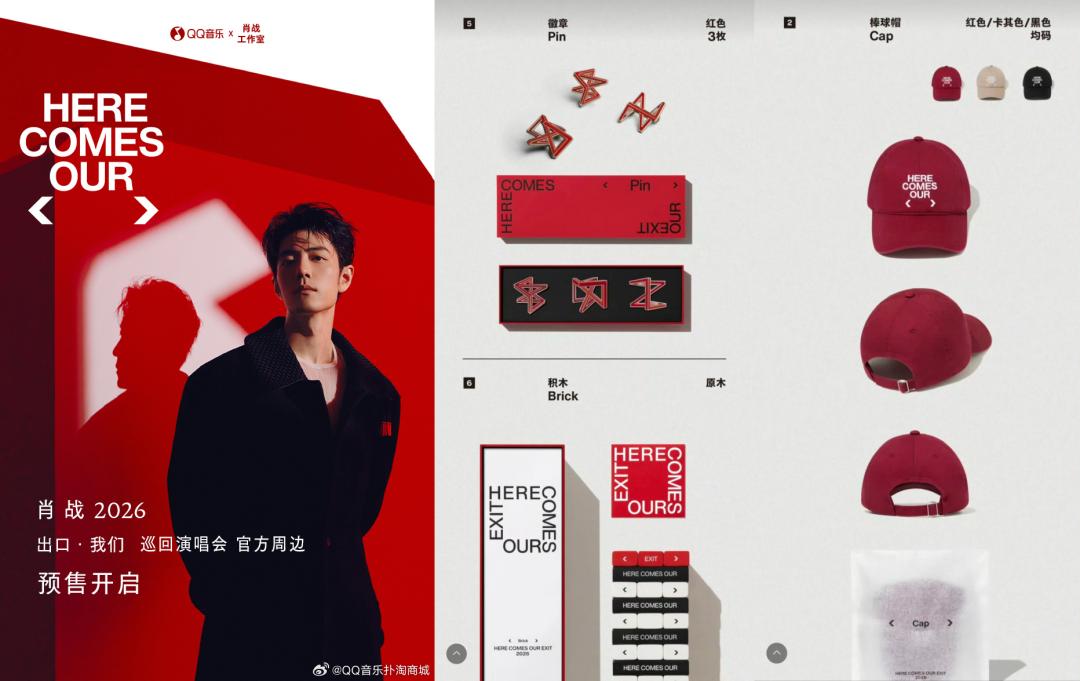
On the morning of October 20, Putaohuo Mall under Tencent Music Entertainment Group (TME) launched official merchandise for Xiao Zhan's "Exit · Us" concert tour. A few hours later, the estimated total sales calculated by multiplying the platform's "sold" quantity by the unit price exceeded 200 million yuan.
On October 27, multiple US media reported that Lego has recently established its first head of "Celebrity and Brand Partnership" role, which is taken up by Kelsey Sherman, former vice president of entertainment marketing and consulting at WME talent agency. This new position marks a key step for Lego, officially announcing its plan to internalize "celebrity relations" as IP development capabilities, and explore brand cooperation forms beyond traditional licensing and co-branding.
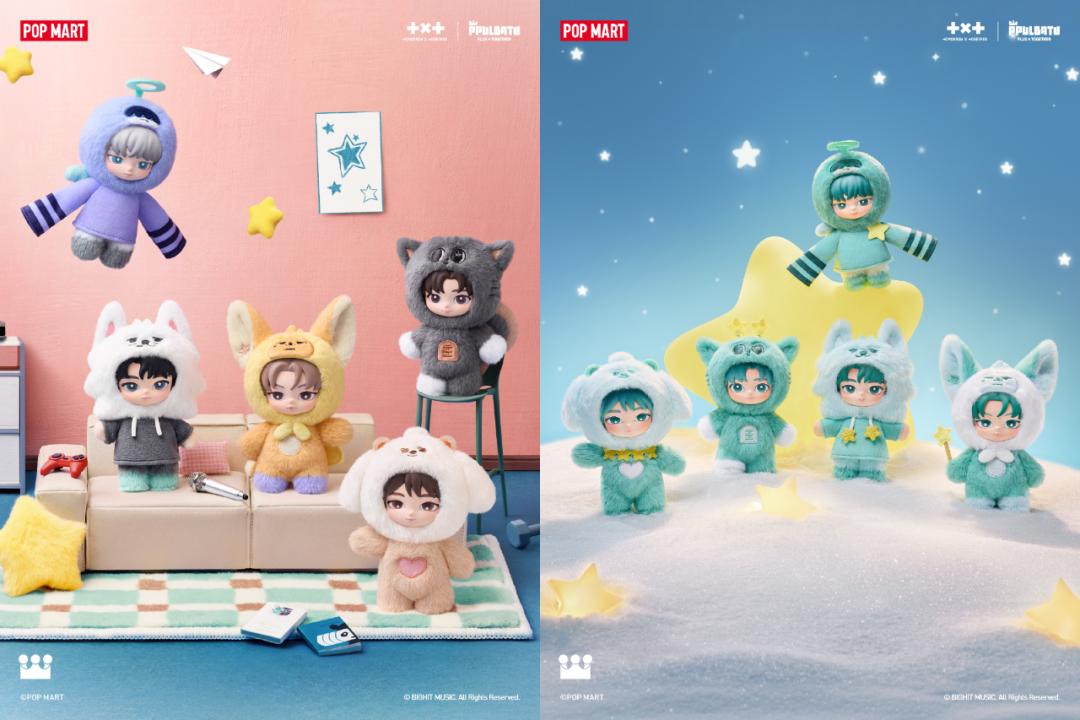
Another toy giant, Pop Mart, recently announced that it will soon launch blind boxes featuring K-pop artist IPs on shelves. On November 5, it will put the "PPULBATU with TOMORROW X TOGETHER Star Series" plush pendants on sale, including 5 regular styles and 5 hidden styles, priced at 129 yuan per piece, with an exclusive small photo card attached.
From Tencent's Putaohuo Mall to Lego and Pop Mart, several moves point to the same thing: the merchandise business of celebrity artist IPs is being re-evaluated. The merchandise business has become one of the core sectors of entertainment companies, and more and more professional trendy toy brands are participating in this track.
The financial reports of South Korean entertainment agencies state this point more directly.
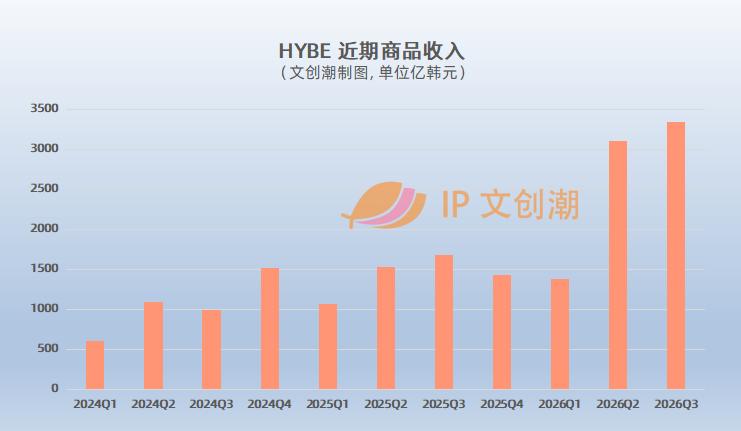
In the third quarter of 2026, HYBE, which manages entertainment groups including BTS and SEVENTEEN, generated 334.6 billion won (about 1.67 billion yuan) in revenue from its merchandise segment in a single quarter, a year-on-year increase of 98.7%, making it the second largest business line after performances. SM Entertainment, which manages artists such as the girl group aespa and the boy band SUPER JUNIOR, generated 62.1 billion won (about 310 million yuan) in revenue from merchandise and licensing business in a single quarter, which has exceeded the 47.1 billion yuan of physical albums and digital music, making it the largest business segment.
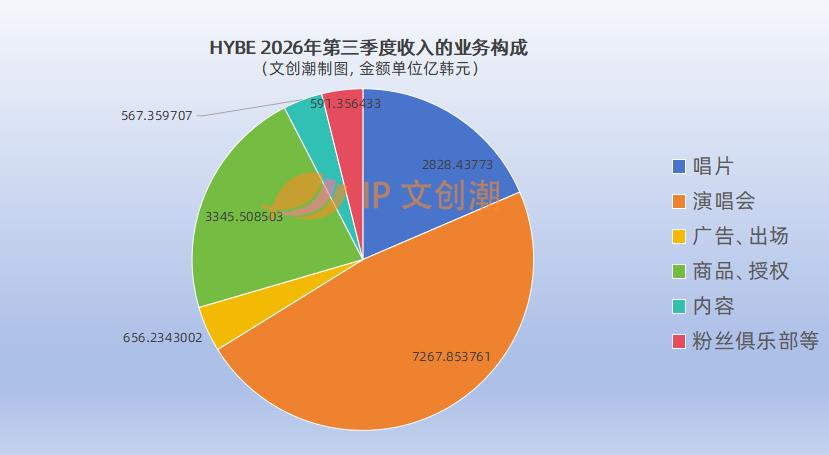
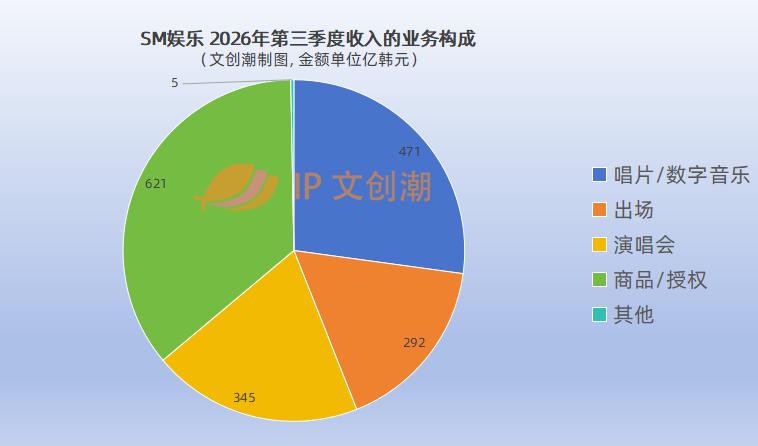
Wenchao Tide made a relevant inventory last year, review: The advancing celebrity artist merchandise, a new hundred-billion market? | Wenchao Tide
Nearly a year later, the categories, scenarios and track players of celebrity artist IP merchandise have undergone considerable changes. In this article, we will discuss the current status of the industry and new trends.
What do celebrity merchandise do: from "cheer sticks" to "character IP assets"
Let's first take a look at Xiao Zhan's concert merchandise on Putaohuo Mall. There are 7 products in total, including baseball caps (169 yuan per unit), badges (79 yuan), hoodies (439 yuan), T-shirts (239 yuan), luggage tags (59 yuan), disposable cameras (269 yuan), and building blocks (139 yuan per unit).
Combined with the products launched by Korean entertainment agencies such as HYBE and SM Entertainment, and Superstar Legend which operates Jay Chou's virtual IP, we can see that today's merchandise forms have evolved from early posters, small photo cards, and cheer sticks to a complete set of combined strategies:
The first is album supporting products, physical albums + conceptual merchandise. For example, for SM Entertainment's NCT 127 group's 7th album "BLINGY", a commemorative pop-up store was held, selling clothing, bags, cards, towels, and character small items simultaneously.
Merchandise for tours and fan meetings are also relatively common, generally including cheer sticks, tour T-shirts, limited badges, keychains, identity cards, etc. With scenario-based design, the scene itself is a sales venue. The baseball caps, badges and T-shirts of Tencent Music's Xiao Zhan concert merchandise fall into this category, and the 7 items form a well-designed price gradient.
In addition, collectible product lines, character-based IP merchandise, and authorized co-branding are also becoming conventional practices, which have evolved through continuous upgrading.
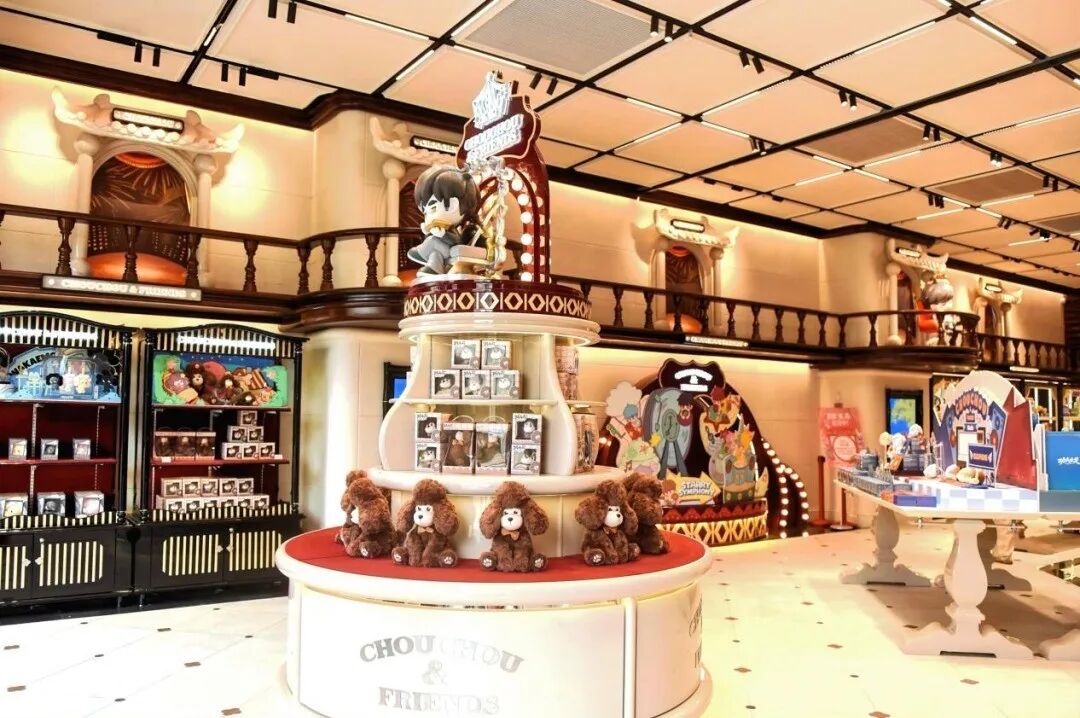
For example, as mentioned in the previous article of Wenchao Tide, Superstar Legend has invested several years in operating and exploring Jay Chou's character-based IP "Little Jay", and now its offline forms have developed from light-touch tests to urban cultural spaces, opening flagship stores in Shanghai, Changsha and other cities.
Review: Holding Jay Chou's IP, why did Superstar Legend open offline stores only now?
HYBE broke down three major strategies for its merchandise business in its financial report (not originally created by it), which is cited by Wenchao Tide as a summary of the industry development direction:
1) From "tour pulse" to "full-cycle repurchase"
In the past, sales of artist merchandise were concentrated in the first few shows of the tour. Now HYBE spreads 2 million pieces of merchandise over 45 days of the entire tour through pre-orders on the online platform Weverse, venue pickup and hotel delivery, forming a continuous purchase rhythm. HYBE executives said that during the BTS tour covering 12 cities, localized product selection by region was carried out, and hundreds of new merchandise items were launched.
2) Data-driven + private domain closed loop
The Weverse platform connects fan clubs, ticket purchases and merchandise consumption. It uses fan behavior data to reverse infer product lines, and optimizes experience through virtual queuing, real-time inventory and fast settlement, making merchandise no longer "designed and then put on shelves", but "first see what fans want".
3) Character IPization and licensing industrialization
Groups under HYBE such as BTS, SEVENTEEN, ENHYPEN share a middle platform to replicate the strategy. For example, character IPization is to precipitate the artist's image, in-group memes, and world view into characters that can continue to exist in the virtual world.
The new K-pop product of Pop Mart mentioned earlier is exactly the character IP "PPULBATU" of HYBE's male singing and dancing group TXT (TOMORROW X TOGETHER).
Where do celebrity merchandise sell well: from "fan impulsive consumption" to "daily IP"
In the article interpreting Superstar Legend, Wenchao Tide mentioned that its heavy operation of "one city one store" runs in parallel with light asset outposts. For new cities, pop-up stores are first used to test local themes, and robot stores are used for low-frequency restocking and trendy toy sales. Flagship stores will be opened when the data is sufficient; the flagship stores are responsible for brand assets, city-limited products, artist co-branding, parties and member repurchases, turning Little Jay from "concert merchandise" into "urban fashion infrastructure".
The comparison between SM Entertainment's data and HYBE is a typical example of the volatility of "concert merchandise".
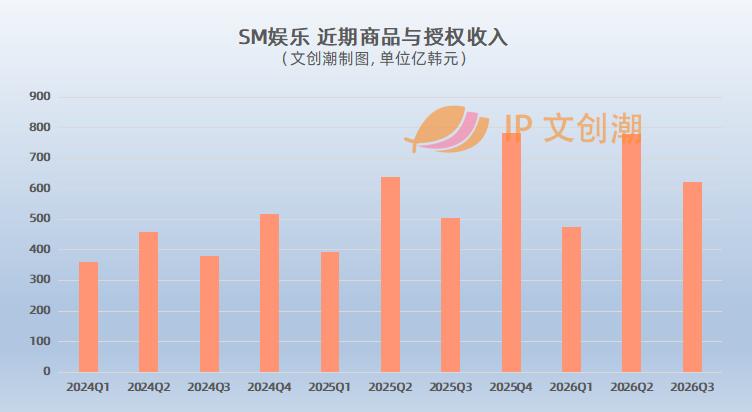
SM Entertainment's merchandise and licensing revenue in the third quarter of this year increased by 23.5% year-on-year, but decreased by 20.3% month-on-month.
The reason is straightforward: in the third quarter, SM Entertainment shifted its focus to overseas decentralized performances and small-scale fan communication, reduced the circulation of new albums, and concert revenue decreased by 34.2% year-on-year. Since celebrity artist merchandise is highly dependent on the two scenarios of "album release period" and "tour site", once the performance density drops, the recession effect of related merchandise will appear immediately.
SM Entertainment itself also pointed out in its financial report: EXO-MUNGCHIZ, NCT 127 pop-up stores, aespa×PUBG (co-branding with the globally popular game) are still contributing to growth, but the overall rhythm of the merchandise business is slowed down by the "tour gap".
This shows that the celebrity merchandise business has strong scenario binding attributes. With the increasing investment of various entertainment companies and trendy toy practitioners, it grows fast, but it is not a smooth curve, but fluctuates up and down with the artist's schedule. (In mainland China, in addition to albums and concerts, there are also schedule scenarios such as variety shows)
Superstar Legend's "light touch point + urban activity" combination in previous years (Little Jay's limited-time pop-up stores enter commercial districts, robot shops display concert merchandise, themed markets carry out node marketing, and superimpose the "Looking for Little Jay" activity to connect IP, landmarks and tour traffic into cultural tourism activities), as well as the core business district flagship store that creates immersive experience this year, are all representatives of celebrity IP operators trying to break the situation of scenario restrictions.
In the first half of 2026, Superstar Legend's revenue from "sales of IP and other products" surged by 329% year-on-year, and revenue from "licensing and franchise use" also increased significantly by 43% year-on-year, which proves the effectiveness of its light touch point model.
Zhou Peimin, Chief Operating Officer of Superstar Legend, said that the company hopes to operate IP with long-termism, conduct business with cultural logic, build connections through space experience in flagship stores, and implement the "one city one store, one city one customization" model.
"Flowering in all its glory" of celebrity merchandise: the road to reshuffling and specialization
During the Double 11 shopping festival in 2025, in Tmall's hot-selling trendy toy list, Mayday's virtual image IP "Boboboo" (Magic Hu Hu Carrot) outperformed Jellycat and Sanrio. During the 618 shopping festival in 2026, Wang Sulong's IP "Roman Planet" ranked among the top 20 popular IPs.
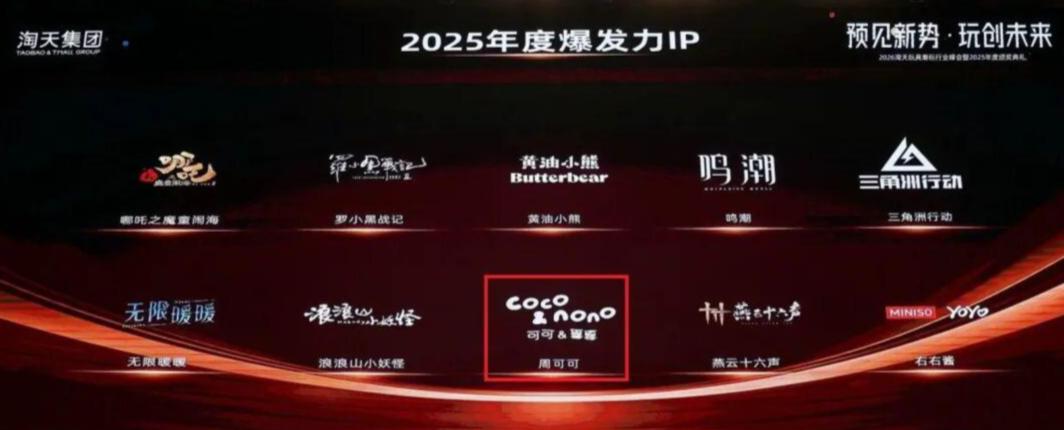
At the toy and trendy toy industry summit of the Taobao Tmall Group in April this year, singer Zhou Shen's official IP "Zhou Keke & Zhou Baobao" won two honors of the 2025 Annual Explosive Growth IP and Annual New Brand. Official data shows that the annual sales of its Tmall store alone exceeded 100 million yuan.
These cases are only part of the picture. In the past one or two years, celebrity artist IPs have visibly increased, and related merchandise has achieved more and more popular results. Celebrity merchandise has generally upgraded from "printing faces" to "self-created character IPs", and from small group orders of fan support clubs to branded trendy toys.
Incomplete statistics show that the number of exclusive celebrity character image IPs in China has exceeded 30 at the beginning of the year, including Mayday, Jay Chou, Zhou Shen, Wang Yuan, Wang Sulong, Bai Jingting, JJ Lin, Zhang Jie, Wang Hedi, Xue Zhiqian, Cai Xukun, Miriam Yeung, Jackson Yee, Zhao Lusi, Lu Han, Ouyang Nana, Hua Chenyu, Mao Buyi, Tan Jianci, Xu Song, Chen Chusheng, Li Yuchun, Zhou Bichang, Wang Yibo, Huang Jingyu, and so on.
These celebrity character image IPs do not directly adopt the real image of celebrities, but extract celebrity-related labels for trendy toy design, or carry out deep linkage and strong binding, or use circle hot memes generated in fan communities and concerts and other activities.
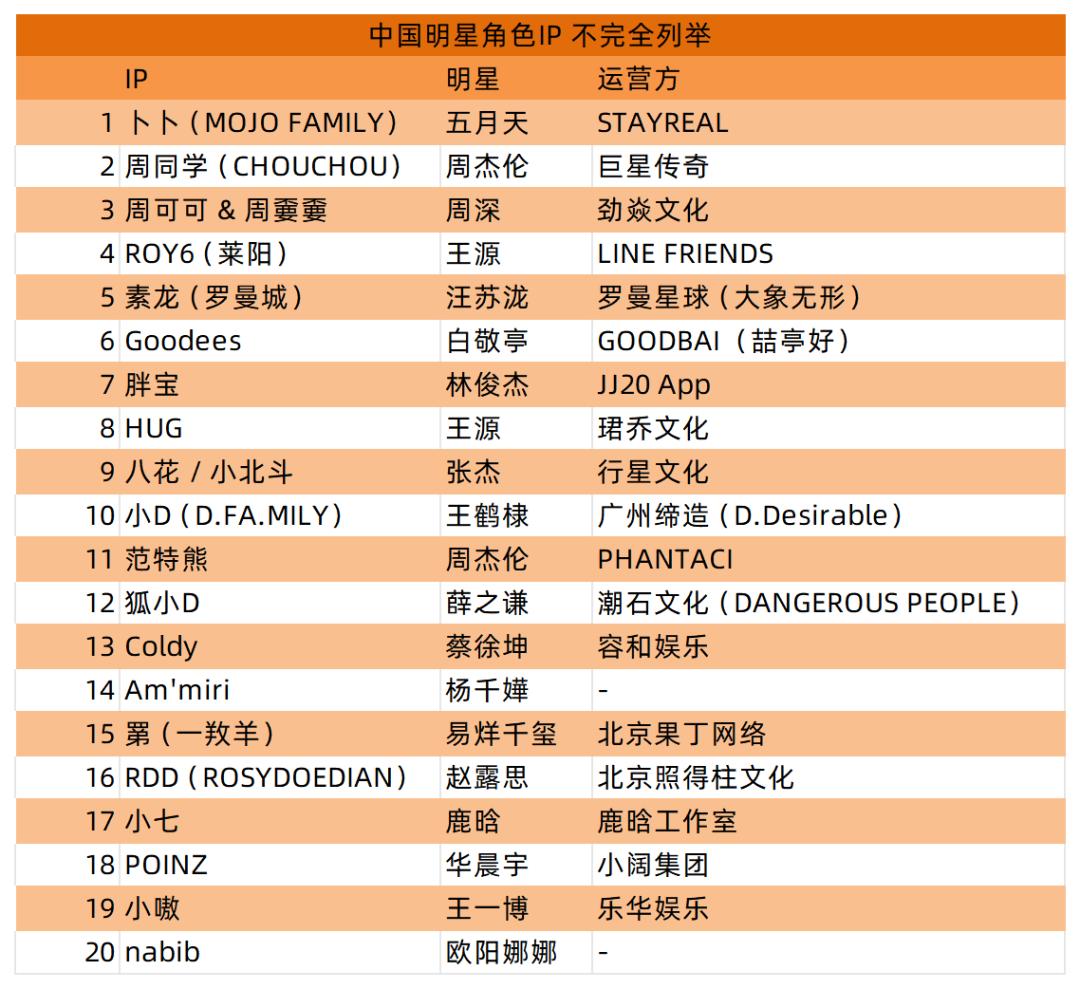
When sorting out the existing character images, Wenchao Tide found that many celebrity studios or agencies have registered related art copyrights to prepare for the launch of IPs, and there will be a situation where celebrity IPs "blossom in all their glory" in the future.
Therefore, the situation we witnessed in the market of character IP trendy toys will inevitably repeat: in the celebrity IP track, there will also be top players and the vast majority of less popular ones. For example, among the dozens of existing self-created celebrity character IPs, the merchandise sales of Boboboo, Little Jay, Zhou Keke and several others are at the level of 100 million yuan, while more are still at the level of fan memes, and their commercial value has not yet been demonstrated.
The main reason is that the traffic is actually concentrated on a few celebrity artists. They not only attract the most attention, but also have the strongest consumer appeal. There is