From a lawn weeder to the founder of a $7.8 billion sports empire, his business story is far more than just inspirational.
When recalling his most unforgettable moment, Ted Leonsis said that once President Obama called and told him he wanted to watch a Washington Mystics game.
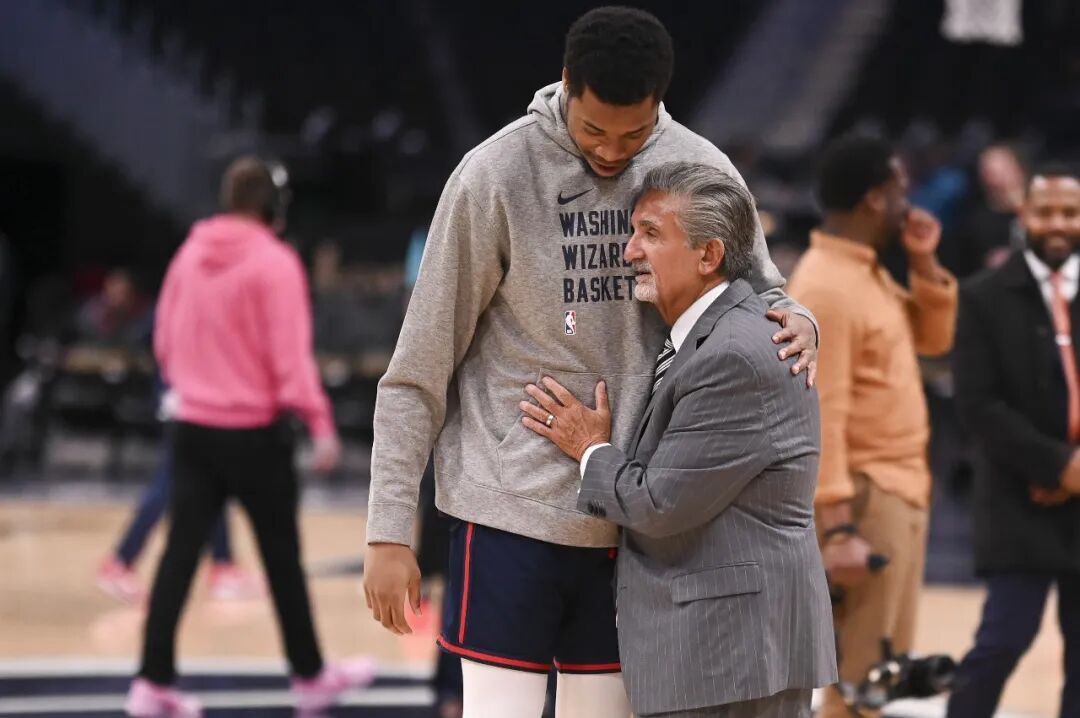
At that time, he had just taken over the Washington Mystics of the WNBA and volunteered to experience all types of work in the company. After receiving the president, Ted was in charge of cleaning up the waste after the game. Someone trimmed their toenails during the game, and his job was to pick up the scattered toenail clippings on the ground. "One second I was standing next to the President of the United States, feeling that I was somebody, and the next second I was picking up other people's toenail clippings. But that is exactly the work attitude you are supposed to have," Ted said.
Ted is the founder of Monumental Sports & Entertainment (MSE), an American sports group, and was named by Forbes as one of the 250 greatest self-made figures in the United States. The MSE company he owns has a valuation of more than 7.8 billion US dollars.
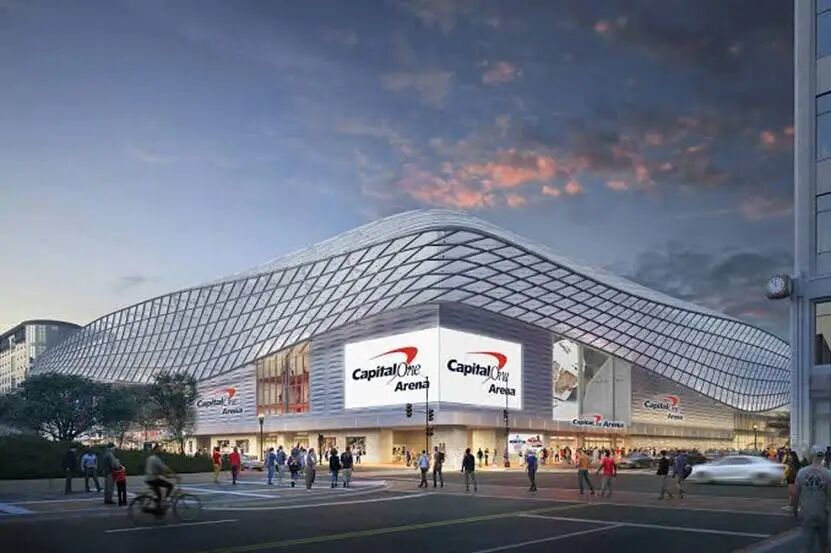
MSE owns the Washington Wizards of the NBA (and the Capital City Go-Go of the NBA G League), the Washington Capitals of the NHL, and the Washington Mystics of the WNBA, and operates five arenas — including the 20,000-seat Capital One Arena located in the center of Washington D.C., as well as the media platform Monumental Sports Network (MSN). This media platform is the exclusive local broadcast and streaming service provider for the Washington Capitals, Wizards and Mystics, distributed through linear TV, digital, mobile and OTT channels.
In recent years, as major leagues including MLB, NHL, NBA, MLS and NFL began to allow PE investment or relax investment regulations on external capital around the pandemic, professional sports assets represented by sports clubs have become targets with scarcity and long-term value in the eyes of institutional capital. More and more capitals have built integrated, multi-team operating sports and entertainment groups by acquiring club assets located in different sports leagues.
Although MSE is not the pioneer of this business model, it is a typical representative of this type of company — it not only owns cross-league and cross-track sports assets, but also generates positive chemical reactions among these assets, which ultimately drives the increase of the parent company's asset value. In June 2023, the Qatar Investment Authority (QIA) acquired 5% equity of MSE, becoming the first and only sovereign wealth fund that directly invests in large American sports clubs. In December 2025, MSE announced that Arctos Sports Partners became a new minority shareholder, and confirmed that QIA had increased its existing investment. According to Sportico's report, the QIA acquisition in 2023 valued MSE at about 4.05 billion US dollars, and the 2025 transaction valued it at 7.2 billion US dollars, representing a 78% increase over three years.
At the beginning of the article, the story that Ted accompanied the US president to watch the game one minute and picked up toenail clippings in the arena the next minute is certainly inspiring, but the reason why MSE can achieve today's status is more due to its leading business philosophy and excellent operation itself.
01
Operating club assets with SaaS philosophy
MSE founder Ted started his career by weeding lawns for others. After graduating from university, he first worked at a computer company, then founded a media company which was later sold to America Online (AOL). This acquisition made Ted the president of AOL. In the following 14 years, the number of AOL members grew from 800,000 to 8 million, and its revenue soared from 100 million US dollars to 1.5 billion US dollars.
In 1999, Ted acquired his first team — the Washington Capitals of the NHL. In 2010, he took over the Washington Wizards of the NBA to become the major shareholder, and then established MSE. Around the time he took over the Wizards, he also acquired the Washington Mystics of the WNBA. The home arena of the Washington Capitals and Washington Wizards has always been Capital One Arena. This arena has been in use since 1997, and it was also the home arena of the Washington Mystics before 2018. This venue hosts more than 220 live events every year, and once held the indoor parade of Trump's second inauguration ceremony in 2025.
▲ Source: Official website of Monumental Sports & Entertainment
In 2023, MSE obtained investment from the local government by using the threat of moving its home arena as a bargaining chip. According to the Washington Post's report at that time, if the Washington D.C. government did not invest in the arena upgrade, MSE would consider moving the Capitals and the Wizards to Virginia. In March 2024, the mayor of Washington D.C. announced that an agreement had been signed with Leonsis to ensure that the Capitals and the Wizards would stay in Washington D.C. "at least until 2050".
In 2019, MSE spent 30 million US dollars to renovate the arena. The renovation included completely replacing the seats of the arena, repairing the circular corridors, and transforming many catering outlets inside the arena. In addition, a larger overhead video display screen and a brand-new SkyRing video screen surrounding the top of the arena were added.
At present, the arena is undergoing a new renovation project with a total cost of 1 billion US dollars, of which 515 million US dollars comes from the Washington D.C. government, and the rest is paid by MSE.
Continuously investing huge sums of money to renovate the arena is not only to improve the game viewing experience of fans, but also one of the ways to maintain revenue growth. As the former president of AOL, Ted talked about his work experience in subscription-based enterprises, and he introduced the "SaaS" (Software as a Service) concept to MSE, that is, to have a continuous recurring revenue stream. For example, one of the company's important revenue pillars comes from 10 "vault suites" in the arena. Customers can not only enjoy sofas and bars in the suites, but also go out to watch games at the best viewing seats in the venue. But customers of the suites must sign a 10-year contract, and this part of the revenue can bring the company millions of dollars in earnings every year. He mentioned that 70% of the company's current business belongs to this type of localized and recurring revenue.
In August this year, MSE signed a 20-year naming rights renewal agreement with Capital One Financial Corporation. Capital One's naming right for the arena has lasted for 10 years since 2017.
02
"Full-stack" ownership
In the fall of 2022, MSE acquired full control of NBC Sports Washington, and later renamed it Monumental Sports Network. This channel holds the exclusive local TV broadcast rights for the games of the Washington Wizards, Washington Capitals and Washington Mystics. Monumental Sports Network is also the TV and digital broadcast platform for the Capital City Go-Go of the NBA G League and Wizards District Gaming of the NBA 2K League.
In addition, the digital broadcast channel launched by MSE in 2016 also broadcasts exclusive behind-the-scenes content of these teams. Today, all these businesses have been integrated into one brand and operated uniformly by Monumental Sports Network.
▲ Source: Official website of Monumental Sports & Entertainment
A month ago, Ted appointed his son Zach as the president and vice chairman of MSE. Zach previously served as the president of media and new business, and he will be responsible for supervising financial operations, infrastructure, technology, venue and media businesses afterwards. In Zach's view, the traditional sports event operation model often relies on external broadcast organizations to distribute event content, and many teams frequently change broadcast partners, develop distribution solutions on their own, or look for new partners. Some teams can't even inform fans where the games will be broadcast until the opening day of the season.
"One of the most correct decisions we have made is not only to continuously invest funds to acquire copyrights, but also to take back control of our own destiny. We are holding the steering wheel when deciding how to distribute content," Zach said.
Owning more assets does not necessarily equal higher profits. Operating venues, building broadcast platforms, and producing media content all require huge upfront investment. If owning a broadcast platform increases revenue by 100 million US dollars per year but costs 110 million US dollars to operate, it is not a cost-effective asset. For small-scale sports companies, sometimes cooperating with other broadcast platforms is a better choice, because broadcasters may have larger audiences, more complete distribution channels and more advertising connections. Selling copyrights can transfer part of the commercial risks to partners while bringing predictable revenue to the teams.
However, for companies with a valuation of billions of dollars like MSE, taking control of distribution channels by themselves is a more common choice. For example, Altitude Sports network under Kroenke Sports & Entertainment (KSE) holds the broadcast rights of three Denver-based professional sports teams under Kroenke.
In an article on Forbes, MSE's asset ownership is described as "Full Stack". It not only controls the teams, but also controls the infrastructure for fans to watch, participate in and experience the games. Zach mentioned that this "full-stack" ownership makes MSE have higher commercial value. Direct reach in the arena reaches 3 million person-times every year, the TV network covers more than 2.5 million subscribers, and there are tens of millions of fans on broadcast channels and various digital and social media platforms. This also allows the company to provide event content through the D2C model, develop its own end-user applications and settle in various digital platforms in the era of declining cable TV, so that fans can find the team's content more easily. "In the final analysis, this also provides great stability for our fans."
"In addition, we are directly facing consumers, and we clearly know who will enter our venues. We have more than 5 million recipients in our database. Compared with other media partners that can only provide anonymous viewing data, we have unique advantages," Zach added.
MSE is not the only enterprise that owns sports teams, venues and media assets at the same time, and what it does is to organically integrate these elements across three major mainstream professional leagues in one local market, so as to provide more comprehensive products to fans and advertisers, control more distribution links, and coordinate the commercial relationships among its various businesses.
03
"Make Washington the sports capital"
Instead of becoming a cross-regional and cross-national sports group, MSE has poured more energy into Washington D.C., where its teams are located.
When Ted spoke frankly about his idea, he said that fans spend a lot of time traveling to the arena, watch the game on site for two and a half to three hours, and continue to watch it on TV after returning home. They invest three hours every day paying attention to the team, and no other thing can generate such deep emotional connection. "Therefore, we must take our responsibility. What we own is not just an ice hockey team, nor just a piece of real estate. What we own is a platform that can reach across generations of families."
Ted attaches great importance to community influence. Through various initiatives launched by the corporate team, leagues and players, and with the support of the MSE Foundation, the company has built 14 playgrounds in Washington D.C., benefiting thousands of children. When the playgrounds are being built, players of the Wizards and the Capitals will all volunteer there.
Professional sports clubs are highly dependent on surrounding communities, including local fans, public infrastructure, corporate sponsors and support from all walks of life. Carrying out community interaction not only helps to consolidate these relationships, but also brings tangible social benefits.
MSE's investment in community services is not limited to one-time donations or short-term appearances of players, but provides local children with opportunities to participate in sports by solving obstacles such as insufficient sports facilities, expensive equipment and lack of coach guidance.
In September 2024, MSE announced a multi-million dollar, four-year investment plan, aiming to provide every child in Washington D.C. with the opportunity to participate in sports. In addition to renovating public courts and building playgrounds, this plan also provides necessary sports equipment and scholarships for schools, and funds the professional development of coaches.
From watching the games of the Washington Capitals to buying the team, Ted said that the next step he will take is to "make Washington D.C. the sports capital of the United States".
This article comes from the WeChat official account "Lanxiong Sports" (ID: lanxiongsports), written by Zhang Yuwei, and released by 36Kr with authorization.