The path that Tesla, Apple and Huawei are all taking: Why are China's intelligent driving industry players collectively moving toward software-hardware integration?
In recent days, the topic of "integrated software and hardware" in the intelligent driving circle has heated up again.
On October 29, XHEART, the "sister company" of Momenta, released its large-model chip X7 Ultra in Suzhou, and the R7 Ultra world model to be launched by Momenta also made its debut at the same time.
The similar naming implies the deep binding between the chip and the model. As its CEO Li Zonglin said: "Let the large model define the chip, and let the chip carry the next evolution of the large model".
In the first half of this year, Li Auto announced that its self-developed chip Mahe M100 was successfully developed; BYD announced that its 4nm intelligent driving chip had entered mass production.
From this perspective, the competition of integrated software and hardware has reached a new level.
Just last year, the hardware and software in the intelligent driving industry were still completely separated.
There were only two leading domestic players — Horizon Robotics and Huawei.
In just one year, integrated software and hardware players have sprung up like mushrooms — this not only shows that the value of full-stack closed loop has been widely recognized by the industry, but also means that the position competition around "integrated software and hardware" has just truly begun.
Why has integrated software and hardware become the focus of competition?
Integrated software and hardware is not a new trend that has emerged in recent years, and its origin can be traced back seven years ago.
At that time, Tesla faced practical problems: first, it wanted to get rid of the constraints of the Mobileye solution, and second, it found that NVIDIA's chips followed a general-purpose route, which did not match its own needs.
So Tesla chose to take the chips in its own hands, and opened up the entire chain of chip design and software development.
Relying on this full-stack capability, Tesla has long been in the leading position of high-level intelligent driving ever since.
After Tesla verified that this path is feasible, domestic manufacturers began to follow up collectively.
Players in the supply chain are also moving closer to the middle — Horizon Robotics, which originally made chips, began to extend to the algorithm direction, and put forward the slogan of building "Wintel for Physical AI".
So why does the competition of intelligent driving move towards integrated software and hardware?
From the perspective of the industry, intelligent driving competition is shifting from the "era of scale competition" to the "era of intensive cultivation".
Data from the Ministry of Industry and Information Technology shows that the penetration rate of passenger cars with L2-level combined assisted driving functions in China has reached 70.5%, and the penetration rate of passenger cars with navigation assisted driving functions has reached 34.2%. Intelligent driving has almost become a standard option for users in the end market.
In the scale stage of intelligent driving, end consumers do not yet have the awareness of "must buy intelligent driving", and the industry can divide labor respectively: those who make chips make chips, those who make algorithms make algorithms, and those who make whole vehicles make whole vehicles.
This refined division of labor saves the cost of each link, giving every company the opportunity to excel and deepen its expertise in its own field.
However, now that the cultivation of the end market is coming to an end, the next competition is no longer "whether there is intelligent driving", but "whether the intelligent driving function is smooth" — the competition will gradually shift from functional configuration to experience.
In particular, L3 is coming, which transfers part of the driving responsibility to the original equipment manufacturers, and the requirements of OEMs for intelligent driving have risen to a new level accordingly.
This is like after the popularization of mobile phones, the competition is no longer about the most basic functions, but about whether the camera is clear and whether various parameters are strong;
It is also like today's short drama industry. After going through the past stage of shoddy production, it must now enter the deep processing stage.
This is the only way for the development of any industry market.
Since it is a universal law of all industries, the answer has actually been written in the version long ago.
In the mobile phone market, Apple has formed the deepest experience moat through full-stack self-development — it can be said that the current intelligent driving industry is taking "Apple" as the standard.
Tesla's model is the most similar to Apple's. In 2024, Li Xiang said that Tesla is the company closest to Apple's model — it has its own terminal capability, its own operating system capability, and its own chip capability.
Huawei's intelligent driving also follows the "Apple-style" full-stack self-developed closed loop, coupled with its strong influence in the C-end, forming its current dominance in the high-level intelligent driving market.
These cases have indeed produced effects in the market, forcing all divisions of the industrial chain to start new thinking:
Those who can get close to the Apple model will try their best to do full-stack self-development;
Those who cannot do full-stack self-development will try to get close to full-stack self-development, and at least grasp the core variables;
This has led to various specific actions.
OEMs feel that intelligent driving is increasingly "the soul of automobiles", and they will try their best to develop it independently if possible, such as BYD and Li Auto;
Naturally, chip manufacturers want to further deepen their own moat, after all, even their own customers are developing chips independently.
Like Horizon Robotics, since it does not have the conditions to become Apple, it will build the Android platform in the intelligent driving industry and build "Wintel".
In July this year, Horizon Robotics and Volkswagen Group launched a new round of deepened cooperation. Horizon Robotics does not directly deliver a closed autonomous driving finished product to Volkswagen, but opens up the underlying computing power architecture, the full set of development toolchains and other resources, so that Volkswagen can develop upper-layer applications on this base by itself.
In fact, it can also be seen from the financial report that Horizon Robotics' algorithm business has performed prominently.
According to Tianyancha App, in 2025, Horizon Robotics' revenue from automotive product solutions reached 1.622 billion yuan, a year-on-year increase of 144.2%;
Revenue from licensing and service business reached 1.935 billion yuan, accounting for 51.4% of the total revenue.
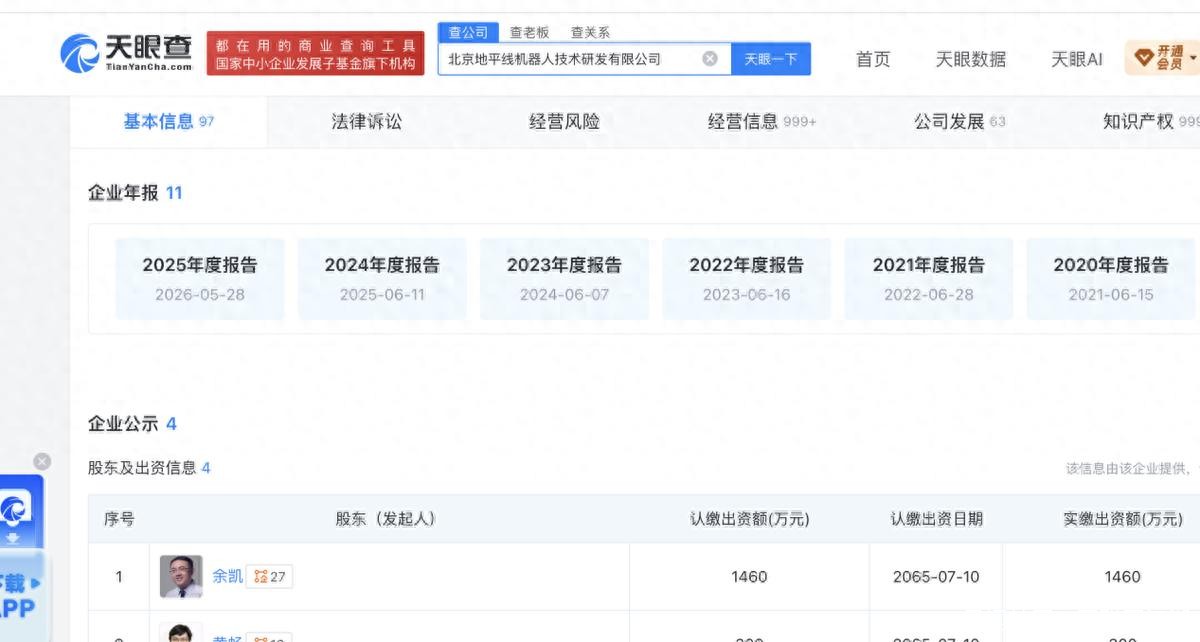
The gross profit margin of the licensing business reached 94.5%, which is significantly higher than the 34.5% gross profit margin of automotive product solutions.
Similarly, algorithm companies feel that the cooperation of general-purpose chips is not good, a lot of computing power cannot be used, and chip iteration cannot keep up with algorithm iteration, so they begin to find ways to master chips;
The most typical example is that Tesla gave up NVIDIA back then and developed chips by itself.
And the current cooperation between Momenta and XHEART, putting forward "model defines chip", is also for a better intelligent driving experience in the future.
From the perspective of actual effect, this idea has shown its value. Based on the XHEART X7 Ultra chip, the model parameter scale of Momenta R7 Ultra is expanded to 5 times of the original, the safety performance is increased by 5 times, and the ability to "deduce everything" begins to emerge.
At the same time, the NPU computing utilization rate reaches 98.7%, and the memory bandwidth consumption is reduced by 80%, which means that more chip computing power is used for model reasoning rather than data transmission, and the overall utilization efficiency is significantly improved.
It can be said that the intelligent driving industry has truly entered the "iPhone" moment.
However, the industry's debate on "integrated software and hardware" of intelligent driving has always existed, and the biggest debate is whether to develop chips independently.
The industry's views on this are extremely divided.
Su Qing from Horizon Robotics once said bluntly that chips are an infinite game that requires paying "tolls" every year for tape-out, IP and production lines. Without a sufficiently wide downstream market, full self-development is a fragile story.
He took Apple and Huawei as examples: Apple can develop chips independently, relying on the 100-million-level shipment volume supported by the full range of iPhone, iPad, Mac and Watch products;
HiSilicon can survive relying on Huawei's product clusters of communications, mobile phones, servers and cloud. If there is only one downstream of its own automobiles, the R&D cost cannot be amortized at all.
Of course, as a senior executive of Horizon Robotics, Su Qing's statement has his own position — car manufacturers and algorithm companies have entered the chip field one after another, which is exactly touching the moat of Horizon Robotics.
However, from the perspective of cost, this statement does make sense: Zhu Jiangming from Leapmotor was one of the first groups of people to develop chips independently, and finally terminated the project because "the economic account cannot be calculated", and admitted that the current AI intelligent driving chips have been seriously oversupplied.
However, even if the cost account cannot be balanced, this account must be calculated in the future.
We are currently in the era of great AI transformation.
He Xiaopeng said that the world's best AI companies in the future will choose customized chips, which will determine the upper limit of the performance of each AI product;
Xie Yan, CTO of Li Auto, believes that when automobiles become "embodied intelligent devices" in the physical world, the underlying computing power is no longer a cost center, but a ticket to the era of embodied intelligence in the knockout round;
Li Xiang even said bluntly that the embodied intelligence barrier in the next ten years is the inference chip, which is related to whether Li Auto can become an enterprise like Apple, and it is "the final fight".
In other words, the weight of consideration for self-developed chips is not on cost, but on the weight of future physical AI — just as Horizon Robotics itself chose not to make whole vehicles, but to build the underlying computing platform in the era of physical AI;
Xpeng, Li Auto, Xiaomi, Chery and other car manufacturers have deployed in the robot field one after another, all following the same logic: not satisfied with making cars, but to become the leader in the AI era, and chips will definitely be used in more AI fields beyond automobiles in the future.
The main reason is that the times are changing so fast that people dare not fail to calculate this account.
L3 has been implemented, L4 may be released on a large scale in 2028, and it may even subvert the OEM's operating model of "one-time car sales" in the future;
At the same time, last year's AI large model was still like a crawler, but in the first half of this year, Agent exploded, and AI officially became a tool entering all walks of life;
Now no one mentions Agent anymore, and general large models have entered the physical world, with iteration speed so fast that people are too busy to follow.
Recently, GPT-6 Astra, a general large model that has never specially learned driving, demonstrated autonomous driving — it controlled a Corolla to drive at low speed for 134.7 meters in a closed parking lot, with a single reasoning cost of 7.74 US dollars.
This achievement may not be worth mentioning in the intelligent driving industry, but it has caused industry anxiety: Zhou Guang, CEO of DeepRoute.ai, predicted at the World Intelligent Connected Vehicles Conference that a few years later, the companies that truly realize fully driverless autonomous driving may not be autonomous driving companies, but OpenAI and Anthropic.
In other words, in the era of great change with infinite possibilities, everything may be subverted. To prepare for the future, chips are a part of the future.
The tide of the times is surging, and opportunities are fleeting. As the saying goes, if you don't fight now, when will you fight — even if there are risks.
Just as Li Xiang is determined to build a great company like Apple, the ongoing drastic changes in the industry may be the only window in Li Xiang's life.
Zuckerberg's words may be the best footnote: "In a world that changes so quickly, the biggest risk you take is not taking any risks."
Leading manufacturers embrace chips, how should the software camp respond?
However, when the top companies in the whole industry are leaning towards the combination of chips and algorithms, the pressure shifts to pure algorithm and software manufacturers — in the future intelligent driving game, will there still be a place for software companies?
The answer is probably not so optimistic.
From the perspective of technical logic, the depth of collaboration between chips and software determines how high the ceiling of efficiency and power consumption of the integrated software and hardware solution can reach, which is exactly the most fundamental problem that the algorithm system needs to solve.
From the perspective of customers, for car manufacturers, if intelligent driving software and hardware can be delivered by one supplier in a package, the matching degree and iteration efficiency are more guaranteed, and the management cost is also lower, which means that companies that "only sell algorithms" may be marginalized in the future.
In reality, the gross profit of software solutions is already low, and car manufacturers are continuing to lower prices:
It is understood that for a set of urban NOA solutions, the single-vehicle licensing fee could be reported to 3,000 to 4,000 yuan two years ago, dropped to 1,500 yuan at the beginning of this year, and even this is not the bottom.
Conversely, whoever masters the chips and sells the chips and solutions in a package can not only increase the overall profit, but also greatly reduce the risk of being replaced by car manufacturers.
Moreover, the competition in the low and mid-end market in the future will upgrade from "competing on price" to "competing on experience". At that time, pure algorithm companies without chip collaboration capabilities and pure chip companies without algorithm binding may fall into passive situations.
From this perspective, players such as DeepRoute.ai, JoyMuse, Black Sesame Technologies, and Qcraft will probably face new challenges next.
However, players in this camp are not unprepared, and alliance-style integrated software and hardware is emerging.
On April 23 this year, several companies including Qcraft, Stepfun, Axera, and Iluvatar CoreX officially announced the formation of the "Qianli Alliance", putting forward the ecological concept of "chain collaboration": Stepfun provides large model capabilities, Qcraft is responsible for model application, Axera develops vehicle-end chips, and Iluvatar CoreX provides general computing power that can be used for large model training.
In addition, last month Qcraft released millimeter-wave radar and proposed "software-defined sensors".
On the other side, DeepRoute.ai and Black Sesame Technologies chose the path of deep binding — on December 12, 2025, the two parties signed an agreement to adopt dual binding of "capital + business": Black Sesame invested in DeepRoute, and jointly developed high-level assisted driving solutions based on the next-generation automotive-grade chip.
The division of labor is very clear: Black Sesame provides chips and development toolchains, DeepRoute.ai is responsible for algorithm adaptation and optimization, and jointly provides car manufacturers with integrated software and hardware solutions of "chip + algorithm", focusing on promoting L2+/L3 mass production, and also exploring scenarios such as Robotaxi.
Whether it is an alliance or binding, the purpose is to achieve deep adaptation of algorithms and chips through closer collaboration. However, compared with the underlying self-developed software and hardware collaboration of Horizon Robotics and Momenta, the cooperation degree of this external cooperation is not high enough after all.
Every family chose this path, and there are their own practical accounts behind it.
For Qcraft, there is really no need to make chips at present — it has long been labeled as a Geely-affiliated company, and the most important thing is to expand customer diversification.
In March 2025, Qcraft, together with Geely and Maichi Zhixing, formed a joint venture entity Qianli Intelligent Driving, as the core carrier of the group's intelligent driving business, fully undertaking the intelligent driving solution supporting for all series of models such as Geely, Zeekr, Lynk & Co, and Geely Galaxy.
This internal joint venture