Against the backdrop of population aging and consecutive years of shrinking population, what is the first product category that supermarkets and hypermarkets can no longer sell well?
At the end of October, *China Statistical Yearbook 2026* compiled by the National Bureau of Statistics was published. In 2025, the per capita consumption expenditure of Chinese residents reached 29,476 yuan, representing a 4.4% increase over the previous year.
The total figure is within expectations, while the distribution across all provincial-level regions is worth closer examination.
Among the 31 provincial-level regions across the country, only 7 register a per capita consumption level higher than the national average, and all 7 of these regions are located in eastern China. Shanghai and Beijing are the two regions where people spend the most, yet they are also the areas with the lowest average propensity to consume; Gansu, which records the lowest income level nationwide, ranks first in terms of average propensity to consume.
Two other sets of figures can be viewed in comparison.
By the end of 2025, the national population decreased by 3.39 million compared with the previous year, marking the fourth consecutive year of decline. In addition, in the first three quarters of 2026, retail sales of services rose by 5.0%, while retail sales of goods only increased by 1.0%.
People are still spending money, but what they spend on, who the spenders are, and where they make purchases are all completely different from before.
All these changes point to one common problem for supermarkets. Over the past two decades, with the growing population, expanding cities and the supplementary role of online channels, supermarkets could always tap into new business opportunities. Now, all these three growth paths have changed.
1
Residents in Beijing and Shanghai spend prudently, while consumption is "upgrading" in county towns
Among the 7 provincial-level regions with per capita consumption above the national average, Shanghai and Beijing take the top two spots, with per capita consumption reaching 54,765 yuan and 50,667 yuan respectively. Another 13 provincial-level regions record a per capita consumption of less than 25,000 yuan, while the lowest figure of 20,501 yuan is registered in Xizang, which is only 37% of Shanghai's level.
The pattern of higher consumption in the east and lower consumption in the west is predictable for most people, but the ranking of average propensity to consume is quite different.
Average propensity to consume refers to the proportion of consumption expenditure in disposable income, and the national average figure stands at 67.95%. Shanghai records 59.54% and Beijing 56.87%, the two lowest figures across the country. Gansu, with a per capita disposable income of 28,224 yuan (the lowest nationwide), has an average propensity to consume of 80.99%, the highest in China.
Converted into the remaining disposable income per capita for a whole year, the gap is very intuitive. The per capita balance of residents in Shanghai is 37,222 yuan, 38,423 yuan in Beijing, while Gansu has only a little over 5,000 yuan.
A high average propensity to consume in most cases does not mean that people are more willing to spend money, but that rigid expenditure squeezes out the money that could have been saved. A large part of the remaining disposable income of residents in Beijing and Shanghai is used to buy properties, purchase financial assets, or save for future unexpected needs, none of which are counted as conventional consumption.
What takes up most of the expenditure can be seen more clearly from the consumption structure.
The per capita residential expenditure in Beijing reaches 19,433 yuan, more than 5 times the 3,641 yuan in Xinjiang. The proportion of residential expenditure in total consumption expenditure is 38.4% in Beijing, 32.7% in Shanghai, while the national average is 21.7%.
With a large proportion of expenditure going to housing, the proportion of food expenditure drops accordingly. The Engel's coefficient of Beijing is 20.2% and that of Shanghai is 25.0%, both lower than the national average of 29.3%. Calculated by proportion, Beijing residents spend about 10,200 yuan a year on food, tobacco and alcohol, and Shanghai residents spend about 13,700 yuan, both higher than the national average of 8,631 yuan. Customers in Beijing and Shanghai do not spend less on food, their food expenditure proportion is just dragged down by high housing costs.
In these cities, more and more money is spent on services, while customers calculate very carefully for the part of expenditure that goes to physical goods on shelves.
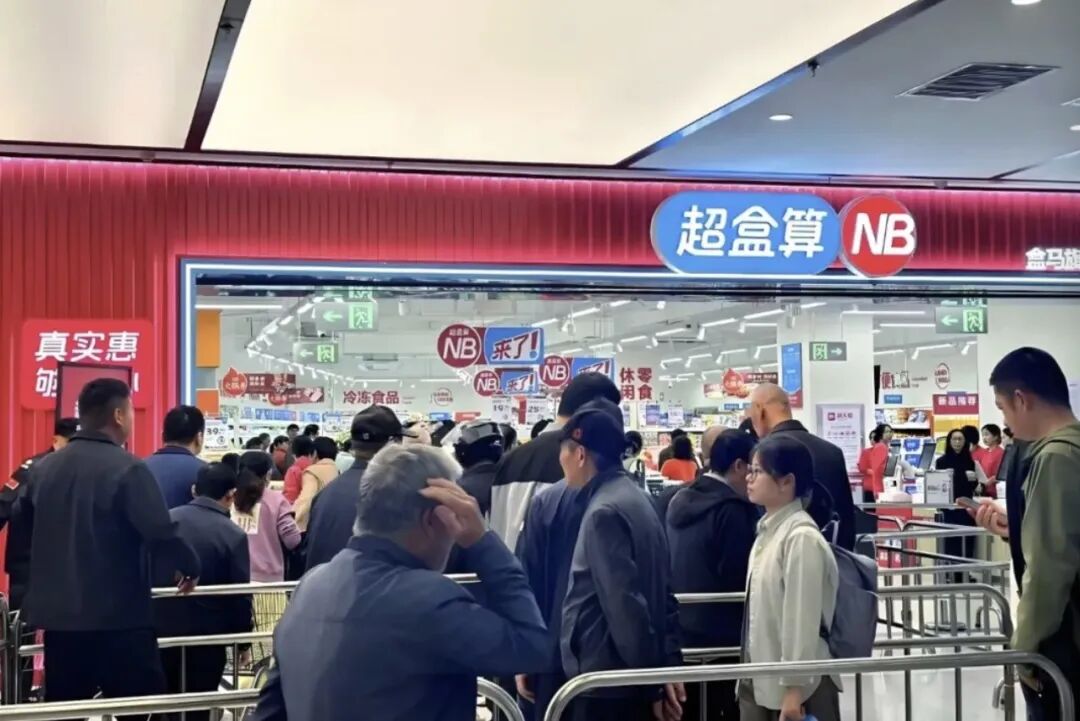
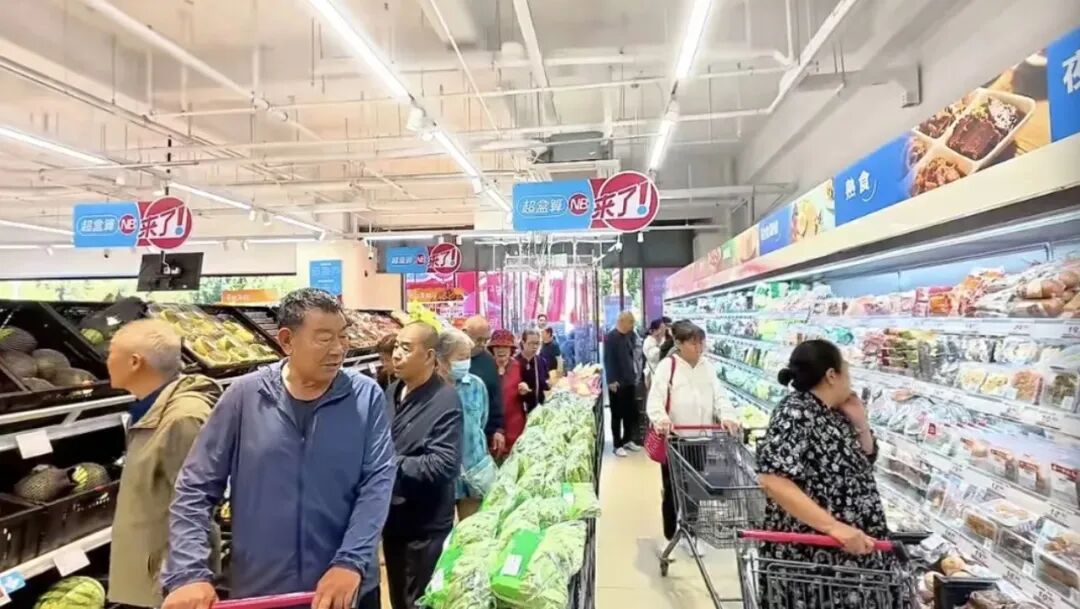
Discount supermarkets first emerged in these cities, which is closely related to the above situation. Freshippo's discount brand Super Box NB started its business in Shanghai, and had 550 operating stores by the first half of 2026.
Membership stores also maintained strong growth momentum during this period. In 2025, Sam's Club China's sales exceeded 140 billion yuan, with a year-on-year increase of about 40%, and the number of paid members surpassed 10.7 million.
Discount stores and membership stores seem to move in opposite directions, but customers are calculating the same account on both sides: whether the price is worth it. Cheap goods must have reasonable reasons for their low price, and expensive goods must also be able to justify their high cost.
The central and western regions present a different picture.
Many provincial-level regions have similar situations to Gansu, where the income level is not high, but the average propensity to consume is significantly higher than the national average.
Therefore, the further away from big cities, the lower the income level, and the higher the proportion of rigid expenditure. In recent years, retail enterprises have been expanding their business exactly to these areas.
The 2026 semi-annual report of Mingmang Mangmang shows that the group has 26,400 stores, about 60% of which are located in county towns and townships. According to the mid-year report of Wanchen Group, by the end of June, the total number of stores of the group exceeded 23,000, and the proportion of stores in third-tier and lower-tier cities was close to 60%.
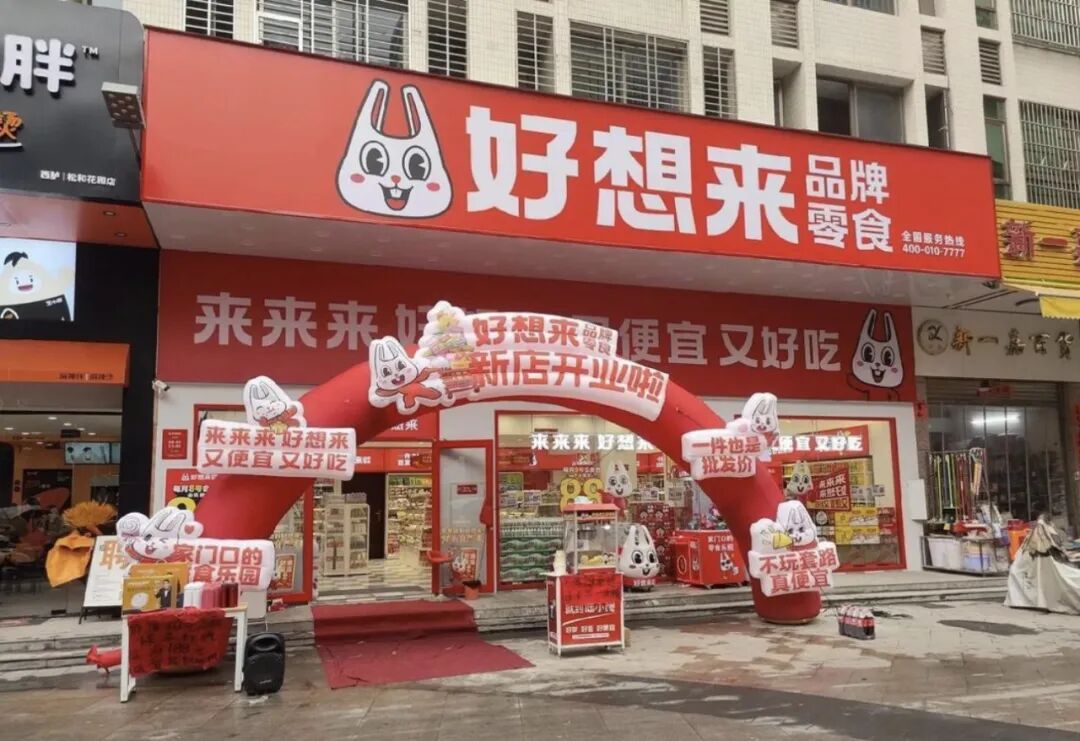
Discount supermarkets are also expanding outward. ALDI has started to expand beyond the Jiangsu-Zhejiang-Shanghai region, and Meituan's Happy Monkey and JD Discount Supermarket also have a large number of stores located outside first-tier cities.
Membership stores are currently expanding all the way into lower-tier markets. Sam's Club plans to open about 13 new stores in 2026, with the focus placed on second and third-tier cities, and some of the layouts further extend to county-level cities. It is worth mentioning that most of these county-level cities are economically strong counties, and Sam's Club values the local consumption capacity.
Customers in Beijing, Shanghai and the central and western regions all calculate their purchases very carefully, but for different reasons. Most of the money of residents in Beijing and Shanghai is spent on housing and services, and the remaining part goes to physical goods on shelves, so customers care more about whether the goods are worth the price. In the central and western regions, money is first occupied by rigid expenditure, so customers pay more attention to whether the goods are cost-effective. The former is an active choice, while the latter is a passive choice.
Therefore, retail formats can be extended to lower-tier markets, but the business model needs to be recalculated according to local conditions. What is brought to county towns should not be the price band that applies to first-tier cities, but goods that are reconfigured according to local average propensity to consume and the proportion of food expenditure.
2
Customers are aging, households are getting smaller
By the end of 2025, the total national population decreased by 3.39 million compared with the previous year, with a decline of about 0.24%.
In the same year, the national 1% population sample survey counted 514.65 million family households, 20.49 million more than five years ago. The average number of people per household is 2.52, compared with 3.1 in 2015, down by nearly 20% in ten years.
Among the current customers of a community supermarket, there are elderly people who come frequently and buy a small amount each time, small households with only one or two people, and the number of households with children is getting smaller and smaller.
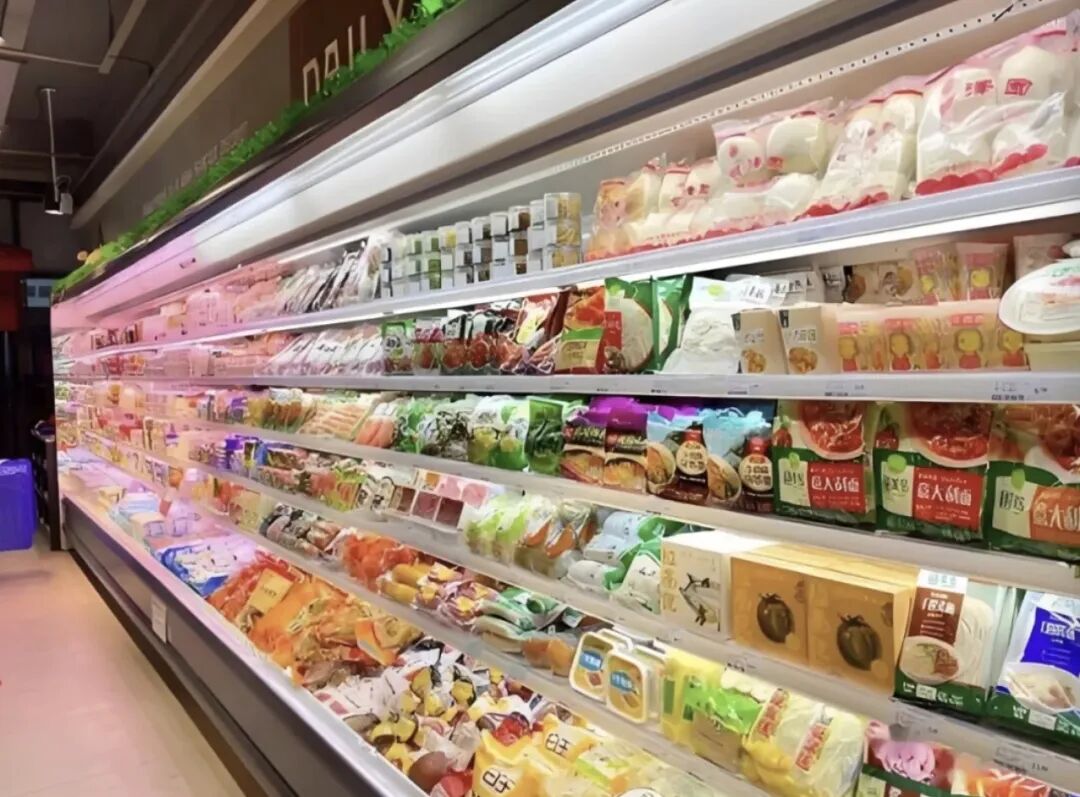
First, let's talk about elderly customers.
Worldpanel Consumer Index shows that middle-aged and elderly households aged 45 and above are an important customer group for regional chain retailers, with the buyer proportion index reaching 108. Their purchase frequency index at regional chain retailers is 105, higher than that of the top five national retailers, but the single purchase volume index is only 84.
These customers do not buy a lot each time, but they come very frequently. If you only focus on the customer unit price, you are very likely to underestimate their value; if you look at their store visit frequency, they are the most stable passenger flow in community stores.
However, many supermarkets' operation for elderly customers still stays at the level of selling discounted eggs in the morning.
Japanese supermarkets encountered this problem earlier. In 2013, AEON transformed its Kasai store in Tokyo into G.G Mall targeted at middle-aged and elderly customers, which opens at 7 a.m., and is equipped with a gym and a clinic inside the store.
Domestic enterprises are also making attempts. For example, Beijing Jingkelong has transformed 7 age-friendly stores. High-definition magnifying glasses are placed all over the store, 24-hour hot water and blood pressure measurement points are provided at the service desk, the height of handwashing sinks is lowered, rest areas are set up, and accessible passages are also reconstructed.

Then let's talk about small households.
With fewer people in the household, large-packaged goods do not sell well. If they are replaced by small-packaged goods, the unit price will be higher, but the total money customers spend each time will be less, and the customer unit price will be pulled down.
The 2025 supermarket category report of China Chain Store & Franchise Association shows that sales of large bags of rice over 5kg dropped by nearly 20%, and sales of large barrels of oil over 5 liters declined by more than 10%.
During the same period, sales of small-packaged rice under 0.5kg increased by nearly 30%, and sales of pre-processed clean vegetable semi-finished products rose by more than 40%.
When the customer unit price drops, the total revenue needs to be supplemented by higher purchase frequency. Fresh food products have the highest added value. Cooking for one or two people is time-consuming, and ingredients are easy to go leftover. What supermarkets can sell to customers is the saved cooking time.
The data of some renovated stores can be used for reference.
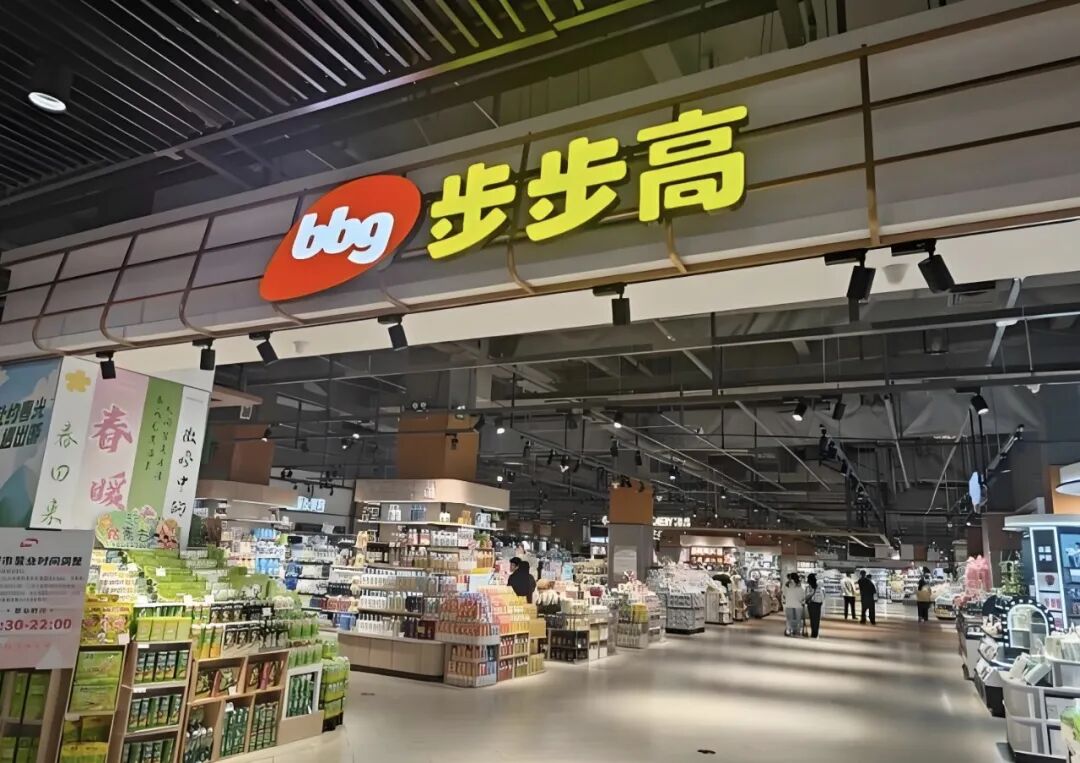
Among the 21 "Fat Reform" stores of Better Life, the year-on-year growth of cooked food and bakery products exceeded 100%, and consumer penetration rate reached 50%. This growth rate is partly due to the addition of new categories and the low base figure, but it can still be seen that customers are willing to buy these products.
For the renovated stores of Jiajiayue, the proportion of fresh food sales is close to 70%, among which cooked food, pasta and bakery products account for about 15% of the total fresh food category.
It is also very easy to miscalculate the profit of fresh food business. The gross profit margin looks high, but after deducting labor cost and scrapping loss, the profit may not be higher. If you only look at the sales proportion, and ignore the penetration rate, repurchase rate and scrapping rate, the fresh food section will become larger and larger, but the profit may not rise accordingly.
Some shelves are also shrinking. The number of newborns decreased by about 17% year on year, so the number of new customers for maternal and child categories is decreasing faster than the total population. The customer base of milk powder and diapers is accumulated by children born in recent years, so the shrinkage of this category will appear later. A relatively safe approach is to first compress long-tail products and retain high-frequency rigid demand products.
In the past, a store was designed for one specific type of household. In the future, it needs to take good care of several different groups of people at the same time.
3
The proportion of online retail declines, business returns to the surrounding areas of physical stores
Data from the National Bureau of Statistics shows that the proportion of online retail sales of physical goods in total retail sales of consumer goods was 27.6% in 2023, 26.8% in 2024 and 26.1% in 2025, declining for two consecutive years.
In 2025, the online retail sales of physical goods reached