The so-called "pretty useless gadgets" have become a runaway hit: 2 grams are priced at 680 yuan, and young people are snapping them up at marked-up prices even while complaining about them.
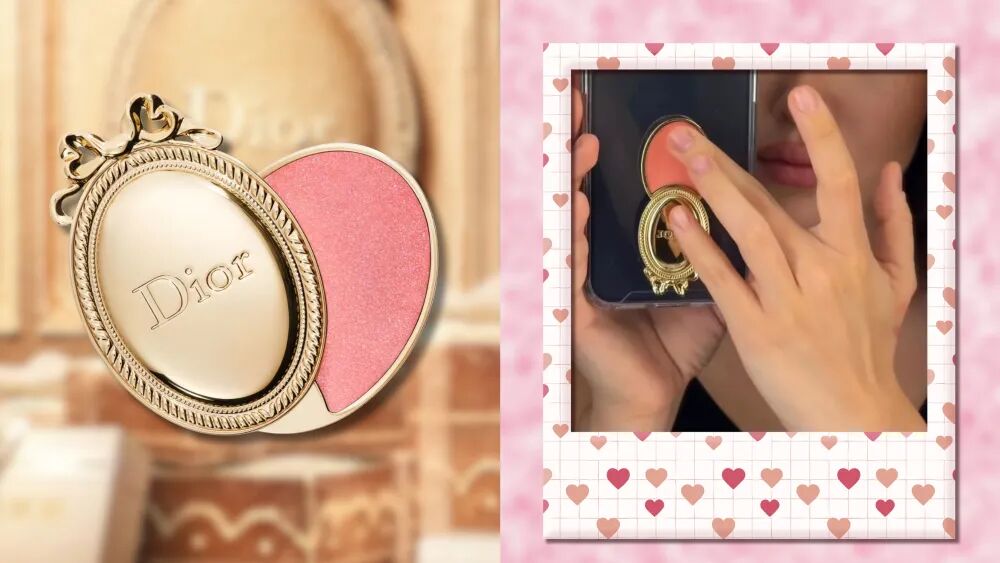
A 2-gram lipstick with only one color is priced at 95 US dollars, equivalent to about 680 RMB.
Recently, a limited-edition holiday lipstick named Dior Médaillon from Dior was quickly sold out after its overseas launch. US beauty retail platform Ulta sold more than 300 units within a few hours after it went on the shelves, and Nordstrom once only supported in-store pickup for remaining stock.
This craze has also spread to China. As the product is currently only sold overseas, overseas purchasing agents have started to snap up goods at marked-up prices. Some people offer prices from 750 RMB up to 850 RMB, and the price of second-hand in-stock items is even higher. Some consumers even bought an extra 300 RMB worth of other products just to get this lipstick.
While complaining about the exorbitant price, consumers are still waiting to snap it up. What on earth is the magic of this lipstick?
The answer may lie in its appearance.
Dior Médaillon, whose official localized name is "Prestige Oval Medallion Lipstick", comes with adhesive backing and a positioning template that allows users to DIY it as a decoration on the back of their mobile phones. It does not look like a traditional lipstick, but more like a golden medallion.
The design inspiration of this medallion comes from the Louis XVI style oval-backed armchair in the salon at 30 Avenue Montaigne, where Dior was first founded in 1946. This year, Dior's creative director Jonathan Anderson has brought this brand symbol back to the fashion stage, presenting it on products including handbags, belts and loafers.
What Dior is selling is obviously far more than just lipstick.
Compared with Dior's own Lip Glow lip balm, which sells for 42 US dollars for 3.2 grams, the price of this new 2-gram product is about 3.6 times higher. The product triggered a buying spree as soon as it was launched. Some consumers pay for its attractive appearance, while others complain crazily that it shows no color at all on the lips, "it even has that tacky fine shimmer," a user commented on Xiaohongshu.
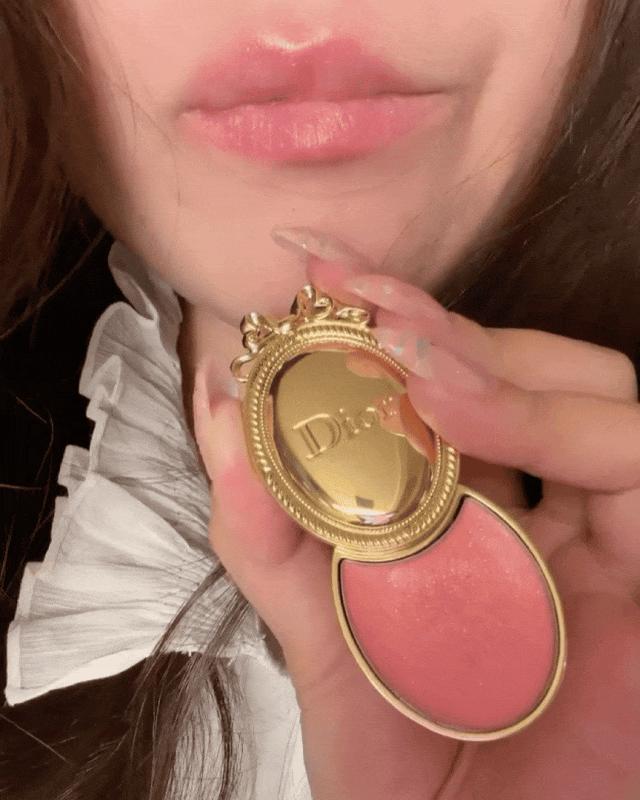
The official creative idea of Dior to stick this limited-edition holiday lipstick on the phone case has sparked more secondary creations on social media.
Some netizens have remade it into bag charms, brooches and necklaces, "it's like I got a vintage Dior necklace." Netizens thread a pearl chain through the top of this lipstick, creating a more Christmas-themed holiday item than the original version. In the hands of these "skilled creators", drastically refashioning this lipstick has become a major current trend.
From clothing and handbags to beauty products, brands are constantly looking for smaller carriers to carry larger brand assets. Luxury brands are pushing this logic into the beauty sector.
This summer, LV (Louis Vuitton) launched a lip liner priced at 50 euros, paired with a brass and zinc alloy pencil sharpener priced at 400 euros. The brand also equipped it with accessories such as a blending brush and a pencil case, turning the originally consumable beauty tool into a luxury item that can be kept for a long time. When consumers spend hundreds of yuan on a lipstick, they get not only the product itself, but also a visible brand symbol. Nowadays, this set of operation strategies has a newer name: "accessorization of beauty products".
In fact, there are already pioneers of this logic in the overseas beauty market.
US brand Rhode launched a lipstick phone case that combines a phone case with a lip gloss, turning the beauty product that was originally hidden in the bag into a mobile phone accessory. South Korean brands have also begun to make lipsticks and eye shadows into keychains and mini pendants to cater to the popular "bag decoration" culture among young people.
South Korean media reports that in 2025, South Korean beauty brand Fwee launched a mini eyeshadow palette that can be hung on bags, and AMUSE launched a lip gloss keychain. More and more brands are starting to make beauty products into accessories with both practical and decorative functions.
This trend is also taking root in the Chinese market.
Flower Knows makes products such as highlighters, blushes, eye shadows and lipsticks into mini pendants; Judydoll launched a multi-purpose cream with a hand mirror and stickers; Carslan added a lanyard to its sunscreen primer, and the 84-yuan product has sold more than 20,000 units on Tmall.
DOCUMENTS made 5ml eau de toilette into a "mini perfume bag charm" tied to a Chinese knot, with four corresponding scents for four different knot crafts, allowing perfume to step out of the bottle and become a decoration that can be hung on bags, keys or even inside cars.
Behind these products is a growing consumer trend.
According to Xiaohongshu's 2025 Makeup Trend Inspiration Guide, the search volume for "pendant cushion" increased by 11600% year on year, "makeup pendant" increased by 433%, and "MINI makeup" increased by 145%.
For brands, making beauty products into pendants not only means a new packaging form, but also means that beauty products get new display scenarios. Lipsticks and cushions that were originally hidden in makeup bags can now become part of consumers' outfits.
However, under the boom, there is another side worth noting.
On Xianyu, many pendant-style makeup products are labeled as "bought but forgot to use" or "pure decoration", and have become idle items. When consumers buy products for their appearance, whether brands can truly combine decorative properties and practical value determines how far this trend can go. At the same time, the core quality of the product remains the core driver of consumers' repurchases, and whether "pendant beauty products" are actually good to use determines how long they can stay in your makeup bag.
From Dior's 95-dollar medallion lipstick to domestic beauty pendants priced at dozens of yuan, the prices vary greatly, but the consumption logic is similar: beauty is evolving from a usage behavior to a lifestyle that can be displayed, matched and shared.
When a lipstick can be hung on the mobile phone, what consumers buy may not only be the lipstick, but also a little more space to express themselves in daily life.
This article is from the WeChat Official Account "Tianxia Wangshang" (ID: txws_txws), written by Tianxia Wangshang, and published with authorization from 36Kr.