When India completed the acquisition of Iveco, a major stumbling block for the overseas expansion of commercial vehicles has emerged.
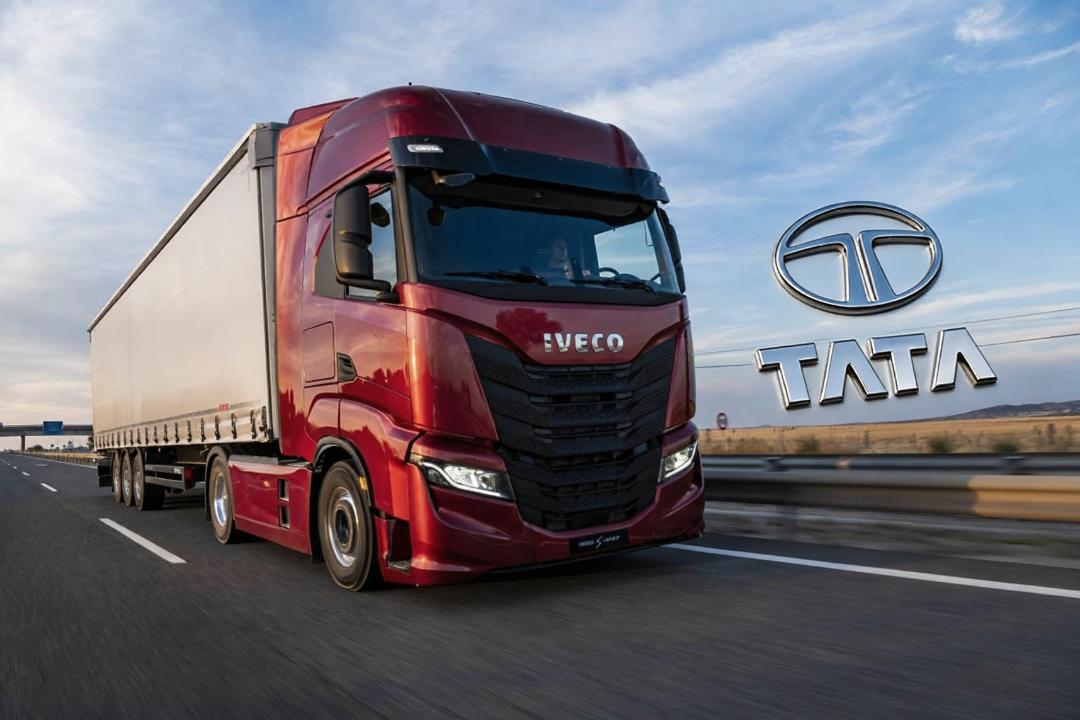
After more than a year-long acquisition in the automotive industry, India has secured another opportunity to penetrate the heart of the European automotive market.
Leveraging the commercial vehicle market, it remains unknown whether Indian automobiles will truly become a barrier in the next round of industrial transformation. But under the background of the new era, the birth of a brand-new commercial vehicle group is not only a reshuffle of the rankings on the global commercial vehicle map, but also brings new challenges to every participant in the industry competition.
Especially for Chinese automakers that have expanded aggressively in overseas markets in recent years, if the radical passenger vehicle overseas expansion strategy prompts Europe to introduce tough policies to impose restrictions, opening up new battlefields will no longer be just empty talk.
On the 26th of last month, India's Tata Motors officially completed all payments and acquired an 89.42% stake in Italian commercial vehicle giant Iveco. Later, Iveco was delisted from the Milan Stock Exchange, which indirectly officially announced that this century-old Italian commercial vehicle brand has been completely taken over by Indians, and has truly become a sibling unit of Jaguar Land Rover (JLR) and Daewoo Commercial Vehicles.
From the perspective of the Chinese market, this M&A is not only a feud between overseas automakers, but also takes place in the commercial vehicle segment that ordinary people rarely come into contact with, so we can just treat it as a lively event to watch.
However, as the speed and intensity of Chinese automakers' overseas expansion continue to accelerate and increase, no one can guarantee that Tata, which has acquired Iveco, will not form new threats and resistance in the global commercial vehicle market.
According to common sense, the entire commercial vehicle sector after Tata's merger will have a total annual sales volume of more than 540,000 units, with a total revenue of about 22 billion euros, firmly ranking as the world's fourth largest commercial vehicle group. With such a scale, it is really not an easy task for Chinese commercial vehicle automakers that are used to guerrilla warfare to confront head-on, especially in the high-end market where Iveco is located, it is even more difficult to engage in close competition.
At the 2026 Hannover Motor Show, nearly 300 Chinese exhibitors accounted for more than 20% of the total, ranking first among all countries, which is equivalent to "1 out of every 5 exhibitors in the pavilion comes from China". Leading brands including FAW Jiefang, Dongfeng Motor, Sinotruk, BYD, and Foton Motor all secured core booths, standing side by side with international giants such as Daimler Truck, MAN, Volvo, and Scania.
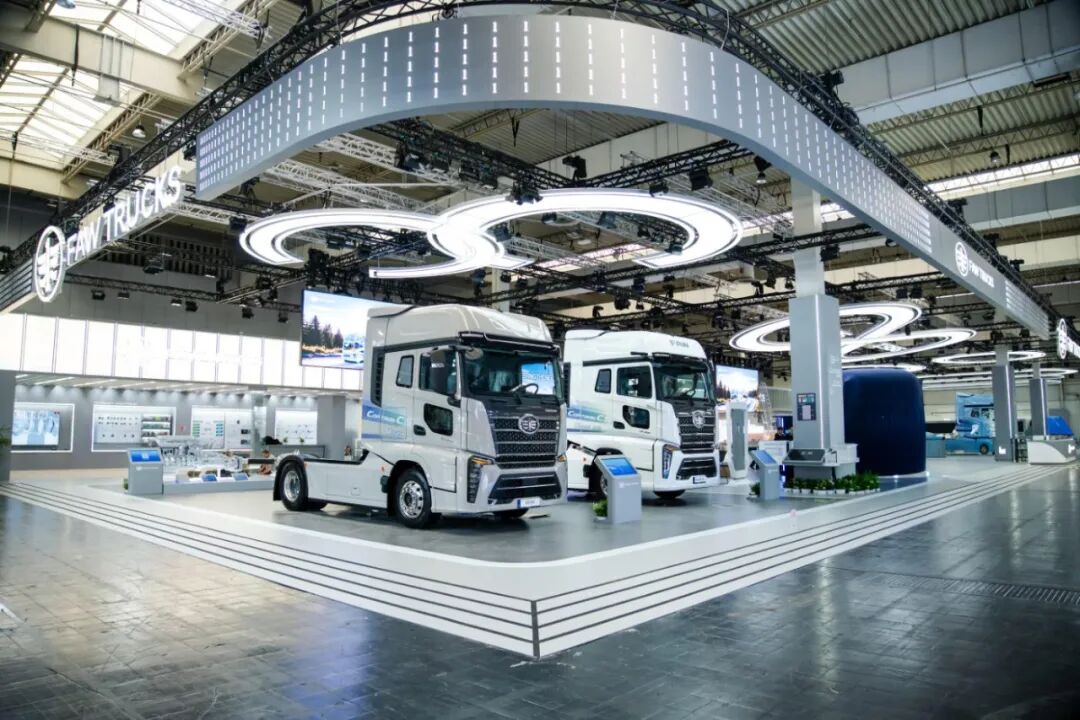
Apparently, China has transformed from a "participant" to a "pattern shaper". Chinese enterprises focus on demonstrating their strength in complete vehicles and three-electric technologies, while European enterprises stick to invisible details such as chassis, safety components, materials, and software toolchains, which are still the underlying capabilities that determine the right to speak. That is to say, to gain advantages at the peak of the commercial vehicle industry, Chinese automobiles still need a strong springboard.
The menacing Tata-Iveco
For a long time, the commercial vehicle market has never been the focus of public attention. But that does not mean that this market lacks potential. According to statistics, the global commercial vehicle market is a super market with annual sales of nearly 29 million units, an output value of 1.2 to 1.3 trillion US dollars, and a parc of 160 million units, and the parc is still expanding at a speed of more than 3%.
Therefore, when we look back at Tata's acquisition of Iveco, it no longer seems so simple. It is not like SAIC's acquisition of Nanjing Automobile back then, which aimed to turn MG into an exclusive OEM brand.
Every overseas M&A of Tata looks very rough, from the acquisition of South Korea's Daewoo Commercial Vehicle business in the early years to the takeover of Jaguar Land Rover from Ford. But this kind of opportunistic, home-raiding acquisition has indeed completely inherited the hard power accumulated by others for decades.
In September 2002, Daewoo Commercial Vehicle (DWCV) was separated from the crisis-stricken South Korean Daewoo Group, becoming the second largest heavy-duty commercial vehicle manufacturer in South Korea at that time, second only to Hyundai Motor, with a market share of more than 25% in the South Korean heavy truck market, and the annual production capacity of the Gunsan plant was about 20,000 medium and heavy commercial vehicles.
By March 2004, Tata Motors took the opportunity to complete the acquisition with more than 100 million US dollars, obtaining 100% equity of Daewoo Commercial Vehicle, making it a wholly-owned subsidiary of the Tata Group.
With this experience, over the past year, Iveco sold its defense subsidiary (IDV) to Italian military giant Leonardo for 1.7 billion euros on the one hand, to avoid national security risks and clear regulatory obstacles for the acquisition;
On the other hand, Tata also promised that Iveco will keep its headquarters in Turin, Italy, will not carry out major restructuring of its main brands and operating structures within two years, and will not close factories or lay off staff on a large scale. The final acquisition reached in this way has inevitably avoided the resistance of continuous expansion in Europe in advance.
In the European heavy-duty commercial vehicle market, Iveco cannot gain an advantage compared with Scania, MAN, Volvo, Mercedes-Benz, and even DAF. But this does not change the reality that Iveco still occupies a market share of about 10%, and in the Latin American market, Iveco also has a complete service system covering new vehicle sales, after-sales maintenance, and refitted vehicle business.
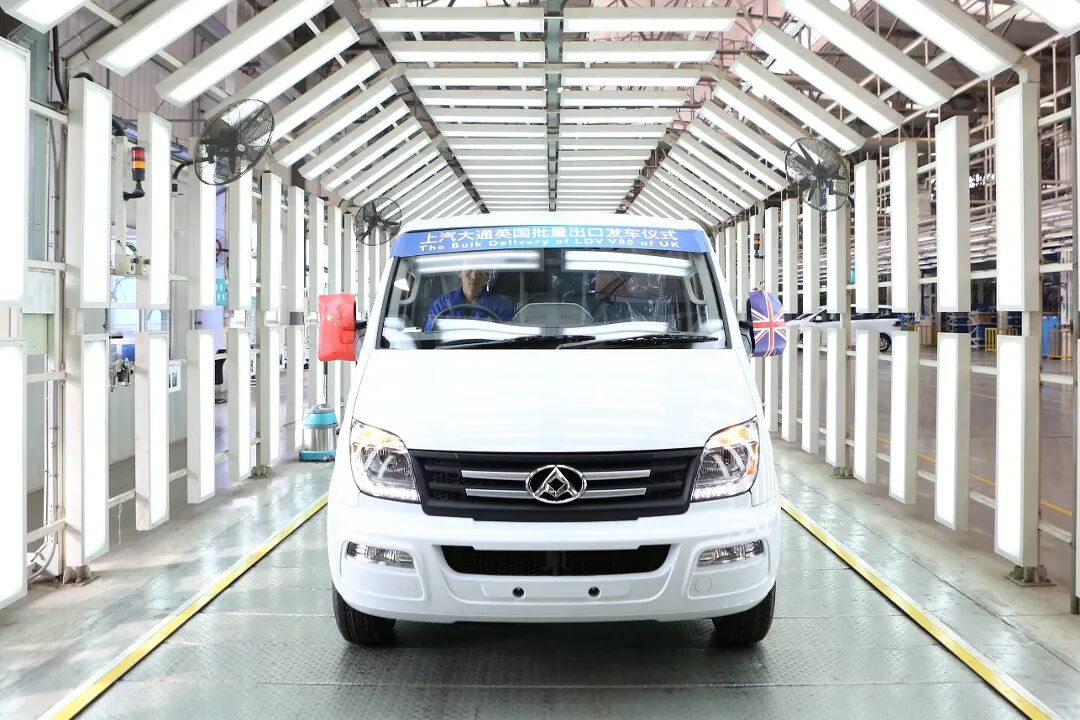
What role can these inherent advantages play? In fact, there is no need for too many examples. The benefits that even the declining LDV brought to SAIC Passenger Vehicles in Europe and Australia are clearly visible to us. Not to mention what huge benefits Iveco, which already operates well, will bring to Tata in the high-end commercial vehicle market in the future.
If the integration goes smoothly, Iveco's commercial vehicle quotation flexibility in the Latin American and European markets will be significantly improved. This is definitely a substantial threat to Chinese brands (Foton, Dongfeng, Jiefang, etc.) that have always been famous for cost performance. When Chinese automakers confront them head-on in these main commercial vehicle markets, the original price difference will be compressed.
That is to say, even if the operation of Nanjing Iveco will not be affected, as long as Tata makes up its mind to carry out joint procurement in its commercial vehicle sector and move the parts supply chain from Western Europe to low-cost regions, it will send us a new signal: that is, including light commercial vehicles, Chinese commercial vehicle enterprises will face a new industry challenger that has both high-end brand image and low manufacturing costs in the future overseas expansion competition.
There is no easy way for Chinese automobiles to go global
Of course, commercial vehicles have never been a niche market.
Data shows that in 2025, China's commercial vehicle exports exceeded 1.06 million units for the first time, a year-on-year increase of 17.2%, reaching a historic milestone of one million units, and has become the "second engine" driving the growth of the industry.
From January to September 2026, commercial vehicle exports continued to grow, with cumulative sales of 1.039 million units, a year-on-year increase of 38.8%, and the annual total is expected to be about 1.373 million units. Many institutions judge that Chinese commercial vehicles' overseas expansion is still in the "scale expansion period". In terms of structure, trucks are the absolute main force, and heavy trucks are expected to become the representative of "high-end manufacturing" of Chinese commercial vehicles.
At the same time, no matter the feedback from the Hannover Motor Show before, or according to the Bain report, about one-third of European fleet operators have had contact with Chinese manufacturers, and Chinese electric trucks have been rated better than Western brands in terms of price, TCO, range and energy efficiency. All these strongly prove that Chinese commercial vehicles may complete the historic transformation from "selling products" to "building systems" in the industry transformation.
Especially in the bus market, BYD alone has a persistently high market share in the European pure electric bus market. As of September 2026, its cumulative orders in Europe have exceeded 8,000 units, covering more than 20 countries and more than 100 cities. Among them, the market share in Germany is 13.7%, and 17.6% in Spain, both ranking first among Chinese brands. These data were almost unthinkable for us in the past.
However, as Tata builds a commercial vehicle group with sufficient strength to surpass Chinese automakers, and Europe still maintains a core consensus that Chinese commercial vehicle products and technologies are already strong enough to enter the European market, but sales service networks, brand trust, and used car residual value are still structural problems, which will inevitably lead to direct challenges to the Chinese model.
Simply put, the extensive overseas expansion of Chinese commercial vehicle enterprises that prioritize cost performance may not be able to withstand the price counterattack re-launched by established automakers after "streamlining operations and reducing costs".
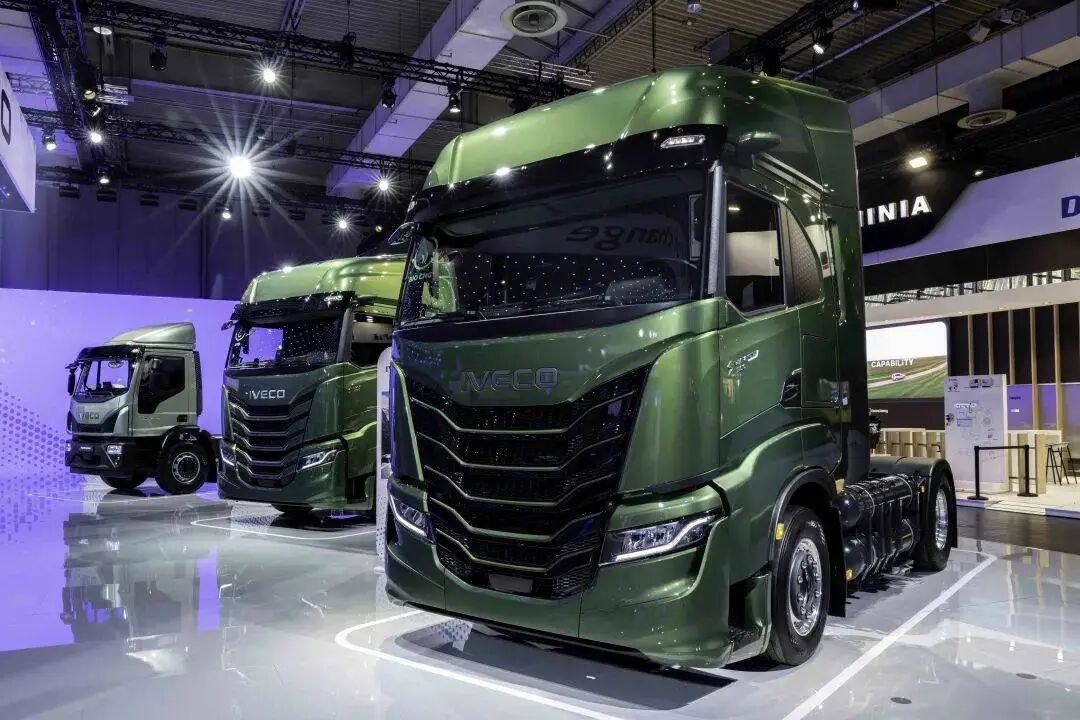
Today, Iveco still owns Daily, heavy trucks, buses, Heuliez electric buses, and the FPT powertrain covering diesel/natural gas/pure electric/hydrogen fuel; while Tata covers all segments from 0.5-ton micro trucks to heavy trucks and public transport in India, with a 55% exclusive share in the heavy truck market.
This means that from micro trucks to heavy trucks, from urban logistics vehicles to long-distance tractors, from public transport to hydrogen fuel, this new competitor will emerge in almost every segment that Chinese enterprises can encounter overseas. Perhaps Tata cannot penetrate every market with its momentum, but Indians will definitely try every means to block the way head-on in the price bands and countries that Chinese commercial vehicles most want to enter.
One of the core assets that Tata acquired is exactly the FPT Industrial powertrain division. Once power calibration and new energy technology resources are prioritized for the Tata system, its cost advantage may even radiate to the new energy sector, weakening the first-mover advantage of Chinese electric commercial vehicles.
Indeed, under the background that the penetration rate of zero-emission heavy trucks in Europe is only 2.4%–4.8%, as long as Europe firmly implements the target that the market penetration rate of this type of heavy truck will reach about 35% by 2030, this huge gap will be an opportunity for Chinese brands.
However, in view of the gap between the current penetration rate of zero-emission trucks in Europe of about 5% and the target of about 35% by 2030, this is not just about selling more vehicles, but also about the simultaneous expansion of charging, fleet scheduling and financial products. If Chinese commercial vehicles want to achieve long-term development in Europe, they must turn their electrification advantages into systematic advantages before their opponents take root in brands, channels and local factories, and directly output full-life-cycle cost solutions related to charging, operation and maintenance, and fleet management.
In short, the competition in the overseas commercial vehicle market is a very large topic with a level of segmentation no less than that of passenger vehicles. Here, we only need to understand that when Tata forms a huge commercial vehicle group through the acquisition of Iveco, its goal is definitely to pull in all enterprises that intend to sell vehicles in the mid-to-high-end commercial vehicle market to fight a defensive counterattack.
When competition has escalated from "brand vs. brand" to a combination collision of cost structure, technical route, regional channels and localization capabilities, the real exam question is not "will Tata threaten Chinese automakers", but whether Chinese automakers can complete the identity transformation from exporters to regional operators before their opponents complete the integration.
This article is from the WeChat official account "Auto Community" (ID: iAUTO2010), written by CAO Jiadong, authorized to be released by 36Kr.