Former Head of Design at Claude joins Elon Musk, shifting from designing Cowork to taking charge of the development of Grok Bot.
The former design lead of Claude has joined Elon Musk's camp.
Her name is Jenny Wen.
Earlier this year, she was still in charge of the design of Claude and Cowork at Anthropic.
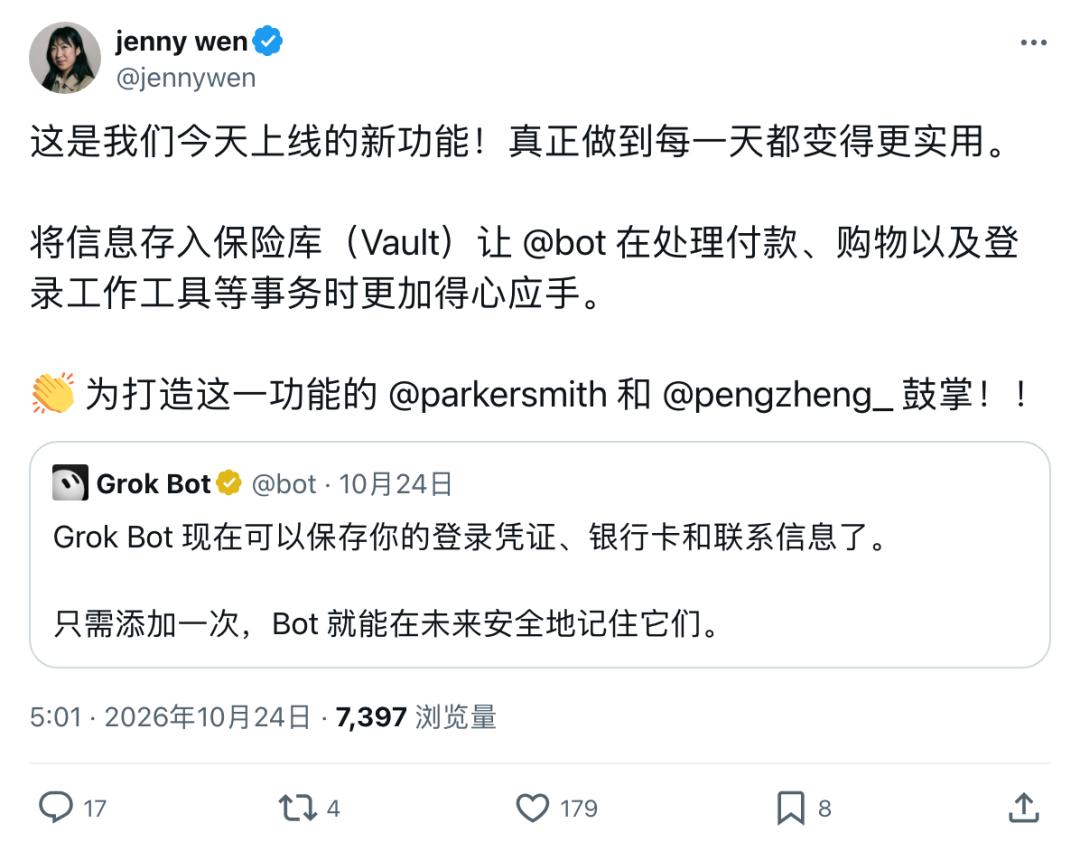
On October 23, Grok Bot under Elon Musk launched the Vault feature.
She reposted this update on X and wrote:
This is our new launch today!
From Claude to Grok Bot, Jenny Wen's career shift can be traced back to a tweet in July this year.

That day, she announced three major milestones in her life at once:
Leaving Anthropic, welcoming her baby daughter, and soon joining Cursor as Head of Design.
A month later on August 14, SpaceX officially completed the acquisition of Cursor, and she joined Elon Musk's camp along with the team.
"The Misguided Engineer"
Building Joy Into Whiteboard Tools
Jenny Wen uses three words to introduce herself on X:
generalist, realist, escapist.
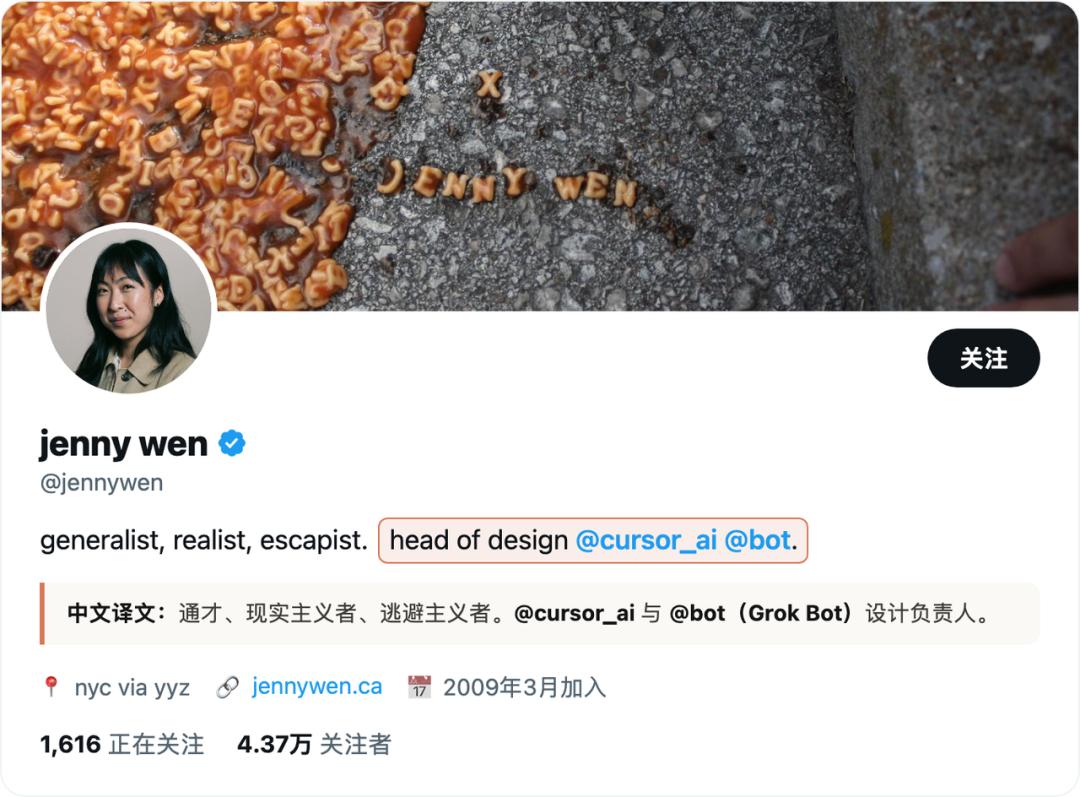
These three words cover a wide range of meanings and even seem contradictory, but they all make perfect sense when connected to her life experience.
The so-called generalist refers to her self-described "odd block-shaped designer" who has mastered multiple skills at a fairly deep level.
The so-called realist is reflected in her pet phrase "It is what it is". It sounds a bit pessimistic, but it actually helps her free herself from unnecessary burdens.
As for escapism, after finishing a summer's work in New York, she stepped on the gas and drove all the way across Alaska.
This spirit of closing one chapter and moving on to the next has existed since she was a student.
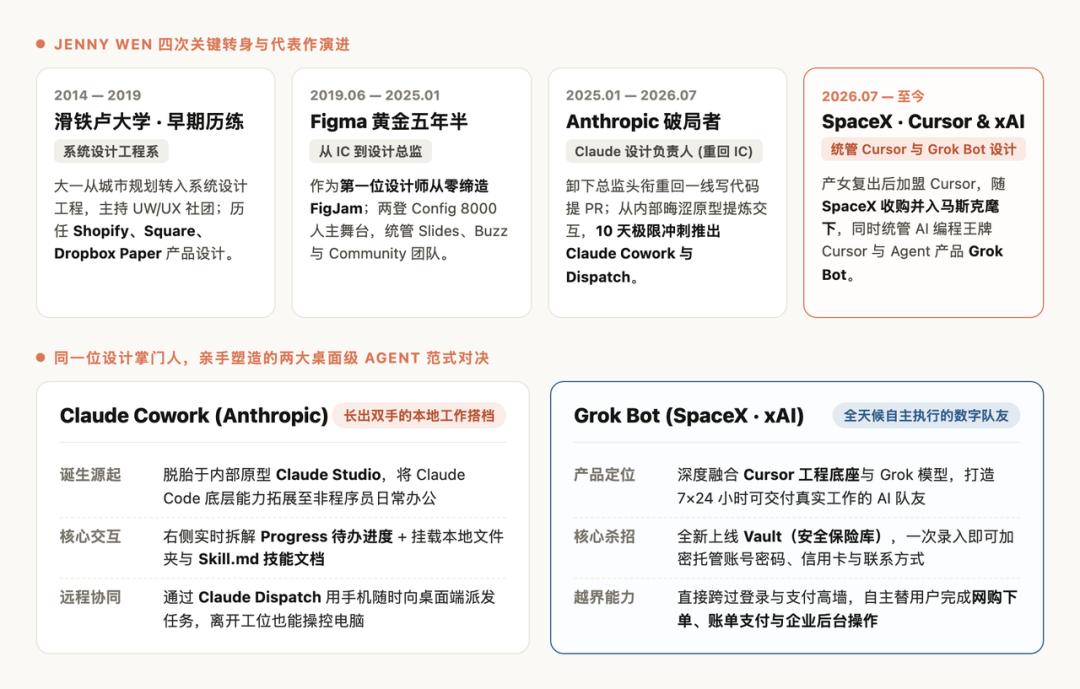
When she studied at the University of Waterloo, she first majored in urban planning. Halfway through the program, she decided to start all over again and switched to systems design engineering.
She later explained that she felt the major was boring as she studied, and she wanted to switch to a more challenging direction that focused more on mathematics and science.
During her internship, she worked as a software engineer side by side with UX designers, and that was the first time she realized there was a profession specifically focused on making products easy and pleasant for people to use.
Later when she worked on design at Dropbox, she joked that she often felt like a "misguided engineer", always trying to convince others, including herself, that she was a real designer.
In 2020, the whiteboard tool FigJam started from scratch, and she was one of the first designers to join the project.
Without lengthy PPT demonstrations and argumentation, she and the engineers directly built prototypes of stamps, emojis and cursor chat features with real code, then walked into colleagues' meetings uninvited and asked everyone to try the product on the spot.
The prototype had plenty of flaws, but everyone in the conference room was laughing.
"We knew there was something great here." The laughter from colleagues at the rough prototype was far more convincing than any number of alignment meetings.
In 2023, she hosted the main stage of Figma's annual user conference Config, facing about 8000 on-site attendees.
Later, she was promoted to Design Director at Figma, leading the design teams for products including FigJam online whiteboard and Figma Slides presentation tool, with up to a dozen designers reporting to her.
Stepping Down From The Stage For 8000 Attendees
Returning To The Review Table To Receive Feedback
As a Design Director at Figma, it seemed to be a natural choice to keep moving up the management career ladder.
However, she left Figma in January 2025 and joined Anthropic as an Individual Contributor (IC), returning to hands-on design work.
She was very clear at that time: the middle management role would not necessarily remain stable in the future. Without getting hands-on work done herself, it would be very difficult for her to understand what her team was going through.
Rather than watching the waves from the shore, it was better to jump into the water first.
After returning to the front line, the most unfamiliar task for her was to sit back at the review table and receive feedback and criticism again.
Being criticized, and being criticized so frequently, was really tough.
She admitted that putting your work out there for others to pick apart is an extremely vulnerable experience in itself.
In September 2025, after working on the front line for more than half a year, she publicly challenged the traditional design industry at the Hatch conference in Berlin, putting forward a Silicon Valley-shaking assertion that "the traditional design process is dead".
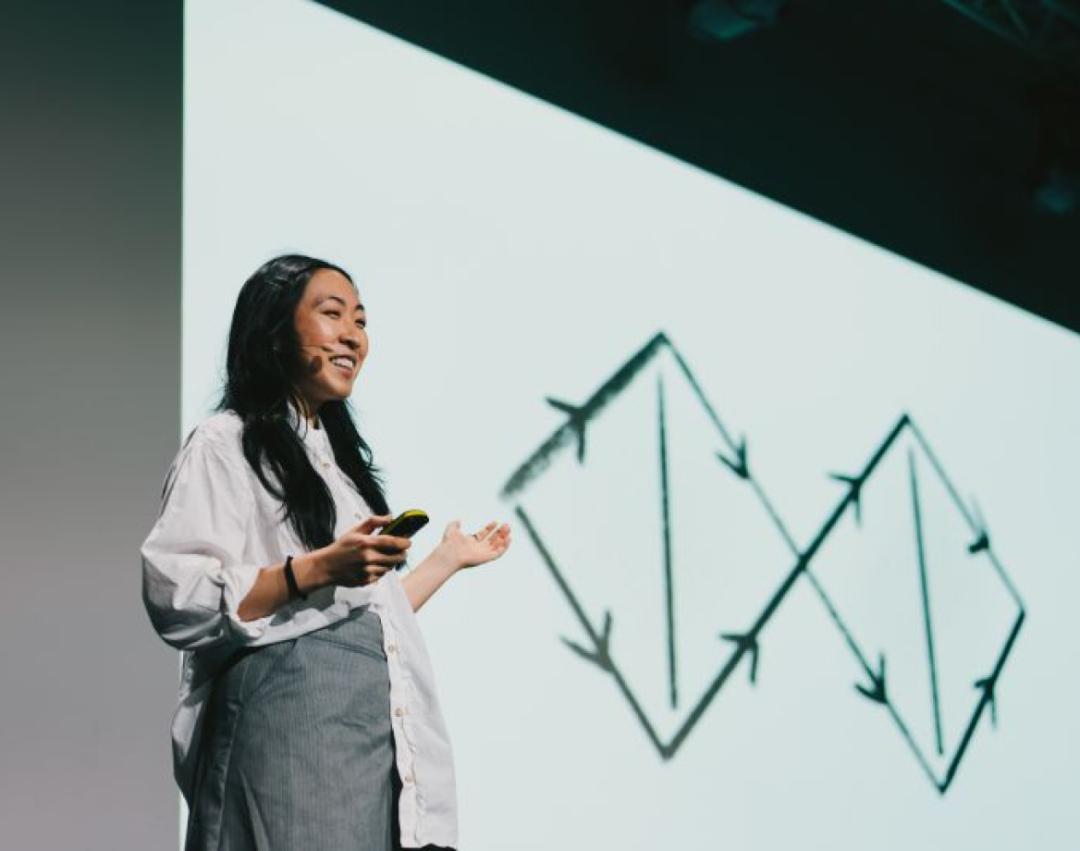
At the opening of her speech, she seriously demonstrated the textbook design process, then joked: "Congratulations, you've solved all the problems of the company!"
Immediately after that, she changed her tone and asked: "This is completely unrealistic, isn't it?"
She made a sharp metaphor: the old design process is like an IKEA instruction manual, you can assemble a Billy bookshelf by following the steps; but when doing design, you have no idea whether the final assembled product will be a bookshelf, a table lamp, or even a hot dog.
Worse still, she said engineers at Anthropic often write code with "7 instances of Claude" running at the same time, and even engineers are struggling to keep up with their own speed. If designers still hold onto the old process and draw wireframes slowly, they will only hold the whole team back.
Ironically, just three or four months after this speech criticizing the old process, she looked back at it and thought it was outdated and "a bit embarrassing".
Later, the time she spent on drawing drafts and making prototypes was cut from 60-70% to 30-40%, and she spent the rest of the time working alongside engineers or writing code herself.
When someone mentioned in Slack that an icon was misaligned, she directly asked Claude to fix it, and merged the PR right away.
The girl who once joked that she was a "misguided engineer" had come full circle and pushed herself to become half an engineer.
Behind The Prototype That "I Really Don't Understand"
Lies The Shadow Of Cowork
In January 2026, Claude Cowork was officially launched.
The most widely spread story among the public is the Silicon Valley myth that a small team built a hit product in a 10-day lightning sprint.
However, she debunked this myth herself in a podcast:
It definitely took far more than 10 days, and far more people were involved in the project.
She drew the initial direction for what Cowork should look like back in 2025.
The starting point of the story was an internal prototype at Anthropic in 2025 called Claude Studio, whose interface was packed with information, full of skills, knowledge, ongoing tasks of Claude and output previews.
Her first reaction was very honest: "I don't know what this is for, I really don't understand it."
Oddly enough, researchers and many other colleagues were very excited about this prototype.
As an angel investor herself, she used the "readability" insight from the venture capital circle: ideas that everyone can understand at a glance are mostly not innovative enough. The ideas that you don't understand but excite insiders are worth further exploration to figure out what makes them great.
Later, the prototype team extracted the Skills framework from this messy prototype.
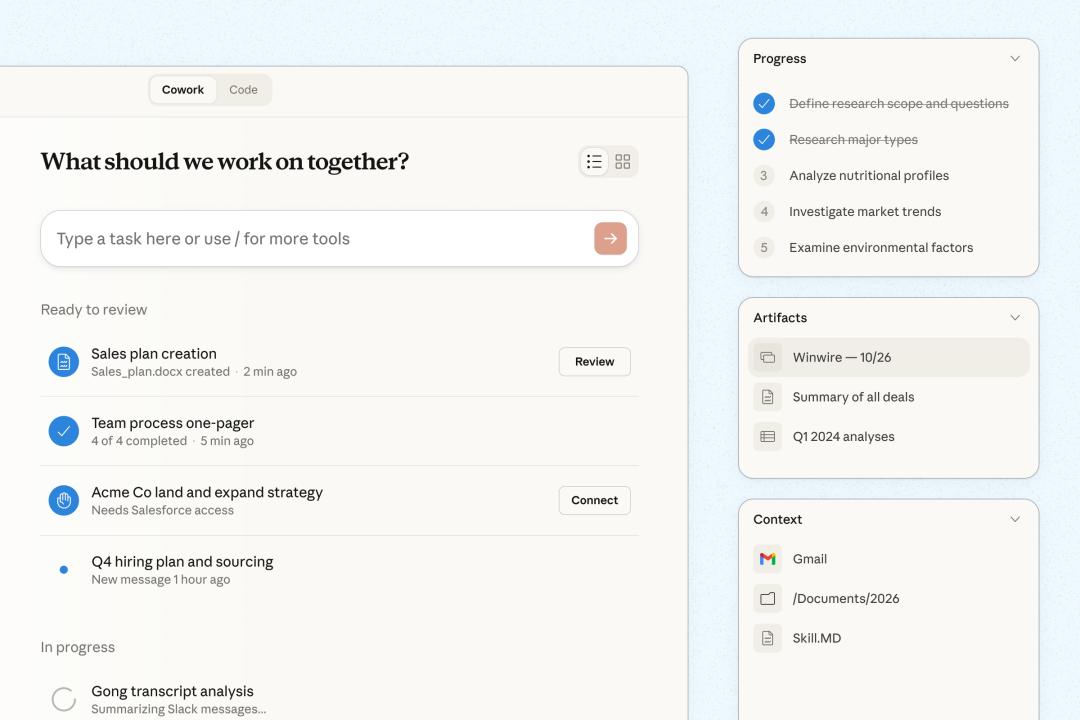
In Jenny's view, Claude is very good at sorting out scattered materials casually submitted by users into useful outputs.
But when a task runs for a long time, users will want to know: what is Claude planning to do? Which files is it checking? What progress has it made now?
Therefore, when designing Cowork, she focused on presenting two types of information: Claude's plans and to-do items, as well as the context and files it is currently using.
By putting the whole process in front of users, they will feel more confident to hand over their work to the AI.
By March, this collaboration feature was extended to mobile devices.
Claude Dispatch, which Jenny participated in launching, allows users to keep assigning tasks to Claude even after they leave their computers.
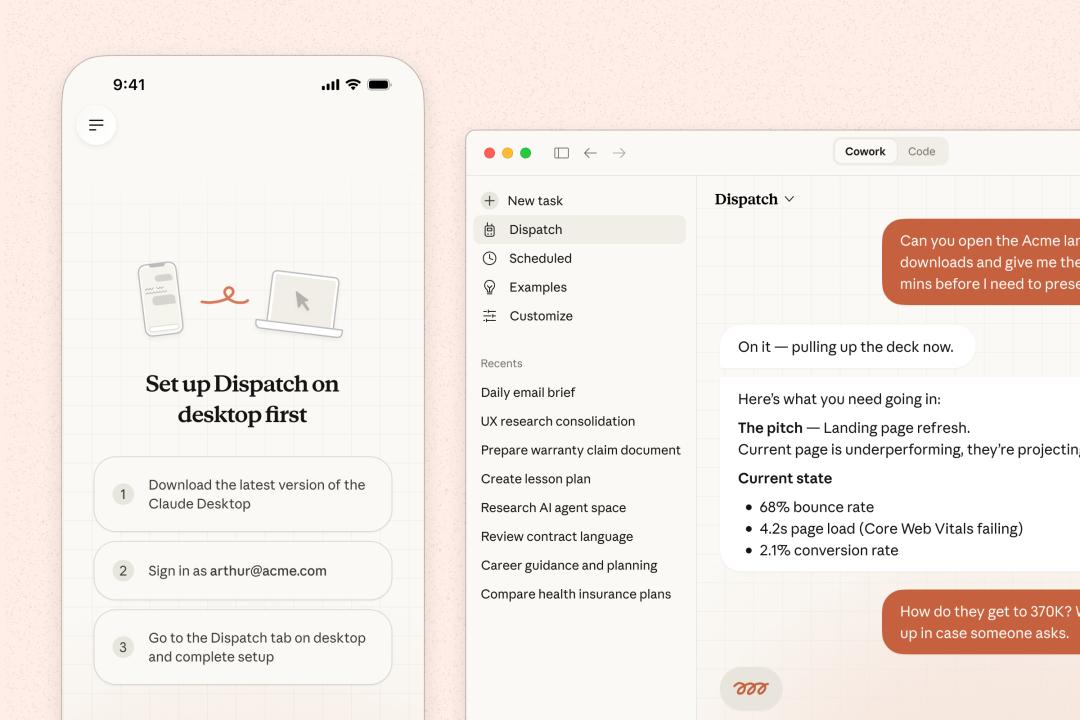
For example, when going out to buy coffee, users can send tasks to Dispatch just like sending text messages. Claude Cowork or Claude Code on the computer will handle the tasks, and users can check the results on their mobile phones.
However, when asked about the part of Cowork she is most proud of, the first thing that comes to her mind is that the product was finally launched: "We actually shipped it."
She explained that if you work on a product for too long, you will only see its flaws. Only by handing it over to users can you have the chance to figure out what value it can bring, and what improvements you should make next.
Pushing Open The "One-Way Door"
Next Stop: SpaceX
Few people know that during the months she worked on Cowork, she was pregnant with her first child.
On March 23, 2026, she published a slightly anti-motivational essay on her personal website titled Grieving This Part Of My Life.
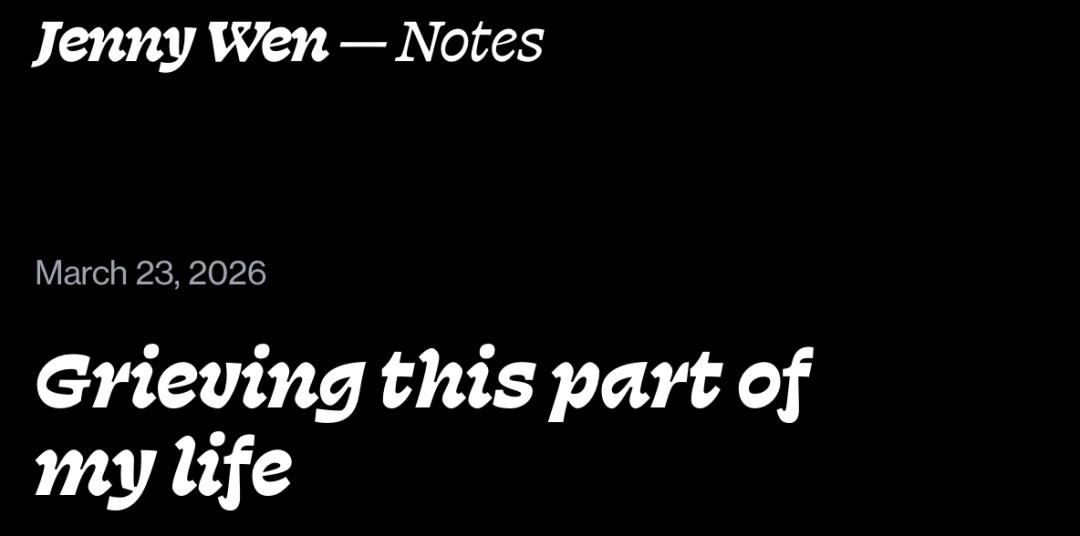
Before that, she was a high-achieving workaholic who took pride in working nonstop at high intensity; after getting pregnant, her body betrayed her ambition first.
She was extremely tired, and sweated more easily on the subway platform than before. She stopped exercising, her well-trained biceps seemed to disappear, and she even lost the motivation to go to the pottery class she had signed up for.
Hormonal changes made her sleep poorly at night, and when she couldn't fall asleep late at night, she fell into a deeper fear: she worried that giving birth to a child would lead her to a "one-way door" that she could never turn back from.
After becoming a mother, would the creativity, curiosity, drive and ambition she valued disappear too? She even thought that it was almost "unholy" for a pregnant woman to have such thoughts.
Fortunately, the realist side of her personality helped her reconcile these contradictory and complex feelings.
She realized that it was true that she was grieving for the old days, and it was also true that she was touched by the wonderful things happening in her body. "Being able to hold two seemingly opposite emotions at the same time is the most human thing you can experience."
Less than four months later, new progress came to both her life and career.
From switching majors because she felt bored, to giving up the Design Director title at Figma and returning to front-line work at Anthropic, to joining Cursor after becoming a mother, Jenny Wen never follows the fixed promotion script in Silicon Valley.
When engineers can already have multiple Claude agents write code and build product prototypes at the same time, clinging to old processes and the director title will only make you less and less valuable.
The only things that can secure your career are the courage to restart after seeing the changes clearly, and the vision to spot opportunities and judge directions from complicated information.
References:
https://x.com/jennywen/status/2076679443754475919
https://x.com/jennywen/status/2113737725568246161
https://jennywen.ca/
https://jennywen.ca/notes/grieving-this-part-of-my-life
https://www.youtube.com/watch?v=eh8bcBIAAFo
https://www.youtube.com/watch?v=4u94juYwLLM
This article is from the WeChat official account "AI Era", author: ASI Revelation, editors: Yuan Yu, Moses, authorized for release by 36Kr.