Report: The number of users of Hongguo has surpassed that of Doubao, and mobile internet users are accelerating their flow to short dramas and AI.
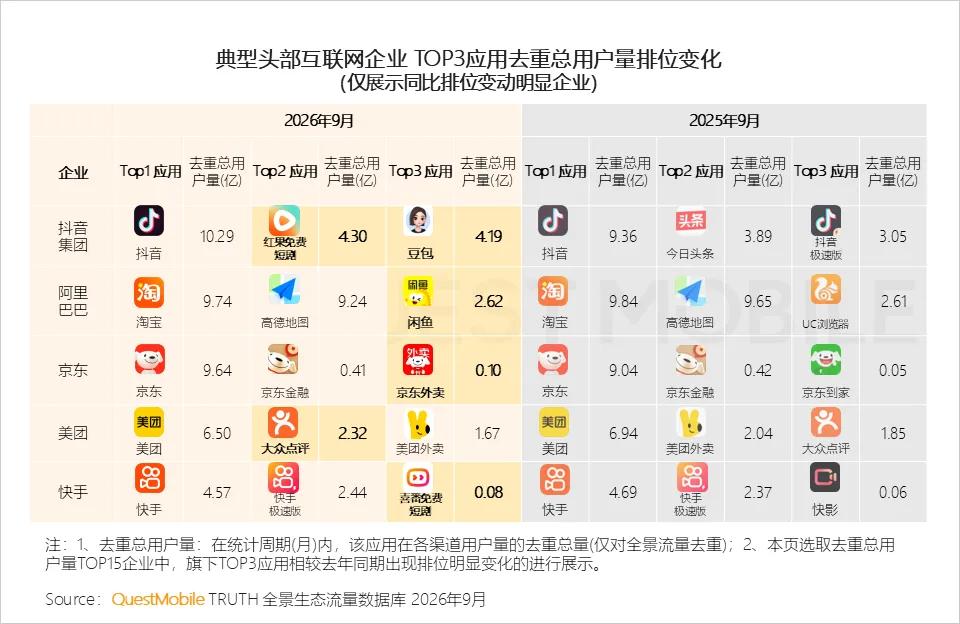
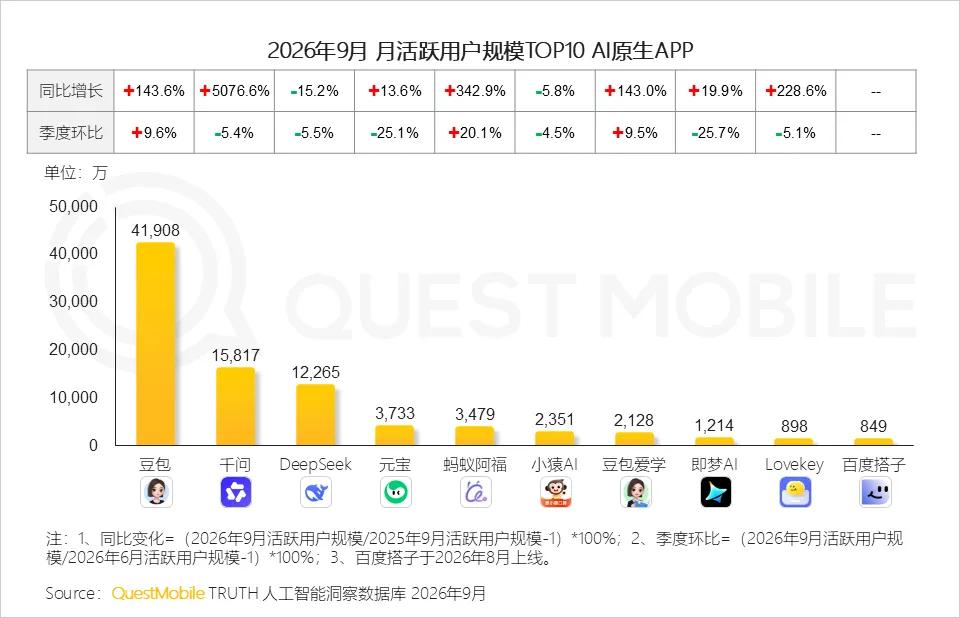
According to QuestMobile data, the user scale of Hongguo Free Short Drama under Douyin Group has reached 430 million, exceeding Doubao's 419 million, making it the second-largest application of the group after Douyin. The user scale of short drama applications grew from 10 million to 400 million in less than 3 years, with an annual compound growth rate as high as 443.1%.
The mobile internet traffic dividend is coming to an end, and the competition for user duration has become the new main battlefield.
According to the 2026 China Mobile Internet Autumn Report newly released by QuestMobile, against the backdrop that the growth rate of user scale has dropped back to below 1%, short drama videos and AI applications are reconstructing the industry landscape with completely different paths — the former is eroding the duration of traditional content, while the latter is accelerating the penetration of user decision-making links.
Data from the report shows that as of September 2026, the monthly active user scale of mobile internet has reached 1.281 billion, with a year-on-year increase of only 0.9%; but the monthly per capita usage duration maintains a high growth rate, reaching 189.8 hours in September, up 6.5% year on year, demonstrating the resilience of duration deepening under stock competition. At the same time, the monthly active user scale of AI native APPs has reached 546 million, surging 82.1% year on year; the total duration growth contribution rate of short drama videos and short videos has reached 111.5%, which means the expansion of these two tracks is fully eating into the user time of traditional content fields such as online videos and comprehensive information.
Application rankings also reflect the changes. According to the statistical caliber of the report, the user scale of Hongguo Free Short Drama under Douyin Group has reached 430 million, exceeding Doubao's 419 million, making it the second-largest application of the group after Douyin. Meanwhile, the "high-frequency interaction battle" between Doubao and DeepSeek is entering the deep-water zone — the monthly per capita usage times of Doubao is 72.0 times with a duration of 132.5 minutes, while those of DeepSeek are 65.9 times and 136.7 minutes respectively. The two show completely opposite quarter-on-quarter trends, indicating the landscape is still evolving dynamically.
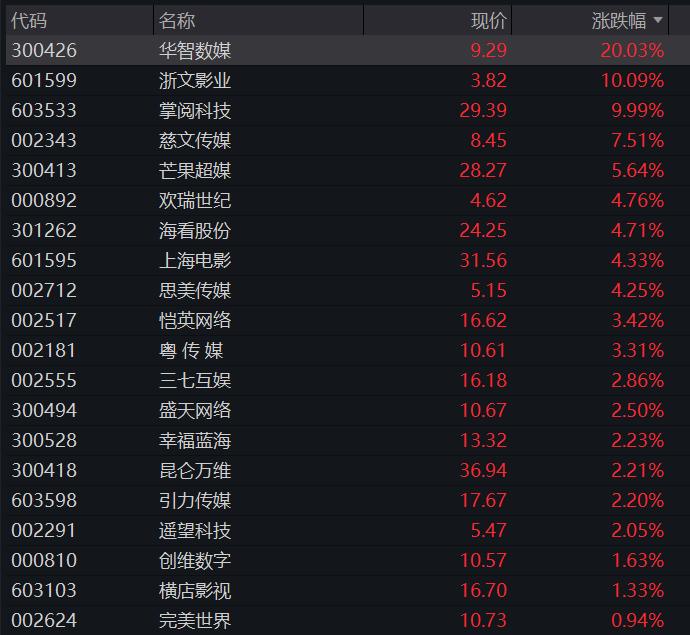
The market has responded to relevant sectors. Today, AI short drama and manhua drama concept stocks rose, Huazhi Digital Media hit the 20% daily limit for the second consecutive trading day, Wentou Holdings recorded 5 limit-up moves in 6 trading days, and Zhangyue Technology notched 3 limit-up moves in 5 trading days.
01
Peaking in Scale, Duration Becomes the Core Battlefield
The growth model of mobile internet is undergoing a fundamental shift. QuestMobile data shows that the monthly per capita usage duration reached 198.3 hours and 200.0 hours in July and August 2026 respectively, up 7.4% and 7.2% year on year, and broke through the 200-hour threshold for the first time in August; after the summer vacation effect faded in September, it still maintained 189.8 hours, up 6.5% year on year, confirming that the duration growth is structural rather than seasonal.
The "silver-haired" trend of user structure has further deepened, constituting the most important demographic variable at this stage. The report shows that users aged over 46 have accounted for more than 40%, up 2.6 percentage points year on year, among which users aged over 51 are close to 30%; the proportion of users aged 25 to 45 has dropped to 39%, falling below 40% for the first time. This structural reversal is profoundly affecting the content strategy, product design and marketing investment direction of all platforms.
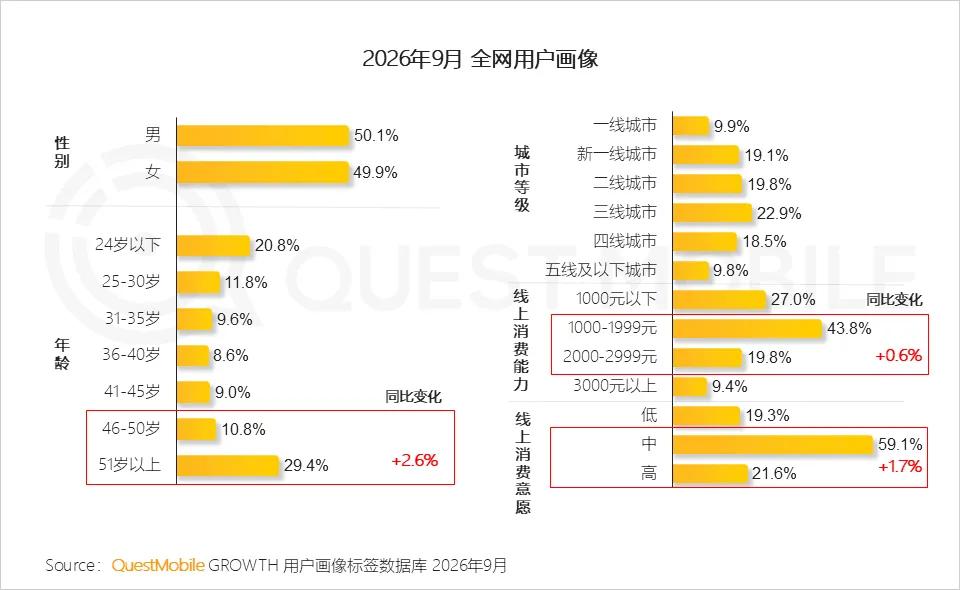
At the terminal level, Apple narrowly surpassed Huawei (20.87%) with an active share of 20.92% to take the first place among smart terminals, but both showed a year-on-year decline; the shares of OPPO, vivo and Xiaomi are 18.24%, 16.79% and 10.34% respectively, among which vivo and Xiaomi increased by 1.3 and 0.7 percentage points respectively. In terms of price range, the active share of mid-to-high-end models priced from 2000 to 4999 yuan has reached 48.8%, up 2.3 percentage points year on year, showing consumption resilience.
02
Short Drama Explosion: From 10 Million to 400 Million in Less Than 3 Years
The rise speed of short drama videos is rare in the history of mobile internet. QuestMobile data shows that the user scale of short drama applications grew from 10 million to 400 million in less than 3 years, with an annual compound growth rate as high as 443.1%. In the duration competition, short drama videos and short videos together contributed 111.5% of the total duration increment across the network, which means the growth of these two tracks has exceeded the total increment of the whole network, essentially offsetting the duration loss of other tracks with positive contribution.
At the platform level, the traffic of short drama APPs under Douyin and Kuaishou is growing rapidly, and users do not flow away from the main platforms as a result — the proportion of users corresponding to short video platforms in short drama APPs continues to rise, forming a collaborative ecology of "drainage from the mother platform and undertaking by independent applications". It is worth noting that the user scale of Hongguo Short Drama surpassed Doubao in this quarter.
However, the traffic stability of the short drama industry is still a hidden concern. The report points out that except for some head applications, most short drama APPs and mini-programs have a short operation cycle, and the industry has a fast update frequency. Against the background that AI-enabled production costs have dropped significantly — according to industry data, the production cost of some AI short dramas has dropped by 80% to 90% compared with before — the production capacity on the supply side has been released rapidly, but the head effect is also significant: among the massive new works, the proportion of those that can exceed 100 million views is extremely low, and the contradiction between content quality and traffic distribution remains prominent.
In terms of going global, reports from CCTV Finance show that about 10 Chinese enterprises have established overseas short drama platforms at present, more than 10 overseas short drama APPs have launched exclusive AI manhua drama channels, the total number of active users of overseas AI manhua drama has exceeded 150 million, and Chinese manufacturers occupy 9 of the top 10 overseas paid short drama applications. Huafu Securities believes that AI manhua drama is taking over from live-action short dramas to become the core increment of the industry, and it is recommended to focus on the platform and tool links.
03
AI Applications: The Entrance War Ends, The Operation War Begins
The AI application market completed a key structural shift in the third quarter of 2026. QuestMobile data shows that the monthly active users of AI native APPs reached 546 million, up 82.1% year on year; the monthly active users of AI applications of terminal manufacturers reached 783 million, up 16.9% year on year; the monthly active users of PC clients reached 26 million, up 82.3% year on year. In contrast, AI application plugins and AI applications on PC web pages decreased by 15.6% and 10.4% year on year respectively.
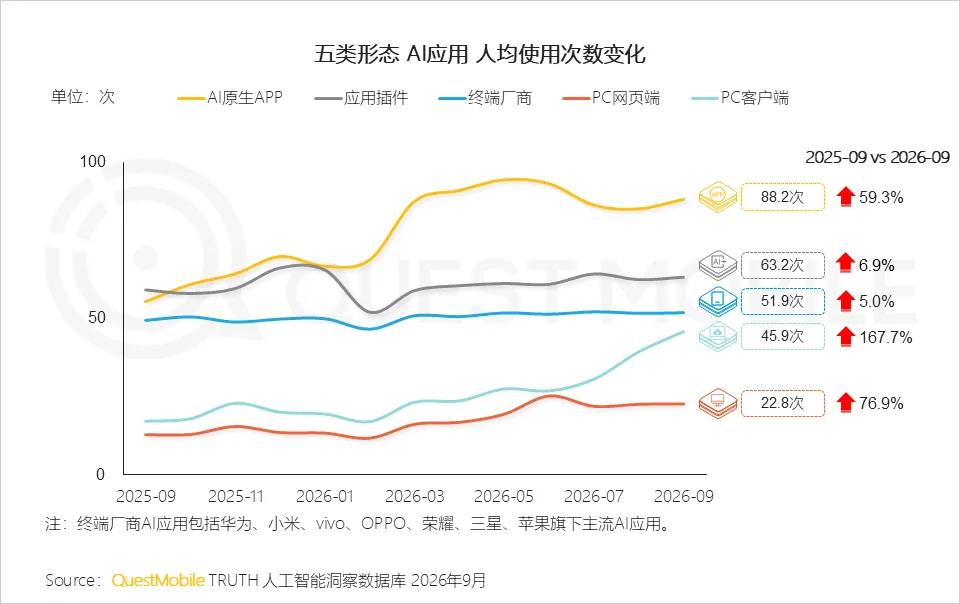
This differentiation means that the closed-loop independent entrances and the system-level entrances close to the delivery end continue to expand, while the lightweight entrance form relying on multi-level transfer is shrinking. The "land-grabbing" user scale war has evolved into a "high-frequency interaction" user operation war.
In the head application landscape, Doubao and DeepSeek form a duopoly, but their growth momentum diverges. QuestMobile data shows that in September 2026, the monthly per capita usage times of Doubao is 72.0 times, and the monthly per capita usage duration is 132.5 minutes; those of DeepSeek are 65.9 times and 136.7 minutes respectively, and those of Yuanbao are 38.7 times and 78.6 minutes. From the perspective of quarter-on-quarter changes, the monthly per capita times and duration of Doubao decreased by 6.1% and 7.8% respectively, while those of DeepSeek increased by 5.8% and 9.5% respectively, indicating that the ebb and flow of the two in the depth of user operation is accelerating.
The differentiation of citation mechanisms further reveals the path divergence of each platform in finding the optimal solution among "source breadth — content precision — answer quality": Doubao and Qianwen tend to make efficiency-improving subtraction, Yuanbao and DeepSeek iterate steadily, Kimi achieves deep coverage, and Wenxin expands in a balanced manner.
In terms of system-level AI applications, the total user scale reached 592 million in September 2026, with a year-on-year growth rate of 23.0%. The report points out that the increment logic of mobile phone manufacturers' AI does not lie in the "assistant" itself, but in the "capability layer delivered by the system by default" — the default mentality of "evoking when encountering problems" has not been established, which is still the core gap of current mobile phone AI assistants.
04
Large Factory Landscape: The Top Three Are Stable, The Second Tier Accelerates Differentiation
The landscape of the top internet camps is basically continued, but the growth rate differentiation within the tier is intensifying. QuestMobile data shows that as of September 2026, the de-duplicated total users (APP + mini-program) of Tencent Holdings, Douyin Group and Alibaba reached 1.28 billion, 1.259 billion and 1.258 billion respectively, with year-on-year growth rates of 0.9%, 5.2% and 0.4% respectively. The pattern of the three strong players is stable, but the growth rate of Douyin Group is significantly leading.
The internal differentiation in the second tier is prominent: Baidu Group, JD and Ant Group rank 4th to 6th in turn, with user scales of 1.093 billion, 978 million and 968 million respectively, and year-on-year growth rates of -1.8%, 7.1% and 1.4% respectively. Relying on e-commerce scenarios, JD and Pinduoduo (year-on-year growth rate of 6.5%) have become the fastest-growing players in the second tier, while Baidu is facing phased user-level pressure in the AI wave.
In terms of the advertising market, QuestMobile data shows that the scale of China's internet advertising market reached 193.24 billion yuan in the third quarter of 2026, up 3.1% year on year, with overall stability. The delivery growth rate of high-value consumption categories such as automobiles and luxury goods is relatively high, and internet industries such as AI applications and takeaway services maintain competitive delivery. In September, the user scale of college students in the AI application industry reached 23.591 million, and the school opening season became an important window for AI applications to acquire customers.
05
AI Games: The Next Supply Revolution After Short Dramas?
The explosion of short dramas is providing a reference for another content revolution. The penetration speed of AI tools in the field of game development has accelerated significantly — taking 37 Interactive Entertainment as an example, the proportion of 2D art assets produced with AI assistance exceeds 80%, and the proportion of advertising video materials with deep AI participation in production exceeds 70%. At the same time, TapTap launched more than 5000 new games in the first half of 2026, an increase of about 8.4 times over the same period of the previous year, and a large number of these works are produced with AI participation.
Overseas, the Roblox Build platform has attracted more than 100,000 testers, with about 9000 games released, 71% of whose creators have never used Roblox Studio before; Google and Unity announced a cooperation in October to connect natural language creation, game engine and browser running experience. The declining track of game creation threshold is replicating the path that AI short dramas have gone through.
However, the technical threshold of games determines that this supply revolution comes later. Short dramas play along a preset timeline, while games need to respond to players' operations in real time, with collision, state and economic system all indispensable. Being able to generate a section of game screen is still far from generating a work worth playing repeatedly. The industrialization of AI games is expected to spread step by step according to different complexity: small games, interactive shadow games and UGC content platforms with relatively simple rules may take the lead in volume expansion, while complex SLG and large open world will still rely on long-term polishing by professional teams.
The more critical variable is that games have richer interaction, social and virtual economic space than short dramas. Intelligent NPCs with memory ability, UGC creation ecology with universal public participation, and dynamically evolving game worlds are likely to attract new user groups who were not used to traditional competitive or numerical thresholds in the past, thus opening up a demand revolution in addition to the supply revolution. AI short dramas amplify content supply, while AI games have the opportunity to expand content consumption at the same time — this is the most essential difference between the two, and also the core logic why the market gives longer-term imagination space to the latter.
This article is from the WeChat Official Account "Hard AI", author: Zhang Yaqi, authorized for release by 36Kr.