Clinging closely to the Yangtze River Delta, will this major industrial province in Northeast China achieve "overtaking by switching to a new development track"?
Entering the critical sprint period towards the end of the year, on October 30, Jilin held a meeting on the analysis of Q3 economic operation, stressing that extraordinary measures should be taken to sprint for the annual targets and promote the province's economy to stabilize and pick up.
In the first three quarters of this year, Jilin's GDP reached 1.107653 trillion yuan, up 2.4% year on year, ranking at the lower end among the 31 provincial-level administrative regions. The added value of the secondary industry hit 348.322 billion yuan, down 1.6% year on year, which became the main factor dragging down economic growth.
Under mounting pressure, while emphasizing the supporting role of key industries, Jilin specifically noted that it would "accelerate the leapfrog development of the new energy industry" and vigorously expand application scenarios for green hydrogen and green methanol.
As "the most advantageous and potential growth pole for Jilin's revitalization and development", the new energy industry has been placed at the top of Jilin's priority list.
Just recently, the comprehensive hydrogen energy application pilot urban agglomeration covering Northeast China (including eastern Inner Mongolia) and the Yangtze River Delta was officially launched. Four cities in Jilin, namely Changchun, Siping, Songyuan and Baicheng, are included in the core pilot section, to break the biggest bottleneck of "mismatch between supply and demand and unsmooth industrial chain" in China's hydrogen energy industry. Partnering with the Yangtze River Delta, Jilin is standing at a key position.
01
Target
On October 20, in Songyuan, Jilin, the second phase of China Energy Engineering Group's "Qing Hydrogen No.1" Songyuan Project, the world's largest integrated green hydrogen-ammonia-methanol project, officially started construction.
With a total investment of 10.828 billion yuan, the project will build a 1600 MW wind and solar power generation facility, an energy storage project, and two large-scale green flexible synthetic ammonia units. Upon full operation after completion, it will produce 56,000 tons of green hydrogen and 400,000 tons of green ammonia annually. Combined with the first phase, the annual green ammonia production capacity will reach 600,000 tons.
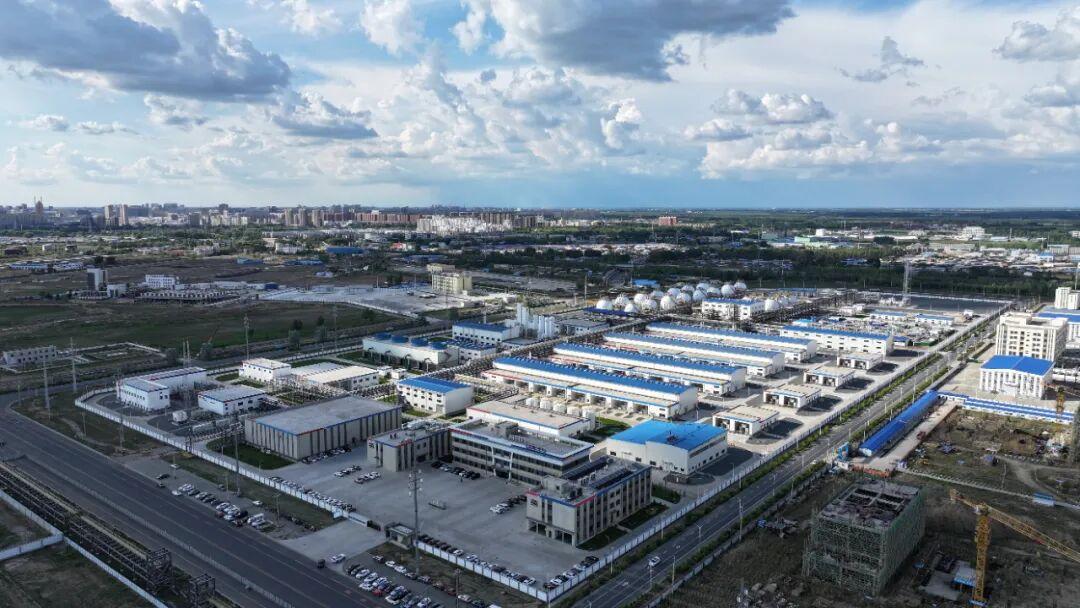
Image source: China Energy Engineering Group
This is a landmark project for Jilin to develop the green hydrogen industry and "accelerate the transformation of resource advantages into development competitive advantages".
Songyuan is located in western Jilin, one of the regions rich in wind and solar resources in Jilin Province. For many years, the installed capacity of wind power and photovoltaic power here has grown rapidly, but the prominent contradiction of "power generated cannot be transmitted out and put into good use" remains prominent. Local consumption of green power is not only a task for enterprises, but also a key issue for the whole province of Jilin.
The core task of "Qing Hydrogen No.1" is to convert renewable energy such as wind power and solar power into green hydrogen locally, and further synthesize green ammonia and green methanol, turning green wind and solar power into storable, transportable and ex-sellable industrial products.
In recent years, relying on projects including "Qing Hydrogen No.1", Jilin has been vigorously exploring the "direct connection of green power + local consumption" model to promote local conversion of green power.
By the end of 2025, Jilin's green hydrogen production capacity reached 86,700 tons per year, and the production capacity of green ammonia and green methanol reached 430,000 tons per year, accounting for about half of the national total, firmly ranking in the first echelon across China. This also means that Jilin has initially completed the large-scale verification of green hydrogen production.
However, large scale does not equal commercialization. The green ammonia production capacity to be built in the second phase of CEEC's Songyuan project is twice that of the first phase, and the unit production cost of green ammonia will be reduced by more than 10% compared with the first phase. As Li Jingguang, Party Secretary and Chairman of CEEC Hydrogen Energy Co., Ltd., noted, the first phase of the Songyuan project solved the feasibility problem of "from 0 to 1", while the second phase addresses the commercialization problem of "from 1 to N".
In fact, Jilin's expectations for the green hydrogen industry go far beyond production capacity scale.
Since the beginning of this year, Jilin has publicly stated on many occasions that it regards green energy as "the largest growth pole for the province's revitalization and development".
With Changchun, Siping, Songyuan and Baicheng as the core, Jilin's hydrogen energy industry is gradually forming a closed-loop industrial chain:
Baicheng and Songyuan are home to ten-million-kilowatt-level clean energy bases, rich in wind and solar resources, undertaking the core task of large-scale green hydrogen-ammonia-methanol production across the province;
Siping takes the construction of zero-carbon parks as the starting point, expands local chemical consumption scenarios for green hydrogen, and undertakes the downstream extension of the western hydrogen energy industrial chain;
Changchun gives full play to its solid equipment manufacturing foundation and rich scientific and technological innovation resources as the provincial capital, focusing on two major directions: R&D of hydrogen energy equipment and implementation of demonstration scenarios, to fill the "last mile" gap of terminal application in the hydrogen energy industrial chain.
According to the plan, by 2030, Jilin will strive to reach a green hydrogen production capacity of 1 million tons, and a green ammonia and green methanol production capacity of 6 million tons, building the world's largest "green liquid fuel supply base".
02
Joining the Pilot Cluster
At present, hydrogen energy has become an important variable reshaping the global energy competition landscape, and the hydrogen energy industry is entering a critical period of large-scale application and industrialized development.
Previously, the outline of the 15th Five-Year Plan listed "hydrogen energy and nuclear fusion energy" as one of the future industries for China's priority layout, clarifying that it should be promoted to become a new economic growth point;
In June this year, the "15th Five-Year Plan for New Energy System Construction" was released, which for the first time included hydrogen energy and green fuels into the non-fossil energy supply system in the top-level national energy design.
Zhang Lin, Director of the Planning and Development Department of China Electricity Council, previously said that the next five years will be the critical period for China's hydrogen energy industry to shift from "demonstration application" to "market-driven" development. The rise of the whole industrial chain of hydrogen energy "production, storage, transportation and application" contains huge green transformation opportunities and a market scale of trillions of yuan.
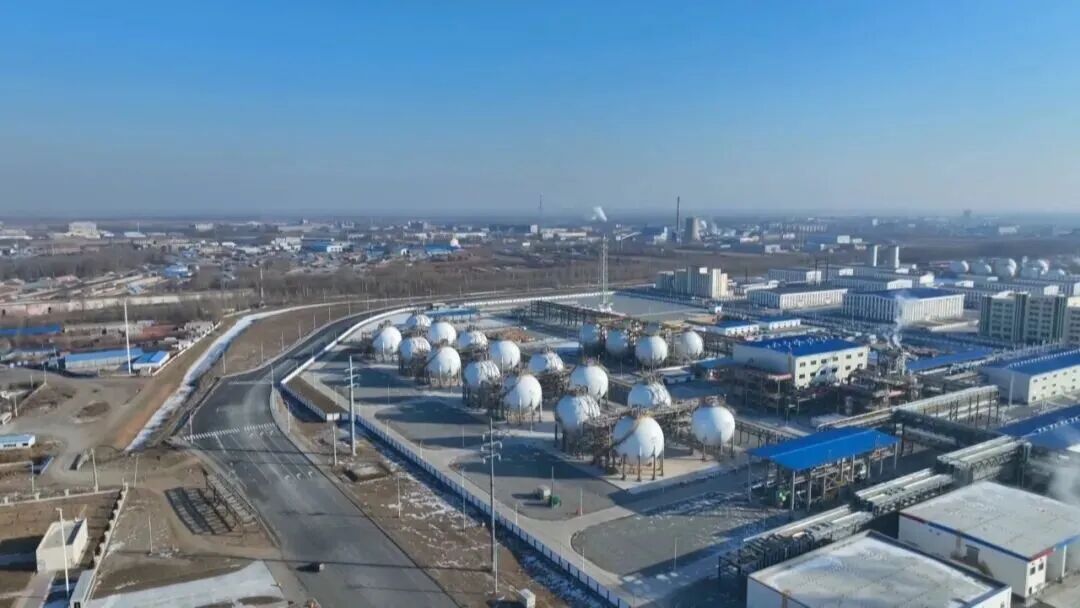
Image source: Jilin Official Release
According to statistics, at least 23 provincial-level regions explicitly mentioned the hydrogen energy industry in their 2026 government work reports, and more than 20 provinces have clarified the medium and long-term plans for hydrogen energy in the next 5 to 10 years.
In this national landscape, Jilin has occupied a leading position.
In addition to its green ammonia and green methanol production capacity accounting for about half of the national total, another major advantage of Jilin lies in its production cost. According to the calculation of "Gaogong Hydrogen Electricity", the unit hydrogen production cost of the first phase of CEEC Songyuan Project is only 11.8 yuan per kg, making it one of the most cost-effective green hydrogen projects publicly disclosed in China.
With obvious advantages on the production side, Jilin is now embracing new opportunities on the application side.
Not long ago, three departments including the Ministry of Industry and Information Technology announced the selection results of comprehensive hydrogen energy application pilots, identifying five major urban agglomerations: the Beijing-Tianjin-Hebei region and the Guangdong-Hong Kong-Macao Greater Bay Area are traffic scenario-oriented pilots, while Northeast China (including eastern Inner Mongolia)-Yangtze River Delta, Xinjiang-Chengdu-Chongqing Economic Circle, and the "Ji Zi Wan" of the Yellow River-Central Plains are industrial scenario-oriented pilots.
The core task of the Northeast China (including eastern Inner Mongolia)-Yangtze River Delta pilot urban agglomeration is to build a cross-regional green fuel transportation corridor, focusing on solving the spatial mismatch problem in China that "green hydrogen resources are concentrated in the north while hydrogen consumption scenarios are mostly in the south".
According to the division of labor of the urban agglomeration, the upstream will build wind and solar hydrogen production and green ammonia/methanol bases in Jilin and eastern Inner Mongolia, with a planned annual output of 1.12 million tons of green ammonia and 2.59 million tons of green methanol, forming a ten-thousand-ton-level zero-carbon fuel supply capacity;
The midstream takes Liaoning as the hub, building a multi-modal transport storage and transportation network relying on Shenyang, Dalian and Yingkou to open up the channel for northern hydrogen to be used in the south;
The downstream, led by Shanghai, will build a green fuel bunkering and trading center at Yangshan Port and develop full-chain high-end hydrogen energy equipment, forming a north-south linked, land-sea closed-loop hydrogen energy industrial ecosystem.
03
Pivot
For Jilin, hydrogen energy is no longer a simple regional emerging industry, but a key pivot to balance the national north-south supply and demand, making Jilin the core hub connecting northern resource supply and the Yangtze River Delta consumer market.
A series of actions have already been launched.
On October 13, the world's first ship-to-ship bunkering of green ammonia fuel was completed in Zhoushan, Zhejiang. From the production base in Songyuan to the bunkering at Zhoushan Port, 1,000 tons of zero-carbon green ammonia fuel produced in China was delivered to international ocean routes for the first time.
Earlier in March and August this year, green methanol produced in Taonan, Jilin, completed two large-scale marine green methanol bunkering operations successively at Shanghai Yangshan Port, breaking the global single bunkering record twice, which also marked the official formation of the "southward methanol transportation from the north" corridor.
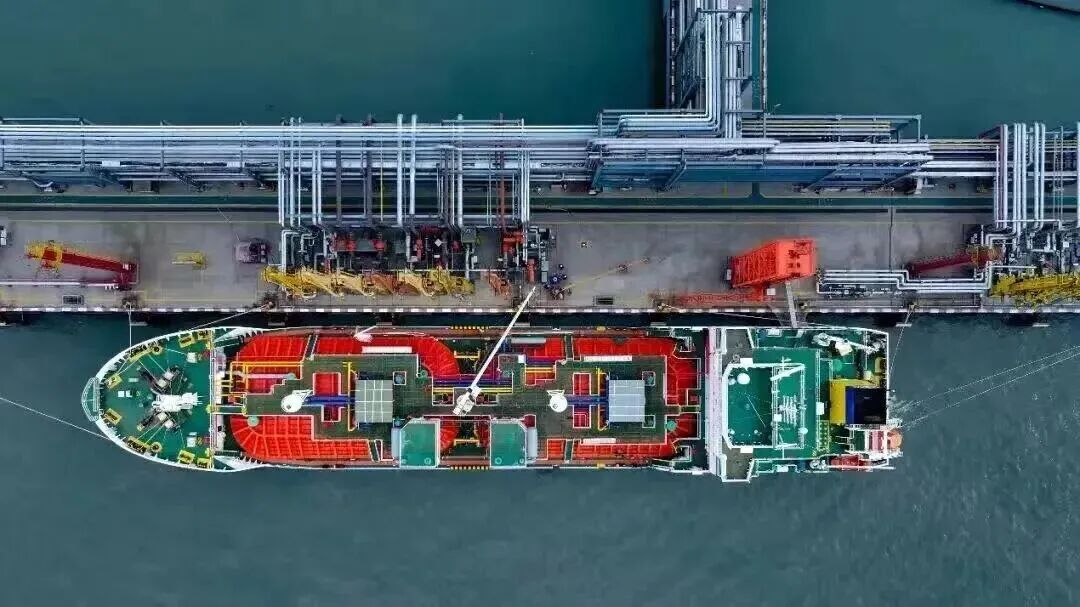
Image source: Jilin Official Release
Relevant domestic and international institutions predict that the global demand for green fuels will reach about 10 million tons of oil equivalent by 2030, and exceed 100 million tons of oil equivalent by 2050, indicating a broad space for industrial development.
Jilin's vision goes far beyond that.
Yuan Jianguang, a researcher at Jilin Hydrogen Energy Industry Comprehensive Research Institute, pointed out in an interview with local media that for Jilin, this is not only an additional ex-situ transportation channel, but "more importantly, it allows Jilin to participate in the construction of green fuel supply chains, standard systems and business models in advance".
The four-year pilot period is also an important window of opportunity for Jilin. How to give full play to the role of hydrogen energy in energy transformation, while solving problems such as production cost, storage and transportation efficiency and market demand, has become the top priority for the industry in the next stage.
According to the latest deployment of Jilin, the province will amplify the scale effect, guide the clustered development of industries, and continuously expand the scale of the "green hydrogen +" industry.
Specifically, while strengthening scientific and technological research to effectively reduce production costs and solve key bottleneck problems, Jilin will also promote the implementation of projects and products including hydrogen energy transportation, methanol vehicles, hydrogen energy peak-shaving power stations, green hydrogen heating, solid-state "storage, transportation and bunkering" facilities, and hydrogen metallurgy, to further expand local green energy consumption scenarios.
From a longer-term perspective, the key to Northeast China's revitalization lies in finding a new track for "overtaking on a new curve", and the development of Jilin's hydrogen energy industry may be the latest footnote of this strategy.
This article is from the WeChat official account "City Evolution", written by Liu Xuqiang, published with authorization from 36Kr.