Who exactly is to blame for a rear-end collision that occurs when driving with L2 autonomous driving mode engaged?
When the vehicle ahead brakes sharply on the highway, the dashboard beeps twice, the steering wheel automatically pulls back, and the brakes are applied, but the vehicle fails to stop.
After getting off the car, many people's first reaction is: "The car drove itself, can I hold the manufacturer accountable for this?"
This question has a fairly clear answer in 2026, and this answer is not very friendly to the person sitting in the driver's seat.
01
First, confirm one thing: What level of autonomous driving are you actually using?
According to the national standard "Driving Automation Classification for Vehicles" (GB/T 40429—2021), driving automation is divided into six levels from L0 to L5: L0-L2 are driving assistance systems, where the system only provides support, and the human driver must monitor road conditions throughout the entire process and take over at any time; L3 is conditional autonomous driving, where the system drives the vehicle on its own within limited scenarios, but the human driver must take over once a takeover request is issued; L4-L5 are high-level / fully autonomous driving.
The key point is: The vast majority of passenger vehicles currently on sale in the market — including models with words like "smart driving", "NOA", and "navigation-assisted driving" in their promotional materials — are still technically defined as L2-level combined driving assistance systems.
In other words, it helps you press the accelerator and watch the lane, but the subject responsible for driving is still you.
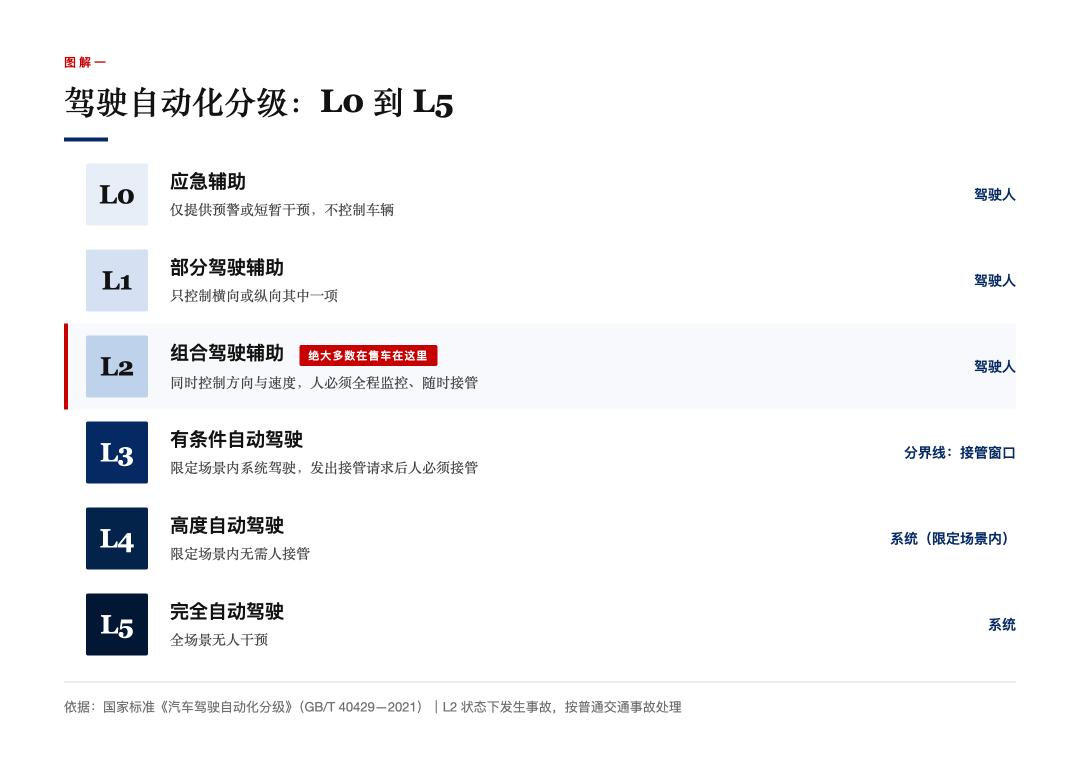
Figure 1 · Driving Automation Classification and Liable Subjects (Based on GB/T 40429—2021)
02
Here is the conclusion first: The person behind the steering wheel is liable
This is not the opinion of a single law firm, three lines of reasoning all point to the same conclusion.
The first line: Judicial interpretation. On February 13, 2026, the Supreme People's Court issued the 48th batch of guiding cases, making it clear that the on-board driving assistance system cannot replace the driver as the driving subject. After activating the on-board driving assistance function, the driver is still the person actually performing the driving task and is responsible for ensuring driving safety.
The second line: Criminal judgment. In February 2026, in Linxiang, Hunan Province, Zhou got on the car after drinking, turned on the intelligent driving system, set the navigation, then played music in the car and fell asleep. The vehicle later collided with an unlicensed three-wheeled motorcycle, injuring two people. After identification, Zhou's blood alcohol content was 240.99mg/100ml, and the traffic police determined that he bore the main responsibility for the accident.
The focus of the dispute in the trial was straightforward: Does turning on "smart driving" after drunk still constitute the crime of dangerous driving?
The court's answer was yes. The reasoning was very clear: The driving automation level of the involved vehicle is only L2 combined assisted driving, not a fully autonomous driving system. The driver must be on duty throughout the process and take over at any time. The subject of driving responsibility is always the driver himself, and the driving obligation cannot be exempted just because the assisted driving function is turned on. He was finally sentenced to three months of criminal detention and a fine of 6,000 yuan.
The third line: Public legal education caliber. In the public interpretations of procuratorates, traffic management departments and practicing lawyers across the country in 2026, almost the same sentence is used: If an accident occurs in the L2 state, it shall be handled as an ordinary traffic accident, and the traffic management department of the public security organ shall divide the responsibility according to the role of the parties' acts in the occurrence of the accident and the severity of their faults.
So the most simple question — "The car crashed itself, can I blame the car company?" — The answer is: No, unless you can prove that the system was defective.
The system only helps you press the accelerator and control the steering wheel, it does not take responsibility for you.
03
"Responsibility" actually consists of three accounts, and many people get the first one wrong
When discussing smart driving accidents, the most common mistake is to confuse "who gets fined and points deducted", "who goes to jail" and "who pays for compensation" as one single matter. The legal bases for these three accounts are completely different.
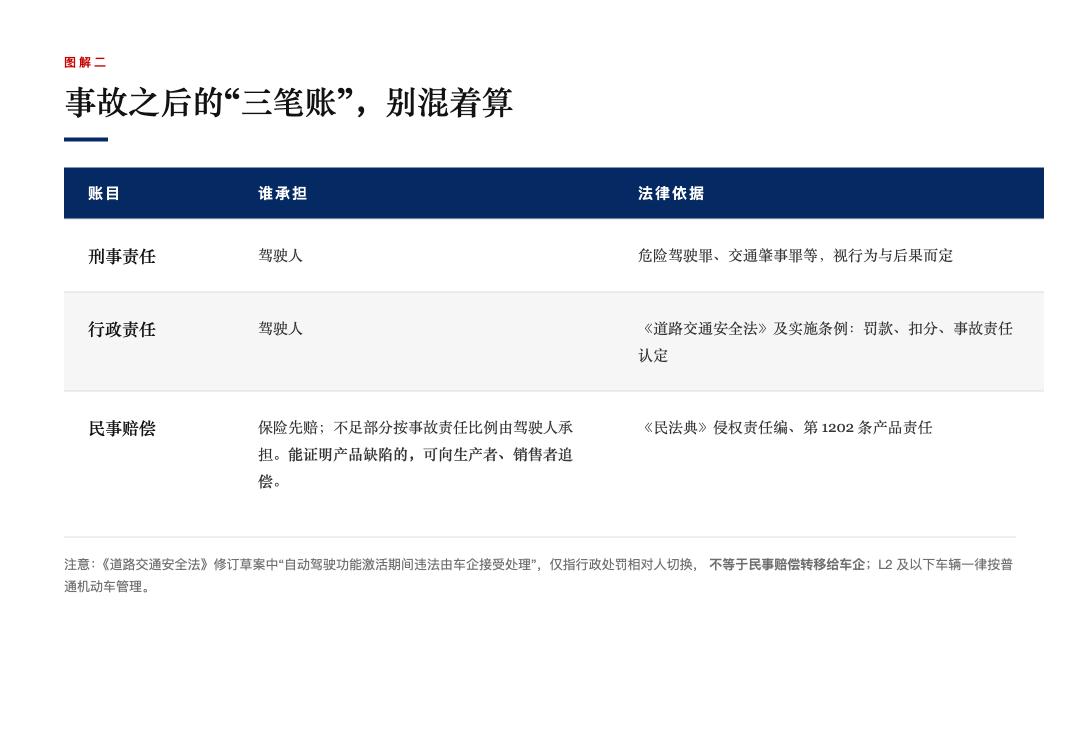
Figure 2 · Liable Subjects and Legal Bases for Criminal, Administrative and Civil Liabilities
There is another thing that is particularly easy to misinterpret: The provision in the revised draft of the Road Traffic Safety Law that "traffic violations during the activation of autonomous driving functions shall be handled by the automobile manufacturer".
Many people see "handled by the automobile manufacturer" and think the responsibility has been transferred. This is not the case. The draft also clearly states that "being handled" here is only limited to the switch of the administrative penalty counterpart, which does not mean that the final civil compensation responsibility is automatically transferred to the automobile manufacturer; and if it is in manual driving, assisted driving mode, or the vehicle is only L2 or below, no matter how high the hardware configuration is, it shall be managed as an ordinary motor vehicle, and the violation shall be borne by the driver.
In one sentence: The current set of rules is "strict" for L2 vehicle owners.
04
Only in three cases may the responsibility be transferred to the automobile manufacturer
The first case: Product defect. Article 1202 of the Civil Code stipulates that if a product causes damage to others due to defects, the infringed party may claim compensation from the producer or seller. Theoretically, if you can prove that the accident was caused by a defect in the assisted driving system, you can pursue compensation from the manufacturer.
But the threshold in reality lies in burden of proof. Vehicle owners cannot obtain complete background data, and automobile manufacturers unilaterally master driving records, which is the sticking point of a large number of disputes in the past few years. So you will see that in some cases, the owner's appeal is not "you pay", but "you give me the data".
The second case: Failure to take over within the takeover window. This is truly established only at the L3 level, but the direction is also worth remembering for L2 vehicle owners.
The "Safety Requirements for Autonomous Driving Systems of Intelligent and Connected Vehicles" (GB 44721—2026), released on July 30, 2026 and implemented on July 1, 2027, is China's first mandatory national standard for L3/L4 autonomous driving. Ji Xuehong, director of the Automotive Industry Innovation Research Center of North China University of Technology, interpreted to the media that the standard clarifies that accidents caused by vehicles within the system operation scope are the responsibility of the automobile manufacturer, and failure to take over within 10 seconds after the takeover reminder is issued shall be the responsibility of the driver.
Conversely, once a takeover request is issued, the balance of responsibility begins to shift back to the driver. The later you take over, the harder it is to clarify the situation.
The third case: The automobile manufacturer's own "responsibility guarantee" commitment. In the past two years, many brands have launched service commitments such as "smart driving accident protection" and "assisted driving liability insurance". Two points need to be noted: Such commitments are corporate commercial commitments or value-added services, not legal responsibility transfer, nor are they equivalent to insurance; the scope of compensation, trigger conditions and exemption clauses vary greatly among different manufacturers, so you must read the original text carefully, not just the posters.
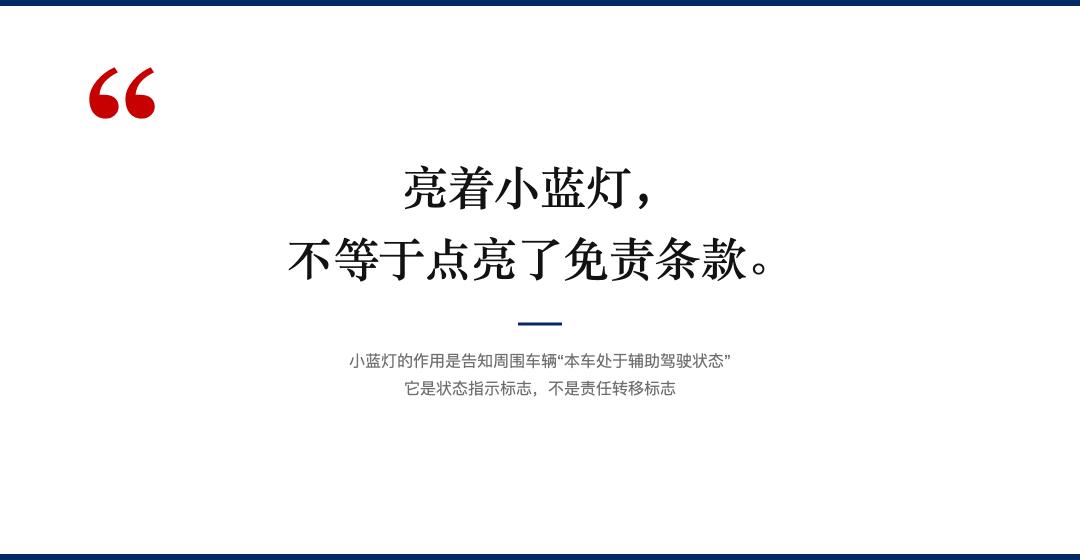
Figure 3 · The "small blue light" is the status indicator for assisted driving activation, not a responsibility transfer sign
That "small blue light" — the blue indicator light on the rearview mirror when assisted driving is activated — its function is to tell surrounding vehicles "I am currently in the assisted driving state" to reduce the accident rate. It is not a responsibility transfer sign.
05
When L3 really arrives, what will change?
In December 2025, the Ministry of Industry and Information Technology granted conditional licenses to the first batch of L3-level autonomous driving vehicle products, which are clearly limited to road traffic pilots in designated areas; Beijing, Chongqing and other places subsequently issued special license plates for autonomous driving. The L3 version of Arcfox Alpha S was launched on Beijing's highway network, and the L3 version of Deepal SL03 was launched on Chongqing's highways and urban expressways.
The supporting technical foundation is also being supplemented: GB 44721—2026 requires L3/L4 models to be equipped with DSSAD Autonomous Driving Data Recording System, which is an unalterable "black box" that completely records system status, takeover requests, fault degradation and collision processes. The industry generally believes that this solves the old problem of "automobile manufacturers unilaterally mastering data and vehicle owners having difficulty in producing evidence".
But you need to see the timetable clearly: The national standard will not be implemented until July 1, 2027, and the revision of the Road Traffic Safety Law is still a draft. Before that, the vast majority of vehicles on the road are still L2, and are still handled under the rule of "the human driver is responsible".
06
If an accident really happens, do these 5 things immediately
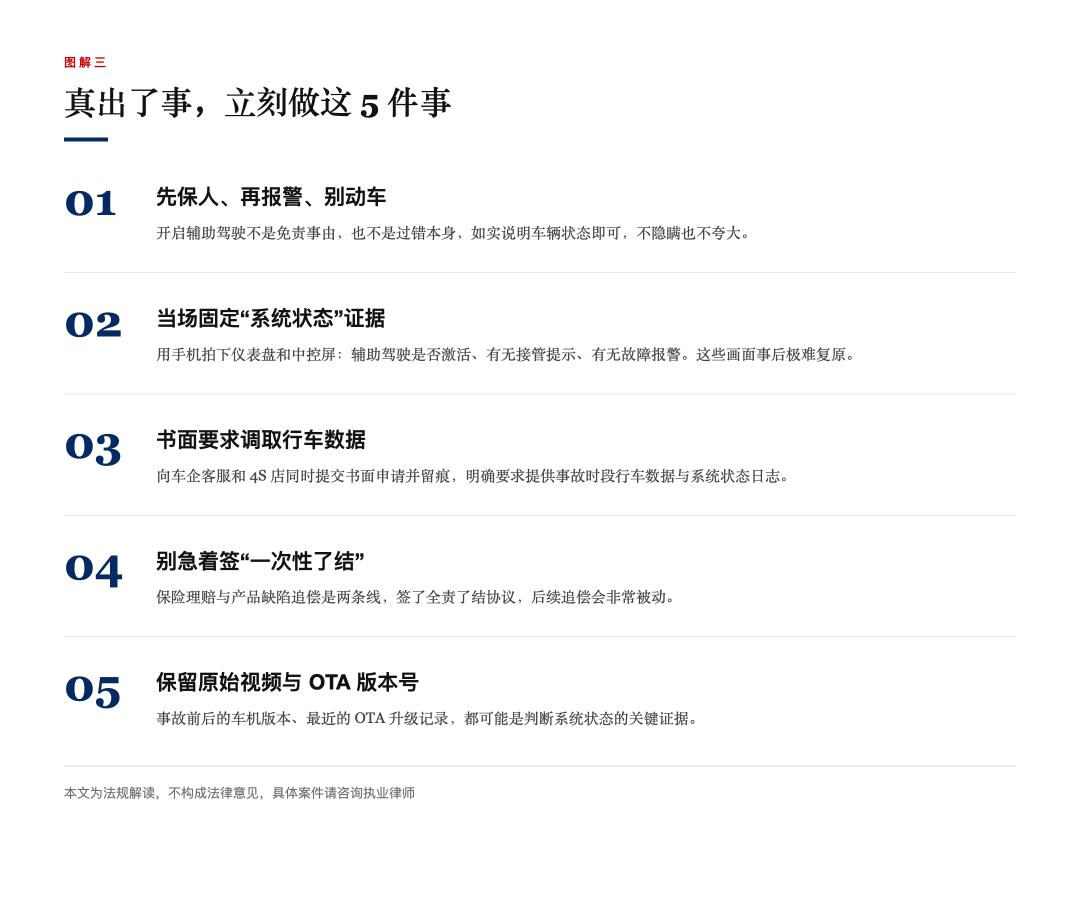
Figure 4 · Accident Scene Handling Checklist
1. Ensure personal safety first, call the police, and do not move the vehicle. Activating assisted driving is not a reason for exemption, but it is not a fault in itself. Just truthfully state the status, do not hide it or exaggerate it.
2. Fix the evidence of "system status" on the spot. Use your mobile phone to take photos of the dashboard and the central control screen: whether the assisted driving is in the activated state, whether there is a takeover prompt, and whether there is a fault alarm. These images are extremely difficult to restore afterwards.
3. Submit a written request to access driving data. Submit a written application to both the automobile manufacturer's customer service and the 4S store (keep a record, do not just call), and clearly request to provide driving data and system status logs during the accident period. If the automobile manufacturer does not cooperate, this record itself will be the material for subsequent rights protection.
4. Do not rush to sign the "one-time settlement" agreement. Insurance claim settlement and product defect recourse are two separate lines. If you sign a full responsibility settlement, you will be very passive if you want to pursue recourse later.
5. Keep the original video and OTA version number. The infotainment system version before and after the accident and the latest OTA upgrade record may be the key to judging the system status.
Technology is always moving forward, but the underlying logic of the law is very simple: Whoever is driving is responsible.
In the L2 era, there is no exception to this rule. It is not until L3 is truly widely deployed, DSSAD is truly installed on vehicles, and the Road Traffic Safety Law is truly revised, that the responsibility dividing line will shift from "human driver" to "whether the system is activated". Before that, you can use assisted driving with confidence, but please remember its name — assistance.
This article is from the WeChat official account "Decoding Auto", author: Wokebadi, published with authorization from 36Kr.