Wybot is racing to become the first publicly listed company in the pool robot industry.
On October 30, Wanyuan Technology obtained the overseas listing filing notice from the China Securities Regulatory Commission, planning to issue no more than 12,688,600 shares to sprint for the Main Board of the Hong Kong Stock Exchange. Once the listing is completed, it will become the "first share of swimming pool robot" in the capital market.
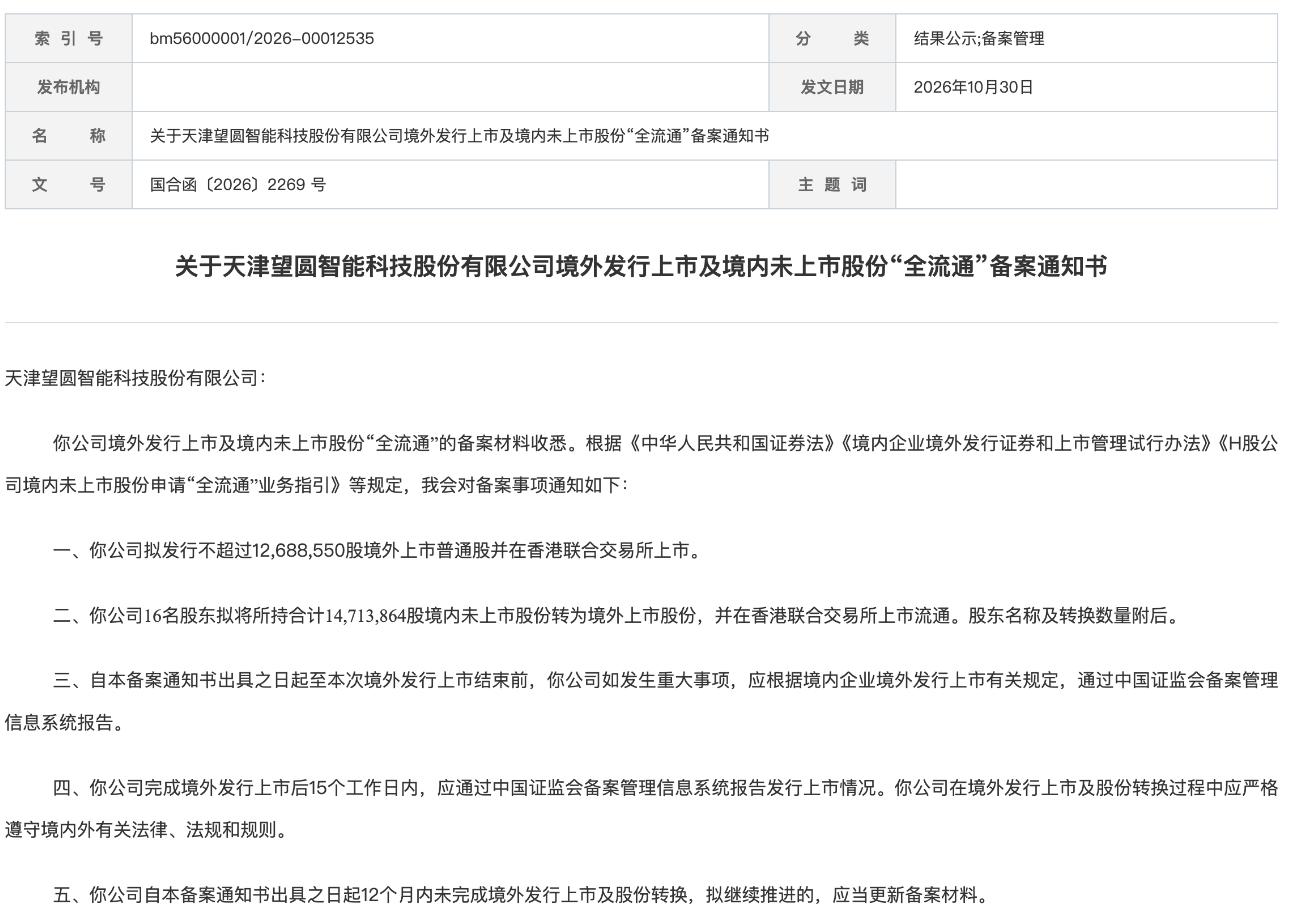
Image source: Official website of China Securities Regulatory Commission
In public perception, swimming pool cleaning robots are often simply equated to "sweeping robots thrown underwater".
However, the complex underwater environment is completely different from the ground: GPS signals cannot penetrate water bodies, water flow disturbance, light refraction, and pool wall reflection will interfere with sensors, and multiple engineering problems such as IP68 level sealing, lithium battery underwater heat dissipation, stain identification, and garbage collection need to be solved at the same time.
For a long time, the global swimming pool robot market has been dominated by overseas giants such as Israel's Maytronics and Spain's Fluidra, and the products are mainly cable-equipped models. Cable tangling is a long-standing user pain point that cannot be eradicated in the industry.
Founded in 2005, Wanyuan Technology was co-founded by Fu Guilan, who started a cross-border business at the age of 50, and her son Yu Qian. After 20 years of R&D, it seized the industry transformation window of cable-free + underwater intelligence, solved a series of engineering problems in underwater scenarios, and achieved overtaking by switching tracks.
In terms of shipment volume and GMV in 2024, the company's total shipment of swimming pool robots ranks the 3rd in the world and the 1st in China (global market share of about 9.2%), among which the market share in the cable-free swimming pool robot track is 19.7%, ranking first in the world, and its products are sold to more than 60 countries around the world.
Market Share of Swimming Pool Robot Industry in 2024
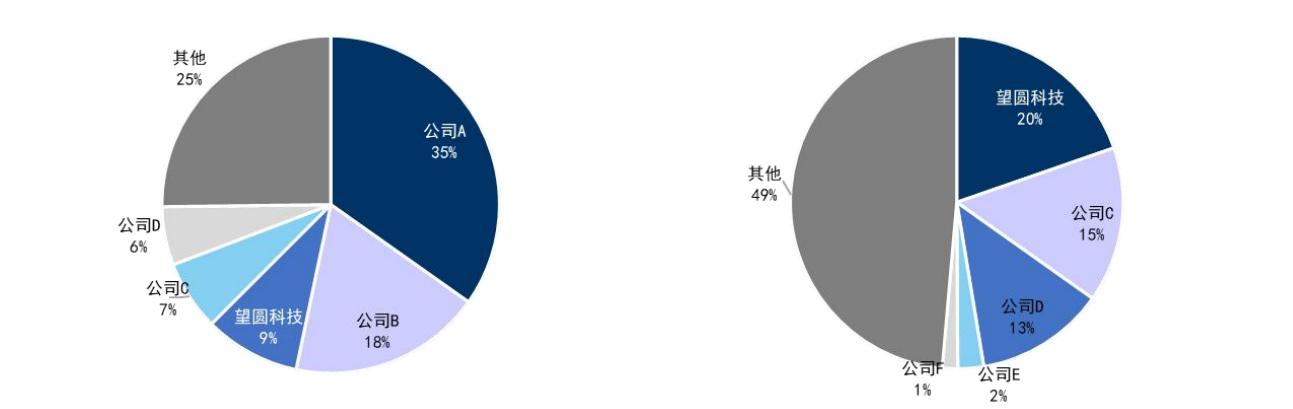
Data source: CIC Insights
It is worth noting that the prospectus shows that from 2023 to 2025, revenue increased from 378 million yuan to 812 million yuan, with a three-year compound growth rate of 46.6%, and the gross profit margin increased from 57.5% to 62.9%; but the net profit margin dropped all the way from more than 30% during the A-share application period to 16.1% in 2023 and 12.4% in 2025. Both revenue and gross profit are rising, but the actual profit retained by the enterprise continues to be eroded.
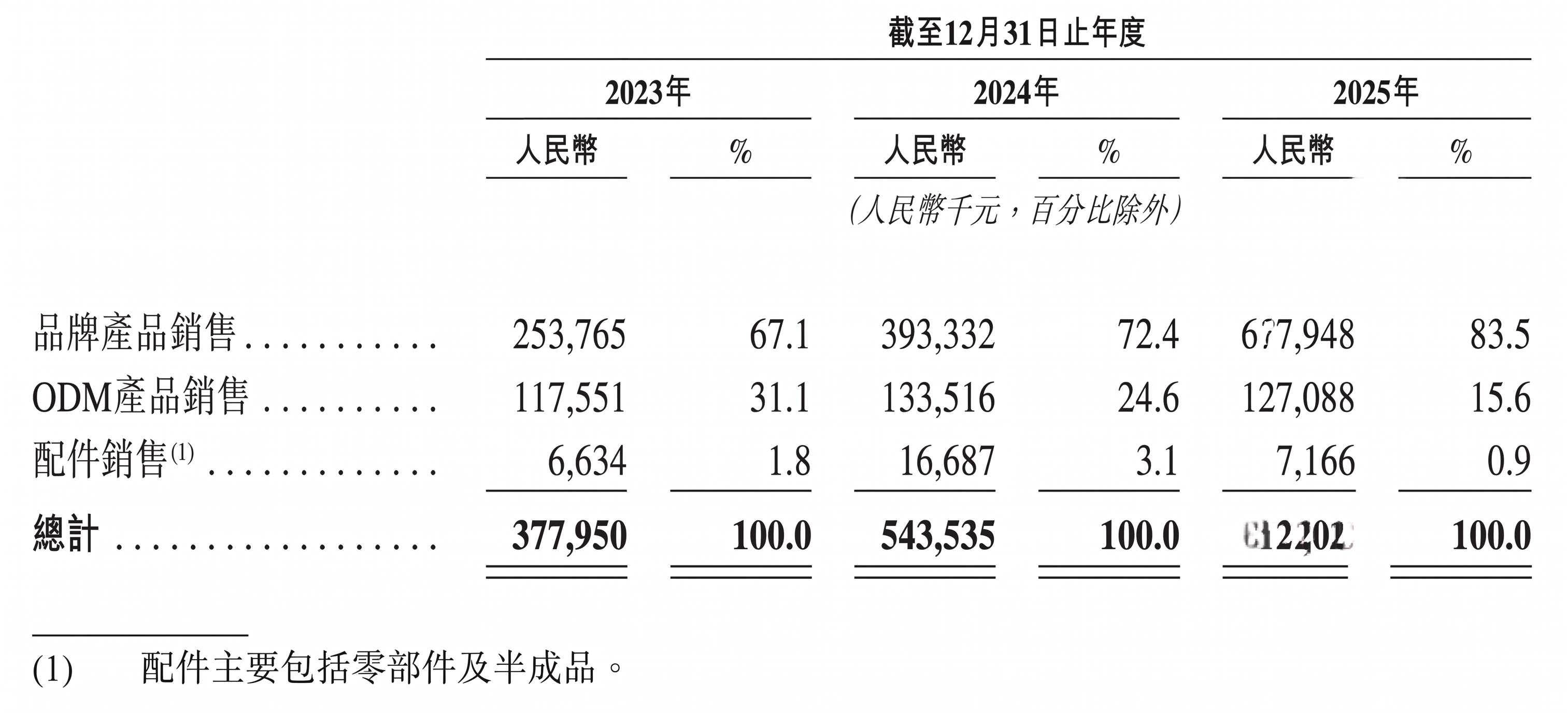
Image source: Wanyuan Technology Prospectus
It is not difficult to see that this contrast is not only the common feature of Chinese hardware enterprises transforming from ODM OEM to self-owned brand going global, but also reflects the reality that "strong technology" does not equal "stable business" for hard technology enterprises.
Technology Iteration
Wanyuan's market position is built on continuous product technology iteration. Up to now, the company has completed four key technological leaps.
In 2009, the company launched a light cleaning robot specially designed for above-ground swimming pools, weighing about one-third of traditional products and priced more than half lower. It achieved break-even in that year and consolidated the first-generation product capabilities.
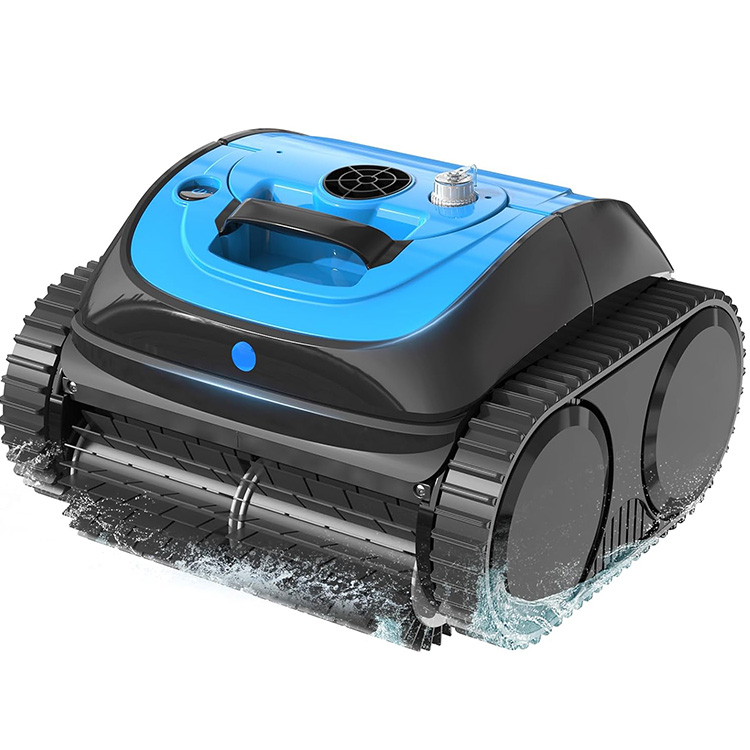
i-Cleaner / HJ Series
In 2017, after years of research and development, a landmark industry breakthrough was realized: the company launched the first cable-free lithium battery swimming pool cleaning robot, completely getting rid of the power supply cable. Realizing cable-free operation is not simply stuffing the battery into the body. It is necessary to balance the contradictions between heat dissipation, battery safety, whole machine weight and battery life under the IP68 fully sealed condition. Wanyuan realized the integrated built-in of battery and body, and the battery life can cover the complete swimming pool cleaning cycle.
In 2019, Wanyuan Technology went a step further and implemented the automatic return-to-station charging technology. The robot will automatically return to the shore base station to charge after finishing the operation, which greatly reduces manual intervention. It has become one of the few companies in the world that master this technology, further consolidating its leading position.
In 2023, the era of AI underwater intelligence arrived. The company pioneered AI-driven products, and the new generation of products equipped with AI technology was launched. Later, the flagship product WYBOT S3 implemented five self-developed core capabilities: underwater acoustic positioning, underwater AI vision, underwater 3D modeling, autonomous navigation, and automatic garbage collection, completing the intelligent upgrade from "blind scanning and moving" to "perception - decision - execution".
As of the disclosure of the prospectus, the company holds more than 160 registered patents at home and abroad, including 27 invention patents, and has obtained overseas market access certifications such as EU CE and North American ETL, forming an integrated self-development system of structure, hardware and algorithm. At present, 97.5% of the company's revenue comes from cable-free products, which is deeply bound to this high-growth segmented track.
Industry data shows that the penetration rate of cable-free swimming pool robots has soared from 6.6% in 2020 to 51.5% in 2025, surpassing cable-equipped products for the first time. It is expected that the penetration rate will reach 71% by 2030.
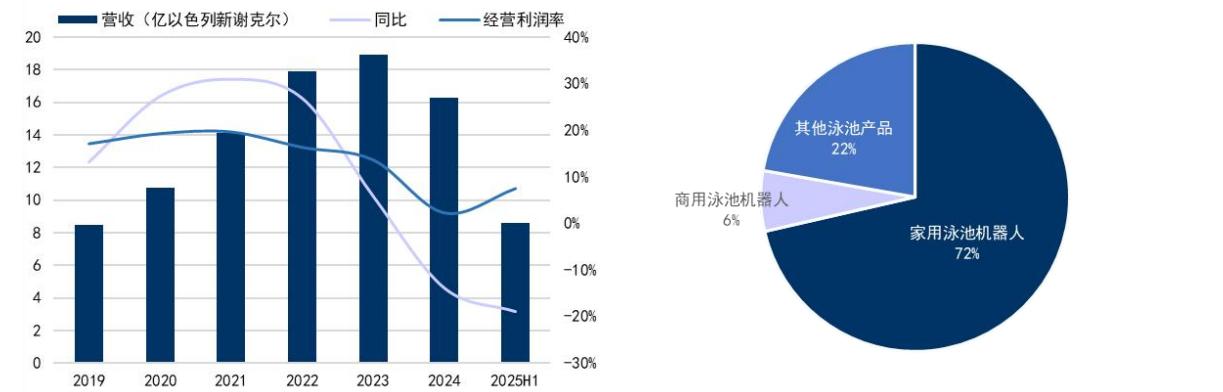
It is worth alerting that the steepest dividend stage of stock replacement from "cable-equipped to cable-free" has passed. Future growth will rely on new overseas swimming pool demand and stock equipment renewal. The overall growth rate slope of the track will gradually slow down, and the risk of relying on a single category objectively exists.
Commercial Examination
In the early stage of Wanyuan's development, its business model was dominated by ODM OEM, processing for overseas brands such as Bestway to earn manufacturing and processing profits.
Starting from 2023, the company's strategy has fully shifted to self-owned brands, creating two major brands WYBOT and Winny Pool Cleaner, and directly facing overseas C-end consumers through Amazon and independent websites.
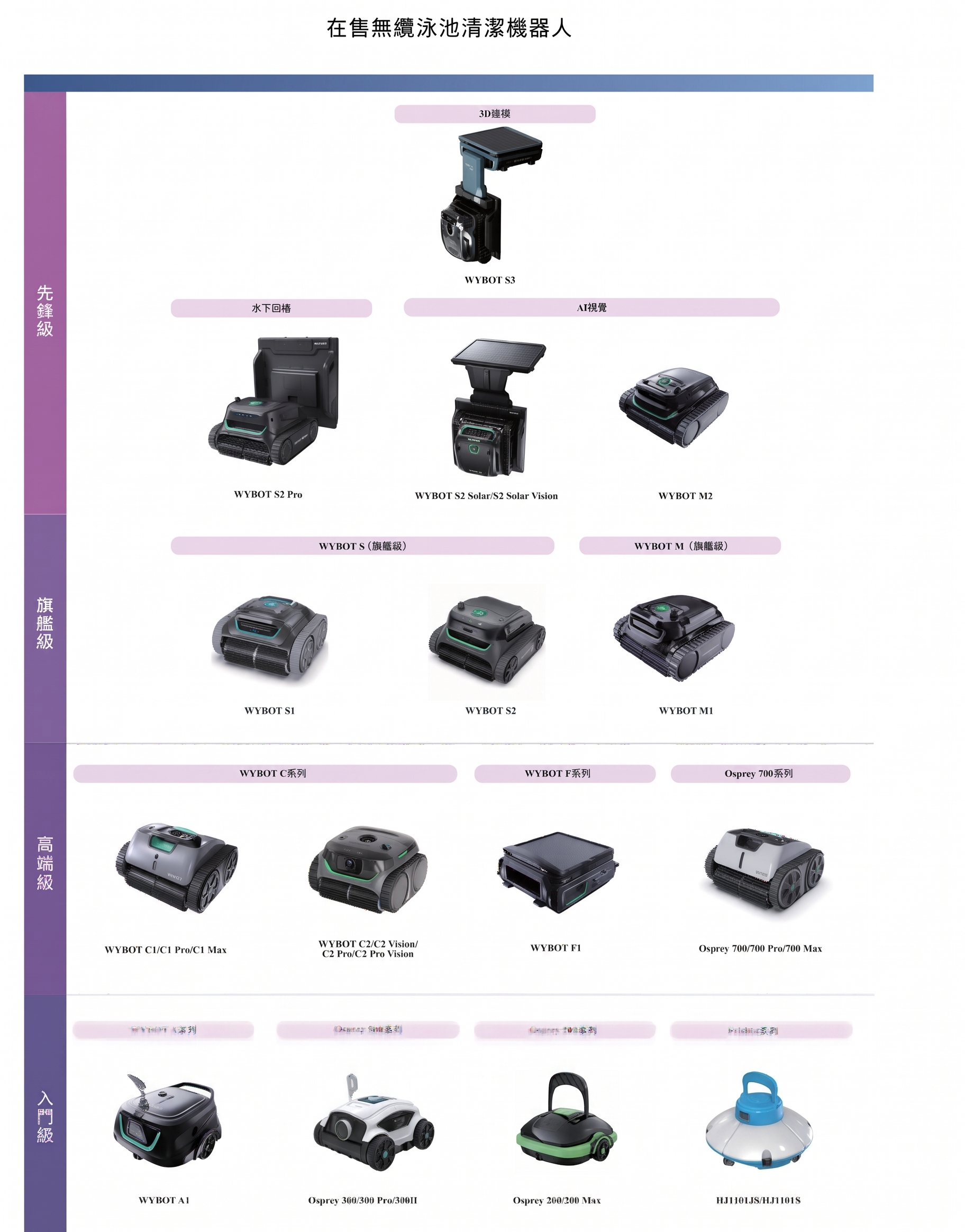
Image source: Wanyuan Prospectus
In just three years, the proportion of self-owned brand revenue increased from 67.1% to 83.5%, and the ODM business was reduced to 15.6%. Branding directly drives the improvement of profitability: the gross profit margin of self-owned brand products reaches 65.2%, and the gross profit margin of accessory business is as high as 75.1%, driving the company's overall gross profit margin to rise.
However, the brand going global of consumer hardware is a business with upfront investment. Traffic delivery, overseas after-sales system construction, and local sales team expansion all require continuous capital investment.
Data shows that Wanyuan's sales and marketing expenses reached 303 million yuan in 2025, more than three times the 97 million yuan in 2023, with a year-on-year increase of more than 70% for two consecutive years, and the growth rate is significantly higher than the revenue growth rate.
Advertising promotion, after-sales compensation, and overseas labor costs are the main increments. Marketing investment is upfront, but the revenue growth brought by brands has a time lag. Most of the benefits brought by high gross profit are consumed by sales expenses, which directly lowers the net profit margin.
In contrast to the high sales expenses, the proportion of R&D investment is declining. As a high-tech enterprise, Wanyuan Technology's R&D expense ratio dropped from 5.1% in 2023 to 3.7% in 2025.
Although the absolute amount of R&D is still growing, it cannot keep up with the expansion speed of revenue. The company's current technical barriers come more from early accumulation. As domestic manufacturers have entered the cable-free track one after another, overseas established giants are also accelerating the layout of cable-free intelligent products.
How to maintain continuous technological iteration capability is a key concern of the capital market.
At the same time, swimming pool robots have strong seasonality, with sales concentrated in the Northern Hemisphere summer. The company's inventory scale rose from 120 million yuan in 2023 to 282 million yuan in 2025, and inventory turnover days extended from 248 days to 293 days. Out of stock in peak season and inventory depreciation in off-season continuously test the supply chain forecasting and management capabilities.
Multiple Variables
Wanyuan Technology is a typical family-controlled enterprise.
Fu Guilan and Yu Qian are mother and son, who co-founded Wanyuan Technology in 2005. Fu Guilan is currently the chairman and CEO of the company, aged 70; Yu Qian serves as vice chairman and product director.
Fu Guilan and Yu Qian, the mother and son, jointly control 71.58% of the voting rights of the company through multi-layer shareholding platforms, and the shareholdings of external institutional shareholders are scattered, making it difficult to form a strong check and balance on the management.
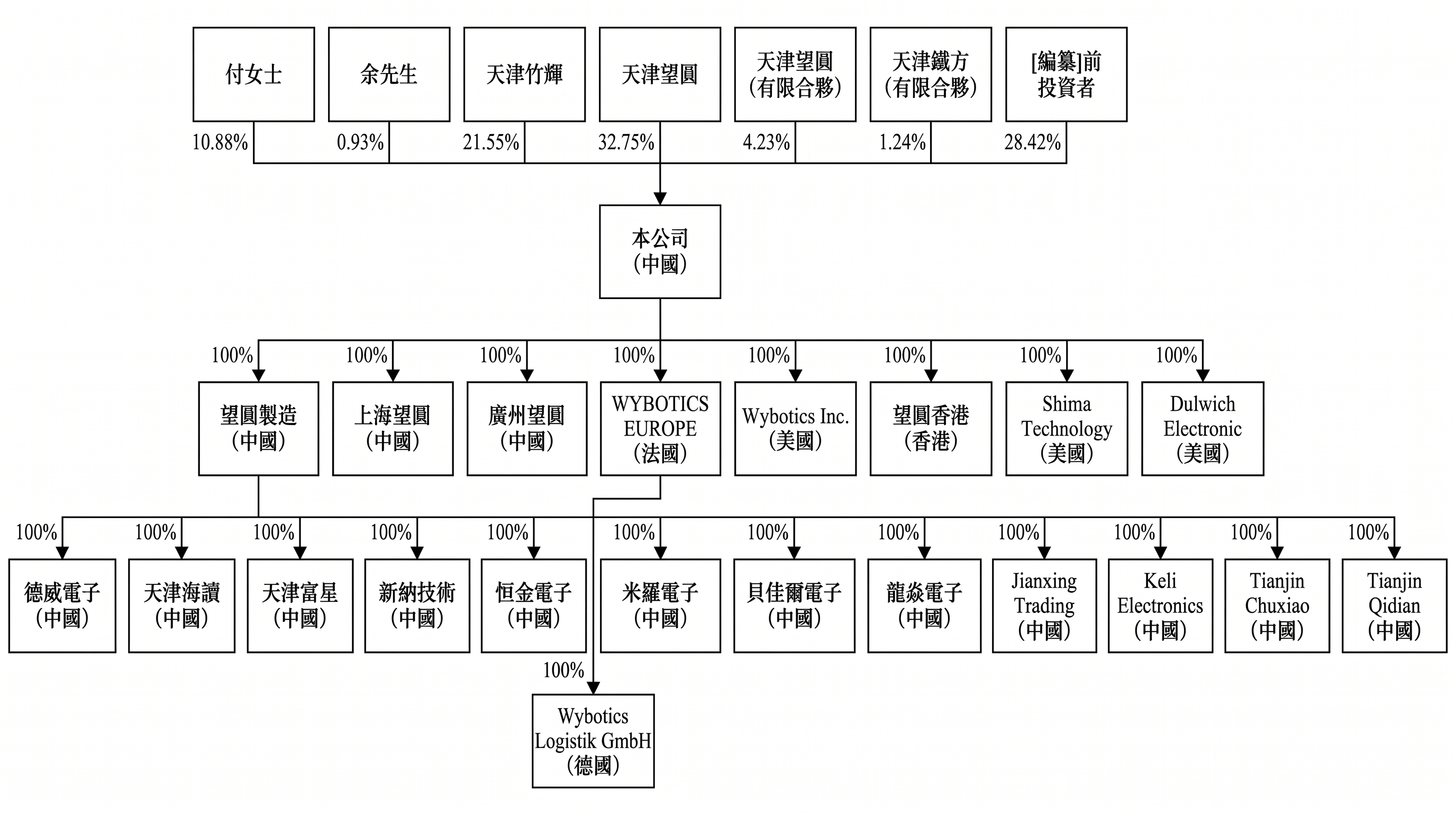
Family holding itself is not right or wrong, but the company's large dividends at the two IPO nodes have aroused market discussion:
It distributed 85 million yuan in dividends when sprinting for A-shares in 2021; it distributed another 62 million yuan in dividends before sprinting for Hong Kong stocks in 2025, accounting for 50% of the adjusted net profit of that year, most of which went to the actual controller's family.
Legally speaking, dividends are the distribution of profits already realized in history. This Hong Kong stock fundraising plan includes replenishing working capital to serve future business expansion, and the two things do not conflict. However, under the secondary market pricing logic, "large dividends before listing and then refinancing to replenish working capital after listing" will constitute a governance-level discount factor.
The external risks of overseas operations cannot be ignored either. 93.1% of the company's revenue comes from overseas, with North America and Europe accounting for 85.1% in total, and the revenue region is highly concentrated.
On the one hand, there is uncertainty in European and American tariff policies, and changes in trade policies will directly squeeze product profits and end competitiveness;
On the other hand, hard technology going global cannot avoid patent games. Although the US 337 investigation has been terminated, there are still pending patent infringement lawsuits in California, France and other places. Once an unfavorable judgment occurs, it may bring high compensation or even local market sales ban, directly impacting its basic business foundation.
In addition, overseas product quality disputes and compliance risks will also continuously bring cost and brand pressure.
Conclusion
Over the past 20 years, Wanyuan Technology has proved one thing: Chinese manufacturing is not limited to assembly and OEM. By solving complex engineering and algorithm problems in underwater scenarios, it can seize the window of technological iteration and become a global leading enterprise in the segmented hardware track that was once monopolized by European and American giants.
Successful listing is only a pass to the capital market. For Wanyuan Technology, the real test is yet to come, and there are three major difficulties ahead:
Whether technology can continue to iterate. Under the background of intensified competition among peers, reverse the downward trend of R&D expense ratio, and transform past technology accumulation into continuous product generation gap;
Whether commercial efficiency can be improved. With the accumulation of brand momentum, gradually optimize the sales expense ratio, and convert the nominal high gross profit into real net profit;
Whether risk and governance can match the business scale. In the face of concentrated family equity, large dividend disputes, overseas geopolitical and patent lawsuits, establish a governance and risk hedging system suitable for public companies.
The cable-free swimming pool robot track has already achieved a proven business model.
After landing on the Hong Kong Stock Exchange, what the market expects to see is not only impressive revenue and technical parameters, but also how a hard technology enterprise can precipitate its technical advantages into long-term sustainable commercial value.
This article is from the WeChat official account "Reactor", written by Fang Tang, authorized for release by 36Kr.