Embodied robots are about to enter the capital integration period: who will take over?
On October 28, HSG and Unitree Robotics jointly launched the "Shan Yu · Innovation Plan" to search for early-stage projects in embodied intelligence, robot applications and key upstream and downstream technologies.
Unitree provides engineering experience, HSG provides the investment system, and the two parties jointly screen projects.
DeepSeek is also looking for an entry point to the physical world.
According to a Bloomberg report on October 12, DeepSeek plans to lead the tens of millions of US dollars seed round of robot AI company Winverse AI, with the latter's proposed post-money valuation of about 400 million US dollars.
Winverse AI was established only a few months ago. Its founder Hu Han was previously in charge of Tencent's vision-language model and embodied foundation model research.
This transaction has not been finally closed, but the proposed valuation has already revealed large model companies' willingness to price scarce teams and robot "brains".
According to data from IT Juzi, in the first half of 2026, a total of 288 financing events took place in China's domestic embodied intelligence and robotics sector, with the financing amount exceeding 460 billion yuan; according to statistics cited by 36Kr from IT Juzi, about 70% of the capital flows to the top 20 enterprises.
According to statistics from TMTPost based on public reports and court announcements, from February 2025 to September 2026, more than 20 robotics companies went bankrupt, dissolved, liquidated or shut down their business lines.
In the article "Embodied Robots, Winter Is Coming", Chaoyong AI specifically describes the current status of the embodied track. Meanwhile, Chaoyong AI believes that embodied robots are about to enter a capital integration period. Next, scarce robot "brains", as well as companies with core component technologies, data, engineering capabilities or real scenarios, will have the opportunity to become acquisition targets.
Leading companies still have capital and the need to complement their capabilities.
Some companies have not yet achieved a closed commercial loop, but their teams, technologies and data still have value.
For buyers, acquiring a formed team may be faster than rebuilding from scratch.
For companies that are still operating but struggling to independently achieve a closed commercial loop, M&A provides an alternative path: integrating the team, technology, orders and data into the acquirer's product, factory and customer system to reduce redundant construction.
Large model and chip companies, industrial enterprises and car companies are three types of potential buyers worthy of attention.
The number of acquisition cases is not large yet, but their pricing logic has begun to emerge.
01
Large model and chip companies: Paying another price for the "brain"
DeepSeek's two moves point to the robot body and the "brain" respectively.
Previously, it has invested about 141 million yuan to participate in the strategic placement of Unitree Robotics' IPO; the proposed investment in Winverse AI is closer to the model and infrastructure side.
Winverse AI has a short establishment time and no public products, so it is difficult to value it based on existing revenue and orders. Investors are mainly optimistic about the team, technical direction and future market positioning.
Chip companies are also paying for similar capabilities.
On September 28, AMD announced that it has reached an acquisition agreement with World Labs for a transaction of about 8.2 billion US dollars, all paid in stock.
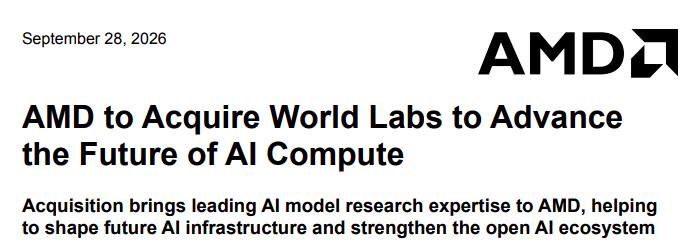
Image source: AMD official website
World Labs was co-founded by Li Feifei, mainly researching spatial intelligence and world models, with technologies involving 3D environment generation, robot learning and simulation. The transaction is expected to be completed by the end of 2026 and is still subject to regulatory approval.
What AMD values is not robot production capacity and orders, but the model research team and the opportunity to understand the next generation of physical AI workloads.
Not all technology companies need to make direct acquisitions.
In the equity financing agreement signed for XPENG's robotics business, Tencent and Alibaba subscribed for about 100 million US dollars respectively.
For them, minority equity investment is sufficient to connect the robot body, real scenarios and physical AI business, without having to bear the whole machine manufacturing, inventory, production line and after-sales service by themselves.
In the future, large model companies such as Zhipu, Alibaba, ByteDance, or Internet giants with leading large model businesses may invest in or directly acquire robotics and robot "brain" companies.
Alibaba's strategic investment team previously contacted Chaoyong AI, hoping that we could provide the contact information of a dexterous hand enterprise.
Contact does not equal investment, but it shows that large model companies are already looking for specific targets.
02
Industrial companies: Manufacturing enterprises and new physical AI players meet each other's needs
Listed manufacturing companies and new physical AI players all start from their existing businesses.
Manufacturing enterprises have factories, supply chains and customers in hand; physical AI companies master perception, simulation, data or computing capabilities.
Whether they invest or acquire depends on which capability their existing business is still lacking.
In June 2025, CATL led the over 1.1 billion yuan Series B financing of Galaxy Universal. At that time, Galaxy Universal's industrial heavy-duty robots had already entered CATL's battery factories.
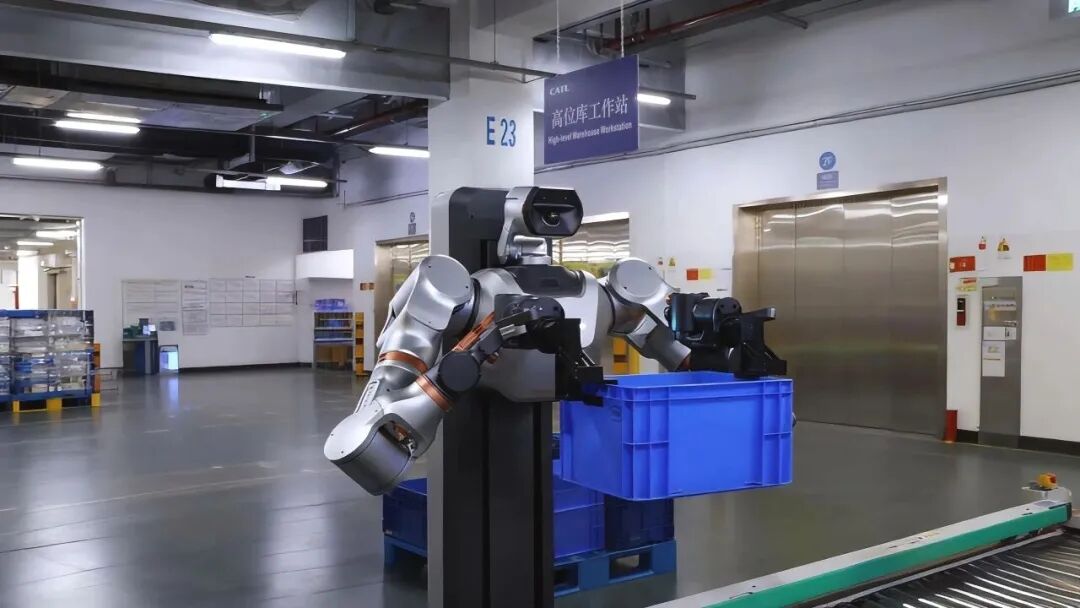
Galaxy Universal robots operating in CATL's battery factory
For CATL, the order is very important: first verify whether the robot can be used in the production system, and then deepen cooperation through equity investment.
Hangzhou Kelin chose a more direct way: to acquire complete machine manufacturer Kepler. Hangzhou Kelin is mainly engaged in intelligent perception and diagnosis of power equipment, and has accumulated technologies in six-dimensional force sensors, dexterous hands and motion control systems; Kepler develops heavy-duty full-size industrial humanoid robots.
Through the acquisition, Hangzhou Kelin extended its robotics business from core components to complete machines, and its existing power and industrial customers may also become the entry point for robotics products.
Hangzhou Kelin invested in Kepler twice within five months, and the valuations corresponding to the two transactions are different.
In December 2025, Hangzhou Kelin transferred 9.43% of Kepler's equity for 100 million yuan, corresponding to a valuation of about 1.06 billion yuan.
In May 2026, Hangzhou Kelin announced that it will continue to acquire Kepler's equity for no more than 300 million yuan, raising its shareholding ratio to 51%; the overall valuation corresponding to this transaction dropped to about 722 million yuan.
In August 2026, Kepler completed the industrial and commercial change and became a holding subsidiary of Hangzhou Kelin.
Kepler's revenue in 2025 was 4.3372 million yuan, with a net loss of 66.939 million yuan, but its on-hand orders still exceeded 47 million yuan.
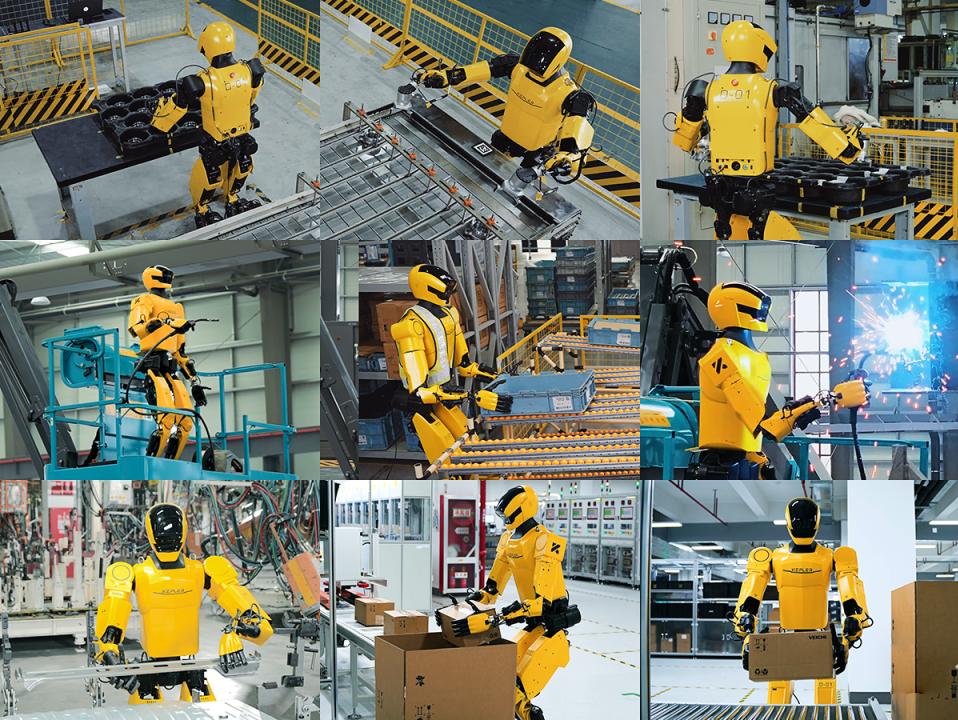
Kepler robot
What the acquirer is facing is not a profitable business, but a set of assets that continue to lose money but still have orders, teams and technologies.
For Hangzhou Kelin, the key is whether Kepler's orders can be delivered, and whether the complete machine can form a business with its own components and customer channels.
Kepler's team, orders and ontology capabilities are thus revalued in Hangzhou Kelin's business.
The valuation of Kepler's control transaction is about 722 million yuan, and Winverse AI's proposed post-money valuation is about 400 million US dollars. The two figures cannot be directly compared, but when put together, we can see two sets of pricing logic for manufacturing assets and scarce model teams.
New physical AI players have different starting points.
Hesai, 51WORLD and Horizon Robotics provide perception, simulation and computing capabilities respectively; Momenta and Mobileye already have real-world perception, decision-making and large-scale delivery experience.
They enter the robotics business in different ways.
Hesai chooses to build a solid infrastructure.
In the second quarter of 2026, the shipment volume of Hesai's robotic LiDAR reached 142,400 units, a year-on-year increase of 193.4%.
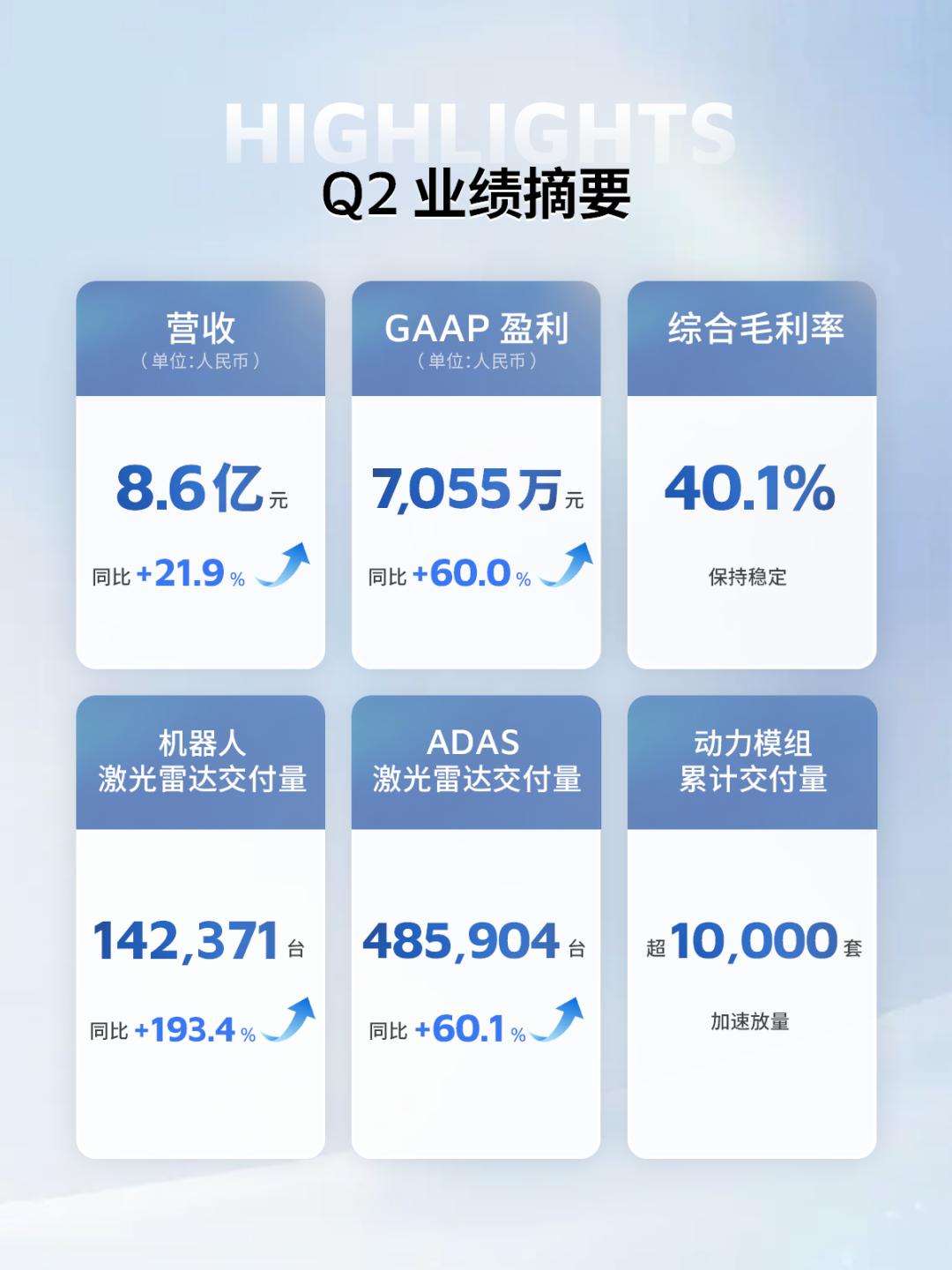
Hesai 2026 Q2 financial report
In addition to LiDAR, it has also launched the spatial intelligence platform Kosmo and robot power modules. Liu Xingwei, vice president of its robotics perception business, clearly stated that the company does not develop general embodied large models and robot bodies, but provides infrastructure.
51WORLD enters from digital twin and simulation.
In March 2026, it released the 51World Model world model; in August, it launched the AperData embodied data base and the AperOne embodied application platform.
AperData covers data collection, governance and training, and AperOne connects scenario reconstruction, simulation training, evaluation, deployment and operation. 51WORLD sells training grounds and deployment bases, and does not manufacture robot bodies.
For 51WORLD to do a good job in simulation, data and deployment platforms, it is also very likely to supplement the downstream ontology through investment or acquisition.
Momenta invests in data first, rather than buying the ontology first.
In August 2026, it led the Series A financing of Jianzhi Robotics.
Jianzhi does not develop ontology, and mainly builds an ontology-free data system, Data Foundation Model and real machine evaluation infrastructure. Momenta invests in data and model capabilities, and extends the data flywheel experience of autonomous driving to embodied intelligence through this.
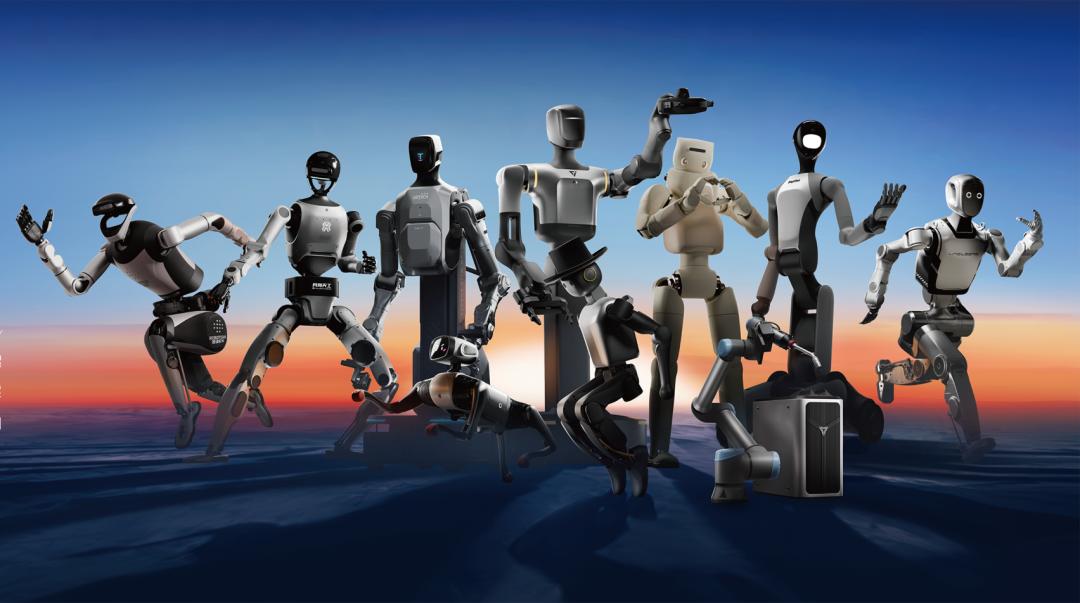
Horizon Robotics has split its robotics business into Diger Robots, providing chips, algorithms and software development platforms.
Diger Robots also does not develop ontology, but allows all kinds of robot customers to use its general base.
Diger Robots
In April 2026, Diger Robots completed the 150 million US dollars Series B2 financing, with a total Series B financing of 270 million US dollars. Its customers already have their own ontology, so acquiring a complete machine manufacturer may turn itself into a competitor of its customers.
Mobileye chose to make a direct acquisition.
In 2026, it acquired humanoid robot company Mentee Robotics for about 900 million US dollars, and the latter operates as an independent business unit.
Mobileye already has experience in visual perception, autonomous driving AI and large-scale mass production, but it does not have an existing humanoid robot body and team. It directly bought a set of platforms that have been iterated to the third generation, making up for the "body" missing when entering the physical AI field.
Such companies may supplement their capabilities upstream or downstream: supplement models if they lack "brains", and supplement ontology if they lack ontology.
Chaoyong AI learned that some companies have been in contact with ontology companies and robot "brain" teams, and the specific targets are temporarily inconvenient to disclose.
03
Car companies: Major buyers prefer to complement capabilities rather than rescue ontology
Car companies are also the most concerned potential buyers.
They already have factories, supply chains and manufacturing systems. When entering the robotics business, they are more concerned about which capabilities need to be self-developed and which can be supplemented through investment or acquisition.
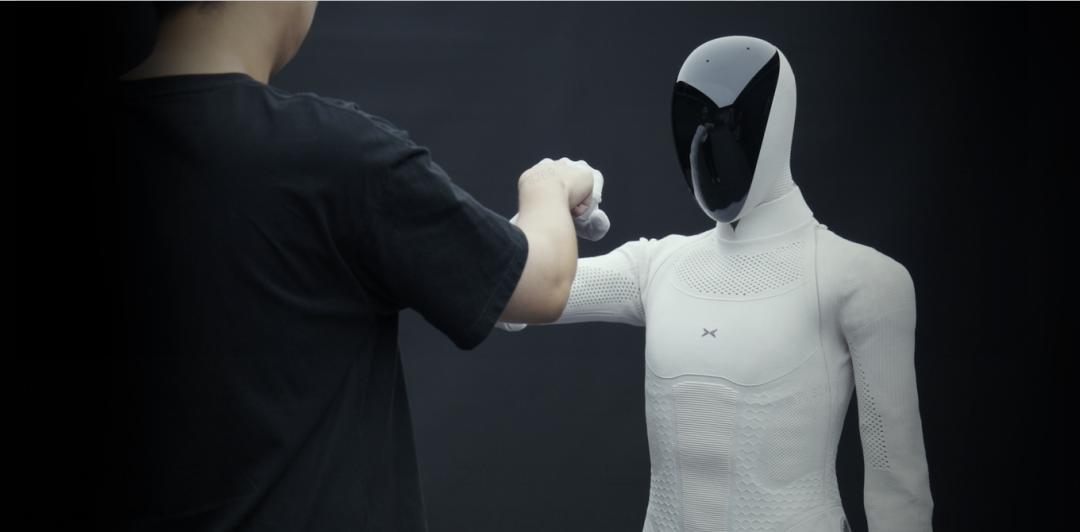
XPENG chose to make robotics its second core business and open equity to external capital.
Its robotics business has signed an equity financing agreement of over 900 million US dollars, and the ontology, brain, cerebellum, data and infrastructure systems have also been built.
XPENG Motors' accumulated capabilities in AI chips, supply chain, manufacturing and globalization can all be reused in robotics; IRON plans to enter XPENG's stores and parks first, and then deliver to external customers.
XPENG Robot
Chaoyong AI previously contacted XPENG's strategic investment team, who hoped that we could assist in connecting a manipulator robot project.
For car companies, the key is not whether to buy a robotics company, but whether the capabilities of this company can be integrated into the existing technology and product system.
BYD follows the route of "self-development + investment".
It has confirmed that it is developing humanoid robots, and has successively invested in Agibot and Panshi Sensing Technology.
Agibot provides complete machine and embodied intelligence capabilities, and Panshi provides tactile sensors and dexterous hands. BYD can verify products with its factories, and then supplement external technical capabilities through investment.
Geely is more inclined to bind external teams with capital.
In November 2025, Geely Capital led the nearly 1 billion yuan Series A+ financing of Star Age Era.
Star Age Era develops both embodied large models and robot bodies, and is already looking for orders in scenarios such as logistics and manufacturing. For Geely, investing in such a company that already has models, ontology and engineering teams is faster than building a full-stack team from scratch.
