Why is iPhone Duo still the most special foldable smartphone?
Consumers' judgment of a company or a brand will not be reset to zero immediately after a single bad rating or a failed product, but will gradually change amid repeated gaps between expectations and actual experiences.
After the iPhone Duo hit the market, discussions around it quickly shifted from snapping up units at marked-up prices to app adaptation issues and inner screen cracking.
Some early adopters stated that their phones, without any falls or obvious external force applied, developed cracks or display abnormalities along the hinge position when being normally opened and closed. Apple later responded that it had noticed the inner screen issue on a "small number" of devices, and instructed its staff to replace eligible units, but did not disclose the number of affected devices or the root cause of the fault.
This controversy stands in sharp contrast to Apple's previous product claims. After the iPhone Duo was released, Tom Marieb, Apple's senior vice president of Hardware Engineering, told the media that the team had invested tremendous effort in the reliability of the hinge, and invited the public to "test us with results". John Ternus, Apple's CEO, also noted that the company did not decide to launch the product until the foldable screen met its own standards in quality, durability and design.
The software was not fully ready either. In the early stage of the launch, among the 25 commonly used apps tested by He Tongxue, around 80% had not completed full adaptation. Some apps still retained thick black borders after being unfolded, or simply stretched the interface of a regular phone proportionally.
Although products such as WeChat rolled out urgent updates later, black borders still exist in some interfaces, and the experience of some frequently used apps is still under adjustment. Apple has also begun to require developers to provide Duo screenshots for newly submitted or updated apps starting from April 2027.
However, these complaints have not stopped the iPhone Duo from becoming one of the most high-profile consumer electronics products recently.
Apple's official sales channels were once out of stock, and offline retail stores were crowded with consumers who repeatedly opened and closed the screen, checked creases and tested apps. Although the price premium has dropped, two days ago when people walked out of Apple's stores, there were still people chasing after them to ask if they had a phone to sell. A large number of apps have released official information about adapting to the iPhone Duo.
This is a very interesting phenomenon. Even though foldable screens are far from new, and Apple's innovation has been repeatedly questioned, it has not delivered a perfect foldable screen product, yet it still has unique influence that can drive consumers, developers and business partners to act around this product category again.
01
The late-arriving iPhone Duo is still the exceptional one
When Apple entered the foldable screen market, manufacturers including Samsung, Huawei, Honor and OPPO had already launched multiple generations of products. Issues such as how the hinge folds, how to thin the body, how to switch between the inner and outer screens, and how to run multiple apps at the same time have been studied for many years. The widespread attention the iPhone Duo has attracted obviously cannot be explained by the "novelty of foldable screens".
Apple is intentionally telling a story that the existing solutions on the market are not good enough, so the iPhone Duo is here to reshape the product experience. Greg Joswiak, Apple's senior vice president of Worldwide Marketing, stated bluntly that the company had studied existing foldable screens, and many of these products were "uninspiring".
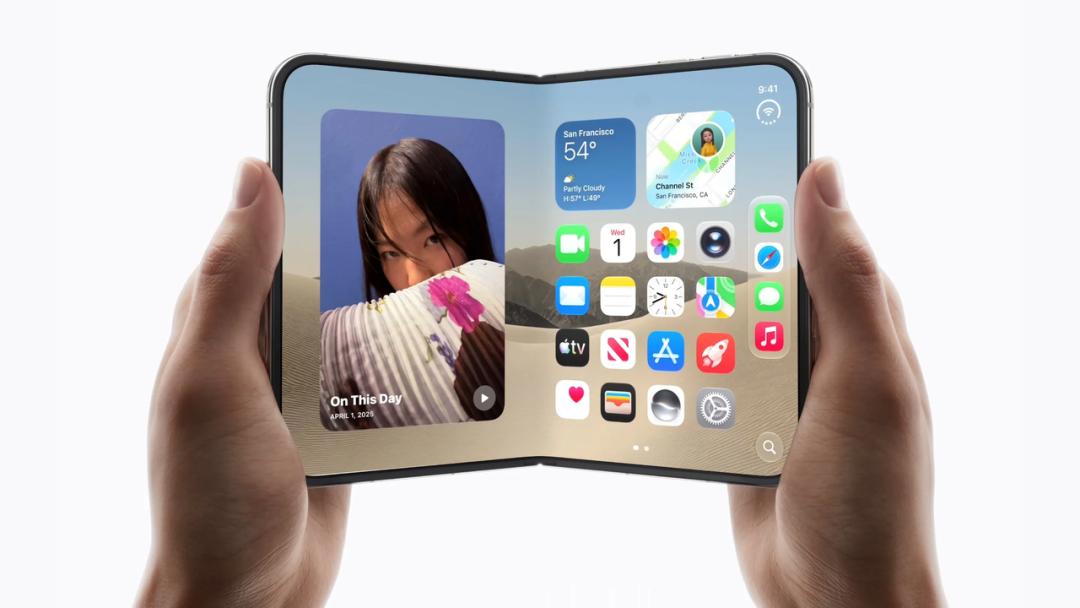
In Apple's explanation, the iPhone Duo is not a simple splicing of two mobile phone screens, which would easily result in a square screen with a weird aspect ratio after unfolding. It is supposed to be a device between an iPhone and a small iPad. When users open the phone, they should feel that their original device is naturally extended, rather than switching between two awkwardly spliced products.
Breaking through with screen aspect ratio is not an idea exclusive to Apple. Before Apple released the iPhone Duo, Xiaomi launched the "medium fold" product Xiaomi 18 Fold, which sits between large foldables and small foldables. Lei Jun described it as "a brand new experience that balances portability and field of view". Huawei launched the similarly sized "wide fold" product Pura X back in 2025.
Breaking through with experience, just as mentioned at the beginning, the iPhone Duo did not properly solve the screen reliability and software experience issues at its launch. The most memorable "experience evolution" Apple has delivered at the moment is the further reduction of screen creases with a matte texture, as well as the cool inner and outer screen switching animation that was quickly replicated after launch, but no one had brought it to market earlier than Apple before that.
However, these competing products and shortcomings have not affected the iPhone Duo's commercial mobilization capability.
Products including WPS, Taobao, Xiaohongshu, AutoNavi Maps and Feishu have released new versions or instructions for the iPhone Duo to adapt to the large screen, split-view layout and half-fold state. WIRED observed in its review that some apps that had long refused to provide split-view interfaces for Android foldables quickly completed similar optimizations for the iPhone Duo.
For these companies, supporting a new screen size was originally just part of their product development work; but when this screen belongs to a new iPhone, the adaptation itself not only serves potential users, but also demonstrates their own product capabilities by riding the wave of the new product launch. For the same foldable screen, it brings different dimensions of returns and return expectations to the product.
Even without focusing on adaptation, hundreds of brands including Duolingo, Weilong, Coca-Cola and Clarins have leveraged the momentum of the iPhone Duo for marketing. They turned the "Duo" of the iPhone Duo into the Duo of Duolingo, the double, amplified Duo, and the far more satisfying Duo. Before this, no foldable screen product had ever demonstrated such marketing appeal.
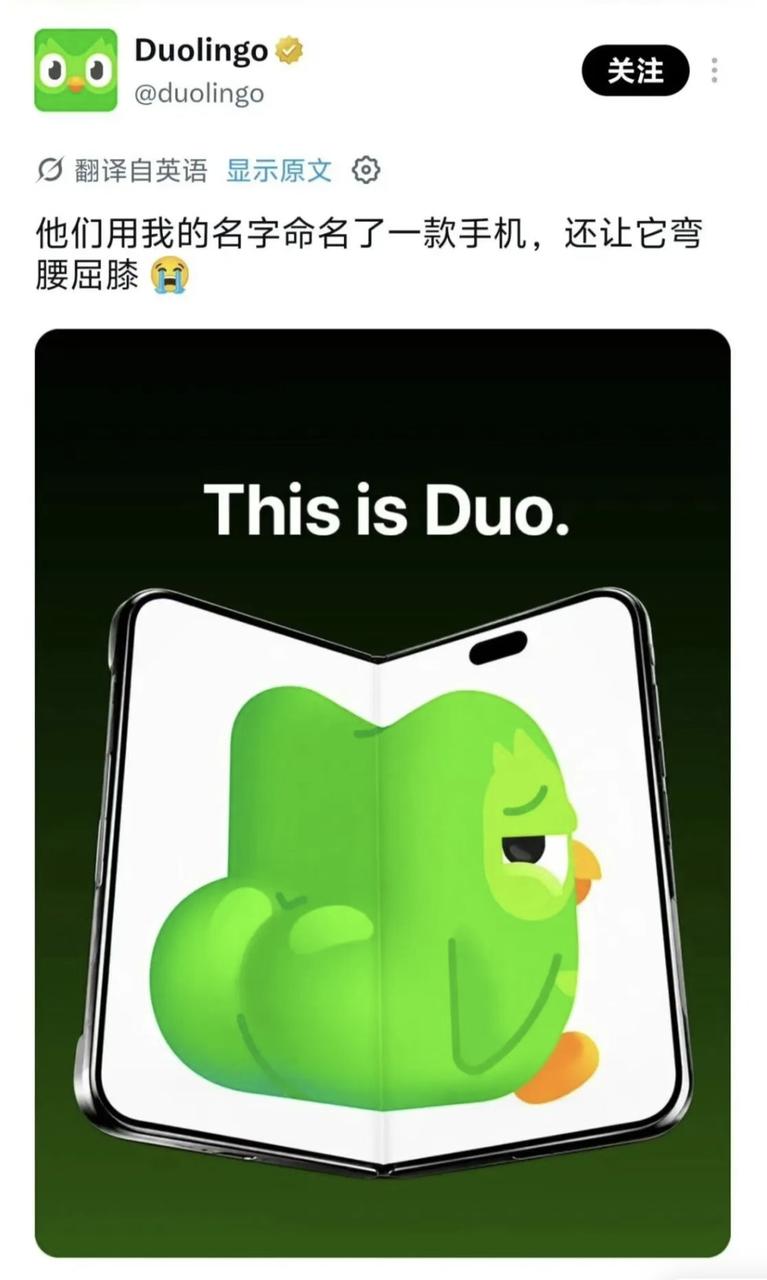
The current "exceptional" feature of the iPhone Duo is that it is still too early to tell if it is a successful foldable screen, but consumers are willing to compare options for it again, developers are hurrying to roll out updates, and business partners are willing to turn a single adaptation into public communication news.
Apple may no longer be the leader in foldable screen technology, but it remains an unavoidable reference point for the industry to judge whether foldable screens can further penetrate the mass market.
02
Turning past product experience into expectations for the next product
When an iPhone user considers whether to buy the iPhone Duo, they are faced with an unfamiliar foldable form factor, and a very familiar usage experience, including how to operate the device, the ability to migrate photos, apps and accounts, seamless connectivity with Mac, AirPods and Apple Watch, and familiar channels for purchase and repair. These consistent experiences help users judge faster whether the new product suits them.
However, this kind of experience is not unique to Apple, and even Apple is not the best at it right now. A survey by CIRP shows that in the year ending September 2026, the in-system retention rate of US iPhone users is lower than that of Android users. In the 2026 US Mobile Phone Satisfaction Survey released by ACSI, Apple's score is also slightly lower than Samsung's.
Apple's unique recognition comes from two points: one is its continuous product innovation in the early stage, which formed its unique industry ecological niche and brand influence; the other is its more continuous and stable delivery of high-quality products and services in the later stage.
First of all, Apple's several past product innovations are the foundation of building its uniqueness. From iPod to iPhone, Apple once turned existing technologies into products with clearer use cases and easier operation. Consumers may not understand the engineering breakthroughs behind them, but they remember that Apple allowed them to operate music players in this way, and use mobile phones in this way.
Although these products were later popularized and caught up by competitors, the recognition brought by these products still stays with Apple. So when Apple starts making headsets and foldable screens, the market will ask an extra question: How will it do it? This expectation does not require Apple to launch products first every time, but believes that it has the potential to find a solution worth trying from design, interaction, and the integration of software and hardware.

Secondly, Apple also maintains this recognition through regular product updates. The relatively consistent design language, operation logic and device synergy keep connections between different products. At the same time, stable services also allow users to get a better experience when using a product. This continuity and stability allow Apple to maintain differentiation even when a product does not have leading advantages in specifications.
This continuity and stability also affect the investment of other companies. Developers are willing to adapt in advance because Apple already has more users who are likely to buy new products; richer apps and more complete services in turn increase consumers' willingness to try new products. The adaptation and promotion mentioned earlier are backed by both Apple's ability to attract attention, and the user relationships and cooperation experience accumulated over many years.
Of course, Apple has also experienced failures. Its headset product Vision Pro also received a lot of attention, attracted a group of developers to invest, and made spatial computing a hot topic again, but actual sales did not meet the initial high expectations. Issues such as price, wearing burden and usage scenarios did not disappear because of Apple's unique brand recognition. Consumers will not long support a product that lacks clear use cases.
But the failure of Vision Pro has not affected the early popularity of the iPhone Duo. Apple still has unique value, precisely because it has cultivated a relatively stable judgment among consumers: Apple may not be the first company to adopt a technology, but it has the opportunity to combine design, system, software and services into a set of easier-to-use experiences.
This judgment reduces the cost for consumers to understand the next product. Users do not need to re-recognize Apple at every launch, nor do they decide whether to buy based on only one specification. The usage experience of past generations of products will be incorporated into their judgment of new products. As long as this experience remains generally stable, consumers will be more willing to pay attention to what Apple does next, and more willing to actively try an unfamiliar product form factor.
03
Technology will be caught up, while recognition can be accumulated continuously
The market frenzy over the long-overdue iPhone Duo once again proves that when technology gradually matures, the important value brought by brand reputation and consumer recognition may no longer only make a product sell at a higher price, but allow consumers to make decisions "without thinking" the next time they make a purchase.
In markets such as new energy vehicles, drones and action cameras, the duration that a single technical advantage can be maintained is shortening. Battery life, imaging, intelligent driving, body weight and software functions, once verified by the market, will quickly become standard configurations in the next generation of competitors' products. After an enterprise wins a single product with a technical breakthrough, it is difficult to win every subsequent consumer choice relying solely on the same advantage.
Top technology/product companies all need to complete the key cycle from product leadership to brand accumulation. Technical advantages must first be transformed into specific usage experiences, then the experiences and services are repeatedly delivered through multiple generations of products, and finally confidence in the enterprise and the brand can be formed. Launch events and best-selling products will bring a temporary increase in attention and user scale, but only the reliability, services and experience continuity in long-term usage can preserve the success of one product for the next round of competition.
In China, DJI provides an example that is closer to this process. When a user chooses a drone, they may initially value flight stability, transmission range or imaging quality; when they continue to buy a Pocket, Action or microphone, what affects their choice is no longer just a certain specification, but also whether the device is easy to use, and whether existing accessories can continue to work. What DJI really needs to guard is users' stable expectation for shooting results and usage processes.
Leading specifications may only belong to one generation of products, while stable expectations can extend to multiple product lines. When competitors catch up with imaging and hardware performance, consumers will still judge based on past usage experience which company is more trustworthy. Technical advantages no longer stay in product specifications, but become experience that consumers can call on when making their next choice.
Xiaomi Auto is at an earlier stage. The hype at the launch event, initial orders and foot traffic in stores prove that Xiaomi has mobilized its existing brand influence, and that consumers are willing to give it a try. However, the usage cycle of a car is far longer than that of a mobile phone. Safety, quality, software maintenance, repair services and residual value performance all require a much longer period of time to be verified and recognized.
Whether Xiaomi can build a stable automotive brand will ultimately depend on whether consumers still treat each new car as an isolated attempt, or begin to believe that Xiaomi can continuously deliver reliable automotive products, and make a "no-thought" purchase for their favorite new model.
Apple has just been on this path for longer. Its lag in generative AI, the delay of Siri functions, and the current issues with the iPhone Duo are all changing consumers' judgment of Apple. How Apple handles the inner screen issue of the iPhone Duo and whether the app experience can be improved will all be incorporated into consumers' new judgment of Apple, affecting whether users will trust Apple's promise of reliability and complete experience the next time.
The accumulation of brand recognition is not about depositing past successes into an account that only keeps growing. Technological leadership can help an enterprise win one generation of products. More lasting competitiveness comes from consistently good experiences and consistently delivered promises. Apple remains exceptional, precisely because in the minds of many consumers, it is still sticking to delivering on this.
This article is from the WeChat Official Account "Narrow Broadcast", written by Li Wei, and published with authorization from 36Kr.