Will 80 Tesla car owners face two years of imprisonment for cracking the intelligent driving system?
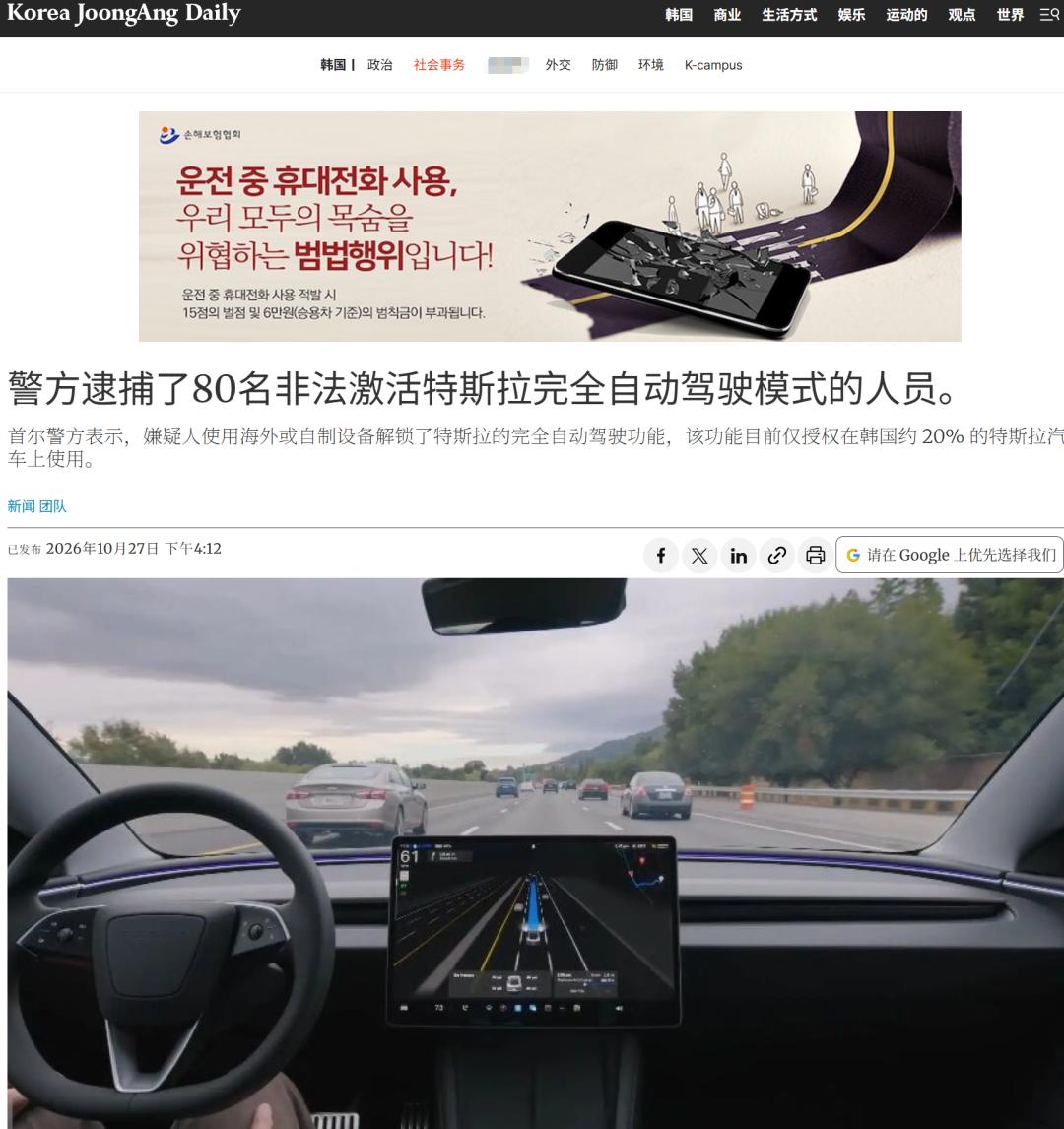
South Korean police have recently arrested a number of Tesla owners.
According to South Korean media reports, more than 80 Tesla owners are suspected of violating the Automobile Management Act, facing up to two years in prison and a fine of 20 million won (about 99,600 RMB).
It is quite surprising that driving their own cars could even lead to jail time.
Here is what happened: these South Korean owners cracked the FSD (Full Self Driving) feature that Tesla takes great pride in.
Many people might think they deserve to be arrested for pirating FSD, but that is not the case at all. They have honestly paid over 9 million won (about 41,000 RMB) for the permanent activation fee of the feature.
What they cracked is actually only a restriction program for FSD.
Users who know well about Tesla may feel confused: isn't FSD available in South Korea?
A regulatory version of FSD was launched in China for a short period of time.
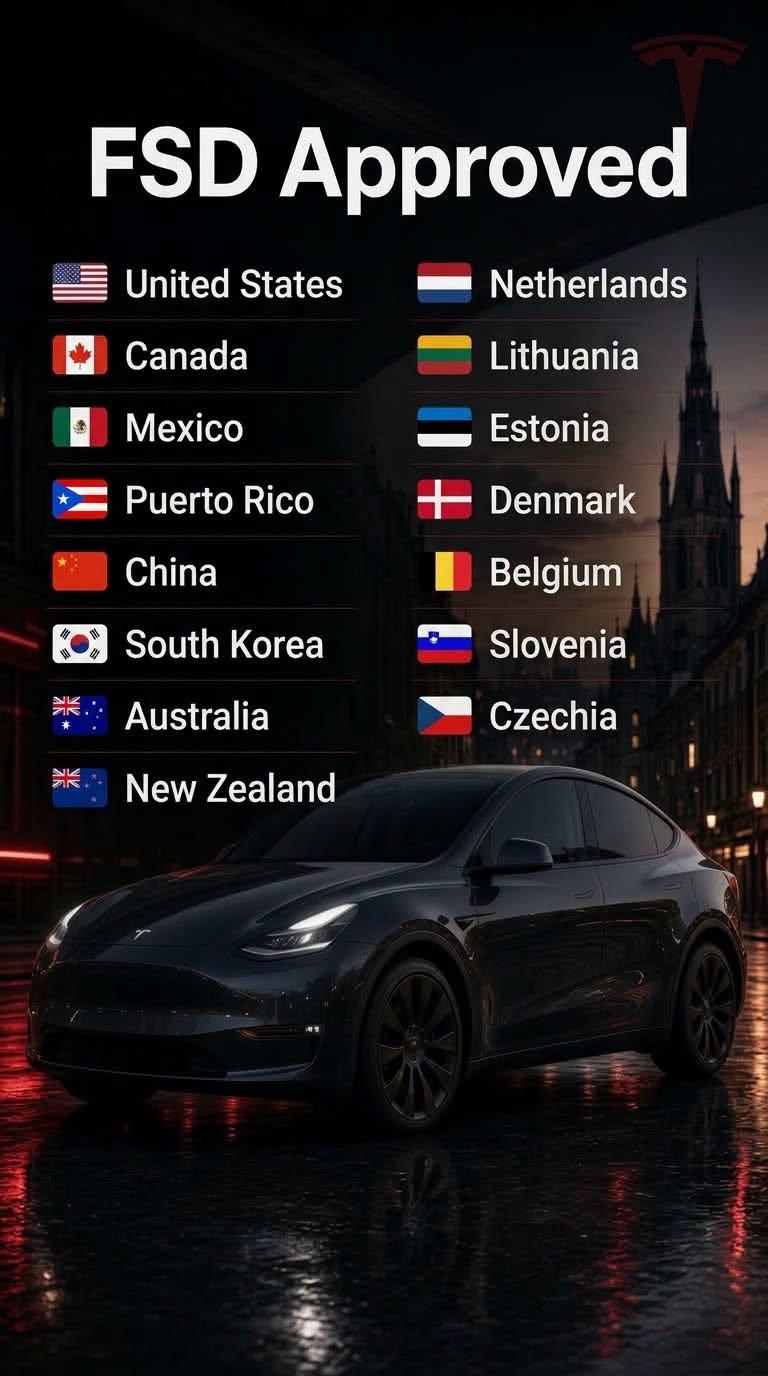
Indeed, FSD is currently available in South Korea, but with certain conditions.
In 2025, Tesla passed the approval, pushed out a v14 regulatory version for car owners, and officially included South Korea in the scope of FSD use. Tesla promoted this event extensively at that time.
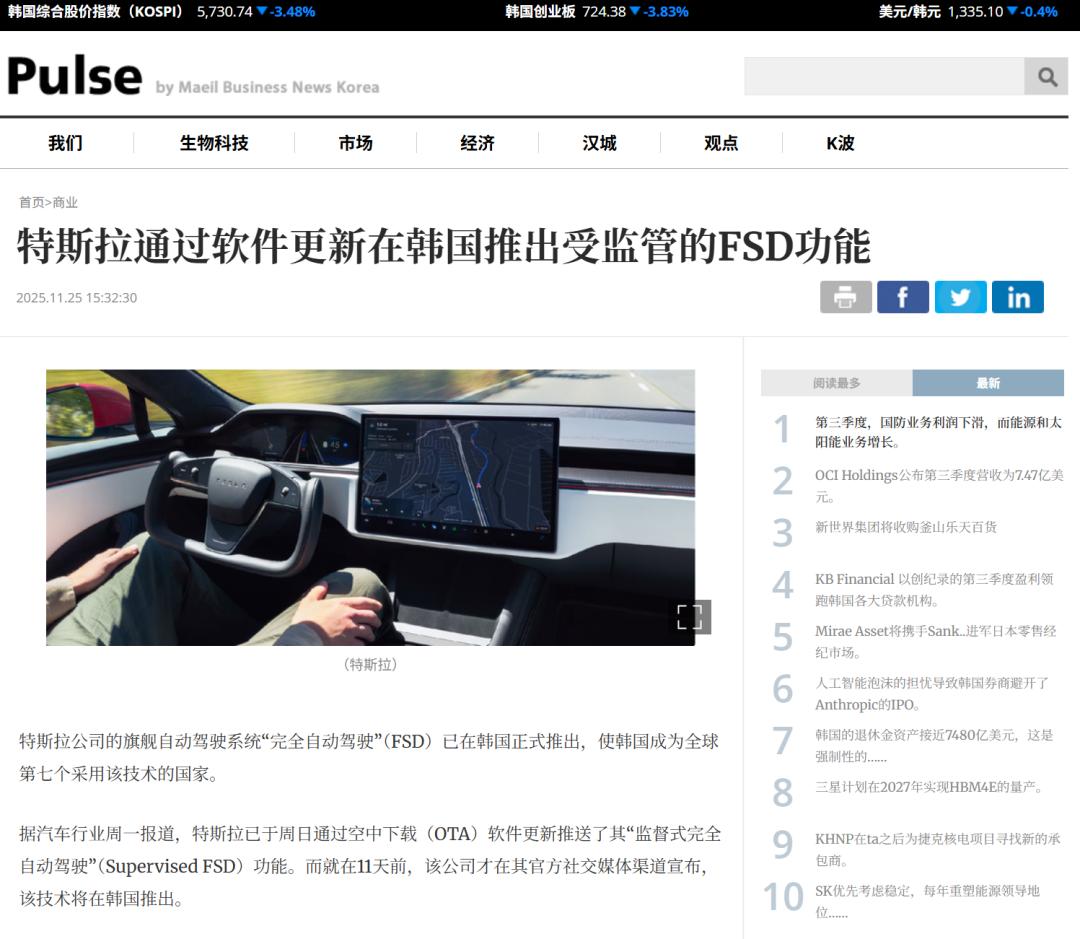
But in fact, this "crippled version" can only be used by US-made Tesla vehicles, while all Tesla vehicles produced at the Shanghai Gigafactory in China cannot use it.
This issue relates to the regulatory certification requirements in South Korea.
When this version was under approval, the South Korean side reviewed it in accordance with the Korea-US Free Trade Agreement (FTA).
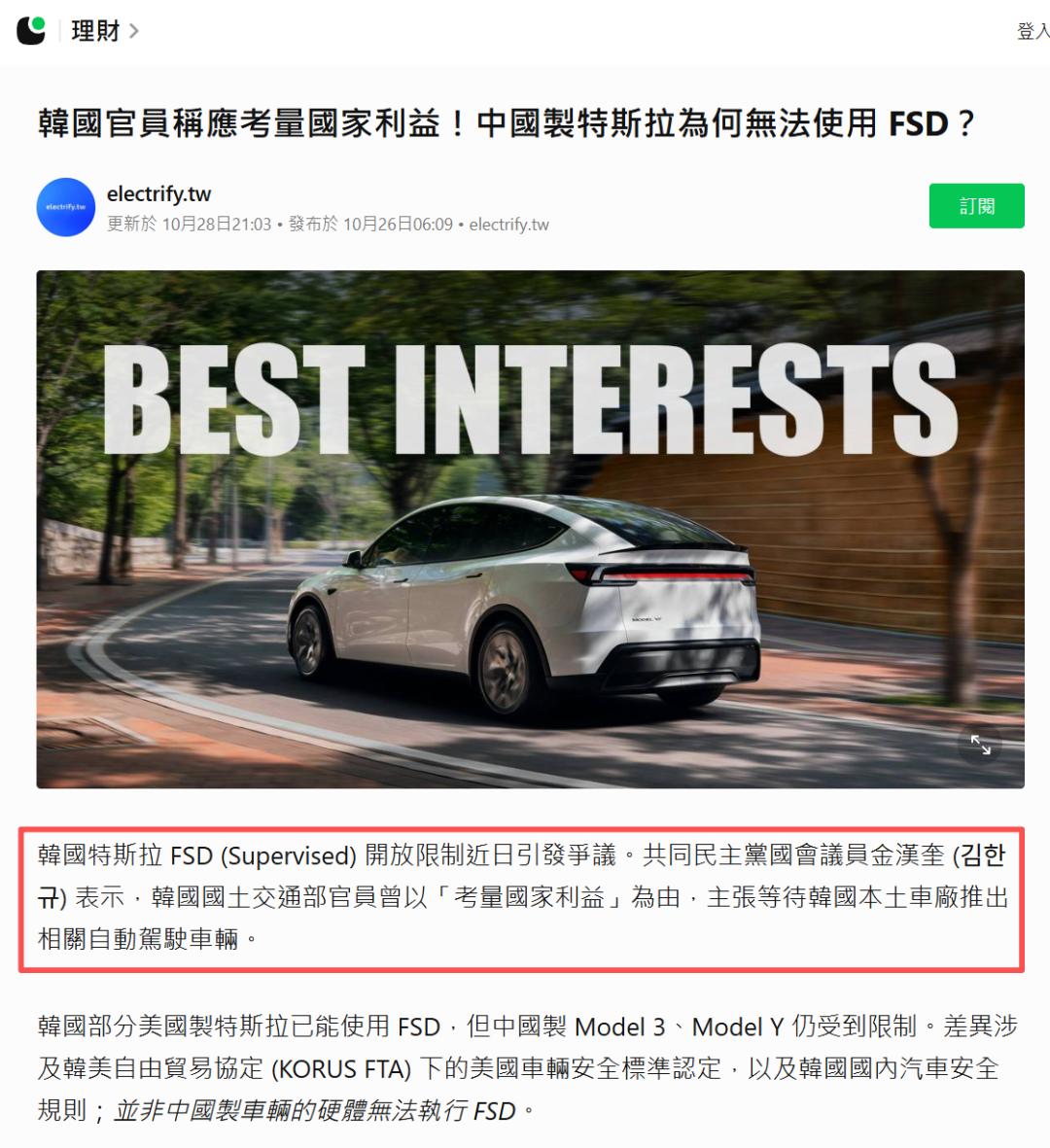
According to the explanation of an official from the South Korean Ministry of Land, Infrastructure and Transport, the FTA can exempt relevant requirements such as Annex 6.2 of Article 89 of the South Korean Automobile Regulations, and the feature only needs to meet US standards.
"The driver is required to hold the steering wheel and manually turn on the turn signal when changing lanes"
However, China-spec vehicles do not have such exemption, and they are not manufactured in accordance with South Korea's assisted driving regulations. According to South Korean regulations, this situation must be approved and certified by the Minister of Land, Infrastructure and Transport.
But here comes another problem: after Tesla stopped production of the Model S and Model X, all Tesla vehicles sold in South Korea are now produced by the Shanghai Gigafactory.
At present, there are about 238,000 Tesla vehicles in South Korea, 77% of which are China-spec vehicles.
Car owners do not care about the wrangling between the South Korean government and Tesla. They all paid the same fee, so why can the US-spec version use FSD but the China-spec version cannot? Dissatisfaction gradually accumulated.
There is a theory that this is a deliberate premeditated scheme...
Soon after, an open-source developer made progress.
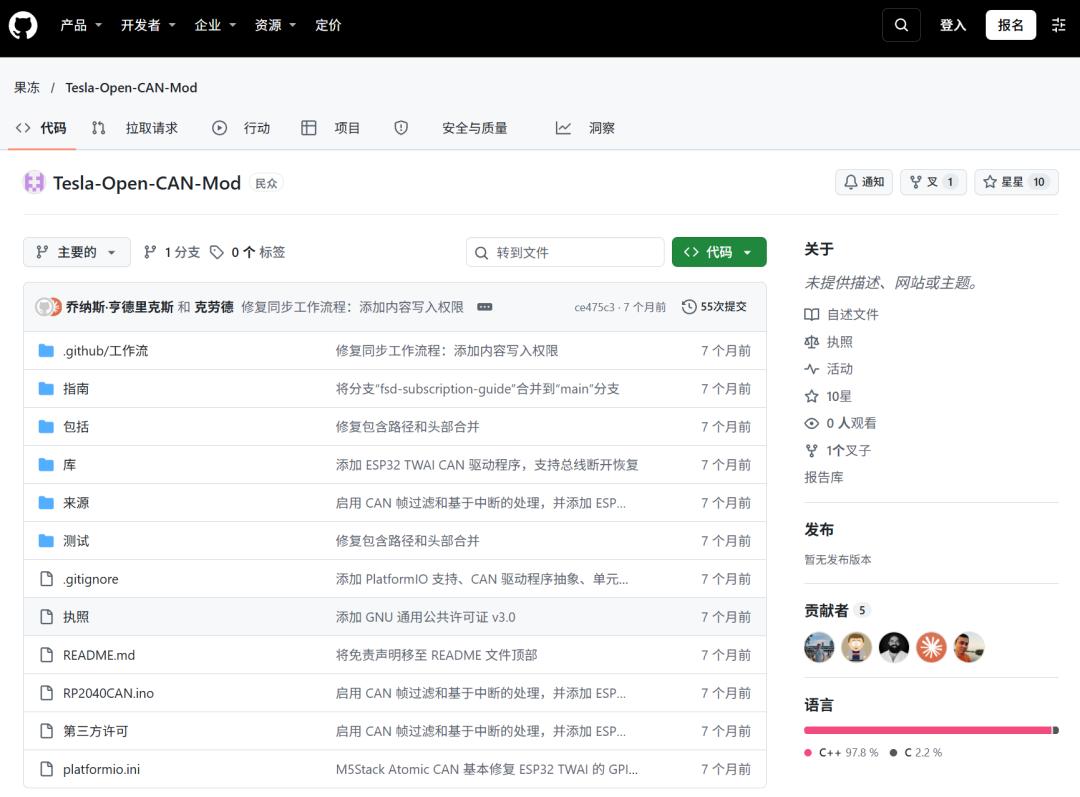
In March 2026, an open-source project named tesla-open-can-mod was launched on the geek platform Github.
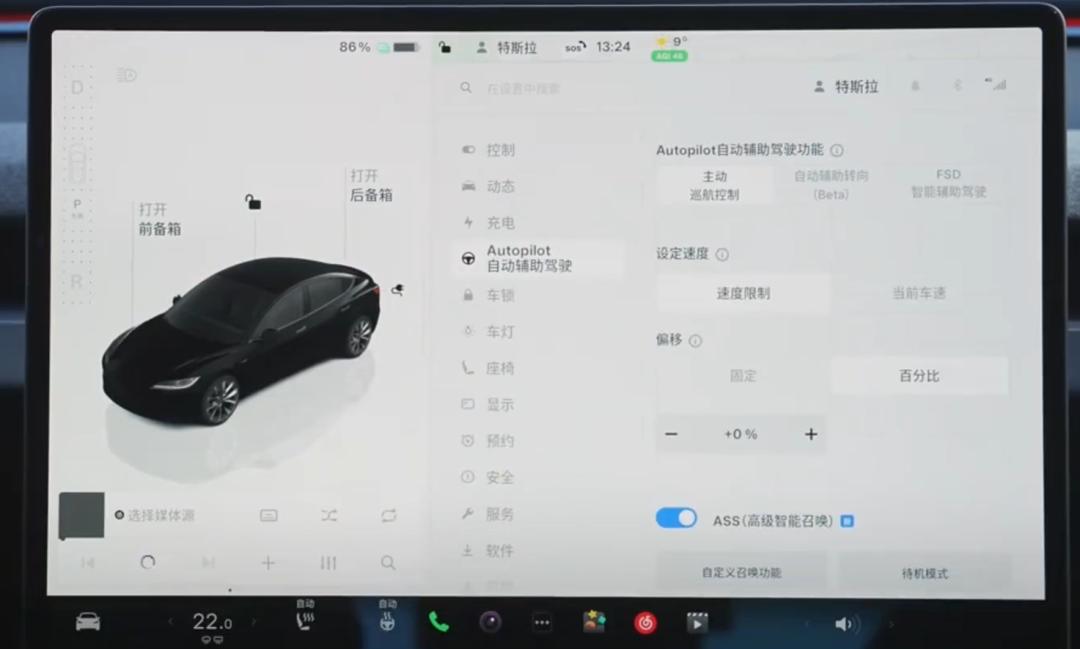
Using the previously open-source observation tool for Tesla CAN bus (the communication protocol between automotive components), the developer found that for vehicles that had paid for FSD but could not use it, Tesla officials only added a very simple restriction.
The developer has now deleted the repository and disappeared. Here we will briefly explain how they achieved this.
The well-known FSD is actually only a high-level feature of AP (Autopilot, Tesla's assisted driving system).
If FSD is activated, there will be an FSD option on the right side of the AP options on the car infotainment system.
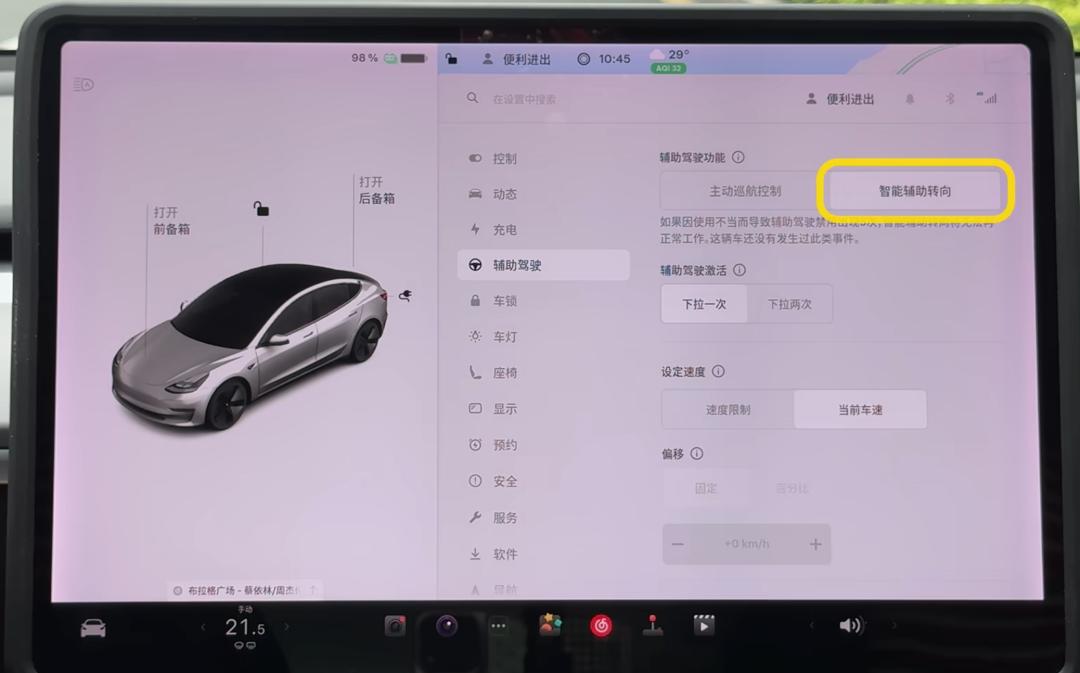
But if FSD is disabled, there will be no FSD option in the AP menu at all, so you have to find an alternative access point to the switch.
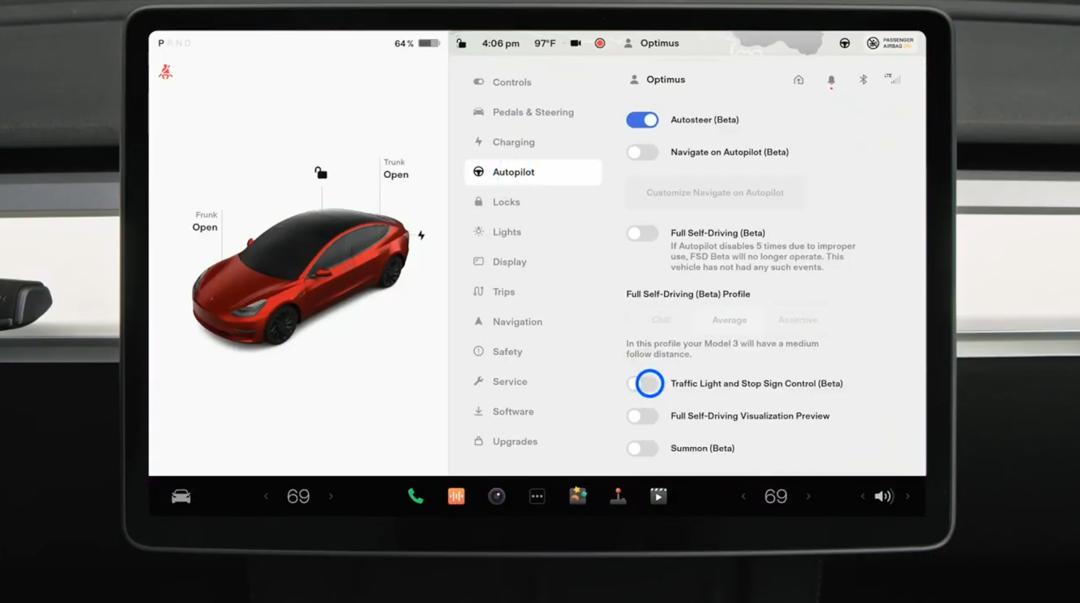
At this point, the developer found through CAN bus communication that the "Traffic Light and Stop Sign Control" function in the autonomous driving settings can be slightly modified to replace the FSD switch.
Therefore, when the screen communicates with the AP system through the CAN bus, the developer uses pre-prepared firmware to intercept the message from the screen, modify it to "I want to turn on FSD", and then send it to the AP system.
In this way, the AP system will "misidentify" that the car owner wants to turn on FSD, and the owner can successfully use the feature.
To put it in a more vivid way, it is like robbing the messenger halfway and smoothly taking over the post.
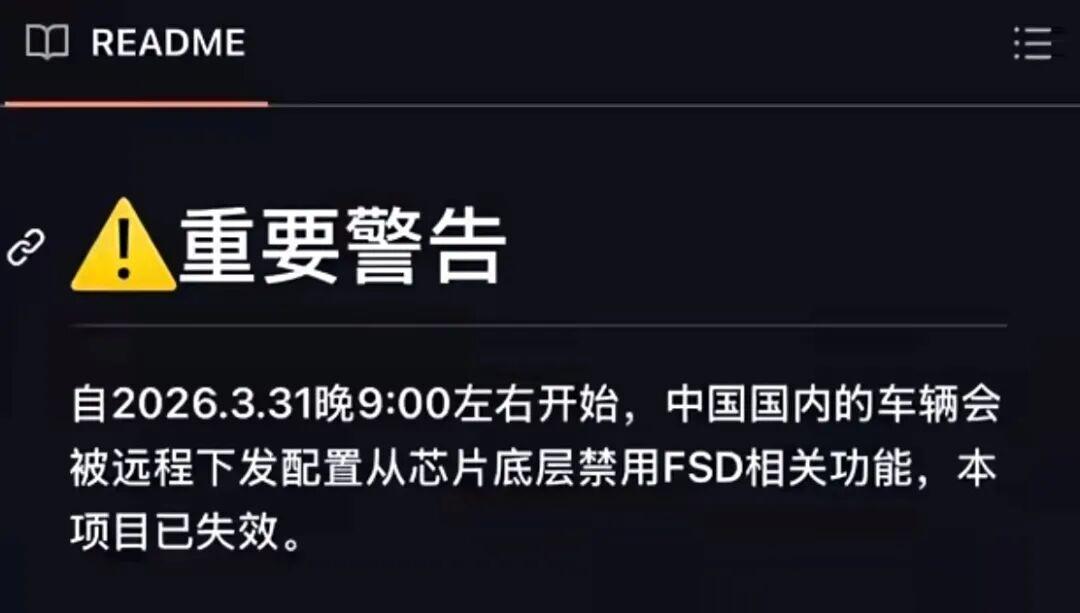
This operation does not require high technical skills, the difficulty lies in finding the FSD activation switch from a large amount of binary code, which may also be attributed to the great reverse engineering era.
In short, this solution spread quickly in Tesla owner groups all over the world, and these South Korean car owners did exactly this.
However, Tesla patched the vulnerability on the last day of March, and this open-source incident did not last for a long time.
But South Korean car owners clearly paid for the feature, so why are they summoned by the police?
The blame actually falls on Tesla. As soon as the incident happened in March, the official Tesla South Korea reported it to the South Korean Ministry of Land, Infrastructure and Transport in accordance with South Korea's "cybersecurity threat compliance obligation".
Then the South Korean police launched an operation, investigated in car owner communities for several months, and finally arrested more than 80 unlucky car owners.
According to a report by the Korea JoongAng Daily, the South Korean police believe that the behavior of these car owners has affected road traffic safety, and their stance is very firm.
Now they are really waiting for punishment with no way out.
Can't they just turn a blind eye to this? Tesla is really too malicious.
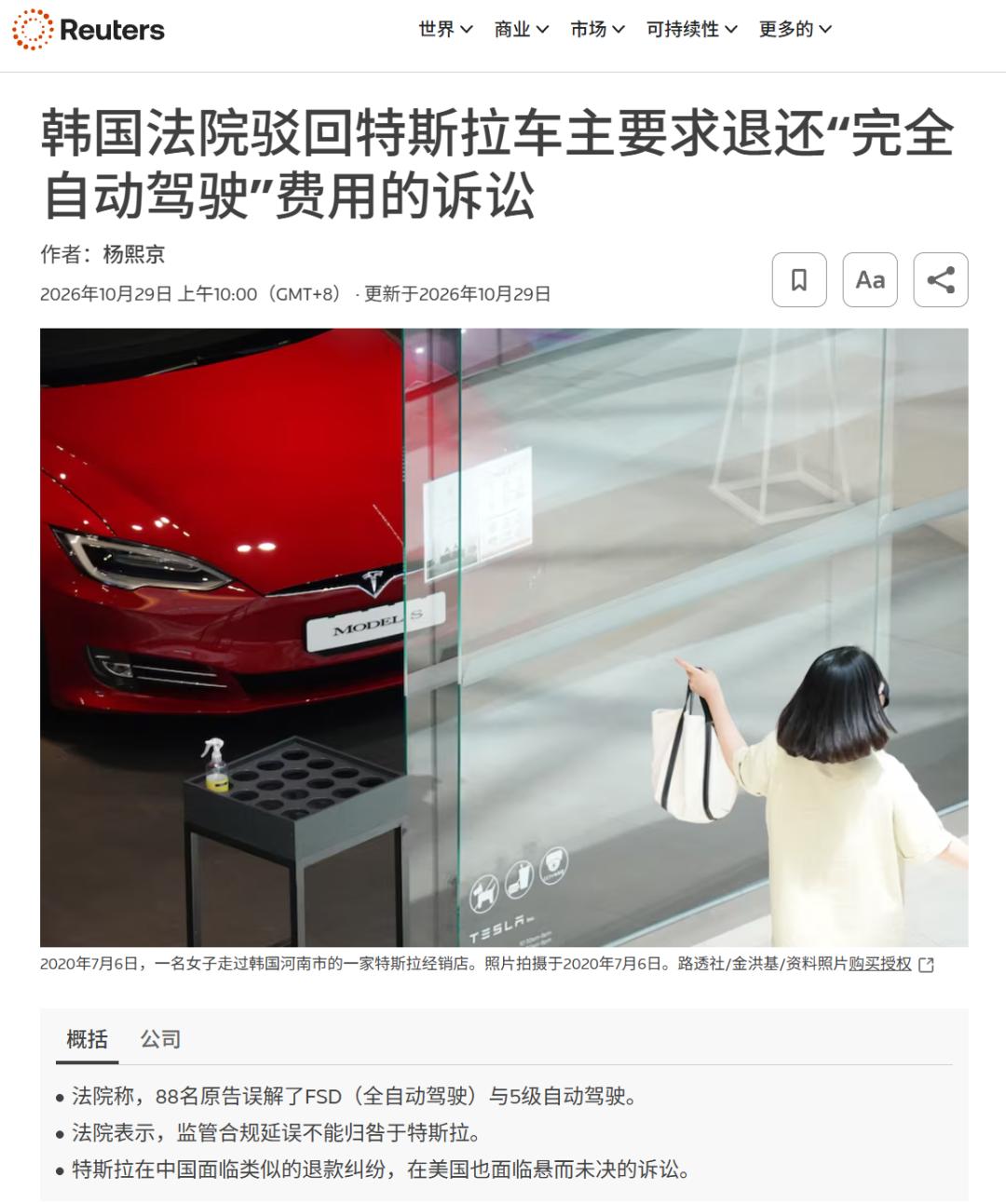
Then a more dramatic thing happened: on October 29, the South Korean court rejected the lawsuit filed by another 88 car owners demanding a refund from Tesla.
The reason is that Tesla did not promise "unmanned autonomous driving" and has already provided part of the functions.
It is ridiculous that they can neither use the feature nor get a refund, this is a perfect layered defense.
That's all for the story of Tesla in South Korea. Tesla is currently applying to the South Korean government for exemption for China-spec vehicles, and we can only wait for the result.
In fact, it can be seen from this incident that FSD is always a "futuristic product" everywhere.
Everyone trusted the performance and promotion of FSD in North America, and actually paid to buy the permanent access to FSD, but after getting the car, they found that it cannot be used due to regulatory and other reasons.
Elon Musk always plays the "cry wolf" game with everyone on X, always saying "it's available now" and "it's coming soon", but it will be delayed again when the time comes.
Recently, Musk mentioned China's FSD again at the Q3 earnings conference, saying that they are "striving for approval" and hope to get the approval around March next year.
But I don't think there is much hope.
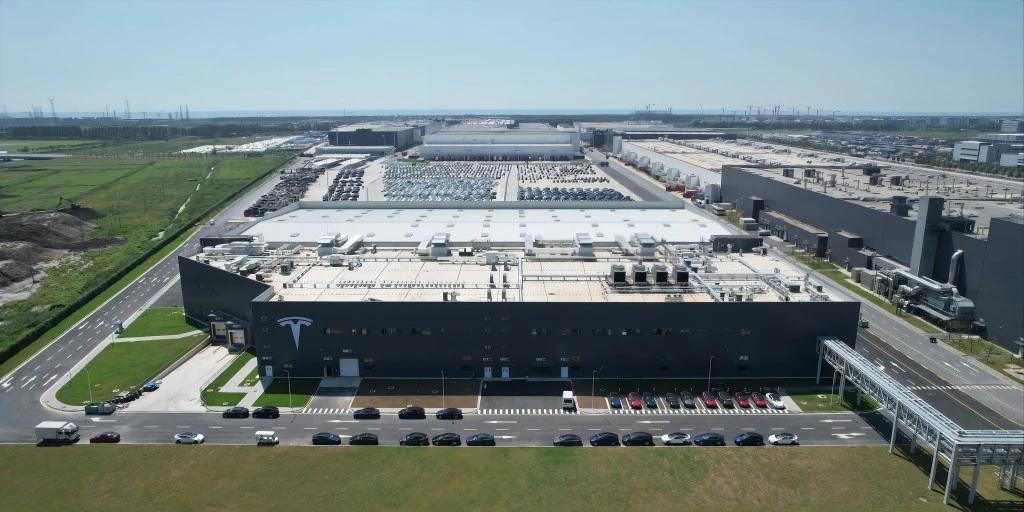
As for the data compliance issue, Tesla built a data center in Shanghai in 2021, which is similar to Apple's Cloud Guizhou, ensuring that data does not leave the country.
It also uses Baidu Maps, and has built an AI training center in China for localized optimization of FSD.
Musk has visited China many times and kept saying "it's coming soon". In May this year, he also pushed out a small-scale trial "regulatory version". It is obvious that all kinds of obstacles for FSD have been cleared.
However, combined with the recently released draft for comments on L3 and L4 autonomous driving, Tesla FSD, compared with EAP, is clearly targeting L4, and its name is even "Full Self Driving".
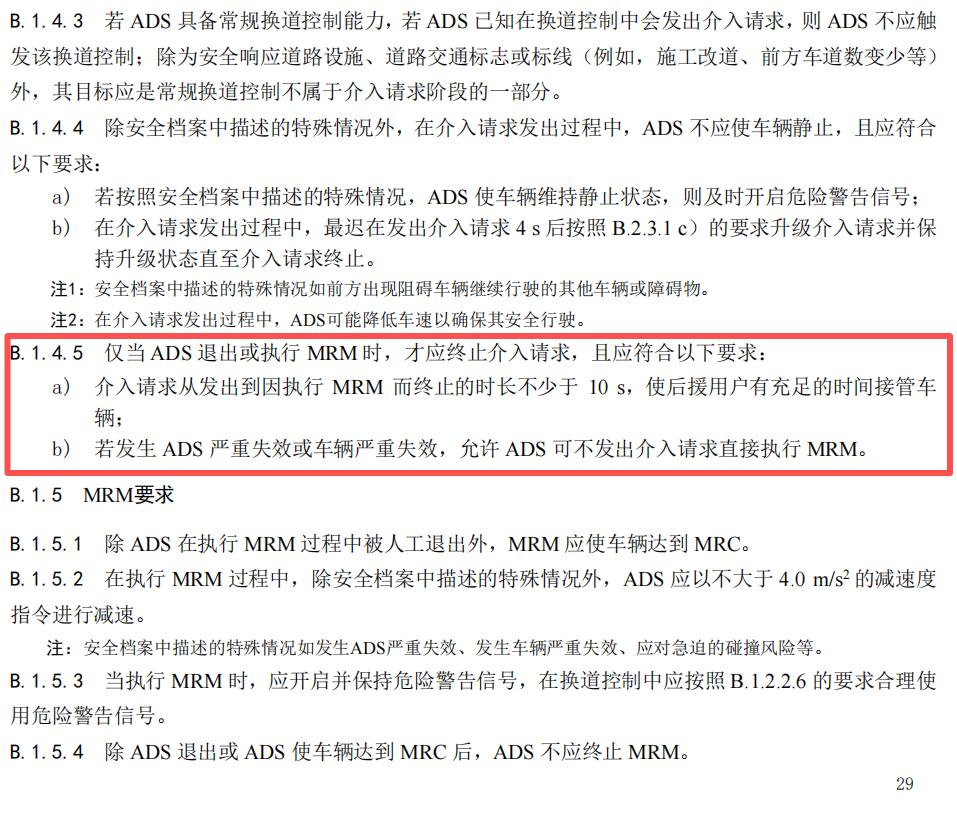
One of the requirements for L3 and L4 autonomous driving is that if the ADS is not capable enough and requires driver intervention, the system must remind the driver more than 10 seconds in advance through multiple methods including sound, light and tactile feedback.
With this extremely strict regulatory requirement, plus the pedestrians running around and electric vehicles that do not follow traffic rules on our roads, it is hard to say whether FSD can work well.
Even at the 2026 World Intelligent Connected Vehicles Conference, the consensus among executives of all car companies is that L3 autonomous driving will be achieved around 2028.
So for those who are still waiting for the FSD "futuristic product", you can just stop waiting.
Image and data sources:
TESLA | Traffic Light and Stop Sign Control, LIFE STYLE
국토부 “중국산 테슬라 FSD 막은 적 없어...안전기준 충족해야”, 채널
테슬라 FSD 한국 승인|"내 중국산 모델Y도 되나?" 국토부에