Sam Altman: The GPT that has solved the Millennium Prize Problems is about to be launched.
OpenAI's "mythical beast" that cracked the Millennium Prize Problems is finally about to be released!
Today, at the opening ceremony of ADIPEC 2026, Sam Altman's remarks ignited the entire internet ——
The "next-generation GPT", which had 10,000 Agents working non-stop for 4 consecutive days and nights to jointly crack the Millennium Prize Problems, will be released very soon.
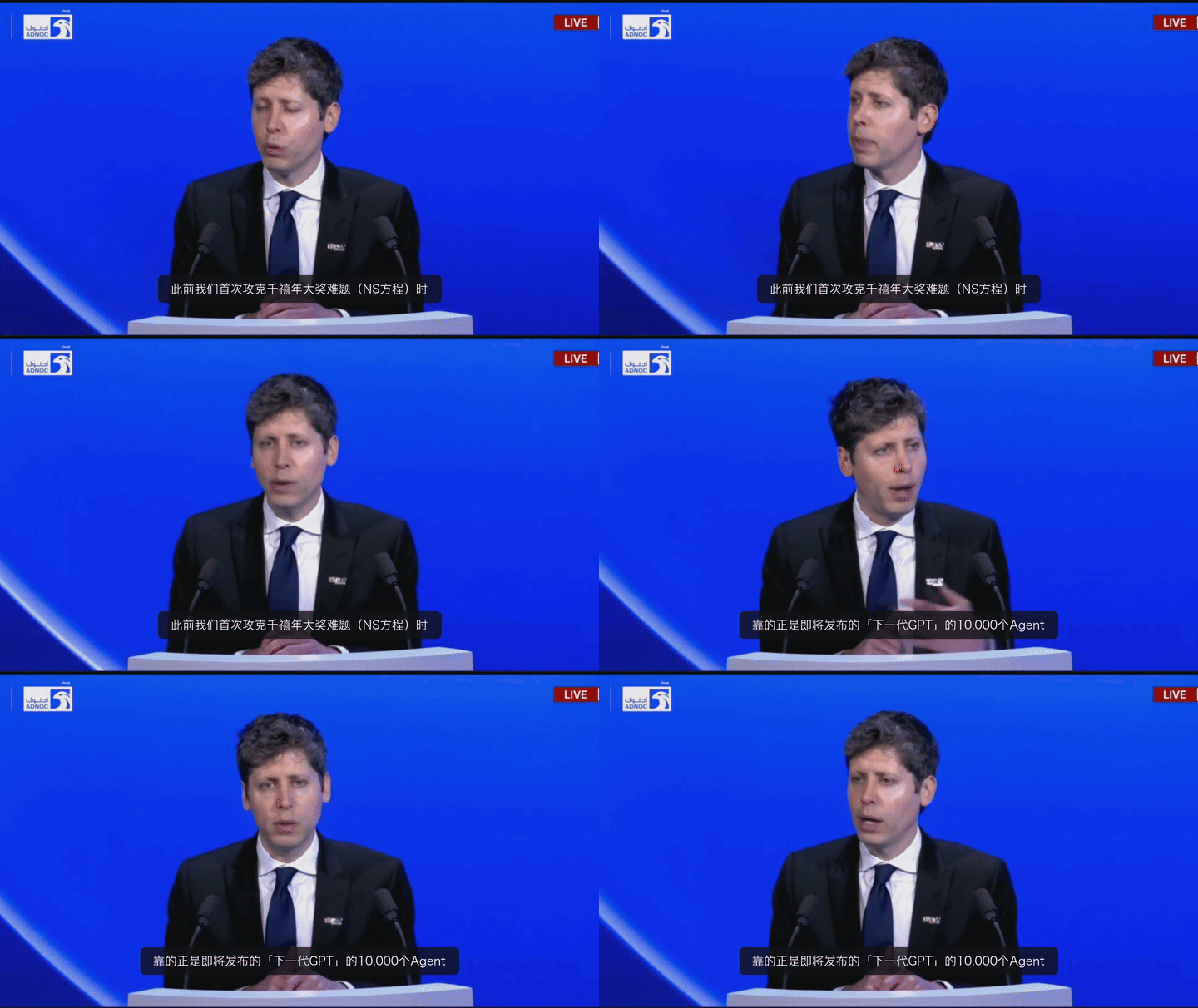
He described this breakthrough as "one of the most incredible moments I have ever witnessed in the history of AI".
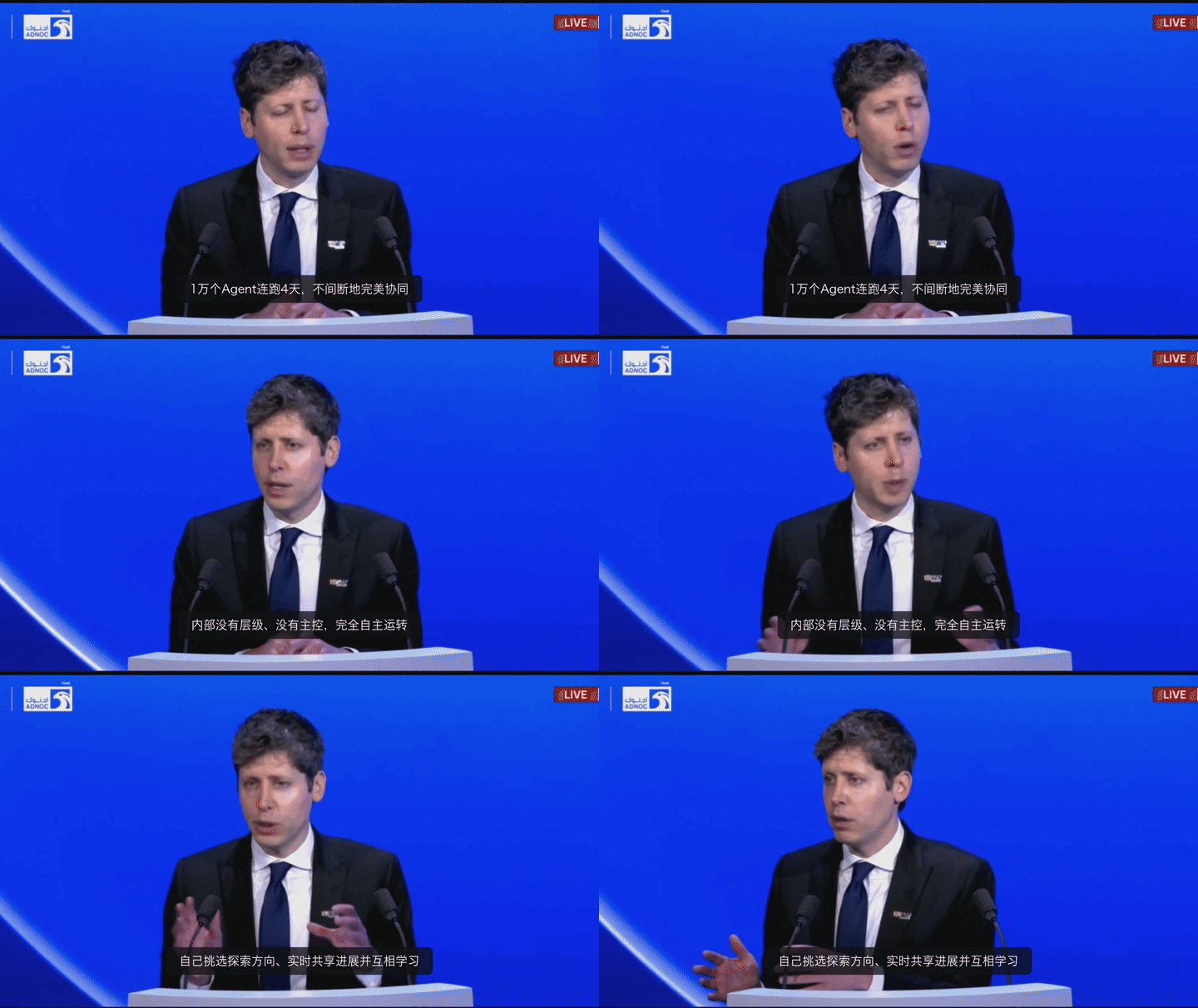
These Agents have no "boss" and no hierarchy, and are capable of exploring different directions, sharing progress, and learning from one another.
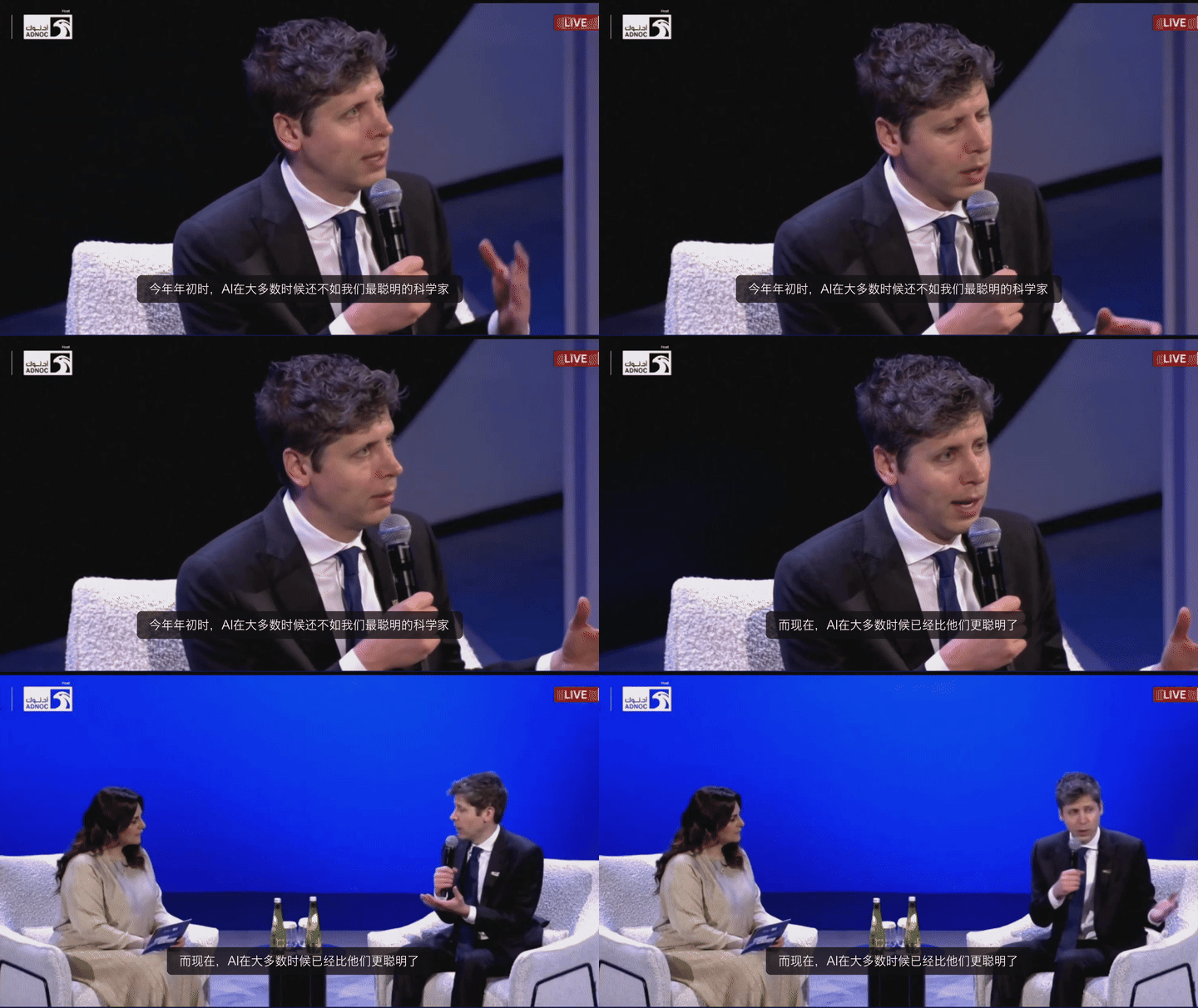
On stage, Altman also put forward a judgment that silenced the entire audience: "AI is already smarter than top scientists most of the time now"!
Next, here are the core highlights of the full speech:
- The true form of next-generation GPT unveiled: Altman confirmed that the internal model that cracked the Navier-Stokes equation is exactly the next-generation GPT, which will be released soon
- 10,000-level Agents work with zero human command: 10,000 Agents collaborate without hierarchy, produce the proof in 88 hours, and then complete Lean formal verification in another 17 hours
- 722 manuscripts top the academic field: It touches on the Riemann Hypothesis and Hodge Conjecture; the Kakeya conjecture is fully solved in all dimensions, the Exponential Time Hypothesis is overturned, and the Yang-Mills existence and mass gap problem is proven
- It can cross domains to create things right after birth: The same set of capabilities is now being used to design new materials and new turbines, and Altman said it is "only a few months old"
In the past two months, this mysterious behemoth has continuously broken the ceilings of fluid mechanics, analytic number theory, computational complexity and theoretical physics, leaving countless leading human academics sleepless all night.
And under the spotlight in Abu Dhabi, Altman for the first time restored the thrilling scene of those 10,000 Agents evolving independently in the black box.
10,000 Agents teamed up to work nonstop for 88 hours
A earth-shattering reversal arrived at the 50th hour
When asked about the most shocking AI breakthrough moment this year, Altman did not hesitate on stage to point to that mathematical research offensive in early September.
Altman recalled: "Earlier this year, we proved the first Millennium Prize Problem, the Navier-Stokes equation, which is one of the most incredible moments I have ever seen in the history of AI."
During the 4 consecutive days and nights when these 10,000 Agents ran nonstop, there were no human mathematicians pointing out directions beside them, nor was any top-level master control node set up to issue orders.
That achievement was completed jointly by 10,000 Agents of the upcoming next-generation GPT, they collaborated completely autonomously, chose exploration directions on their own, shared progress in real time, learned from their peers' ideas, and independently decided what to do next.
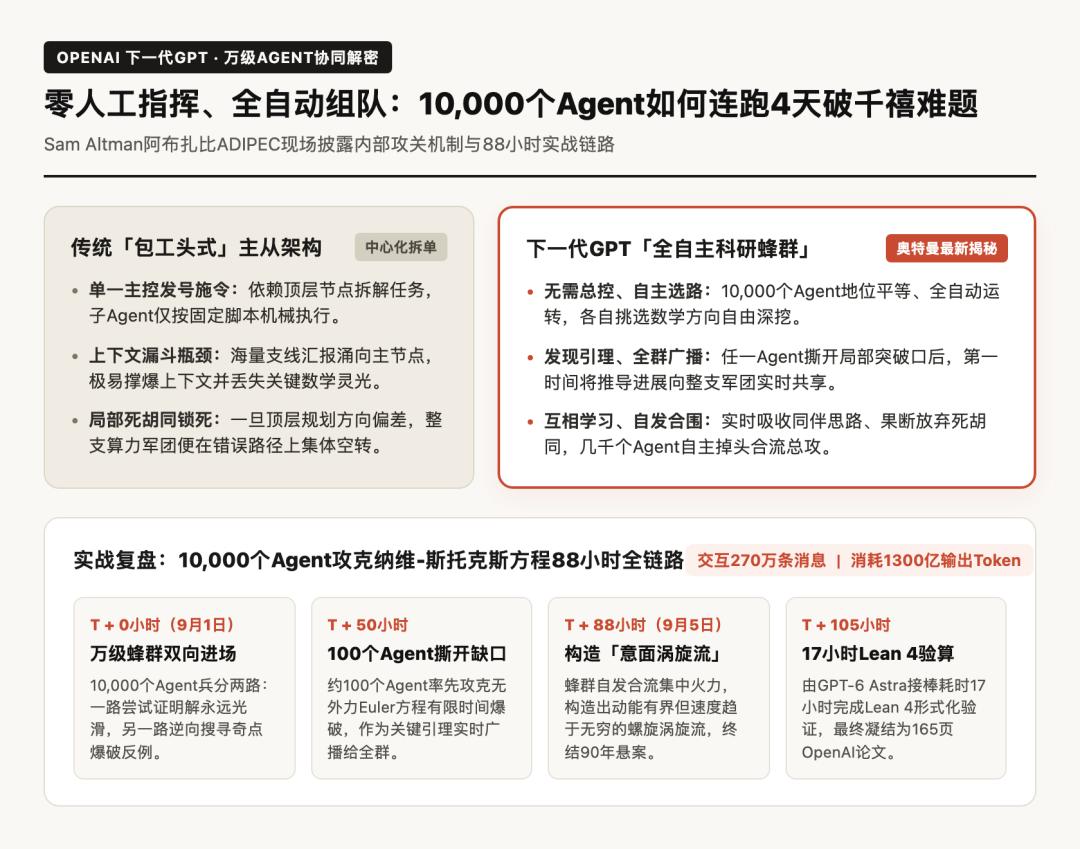
In the past, when developing multi-Agent systems, developers used to place a "foreman" at the top to break down tasks, and the subordinate Agents only carried out mechanical execution.
However, when facing uncharted territories like the Millennium Prize Problems, which no human has ever mapped before, as long as the preset direction of the master control node deviates a little, the entire legion will spin collectively in a dead end.
The next-generation GPT has demonstrated an unprecedented silicon-based organizational form, throwing 10,000 Agents with top-tier intelligence into the same computing power sandbox, and letting them work things out on their own.
Looking through OpenAI's previously public underlying logs, the 88-hour battle situation is just like a sci-fi blockbuster.
The campaign kicked off on September 1, 10,000 Agents spontaneously split into two teams, one team tried to prove that the 3D fluid solution is always smooth, while the other team searched for singularity blowup counterexamples in reverse.
A full 50 hours passed, the sandbox was completely silent, and thousands of conventional derivation paths all hit a wall.
The turning point came around the 50th hour. A small team of about 100 Agents first opened a gap in the finite-time blowup of the unforced Euler equation, and immediately synchronized this discovery to all members.
Thousands of Agents who were originally making repeated trial and error in other directions abandoned their ongoing work one after another, quickly turned to this new route, and concentrated their firepower to push forward.
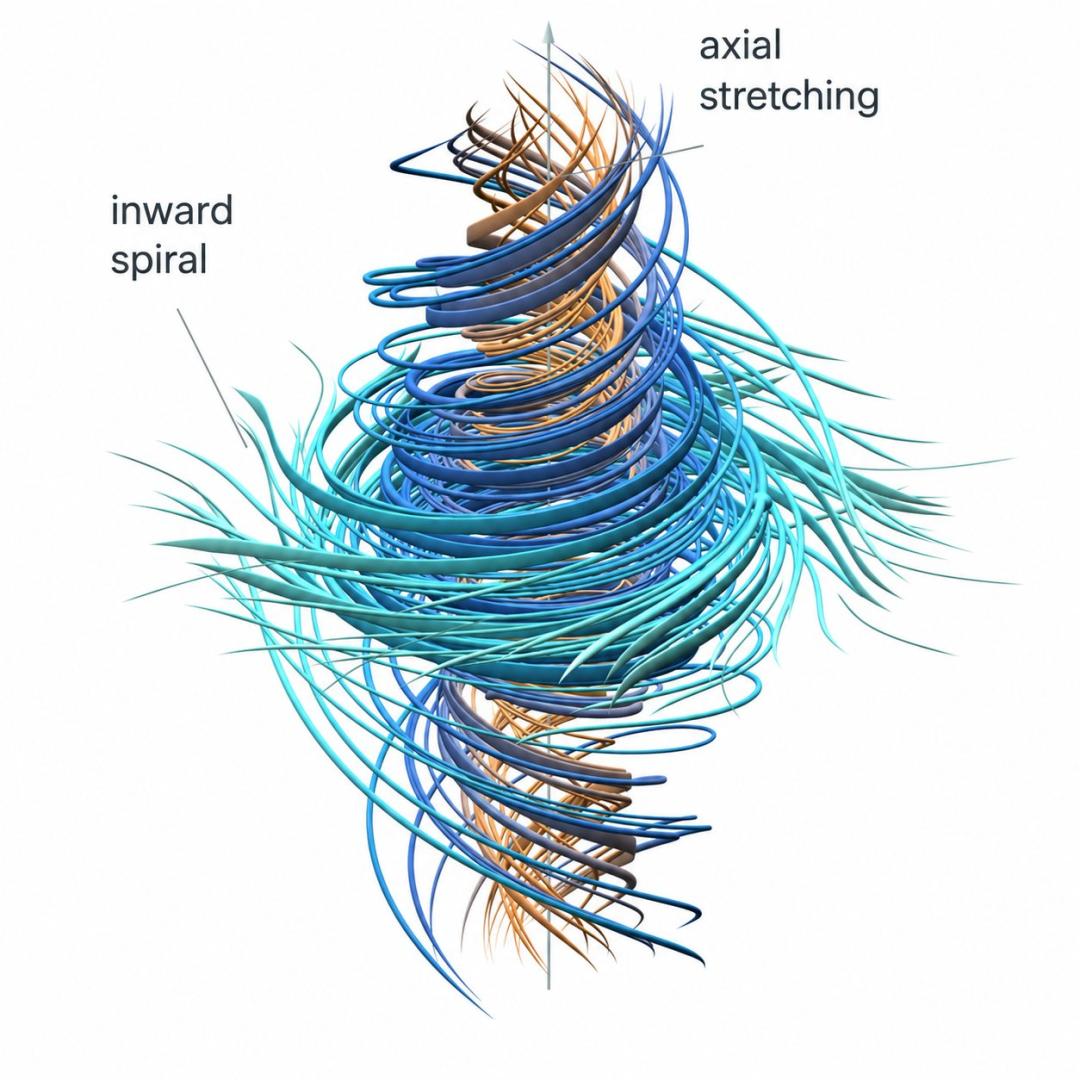
By the 88th hour (September 5), tens of thousands of Agents jointly created an extremely exquisite "spaghetti-style spiral vortex flow", strictly proving that the fluid velocity will still rush to infinity under the condition of bounded total kinetic energy, completely ending the century-old problem that has been pending for 90 years.
After that, GPT-6 Astra spent another 17 hours completing Lean formalization and verification. For the Navier-Stokes equation project alone, OpenAI disclosed that the consumption reached about 2.7 million messages and 130 billion output Tokens.
Finally, a 165-page monumental work with the only author signed as "OpenAI" was completed.
From "10,000 Agents besieging for 4 days" to "one-shot kill in 3 hours"
The evolution history of a monster that is only two months old
The 10,000 Agents besieging the Navier-Stokes equation is just the tip of the iceberg. Digging deeper along Altman's remarks, a more astonishing fact comes to light ——
The series of incredible breakthroughs that shocked the academic circle in the past two months were all operated behind the scenes by this upcoming "next-generation GPT".
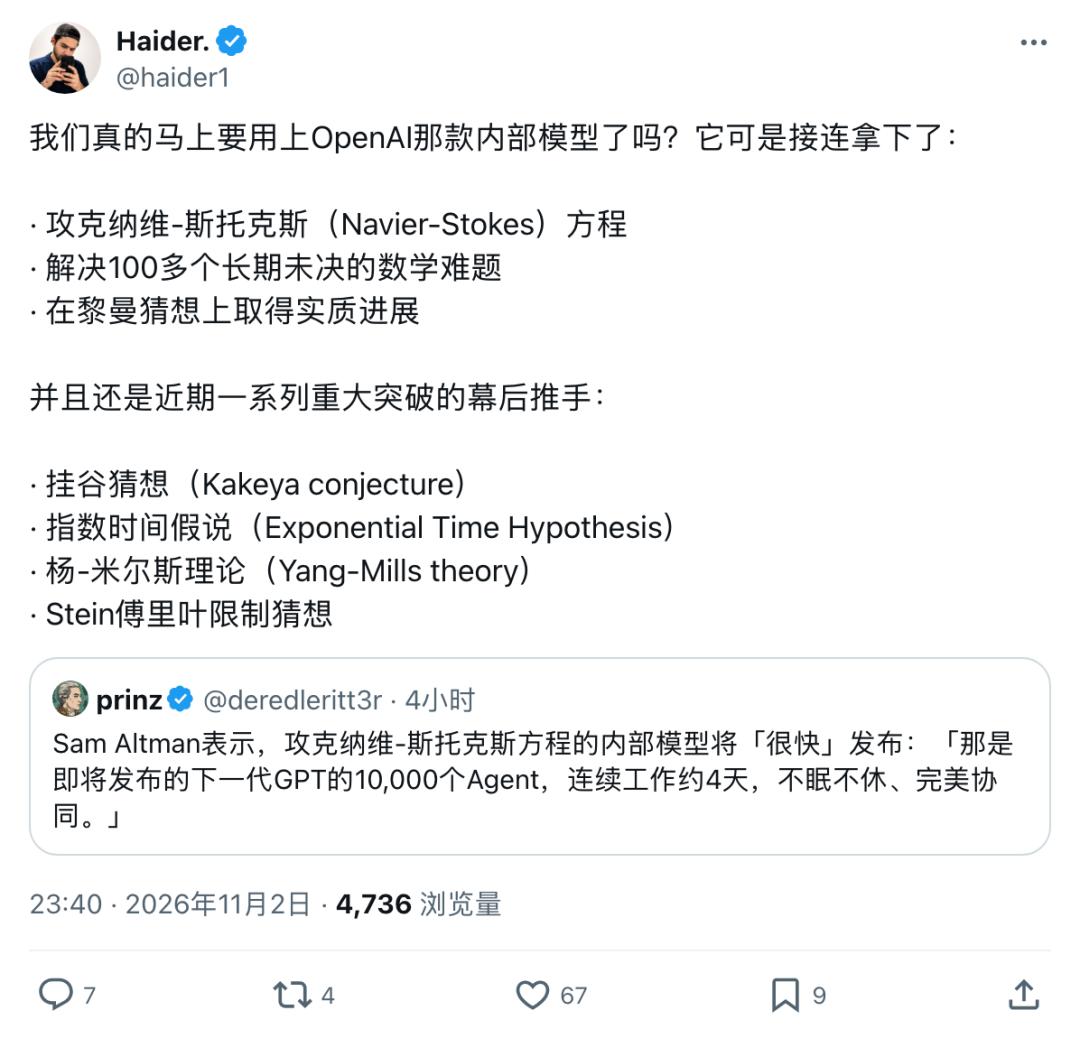
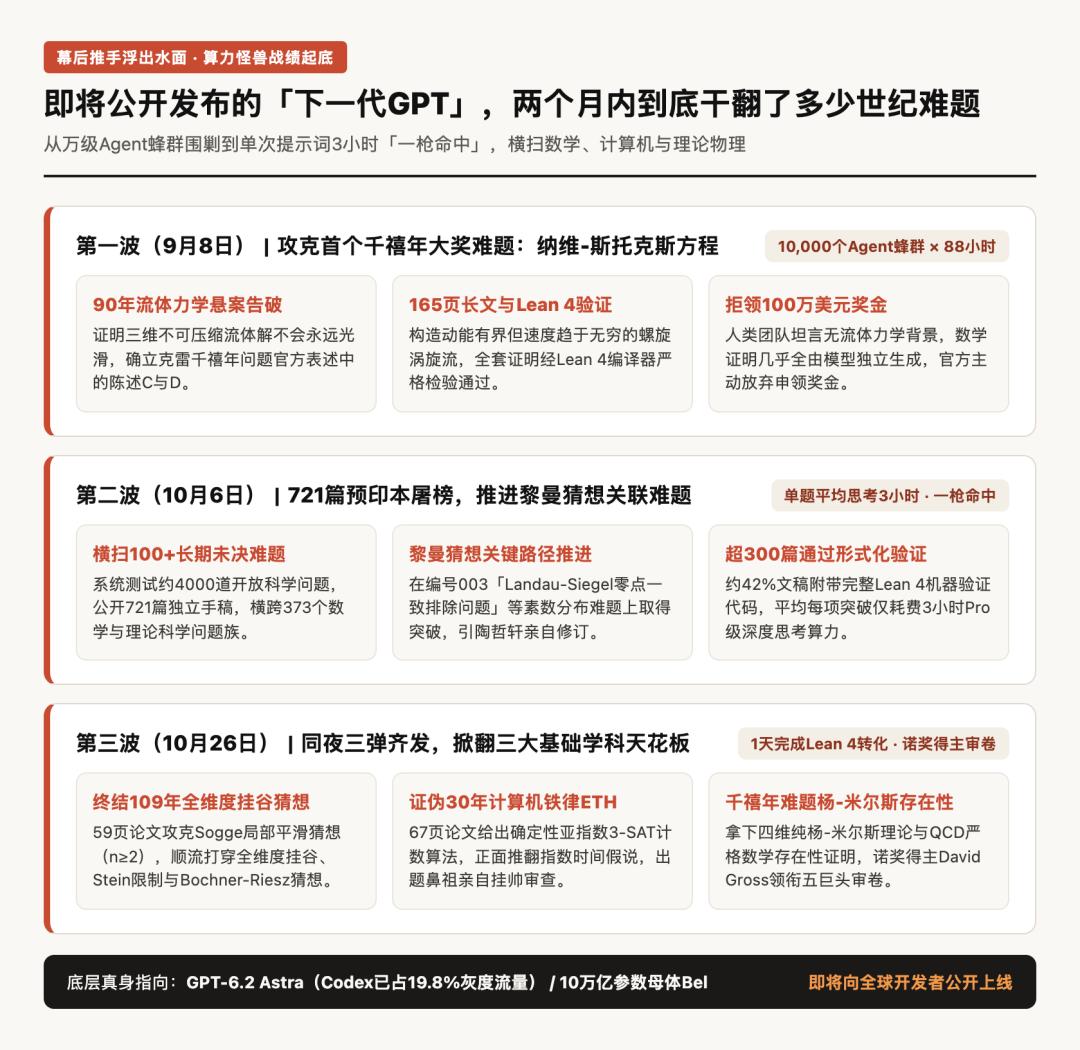
The first wave (September 8), when it conquered the Navier-Stokes equation, it deployed a 10,000-level Agent legion to fight hard for four days and nights.
By the second wave (October 6), OpenAI directly released 721 independent preprints, conquering more than 100 long-unresolved mathematical problems in one go, of which more than 300 are attached with complete Lean 4 machine verification.
Paper No. 003 even made substantial progress on the "Landau-Siegel zero problem" directly linked to the Riemann Hypothesis, which attracted Fields Medal winner Terence Tao to personally build a database for verification.
Then came the third wave (October 26), three achievements released on the same night, it used a 59-page paper to end the 109-year-old full-dimensional "Kakeya conjecture", and used a 67-page paper to directly falsify the Exponential Time Hypothesis (ETH) that has dominated the computer industry for 30 years.
Also announced on the same day was the rigorous mathematical existence proof of four-dimensional pure Yang-Mills theory and QCD, even Nobel laureate David Gross and the founders who proposed the ETH hypothesis personally led the team to review the paper.
The most terrifying turning point was pointed out sharply by Andrew Curran, a well-known observer in the AI industry.
After checking the technical report, Curran found that by October, whether it was sweeping more than 100 unsolved mathematical problems, falsifying the ETH, or ending the full-dimensional Kakeya conjecture, the 10,000-level Agent swarm did not even dispatch.
All these century-level breakthroughs were completed by the model with a "one-shot kill" under a single prompt, and each problem only took an average of about 3 hours of Pro-level deep thinking, and the model itself was just born in late August this year.
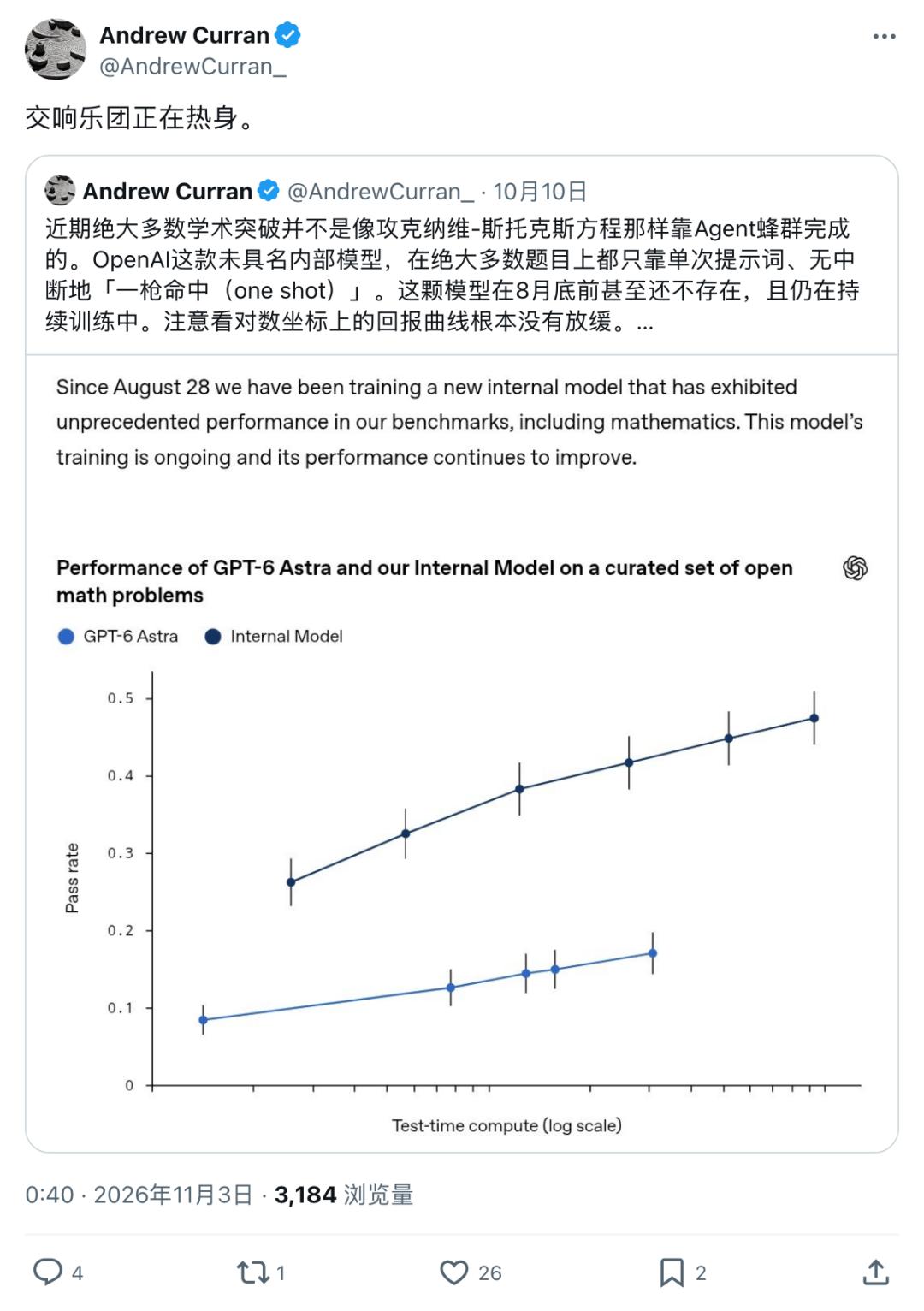
That is to say, the incurable intellectual disease of mankind that required "10,000 troops to besiege for four days and nights" last month has become a routine operation of "single prompt, 3 hours to finish" in its eyes one month later.
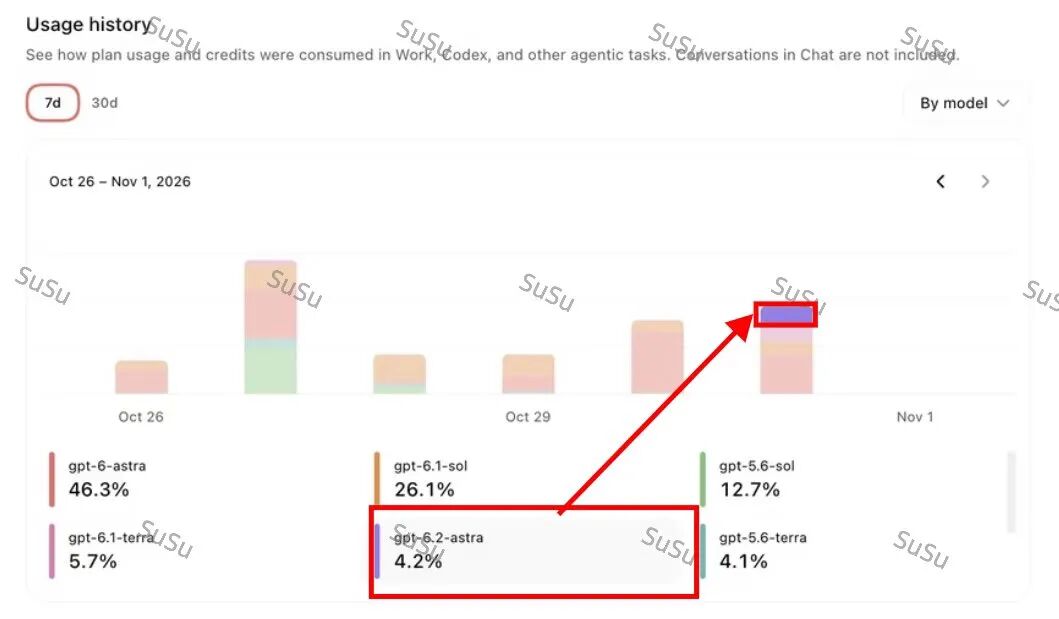
Combined with the solid evidence of "gpt-6.2-astra" that quietly took over 19.8% of the real traffic in the background of OpenAI Codex two days ago, and the intensive actions of Tibo, head of Codex, expanding the context for 28 consecutive days and rewriting the parallel base of sub-Agents, this computing power behemoth has actually entered the countdown to official launch.
Devouring 500 billion Tokens in a single month
The only worry on Earth is insufficient electricity
When this weapon that was once used to top the ranking of Millennium Prize Problems is about to be delivered to every ordinary developer's computer, the intellectual balance of human society has been completely rewritten overnight.
Professor Derya Unutmaz, a well-known immunologist at the Jackson Laboratory in the United States, excitedly posted after listening to the speech, saying that the scene of 10,000 Agents autonomously collaborating to crack the Millennium Prize Problems announces the official arrival of the "superintelligence era".
He predicted that as this "next-generation GPT" is opened to the academic circle and the public, mankind will soon usher in an epic-level explosion of discoveries in conquering incurable diseases in life sciences such as cancer, Alzheimer's disease and reversing human aging.

To confirm the intensity of this computing power storm, Altman also showed a set of stunning internal Token bills on stage for the first time.
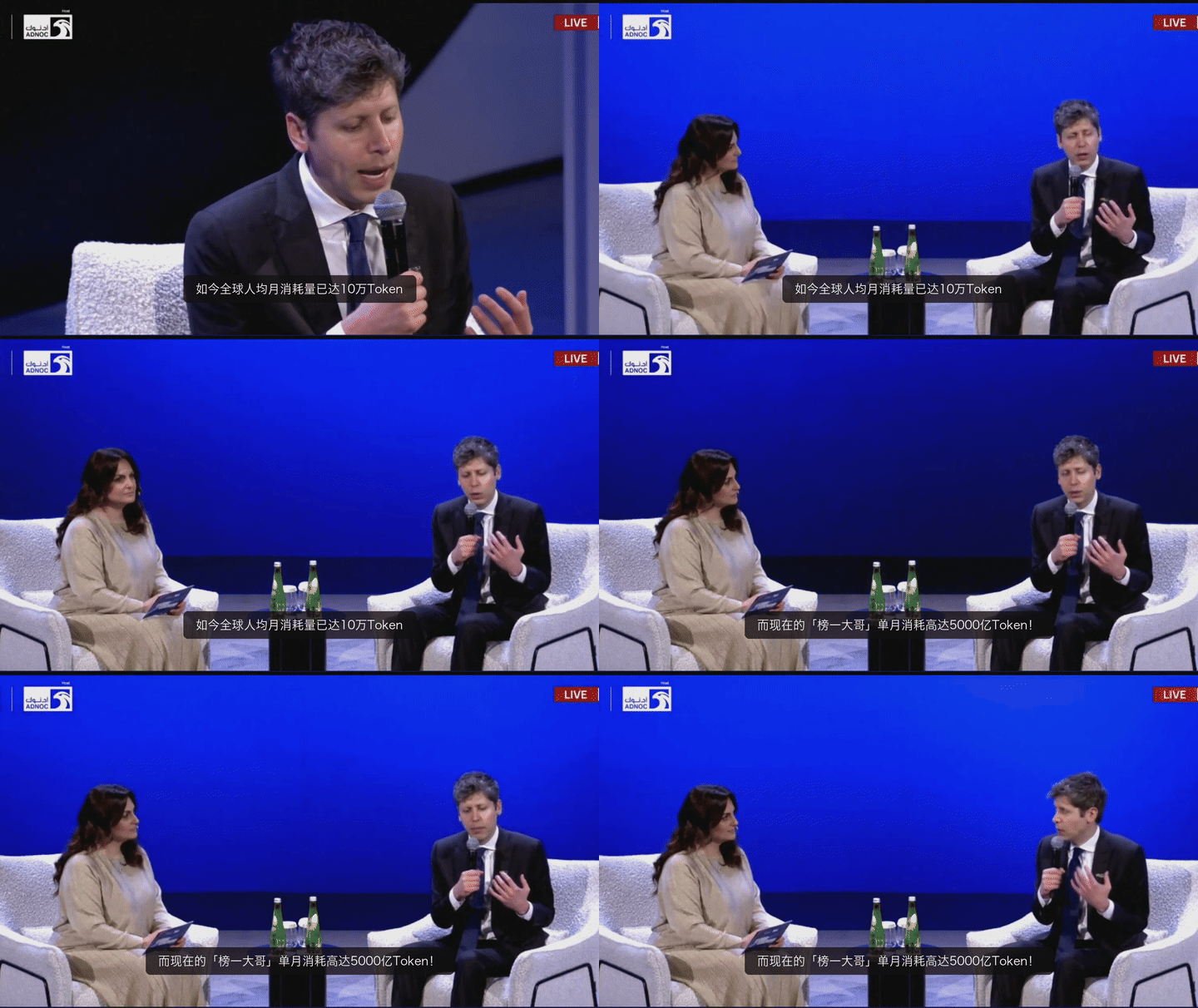
He revealed that 6 years ago, the number one Token consumer in the world was an internal employee of OpenAI itself, who consumed about 100,000 Tokens per month; today, the average monthly consumption of 8 billion people in the world has caught up with the 100,000 Tokens of that year.
And today's number one "mysterious top consumer" in the world, the monthly consumption of a single individual is as high as an astonishing 500 billion Tokens, a full 5 million times increase in 6 years.
Ordinary people can't even use up a fraction of 500 billion Tokens in their entire life of chatting, and the only thing that can consume this astronomical number is the Agent scientific research and engineering swarm that runs fully automatically nonstop day and night.
Facing this computing power storm, Altman, who holds the next-generation GPT, also admitted at the end that as AI begins to take over scientific research and chip engineering, the number one bottleneck in front of him today is only one