A well-known skincare brand collapsed just before the Double 11 shopping festival.
Another Japanese beauty brand has closed its stores in China. As the end of 2026 approaches, Kao Group's list of brand layout adjustments keeps growing.
On November 1, SOFINA, the high-end skincare brand under Kao Group, released store closure announcements on its Taobao Tmall and Douyin stores. The announcement[1] shows that due to brand strategy upgrading and business layout adjustment, the official store closure process has been launched, and the stores will be officially closed and the product sales business of the flagship stores will be suspended from December 1, 2026.
It is worth noting that SOFINA stated in this announcement that this is a decision made "after careful consideration" and with "regret". Jumeili consulted about "where to purchase the products afterwards", but the relevant store customer service has not yet given a clear reply.
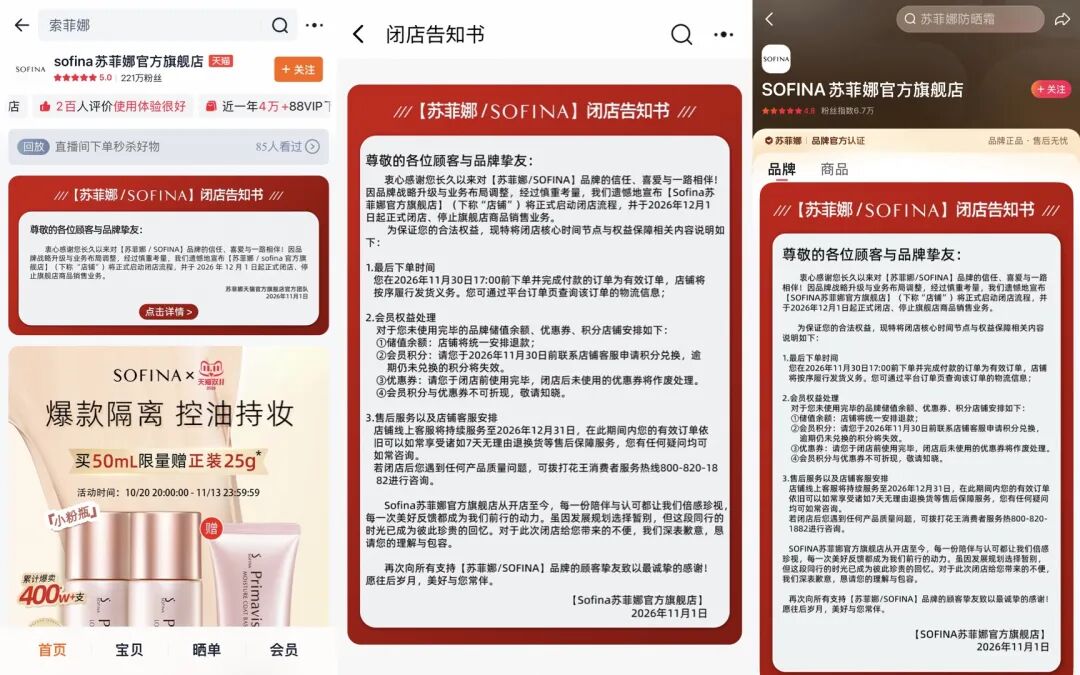
△ Screenshots of SOFINA official flagship stores, captured from Taobao Tmall and Douyin
After the news of store closure spread, it triggered a wave of consumers' nostalgic memories, and "tears of the times" became one of the high-frequency labels netizens gave to the brand.
Now this long-established beauty brand, which has been founded for 44 years and entered China for 22 years, after experiencing the golden period of China's market development, why did it choose to press the pause button on sales of its domestic Tmall and Douyin flagship stores?
22 Years in China, SOFINA Has Closed Two Official Online Flagship Stores in a Row
Up to now, the SOFINA official flagship store on Taobao Tmall that has released the store closure announcement has 2.21 million followers, and the SOFINA official flagship store on Douyin has 67,000 followers; the former only has 3 remaining product links, and the latter has no products on shelves. In addition, SOFINA accounts on Xiaohongshu and WeChat Official Accounts have stopped updating since the end of December 2025.
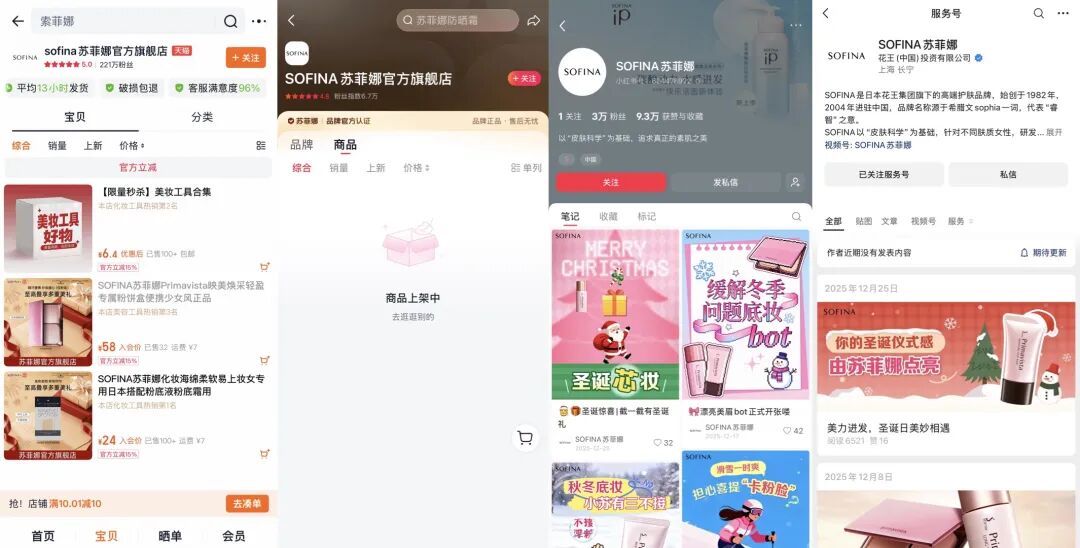
△ Status of SOFINA on major online e-commerce platforms in the Chinese market, captured from Taobao Tmall, Douyin and Xiaohongshu
The official website[2] shows that the development history of the SOFINA brand follows the main line of "skin science", and it develops various products for women with different skin types. The brand name comes from the Greek word "sophia", which means "wisdom". Official accounts such as SOFINA Changsha once mentioned that SOFINA, Shiseido and Kanebo are collectively known as the three major Japanese beauty brands.
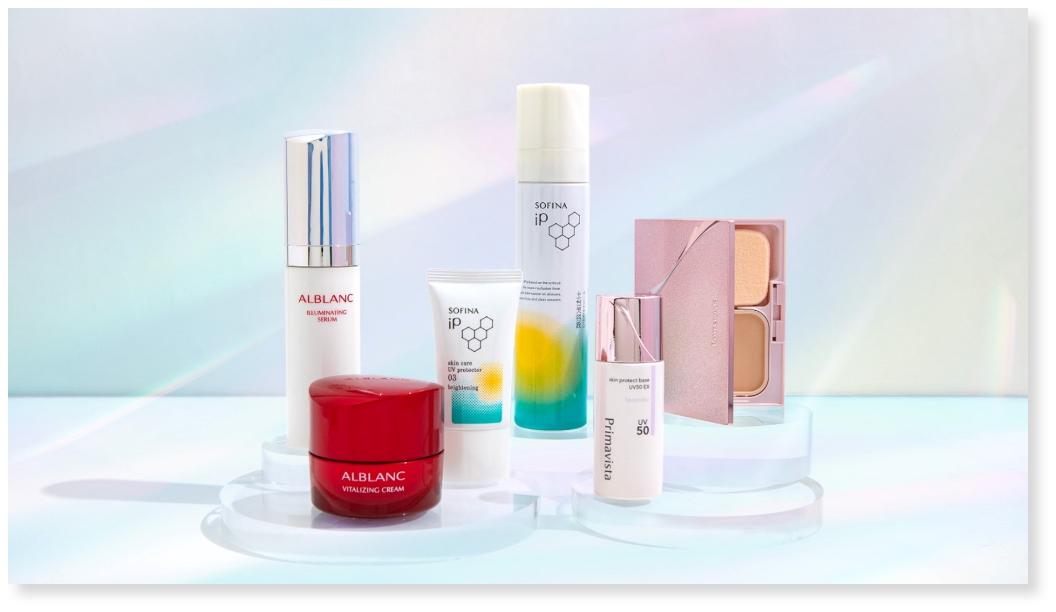
△ Related products under SOFINA, Source: SOFINA Hong Kong Official Website
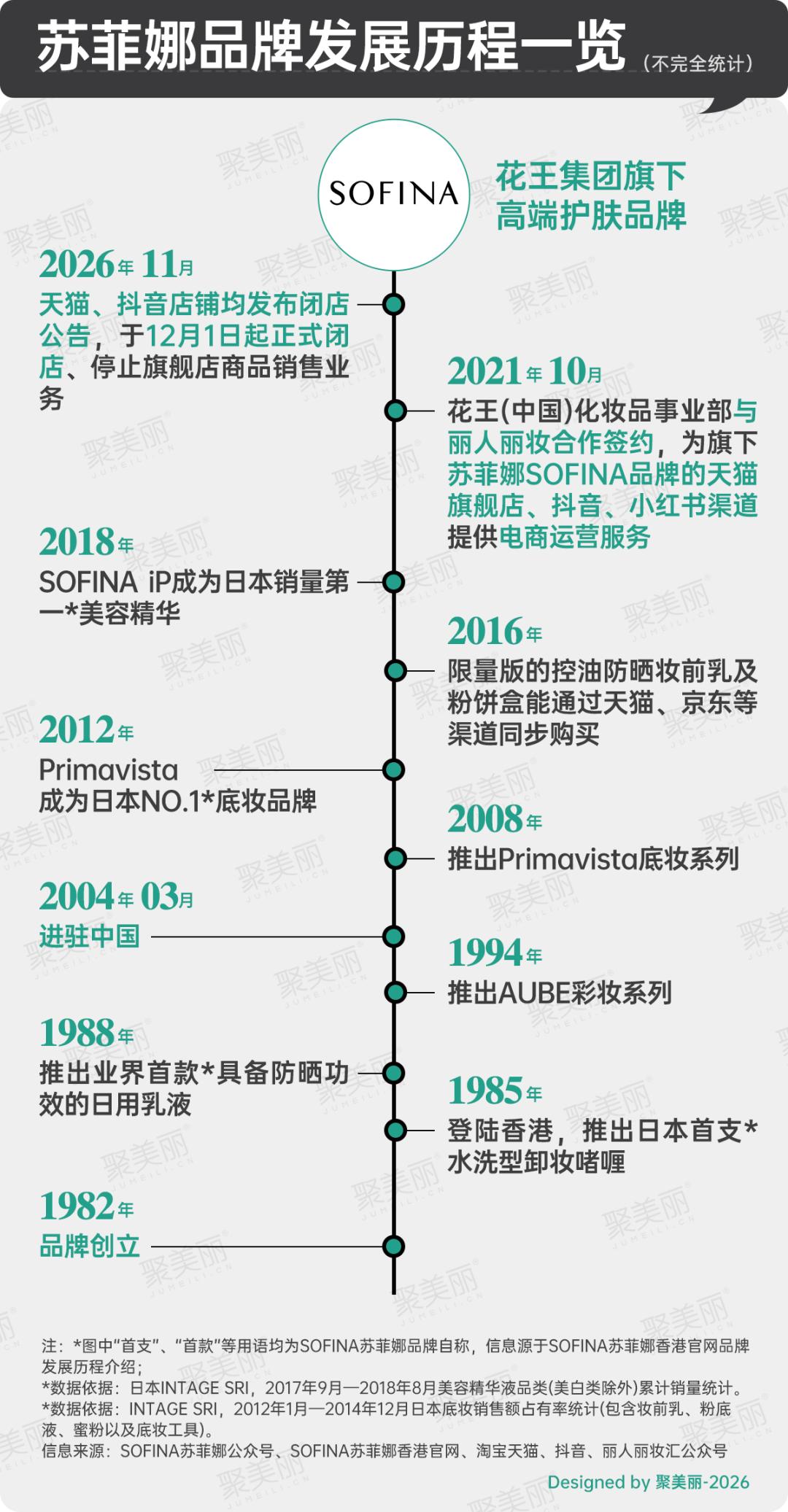
The birth of this brand originated from Kao Group's doubt about "inferior cosmetics", hoping to "insist on making high-quality skincare products at reasonable prices". As a result, SOFINA was founded in 1982, and then entered the Asian market with Hong Kong and Chinese mainland as key nodes.
From the perspective of the parent company, Kao's cosmetics business, which started with the founding of the SOFINA brand, brings the company more than 700 million US dollars (about 4.7 billion RMB) in sales revenue every year. Before entering China, Kao Group's business in the Chinese market was limited to low-end bathing products.
In March 2004, SOFINA landed in the Chinese market and became the first high-end skincare brand introduced by Kao Group to the Chinese market. At that time, Kao Group stated in media reports[3]: "By the 2007 fiscal year, the company will strive to achieve sales of 9.4 million US dollars (about 62.48 million RMB) in China."
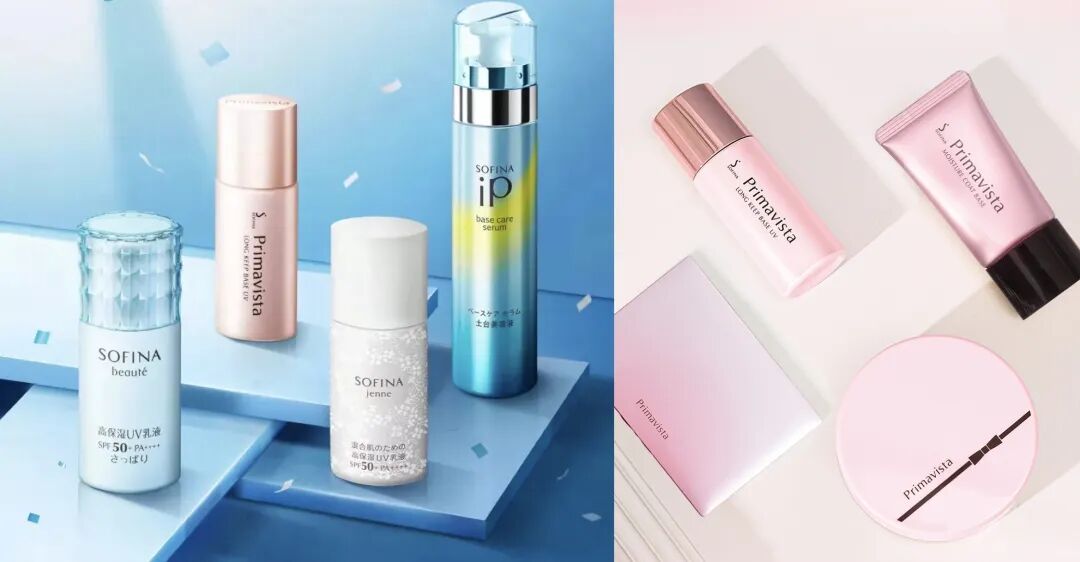
△ Related products under SOFINA, Source: SOFINA
Within two years after entering China, Kao Group planned to open 10 SOFINA stores in Shanghai and its surrounding areas. Products would first be imported from Japan, and local production in China would be considered when sales reached a certain scale. This fully shows Kao Group's optimism for SOFINA and its emphasis on the Chinese market.
But at the same time, Daisuke Yamaguchi, an analyst at Citigroup, the global financial services group, once said: "Shiseido accounts for 60% of the market share in department stores in China's coastal cities." This means that Kao Group, which entered the market a little later, had to compete head-on with Shiseido from the initial stage of its layout in China.
Perhaps because the offline department store market was restricted by Shiseido's high market share, Kao Group turned its attention to the fast-growing online e-commerce sector.
In October 2021, Kao (China) Cosmetics Division signed a cooperation agreement with Lily & Beauty, which provided e-commerce operation services for SOFINA's Tmall flagship store, Douyin and Xiaohongshu channels.
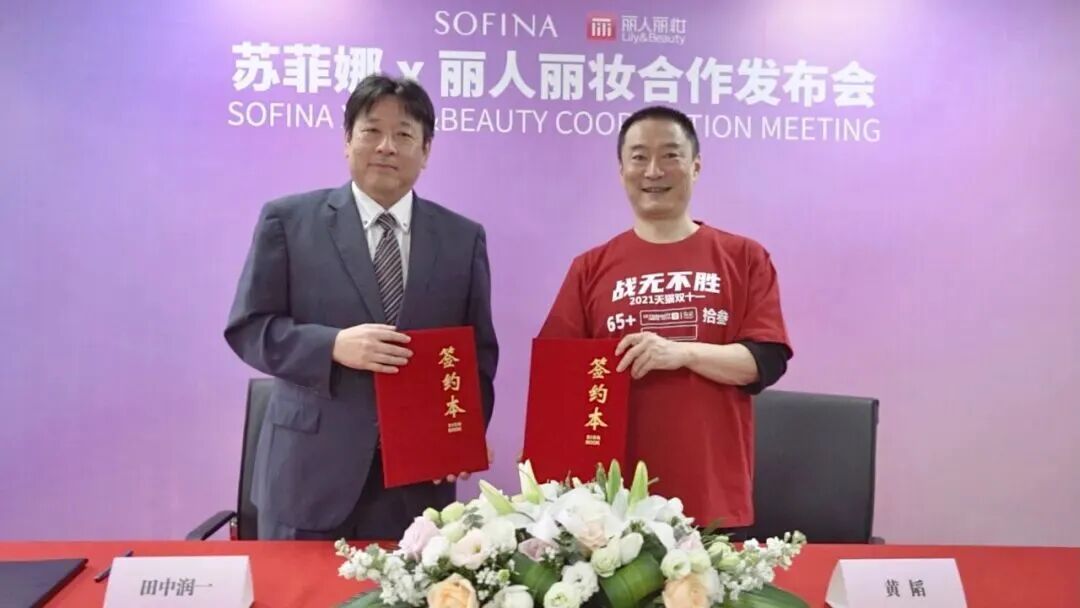
△ Junichi Tanaka, Head of Kao Cosmetics Business Unit, and Huang Tao, Chairman and General Manager of Lily & Beauty, attended and signed the cooperation agreement, Source: Lily & Beauty Official Account
At that time, Junichi Tanaka, Head of Kao Cosmetics Business Unit, said: "SOFINA is a brand with great development potential, and we hope it can continue to grow in the fast-changing online retail market."
Several years later, this expectation for growth forms a sharp contrast with the current situation where SOFINA's domestic Taobao Tmall and Douyin flagship stores announced the closure on the same day.
It is worth noting that store closure does not mean completely exiting the Chinese market. Kao Group announced the launch of the skincare series SOFINA BASIC+ in June this year. But from its positioning, it does not seem so "high-end" anymore, and it is also launching affordable products. The brand's previous main pricing range was concentrated at 3000 yen to 5000 yen (about 126 RMB to 211 RMB), but now it is positioned in the low to mid-range price range, with a selling price of 1000 yen to 2000 yen (about 42 RMB to 84 RMB)[4].
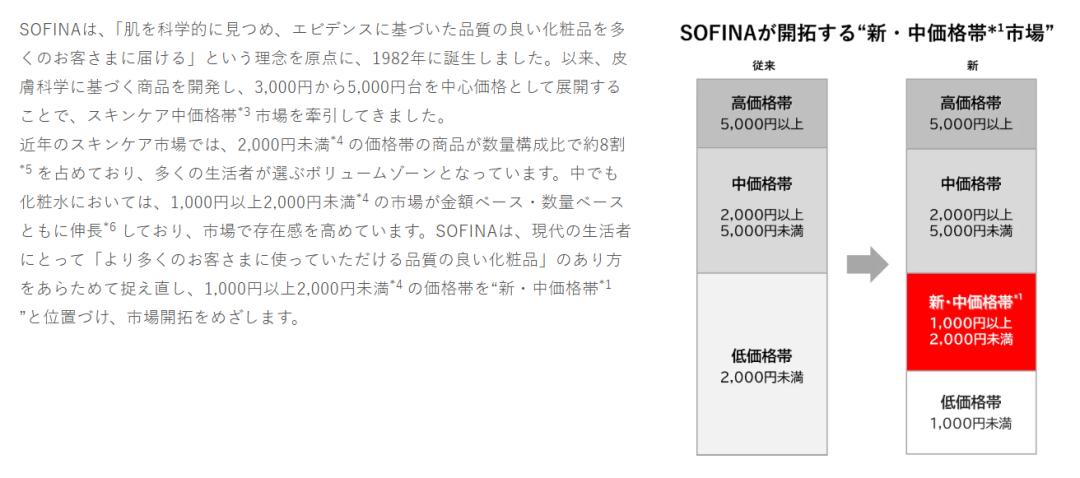
△ Screenshot from Kao Group's official website press release
On the other hand, under the domestic e-commerce traffic logic, new product iteration rhythm, and competition squeeze from local brands, the model that only relies on opening flagship stores and entrusted operation has been difficult to "run through" the entire growth model.
Store Closure and Restart: Japanese Beauty Brands Frequently Make "Addition and Subtraction" Adjustments in China
Under the background of the rapid development of the Internet and AI, Japanese beauty brands that adhere to the "slow craftsmanship" are facing unprecedented challenges.
Kao Group's brand contraction did not start with SOFINA. As early as November 2022, its high-end skincare brand est released a store closure announcement through its official WeChat official account, due to brand strategy adjustment, and consumers could go to the est overseas flagship store to purchase products; by November 2024, est Tmall overseas flagship store also released a store closure announcement, officially stopping operation from November 30, 2024.
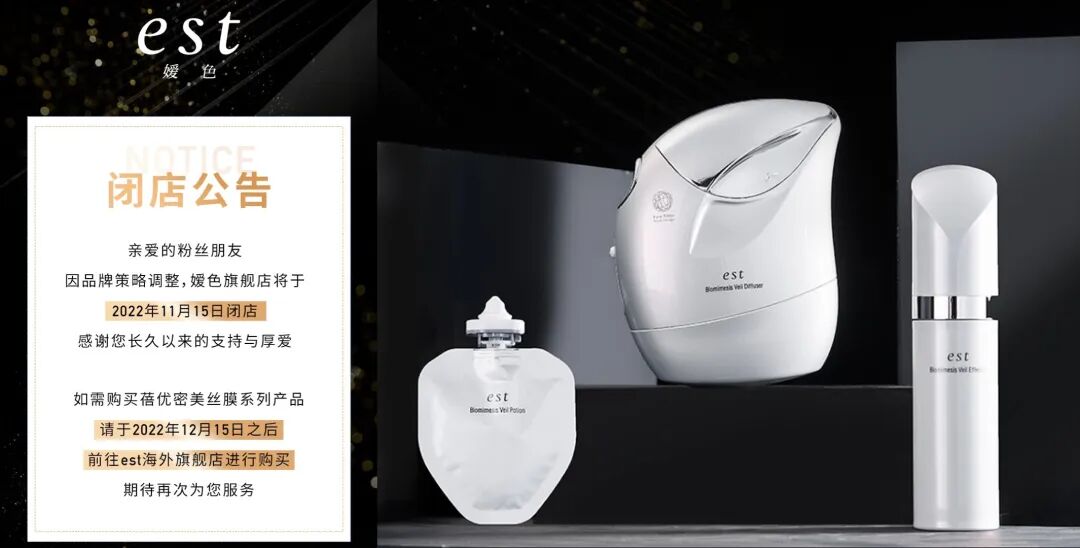
△ The last post before the est official account stopped updating is the store closure announcement, captured from est
Another makeup brand KATE released store closure notices on its Douyin official flagship store and Tmall official flagship store at the beginning of this year, stating that due to brand strategy upgrading and business layout adjustment, it stopped product sales on April 1. At present, KATE's overseas flagship store is operating normally, and a new official account on Xiaohongshu was restarted last month.
From 2025 to now, there have been more than ten cases of store closure, counter withdrawal, and exit from the Chinese market, including many Japanese beauty brands' collective "exit" in the Chinese market, as well as strategic contraction and transfer under the pressure of operation.
Not all Japanese beauty brands facing contraction in China have "disappeared". For example, TATCHA, Decorte and Sekkisei are typical cases: the former closed its online channels, while the latter two withdrew from offline counters but still operate on Chinese online channels.
It is also worth noting that compared with the "contraction wave" of store closure, counter withdrawal and exit from the Chinese market in 2025, the situation this year has improved. According to incomplete statistics from Jumeili, including this SOFINA store closure, the number of cases is only single-digit.
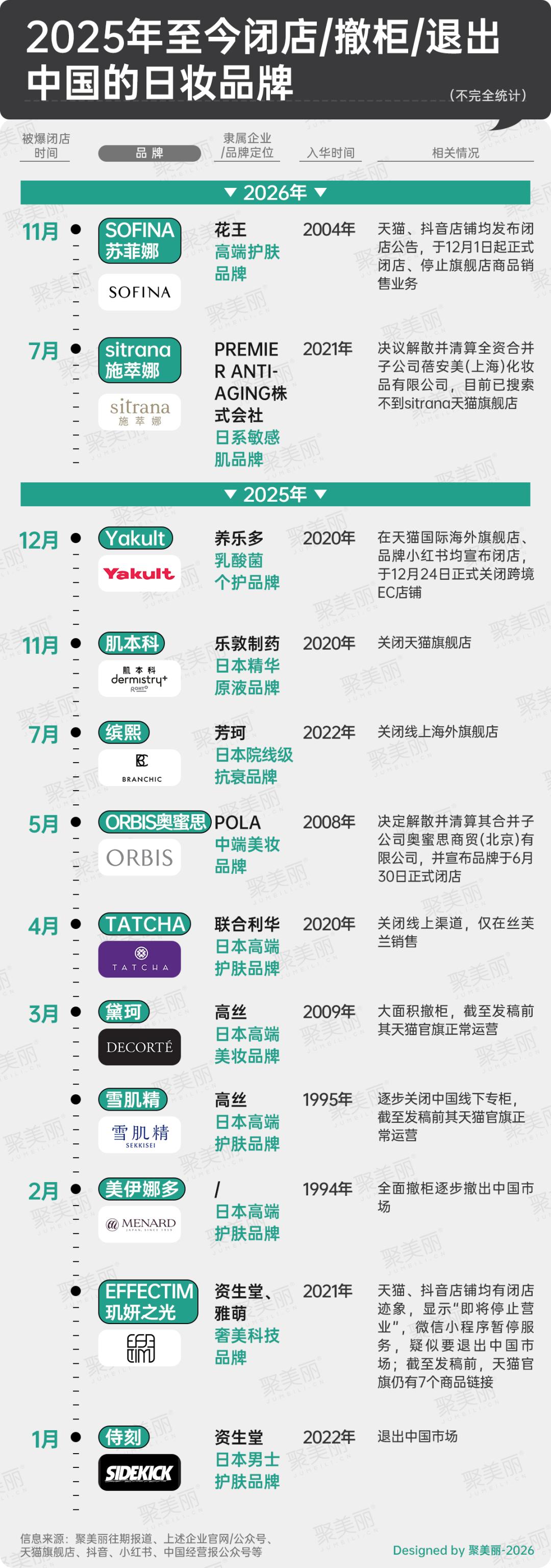
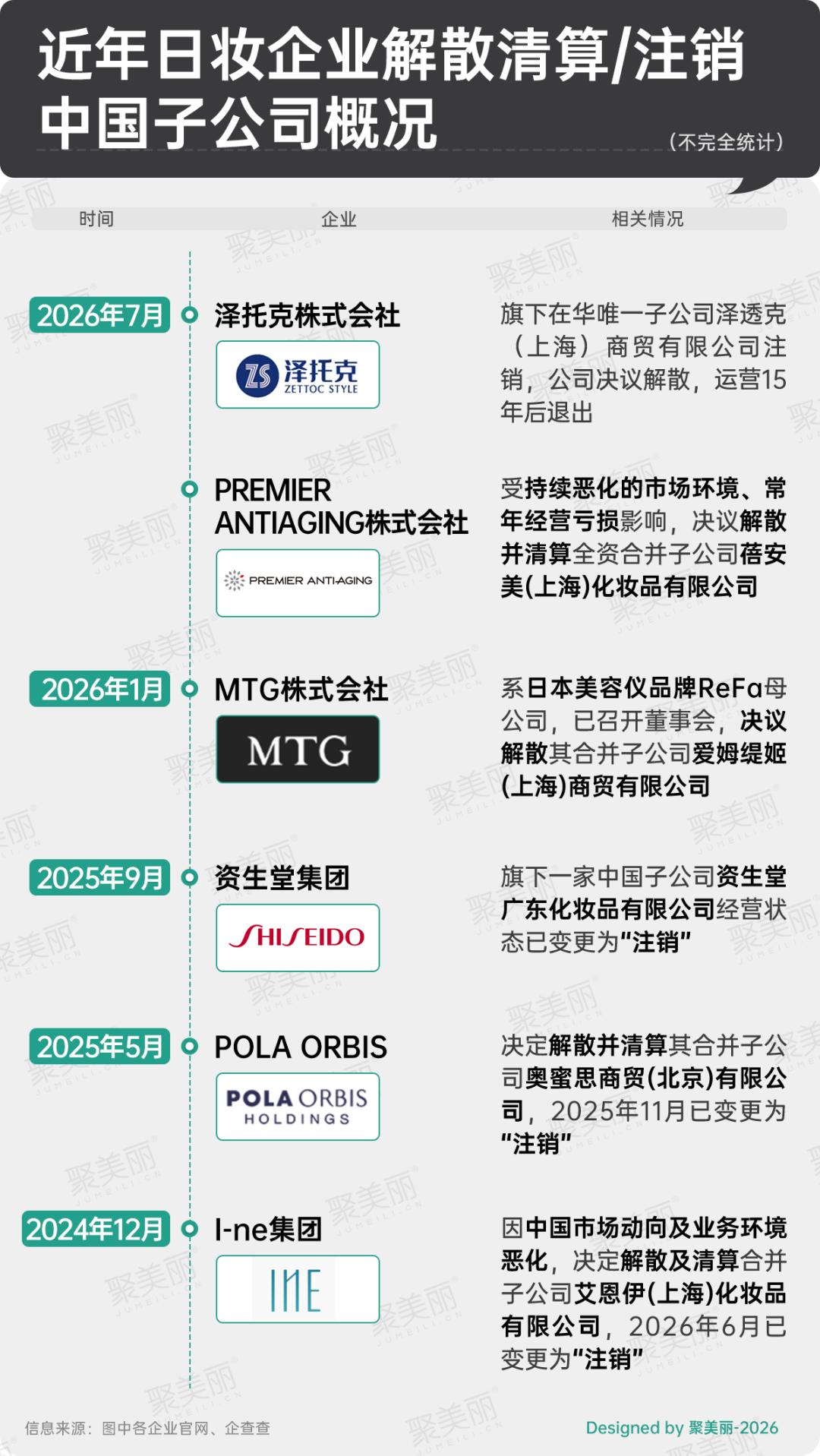
However, the risk of brand and parent company liquidation still exists. In July 2026, as the parent company PREMIER ANTIAGING Co., Ltd. resolved to dissolve and liquidate its wholly-owned subsidiary Peianmei (Shanghai) Cosmetics Co., Ltd., the Japanese sensitive skin brand sitrana can no longer be found with its official Tmall flagship store.
Moreover, by sorting out the development status of Japanese beauty companies in China in recent years, it is found that there have been 6 dissolution, liquidation or cancellation events in just 2 years, including leading companies such as Shiseido Group, POLA ORBIS and I-ne Group.
From the perspective of market performance, in the first half of this year, the sales revenue of Shiseido Group, Kao, Kose and I-ne in relevant markets including China increased by 10.0%, 10.5%, 24.0% and 74.6% year-on-year respectively[5]. This means that for many Japanese beauty companies, the Chinese relevant market is an incremental field with opportunities.
Combined with the initial data of this year's Double 11, in the Tmall Beauty Double 11 opening transaction progress ranking list, domestic brands including Proya, Winona and Mao Geping are all on the list.
There are 3 Japanese beauty brands on the list, namely SK-II, CPB and Shiseido, accounting for less than 20% of the TOP20. And there are no Japanese brands in the TOP20 of the personal care list in the same period.
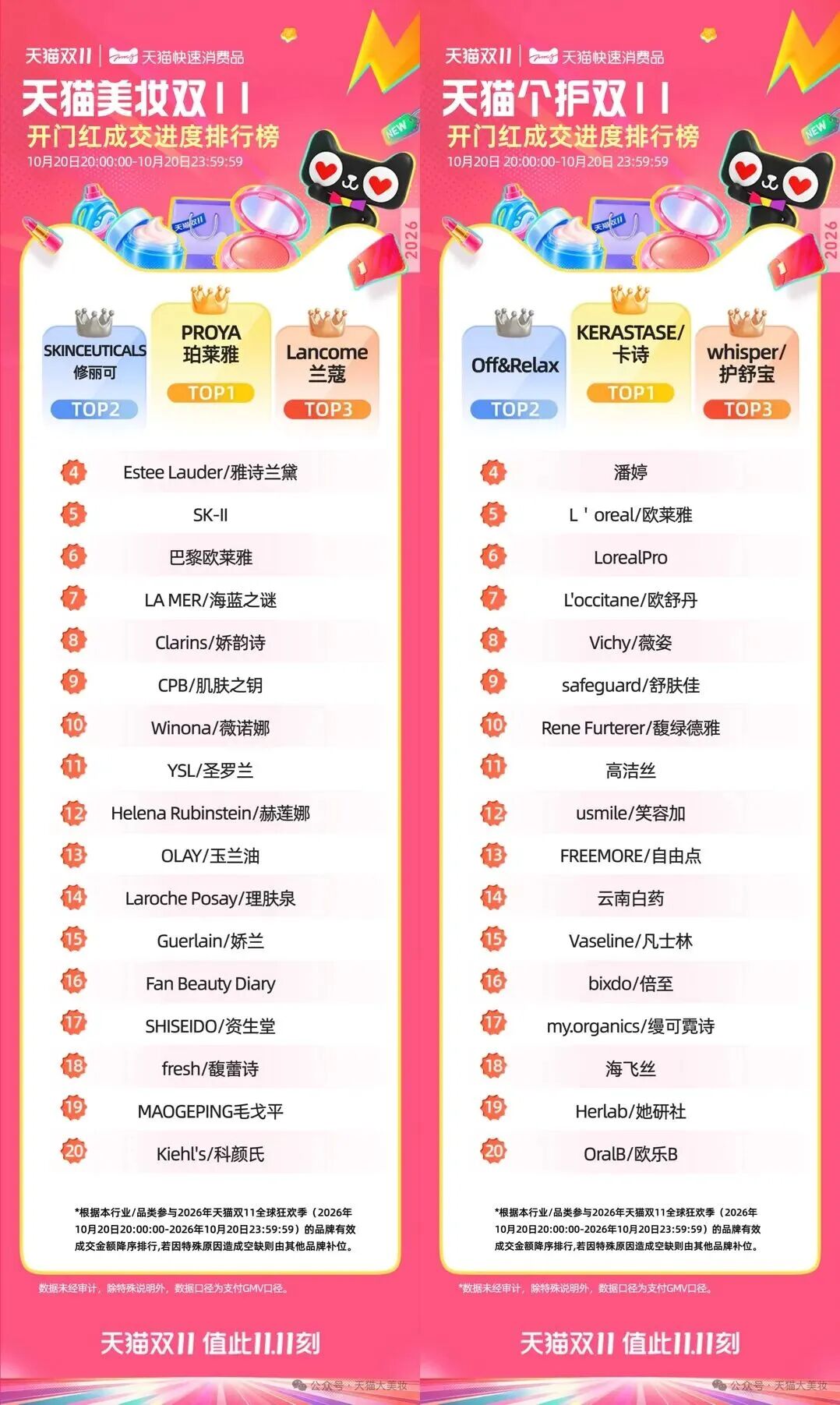
△ Tmall Beauty Double 11 opening transaction progress ranking list, Source: Tmall Big Beauty
For SOFINA, this brand strategy upgrading and business layout adjustment is more like a strategic shift of Japanese brands: abandoning heavy asset direct operation, and adopting a lighter way to retain existing fans.
There is no doubt that Japanese beauty brands are accelerating reshuffling. With intensified competition, more and more Japanese brands are re-examining their operation models in the Chinese market and making adjustments to adapt to the current ever-changing consumption environment. The deeper situation is that Japanese beauty companies use brand strategy adjustment and "addition and subtraction" of their business in China to stabilize