Women's choices are rewriting the health business.
Women's growing emphasis on their own experience is rewriting the competition logic of health products.
In reviews of condoms, women are starting to talk more explicitly about lubrication and comfort. Before making a purchase, they read reviews, check ingredients, and are willing to spend time learning about the differences in materials. Physical sensations that were rarely publicly discussed in the past are becoming specific requirements that influence purchasing decisions.
This year's Double 11, this change has already been reflected in the transaction ranking list. According to the head of the adult personal care category at Tmall Health, on the first day of the Double 11 campaign, Daren Tang ranked fourth in Tmall's condom brand transaction volume, and beU ranked sixth. Two new brands born with a "female perspective" have secured positions in a market where established brands have long held dominant advantages. Mature brands such as Jissbon are also launching new female-friendly products to re-engage this group of consumers.
A mature market with a relatively stable brand landscape is brimming with new opportunities. Women's more active participation in consumption decisions has pushed brands to re-examine their products, making intimate protection a new sample for observing changes in women's health consumption.
From identifying women's needs to driving the growth of new products, Tmall Health is translating changes in consumer choices into growth opportunities that new merchants and new products in the health industry can participate in.
"Her" needs are getting more explicit responses
The fact that a category has existed for many years does not mean that all detailed user needs have been fully addressed.
"In other industries, women's needs and what kind of products they should look for were addressed very early on," said the head of the adult personal care category at Tmall Health. "Adult personal care is a little different. Previously, many women were unwilling, and did not take the initiative to understand that they actually have these options, and can fight for these choices for themselves. This change has only happened in the past one or two years."
Inside the platform, this wave of change is attributed to two main lines. One is the "normalization of intimacy": adult products and related content have changed from being hidden and unmentionable to daily consumer goods with aesthetic design, better material and function, and the ability to provide emotional value, attracting a large number of very young female consumers into this industry. The other is "self-pleasure and self-love": women begin to take their feelings in intimate relationships seriously.
This change first shortens the distance between consumers and products. Experiences that were originally too awkward to talk about can now be written into reviews and appear in social discussions.
Self-pleasure here has a very specific meaning: women's own feelings should be the basis for product selection.
In condom reviews and recommendation posts on Xiaohongshu, the pH value and the safety of lubricant ingredients are high-frequency topics, and some people specifically ask whether it will disrupt the balance of the private flora. Their decision-making chain is longer, and their judgment is more rational. After building trust, their repurchase rate and loyalty are higher, and they are more willing to pay a premium for comfort and safety.
These requirements are often very detailed. One bad experience can be a reason to re-select products. Simply labeling a product as "female-oriented" can hardly meet these requirements.
There is a considerable gap between this set of evaluation criteria and the product language commonly used in the industry. In the past, the condom category has long been viewed from a male perspective, and product communication is more familiar with selling points such as thinness and durability. Women's attention to comfort and safety has added a long-absent evaluation perspective to this category, and the space for differentiated products emerges here.
Some products actually appeared earlier than this round of discussion. The aforementioned person in charge mentioned that condoms with added hyaluronic acid and increased lubrication volume appeared about four years ago. It was not until the past one or two years, after the content channels and consumer perceptions changed, that similar products received more positive market responses.
The difference in buyer structure is already quite distinct. Data from Tmall Health shows that female buyers usually account for about 30% of mature condom brands, while for new brands dominated by female consumers, this proportion can reach 60%, almost twice that of the former. Across the entire industry, although the number of buyers is still mostly male, women's needs have formed a sufficiently distinct consumption force in some brands.
The active choices in women's health consumption have thus extended to intimate protection. They are willing to discuss publicly and place orders in person. The requirements originally scattered in individual experiences have gradually converged into market demands that brands can respond to.
New female-friendly demands require new supply
New demands have begun to change the starting point of product development.
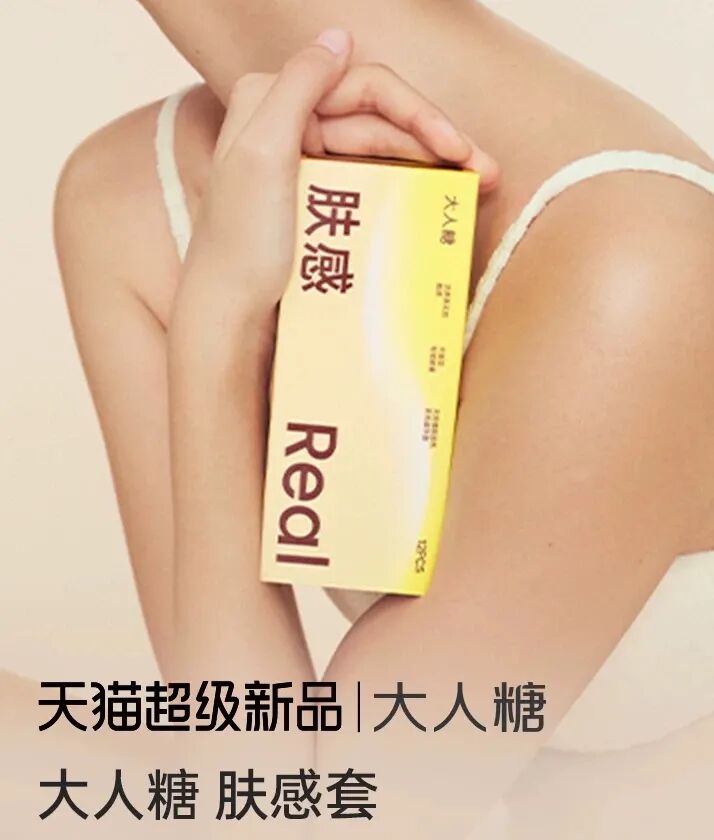
This is particularly evident in product upgrades in the field of adult personal care, and adjusting for female-friendliness is a leading direction. For example, the two cutting-edge brands that performed well in this year's Double 11: Daren Tang, founded in 2019, is well-known as a female intimacy brand with original designs, and entered the condom track in the second half of 2025; beU, founded in 2021, took the lead in clearly putting forward the positioning of "designed exclusively for women", and is currently the No.1 brand in the condom topic on Xiaohongshu.
The paths of the two are quite consistent: both take female products as their main business, and then cross-category to enter the condom track and achieve good results.
Daren Tang's skin-friendly condoms were exclusively launched on Tmall at the end of May this year, designed exclusively for women. In the first month after launch, it ranked among the top three in the industry, and now it is one of the top three items in the condom category. This year's Double 11, beU's new product Dianchao condoms were launched for the first time on Tmall, ranking TOP4 in the condom pre-sale list during the pre-sale period. In the longer term, in the past three years, the two female brands Daren Tang and beU have jointly captured about 10% of the condom market share, tearing a gap in a category that has been closed for many years.
This step was not easy. The pattern of the condom industry has been stable for many years, and the three major brands Durex, Okamoto and Jissbon have long occupied a high market share. Restricted by promotion rules, the brand upgrades and formula upgrades common in the new consumption wave have hardly occurred in the family planning supplies industry.
The entry of new brands, coupled with the votes of female consumers, has stimulated the original leading players. Jissbon Bionic Skin is a sample of mature brands adjusting their supply. Jissbon's most well-known product line previously focused on durability. After capturing the female-friendly trend, it decided to target high-end female groups. Its Bionic Skin condoms exclusively launched on Tmall this year use a material called polyisoprene (PI), which is different from natural latex, and adds a large amount of hyaluronic acid to meet women's needs.
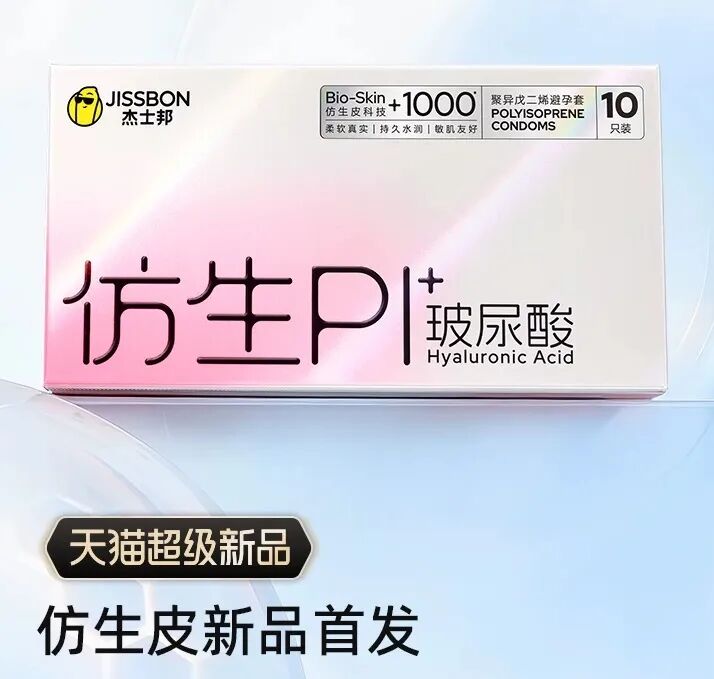
The name "Bionic Skin" itself is a repositioning, to let consumers see at a glance that it is different from the original products, and the packaging has also been changed to a pink flat box.
New brands and mature brands are responding to the same change along different paths. New entrants are more familiar with female consumption expression, while mature brands have accumulated R&D and supply chain capabilities.
Female-friendliness brings these different capabilities to the same market, and competition extends from channel positions to the products themselves. For the platform, both the new ideas brought by new brands and the transformation of mature brands are needed, so Tmall Health has the opportunity to organize more high-quality supplies.
The role of Tmall Health is more like a booster, helping brands to make new products a hit, so as to seize the trend.
For new brands coming from cross categories, the first step is to give them the confidence to enter the market. What industry specialists talk most about with brands is repurchase. Condoms are a high-repurchase category, and the market share exchanged for upfront investment corresponds to a much longer consumer life cycle.
The gap between demand and supply also requires operational measures as a bridge. Before Daren Tang's skin-friendly condoms went on the market, it experienced a price adjustment. As the brand's first item to seize the market, the skin-friendly condoms were originally planned to be priced higher. Tmall Health suggested pulling the price back to the mid-range price band, finally setting at around 89 yuan for 10 pieces, balancing the need for profit and acquiring new customers.
The launch rhythm of Jissbon Bionic Skin is built on the co-creation of the brand and the platform. The launch window of this new product was placed on the International Women's Day after the Spring Festival return to work, instead of the industry's usual Valentine's Day and Qixi Festival.
The product narrative on Valentine's Day and Qixi Festival is more likely to focus on couple gifting, while International Women's Day is more suitable for discussing women's own needs, and women's position as purchase decision-makers is also clearer.
In response to the relatively high unit price, the two sides jointly designed the mechanism of "second item for 0 yuan" during the launch period, which retained the product's listed price while reducing the actual cost for consumers to try it for the first time. During the half-month launch period, the cumulative transaction of this product exceeded 2 million yuan, ranking top three in the condom category in the whole cycle, and the peak transaction on February 28 ranked first in the family planning supplies category by individual item.
Female-friendliness has evolved from a consumption trend into brands' promotion planning, and the product itself has become the focus of operational discussions between the two sides. Tmall data shows that the category transaction on the first sale day of this year's Double 11 exceeded expectations. According to the weight proportion of each brand on the first sale day, it is the female-oriented new products that support this part of the growth.
The growth of female-friendly new products shows that there is still new competition space in mature categories. Tmall Health's understanding of crowds and operations reduces the uncertainty of brands testing new demands, allowing product innovation to get market verification faster. The previously insufficiently responded demands have thus become increments that both new brands and mature brands can compete for.
Why did the new trend happen at Tmall Health?
The successive market responses of new products on Tmall are related to the consumers gathered here.
Women's shopping habits accumulated in Tmall for many years in categories such as apparel and beauty provide a basis for health new products to find consumers. Female consumers with high quality requirements are already used to shopping here, and the familiar shopping channel has become the entry point for new products to enter daily consumption.
Among female condom users on Tmall, 88VIP women contribute more than 50% of the transaction volume. The group willing to pay for experience exactly matches the positioning of female-friendly new products.
New products lacking sales volume and reviews also need the opportunity to be seen. Tmall Super New Products provides resource support according to project levels, mainly depending on the competitiveness of the product itself. Resources such as recommendation and search are connected with the brand's off-site content communication, helping qualified products reach target users; the membership system and subsequent crowd operations help merchants continue to serve old customers and strive for repurchases.
Taking Jissbon's Bionic Skin product as an example, after International Women's Day, the brand launched Tmall exclusive gift boxes in combination with nodes such as 520 and Qixi Festival, putting the same core product into new purchase scenarios, so that the operation after the launch can be continued.
After the 618 shopping festival in 2026, as multiple female-friendly new products received market feedback, Tmall Health clearly defined female-friendly condoms as a trend category, and shared relevant insights with more merchants. Some brands' product planning has extended to the next year. The demand verified by one product has begun to get a wider supply response.
"Female-friendliness" still needs clearer product basis. The platform is sorting out relevant standards with leading brands and the supply chain, and no general standard has been formed yet. Consumers' attention provides direction for innovation, and specific products still need to pass the test of quality and actual experience.
For a mature market, new growth often comes from re-understanding existing demands. As the main position for brand operation of new merchants and new products in the health industry, Tmall Health's long-term value lies in this. It helps brands find operable opportunities in changes, and also allows more women's specific feelings to get continuous product responses, thus translating the changes in women's health consumption into growth opportunities that the whole industry can participate in.
The starting point of growth is often a demand that is finally taken seriously. Women's choices are rewriting the health business, and Tmall Health's long-term value lies in extending the response of a new product to the continuous renewal of the entire category.